1815 Half Dollar Error List with Pictures

A superb 1815/2 half dollar sold for $182,125 in August 2012. The 2 beneath its final 5 is no one-off mistake: every genuine half dollar dated 1815 has that overdate.
The 1815 half dollar errors below also include raised lines, faint extra designs, and a turned back. Whole-coin values run from about $3,000 to that exceptional auction record; read on to learn which marks matter and how to check them.
1. 1815/2 Capped Bust Half Dollar Die Cracks (Estimated Up to $4,500)
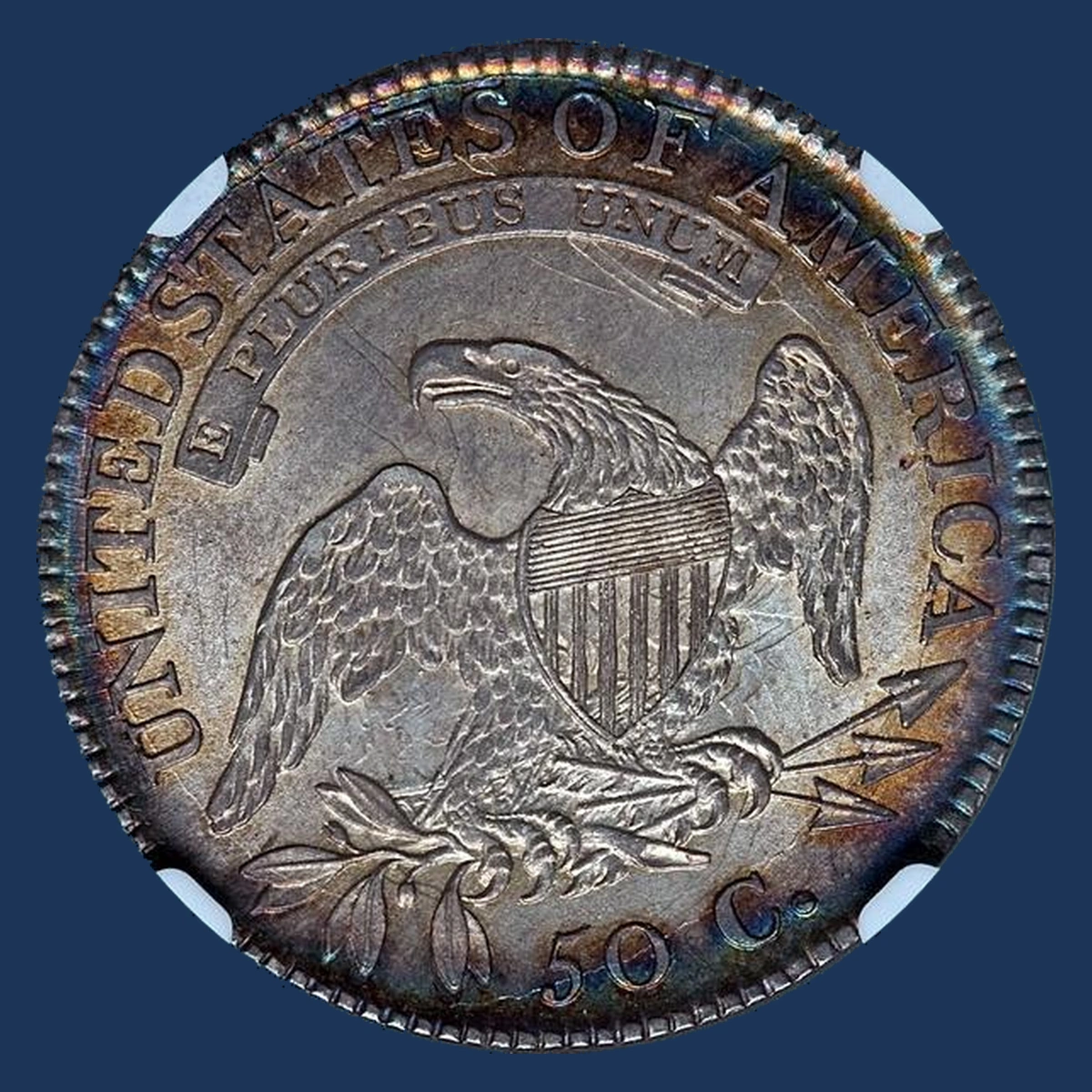
A fine line that stands above the silver can come from a crack in the tool that made the coin. This steel stamping tool is called a die.
Silver fills the crack during striking and leaves a raised line on the finished coin. The coin itself has not split.
Reported 1815/2 features include cracks on the back and a small defect at the corner of the N in UNITED. A separate collector’s coin has a line from the curl below Liberty’s ear toward her neck, so do not expect every reported mark on one example.
Estimated Value
An estimated $3,000–$4,500 covers worn examples with condition problems like the cleaned coin that sold for $3,840 in October 2025. Heritage noted its small defect at the N.
PCGS called it XF Details, meaning moderately worn detail with a problem preventing a normal grade. The price buys the entire scarce-date coin, not just its raised mark; better surfaces can change the value greatly.
How to Identify
Tilt the coin under a low light while examining UNITED with a magnifier. A raised defect catches light differently from a scratch cut into the surface.
Look especially at the corner of the N. For the separately reported front crack, follow the curl below Liberty’s ear toward her neck and compare the whole path.
If the coin is outside a grading holder, use a scale and calipers to check about 13.48 grams and 32.5 millimeters across. Examine the lettering around the edge for damage as well.
A raised line that follows the same path as a documented example is the quickest useful match.
2. 1815/2 Capped Bust Half Dollar Rotated Reverse (Estimated Up to $6,500)
Hold Liberty upright, turn the coin over from top to bottom, and look at the eagle. On the Russell Logan collection coin, the back is reported to lean about thirty degrees counterclockwise.
Collectors call this a rotated reverse: the back points in the wrong direction relative to the front. The picture itself can still be clear.
The same coin has faint extra design traces but lacks the later cracks reported on the back. Those are separate features; photographs cannot show the rotation properly if someone turns each picture upright before displaying them.
Estimated Value
Allow an estimated $4,000–$6,500 for a genuine example with moderate wear. This comparison does not assign a grade to the Logan coin.
Reported sales of ordinary 1815/2 halves include $5,000 for a PCGS VF30 in March 2026 and $5,855 for a PCGS VF35 in January. Both grades describe worn coins with clear major details, and neither sale establishes an extra price for the thirty-degree rotation.
How to Identify
Keep the coin secure in a protective holder with Liberty upright, then turn it over from top to bottom. The eagle should normally appear upright after that flip.
Measure any lean with a protractor, and repeat the flip to make sure the coin did not move inside its holder. Separate seller photographs may have been turned independently.
Confirm the 1815/2 date with a magnifier and inspect the edge lettering. For an unholdered coin, a scale and calipers can check the usual 13.48 grams and 32.5 millimeters.
A repeatable thirty-degree counterclockwise lean after the controlled flip is the quickest direct check of the reported rotation.
3. 1815/2 Capped Bust Half Dollar Clashed Dies (Estimated Up to $12,000)
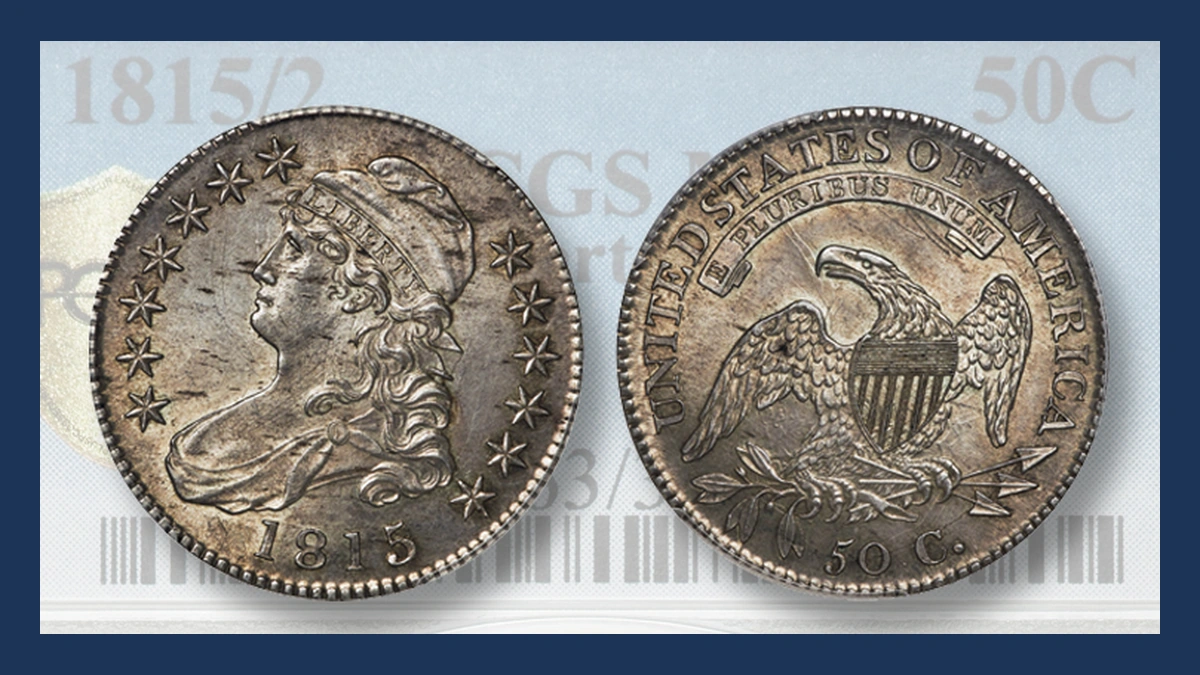
Faint shapes inside the eagle’s shield can be traces of a design that belongs on the other side. These extra marks are called clash marks.
They form when the two steel stamping tools meet without a blank between them. Parts of each design can mark the opposite tool, which then leaves extra shapes on later coins.
An 1815/2 graded PCGS AU58 was described in 1999 as having many such traces on both sides. AU58 means very little wear, while the separate Logan coin has lighter traces that may need better lighting to see.
Estimated Value
The estimated $3,500–$12,000 range covers worn examples with condition problems through attractive coins with only light wear. Much of that value comes from the scarce date itself.
A cleaned example with clash marks sold for $3,840 in 2025, and recent ordinary XF examples approach $5,900. XF means moderate wear; the $12,000 upper figure is an estimate for better-preserved coins, not a newly found sale price for the 1999 AU58 example.
How to Identify
Search inside the shield with a magnifier, then move out into the smooth areas around the design. Look for connected shapes rather than one stray line.
Compare those shapes with parts of the opposite side. Changing the light can help you separate faint raised marks from scratches.
Keep the whole coin in the photographs so the position of each small mark remains clear. Inspect the edge lettering too, and use a scale and calipers on an unholdered coin to compare 13.48 grams and 32.5 millimeters.
Recognizable pieces of the opposite design in the documented shield and open areas provide the quickest convincing check for clashing.
4. 1815/2 Capped Bust Half Dollar Overdate (Auction Record $182,125)
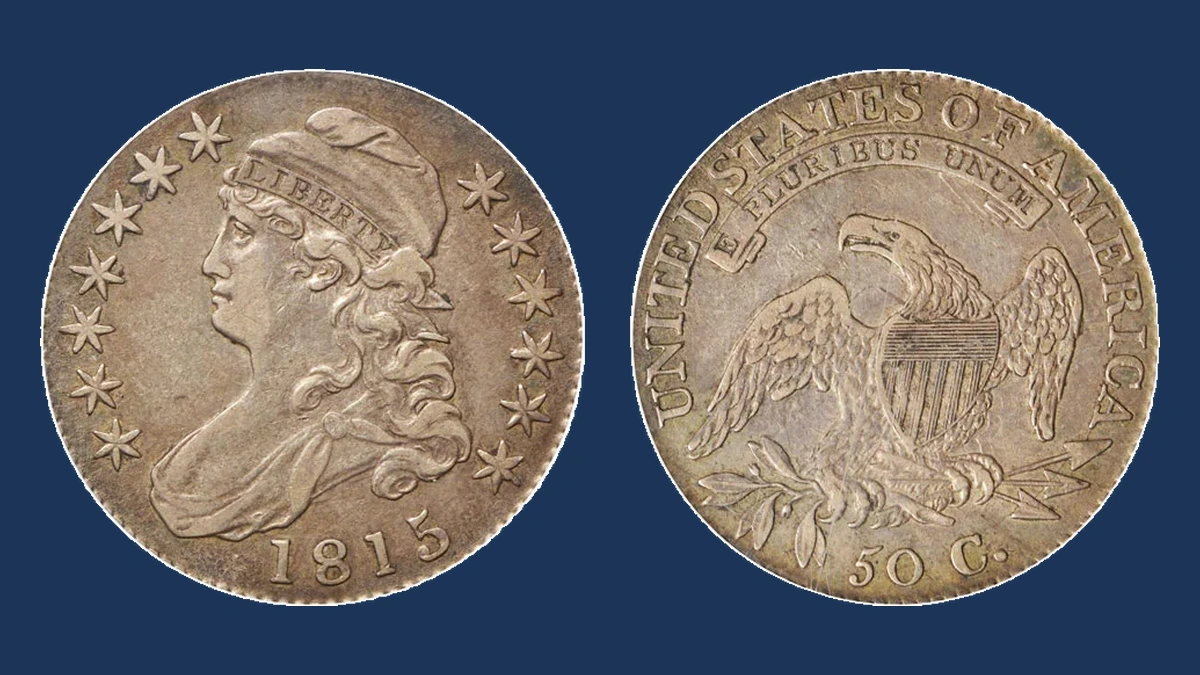
Look beneath the final 5 in the date. Curved pieces of an earlier 2 remain because a worker punched a 5 over it in the steel tool used to stamp the coin.
This is why collectors write the date as 1815/2. Every genuine half dollar dated 1815 comes from this issue.
Wear and lighting affect how clearly the older digit shows, but they do not create a separate ordinary 1815 version. Be careful with altered dates: someone can change the numbers on a cheaper coin without reproducing the proper shape of the 2 beneath the 5.
Estimated Value
Worn examples have a practical estimated range of $3,000–$12,000. Exceptionally well-preserved coins can bring much more.
PCGS records a $182,125 auction sale in August 2012 for an MS66+ example, a high grade for a coin without wear. That price reflects the quality of the whole coin, and the overdate is already part of every genuine 1815 half dollar’s value rather than an extra charge.
How to Identify
Compare the last digit through a magnifier with a clear photograph of a genuine 1815/2. Include the whole date, not just the curved pieces below the 5.
NGC shows an 1825 altered to look like 1815. The changed second digit has the wrong shape and disturbed metal around it.
Inspect the edge lettering, and use a scale and calipers to compare the usual 13.48 grams and 32.5 millimeters. A worn coin should also be compared with a genuine example showing similar wear.
The correctly placed 2 beneath the 5, surrounded by an untouched matching date, is the quickest first check.
Conclusion
Expect roughly $3,000–$12,000 for the worn-coin comparisons discussed here, while the exceptional auction record reaches $182,125. These are prices for complete scarce-date coins, not separate fees for each mark.
Check raised lines with angled light, extra shapes against the opposite design, and rotation with a controlled flip. Start by confirming the 1815/2 date, since every genuine 1815 half dollar shares that important feature.