1848 Half Dollar Error List with Pictures

NumisBids reports a $2,800 result for an 1848 WB-7 half dollar at Heritage’s January 2025 auction. The PCGS MS63 coin has extra date lines and doubled lettering on the back.
These 1848 half dollar errors have estimated values of $125–$4,000 in the grades discussed. Read on to find peeling or defective metal, raised cracks and lumps, and repeated parts of the design.
1. 1848-O Liberty Seated Half Dollar Planchet Defect (Estimated Up to $500)
One 1848-O half dollar weighs 13.1 grams and has an ANACS label identifying defective coin metal. Its F12 Details grade describes a worn coin with a noted problem.
The defect began in the blank, the metal disc used to make the coin. Its exact shape is not specified in the auction title.
That matters when looking at the coin. A missing edge, peeling layer, and rough metal patch are not automatically the same error.
The coin appeared in a collection of incomplete blanks, but that collection name does not prove this piece has a curved clip.
Estimated Value
A circulated 1848-O with a modest, confirmed metal defect has an estimated value of $125–$500. The January 2025 F12 Details listing does not show its sale price publicly.
A different 1832 Capped Bust half with a small rim defect totaled $263.25 in July 2025. It was graded ANACS XF45 and had less wear.
That comparison supports an estimate, not a known sale price for the 1848-O coin.
How to Identify
A low weight is only a starting clue. Weigh an unsealed coin on a scale and compare with the original 13.36 grams; wear also removes silver.
Calipers should show about 30.6 millimeters across. Inspect the grooves around the edge and examine the defect with a 10× magnifier.
Look for naturally struck detail near the flaw, rather than fresh cuts, filing, or corrosion pits. Confirm the date and O below the eagle.
For a sealed coin, use its recorded measurements instead of opening the holder. The quickest check is to match the flaw and both sides to pictures of the certified 13.1-gram example.
2. 1848-O Liberty Seated Half Dollar Die Cracks (Estimated Up to $1,500)
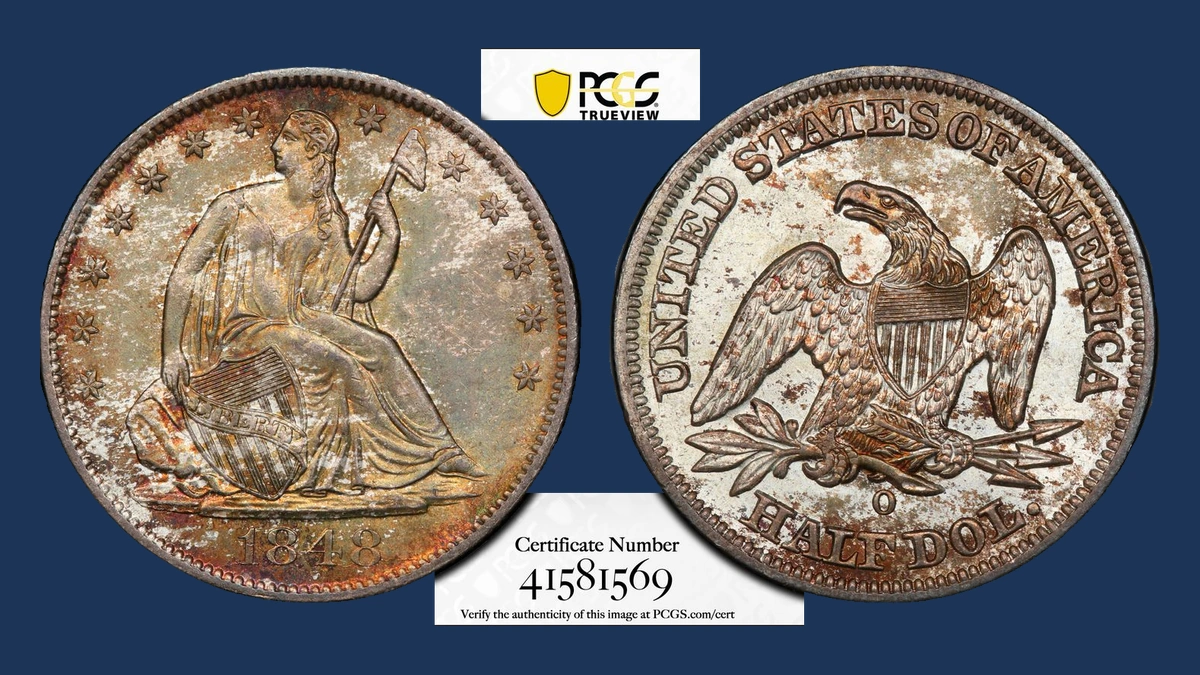
A raised line from the top of Liberty’s foot toward the last star on the right is reported on an 1848-O. The owner also describes many cracks on the back.
Cracks form in the dies, the steel tools that stamp coins. Silver entering those narrow gaps leaves raised lines on the finished piece.
The described coin is graded PCGS MS65, an unworn grade. Its owner’s observations identify places to inspect, rather than proving every 1848-O has the same cracks.
A weak area beneath the foot is a different feature. It is not another raised crack line.
Estimated Value
Moderately to lightly worn examples with recognizable cracks have an estimated value of $200–$1,500. A regular PCGS AU50 1848-O sold for $552 in April 2024, according to the auction records.
That coin provides a comparison for the date and condition. Clear cracks and attractive surfaces may increase collector interest.
This range does not price the owner’s MS65 coin. An unworn example belongs in a different market from the circulated coins discussed here.
How to Identify
Count to star 13, the last star at the lower right of the front. With a 10× magnifier, inspect the line leading from it toward Liberty’s foot.
Tilt the coin under a lamp. A crack should form a raised ridge; a scratch generally cuts into the silver.
Now inspect the back separately, following only the lines actually visible on your coin. Their strength can vary as the stamping tool wears.
Check the edge grooves and compare scale and caliper readings with 13.36 grams and about 30.6 millimeters. To match the reported feature quickly, trace the raised connection between the top of the foot and star 13.
3. 1848 Liberty Seated Half Dollar Crumbling Die and Rim Cud (Estimated Up to $2,500)
Rough raised patches can appear around the stars on some 1848 Philadelphia halves. Small pieces of the steel stamping tool broke away, leaving spaces for extra silver.
Another example has a raised lump joined to the rim below and left of the date’s first digit. A rim-connected lump of this kind is called a cud.
That example also has a small raised chip inside the C of AMERICA. The chip sits within the design rather than at the rim.
The star patches and the rim lump belong to different examples. Do not expect both together.
Estimated Value
Estimated values run from $300–$2,500 for circulated examples through attractive coins in lower unworn grades. NumisBids reports $1,700 for a PCGS MS61 example with the rim lump in January 2025.
An earlier Heritage description of a lightly worn AU55 coin identifies the same lump’s location. These examples help connect the feature with a complete coin.
The range includes the coin’s condition and surfaces, not just the extra silver.
How to Identify
Start below and left of the 1 in the date. A 10× magnifier should show a raised mass joined naturally to the rim.
Inspect the C in AMERICA on the back for the small supporting chip. On a separate star-patch example, look around the stars instead of expecting that same rim lump.
Added metal may leave a seam, while impact damage can flatten the edge grooves. Use a scale and calipers to compare with the original 13.36 grams and 30.6-millimeter diameter.
Wear can lower the weight. For a quick cud check, confirm that the raised lump below the first date digit flows into the rim without an added-metal seam.
4. 1848 Liberty Seated Half Dollar Cataloged Doubled Die Obverse (Estimated Up to $4,000)
The name WB-7 appears in listings for an 1848 half dollar with repeated design details. PCGS labels it RPD & DDO, meaning repunched date and doubled design on the front.
However, the auction description places the doubled letters on the back, at OF AMERICA. It separately identifies extra lines beside the front-side date.
No precise extra front-design feature is established by those descriptions. A catalog label alone does not show where to look.
The known date and back lettering remain useful clues to WB-7. They should not be mistaken for a different front-side doubled feature.
Estimated Value
The estimated value is $300–$4,000 for a WB-7 from circulated condition through MS63, an unworn grade. NumisBids reports $2,800 for the January 2025 MS63 example.
That is the same coin with the repunched date and doubled back lettering discussed below. It is not a separate sale for front-side doubling.
Do not add the three ranges together. They describe overlapping features on one coin, whose condition and surfaces still determine much of its value.
How to Identify
Ask which front-side feature is doubled before relying on a label. The PCGS variety list gives the WB-7 name, but the photograph must show the actual extra detail.
Use a 10× magnifier to inspect that claimed feature. Extra lines beside the date are date repunching; extra letters in OF AMERICA are on the back.
Check the edge grooves for alteration. A scale and calipers allow comparison with the original 13.36 grams and roughly 30.6 millimeters across.
For a quick front-doubling check, require a matching extra outline in a confirmed front-side design feature beyond the date, rather than using a picture of back lettering.
5. 1848 Liberty Seated Half Dollar Repunched Date (Estimated Up to $4,000)
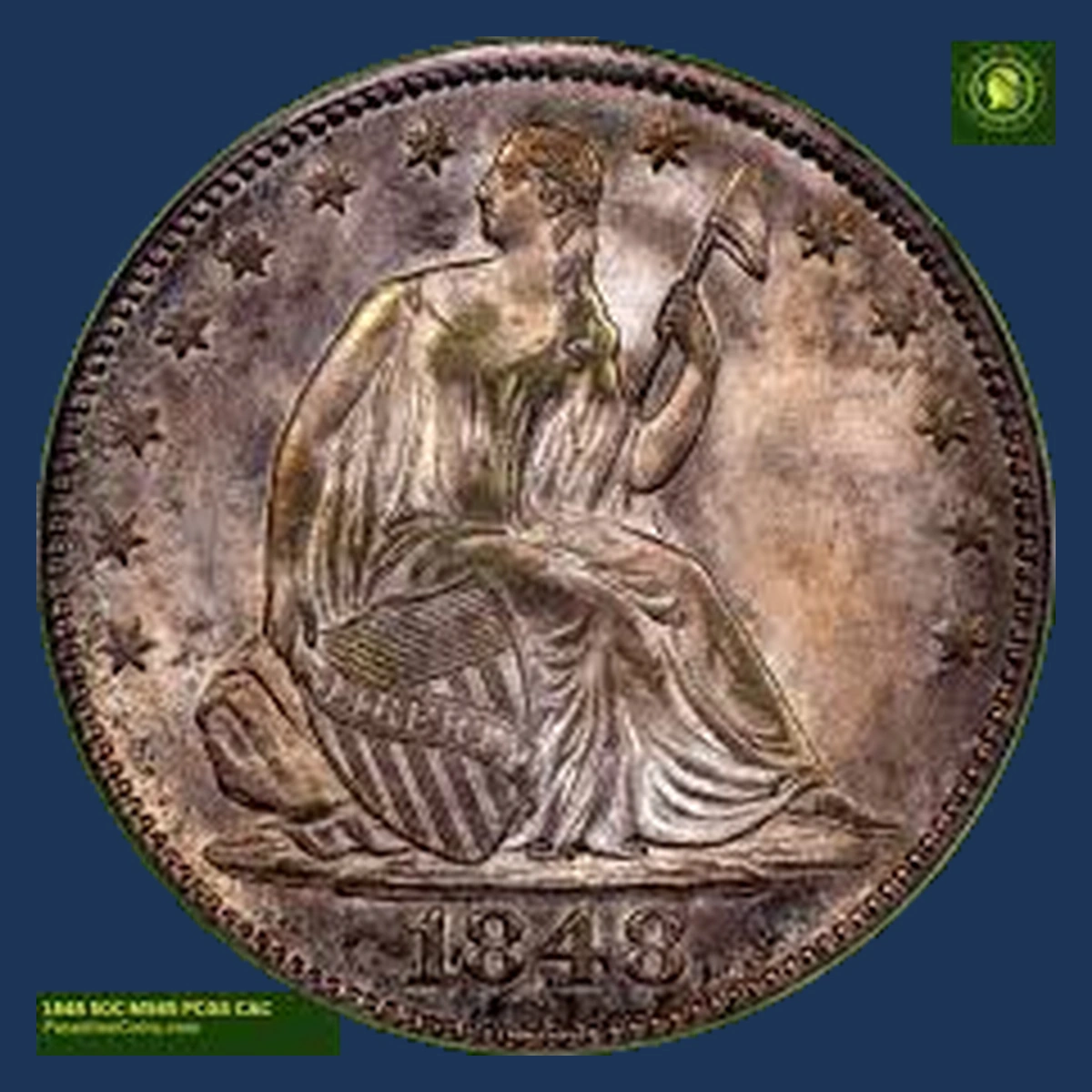
Extra parts of the 1 and first 8 appear above the main date on WB-7. They show where an earlier date impression sat.
A worker applied the date punch to the steel stamping tool more than once. When the punch moved, the last impression did not fully cover the earlier one.
Every coin made with that tool could carry the same extra lines. The finished coin did not need to be struck twice.
The Heritage MS63 example also shows doubled letters on the back. Those are a separate feature on the same physical coin.
Estimated Value
NumisBids reports $2,800 for the PCGS MS63 WB-7 in Heritage’s January 2025 auction. MS63 describes an unworn coin that still has noticeable marks, which affect its overall appearance.
An estimated $300–$4,000 spans circulated examples through appealing MS63 coins. Clear extra date lines help identify the variety.
The back doubling and the coin’s overall condition are already part of its value. They do not each add another copy of this price range.
How to Identify
Focus on the first two date digits, 18. Under a 10× magnifier, look just above their main edges for raised pieces of an earlier, higher impression.
Change the light direction to separate raised silver from dark toning. A flat shelf beside a digit is not the same as a recognizable earlier outline.
Compare the whole date with a confirmed WB-7 picture, including the spacing between digits. Check the edge grooves and compare scale and caliper readings with 13.36 grams and about 30.6 millimeters.
For the quickest check, match the raised remnants above the 1 and first 8; no hidden 7 or different year is needed.
6. 1848 Liberty Seated Half Dollar Doubled Reverse Lettering (Estimated Up to $4,000)
Look along the tops of OF AMERICA for repeated letter edges. Heritage identifies that location on the back of the 1848 WB-7 half dollar.
The extra outlines came from the design on the steel stamping tool. They differ from the date lines made by a separate hand punch on the front.
Both can appear on the same coin. That makes the front-side date useful when checking the back lettering.
The catalog’s differing front-doubling label does not move these letters to the other side. Inspect the actual letters and match them with a confirmed example.
Estimated Value
A complete WB-7 showing this back feature has an estimated value of $300–$4,000, from circulated grades through MS63. The January 2025 MS63 result reported by NumisBids is $2,800.
That one transaction covered both the repunched date and doubled back lettering. It does not give a separate price for OF AMERICA.
Sharper letters and original surfaces can improve appeal among coins of similar grade. They do not multiply the whole coin’s value.
How to Identify
Keep the back upright and examine the top edges of OF AMERICA with a 10× magnifier. Follow more than one letter instead of choosing a single bright edge.
Shift the light and compare the extra outlines with a confirmed WB-7 image. Reflections can disappear as the angle changes, while flat shelves may come from movement during striking.
Then check the raised extra 18 above the date on the front. Inspect the edge grooves and compare scale and caliper readings with 13.36 grams and about 30.6 millimeters.
The fastest check is a matching set of doubled top edges in OF AMERICA, supported by the extra front-side date lines.
Conclusion
The estimated $125–$4,000 range covers different grades, metal defects, raised cracks, and repeated design details. Begin with what you can see, then match the feature and condition to a confirmed example.
Remember that several WB-7 descriptions concern the same coin. Its date lines and back lettering receive one whole-coin price, while the conflicting front-doubling label needs a visible front-side feature before it can guide identification.