1853 Half Dollar Error List with Pictures

An 1853 half dollar with doubled lettering on the back sold for $14,030 at Heritage in September 2026. It was graded PCGS MS65 and identified as FS-802.
The 1853 half dollar errors below have estimated values from $500 to $16,000 at the stated grades. The arrows beside the date and rays around the eagle are normal.
Read on to find the extra lines, missing metal, and doubled letters that make these coins different.
1. 1853 Liberty Seated Half Dollar Die Crack (Estimated Up to $1,500)
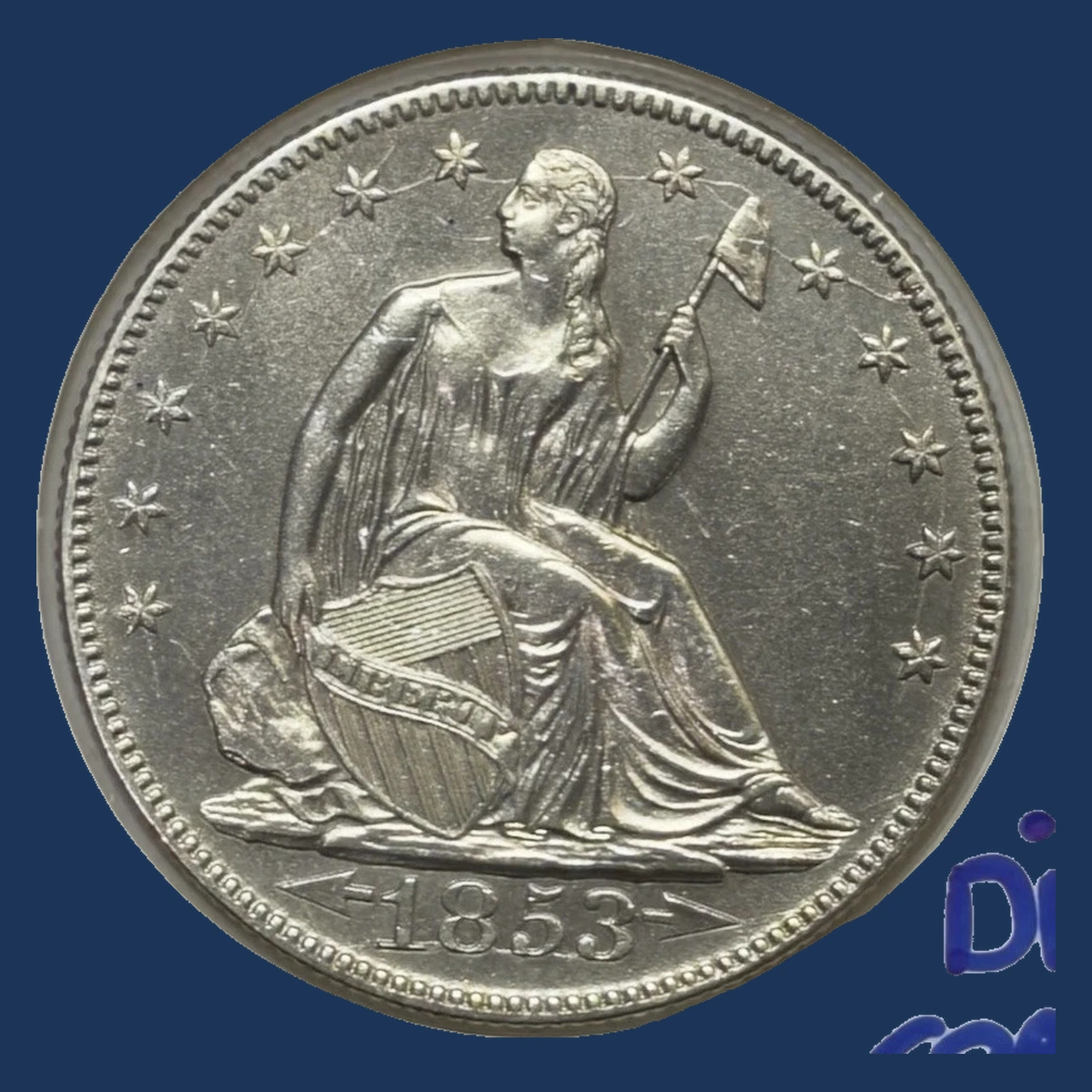
A raised line can run from the rock through an arrow and along the bottoms of the date digits. An owner describes this path on an 1853 Philadelphia half dollar.
The coin is graded PCGS AU58, meaning it has only slight wear. The crack description comes from its owner, not a separate PCGS error opinion.
Such a line forms when a die, the steel tool that stamps coins, develops a crack. Silver squeezes into the gap during striking.
That leaves a narrow ridge. A scratch made later usually cuts into the coin instead.
Estimated Value
A lightly worn example with this date-area crack has an estimated value of $800–$1,500. A regular 1853 Arrows and Rays half graded ANACS AU58 sold for $1,140 in December 2025.
That sale gives a comparison for the whole coin in similar condition. It was not the owner’s reported cracked example.
Original shine and clean surfaces matter at this level. A heavily worn coin needs a lower-grade price comparison.
How to Identify
Check the design first: arrows should flank the date, and rays should surround the eagle. This Philadelphia example has no mintmark on the back.
Use a 10× magnifier to follow the reported line from the rock, through the arrow, and beneath the digits. Tilt it under a lamp to see whether the line rises above the silver.
Compare the weight with the original 12.44 grams using a scale. Calipers should show roughly 30.6 millimeters across; inspect the edge grooves for damage.
Wear can reduce the weight. To check this reported crack quickly, trace one raised path through the rock, arrow, and date bases rather than judging a bright spot.
2. 1853 Liberty Seated Half Dollar Clipped Planchet (Estimated Up to $2,000)
A piece is missing near seven o’clock when the date is held upright. A 1984 Fred Weinberg catalog describes this feature on an 1853 Arrows and Rays half.
The catalog grades both sides AU55, indicating light wear, but does not identify its mint. The arrows and rays describe the normal design.
A genuine clip starts when an incomplete metal disc is cut from the strip. The design is then struck onto that disc.
A later cut can make a similar gap. The surviving edge must show that the metal was missing before striking.
Estimated Value
An estimated $600–$2,000 covers a genuine circulated-to-lightly-worn Arrows and Rays clip. The reprinted 1984 catalog offered its AU55 example for $600.
That was an asking price, not a completed sale. The regular AU58 coin sold for $1,140 in December 2025 gives a more recent comparison for basic coin value.
Clip size, natural edge formation, and condition still matter. Old claims about extreme rarity do not establish today’s price.
How to Identify
Hold the date upright and examine the gap near seven o’clock with a 10× magnifier. Follow the border teeth and design as they approach the missing edge.
Look for saw marks, filing, or edge grooves cut off abruptly. The rim directly opposite a genuine clip may also look weak, although this clue is not always clear.
Use a scale to compare the remaining weight with the original 12.44 grams. Calipers can measure the surviving round portion against the normal 30.6-millimeter diameter.
Check the actual mintmark rather than assuming one from the old listing. For a quick comparison, inspect the seven-o’clock boundary for naturally struck edges instead of fresh cutting.
3. 1853 Liberty Seated Half Dollar Clashed Dies (Estimated Up to $4,500)
The lines radiating from the eagle are supposed to be there. An 1853 clash adds unwanted shapes beyond those normal rays.
This happens when the two steel stamping tools hit each other without a metal disc between them. One tool can pick up marks from the opposite design.
Coins struck afterward may show faint pieces of that design in unexpected places. PCGS lists a clashed Philadelphia Arrows and Rays variety.
The transferred shape is the useful clue. A random scratch or one of the normal rays does not prove that the tools collided.
Estimated Value
An unworn coin around MS63–MS64 with clear clash marks has an estimated value of $2,500–$4,500. These grades describe uncirculated coins with differing amounts of surface marks.
A regular PCGS MS64 example sold for $3,737.50 at Heritage in April 2010. That older sale compares the whole coin at a similar grade.
It does not measure a separate clash premium. Worn coins belong in a lower range, while clear transferred shapes may interest specialists.
How to Identify
Place a picture of a normal 1853 half beside the coin. Account for the intended rays before deciding which lines are unusual.
A 10× magnifier can help you compare an extra shape with the design on the opposite side. Check both sides; a scratch need not match any part of the other design.
For the Philadelphia variety, confirm the lack of a mintmark. Check the edge grooves, measure about 30.6 millimeters with calipers, and compare with the original 12.44 grams on a scale.
Allow for wear. The quickest useful test is to match an extra shape to a confirmed clashed example after ruling out the normal rays.
4. 1853 Liberty Seated Half Dollar Doubled Die Reverse (Estimated Up to $16,000)
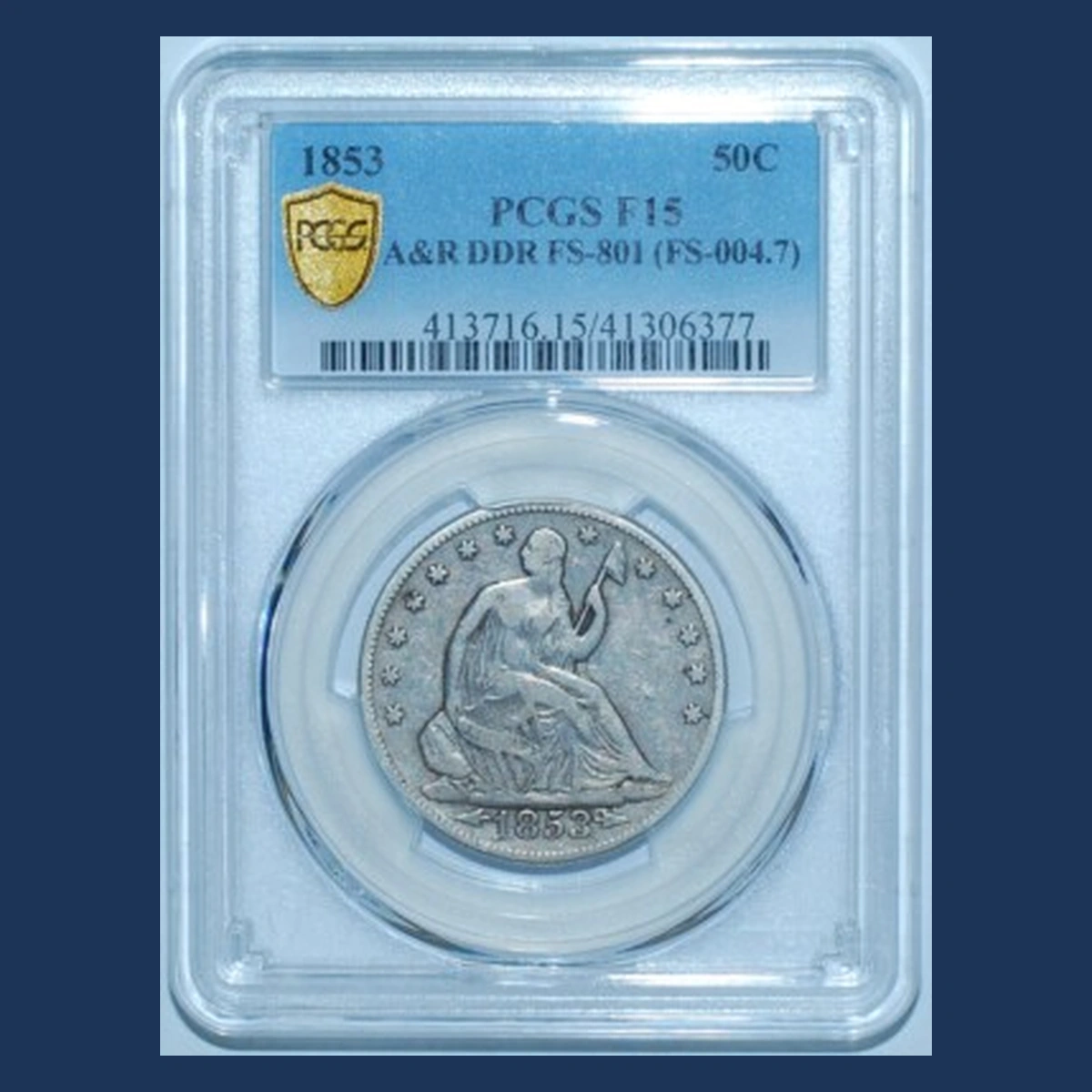
Some letters in HALF DOL show an extra outline on the FS-802 variety. That is a useful place to begin looking.
The doubling was already present on the steel stamping tool before it struck the coin. Repeated design impressions made while preparing the tool were slightly out of alignment.
Several doubled-back varieties are recorded for 1853 Philadelphia halves. Their catalog numbers tell collectors which particular version to compare.
They need not show identical extra lines. A flat shelf beside a letter can have another cause and is not the same as a rounded second outline.
Estimated Value
Lightly worn examples have an estimated value of $500–$1,200. A PCGS AU58 FS-802 sold for $990 in April 2025.
A PCGS MS65 FS-802 brought $14,030 at Heritage in September 2026. That much better preserved, unworn coin supports a separate estimate of $12,000–$16,000.
The recorded sales show why condition matters so much. Visible doubling on a worn coin does not give it the value of the MS65 example.
How to Identify
Find HALF DOL below the eagle and study the complete letters through a 10× magnifier. Compare them with the FS-802 pictures, keeping each extra outline visible.
Move the light slightly to rule out glare. Rounded doubled detail differs from a low, flat shelf left when a stamping tool shifts during striking.
The normal coin has arrows, rays, no Philadelphia mintmark, and grooves around its edge. Use a scale and calipers to compare with 12.44 grams and roughly 30.6 millimeters.
Other doubled varieties need their own comparison pictures. For FS-802, the fastest check is matching the paired outlines in HALF DOL to the confirmed example.
Conclusion
The estimated $500–$16,000 range covers very different grades and features on 1853 half dollars. A lightly worn doubled-letter coin and an MS65 example should not share the same price.
Start by recognizing the normal arrows and rays. Then look for a raised crack, a naturally formed missing edge, a transferred design shape, or rounded doubled letters, and compare only coins with matching features and condition.