1858 Half Dollar Error List with Pictures

An 1858-S with an extra digit trace sold for $32,900 in October 2014. Its exceptional unworn condition was central to that price; a repaired worn example of the variety sold for $156.
The 1858 half dollar errors below also include peeling metal, doubled stars, and a shifted strike with a stepped edge. Estimated whole-coin ranges span $100–$32,900.
Read on to find the right mint and compare the visible feature before choosing a price example.
1. 1858-O Liberty Seated Half Dollar Reported Obverse Lamination (Estimated Up to $400)
A dealer suggested that an 1858-O had a peeling layer on the front. The year reference retains that report, but the actual surface must show whether the explanation fits.
Lamination means a layer separates where the metal mixture has a weak bond. A thin flap may lift or fall away, leaving a shallow hollow.
The account gives no exact location on the front. A spot shown on another coin should not be borrowed for this one.
Look for a layer, not just roughness. Corrosion pits, scraping, and other defects can interrupt a silver surface without showing that it peeled.
Estimated Value
Estimate $100–$400 for a worn 1858-O with a clear shallow separation. Original surfaces and remaining design help decide where it fits.
A different back-side metal-flaw report for the same year has a $265 dealer price. It gives limited context, not a sale of this front-side candidate.
The estimate assumes a visible separating layer. Corrosion or deliberately removed silver needs comparison as damage rather than an original peeling-metal error.
How to Identify
Use a 10× magnifier and angled light where the patch meets intact silver. A lifted edge or thin layer gives more information than a color change or scattered pits.
Keep any loose piece in place. Check whether the nearby stamped design continues naturally into the separation instead of ending at a sharp later cut.
Confirm O below the eagle and the back without the later motto. A digital scale and calipers compare accessible coins with the original 12.44 grams and about 30.6 millimeters; inspect the edge grooves too.
A visible thin layer separating at the original surface is what to find here. A scraped hollow without that structure does not show lamination.
2. 1858-O Liberty Seated Half Dollar Reverse Planchet Flaw (Estimated Up to $500)
A dealer described an 1858-O with a planchet error on the back. A planchet is the metal disc before stamping, so the wording points to faulty original metal.
It does not say the coin was clipped or had a peeling layer. Those more specific causes need their own visible evidence.
When a flawed disc is stamped, the design may form around or into its irregular surface. The boundary can help show which came first.
This is a separate report from the front-side lamination. Neither its exact location nor its cause can be filled in from that other coin.
Estimated Value
The year reference records a $265 dealer offer. That is an asking price, not a completed auction sale or a numerical grade.
An estimated $150–$500 suits a worn coin with an identifiable original metal flaw and readable nearby design. Condition still matters within that range.
The broad description does not establish peeling silver. Its price should not include an assumed lamination premium without showing a separating layer.
How to Identify
Start where the back design meets the flaw. With a 10× magnifier, check whether the design formed around the irregular metal or was removed afterward.
Compare the patch with nearby undisturbed silver. Digging, an impact, and corrosion can all create an obvious hollow without beginning in the blank.
Check O and HALF DOL., then inspect the edge grooves. Use a digital scale against the original 12.44 grams and calipers against about 30.6 millimeters when safely accessible.
Stamped detail meeting an original irregularity naturally is the feature to look for. Roughness alone cannot establish either the dealer’s broad description or a more specific kind of metal flaw.
3. 1858 Liberty Seated Half Dollar Rotated Dies (Estimated Up to $600)
A ten-degree tilt is easy to hide by straightening photographs. Specialist Bill Bugert records about that much clockwise back-side rotation on a Philadelphia example.
The difference is between the positions of the two designs. Each side can still look complete and centered when viewed alone.
The dies, the steel tools that stamp coins, were turned slightly out of their normal alignment. No second strike or missing metal is needed to explain that angle.
Test it with a consistent flip. A matching date or a slanted eagle in one picture cannot show whether another coin shares the reported rotation.
Estimated Value
An estimated $100–$600 covers worn Philadelphia examples with the reported small rotation. Most of the amount reflects the coin’s condition.
Ordinary circulated prices for the year provide the starting point. No separate sale price or fixed rotation premium is assigned to Bugert’s example.
Ten degrees is much less noticeable than a quarter turn. Prices for strongly rotated coins therefore should not be applied without allowing for that large difference in appearance.
How to Identify
Hold Liberty upright and flip top to bottom without a sideways twist. Normally, the eagle should finish upright too.
Repeat the movement against a fixed reference and measure the angle. A loose coin turning inside its case can imitate a small rotation.
Confirm a regular Philadelphia half without a mint letter. Inspect the edge grooves with a 10× magnifier for seams or other changes.
If the coin is outside a sealed grading case, check its weight and width. Use a digital scale and calipers against 12.44 grams and about 30.6 millimeters.
The back should repeatedly finish about ten degrees clockwise from upright to match the described example. Separately straightened front and back photographs cannot demonstrate that relationship.
4. 1858 Liberty Seated Half Dollar Clashed Obverse Die (Estimated Up to $750)
Extra lines beside Liberty’s right arm and leg appear on Bugert’s documented Philadelphia example. Nearby flat areas also carry strong traces, while the back paired with that front is described as unclashed.
This can happen because dies were reused and paired after one had been marked. Both sides need not show equally visible traces.
The marks began when stamping tools hit each other with no blank between them. Later coins received parts of the opposite design in unexpected places.
This is a die clash. Its shapes should explain their relationship to the other design rather than resemble random scratches.
Estimated Value
Estimate $150–$750 for a worn Philadelphia coin with clear matching front-side clash shapes. Better detail makes the shallow marks easier to see.
An 1862 Philadelphia half with clashes sold for $299.63 in May 2015. It was graded AU55 Details for polished surfaces.
That nearly unworn but impaired different-year coin is a limited comparison. The range remains a whole-coin estimate, rather than a recorded price for Bugert’s 1858 example.
How to Identify
Examine Liberty’s right arm, leg, and nearby flat areas with a 10× magnifier and low light. Compare the unusual shapes with an image of the opposite design, turned to show how the dies met.
A scratch or polishing line will not necessarily follow a recognizable piece of that other design. Trace the shape rather than accepting any mark in the right area.
Inspect the back and edge grooves. A digital scale and calipers can check accessible coins against 12.44 grams and roughly 30.6 millimeters.
A matching extra shape beside the arm or leg can establish the front-side clash. Do not reject it just because the presently paired back shows no corresponding mark.
5. 1858 Liberty Seated Half Dollar Doubled Die Obverse (Estimated Up to $1,200)
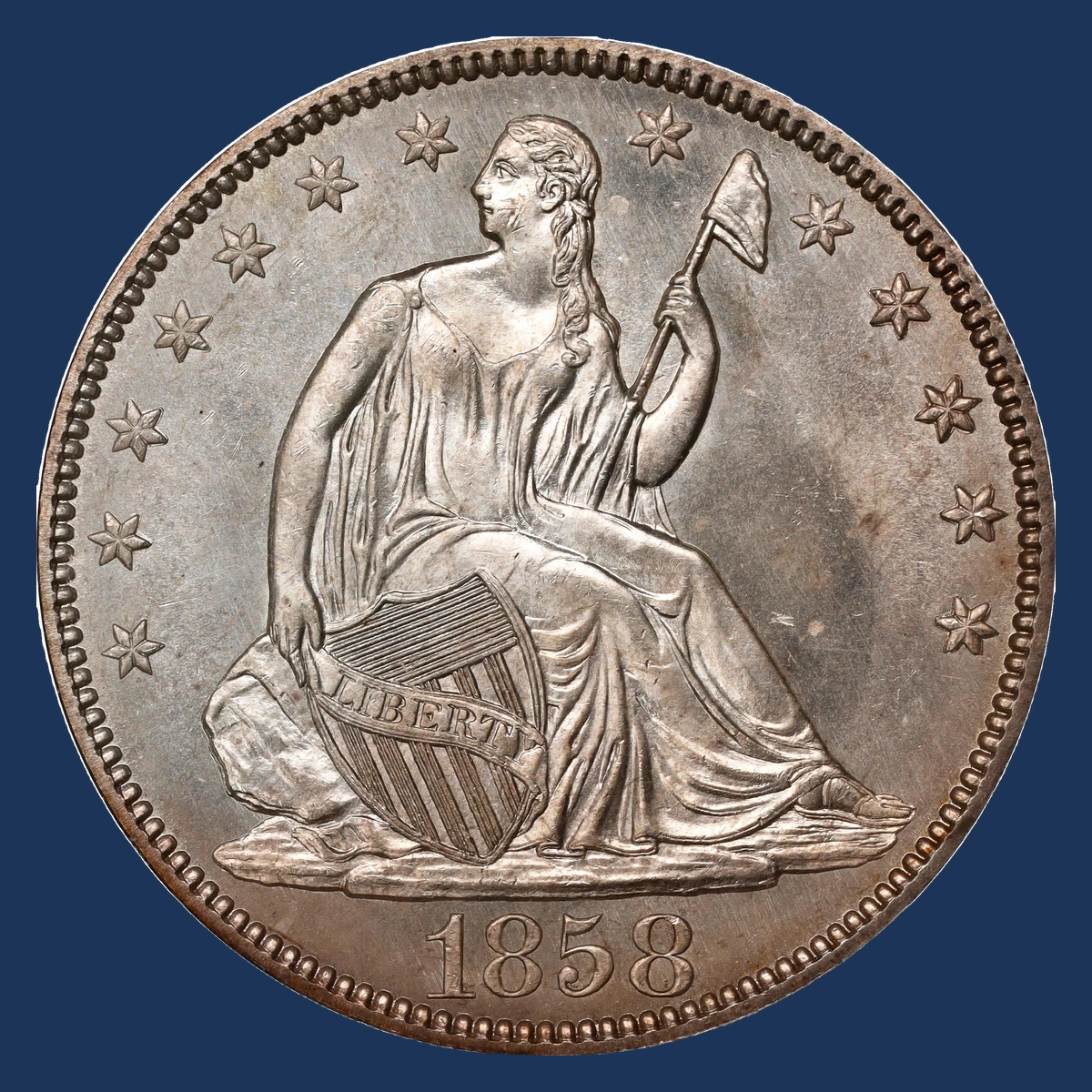
Start with the stars on Liberty’s left and the folds of her clothing. Extra outlines there can reveal a doubled front design on reported Philadelphia examples.
The change was already in the die before the coin was stamped. This differs from extra date strokes left by moving a separate numeral punch.
A doubled-looking date alone therefore cannot decide which feature is present. The main design needs its own comparison.
Specialists recognize more than one doubled front for 1858. Each example should match its own star and clothing details, rather than a mixture of marks from different dies.
Estimated Value
Identified worn through nearly unworn Philadelphia examples have an estimated $250–$1,200 range. Clear extra outlines and pleasing surfaces support stronger prices.
Heritage cataloged an NGC AU53 doubled front in November 2025. No realized price from that listing is used here.
The estimate allows interest in the variety above ordinary worn examples. Exceptionally preserved unworn coins need another comparison, and the recent listing is not presented as a sale proving this range.
How to Identify
Compare several left-hand stars and the relevant clothing folds through a 10× magnifier. Keep the light consistent and use photographs of the same doubled-front variety.
Look for stable extra outlines or a changed shape. Flat shelves, reflections, or worn edges can look doubled without matching the die-made detail.
Check for the Philadelphia coin without a mint letter, date arrows, or the later back motto. Its edge has grooves; use a digital scale and calipers when safely accessible against 12.44 grams and about 30.6 millimeters.
Matching additional shapes in the stars or folds are the evidence to seek. Extra date strokes alone answer a different question about the numeral punch.
6. 1858-O Liberty Seated Half Dollar Off-Center Strike and Partial Collar (Estimated Up to $1,500)
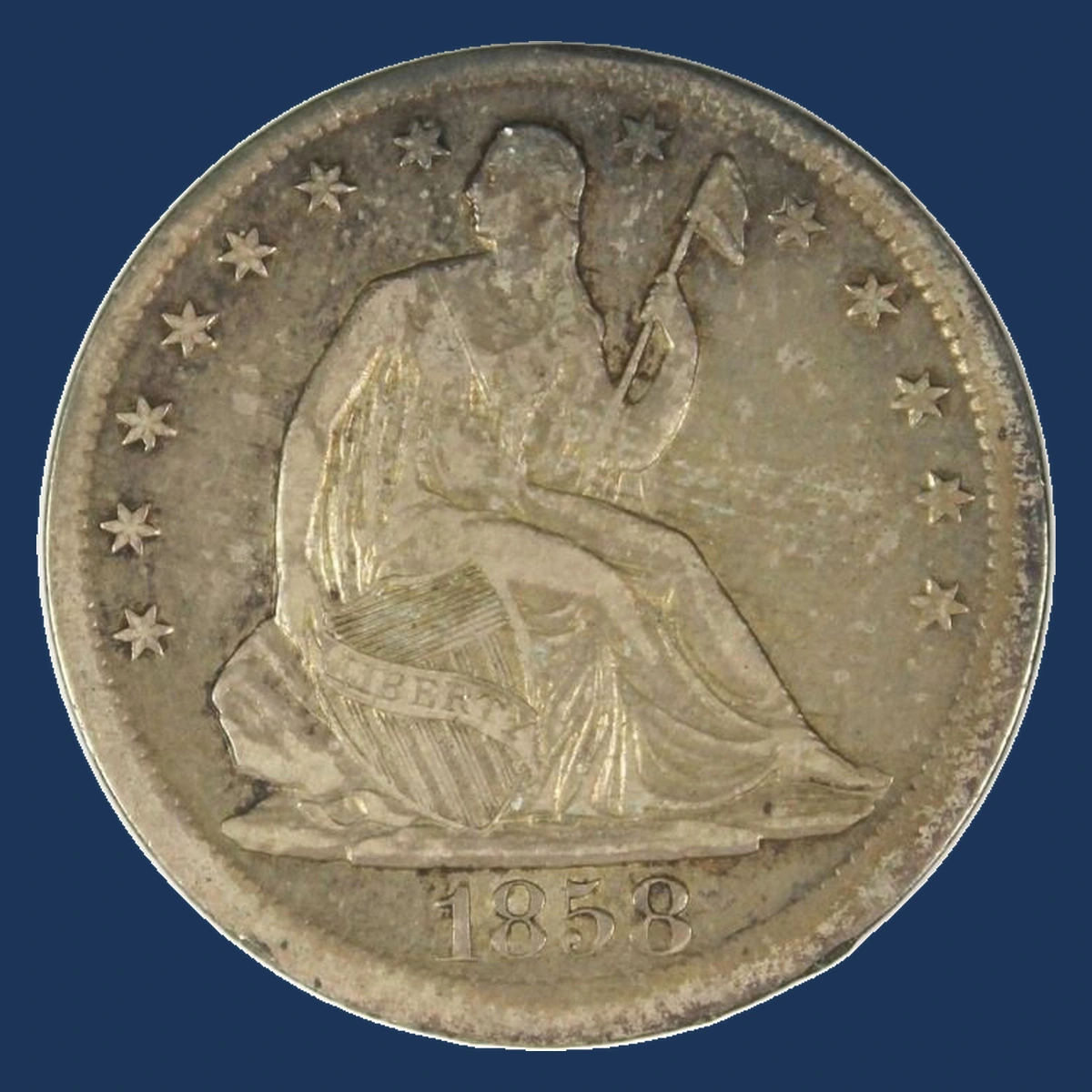
One auction coin combines a roughly 10% shifted design with a step around its edge. The description records partial grooves from 9 to 1 o’clock, giving it a railroad-like appearance.
The collar is the ring that normally controls width and forms edge grooves. Here it restrained only part of the coin’s thickness during stamping.
A separate illustrated 1858-O, graded NGC AG3, is about 10% off center toward 8:30. AG3 means very heavily worn.
That direction belongs to the illustrated coin, not automatically the auction piece. The shifted designs and stepped edge need separate views to explain what happened.
Estimated Value
R. Howard’s February 2020 listing records a $300 floor result, against a $500–$600 estimate. The $300 is used before any buyer’s fee.
Estimate $300–$1,500 for comparable identifiable worn coins. Condition and clear design and edge effects affect value.
No sale price is assigned to the separate NGC AG3 illustration. The auction coin’s two visible effects are already part of one object, so their prices are not added together.
How to Identify
Photograph both sides to show the shifted designs, date, O, and any untouched metal. Then use a 10× magnifier directly along the edge.
On the auction piece, look from 9 to 1 o’clock for partial grooves and a step in thickness. The published AG3 photograph shows another coin’s design position, not proof of the same edge feature.
Calipers record the outline against a normal 30.6 millimeters. A digital scale compares accessible coins with the original 12.44 grams, allowing for wear.
The paired face shift and original stepped, partly grooved edge show the combined accident. Neither observation should be borrowed from the other specimen.
7. 1858 Liberty Seated Half Dollar Repunched and Misplaced Date (Up to $32,900)
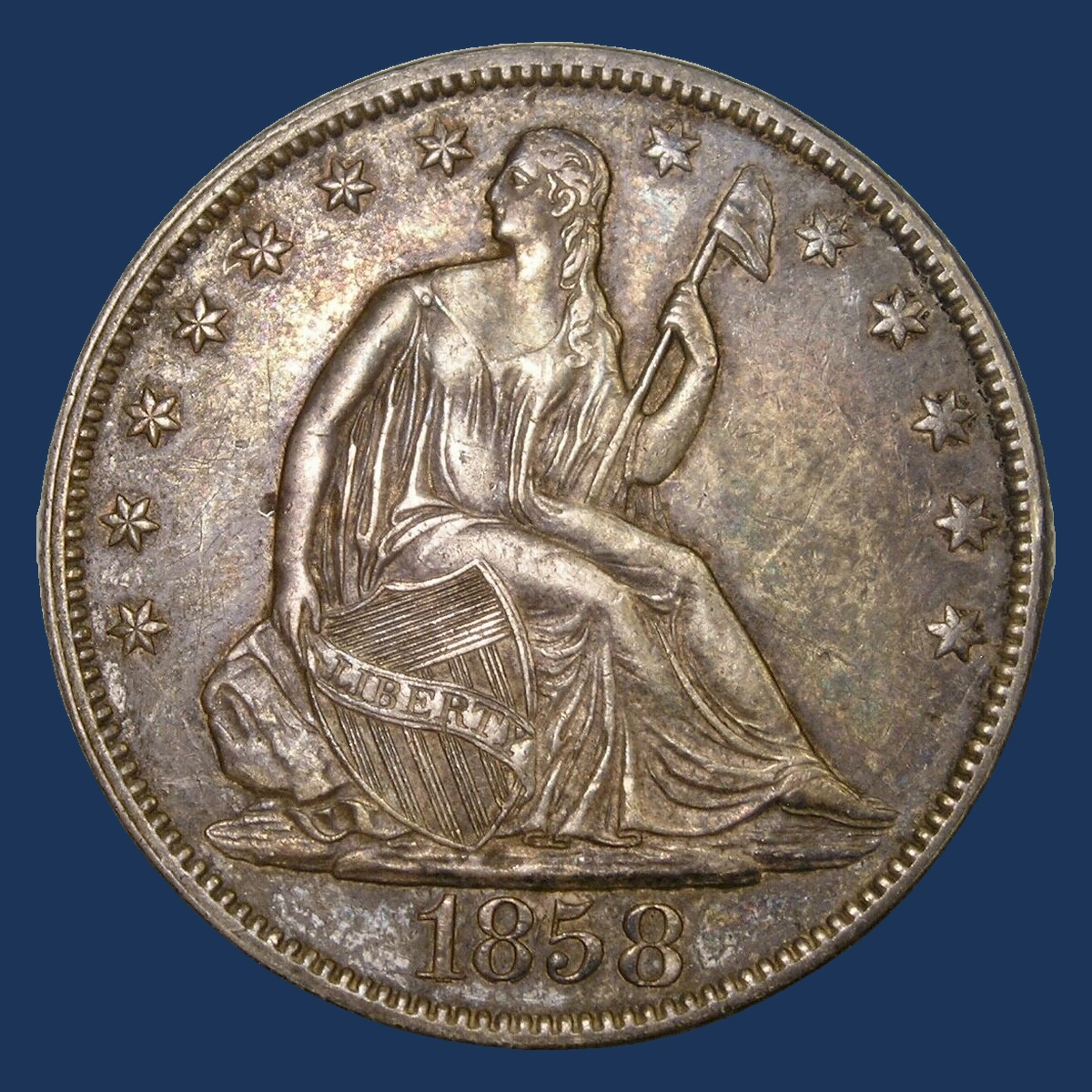
An extra numeral may sit beside the date or farther away in the rock and border. Both can come from earlier positions of a date punch.
Philadelphia examples include extra strokes around 18 and the final 8, plus an upside-down 1 between 5 and 8. New Orleans reports also describe marks beside and outside the intended date.
On the documented San Francisco variety, a curved piece of an 8 appears in the rock above the last digit. That gives a specific place to look.
These are different dies and mints. One coin need not carry every mark mentioned here.
Estimated Value
The San Francisco variety sold for $156 with repairs in 2020. Unworn examples brought $3,840 in MS63 and $10,200 in MS65 in March 2024.
An MS66 reached $32,900 in October 2014. Estimated ranges are $200–$1,500 for comparable worn date-punch varieties and $3,500–$32,900 for the cited unworn San Francisco quality levels.
Keep mint and condition attached to the price. A tiny extra digit does not erase wear or repairs.
How to Identify
Read the mint letter before choosing a comparison photograph. Philadelphia and New Orleans have several reported extra-digit locations, while the San Francisco example points to the rock above the final 8.
Check the mint area and edge grooves for alteration. Accessible coins can be measured with a digital scale and calipers against 12.44 grams and approximately 30.6 millimeters.
Trace the suspected numeral under a 10× magnifier. Normal rock lines, damaged border teeth, or later cuts may imitate a single short stroke.
For the S variety, find the matching curve of an 8 above the last digit. Elsewhere, match the whole extra shape to the correct mint’s example.
Conclusion
The shifted 1858-O with a stepped edge shows why photographs of the edge can matter as much as the faces. Its two effects explain one coin rather than two separate values.
Estimated ranges span $100–$32,900. For extra date marks, choose the correct mint before comparing prices; the repaired and exceptional unworn San Francisco sales show how widely condition can separate coins with the same small feature.