1876 Half Dollar Error List with Pictures

Two sizes of date digits appear on one 1876 variety. An example with light wear sold for $3,936 in 2013.
These 1876 Liberty Seated half dollar errors have estimated values from $100 to $10,000. Another memorable feature makes Liberty appear to hold a cigarette, while other mistakes hide along the edge.
Read on to learn where each feature appears and how to separate a mint mistake from later damage.
1. 1876 Liberty Seated Half Dollar Reported Lamination (Estimated Up to $750)
A thin flap or peeling patch can point to a lamination error. This happens when a weak layer inside the metal separates from the rest of the coin.
The flap may remain attached, or part of it may fall away. Both can expose a rough area below the original surface.
The 1876 half dollar contains ninety percent silver mixed with copper. This kind of peeling concerns that mixture, not a modern coin’s outer covering.
Lamination is reported for the year, but no individual example with a confirmed price is identified here.
Estimated Value
For worn Philadelphia or San Francisco examples, the estimated whole-coin range is $100–$750. A clear, moderate-sized peel can be more appealing than a faint seam.
An ordinary Philadelphia coin graded XF45 sold for $216 in November 2025. XF45 means moderate wear with much detail remaining; that sale did not establish a lamination price.
The estimate also considers the remaining surfaces. Cleaning, scratches, or severe metal loss can reduce the coin’s appeal.
How to Identify
Look across the patch under low light with a magnifier. Follow its edge to find a thin flap or a clear boundary between two layers.
A dark patch alone is not enough. Corrosion makes pits, and scraping can remove metal without following a natural internal layer.
Leave any flap in place. Check the grooves around the edge for another split or signs that a separate piece was attached later.
Weigh a loose coin with a digital scale and measure it with calipers. Compare with its original 12.50 g weight and roughly 30.6 mm diameter, allowing for wear or missing metal.
Check the peeling boundary first; it gives a faster answer than the color of the exposed patch.
2. 1876-S Liberty Seated Half Dollar Smoking Liberty Die Line (Estimated Up to $800)
Liberty seems to hold a tiny cigarette because a raised horizontal line crosses her left fingers. This gave the variety its Smoking Liberty nickname.
The line is at her hand, not beside her face. It came from an unwanted groove in the die, the steel tool that stamps the design.
Silver filled that groove during striking and formed the raised line. The same front tool was used with back tools carrying different small S mintmarks.
Collectors call these back mintmark styles Micro S and Very Small S. Both accompany the named hand feature.
Estimated Value
Smoking Liberty examples have an estimated range of $150–$800, covering worn coins through those with only light wear. A clear raised line helps identify the variety.
An ordinary 1877-S graded PCGS XF45 sold for $216 in December 2025. That nearby-year sale is a condition comparison, not a Smoking Liberty transaction.
The 1876 coin’s wear, cleaning, and remaining detail still affect its price. The nickname does not make every example equally valuable.
How to Identify
Bring Liberty’s left fingers into focus with a 10× magnifier. Follow the raised horizontal line through them, rather than looking near her mouth.
Compare its exact position with the Smoking Liberty photographs. A dark stain or a scratch can cross the hand without matching this raised feature.
Then turn to the S on the back. Its size may differ between the two known pairings, so compare each with the appropriate picture.
Use a scale and calipers on a loose coin to check about 12.50 g and 30.6 mm. Examine the edge grooves for filing too.
The raised stroke crossing the fingers in the pictured position is the feature to check first.
3. 1876 Liberty Seated Half Dollar Partial Collar Strike (Estimated Up to $1,000)
The key feature is a step around the edge, even when the faces are heavily worn. A Philadelphia 1876 example graded PCGS Good 6 sold with this error identified.
A metal ring, called a collar, normally holds the coin and forms its edge grooves. Here, only part of the disc’s thickness sat properly inside that ring.
The held portion took the usual shape, while the exposed part spread outward. That created two different edge levels.
A wide front border alone does not prove a partial-collar strike. The edge must show what happened.
Estimated Value
The PCGS Good 6 example brought $192 on August 15, 2020. Good 6 describes a heavily worn coin with major outlines still visible.
An estimated $150–$1,000 covers worn 1876 examples with a clear edge step. Better condition and a stronger, more visible step can support higher prices.
The Heritage sale provides a comparison for a worn coin. It should not be treated as a fixed price for every partial collar.
How to Identify
Turn the coin sideways before examining either face. Follow the edge all the way around with a magnifier, looking for a step beside the grooved portion.
Use calipers to compare the two levels at several points. The normal diameter is about 30.6 mm, but the part that spread can be wider.
A scale should be compared with the original 12.50 g weight. Heavy circulation wear, as on the Good 6 example, can reduce that figure.
Look for file marks or a deliberately cut groove. Those can imitate two levels without the natural spreading caused by the strike.
A step that follows the change from grooved to expanded edge provides the fastest useful confirmation.
4. 1876 Liberty Seated Half Dollar Reported Rim Cud (Estimated Up to $1,500)
A raised lump that joins the rim and replaces design detail is called a cud. It forms when a piece breaks from the edge of the steel stamping tool.
During the next strike, coin metal fills the missing space. This leaves a mound instead of the picture or lettering that should be there.
The same spot on the other side can look weak too. A thin raised line alone is a different, smaller kind of tool damage.
A rim cud is reported for 1876, but no specific mint or location is established here.
Estimated Value
A clear, genuine cud on a worn Philadelphia or San Francisco coin has an estimated value of $300–$1,500. The figure includes the entire coin.
An ordinary Philadelphia XF45 sold for $216 in November 2025, giving a comparison for the underlying coin. That was not a recorded cud sale.
The higher estimate allows for a large, appealing raised break. Size, original surfaces, and the condition of the surrounding design all affect its value.
How to Identify
Find where the raised patch meets the rim. If normal design surrounds the lump on every side, it does not fit the definition of a rim cud.
Use a magnifier to inspect the boundary. The metal should flow into the nearby surface, without a seam suggesting an added blob.
Turn the coin over and look for weakness opposite the patch. This can help, but it need not be dramatic.
Check the remaining edge grooves for a dent that pushed metal upward. Use calipers for the usual 30.6 mm size and a scale for the original 12.50 g weight, allowing for wear.
The immediate test is whether one raised patch replaces design and connects directly to the rim.
5. 1876-CC Liberty Seated Half Dollar Die Cracks (Estimated Up to $2,000)
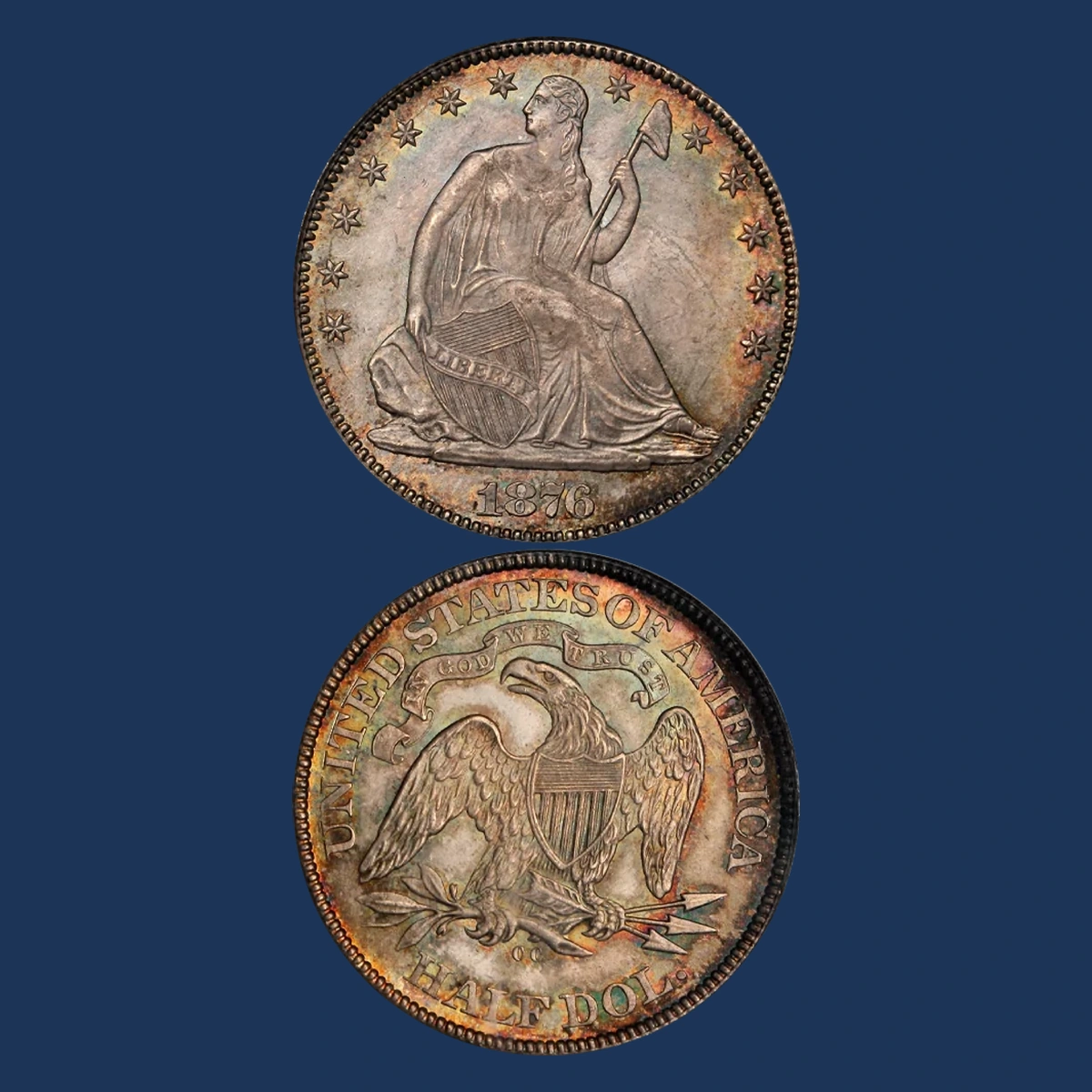
Thin raised lines appear near the date, among the final three stars, or below HALF DOL. on known Carson City varieties. Each path belongs to a particular stamping tool.
These lines form when a tool cracks and silver enters the opening. As the crack grows, the line can extend through more of the coin’s design.
The half dollar itself has not necessarily split. The damaged tool leaves its shape on an otherwise solid coin.
The listed paths need not occur together. Compare the route on your coin with one matching example.
Estimated Value
Worn 1876-CC halves with moderate crack lines have an estimated range of $300–$2,000. Much of the price comes from the Carson City coin’s condition, not the line alone.
A PCGS VF20 sold for $336 in April 2025, while an AU55 brought $1,830 in January 2026. VF20 shows moderate wear; AU55 has only light wear.
Neither result is identified as a crack-specific sale. They show the large price difference that preservation can make.
How to Identify
Check the CC mintmark before following the raised lines. With a magnifier, look beneath the date, around the last three stars, and below HALF DOL.
Choose one line and trace it from end to end. Do not combine separate paths from different example coins into a single match.
Move the lamp sideways to see whether the line rises above the surface. A scratch cuts into the coin and may leave a small lip beside it.
Check the edge grooves for damage. On a loose coin, use a scale and calipers to compare with 12.50 g and 30.6 mm, allowing for wear.
A continuous raised line following one pictured route gives the most direct first check.
6. 1876-CC Liberty Seated Half Dollar Die Clash (Estimated Up to $2,000)
Faint extra outlines appear above Liberty’s right elbow and in the open area beside it. They are known clash marks on an 1876-CC variety.
A clash happens when the two steel stamping tools strike each other without a coin between them. Part of one design can mark the opposite tool.
Coins struck afterward pick up those unwanted lines. This explains why a fragment from the back design can appear on the front.
The lines are usually incomplete. They are different from the larger overlapping pictures created when a coin is struck twice.
Estimated Value
Estimated values are $350–$2,000 for worn through lightly worn examples with visible clash marks. Weak lines may add little to the coin’s ordinary value.
Carson City sale records include a PCGS VF20 at $336 in April 2025 and an AU55 at $1,830 in January 2026. The latter has much less wear.
Those sales price complete coins. Neither establishes an extra amount paid specifically for clash marks.
How to Identify
Compare the ordinary back design with the faint lines near Liberty’s right elbow. A clash should show recognizable pieces of the opposite picture, rather than random scratches.
Keep the front upright and use angled light with a magnifier. Follow the marks above the elbow and into the open area to its right.
Only the portions where the tools touched may transfer. Do not expect a complete second eagle or a full extra picture.
Confirm the CC mintmark and inspect the edge grooves. For a loose coin, use a digital scale and calipers against the original 12.50 g and roughly 30.6 mm.
Recognizable back-design fragments near that elbow are the first features worth checking.
7. 1876 Liberty Seated Half Dollar Repunched Mintmarks (Estimated Up to $2,500)
An extra curve around S or CC may be a remnant of an earlier mintmark placement. Known 1876 varieties include recut S letters and a repunched CC.
Workers added these mintmarks by hand to the steel stamping tool. If the punch landed again in a slightly different position, part of the first letter could remain.
That extra shape then appeared on coins made with the tool. It should resemble part of a letter, not just a random bump.
Mintmarks also vary naturally in size. A large or thick S alone does not prove repunching.
Estimated Value
For worn coins, estimate $150–$800 for San Francisco and $350–$2,500 for Carson City. Lightly worn examples with clear extra outlines can reach the stronger end.
An ordinary 1876-CC AU55 sold for $1,830 in January 2026. That shows how much value the underlying coin can have before considering an unusual mintmark.
These ranges price the whole coin. The extra letter shape must be genuine, and wear or cleaning still affects the result.
How to Identify
Study the mintmark’s size and position before searching for an extra curve. Different S varieties need their own comparisons, and a CC requires a separate photograph.
Move the light over the letter’s outside and inside edges while using a magnifier. An old punch remnant should follow a recognizable part of the same letter.
Look around it for cuts or other signs of alteration. Flat shelves from movement during striking can make a letter look doubled without showing an earlier punch.
Inspect the edge grooves, then measure about 30.6 mm with calipers. A scale should be compared with 12.50 g, reduced somewhat by wear.
Match the extra curve’s shape and position first, rather than judging the letter by thickness.
8. 1876 Liberty Seated Half Dollar Doubled Die Reverse (Estimated Up to $3,000)
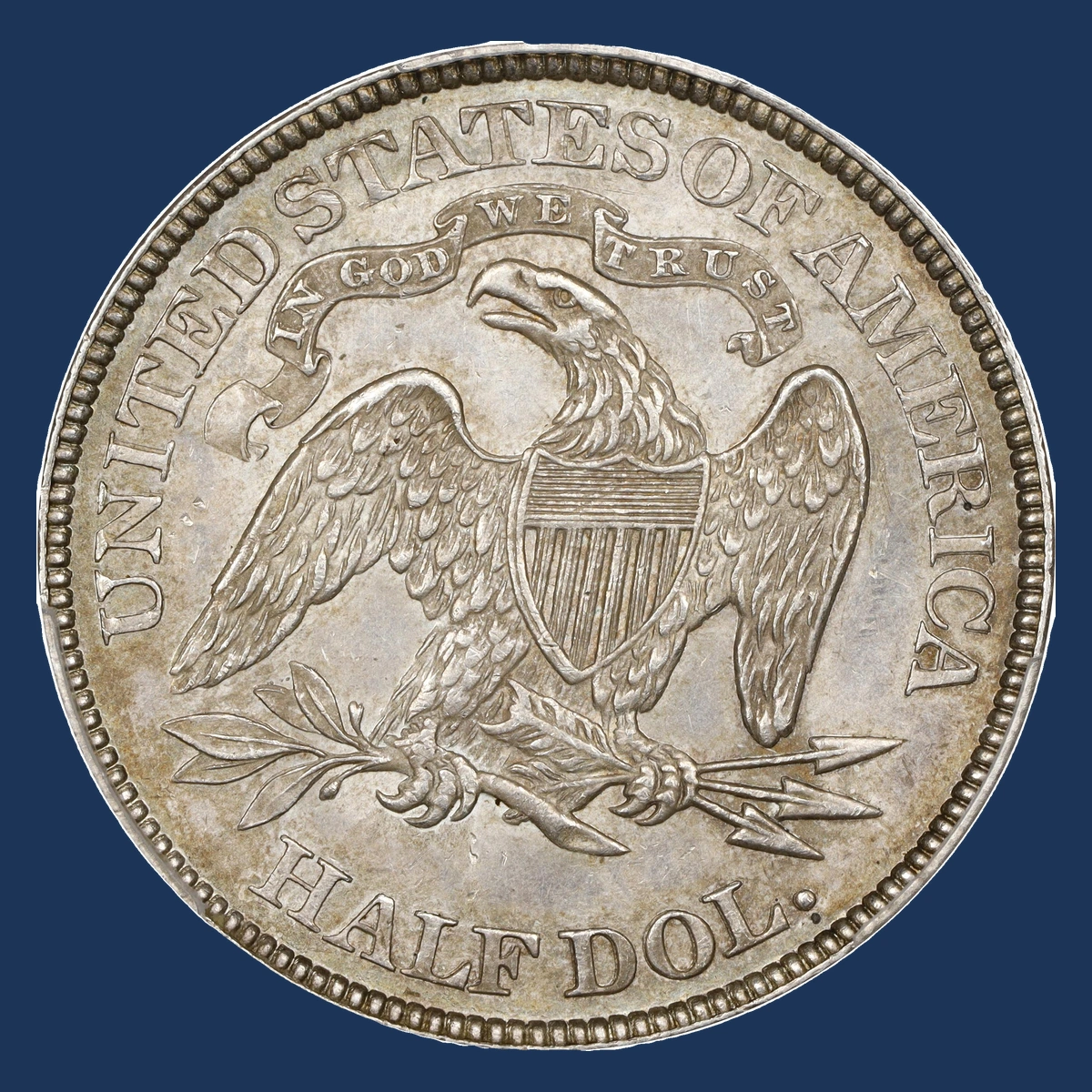
Extra outlines repeat through UNITED STATES OF AMERICA and IN GOD WE TRUST on this Philadelphia variety. A PCGS MS63 example sold in 2025 with these features described.
The lettering was doubled on the steel stamping tool before the coin was made. One normal strike then placed that repeated design onto the silver.
The same example also has misplaced date traces on its front. Those are a separate feature on the same coin.
Its back is called Type II, an ordinary design version. The extra letter outlines, not that version’s name, make it a doubled die.
Estimated Value
The PCGS MS63 coin sold for $2,280 in April 2025. MS63 means unworn with noticeable marks; the coin also had CAC approval of its quality for the grade.
An estimated $500–$3,000 covers worn through lower-grade unworn examples. The auction description records both back doubling and misplaced date traces.
Its price therefore cannot be assigned to the doubling alone. Compare the clarity of the letters and the whole coin’s surfaces.
How to Identify
Read UNITED STATES OF AMERICA under a magnifier, then move to IN GOD WE TRUST. Look for rounded extra outlines that repeat in the same way across several letters.
A thin flat shelf can result from movement during striking. It is less convincing than clear separation in several matching parts of the design.
Compare the Type II back with the auction photographs and check that the coin has no mintmark. The front’s misplaced date does not replace the need to see back doubling.
Inspect the edge grooves and use calipers for about 30.6 mm. Weigh a loose coin against the original 12.50 g, allowing for wear.
Matching repeated outlines in both inscriptions offer the quickest useful test.
9. 1876 Liberty Seated Half Dollar Reported Broadstrike (Estimated Up to $4,000)
A broadstrike has a complete design surrounded by a wider-than-normal body of metal. The coin spread because the retaining ring did not hold it during the strike.
That ring normally limits the diameter and forms the edge grooves. Without it, silver can move farther outward while both stamping tools still cover the full design.
A broadstrike therefore differs from an off-center strike, which cuts off part of the picture. Later hammering can also widen a coin, but crushes existing details.
The reported 1876 category has no identified certified example here.
Estimated Value
The estimated range is $1,000–$4,000 for confirmed worn through lower-grade unworn examples. It is a comparison-based estimate, not a sale result for a named 1876 coin.
The May 2025 Mint Error News guide lists Barber half broadstrikes at $1,000–$2,000 when worn and $2,000–$4,000 when unworn. Barber halves are a later design.
An 1876 example needs its own mint, condition, and amount of spreading considered before using those comparisons.
How to Identify
A scale can help rule out missing metal before you examine the shape. A broadstrike spreads the original disc, so compare the weight with 12.50 g after allowing for wear.
Use calipers across several directions to record any expansion beyond 30.6 mm. The spreading may not be even all around.
Next, check with a magnifier that the outer design survives on both sides. Inspect the edge for natural spreading rather than full normal grooves or filing marks.
Flattening after minting crushes existing detail. A wide rim on one side alone is not enough.
Start by pairing the expanded outline with a complete, uncrushed design; those two features are the quickest useful clues.
10. 1876 Liberty Seated Half Dollar Repunched and Misplaced Dates (Estimated Up to $5,000)
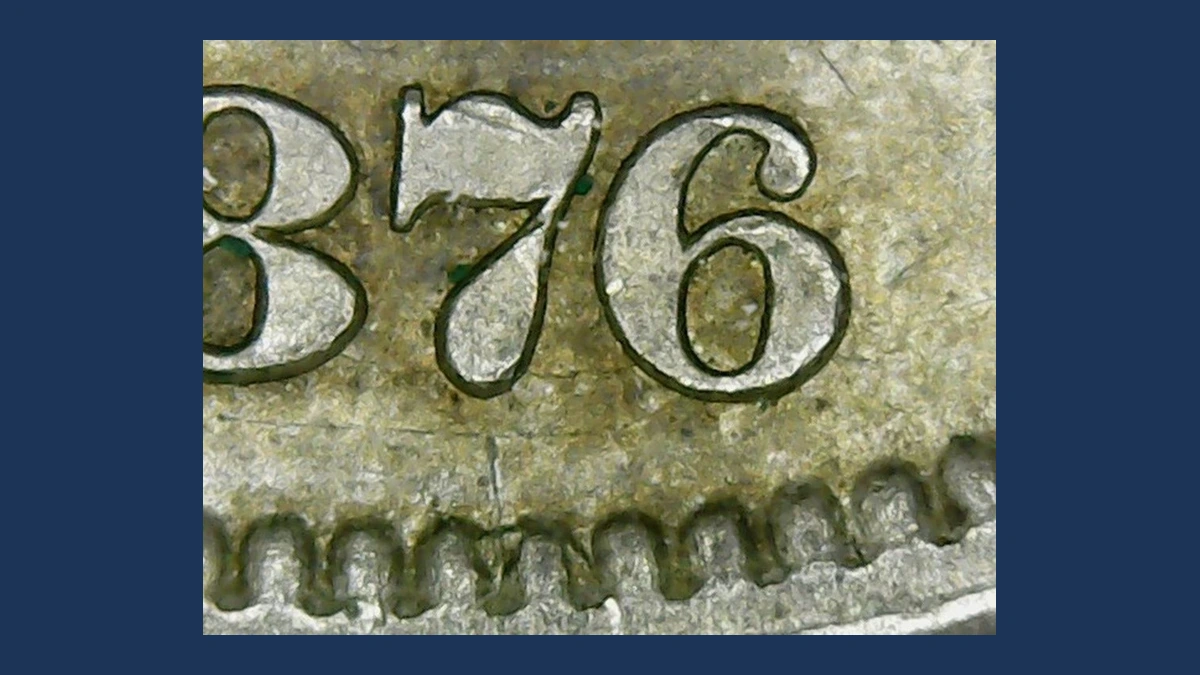
The Large over Small Date variety shows smaller numeral traces beneath the finished 1876 date. Other repeated punching affects the Philadelphia 76 or the final 6 on San Francisco coins.
Carson City date varieties are known too. Each needs its own matching example.
Some punches landed farther away, among the small border teeth below the date. Philadelphia examples show traces below 1 and 8; a Carson City example has what appears to be an 8 top.
These are repeated or misplaced digits of the same year, not one year stamped over another.
Estimated Value
Estimate $200–$1,200 for modest repeated or misplaced digits and $1,500–$5,000 for Large over Small Date on worn coins. Mint and condition matter.
A PCGS XF45 CAC Large over Small Date sold for $1,968.75 at GreatCollections. A lightly worn AU55 brought $3,936 in 2013.
The Carson City ANACS AU55 with the apparent 8 top brought $264.50 in 2001. That old result is not a current price for a similar CC coin.
How to Identify
Check the mintmark, then choose a matching date photograph. Use a magnifier to examine the digits and the small border teeth directly below them.
On Philadelphia examples, distinguish smaller underlying numerals from misplaced traces below 1 and 8. On San Francisco coins, examine the final 6 separately.
The Carson City example is described as an apparent 8 top. Do not turn every uneven border tooth into a numeral.
Look for rounded letter-like shapes rather than flat shelves or scratches. Check the edge grooves and use calipers for about 30.6 mm and a scale against the original 12.50 g.
An extra numeral portion matching a photograph from the same mint is the most direct first test.
11. 1876 Liberty Seated Half Dollar Reported Off-Center Strike (Estimated Up to $10,000)
Plain metal beside a partly missing picture can show an off-center strike. The disc was partly outside its intended position when the stamping tools came down.
Both faces should show the effects of that shift. The untouched area should help explain which outer details failed to appear.
A slightly uneven rim is not enough to establish the error. The amount of missing design and a readable date are much more useful.
Off-center striking is reported for 1876, but no individual certified example or mint identity is established here.
Estimated Value
A confirmed 1876 example with a clear shift and readable date has an estimated value of $1,500–$10,000. Stronger displacement and better preservation can raise the price.
The January 2025 Mint Error News guide lists worn Barber halves struck ten to fifteen percent off center at $4,000. Those are later-design coins.
That guide figure is a comparison, not an 1876 sale. It also does not establish a particular shift percentage for this reported category.
How to Identify
Read the date first, then compare the shifted design on both faces. Use a magnifier to follow the transition from stamped detail to untouched metal.
A filed crescent or a scraped-off picture is later damage. The plain area must belong to the original strike.
If only one face looks off center, one stamping tool may have been misaligned instead. A true off-center disc affects both faces.
Measure the outline with calipers against 30.6 mm and weigh it against the original 12.50 g, allowing for wear. Inspect remaining edge grooves and any surviving mintmark.
The fastest first check is whether untouched metal on both sides explains the same missing outer design.
Conclusion
The hand, date, and edge offer very different clues on an 1876 half dollar. Smoking Liberty has a raised line through the fingers, while repeated date digits and a stepped edge tell other stories.
Estimated values run from $100 to $10,000. Match the feature and mint before comparing prices.
Keep the whole coin’s condition in mind, especially when two mistakes appear together on the same example.