1903 Half Dollar Error List with Pictures

Follow the stars on a 1903-O half dollar and you may find raised lines between them. Two such paths appear on the exceptional Duckor coin that sold for $46,000 in 2010.
Other 1903 half dollar errors call for different views: the edge, both faces, or a close-up of the date. Estimated values for the examples below range from $75 to $46,000.
Start with the pictures each feature needs. The checks below explain what to look for and how condition affects the price.
1. 1903-O Barber Half Dollar Rim Burr Error (Estimated Up to $200)
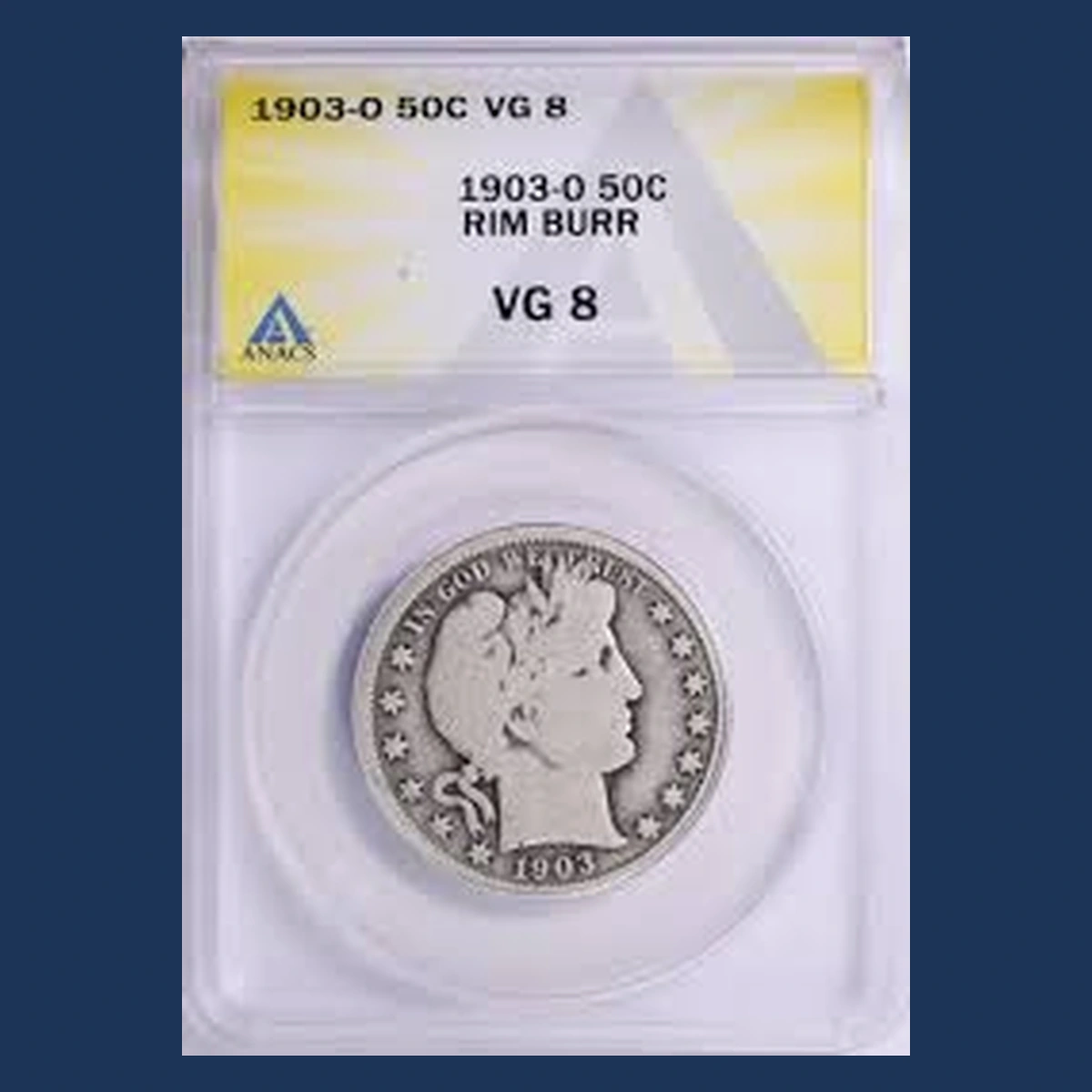
A small projection sticks out at the rim of the 1903-O example. GreatCollections listed it as a rim-burr mint error in an ANACS VG08 holder.
VG08 describes a heavily worn coin. The error label identifies the unusual rim feature, but the listing does not explain how it formed.
A side view matters here. The edge can reveal a projection that is hard to see from above.
On another coin, a similar bump might come from a rim knock or a jewelry mount. The certified example is a reference, not proof that every protruding edge is a mint error.
Estimated Value
Estimate $75–$200 for a similar certified VG08 example. GreatCollections sold this coin on November 30, 2025, but the public page does not show its sale price.
A different minor error offers broad context: a worn 1912-S Barber with a retained metal peel sold for $89 in March 2026. It was graded PCGS VG8.
That result is not a rim-burr sale. The $75–$200 range remains an estimate for the stated coin and condition.
How to Identify
Turn the coin sideways and photograph how the projection joins the rim. Keep the neighboring edge ridges in view so their shape can be compared.
Do not bend the feature. A 10× magnifier can reveal scraping, solder, or a seam without disturbing the metal.
Check for the O below the eagle, showing New Orleans, and compare the full coin with the ANACS reference. The original weight is 12.50 grams, though a VG08 coin has lost metal through wear.
Use a scale and calipers to check its weight and roughly 30.6-millimeter diameter. Matching the projection and surrounding edge to the certified example is the clearest way to identify this particular rim burr.
2. 1903 Barber Half Dollar Five-Percent Off-Center Error (Estimated Up to $2,000)
A small blank margin beside missing border detail can reveal a five-percent off-center strike. Northeast Numismatics listed such a 1903 Philadelphia half dollar in a PCGS AU Details holder.
The metal blank sat slightly out of position when the design was stamped. Both faces must be checked because uneven rims alone can have another cause.
AU Details means the coin retains much detail despite a problem; this example was described as cleaned. That cleaning is separate from its off-center strike.
The listing does not state which direction the design shifted. The actual coin photographs must show that detail.
Estimated Value
Use an estimated $500–$2,000 for an authenticated five-percent off-center example with AU detail and cleaning. This is not a quoted sale price for the listed 1903 coin.
For a recent comparison, a 1976 Kennedy struck fifteen percent off-center sold for $480 in December 2025. NGC graded it MS64, an unworn grade.
The older Barber belongs to a different market. Its smaller shift and cleaned surfaces also matter when considering the estimate.
How to Identify
Find the narrowest border first. Look for missing parts of the small tooth-like border details, then check the blank margin on the opposite side.
Inspect both faces with a 10× magnifier. If only one design sits out of place, a shifted stamping tool may explain it instead of an off-center metal blank.
Confirm the 1903 date and the lack of a mintmark below the eagle. The Philadelphia reference has a ridged edge.
A digital scale checks the original 12.50-gram weight; calipers show any change from the normal 30.6-millimeter outline. Match actual design loss on both faces with the PCGS five-percent example for a direct check of the error.
3. 1903/03 Barber Half Dollar Repunched Date Error (Estimated Up to $2,600)
Look below the last two digits of the date. The reported 1903/03 variety has traces of an earlier 03 beneath the final digits.
The Barber Coin Collectors’ Society survey calls this a southward repunched date. Here, south simply means lower when the date is upright.
The date was punched into a die, the steel tool that stamps coins, more than once. The two impressions did not line up completely.
Both impressions say 03, so this is not a change from another year. The survey records one reported example; a matching photograph is needed to compare the exact extra shapes.
Estimated Value
A verified 1903/03 in MS65 condition has an estimated range of $1,800–$2,600. MS65 describes a well-preserved unworn coin.
An ordinary 1902 Philadelphia Barber graded PCGS MS65 sold for $1,920 in January 2025. That nearby-year sale helps compare condition, but it is not a repunched-date result.
No transaction is given for the survey’s 1903 example. The estimate allows for clear repeated date detail without treating the single report as proof of a fixed rarity premium.
How to Identify
Keep the date upright and examine the lower edges of the 0 and 3. A 10× magnifier and soft side lighting help show raised traces of the earlier digits.
Check the whole coin’s identity too. This is a Philadelphia example with no mintmark, normally weighing 12.50 grams and measuring 30.6 millimeters with a scale and calipers.
Photograph both final digits and the nearby border together. A nick can move metal beside a digit, while flat ledges can result from movement during striking.
Neither should be accepted just because it lies below the date. A matching earlier 03 beneath the final digits on a known example provides the useful confirmation.
4. 1903-O Barber Half Dollar Obverse Die Crack Error (Up to $46,000)
One broken line runs from the final T of TRUST through stars seven to ten. Another runs from star thirteen to the tip of Liberty’s bust on the Duckor 1903-O half dollar.
These are raised lines, made when silver entered cracks in the stamping tool. They are not scratches cut into the finished coin.
The auction description records cracks on the front but none on the back. That difference helps identify the documented example.
Follow the two paths separately. The first is interrupted, so gaps should not be mistaken for missing evidence or filled in as an imaginary continuous line.
Estimated Value
The Duckor coin has two recorded Heritage results: $46,000 in August 2010 and $28,200 in August 2015. Both concern the exceptional PCGS MS67 example.
Estimate $28,000–$46,000 for a coin of that quality. MS67 is a very high unworn grade, where surface beauty and small differences can matter greatly.
These figures do not price the cracks alone. Color, condition, ownership history, and competition among bidders also helped shape the results.
How to Identify
Locate the O below the eagle to confirm New Orleans. The documented back has no die cracks, a useful point to check before studying the front.
Under a 10× magnifier, follow TRUST’s final T toward stars seven to ten. Then inspect the separate line from star thirteen to the bust tip.
The lines should stand above the surface. Preserve the visible gaps rather than connecting unrelated marks.
A loose example should have a ridged edge, weigh 12.50 grams before wear, and measure about 30.6 millimeters. Check with a digital scale and calipers; matching both raised paths and the matching back gives the most direct identification of the Duckor pattern.
Conclusion
These 1903 examples span estimated values from $75 to $46,000, with the highest range reserved for the exceptional Duckor coin. A worn rim-burr example belongs to a very different price level.
Choose the right view before judging an error: the side for a burr, both faces for off-center striking, the last digits for repunching, and the named stars for the crack paths.