1949 Half Dollar Error List with Pictures

Look near Franklin’s mouth, above the bell, and at any faded letters. Those small areas can help separate three kinds of 1949 half dollar errors.
A coin with clash marks from touching stamping tools brought $925 in a November 2020 eBay sale recorded by PCGS. Other examples have much lower estimates.
The ranges here extend from $40 to $950. Read on to learn why some errors add detail while others leave parts of the design missing.
1. 1949-D Franklin Half Dollar Struck-Through Error (Estimated Up to $150)
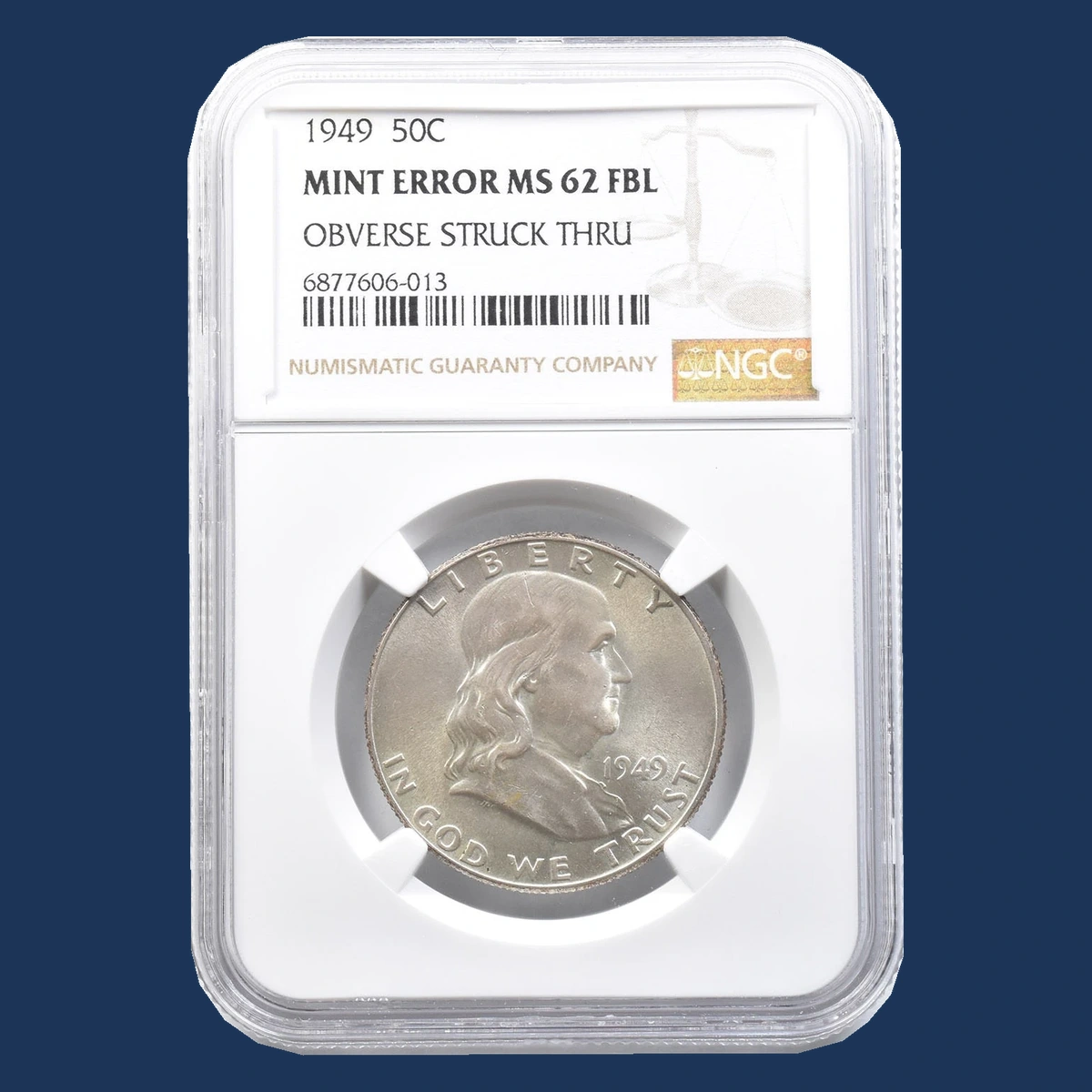
Parts of LIBERTY, IN, and Franklin’s hair look weak on the reported 1949-D example. Nearby detail remains stronger, making the missing areas worth a closer look.
CONECA’s March–April 2019 Errorscope described grease and scrap interfering with the strike. The report did not identify what the scraps were made of.
A die is the steel tool that stamps the design onto the metal blank. Material caught between them can block part of the design, producing a struck-through error.
The uneven loss of detail is the clue. It differs from wear spread across the coin’s exposed high points.
Estimated Value
An estimated $40–$150 suits modest examples from circulated condition through lower unworn grades. The amount of missing detail and the coin’s overall condition both affect its appeal.
A later Franklin offers a comparison. Heritage sold a 1963-D strike-through on the back graded NGC MS65 for $119 in June 2026.
That sale concerns the back of a different year, not the reported 1949-D front. Use it as price context rather than a recorded sale of this example.
How to Identify
Compare the weak parts of LIBERTY, IN, and the hair with nearby clear detail. A blocked strike can leave a weak patch next to a well-formed design.
With a 10× magnifier, inspect the border of each weak area. Rubbing, polishing, or acid can remove detail later, often leaving disturbed or rough surfaces.
Look above the Liberty Bell for the D that identifies Denver. No Proof coins, the specially made collector version, were issued for 1949.
A scale and calipers check the normal 12.50-gram weight and 30.6-millimeter diameter; the edge has ridges. Matching the weak areas to the documented example, without signs of later removal, is the most useful first test.
2. 1949 Franklin Half Dollar Repunched Mintmark Error (Estimated Up to $250)
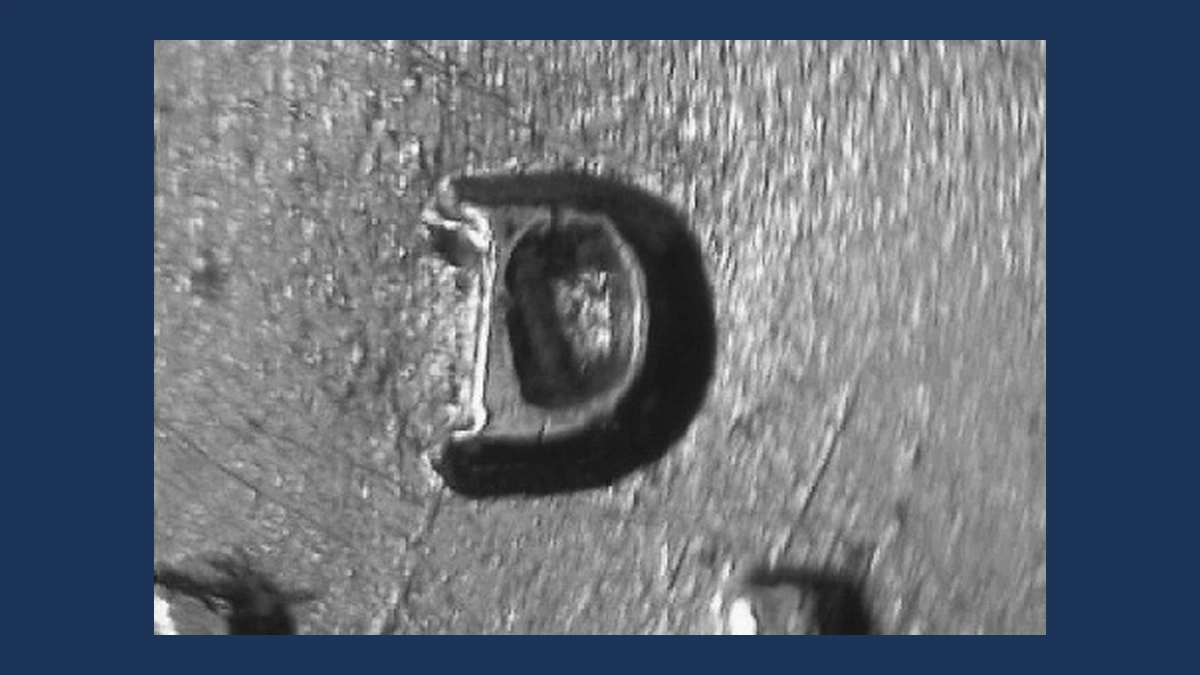
A second outline can peek from beside the small D or S above the bell. That letter was punched into the stamping tool separately, and a repeated punch sometimes landed slightly out of place.
Collectors call the result a repunched mintmark. The letter identifies the mint: D for Denver or S for San Francisco.
Reported 1949 examples include a rotated D and several repeated S shapes. On the S/S variety called FS-501, the earlier S sits lower.
Compare like with like. Two D outlines are different from a D over an S, so each mint needs its own reference picture.
Estimated Value
Heritage sold a 1949-S/S FS-501 graded PCGS MS64+ FBL for $204 in June 2018. Estimate $100–$250 for comparable unworn examples.
This is a San Francisco sale, not a recorded Denver result. Its FBL label means Full Bell Lines, describing how clearly the lines near the bell’s bottom were struck.
FBL is not another error. Better strike detail and preservation can influence the total price alongside the repeated mintmark.
How to Identify
Start above the bell. A Philadelphia coin has no mintmark, so a doubled-looking mark elsewhere cannot prove a D/D or S/S error.
Keep a full back photograph beside a close-up taken through a 10× magnifier. For FS-501, look for the earlier S below the main S; use a separate picture for the rotated Denver D.
The normal coin weighs 12.50 grams and measures 30.6 millimeters, checked with a scale and calipers. Its edge has ridges.
Flat ledges beside letters can come from tool movement during striking. Match the second letter’s raised shape and direction with the correct reference to distinguish repunching from that effect or damage.
3. 1949 Franklin Half Dollar Die Clash Error (Up to $925)
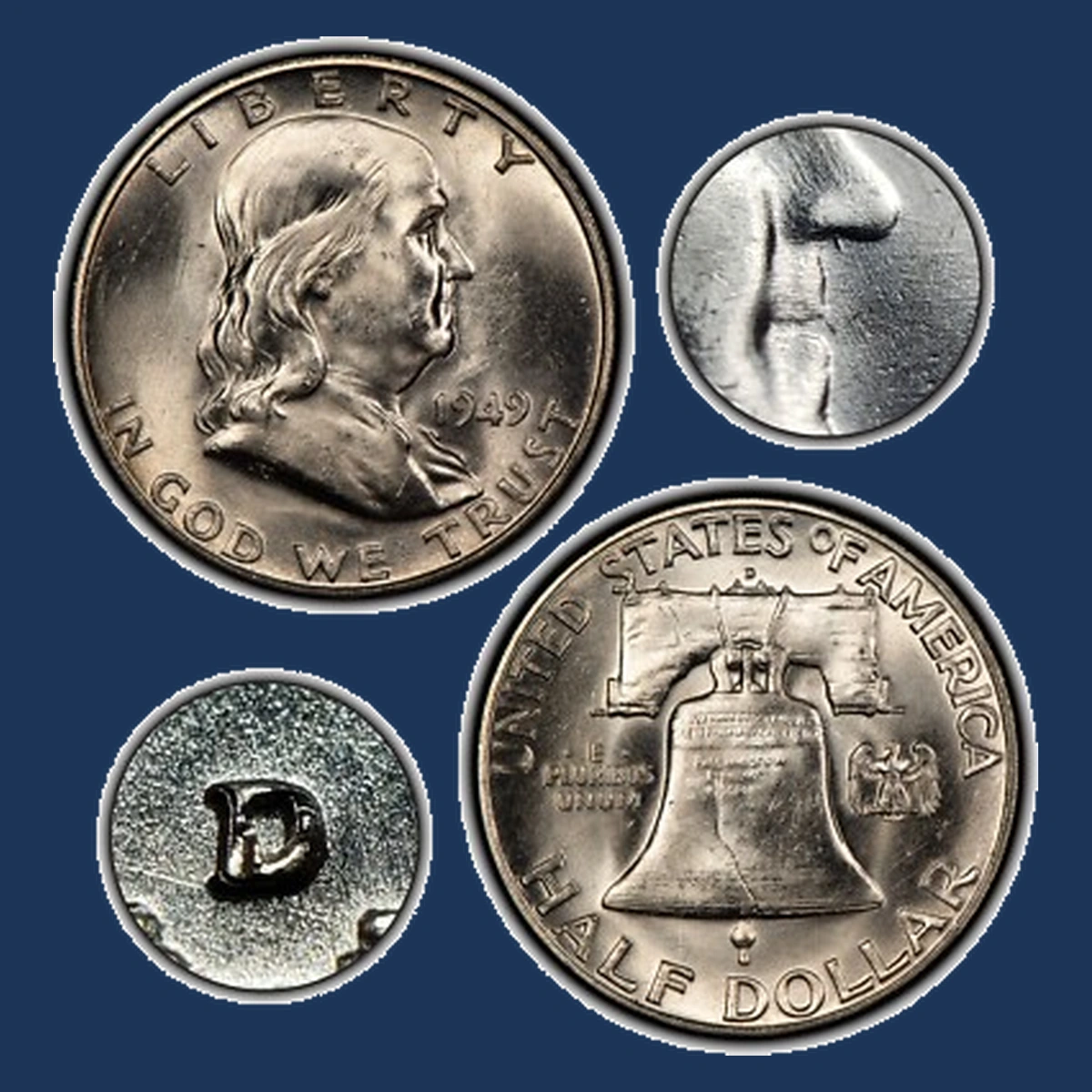
A tooth-like mark at Franklin’s mouth gives one variety its Bugs Bunny nickname. Its catalog number is FS-401, while FS-402 identifies a different pattern on the front.
Both are die clashes. The two stamping tools hit each other with no metal blank between them, picking up parts of the opposite design.
Later coins can show those transferred marks. A mark on the portrait can therefore come from a design normally found on the back.
The reported 1949 examples were made in Philadelphia. The two numbered patterns need separate pictures, and the better-known 1955 Bugs Bunny is a different year.
Estimated Value
The stronger price record belongs to FS-402: PCGS lists a $925 November 2020 eBay sale in MS66 FBL. A 1949 FS-401 Bugs Bunny in PCGS MS63 FBL brought $104 at Heritage in May 2023.
Estimate $50–$950 across worn examples and selected higher-grade unworn coins. The two sales differ in both pattern and condition.
A tooth-like mark alone does not justify $925. Surface quality and clear bell lines also influence the price.
How to Identify
For Bugs Bunny, turn the light around Franklin’s mouth while looking through a 10× magnifier. Compare the tooth-like projection with a labeled 1949 FS-401 image.
A dent or carved mark can change the lip too. Check for damaged metal before treating the shape as a clash.
FS-402 needs its own reference picture. An unexplained mark away from the mouth does not automatically belong to that variety.
The coin normally has a ridged edge, weighs 12.50 grams, and measures 30.6 millimeters; use a scale and calipers. FBL only describes bell-line clarity, so confirm the clash by matching its exact shape and position to the correctly labeled 1949 photograph.
Conclusion
Estimated values for the 1949 errors described here run from $40 to $950. Weak letters suggest missing detail, a second mintmark outline suggests repunching, and a transferred design mark can point to a clash.
Check the mint and the exact shape before comparing prices. The two Philadelphia clash patterns differ, and the strike-through price comparison comes from a clearly identified 1963-D coin.