1972 Half Dollar Error List with Pictures

A 1972 Proof struck twice on a nickel disc sold for $9,000 in 2021. A Proof is a specially made collector coin.
The 1972 half dollar errors below span estimated values of $5–$20,000. The upper estimate concerns a matching three-piece set once offered for $15,000, not sold for that amount.
Read on to compare small repeated letters, missing metal, and overlapping designs, keeping each price with the particular coin or set it describes.
1. 1972-S Kennedy Half Dollar Shared Hub and Master-Die Doubling (Estimated Up to $30)
Small extra outlines on an ordinary 1972-S Proof may appear on many coins rather than one rare variety. Several stamping tools inherited the same repeated detail from earlier tools used to make them.
The earlier tools are called hubs and master dies. They help explain why similar doubling can occur with otherwise different small marks.
Reported front patterns involve letters and hair; back patterns include repeated star points. These are separate comparisons.
One back pattern’s relationship to shared doubling remains under review. Its presence alone does not establish a rare independent variety or a second error premium.
Estimated Value
An ordinary Proof with only this shared doubling has an estimated whole-coin value of $5–$30. Most of that reflects condition and the special finish.
A feature passed through several tools does not automatically carry a rarity premium. An unusually high grade or an additional distinct doubled feature needs its own comparison.
Do not assume either from a few doubled-looking star points. The range is an estimate for ordinary examples, not a recorded auction result.
How to Identify
Compare several normal Proofs before assigning a rare variety name. With a 10× magnifier, inspect whether the same letter or star outlines appear despite different small marks elsewhere.
That repeated background detail may have come from shared earlier tools. Keep the front and back reference pictures separate.
Normal 1972 halves are clad: copper-nickel outer layers are bonded around a copper center. A scale and calipers can compare with 11.34 grams and 30.61 millimeters; inspect the edge grooves for alteration.
When the same small pattern appears across different stamping tools, assess an ordinary Proof first and require a separate matching feature before claiming an uncommon variety.
2. 1972 Kennedy Half Dollar Repunched Mintmarks (Estimated Up to $200)
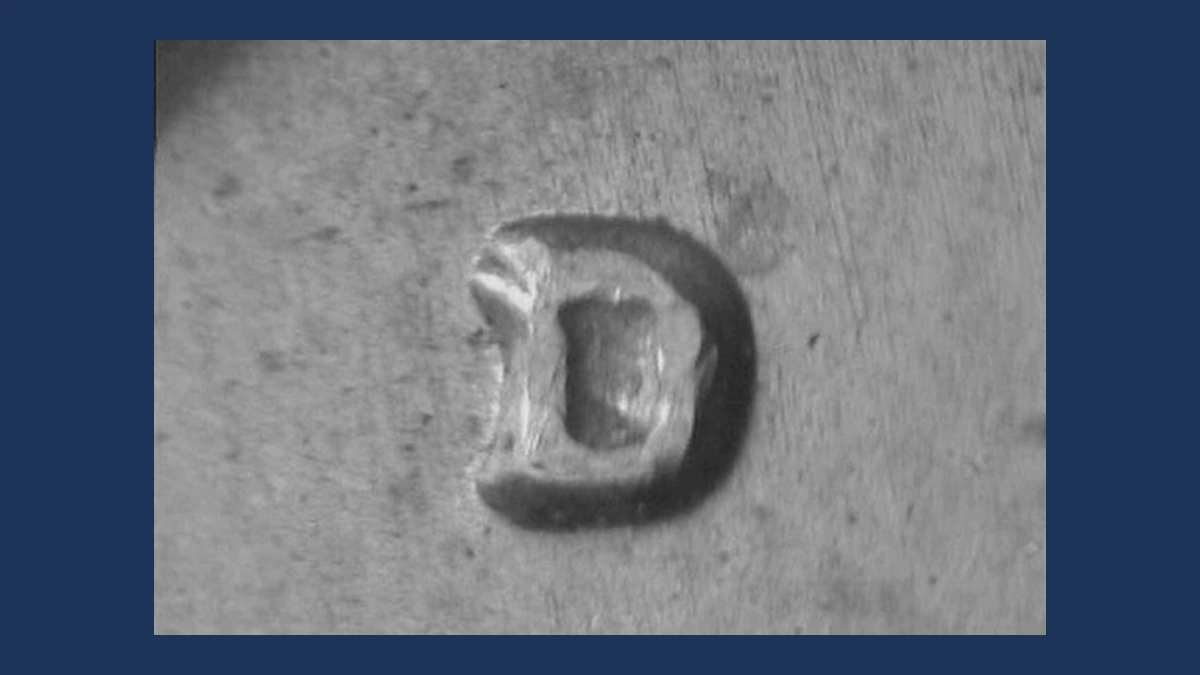
An extra curve beside D or S can preserve an earlier mintmark punch position. Workers added these letters to the steel stamping tools by hand in 1972.
One Denver example has the earlier D above the final letter. Another has a tilted earlier impression and its own small identifying marks.
The San Francisco Proof shows an earlier S to the left. Its reported hair, LIBERTY, and star doubling are separate observations without established doubled-variety numbers.
Do not combine the examples. The earlier letter’s actual shape and location must match the coin being examined.
Estimated Value
Clear repunched mintmarks have an estimated value of $20–$200 in ordinary collectible grades. Strong extra detail and attractive Proof surfaces can support higher comparisons.
A published discussion values a different 1969-D MS65 repunched example around $40. That is a guide comparison, not a completed 1972 sale.
The extra doubling mentioned on the San Francisco coin does not automatically add a major-variety premium. It needs its own identification before it changes the valuation.
How to Identify
Start above the main D or left of the main S when using those specific references. A 10× magnifier should show part of the earlier letter’s curved outline.
The tilted Denver example needs its own photograph. Later crack lines may help identify an older tool, but an earlier coin need not show them.
Check for pushed or tooled metal around the letter and inspect the edge grooves. Compare a scale and calipers with 11.34 grams and 30.61 millimeters.
On the S Proof, the earlier S is the established feature. A matching raised letter contour in the recorded position supports repunching more directly than nearby hair or star doubling.
3. 1972-D Kennedy Half Dollar Misaligned Obverse Die (Estimated Up to $300)
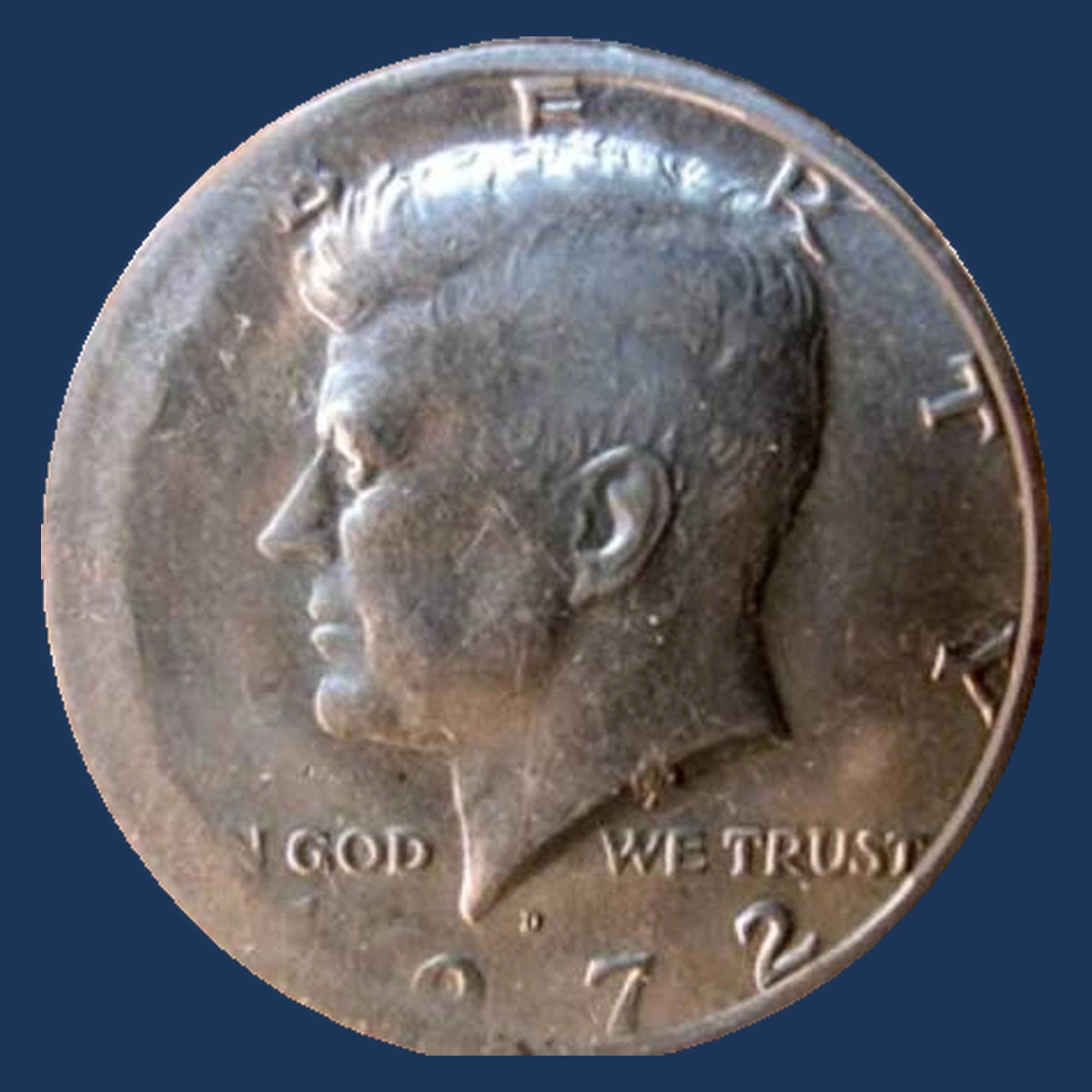
Kennedy can sit closer to one edge while the eagle stays centered. The reported Denver ANACS AU58 has this kind of front-side tool misalignment.
AU58 means very little wear. It does not describe how far the design shifted.
A sideways movement of one steel stamping tool changes the rim width around that face. It may leave no large blank crescent.
A misplaced coin disc instead affects both designs. The report gives no exact percentage or clock direction, so those details must come from photographs of the actual coin rather than the grade or error label.
Estimated Value
Visible original front-side misalignment has an estimated value of $20–$300. Modest shifts belong nearer the lower end.
A different 1971 half struck 70 percent off center sold for $312 in 2023. That MS64 coin had a much larger, two-sided displacement.
The comparison does not turn a one-sided shift into the same error. The ANACS AU58 report supplies no sale price here, so the 1972 range remains an estimate based on condition and visible asymmetry.
How to Identify
Align full photographs by the metal outline, keeping front and back views at the same size. Compare how each design sits inside that outline.
With a 10× magnifier, follow the narrow rim and nearby letters. Filing may imitate an uneven border on a normal coin.
Record the shape with calipers against 30.61 millimeters and weight with a scale against 11.34 grams. Trace the edge grooves for damage and note the actual direction visible on the specimen.
A shifted front paired with a centered back supports one-tool misalignment; corresponding movement of both designs points instead toward the disc being off center during the strike.
4. 1972-D Kennedy Half Dollar Broadstrike (Estimated Up to $500)
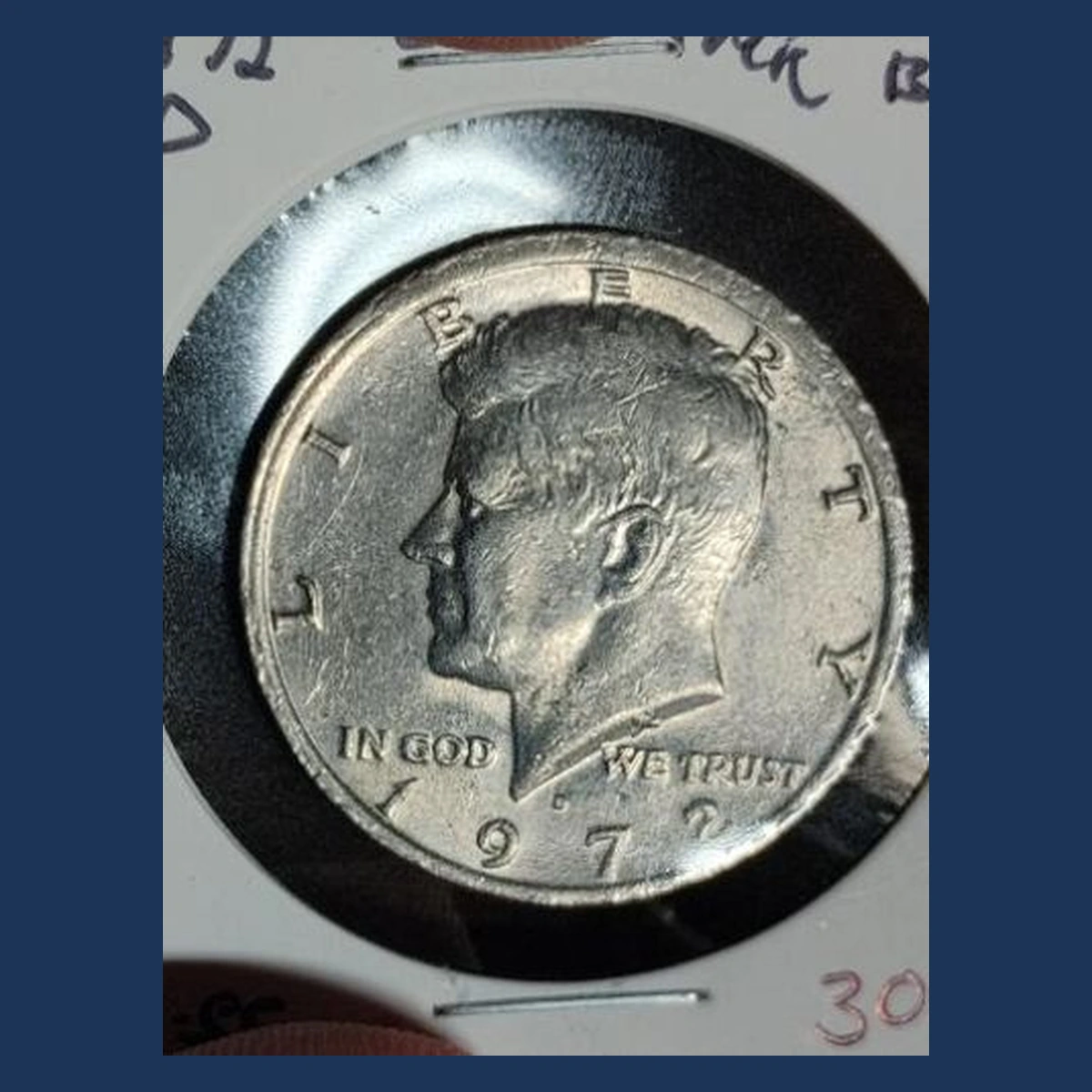
An unusually wide Denver half is described by a seller as broadstruck. The collar, a ring that normally limits the coin’s width, failed to restrain the metal during striking.
The disc spread outward while keeping its design. The exact diameter and grade are not established by the report.
The edge helps explain the event because the collar normally forms its grooves. Missing grooves can accompany unrestricted expansion.
A smooth edge alone is not enough. Grinding removes metal after minting, while a broadstrike spreads the original metal and should leave evidence of natural striking.
Estimated Value
A confirmed broadstrike with attractive original surfaces has an estimated value of $100–$500. A different 1995 Kennedy graded PCGS MS64 sold for $312 in July 2021.
That sale compares the same basic collar failure on another date. It does not establish a sale price for the seller-reported 1972-D.
Clear expansion with a readable complete design can strengthen the comparison. Later edge grinding or flattening falls outside this mint-error range.
How to Identify
Measure the widest points with calipers and weigh the coin on a scale. Compare with 30.61 millimeters and 11.34 grams to distinguish spread metal from metal removed around the edge.
Examine both designs and the border through a 10× magnifier. All design details should remain present on a broadstrike.
Inspect the edge for absent or incomplete grooves and for grinding marks. A blank crescent beside missing design suggests off-centering instead of simple expansion.
Match the reported Denver coin before assigning its grade or width. Naturally struck complete designs on an expanded disc establish more than a smooth edge viewed without the two faces.
5. 1972 Kennedy Half Dollar Struck-In Rim Burr (Estimated Up to $500)
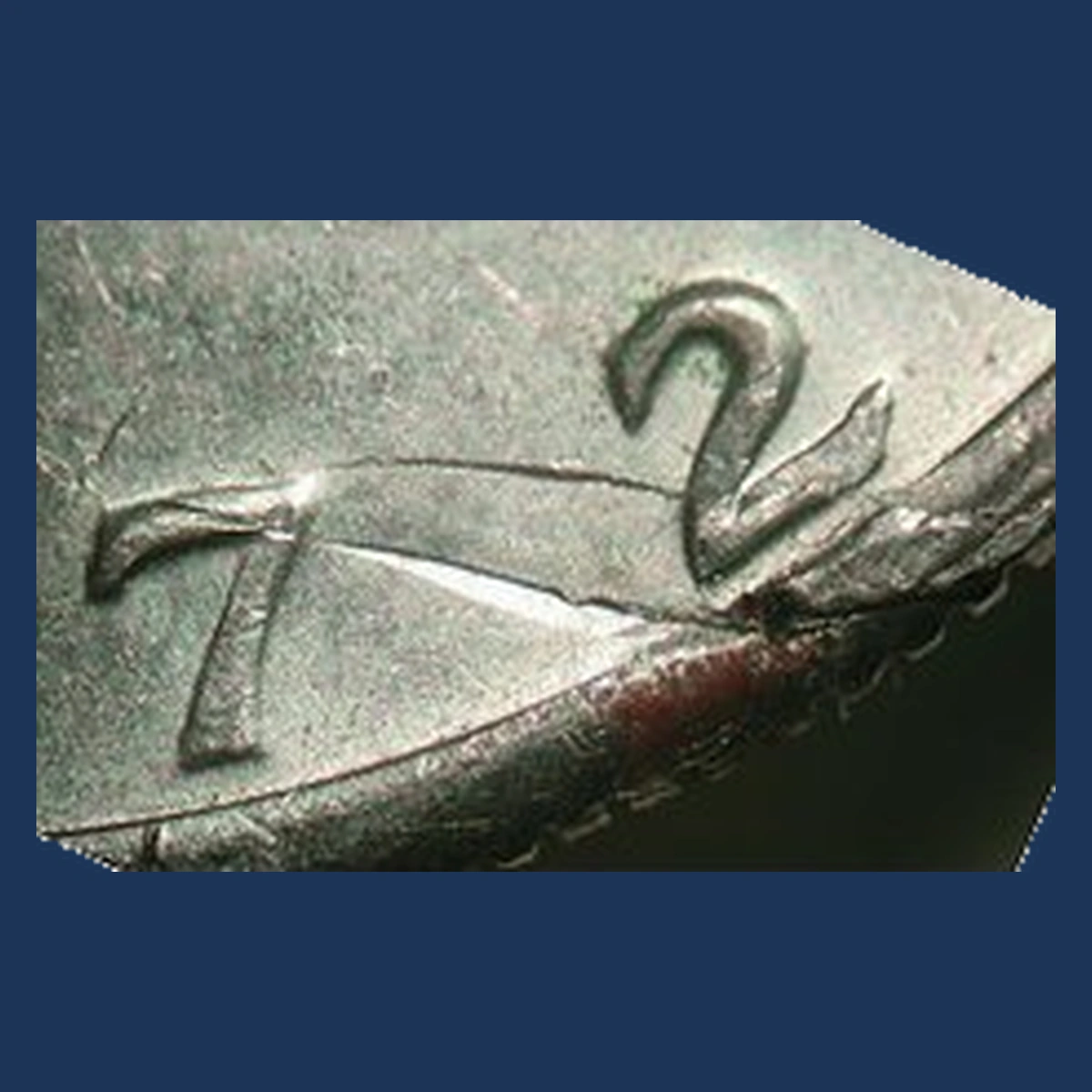
A narrow strip of rim metal crosses the final 72 in the date on Mike Diamond’s reported example. Beside it, a gouge in the edge exposes the copper center.
The researcher calls the strip a rim burr. He suggests a moving machine part raised it before the coin was struck.
That proposed cause is not the same as a folded edge formed earlier while making the disc. The damaged edge helps explain the distinction.
The strip belongs to the coin’s own rim. Its narrow shape does not establish that a separate wire was trapped in the press.
Estimated Value
An original rim burr struck into the design has an estimated value of $75–$500. The range uses related Kennedy defects involving metal present during the strike.
A different 1971-D with retained wire, graded MS64, sold for $228 in 2017. That is a comparison involving separate trapped material, not a rim-burr sale.
It does not identify this strip as wire. A clear connection to the rim and readable interaction with the date support the estimate.
How to Identify
Trace the strip back to its rim connection with a 10× magnifier. Inspect the adjoining gouge and exposed copper before judging the shape across 72.
The date should show how striking acted on metal already raised into that space. A rim bent over the date later can imitate the position but damage finished details differently.
Compare a scale reading with 11.34 grams and caliper readings with 30.61 millimeters. Examine edge grooves and the disturbed rim on both sides of the strip.
The attached strip, adjacent gouge, and strike crossing the metal must fit together; that combination supports a struck-in burr rather than a loose wire or later bent rim.
6. 1972 Kennedy Half Dollar Doubled and Tripled Die Reverses (Estimated Up to $600)
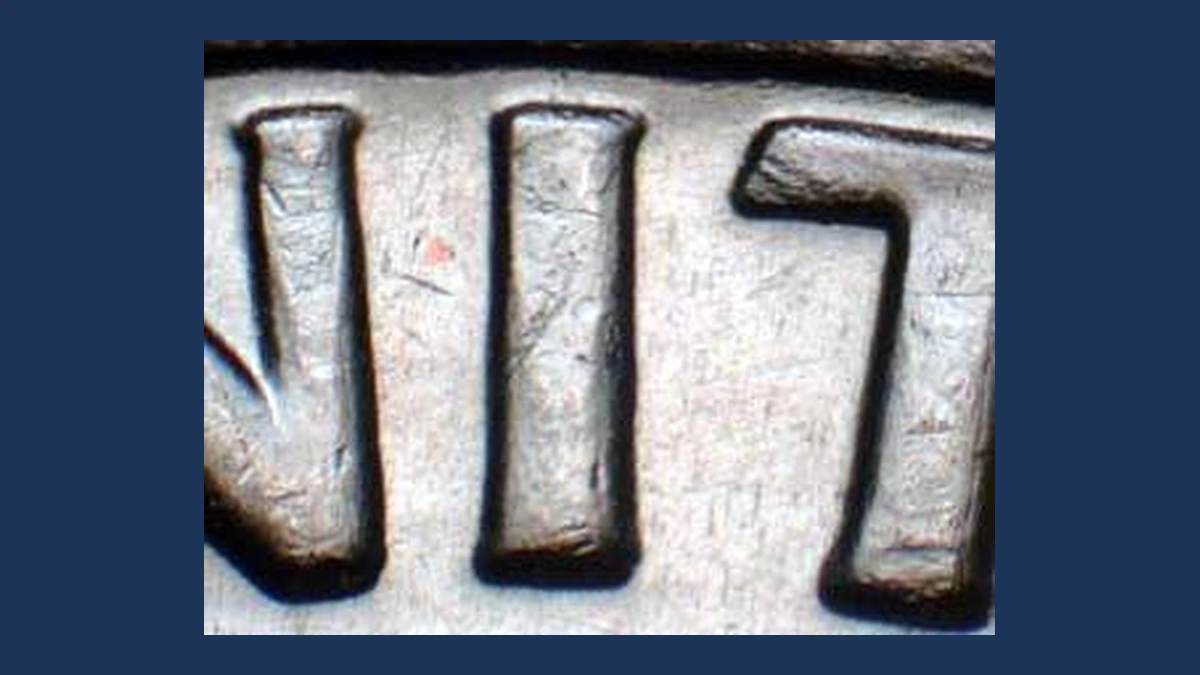
Extra letter edges and star points appear on several 1972 back varieties. Philadelphia’s pattern spreads counterclockwise, while Denver includes a stronger turning pattern and a subtler example with small split corners.
San Francisco Proofs show several different patterns, including inward tripling and outward or counterclockwise doubling. Star points can be clearer than letters.
Each needs its own comparison. Shared doubling inherited from earlier tools is different from an extra feature on one final stamping tool.
A general report with no mint or variety cannot supply those missing details. An unrelated cloth impression also does not establish doubled lettering.
Estimated Value
Minor confirmed back doubling through stronger Proof varieties has an estimated value of $25–$600. Clarity, finish, and a correct match to the particular stamping tool matter.
A different 1976-S clad FS-801 graded PR66 brought about $881 in 2016. That coin has a different back design and a recognized strong variety.
Its result provides context above much of the 1972 range, not a sale price for these examples. Multiple catalog names do not create multiple premiums.
How to Identify
Choose one star point or letter corner clearly shown in the appropriate reference. A 10× magnifier can reveal whether its extra edge matches the direction and shape on your coin.
Then compare another feature rather than relying on a single thick letter. Shared small patterns should be checked against ordinary coins too.
Later clash marks near DOLLAR and the talon can support Denver’s stronger variety, but are not required at every stage. Check edge grooves and use a scale and calipers against 11.34 grams and 30.61 millimeters.
A repeated extra outline matching the selected variety across several features supports independent back doubling beyond the shared background detail.
7. 1972 Kennedy Half Dollar Curved, Multiple, and Elliptical Clips (Estimated Up to $800)
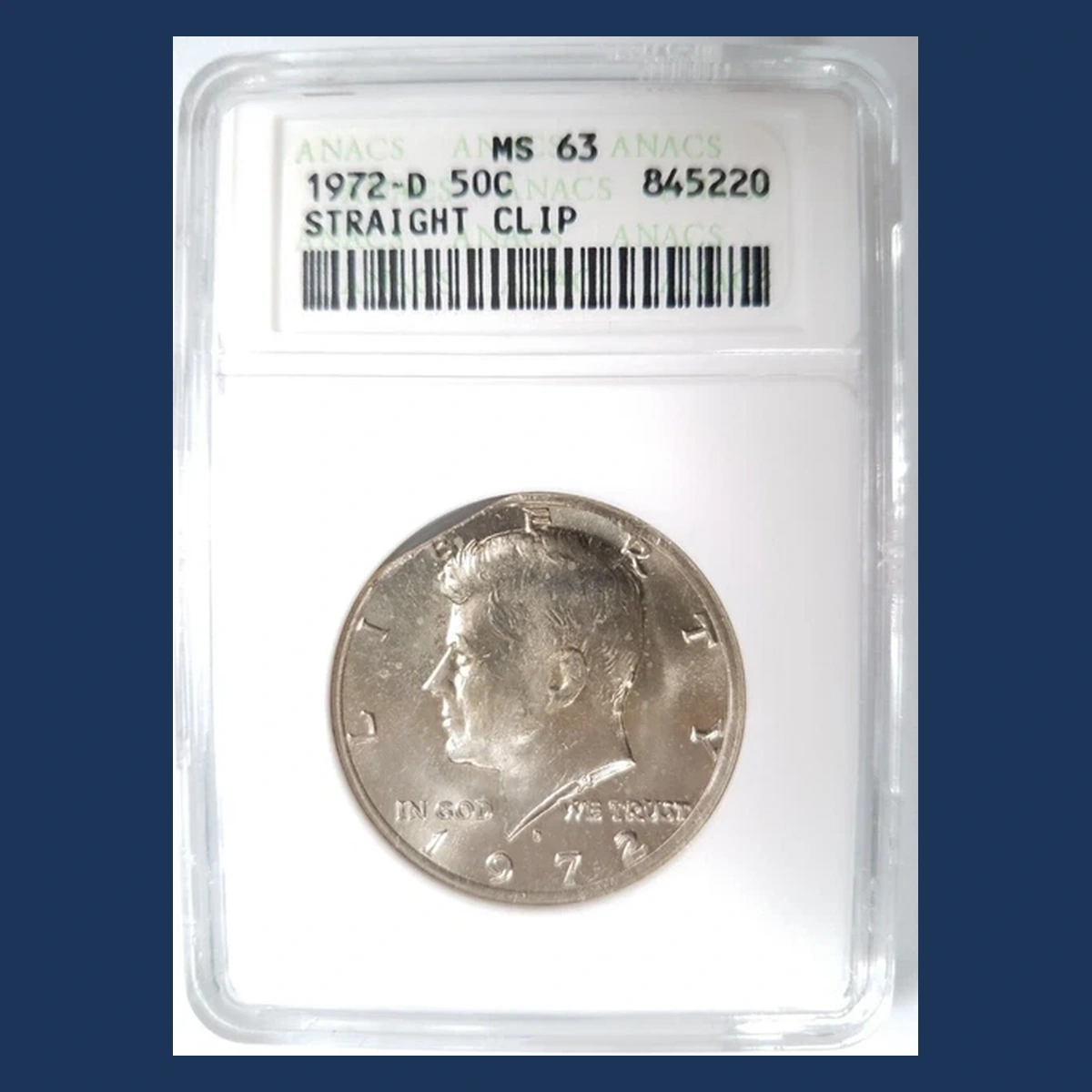
Missing metal can leave a curved gap, several gaps, or an oval-looking outline. Recorded examples include a Philadelphia PCGS MS65 elliptical clip and Denver single, double, and triple clips.
These shapes begin with incomplete blanks, the metal discs later struck into coins. They are different from repeated design details on a stamping tool.
One Denver NGC MS65 is described as a 25-percent curved clip and weighs 6.9 grams. Those are the catalog’s description and measurement for that coin.
A separate Proof set was cut into pieces during striking. Its similar curved pieces record a different event.
Estimated Value
The 6.9-gram Denver MS65 curved clip sold for $240 in July 2021. Estimated values of $30–$800 cover smaller clips through conspicuous multiple or elliptical examples.
A different 1971-D MS65 double clip brought $74 in 2021. That is a lower-priced same-series comparison.
The number of gaps alone does not set value. Preserve the reported 25-percent description and actual 6.9-gram weight separately rather than using one to rewrite the other.
How to Identify
Weigh the coin first and record the result without forcing it to fit a percentage. The documented Denver weighs 6.9 grams; a normal half starts at 11.34 grams.
Under a 10× magnifier, inspect each missing edge for natural striking and nearby weakened detail. Saw marks or cuts through finished lettering suggest later metal removal.
Use calipers across surviving spans against 30.61 millimeters and inspect the remaining edge grooves. Each elliptical or multiple-clip specimen needs its own boundary evidence.
Original struck transitions at every gap support a clip; the separate sheared Proof set instead requires its matching pieces to explain when the metal separated.
8. 1972-S Kennedy Half Dollar Medallic Die Alignment (Estimated Up to $800)
Both designs stay upright when the recorded 1972-S Proof is flipped sideways. A top-to-bottom flip instead leaves the eagle upside down.
This is medal alignment, a half-turn from the normal United States coin arrangement. The outline and centering can otherwise look normal.
NGC graded the coin PR68 Cameo. Cameo describes frosted designs contrasting with reflective backgrounds, not another error.
Unlike a report with no measured angle, this example gives a specific relationship between the faces. The two sides must be kept in their actual positions to demonstrate it without an accidental twist.
Estimated Value
The PR68 Cameo sold for $396 in January 2025. Comparable confirmed 1972-S Proofs have an estimated value of $200–$800.
This is a recent sale for the same alignment, not an estimate borrowed from another denomination. Original surfaces and clear contrast affect the comparison.
A slight tilt is not the same as a half-turn. Nor is a coin photographed after an uncontrolled twist comparable to an example whose face relationship has been demonstrated.
How to Identify
Hold Kennedy upright and flip the coin straight sideways: the eagle should stay upright on the recorded error. Then flip top to bottom and watch it finish upside down.
Repeat both motions without twisting your fingers. A fixed line behind the coin can help preserve orientation.
Inspect the continuous edge grooves with a 10× magnifier for seams or alteration. For an unsealed coin, compare a scale and calipers with 11.34 grams and 30.61 millimeters.
The coin’s outline can remain normal despite the error. An upright eagle after a sideways flip and inverted eagle after a top-to-bottom flip establish the recorded half-turn relationship.
9. 1972-D Kennedy Half Dollar Missing or Defective Clad Layers (Estimated Up to $900)
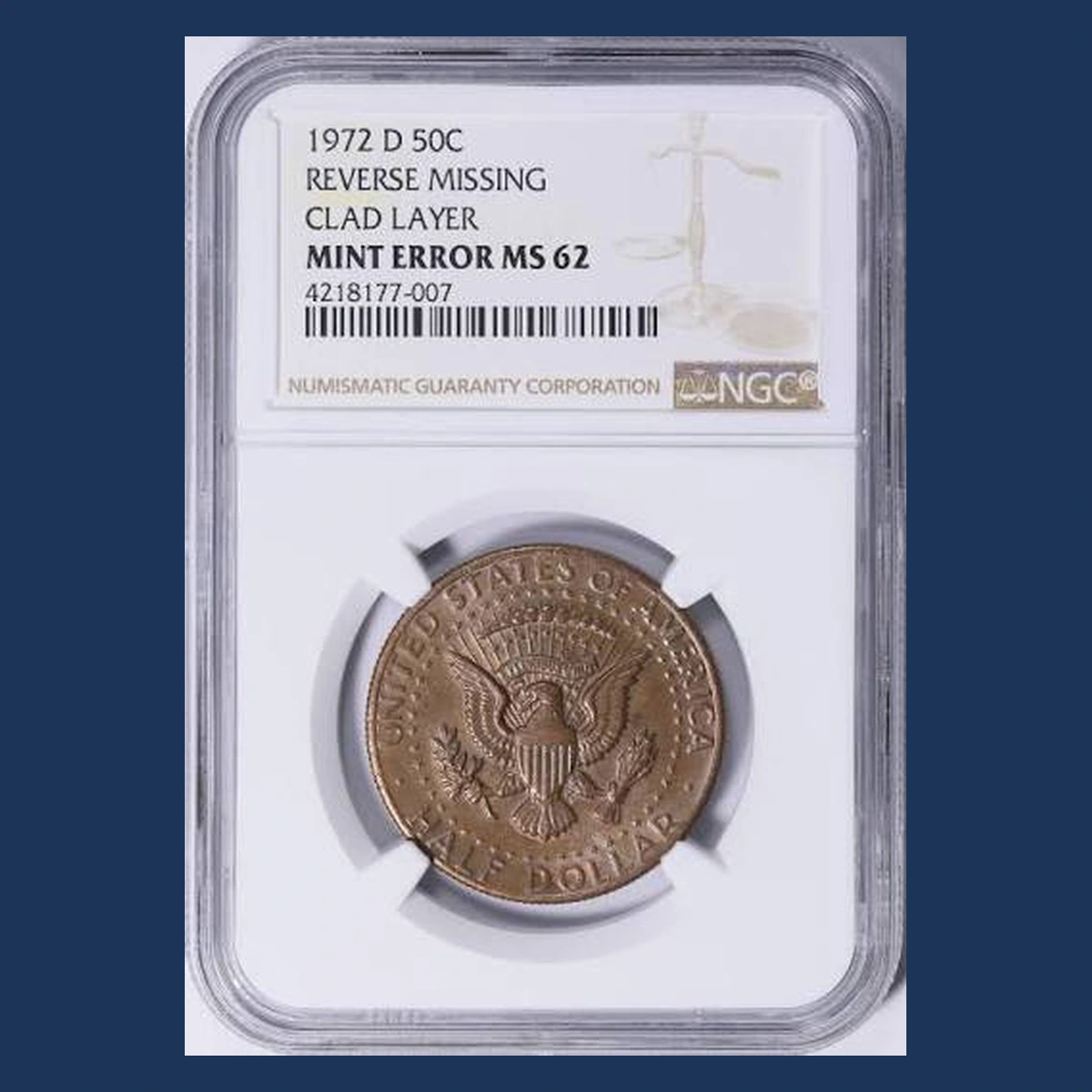
Copper replaces the usual pale outer surface on the documented 9.3-gram Denver MS64. Its front copper-nickel layer is missing, exposing the copper center beneath.
A separate MS62 is missing the back layer. Another AU58 report describes only a local defective patch.
These are failures in the coin’s bonded layers, not evidence of a different-denomination disc. The missing sheet is copper-nickel alloy, not pure nickel.
A local patch and a whole missing face leave different boundaries. Their actual surfaces and weights must be checked separately rather than treated as identical examples because each looks copper-colored.
Estimated Value
The 9.3-gram front-layer-loss MS64 sold for $299 in December 2009. Estimated values of $75–$900 cover partial defects through attractive whole-face losses.
The back-layer example opened at $250 in 2026. That was a starting bid, not a completed sale.
Keep that distinction when comparing the newer offering with the older result. A small local patch also needs a different assessment from a coin with nearly all of one outer face absent.
How to Identify
Compare the affected face with the normal side under a 10× magnifier. Look for a surviving layer boundary and design struck into exposed copper.
Scraping through finished letters or a colored coating points toward a different explanation. Inspect the layered edge and surviving grooves around the loss.
Use a scale against the normal 11.34 grams and calipers against 30.61 millimeters. The recorded MS64 weighs 9.3 grams, but that is not a fixed target for other missing-layer coins.
A natural layer boundary, original detail in the exposed copper, and weight loss consistent with the missing metal together support the manufacturing defect rather than staining or plating.
10. 1972 Kennedy Half Dollar Cloth and Grease Strike-Through Errors (Estimated Up to $1,200)
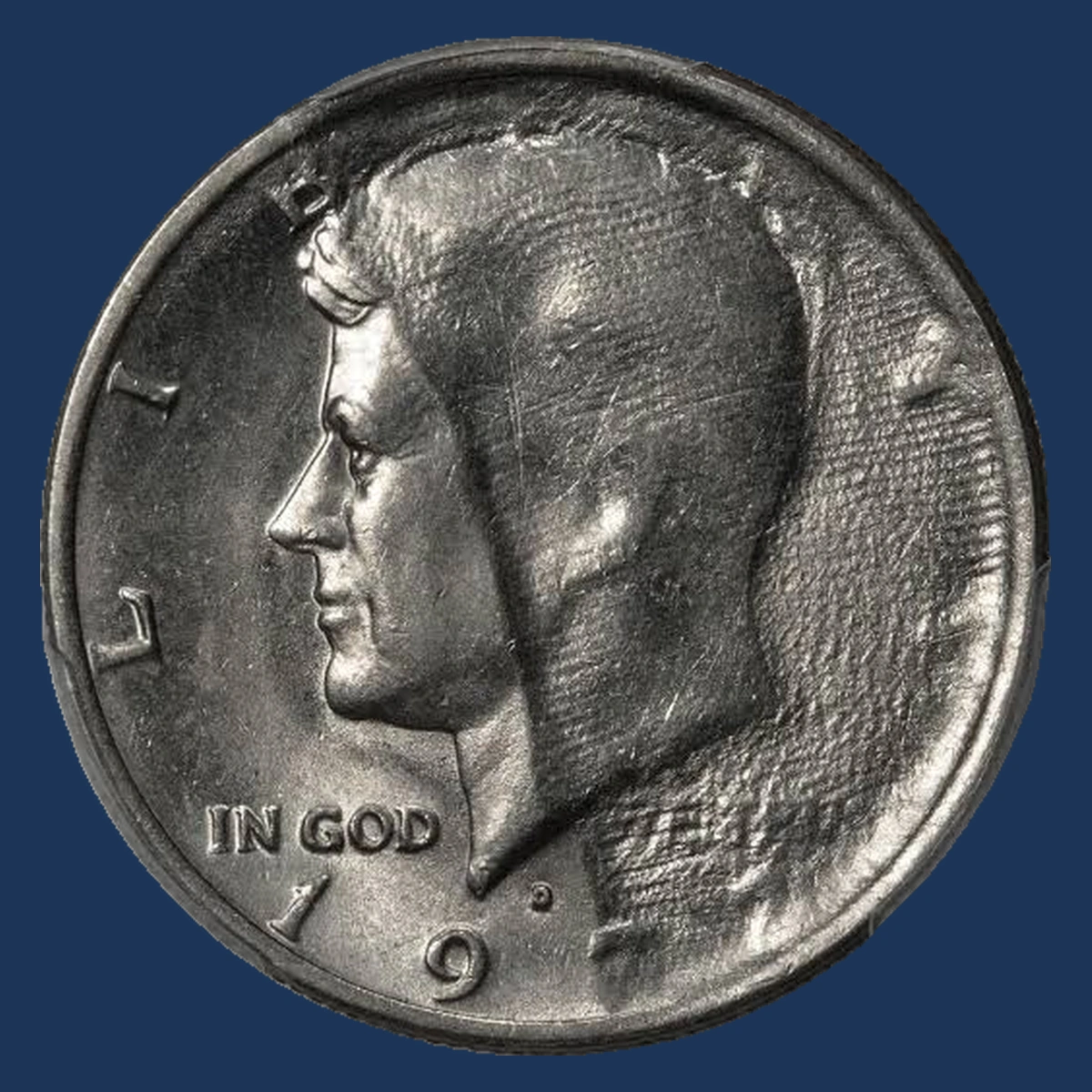
A woven pattern can remain when cloth blocks part of the strike. The reported Denver PCGS MS64 has about 55 percent of a face affected by a cloth impression.
Grease can instead stop small details from forming without leaving a recognizable weave. A separate Philadelphia report calls missing motto detail GODLESS.
That nickname does not mean the mint intentionally removed a word from the design. Material interrupted the transfer of detail.
These examples need different checks. A connected fabric pattern is stronger evidence of cloth than an indistinct missing letter, and neither account describes retained fabric.
Estimated Value
A clear local grease obstruction has an estimated value of $20–$150. A large cloth impression with readable texture is estimated at $200–$1,200.
These are estimates, not recorded prices for the two 1972 examples. A different 1971-D struck through wire, graded AU58, sold for $1,320 in December 2022.
That sale shows interest in identifiable trapped-material impressions. Its wire shape and different date do not supply an exact price for cloth or grease.
How to Identify
For the missing motto, tilt the surface under a 10× magnifier and look for original metal through the weak area. Scratches or a ground-out hollow suggest later removal.
For the Denver cloth report, follow a connected weave across both flat areas and design details. Random pits cannot establish fabric.
The reported 55 percent describes the affected surface, not missing metal. Check edge grooves and compare a scale and calipers with 11.34 grams and 30.61 millimeters.
These obstructions need not enlarge or lighten the coin. A repeated weave supports cloth, while a local smooth interruption without scraping supports a blocked design rather than deliberate removal.
11. 1972 Kennedy Half Dollar Off-Center Strikes (Estimated Up to $2,500)
Almost all the metal remains blank on the recorded 98-percent-off-center 1972-S Proof. Only a small struck sliver survives on the PCGS PR62 example.
The disc was nearly outside the stamping tools when they met. Its identification cannot depend on a fully readable year and mintmark in that tiny remnant.
Another report concerns an ordinary off-center strike without a firmly assigned mint. It remains separate from the San Francisco Proof.
The percentage describes displacement, not how much identifying information survives. A more moderate error may preserve a date that this extreme example cannot show completely.
Estimated Value
The 98-percent-off-center PR62 sold for $900 in June 2023. Estimated values of $150–$2,500 cover the 1972 off-center types discussed.
Displacement, surviving identification, condition, and Proof versus ordinary manufacture affect price. The largest percentage does not automatically bring the highest result.
A more balanced error with a complete date and recognizable design can appeal differently from a nearly blank disc. The $900 result belongs to that extreme Proof, not every off-center 1972.
How to Identify
Match the extreme Proof to its certified photographs before expecting to read a full date. Its tiny struck area needs that direct comparison.
Use a scale and calipers to record the retained metal against 11.34 grams and 30.61 millimeters. Inspect partial edge grooves for contact during the same displaced strike.
On the ordinary-strike example, use a 10× magnifier to follow the boundary between blank metal and design. Look for original blank texture instead of cutting or grinding.
Consistent displacement on both faces beside untouched metal supports an off-center disc; a shifted design on only one face calls for a different explanation.
12. 1972-D Kennedy Half Dollar No FG Reverse (Estimated Up to $3,500)
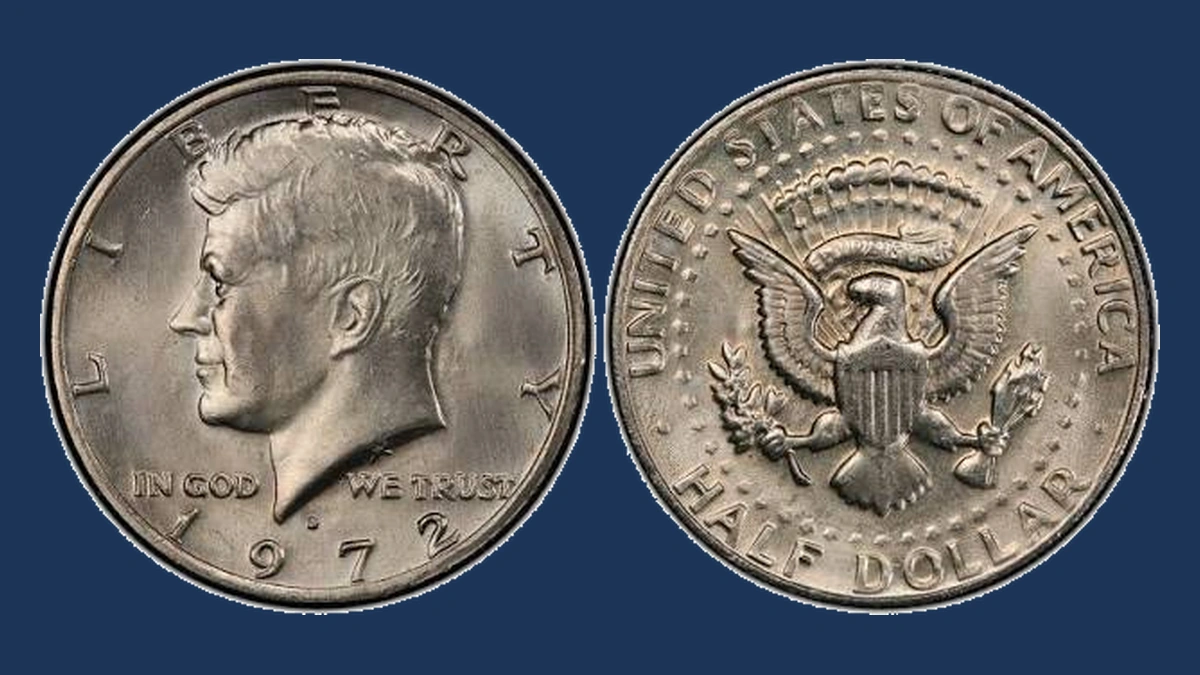
The small FG normally beside the eagle’s leg and tail is absent on the recognized 1972-D FS-901. Excessive polishing of the steel stamping tool removed the initials from the design.
Coins made afterward could therefore lack them. This is called the No FG variety.
Weak initials are not enough. If any part of either letter remains visible, the coin does not meet the complete-absence test.
Wear, poor light, or a blurry photograph can also make the area look empty. Those appearances must be separated from the specific missing detail produced by the polished tool.
Estimated Value
An MS63 example sold for $2,485.13 in 2016, according to PCGS. Confirmed No FG coins have an estimated value of $200–$3,500 across circulated and desirable unworn grades.
The coin’s remaining shine and surface quality help determine its place in the range. MS63 describes an unworn coin that can still show noticeable marks.
An ordinary half with faint but visible initials does not qualify. An empty-looking photograph alone does not establish this variety’s value.
How to Identify
Confirm 1972-D on the front before examining the back. Use a 5× magnifier between the eagle’s leg and tail, moving the light across the area.
Any surviving F or G fails the PCGS complete-absence test. Check neighboring detail for wear and the empty area for fresh polishing or scraping.
Inspect both faces and edge grooves for alteration. A scale and calipers should agree with the normal clad standards of 11.34 grams and 30.61 millimeters.
The useful confirmation is complete absence of both letters at 5× on original mint-made surface, rather than initials hidden by wear, glare, or deliberate metal removal.
13. 1972 Kennedy Half Dollar Doubled Die Obverse (Estimated Up to $3,500)
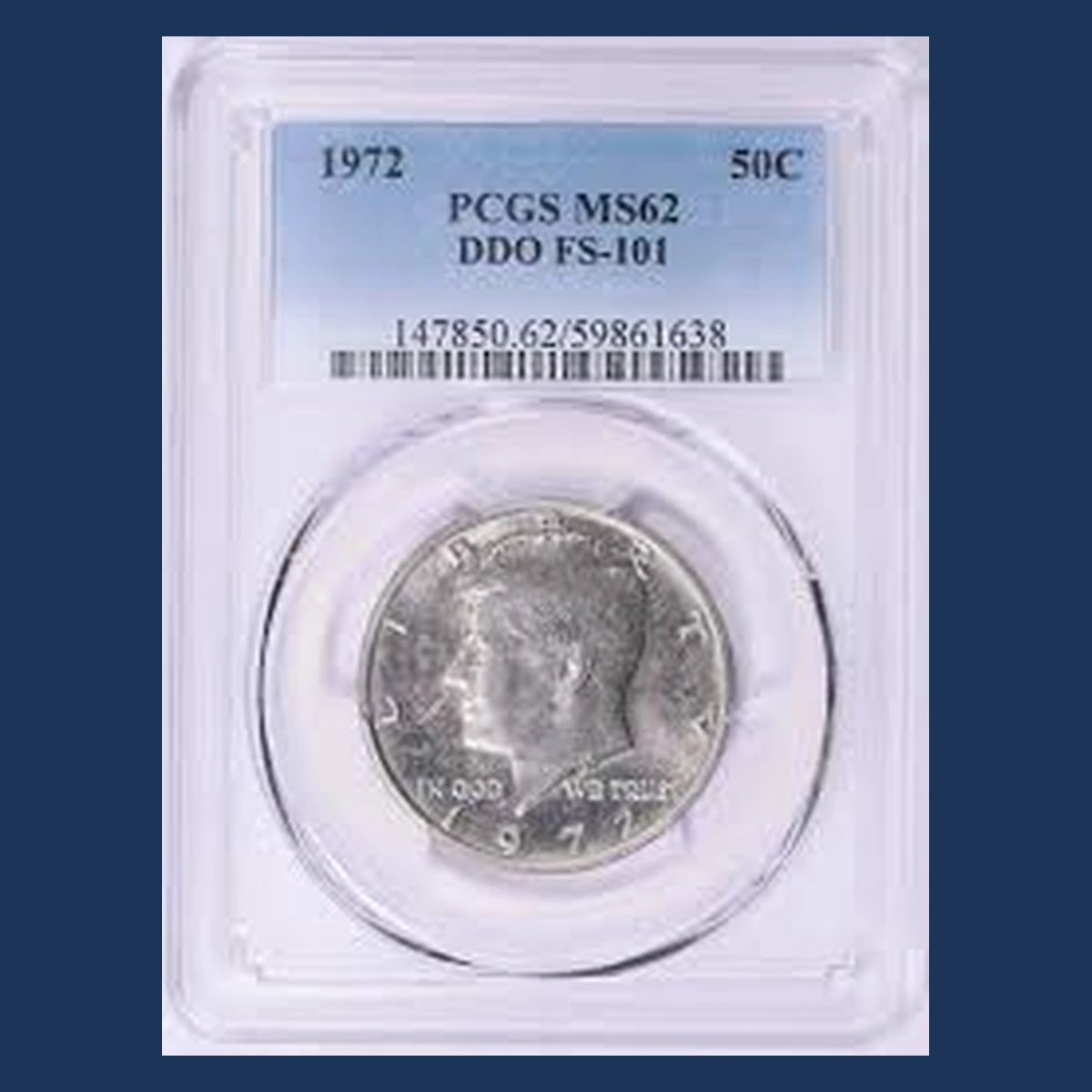
Strong extra outlines on Philadelphia FS-101 turn counterclockwise around a point near eleven o’clock. That front pattern differs from closer Denver doubling and the separate San Francisco Proof varieties.
Some Proofs have three outlines in parts of the motto. Others need finer comparisons of letters and small surrounding marks.
The doubling was present on the die, the steel stamping tool, before it made each coin. It did not require an extra blow to every finished half.
Similar catalog wording does not make the tools interchangeable. Choose the actual mint and variety before comparing the extra details.
Estimated Value
Philadelphia FS-101 graded MS66 sold for $2,680.88 in August 2026 in the GreatCollections archive. Estimated values of $30–$3,500 cover the different recorded front varieties.
That strong, well-preserved Philadelphia example is not equivalent to subtle Denver or Proof doubling. Its specific variety and grade must accompany the price.
An earlier $2,000 figure from another offering was only a starting bid. It should not be presented as a completed sale alongside the MS66 result.
How to Identify
Read the mintmark and identify the finish before opening a comparison image. A Philadelphia FS-101 cannot be matched using a small mark from an unrelated Proof.
With a 10× magnifier, follow the direction and shape of separated letters. Two slanting lines near ER on the Philadelphia back can provide additional support.
Proof varieties use their own eye, throat, or lettering details. Check edge grooves and compare scale and caliper readings with 11.34 grams and 30.61 millimeters.
Rounded separation matching the chosen variety identifies genuine tool-made doubling; a flat shelf that trims the main letter instead suggests movement while the coin was being struck.
14. 1972-D Kennedy Half Dollar Multiple Strikes (Estimated Up to $5,000)
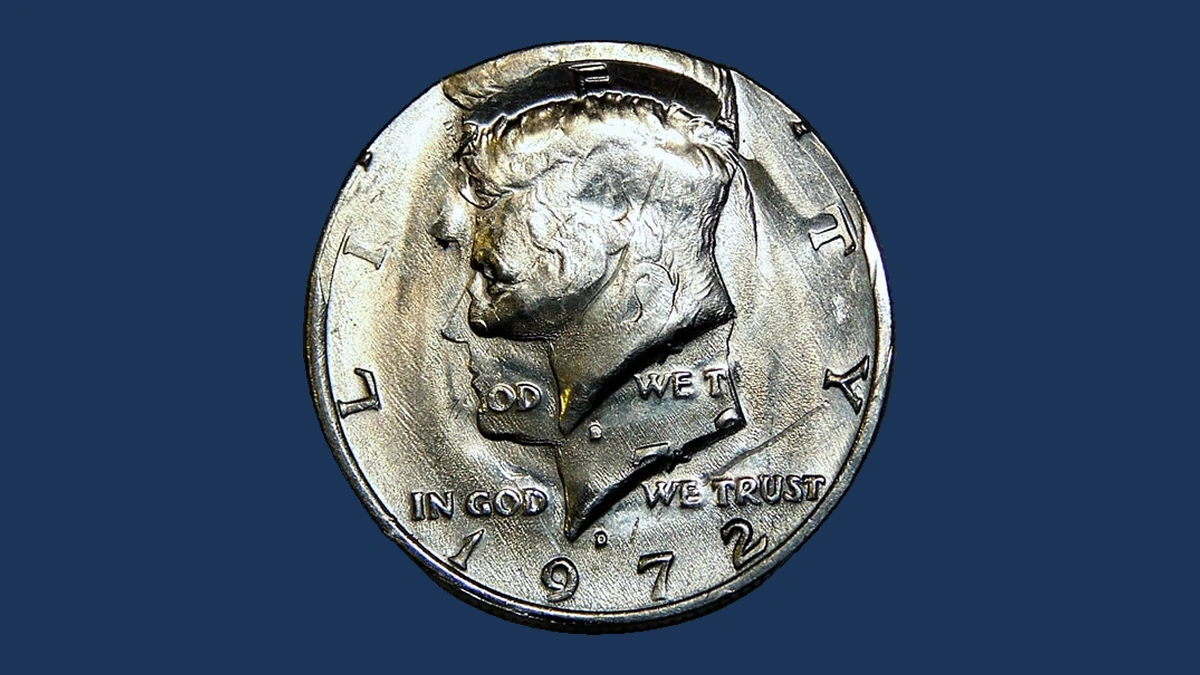
Overlapping dates and portraits show that a struck Denver half met the tools again after moving. Recorded second strikes include shifts of about 60 and 70 percent off center.
Another double strike stayed inside the retaining ring while the design turned about 60 degrees. A flipover example changed which side met each tool.
The triple-struck MS63 began with a centered design. Its second impression was about halfway off center, and the last landed near the rim.
These are separate coins with different sequences. Their large overlapping designs differ from the small repeated outlines on a doubled stamping tool.
Estimated Value
The 60- and 70-percent shifted double strikes sold for $1,320 and $1,080 in June 2023. The turned in-ring MS63 brought $2,070 in April 2006.
The triple-struck MS63 sold for $1,495 in January 2011. An estimated $700–$5,000 covers the different sequences, including the reported flipover.
Readable overlap and attractive surfaces matter more than a simple count of blows. A higher strike count does not automatically multiply the price of a comparable coin.
How to Identify
An in-ring double strike can remain close to 30.61 millimeters despite dramatic overlapping designs. Measure with calipers and weigh against 11.34 grams, but do not stop at normal results.
Use a 10× magnifier to follow the dates and larger details through each impression. The triple strike retains a complete Denver date in its second impression and only part in the final rim strike.
Inspect both faces and edge grooves for expansion or restraint. A flipover mixes opposite-face designs, while a turned second strike repeats the same face.
Those separate raised impressions and their crossings establish successive blows more directly than small doubled-looking letters.
15. 1972 Kennedy Half Dollar Struck on Cent Planchets (Estimated Up to $5,500)
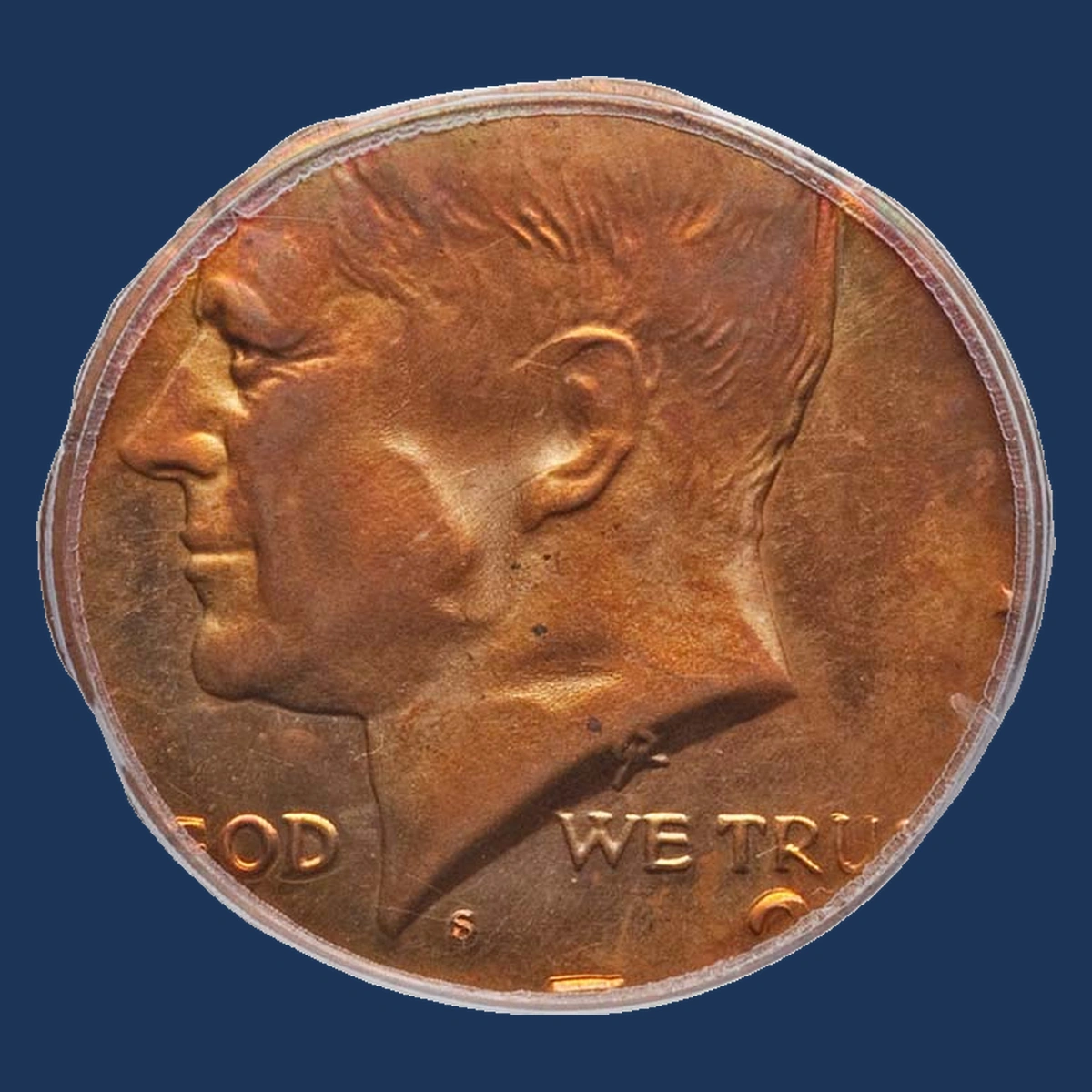
A much smaller copper-colored coin can still show Kennedy and the half-dollar back design. The tools struck a cent disc that was too small to hold the complete design.
A Denver example is graded NGC MS65 Red and Brown. The San Francisco example carries PCGS MS63 Red and Brown, describing its copper color and preservation.
Keep that recorded MS63 wording when identifying the S coin. It does not establish an ordinary San Francisco half-dollar issue for 1972.
The surviving designs must fit the small original disc. A full-size half with an added copper coating is a different object.
Estimated Value
The Denver MS65 Red and Brown sold for $3,720 in August 2024. The separately graded San Francisco MS63 Red and Brown brought $3,360 in June 2023.
Comparable cent-disc errors have an estimated value of $2,500–$5,500. A readable date, mintmark, and recognizable design help the comparison.
These prices concern half-dollar designs on cent metal discs. They do not value ordinary cents, plated halves, or full-size halves with a cent-shaped indentation.
How to Identify
Start on a scale: a contemporary bronze cent disc begins near 3.11 grams, far below the half’s normal 11.34 grams. Calipers should show a much smaller piece than 30.61 millimeters, allowing for expansion during striking.
Use a 10× magnifier to locate Kennedy, the back design, and surviving date or mintmark. The missing outer design should fit a small original disc.
Inspect the edge for original struck metal rather than a full-size coin later cut into a circle. Complete half-dollar edge grooves need not remain.
A small original cent-alloy disc carrying a genuine Kennedy strike, matching the certified example’s surviving features, supports this identification.
16. 1972-D Kennedy Half Dollar Indented by a Cent Planchet (Estimated Up to $6,000)
A cent-sized hollow appears on a full-size Denver half when another blank blocks part of the strike. The second disc is pressed into the half-dollar metal.
The exposed part of the half still receives its normal design. This is an indentation, not a Kennedy design struck entirely on a cent disc.
The recorded NGC MS64 has this cent-disc indentation without the cent retained. Its shape and surrounding struck detail preserve evidence of the smaller obstruction.
A matching cent should not be expected with the coin. It is one surviving half dollar, not a two-piece set described by the source.
Estimated Value
The NGC MS64 sold for $4,320 in June 2023. A comparable well-preserved cent-disc indentation has an estimated value of $2,000–$6,000.
The recorded price was for the half alone. It did not include a matching cent.
An unexplained shallow dent makes a weaker comparison than a clear impression formed during striking. A genuine surviving matched pair would require its own evidence and value rather than an automatic amount added to this sale.
How to Identify
Measure the full coin and the smaller hollow separately with calipers. Compare the half with 30.61 millimeters and use a scale against 11.34 grams.
Near-normal weight is compatible with an indentation because metal moved rather than disappearing. Under a 10× magnifier, trace the curved boundary and how it meets the surrounding design.
Turn the coin over to check that the other face supports pressure during striking. Inspect edge grooves for evidence of later crushing.
The cent-sized hollow should meet original struck details naturally and match the confirmed example; a later punch can cut or distort an already completed design instead.
17. 1972 Kennedy Half Dollar Nickel and Quarter Planchet Errors (Estimated Up to $10,000)
The small nickel-disc Proof examples cannot hold the complete half-dollar design. One received a single displaced strike; another shows two impressions offset in opposite directions.
The double-struck NGC PF66 Cameo weighs five grams. Earlier detail remains near the neck beneath a clearer second date and S.
Its two auction appearances describe the same certified coin, not two discoveries. A changed price does not change that identity.
Denver nickel- and quarter-disc errors are also reported. Those accounts do not inherit the Proofs’ measured weight, certification, or exact pattern of overlapping designs.
Estimated Value
The double-struck nickel-disc Proof sold for $9,000 in October 2021 and $3,720 in June 2023. The same coin appeared at both sales.
Estimate $2,500–$10,000 for the Proof forms and $1,000–$4,000 for comparable Denver pieces. The latter uses related comparisons, including a 1971-D nickel-disc coin at $2,040 and a 1976 quarter-disc coin at $1,020.
Those different-year sales do not confirm any particular reported 1972 Denver example.
How to Identify
A nickel disc starts near 5 grams and 21.21 millimeters; a clad quarter disc starts near 5.67 grams and 24.26 millimeters. Use a scale and calipers, allowing for expansion during striking.
Both differ from a normal 11.34-gram, 30.61-millimeter half. With a 10× magnifier, inspect the edge’s solid or layered metal and any partial grooves.
The single-strike Proof has recorded grooves around five to eight o’clock. The double strike needs its own comparison, with an earlier motto remnant near the neck.
Opposite offsets and the clearer second date and S must match that double-struck Proof’s photographs, rather than being borrowed for a different small-disc coin.
18. 1972 Kennedy Half Dollar Cuds, Die Breaks, and a Matching Die Fragment (Estimated Up to $15,000)
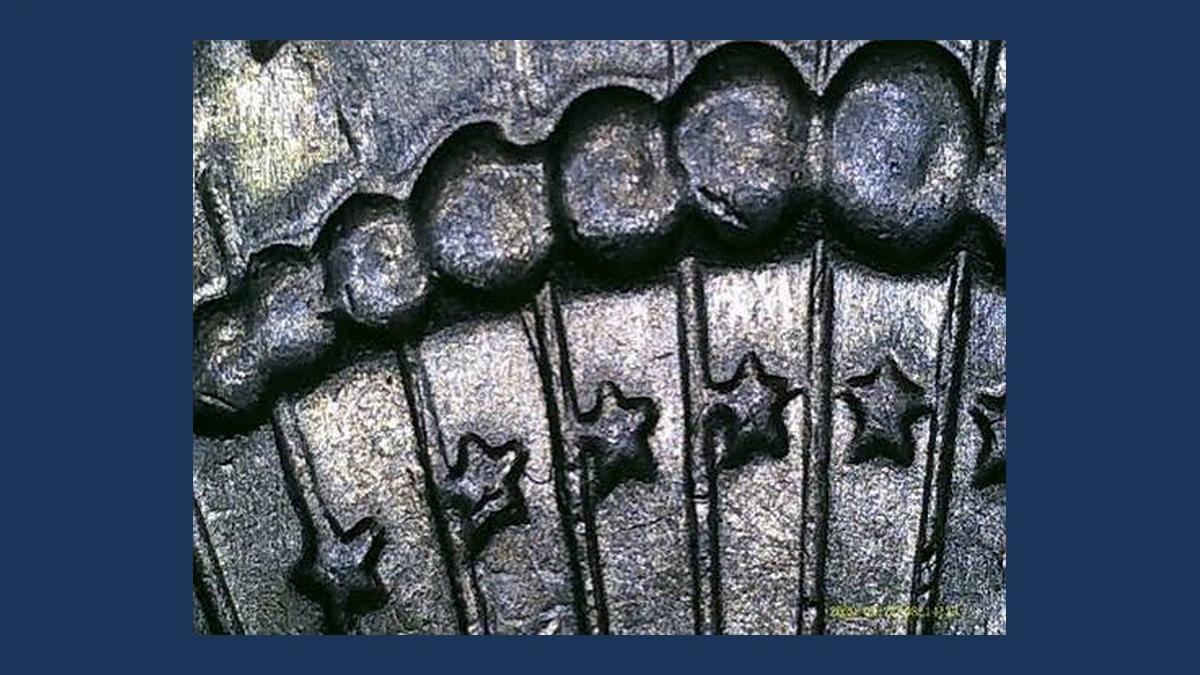
A raised patch replaces normal detail when part of the steel stamping tool breaks away. If the patch reaches the rim, collectors call it a cud.
Denver reports include two front cuds of different sizes and a substantial back example. A San Francisco PR69 Star Cameo has a break at the lower-left front.
Another San Francisco coin is reported with its matching broken steel fragment. That piece of the tool adds evidence beyond the coin’s raised patch.
Keep those examples separate. A loose fragment from another year or an unrelated Proof break does not establish a matching pair.
Estimated Value
The PR69 Star Cameo with a die break sold for $1,140 in June 2023. Individual 1972 breaks and cuds have an estimated value of $40–$1,500.
For the separately reported coin with its matching steel fragment, the estimated pair range is $2,000–$15,000. That is an appraisal, not a reported sale.
The fragment changes what is being valued. Its broader range cannot be assigned to a small-cud coin offered alone.
How to Identify
Weigh the coin alone, excluding any steel fragment, against 11.34 grams. Compare its diameter with 30.61 millimeters using calipers and inspect the edge grooves.
Under a 10× magnifier, follow the raised patch into the rim for a cud. Different Denver examples have different affected areas, so use the matching picture.
For a claimed pair, examine the steel fragment’s broken boundary and recessed design. Those details should correspond to the raised missing-design area on the coin.
A fragment that physically and visually matches the coin’s failure supports the pair; an unrelated piece of steel does not become evidence merely because it accompanies a cud.
19. 1972-S Kennedy Half Dollar Mated Proof Trio (Estimated Up to $20,000)
Three surviving pieces reveal an accident involving two original coin discs. The first half was struck twice inside the retaining ring and indented during the second blow.
Another disc partly overlapped it. That disc received a pressed-in mirror image from contact with the first coin, an effect called brockage.
Pressure and the retaining ring separated the overlapping disc into two pieces. Those sections complete the trio; they are not two additional complete coins.
The first coin is described as PF64. The set’s value lies in how the three objects explain one connected sequence of strikes and separation.
Estimated Value
The complete trio was historically offered for $15,000 in Mint Error News. That was an asking price, not a recorded auction result or a price per piece.
The intact documented set has an estimated value of $10,000–$20,000. Preservation and the continued presence of all three matching components are central to the estimate.
A separated fragment does not automatically receive one-third of the group’s value. It no longer presents the same complete evidence by itself.
How to Identify
Lay out photographs of all three certified pieces in their recorded positions. The first coin’s indentation should match where the other disc overlapped it.
The two separated sections should reconstruct that second disc’s outline. A 10× magnifier can show the mirrored impressed details and joining boundaries.
Use the normal 11.34 grams and 30.61 millimeters as starting comparisons for scale and caliper measurements. The pieces represent two original discs, so individual fragment weights cannot be judged as complete halves.
Trace edge grooves and ring-contact marks without pressing the pieces together. A matching indentation, mirrored design, and two joining sections establish the connected trio rather than three unrelated damaged objects.
Conclusion
The estimated $5–$20,000 range covers ordinary shared doubling, recognizable varieties, and extraordinary matching pieces. Keep the mint, finish, condition, and actual sale or asking-price status attached to each comparison.
Study repeated letters with the correct pictures, missing metal with measurements, and overlapping strikes through their visible sequence. For a paired fragment or the Proof trio, all matching components matter; an isolated piece cannot replace the complete documented group.