2015 Penny Error List with Pictures

A silver-colored 2015 penny raises a useful question: did its copper surface come off, or was it made on the wrong blank?
The difference matters. An older 1981-D cent struck on a dime blank sold for $372 in September 2025.
This 2015 penny error list covers estimated values from $2 to $2,000, including small raised marks and larger striking mistakes. Follow the visible clues below to separate these errors from ordinary wear and damage.
1. 2015-D Lincoln Penny Die Clash (Estimated Up to $100)
Parts of Lincoln’s design can appear faintly on the shield side without the coin being struck twice. The reported 2015-D clash belongs to this group.
Two steel tools, called dies, stamp the front and back designs. If they meet without a blank between them, one tool can pick up marks from the other.
Those marks may then appear on later coins. They are often incomplete.
A few stray lines are not enough to identify a clash. The lines need to match recognizable parts of the opposite design in the right position.
Estimated Value
A faint but clear clash can bring an estimated $5–$30. More visible examples with easily recognized design traces may reach $30–$100.
Buyers pay for what they can see. A large price needs stronger detail than a few marks visible only under heavy magnification.
These are working estimates from similar modern cent errors, not recorded sales of this 2015-D report. Scratches or marks pressed into a penny after minting do not qualify.
How to Identify
Start with a clear photograph of the back and a normal penny for comparison. Find the extra lines before deciding what they resemble.
Compare them with Lincoln’s design on the other side. A genuine clash follows the way the opposing tools face each other; random lines will not make that match.
A deeply pressed, backward copy may instead come from someone squeezing two coins together. Inspect those marks under a 10× magnifier.
If safely accessible, use a scale and calipers to check against 2.50 g and 19.05 mm. The normal edge is smooth.
The useful clue is a recognizable piece of the opposite design, not simply an unfamiliar line beside the shield.
2. 2015 Lincoln Penny Doubled Die (Estimated Up to $150)
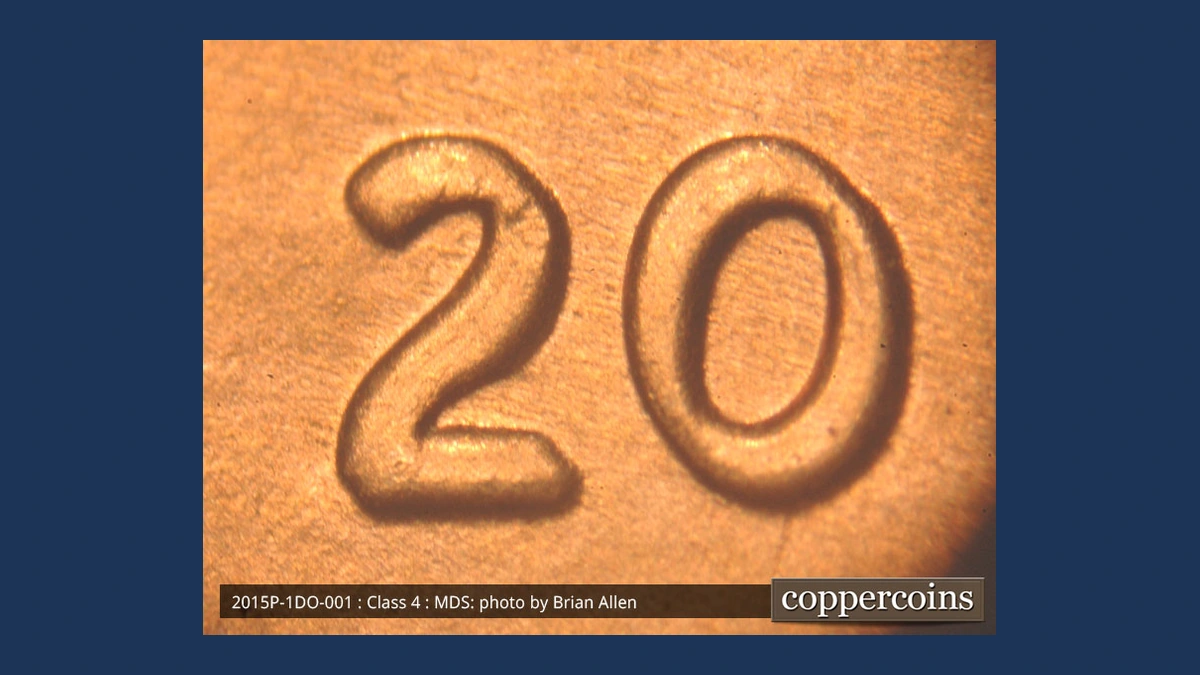
An extra edge beside a letter can have several causes. A doubled die starts with a repeated detail in the stamping tool itself, so later coins copy that detail.
For 2015, reports cover the date and LIBERTY on the front. Back-side reports mention shield lines and ONE CENT.
These are separate places to examine. Finding doubling on one face does not establish it on the other.
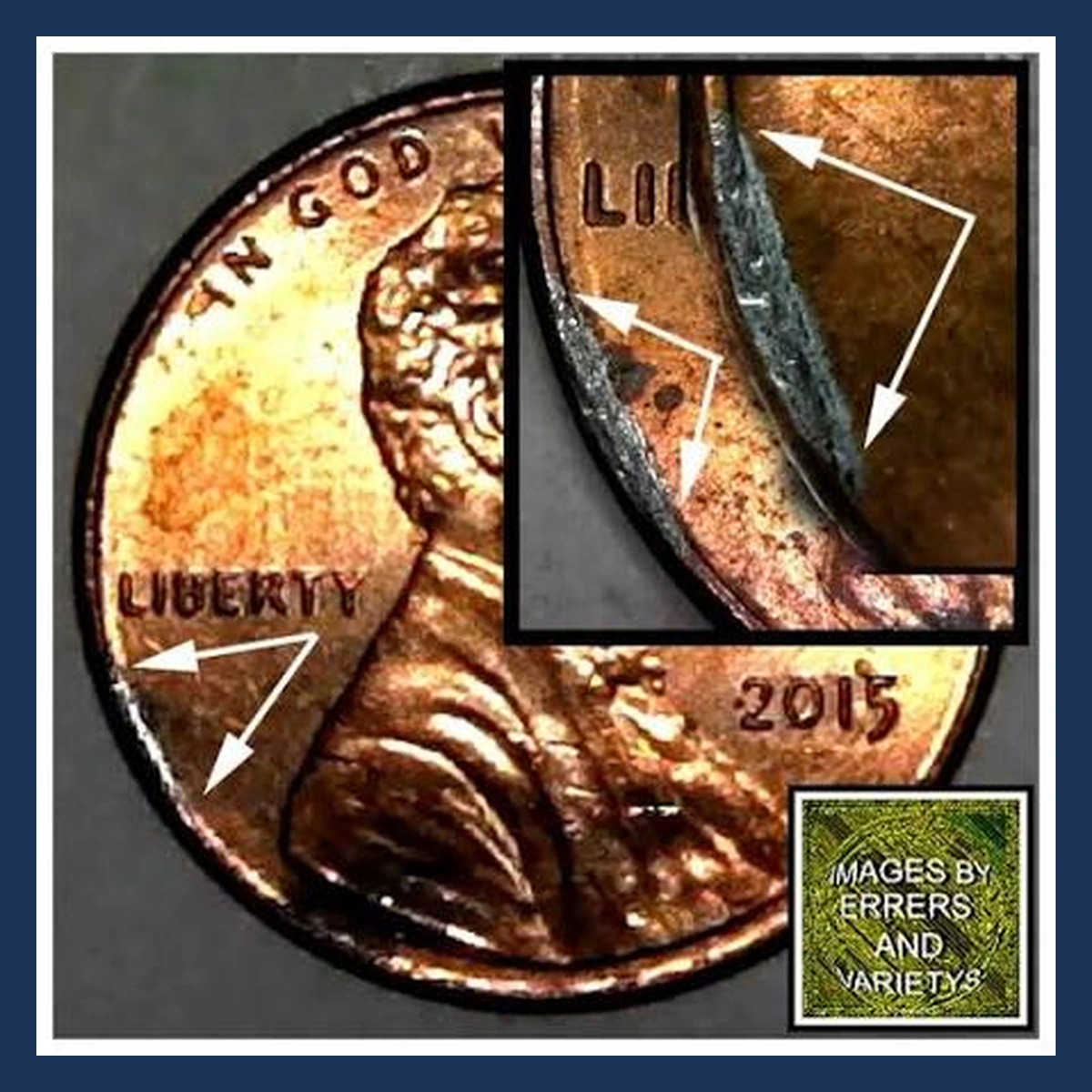
Flat, scraped-looking steps can result from movement during striking instead. Split copper plating can also leave a bright border that looks doubled at first glance.
Estimated Value
For a clearly identified minor doubled die, allow about $10–$50. Stronger separation on an attractive, unworn coin can support an estimated $50–$150.
The upper figure is a comparison-based estimate for this type of modern cent. It is not a documented 2015 auction result.
Both location and strength matter. A seller’s enlarged photograph should show the repeated shape, rather than just a bright edge created by lighting or broken copper plating.
How to Identify
Normal measurements remain 2.50 g and 19.05 mm, with a smooth edge. A scale and calipers can check an accessible coin; doubling itself does not require a different blank.
Look at the shape of the extra detail, not only its brightness. Change the light direction to see whether the second edge remains visible.
With a 10× magnifier, examine the date and LIBERTY first. On the back, check ONE CENT and the shield lines independently.
A flat ledge that reduces the original letter differs from a repeated, raised outline. Also watch for exposed gray zinc beside a torn copper surface.
Compare the exact letter or line with a confirmed example of the same variety. Matching raised separation is more useful than general thickness.
3. 2015-D Lincoln Penny Plating Separation (Estimated Up to $150)
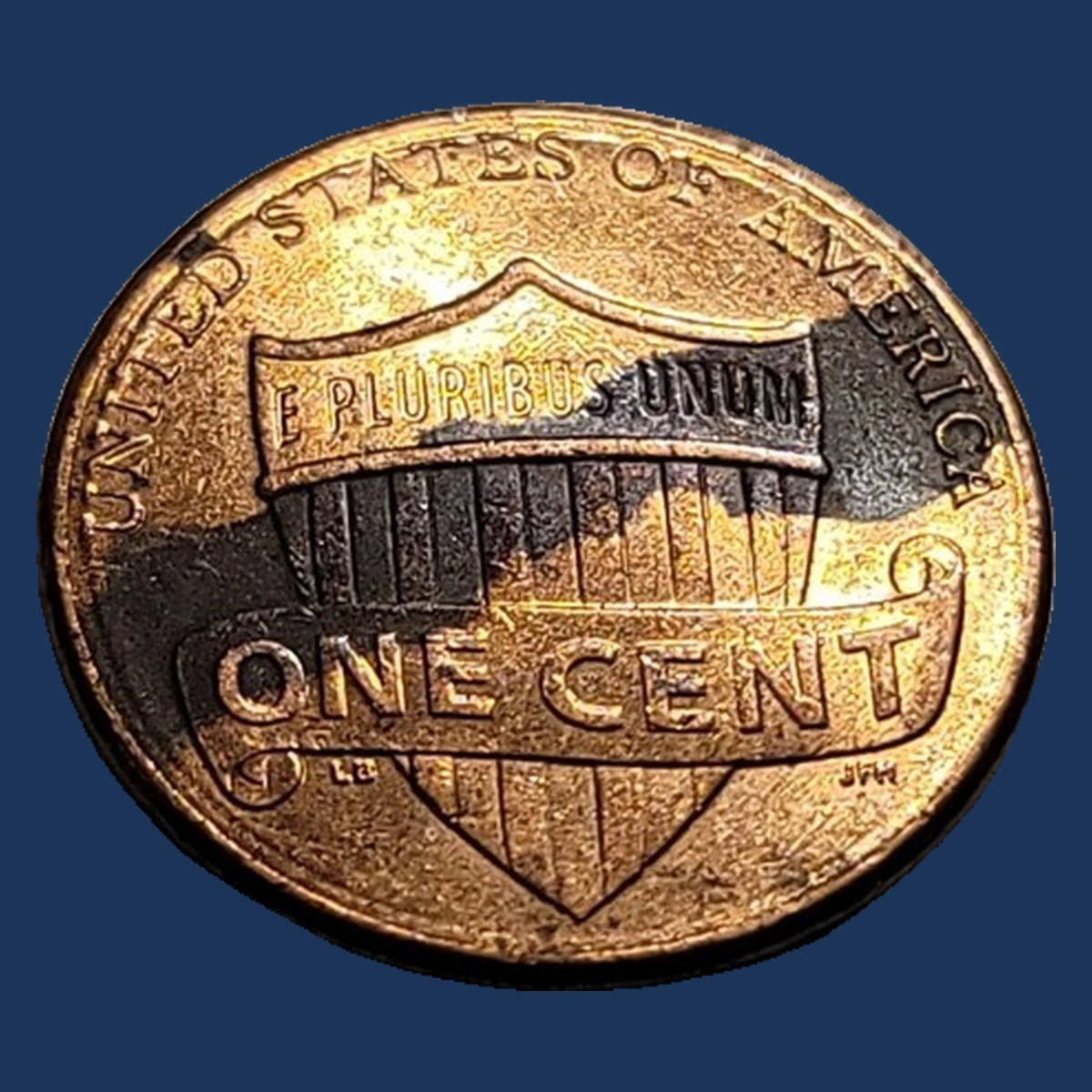
A loose copper flap reveals how a modern penny is built. Its zinc center wears a thin copper coating, and that coating can lift or separate.
This defect is reported for 2015-D cents. Some descriptions call it lamination, a word also used for layers splitting inside older solid-alloy coins.
The materials differ. On this penny, the first question concerns the thin outer copper layer.
Scraping, chemicals, and corrosion can remove copper after a coin leaves the Mint. A gray patch therefore needs more attention than its unusual color alone suggests.
Estimated Value
The size and condition of the copper break guide an estimated $10–$150 range. A small confirmed separation belongs near the lower end.
A larger, clearly mint-made defect can attract more interest, especially when the surrounding design remains sharp. Loose metal should be left in place.
This range applies after the cause is identified as a production defect. It does not turn every peeling 2015-D penny into a valuable error, and no specific sale is claimed here.
How to Identify
Do not lift the flap. Its attachment and the surface underneath help show how the break happened.
A normal 2015-D cent is 2.50 g and 19.05 mm across, with a smooth edge. Record weight and diameter with a scale and calipers when the coin is safely accessible.
Only a thin layer is involved, so a reading close to normal does not rule out separation. A large weight loss suggests additional damage or a different problem.
Follow the boundary with a 10× magnifier. Look for scraped grooves, powdery corrosion, or damage spreading beyond the exposed zinc.
The important view shows the thin copper layer separating from the gray center, with its untouched boundary still visible.
4. 2015 Lincoln Penny Reported Annealing Error (Estimated Up to $250)
A dark or uneven color can make a new-looking penny stand out. Improper annealing is one reported explanation for unusual 2015 cent surfaces.
Annealing means heating metal during production to change its working properties. The term describes a manufacturing cause, not a particular color.
A fire, chemicals, or years of exposure can change a finished penny too. None of those changes becomes a Mint error just because it looks unusual.
This category needs a professional diagnosis of the surface. Color photographs alone cannot establish when or why the change occurred.
Estimated Value
A professionally confirmed production-related annealing error can be estimated at $30–$250 using comparable modern cent errors. Strong appearance and an intact surface help support the upper part.
That range applies to the diagnosed defect, not simply a dark 2015 penny. Ordinary stains usually add no collector premium.
No 2015 auction result is attached to this estimate. Before paying extra, make sure the written identification names the manufacturing problem rather than describing the coin only as discolored.
How to Identify
Put the penny beside a normal 2015 example under neutral light. Compare both faces and the smooth edge, since colored lighting can hide ordinary copper tones.
Examine any rough patches with a 10× magnifier. Flaking, crusts, or a damaged surface can point toward later exposure rather than a production mistake.
For an accessible coin, a scale should read near the normal 2.50 g. Calipers provide the corresponding 19.05 mm diameter check.
These measurements can reveal other problems, but they cannot prove the cause of a color change. Do not polish the surface to test it.
The fastest useful check is the grading service’s written error identification; unusual color by itself is only a reason to investigate.
5. 2015 Lincoln Penny Struck-Through Error (Estimated Up to $300)
A local blank-looking patch may remain while nearby letters stay sharp. Something between the blank and a stamping tool can block part of the design.
The result is called a struck-through error. Soft material may weaken detail, while a firmer object can leave an impression.
For the reported 2015 category, the shape must be examined before naming the object. A groove alone does not prove that a wire was present.
Normal wear works differently. It usually affects exposed high areas together rather than producing one isolated obstruction-shaped patch within a sharper design.
Estimated Value
A 2021-D penny described as struck through grease sold for $84 in September 2025. That later Shield cent gives one useful price comparison.
For 2015, estimate $10–$300, from modest blocked detail to a large, clearly formed impression. These are estimated prices rather than a claimed sale of the pictured year.
The shape, depth, and remaining design all affect interest. A scratch or worn patch should not be priced from the same range.
How to Identify
Compare the weak patch with Lincoln’s high points and the tops of nearby letters. Heavy wear across all these areas suggests ordinary use.
A struck-through area needs a different pattern: a local boundary or impression alongside detail that escaped the obstruction. Study that boundary using a 10× magnifier.
Look for pushed-up metal from a later gouge. Do not name the trapped material unless the impression preserves a recognizable shape.
Weigh and measure an accessible example with a scale and calipers. The usual penny specifications are 2.50 g, 19.05 mm, and a smooth edge.
An isolated blocked area surrounded by sharper original detail is the most useful first clue, especially where the boundary crosses letters or design.
6. 2015 Lincoln Penny Broadstrike (Estimated Up to $300)
Compare a broadstruck penny with a regular cent and the extra width becomes easier to see. Its outer border may look stretched or uneven.
A metal ring normally limits the blank’s outward spread during striking. If the coin is struck without that restraint, it can expand too far.
The design can remain complete even when it is not perfectly centered. That separates a broadstrike from an off-center strike with missing design.
The 2015 reports cover this wider shape. A penny flattened later can also become wider, but its damaged details tell a different story.
Estimated Value
Allow approximately $20–$300 for a genuine 2015 broadstrike. A modest spread on a worn coin belongs toward the lower end.
A broad, attractive border and clear original design support higher estimates. Strong scratches, stains, or flattened detail reduce that appeal.
These figures are drawn from comparable modern Lincoln cent errors, not a specific 2015 sale. Extra diameter must come from the strike itself; simply making a penny wider does not create collector value.
How to Identify
Calipers make the first comparison straightforward: a normal cent measures 19.05 mm. Measure in more than one direction because the spread may be uneven.
Check the weight with a scale if safely accessible. About 2.50 g is expected when the full normal blank remains.
Now look at the date, outer lettering, and shield. They should remain present, even if their spacing from the border looks unusual.
The edge is normally smooth, but broadstriking changes its shape. Under a 10× magnifier, look for scraping or crushed detail from later flattening.
A complete design within a wider, naturally spread border makes the broadstrike easier to recognize than diameter alone.
7. 2015 Lincoln Penny Die Cracks, Chips, and Cuds (Estimated Up to $400)
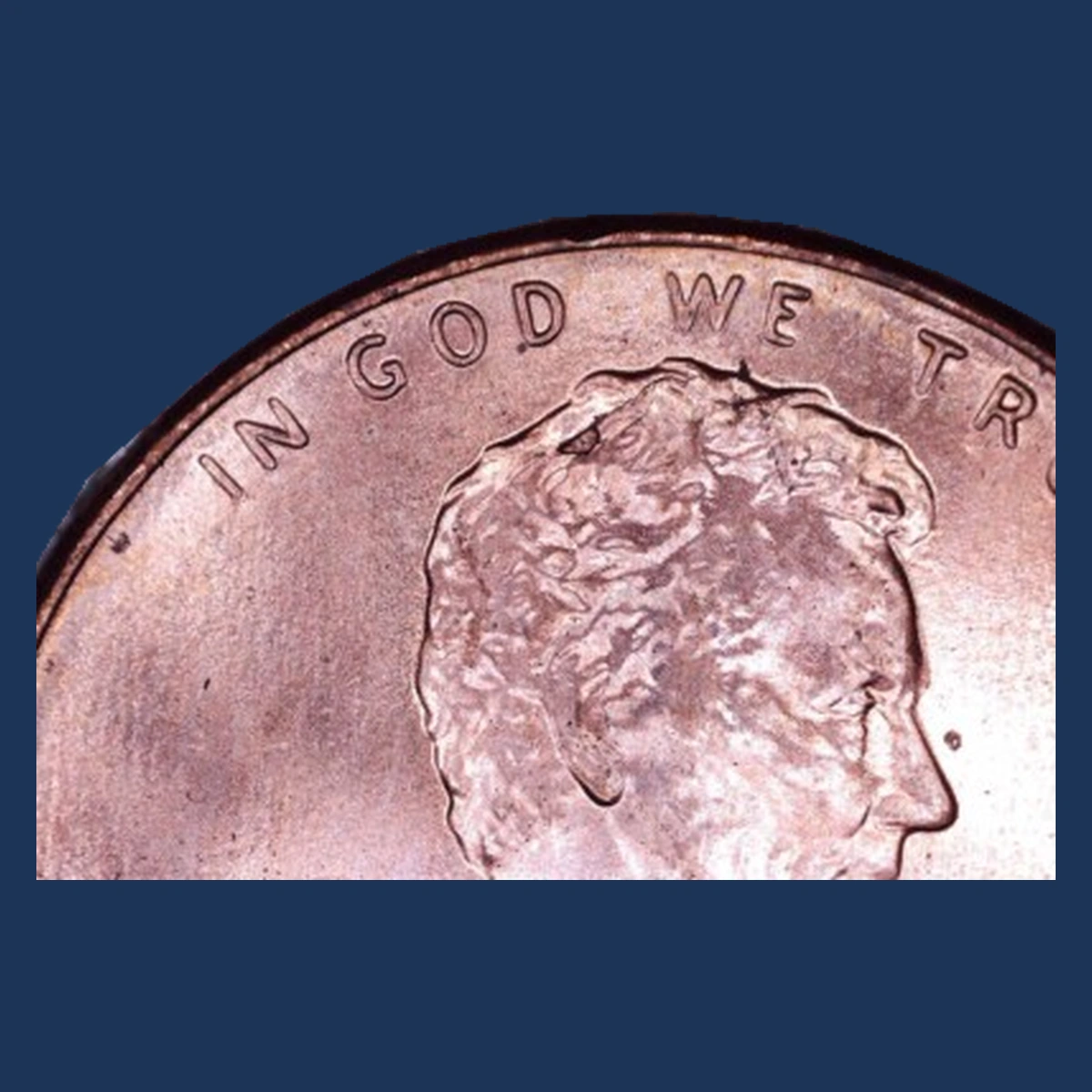
A raised line and a raised blob can come from the same general problem: damage to the stamping tool. Coin metal enters the damaged space during striking.
A narrow crack leaves a line. A small missing piece leaves a chip-shaped bump.
Between the B and E of LIBERTY, a bump resembling an extra I is called a BIE error. A larger break connected to the rim is called a cud.
The 2015-D cud report belongs to that last group. Its connection to the edge matters more than the size of an isolated interior bump.
Estimated Value
Small cracks and BIE chips are estimated around $2–$50. A clear rim-connected cud can fit approximately $50–$400, depending on its size and the coin’s condition.
For comparison, a 2021-D cent with a retained cud sold for $186 in September 2025. In that earlier stage, the broken tool piece remained partly in place.
Heritage’s September 2025 results provide comparisons, not a price record for a tiny 2015 BIE chip.
How to Identify
Use a light from the side to decide whether the mark rises above the surface. A cut that sinks into the coin is more likely a scratch.
For BIE, inspect the space between B and E with a 10× magnifier. The extra bump should join the coin’s metal rather than sit on it as dirt.
A scale and calipers can compare an accessible penny with 2.50 g and 19.05 mm. Normal pennies have smooth edges.
Follow a suspected cud all the way to that edge. An interior blob does not become a cud just because it is large.
The quickest distinction is shape and connection: a raised line, an interior bump, or a raised patch reaching the rim.
8. 2015-D Lincoln Penny Off-Center Strike (Estimated Up to $500)
A broad empty crescent beside the design is the main attraction of an off-center penny. The blank sat too far to one side when the tools came down.
Both faces should show the effect. Part of each design falls beyond the blank while another area receives no design at all.
The 2015-D report concerns this misplaced strike. It does not establish one exact percentage or direction of movement.
A readable date helps collectors identify the piece. A border that looks uneven on only one face may instead reflect a shifted tool.
Estimated Value
A small but clear off-center strike can fit an estimated $20–$100. Larger shifts with a readable 2015 date may bring roughly $100–$500.
The amount of missing design is only part of the price. Buyers also care about the date, surface quality, and how clearly the blank crescent shows.
This is a comparison-based range for modern cents. It does not assign a measured percentage or an auction result to the reported 2015-D example.
How to Identify
A normal blank starts near 2.50 g and 19.05 mm, with a smooth edge. Use a scale and calipers when safely accessible, allowing for changes in the final outline.
Turn the coin over before judging the error. The shield side must also show the misplaced strike, not a normal centered design behind one uneven front rim.
Find the 2015 date and D mintmark, which identifies Denver. Then trace the boundary between the struck design and the empty crescent.
Under a 10× magnifier, that empty area should not look filed smooth. The original blank’s rounded boundary provides another useful clue.
A matching shift on both faces beside an untouched blank crescent is the direct test.
9. 2015 Lincoln Penny on a Dime Blank (Estimated Up to $2,000)
A cent struck on a dime blank combines the wrong size and metal with Lincoln’s design. The smaller blank may fail to hold the outer lettering.
The reported 2015 example is a Philadelphia cent without a mintmark. The 2015 error list describes the dime-blank category; it does not provide an independently confirmed sale here.
A blank is an unstruck piece of metal. This differs from stamping a cent over an already finished dime.
Removing copper from an ordinary penny also creates a gray surface. That alteration leaves zinc, not the dime’s layered metal.
Estimated Value
The $372 sale of a 1981-D cent on a dime blank in September 2025 shows how this mistake can be priced. Its older Memorial design differs from the 2015 shield.
An authenticated 2015 example can be estimated at $300–$2,000, with eye appeal and clear identification driving the range. This is not a claimed 2015 sale.
Proper metal identification matters more than silver color. A stripped zinc penny does not qualify for these prices.
How to Identify
A normal copper-nickel clad dime starts at 2.268 g and 17.9 mm. Compare those figures with the cent’s 2.50 g and 19.05 mm using a scale and calipers.
Allow for metal spreading during the wrong-denomination strike. One measurement alone cannot prove the blank’s identity.
Inspect the edge with a 10× magnifier for the dime’s layered construction. Do not require a finished dime’s grooves: this error begins with an unstruck blank.
The ordinary cent edge is smooth, and its gray zinc center is a different material. Look for filing, corrosion, or stripped copper before accepting the claim.
The decisive combination is a genuine 2015 cent design on a smaller, correctly identified dime-metal blank.
Conclusion
Finding an unusual 2015 penny starts with noticing what changed: its design, surface, or size. The estimated range runs from $2 for small tool breaks to $2,000 for an authenticated dime-blank error.
Keep the coin untouched while comparing it with a normal cent. A raised BIE mark is a different problem from peeling copper, and neither should be priced like the wrong metal.
Let the visible features lead the identification.