1834 Quarter Error List with Pictures

An eagle sitting at the wrong angle can reveal an error that a front photograph misses. An 1834 quarter with rotated dies sold for $180 in May 2019.
This 1834 quarter error list also follows a crossing crack, faint clash marks, and extra letters in the reverse inscription. Estimated whole-coin ranges run from $100–$3,000 across the conditions below.
Try the simple flip test, then examine the smaller marks in each section.
1. 1834 Capped Bust Quarter Crossing Die Crack
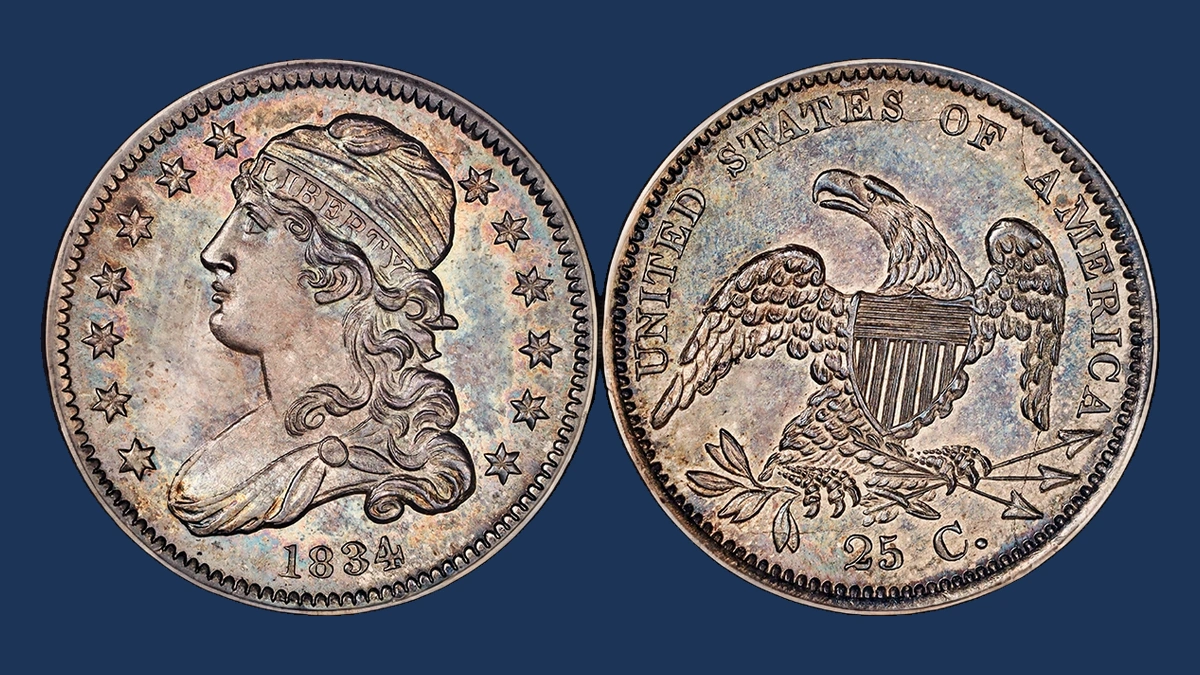
A raised crack can cross the lower portrait instead of following Liberty’s normal hair design. One collector describes a line starting at four-thirty, passing through the thirteenth star, and curving into a curl toward seven-thirty.
The line formed when silver entered a crack in the die, the steel stamping tool. It is not a split cut through the finished coin.
PCGS also describes a crossing front crack that developed on the Browning-1 variety. The collector’s detailed route provides a specific example to compare.
A narrow crack alone is not a large rim-connected lump caused by a missing piece of tool.
Estimated Value
Estimate $100–$2,000 for identifiable crack-bearing examples across worn through lower unworn condition. A clearly raised, long route can attract more attention than a tiny line visible only under strong magnification.
The collector’s coin has unworn details but was cleaned, and it also carries rotation and clash marks. Those features do not justify adding three complete coin estimates together.
Original surfaces and strong remaining design improve comparisons, while later scratches can make the crack harder to demonstrate.
How to Identify
Use the date to set the portrait upright, then locate the thirteenth star at the lower right. Follow the reported ridge from the four-thirty edge through that star and toward the curl.
Continue to the seven-thirty border with a magnifier, checking where the line crosses normal design. A real tool crack should form a raised ridge rather than a channel scratched into the silver.
Changing the lamp’s direction helps separate its shadow from the surrounding hair. Compare the entire curved route with the collector’s example, and inspect any break in the line before assuming separate scratches belong to one continuous crack.
2. 1834 Capped Bust Quarter Die Clash Marks
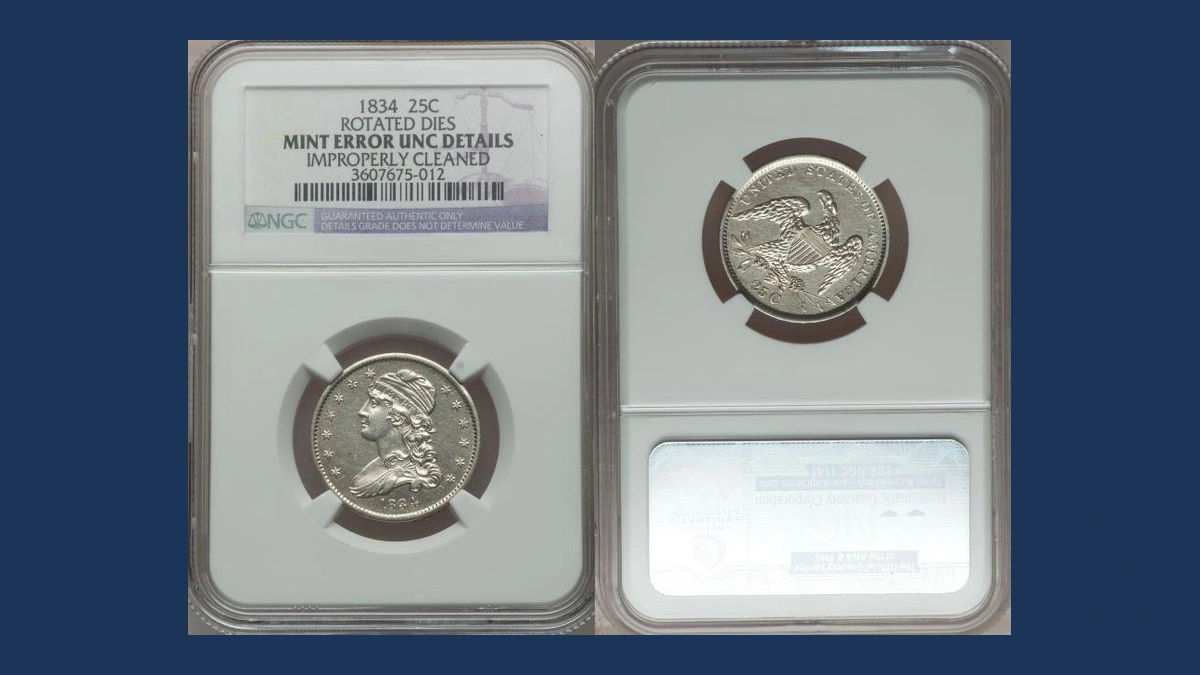
Extra traces below Liberty’s ear, within the hair, and beneath the chin are reported on a collector’s 1834 quarter. They are described as strong clash marks alongside a crossing crack and rotated back.
A clash occurs when the two stamping tools meet without a blank between them. Contact can transfer parts of one design onto the opposing tool, which then leaves faint traces on later coins.
The owner’s collection entry supplies the locations for this example. The comments describe the owner’s observations, rather than a separate grading-service certification of each small mark.
Estimated Value
A whole-coin estimate of $100–$2,000 covers recognizable clash examples from worn through lower unworn condition. Strong, identifiable traces and good surfaces make the comparison more useful than unexplained marks around the portrait.
The reported specimen was cleaned, despite retaining unworn detail. Its rotation and crack are part of the same coin’s appeal, not three independently priced objects.
An unusually high-grade piece would need a comparison at that preservation level instead of a simple premium for extra lines.
How to Identify
Examine beneath the chin first, where an extra shape can be easier to separate from the portrait. Tilt the coin under a single lamp before increasing magnification.
Then inspect below the ear and among the hair strands for the other reported traces.
Compare their outlines with parts of the eagle-side design. A transferred shape should make sense as opposite-side artwork, rather than merely resemble a random curved scratch.
Photograph the three areas together with a complete front view. Keep the crossing crack separate from the faint design traces even where both appear near the hair.
Look for matching transferred shapes in the reported locations; ordinary hair detail and cut grooves do not establish a clash.
3. 1834 Capped Bust Quarter Rotated Dies
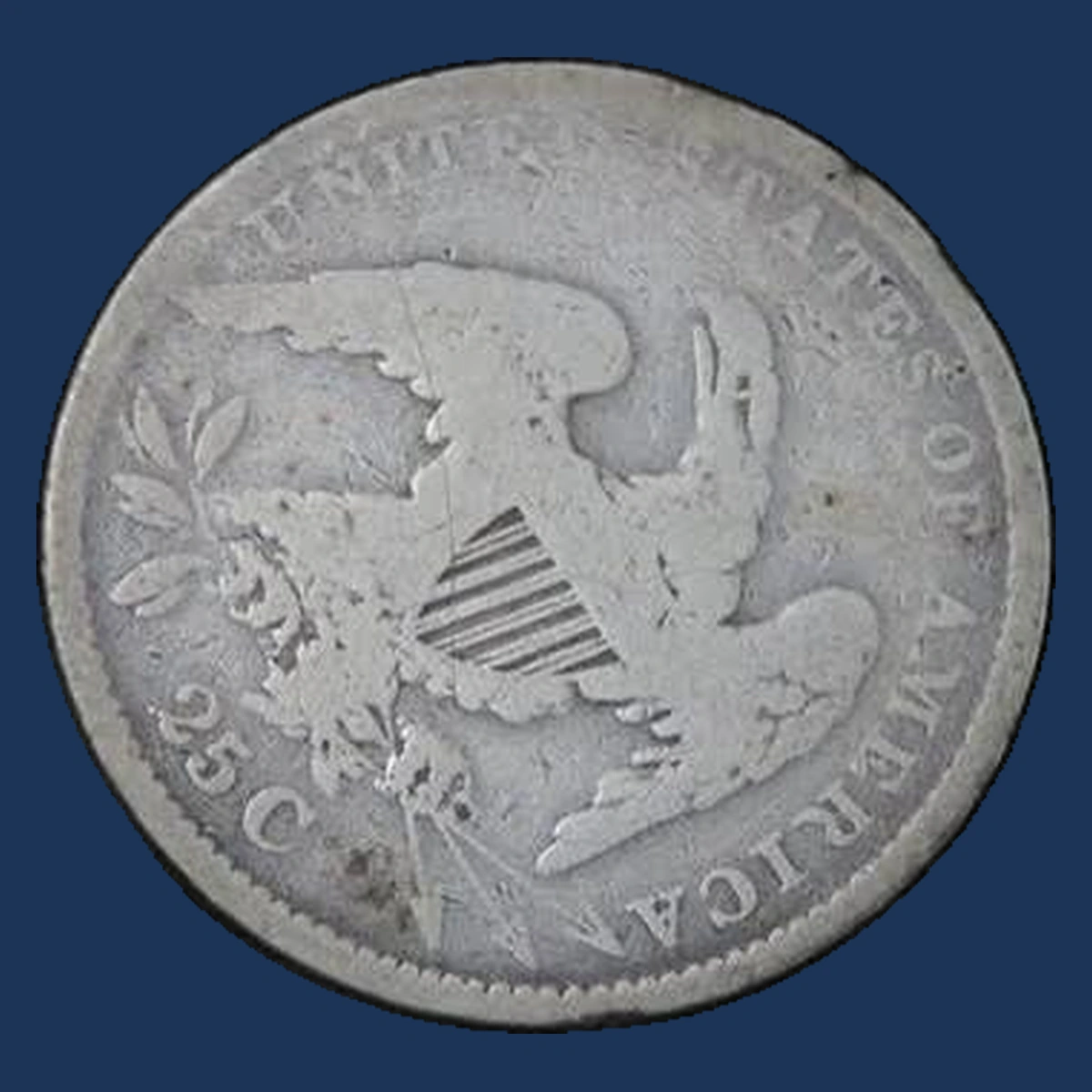
The eagle can appear tilted when the portrait is held upright and the quarter is flipped from top to bottom. The two stamping tools were not aligned in their normal relationship.
GreatCollections cataloged an 1834 quarter with rotated dies in NGC VF25 condition, indicating moderate wear. Its written description does not give an angle.
A different collector-owned example is reported as fifty degrees clockwise. It has NGC Uncirculated Details status with cleaning noted, so it retains unworn detail but has a surface problem.
The collector also describes the crack and clash discussed above on that same fifty-degree coin.
Estimated Value
PCGS records a $180 Heritage sale in May 2019 for the NGC VF25 rotated-dies quarter. The matching certification record also appears in GreatCollections’ 2023 listing, whose price is hidden.
Estimate $150–$2,500 for genuine rotated examples across circulated through lower unworn condition. The amount of rotation and surface quality both influence value.
The separate cleaned fifty-degree piece should not inherit the VF25 coin’s price or unidentified angle.
How to Identify
Practice with a normal United States quarter first. Hold its portrait upright and turn it top to bottom, keeping the twelve-to-six line fixed so the reverse finishes upright.
Repeat that same movement with the 1834 quarter and note where the eagle ends up. Turning left to right or twisting your fingers can create a misleading angle.
For a loose coin, use a clear protective holder and a protractor or aligned photographs to measure the difference. A sealed coin can stay in its holder while you record one continuous flip.
The reported fifty-degree clockwise angle belongs to the collector’s example. Measure the candidate’s own alignment rather than setting its photographs to that angle.
4. 1834 Capped Bust Quarter Recut Reverse Letters, Often Called O/F
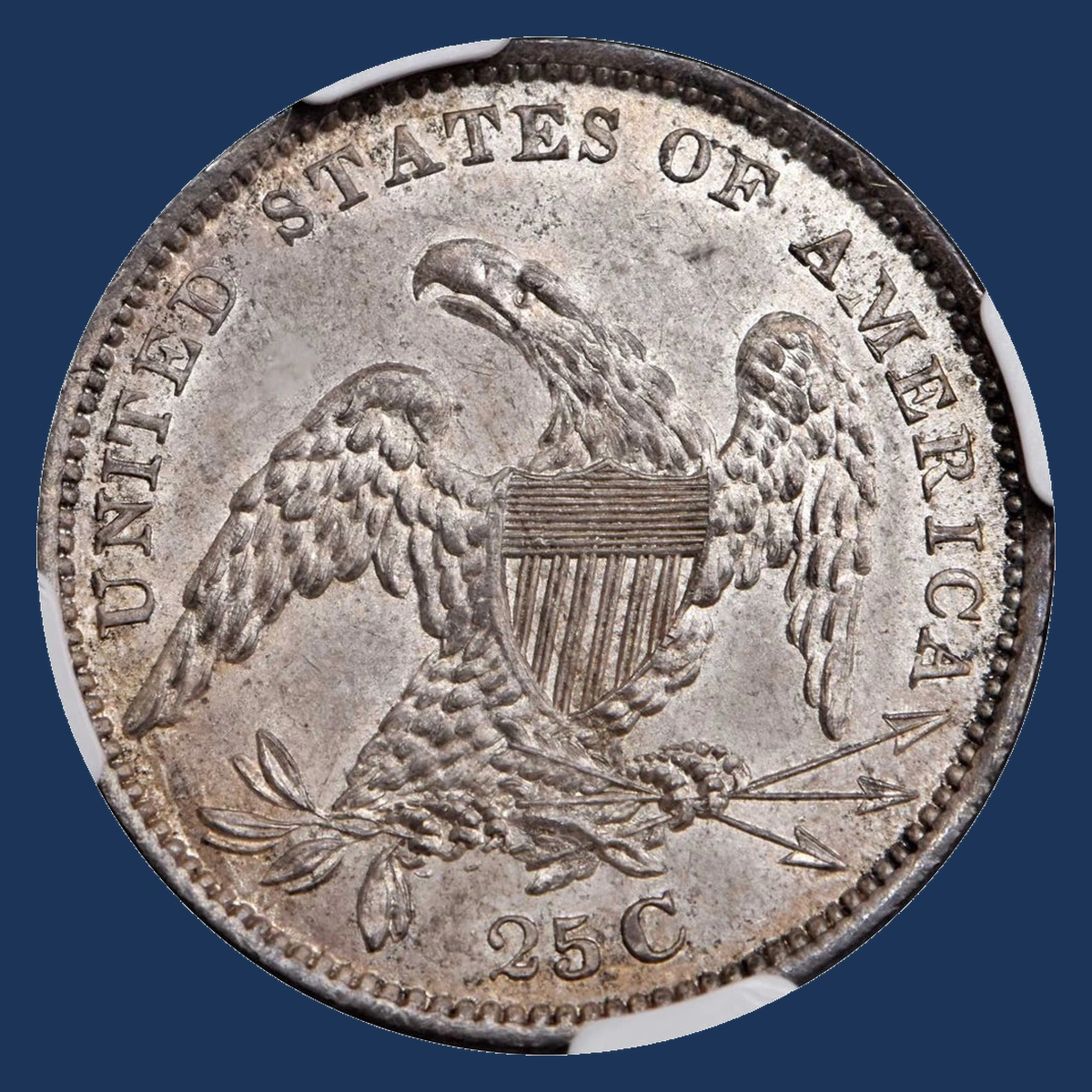
A second F appears between the normal O and F on an early Browning-1 reverse. The top of an extra A also shows between OF and AMERICA.
The inscription was entered again while the tool was prepared, leaving parts of earlier letters. These remains explain the variety better than the old O/F nickname, which suggests only one letter was replaced.
The same reverse has two lines in each shield stripe and no period after the denomination. Later polishing of the tool could remove the extra letter traces.
Those background details help distinguish a match from ordinary thick or worn lettering.
Estimated Value
For examples with recognizable extra letters, estimate $100–$3,000 across worn through modest unworn condition. The amount of preserved detail matters because wear and later tool polishing can hide the small remnants.
This is a whole-coin estimate for the recut-letter variety, not a fixed payment for an O/F label. Compare the visible F and A before deciding how closely another sale resembles the coin.
Cleaning or distracting marks across the inscription can reduce interest even when its variety is correctly identified.
How to Identify
Read OF on the eagle side with a magnifier, looking in the space between its two letters. Find the extra F before moving right to seek the top of the earlier A before AMERICA.
Photograph those two remnants in one view so their spacing can be compared. Then check the shield stripes and the area after 25 C for the supporting Browning-1 details.
A later polished tool may no longer show the extra letters, so their absence needs careful interpretation. For a clear recut-letter example, the matching F and A remnants offer a more direct check than the nickname or general lettering thickness.
Conclusion
The estimated $100–$3,000 span covers several kinds of 1834 quarter features in ordinary collectible conditions. A rotated back, transferred design traces, a crack, and recut letters each need a different check.
Three of those features occur together on the collector’s cleaned example. Judge that coin as a whole, while keeping its individual marks separate from a different specimen’s price or measured angle.