1846 Quarter Error List with Pictures

The small round tip of the 6 is worth a close look on an 1846 quarter. A second tip can survive below it where the date was first punched too low.
A well-preserved example of this variety sold for $9,106.25 in December 2014. Raised cracks provide another way to recognize damaged stamping tools.
Use this 1846 Liberty Seated Quarter error guide to compare those features and a reported back-rim break. Estimated whole-coin values range from $50–$15,000; keep reading for the key checks.
1846 Liberty Seated Quarter Raised Cracks and Rim Breaks
A thin raised line can show where a steel stamping tool cracked. Coin metal entered the crack under pressure, leaving a ridge rather than a cut.
An 1846 auction example has back cracks near the eagle’s beak, wing, AMERICA, and arrows. Another description follows a front crack through the date area toward Liberty’s foot.
A separate listing reports a back cud, a raised lump formed when steel breaks away at the rim. It gives no exact position.
A thin crack and a solid rim lump need different checks, even on coins of the same date.
Estimated Value
For circulated quarters in this group, estimate $50–$1,500. A small crack may add very little to the price of the normal 1846 coin.
Larger, clearly original breaks can draw stronger interest. A reported cud should receive that allowance only after the raised lump is shown to join the rim naturally.
Preservation matters as well: heavy wear, cleaning, or deep scratches can outweigh interest in a narrow line. An attractive coin need not have the largest defect.
How to Identify
Follow the lines around the eagle before inspecting a suspected rim lump. On the cataloged cracked example, look below the beak toward the wing and around ME and R in AMERICA.
Another line runs from the upper arrowheads toward the period after the denomination. A front example follows the date base toward the foot; use its own photograph rather than combining both patterns.
Side lighting should reveal a ridge above the surface. A scratch lies below it, although pushed-up metal can border a deep scrape.
For a suspected cud, inspect the edge connection and the design that the lump replaces. Solder or a rim blow can imitate extra metal, so compare its boundary with the reported error type before paying a premium.
1846 Liberty Seated Quarter Repunched 6
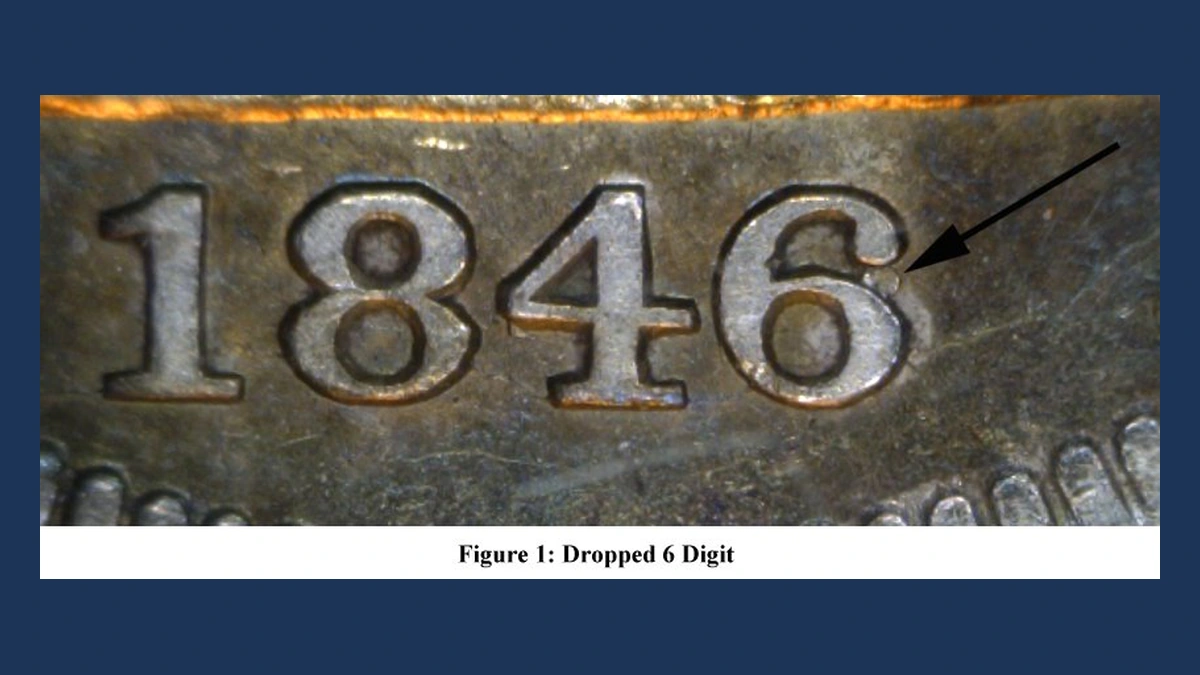
The 6 can have an extra rounded tip between its normal tip and lower loop. That remnant shows an earlier, lower position of the date punch.
The worker corrected the position in the steel stamping tool, called a die. Part of the first impression remained and was copied onto the coins.
This variety is known as Briggs 2-D. The catalog number identifies a particular pair of tools, rather than a grade or a second error.
The coin was not struck twice to produce the repeated date detail, and the extra shape belongs to another 6.
Estimated Value
The same variety in PCGS MS65 sold for $9,106.25 on December 4, 2014 at Heritage. MS65 describes an attractive unworn coin with relatively few marks.
Estimate $100–$15,000 from worn examples through well-preserved unworn pieces. This is the complete quarter’s price; the scarce date and condition account for much of it.
A readable extra tip helps identify the variety. It does not make a heavily worn coin equal to that high-grade auction example.
How to Identify
Compare an ordinary 6 with the enlarged date on your coin. Find the main rounded tip and lower loop before deciding whether anything extra is present between them.
A 10× magnifier should help separate the smaller remnant from dirt or glare. Move the light slowly so you can see the same shape from several directions.
The extra rounded tip should occupy the known lower position. Irregular metal pushed into the opening by a dent does not show the same clean relationship to the numeral.
Check the complete date and the quarter’s eagle-and-shield back so a different 1846 denomination is not used for comparison.
An identified Briggs 2-D photograph provides the decisive comparison: match the extra tip between the two normal parts of the 6.
Conclusion
Two different tool problems explain the main 1846 checks: a misplaced first punch of the 6 and cracks or breaks in the stamping steel. The extra rounded tip requires a date close-up; a crack needs raised relief and the correct path.
Estimated whole-coin prices span $50–$15,000. The $9,106.25 repunched-date auction coin was exceptionally well preserved, so compare wear and surfaces before applying its price.