1854 Quarter Error List with Pictures

The arrows beside 1854 are normal, but a sideways eagle or a missing stretch of design deserves attention. These quarters can carry errors from damaged tools, uneven alignment, or faulty metal.
One 25% off-center example brought $2,400 in January 2023, according to the published auction record. This 1854 Liberty Seated Quarter error guide covers estimated whole-coin values of $30–$6,000.
Read on to separate the five error groups and recognize the valuable Huge O coin that also has peeling metal.
1. 1854 Liberty Seated Quarter Rotated Back Design
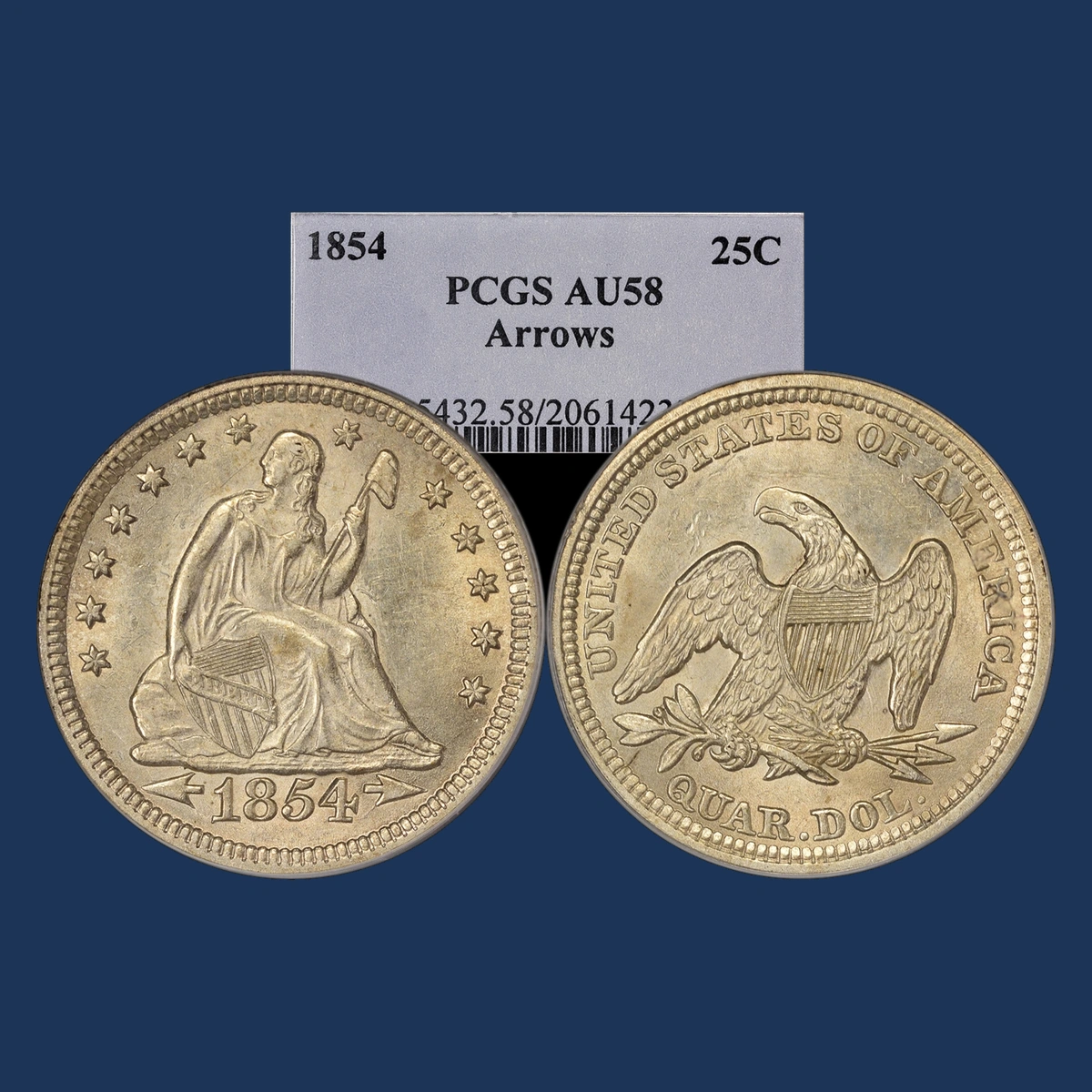
An eagle that leans after you turn the coin top to bottom can reveal a rotated stamping tool. On a normal quarter, that turn brings the back upright.
The steel tools that stamped the two sides are called dies. If one turned out of alignment, the coin received designs at the wrong angle to each other.
Published 1854 examples show about 60 degrees and 80 degrees of clockwise rotation. These are separate coins, not two measurements of one example.
The whole back design turns together, including its surrounding words.
Estimated Value
Estimate $50–$500 for circulated 1854 quarters with a clearly demonstrated rotation. The degree of wear and the size of the turn both influence the price.
A noticeable 60- or 80-degree turn is easier to show a buyer than a small tilt. Original surfaces and a readable date help, too.
This range covers the complete coin; a scratched or heavily cleaned example should not receive the same allowance as an attractive one.
How to Identify
Hold Liberty upright and grip the coin at its left and right edges. Turn it top to bottom without twisting your fingers sideways.
The eagle should now stand upright. If it leans, repeat the turn several times while keeping the same grip.
A clear holder can help keep the front fixed while you check the back. Use a photograph with a straight vertical guide to measure the eagle’s angle, rather than guessing from its wings.
Never measure two loose photographs that someone may have rotated separately. A sideways flip also produces a different result from the top-to-bottom test.
The back lettering should lean by the same amount as the eagle. A repeatable tilt during the fixed top-to-bottom turn identifies the alignment problem.
2. 1854 Liberty Seated Quarter Misaligned Back with a High Rim
A high rim on one part of the back can accompany a design that sits off to one side. An 1854 quarter with this appearance was listed in a Jim’s Coins auction catalog.
The catalog called it a misaligned reverse die, meaning the back stamping tool was out of position. The coin was described as Very Fine, showing moderate wear.
This differs from a whole coin struck off center. A misaligned tool can move one face while the opposite face remains normally centered.
The raised rim and shifted back must be examined together.
Estimated Value
A practical estimate is $50–$600, depending on how clearly the shifted back and high rim survive. Strong, natural relief and an undamaged edge make the error easier to recognize.
The original catalog listing gave a $60 minimum bid. That was the opening requirement, not a recorded selling price.
Heavy rim blows, cleaning, or weak surviving detail can reduce collector interest even when the original alignment error is genuine.
How to Identify
Put photographs of both faces beside each other, keeping each full edge visible. Compare the distance between the outer lettering and the rim around the back.
An off-position back paired with a centered front supports a misaligned tool. If both faces lose corresponding parts of their designs, consider an off-center strike instead.
Now inspect the high rim from the side. Metal pushed inward by a later blow may overlap the face or leave flattened edge grooves.
Use angled light to separate that damage from a rim formed during striking. A normal loose coin is about 24.3 mm across, but an odd diameter alone cannot name this error.
Check the centered front against the shifted back first; that contrast is more useful than rim height by itself.
3. 1854 Liberty Seated Quarter Cracks and Raised Lumps from Broken Tools
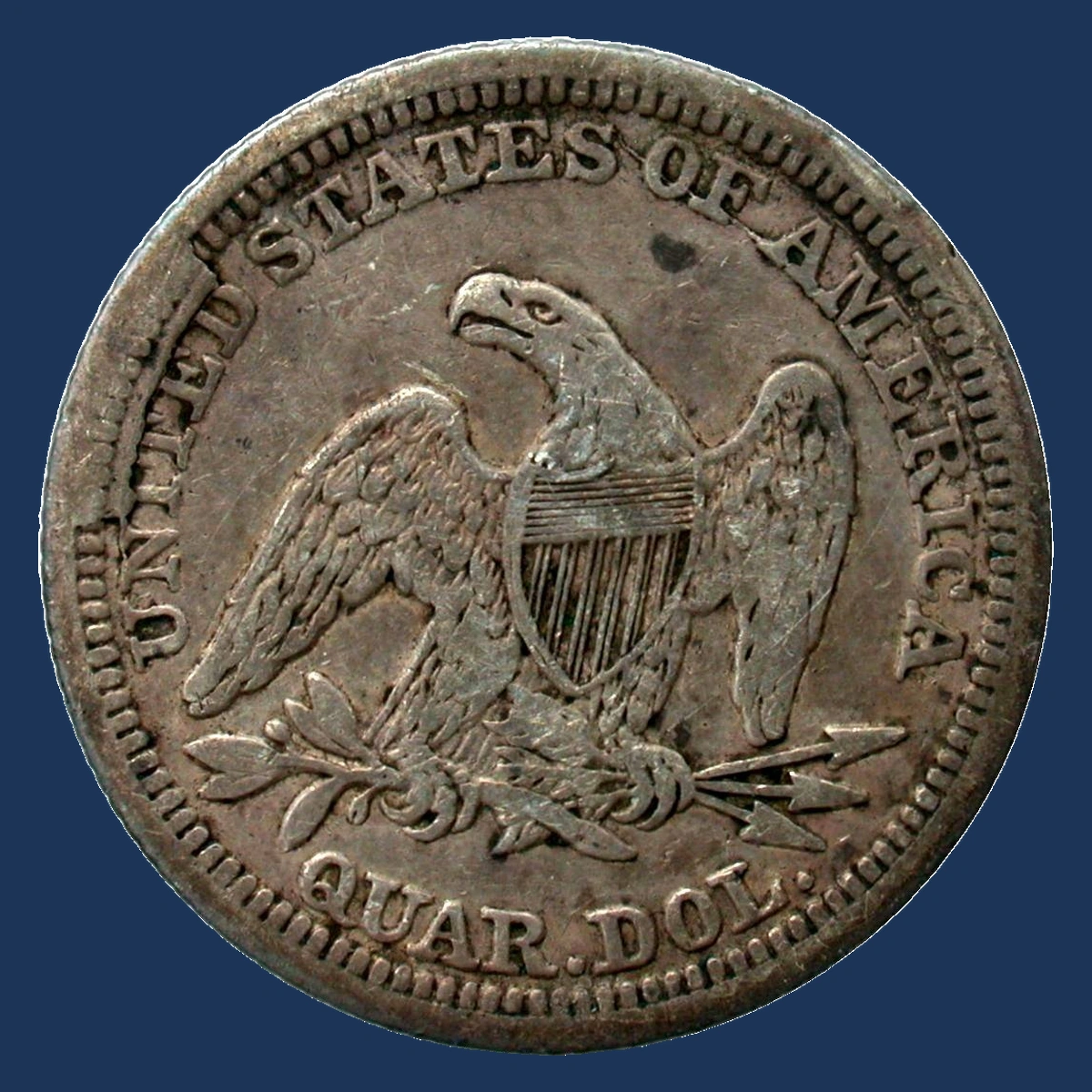
Raised lines and lumps can record damage to the stamping tools. A crack in the steel produces a raised line on the coin.
When a piece breaks away at the edge, metal can fill the gap and form a rim-connected lump called a cud. Several Philadelphia examples have breaks on either face.
One back crack crosses from the lower-left border through the eagle’s wings and shield. A separate 1854-O variety has a filled 4 and a lump above the right arrow.
These marks belong to different examples, not one combined pattern.
Estimated Value
Allow approximately $30–$1,500 for circulated examples across this group. Small cracks may add little to the value of an ordinary quarter.
A bold rim-connected break or a clear filled-date and arrow combination can attract more attention. Wear may hide the finer lines while leaving a larger lump easy to see.
The mint, overall condition, and size of the break matter together. This estimate is for the whole coin, including its normal collector value.
How to Identify
For the New Orleans variety, find the O below the eagle before studying the date. Compare the filled 4 and the top of the right arrow with the published variety.
On a Philadelphia quarter with a long back crack, follow the raised line from the eight o’clock border. It passes through the left wingtip, shield stripes, and right wing.
A rim lump requires a different check: follow its boundary to the edge and inspect any surviving design within it. A retained break can preserve some design because the broken steel remained partly in place.
Use side lighting and a magnifier to distinguish raised metal from an incised scratch. Match the particular line or lump to that example’s photograph, without adding features from another coin.
4. 1854 Liberty Seated Quarter Off-Center Strike
Part of the coin stays blank when the metal disc sits too far outside the stamping tools. The opposite part receives a design that runs off the edge.
A published 1854 example was described as 25% off center and graded VF25 by NGC. That grade indicates a circulated coin with moderate wear.
The percentage describes how much of the strike missed the disc, not an angle around the rim. Both faces help show the error.
A clear date is especially useful because it identifies an unusual strike as an 1854 quarter.
Estimated Value
An estimated $500–$5,000 covers circulated examples with a clear date and substantial displacement. More complete identifying details can improve appeal even when much of the remaining design is missing.
Greysheet’s auction record reports $2,400 at Heritage on January 23, 2023 for the 25% off-center NGC VF25.
That is a useful same-year example. A smaller shift, severe damage, or a partly lost date can produce a different result.
How to Identify
Begin with the blank area, rather than the apparent lean of Liberty. Look for a smooth unstruck portion that belongs to the original metal disc.
Then trace where the stamped design reaches the opposite edge. A genuine off-center strike loses part of the design there; a wide coin retaining the full design may instead be a broadstrike.
Turn the coin over and check for corresponding displacement on the back. One shifted face with a normally centered opposite face suggests tool misalignment.
A scale provides a useful damage check: an unworn normal quarter of this year weighs about 6.22 g. Wear can lower that figure, but filing away a large arc removes metal too.
Look for the paired blank area and naturally cut-off design on both faces.
5. 1854 Liberty Seated Quarter Peeling Metal on a Huge O Coin
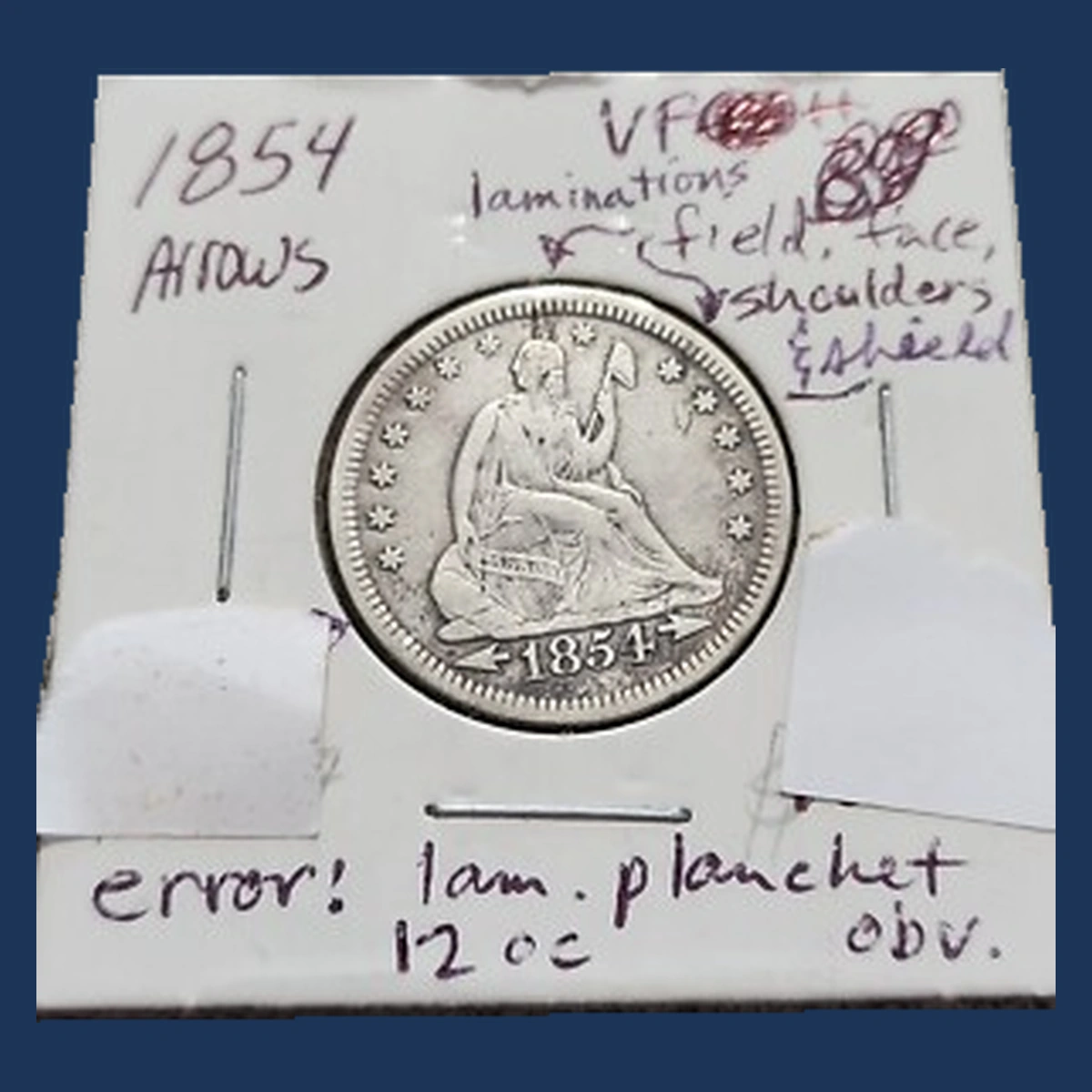
A thin patch of the front surface can lift or peel away, exposing rough metal underneath. Collectors call this a lamination error.
The problem starts within the metal, where impurities or poorly joined layers create a weak area. Striking and later handling can make that layer separate.
A collector described an 1854-O Huge O quarter in Fine-plus condition with a small front lamination. The oversized O mintmark is a separate identifying feature.
The peeling patch does not cause the large mintmark, and the coin’s variety value must be considered on its own.
Estimated Value
For a circulated Huge O coin with a small lamination, estimate $700–$6,000. Much of that value comes from the scarce mintmark variety, rather than the peeling metal.
The collector’s published account describes buying the Fine-plus example for $45 after spotting the overlooked variety. That bargain purchase is not a normal retail benchmark.
A damaged-looking peel can reduce what a variety collector pays, especially if it obscures important detail.
How to Identify
First identify the unusually large, irregular O below the eagle. Compare its shape with a recognized Huge O example instead of treating any thick-looking mintmark as the variety.
The lamination is a second check on the front. Under gentle side lighting, look for a thin broken layer, a lifted edge, or a shallow rough patch where metal separated.
Leave loose metal alone. Pressing or cleaning it can remove the feature and damage the coin.
A scrape often cuts across the existing design and leaves tool marks; corrosion usually produces pits rather than a distinct peeling layer. A magnifier helps you follow the patch boundary.
The normal 6.22 g weight is only a broad reference, since wear and a small missing flake change little. Find an actual layer edge before calling a rough spot lamination.
Conclusion
These 1854 quarter errors span estimated whole-coin values of $30–$6,000. A faint crack, a rotated back, and a large off-center strike each need a different visual check.
The recorded 25% off-center coin brought $2,400, while the laminated Huge O example also carries value from its scarce mintmark. Check both faces and keep the variety’s value separate from any extra interest in the error.