1867 Quarter Error List with Pictures

Even a remarkably well-preserved 1867-S quarter can have a small metal flaw and faint stars. One NGC MS67 example sold for $88,125 in May 2015 with both features.
The 1867 quarter errors and striking features below range from a tiny tool mark to a missing metal flake. Estimated whole-coin values run from $300–$100,000, reflecting the scarce San Francisco issue and its condition.
Read on to separate these original features from later wear and damage.
1. 1867-S Liberty Seated Quarter Weak Outer Stars
The stars near the rim can look flatter than the figure at the center. This difference occurs when metal fails to fill every small hollow in the stamping tool equally.
Weak outer stars are a familiar striking feature of this issue, rather than proof of a rare separate error. A coin can retain an unworn surface while these small details remain incomplete.
The Gardner example graded NGC MS67 shows this contrast. Its high grade describes its exceptional preservation, not a promise that every star received a perfectly complete impression.
Estimated Value
Use an estimated whole-coin range of $300–$100,000 for genuine 1867-S quarters across widely different levels of preservation. Weak stars alone do not earn an added error premium.
The NGC MS67 Gardner coin brought $88,125 on May 12, 2015. That price reflects an exceptional rare-date coin, not the value of faint stars by themselves.
Compare the remaining surface and central detail with coins in similar condition. A heavily worn example is not priced like this outstanding survivor.
How to Identify
Look across the center before judging the stars. If Liberty and nearby lettering remain sharp while the outer stars lack detail, uneven striking is a useful explanation.
Now tilt the surface under light and look for rubbing on the highest points. Wear removes metal after striking and can leave smooth, dull patches beyond the weak star details.
Compare the same stars with photographs of other 1867-S quarters, rather than a perfectly struck quarter from another year. Keep both faces in view when judging the overall amount of wear.
The important distinction is incomplete original detail on a preserved surface versus detail later rubbed away. Soft stars by themselves do not establish a separate rare error.
2. 1867-S Liberty Seated Quarter Raised Line inside S
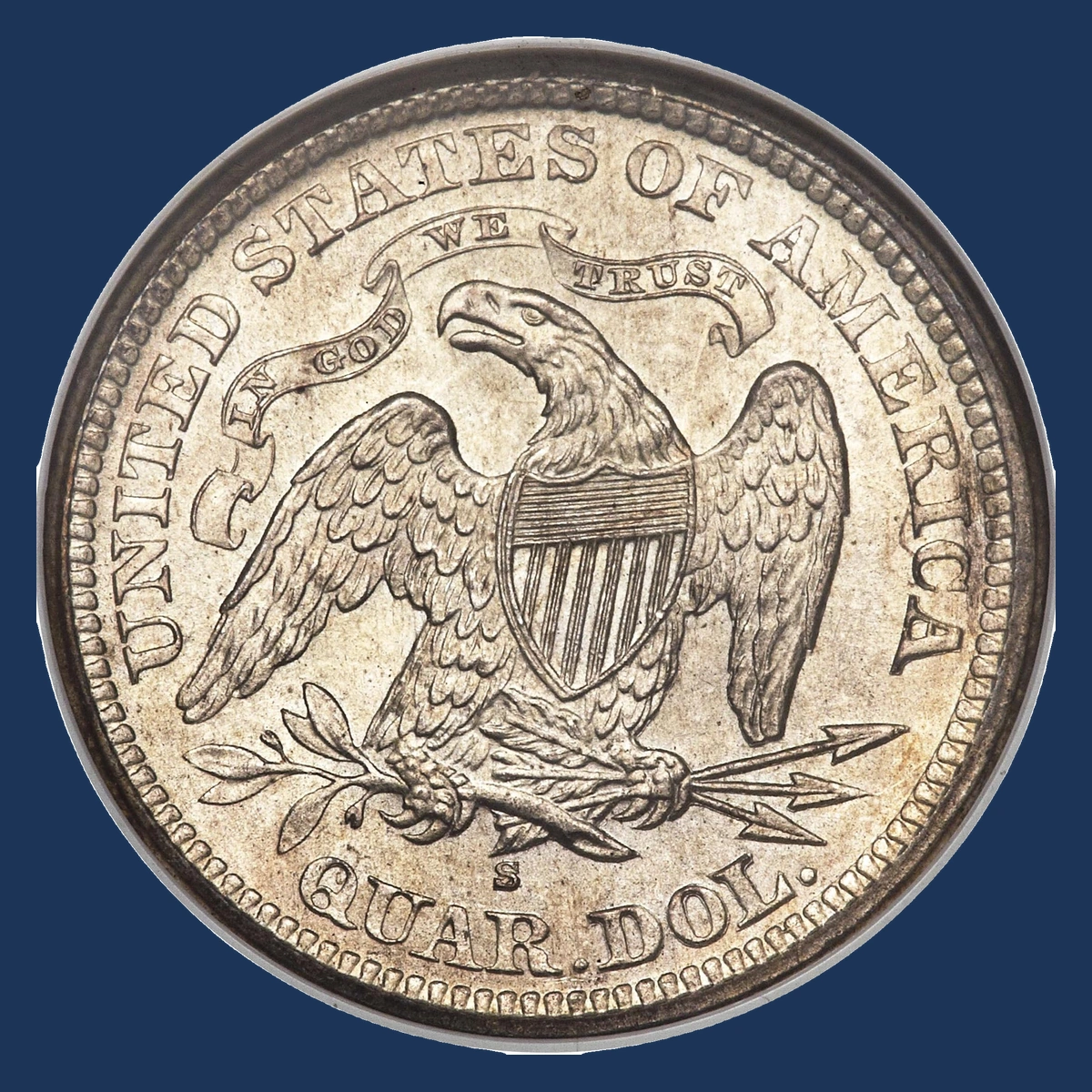
A small, sharp line appears inside the lower curve of the S below the eagle. It came from a scratch in the steel stamping tool, which left raised metal on coins.
This mark helps identify the back tool used for the Briggs 1-A variety. The same tool had also been used for 1866-S quarters.
The mark is therefore different from a scratch cut into a finished coin. It also does not represent a second S punched over the first, since a short line alone is not another letter shape.
Estimated Value
An identified example belongs within the estimated $300–$100,000 whole-coin range for 1867-S quarters. The tiny line helps identify the tool; it is not a separately priced rare mint-letter error.
A PCGS MS63 example sold for $20,700 in August 2011 at Stack’s Bowers. That grade describes an unworn coin with less pristine surfaces than the MS67 comparison.
Look at wear and surface damage across the entire quarter before placing it within the range.
How to Identify
Locate the S on the back and examine the space inside its lower loop with a magnifier. A short sharp line there should be compared directly with a clear Briggs 1-A photograph.
Move the light across the letter to see whether the line rises above the surface or cuts into it. A groove with disturbed metal at its edges can be a later scratch.
Then read the front date carefully: the shared back tool means this mark alone cannot distinguish 1867 from 1866. Match the full S shape and surrounding design as well, because an isolated line is not enough to authenticate the coin.
3. 1867-S Liberty Seated Quarter Fine Crack beside the Date
A faint raised line can be found above and left of the first 1. It comes from a crack in the stamping tool, into which the coin’s metal flowed during striking.
This is called a die crack, with die meaning the steel tool that stamps the design. It should not be confused with a crack splitting through the coin itself.
The line is recorded on the Gardner MS67 example. Its faintness means lighting and surface preservation matter, and a deeper scratch in the same general area is not a substitute.
Estimated Value
Estimate $300–$100,000 for the complete genuine 1867-S quarter, depending on condition. A small tool crack usually helps explain the coin’s appearance rather than setting an independent five-figure price.
The crack occurs on the same Gardner coin discussed with the weak stars and metal flake. Those observations describe one object and must not be priced as three separate auction purchases.
Clear original surfaces make a faint line easier to study. Cleaning or heavy wear can obscure it.
How to Identify
Use a lamp low to the surface so a faint raised line can cast a small shadow. Examine the area above and to the left of the first date digit.
Compare the line with the documented example before tracing it farther across the coin. Do not assume every scratch running toward the date follows the same path.
Tilt the quarter in the opposite direction to check that the feature remains raised. A cut into the coin can look bright from one angle and disappear from another.
Keep the coin uncleaned.
Photographs should include the 1 and nearby design, since their positions help distinguish this fine tool crack from an unrelated mark elsewhere.
4. 1867-S Liberty Seated Quarter Small Metal Flake beside 7
A small piece of surface metal is missing just right of the 7 on the Gardner coin. The auction description identifies it as a flaw in the original metal blank.
A blank is the disk that receives the coin design. A weak area in that metal can separate as a small flake instead of staying joined to the surrounding surface.
This localized flaw belongs to that particular coin, unlike a tool mark copied onto multiple pieces. Other 1867-S quarters should not automatically be expected to have an identical flake beside the date.
Estimated Value
A genuine 1867-S quarter with a small original metal flake has an estimated whole-coin range of $300–$100,000. Preservation and the date’s scarcity can matter much more than this tiny flaw.
The Gardner sale record describes the flake on its NGC MS67 coin. Its strong auction result does not establish a separate premium for missing metal.
For another coin, compare the size and effect of the flaw alongside wear, scratches, and cleaning.
How to Identify
Find the final 7 and examine the small area immediately to its right. Compare its outline with photographs of the Gardner coin, keeping the date visible for position.
Look closely at the boundary of the missing metal. A scraped patch or gouge may have sharp tool tracks, pushed-up edges, or damage extending through nearby finished detail.
Inspect the surrounding surface under changing light without probing the opening. Pulling at a loose edge can enlarge a real flaw and destroy useful evidence.
A matching flake location identifies this example, not every 1867-S quarter. If your coin has a different patch, have that patch judged on its own metal and surface features.
Conclusion
These 1867-S features fit an estimated whole-coin range of $300–$100,000, with rarity and preservation doing most of the work. Weak stars, a tool line, a fine crack, and a small metal flake need different checks.
Compare each feature in its stated location, then judge the complete coin. Several features on one quarter do not create several separate prices to add together.