1871 Quarter Error List with Pictures

Two tiny details help identify the scarce 1871-CC quarter: repeated date strokes and raised dots beside LIBERTY. The 1871 quarter errors here come from the stamping tool used for that Carson City issue.
A PCGS MS65 example sold for $456,000 in August 2022. Estimated whole-coin values run from $5,000–$456,000, driven largely by rarity and condition rather than separate charges for these marks.
Follow the checks below to find both features without confusing them with scratches or deposits.
1871-CC Liberty Seated Quarter Repeated Date Strokes
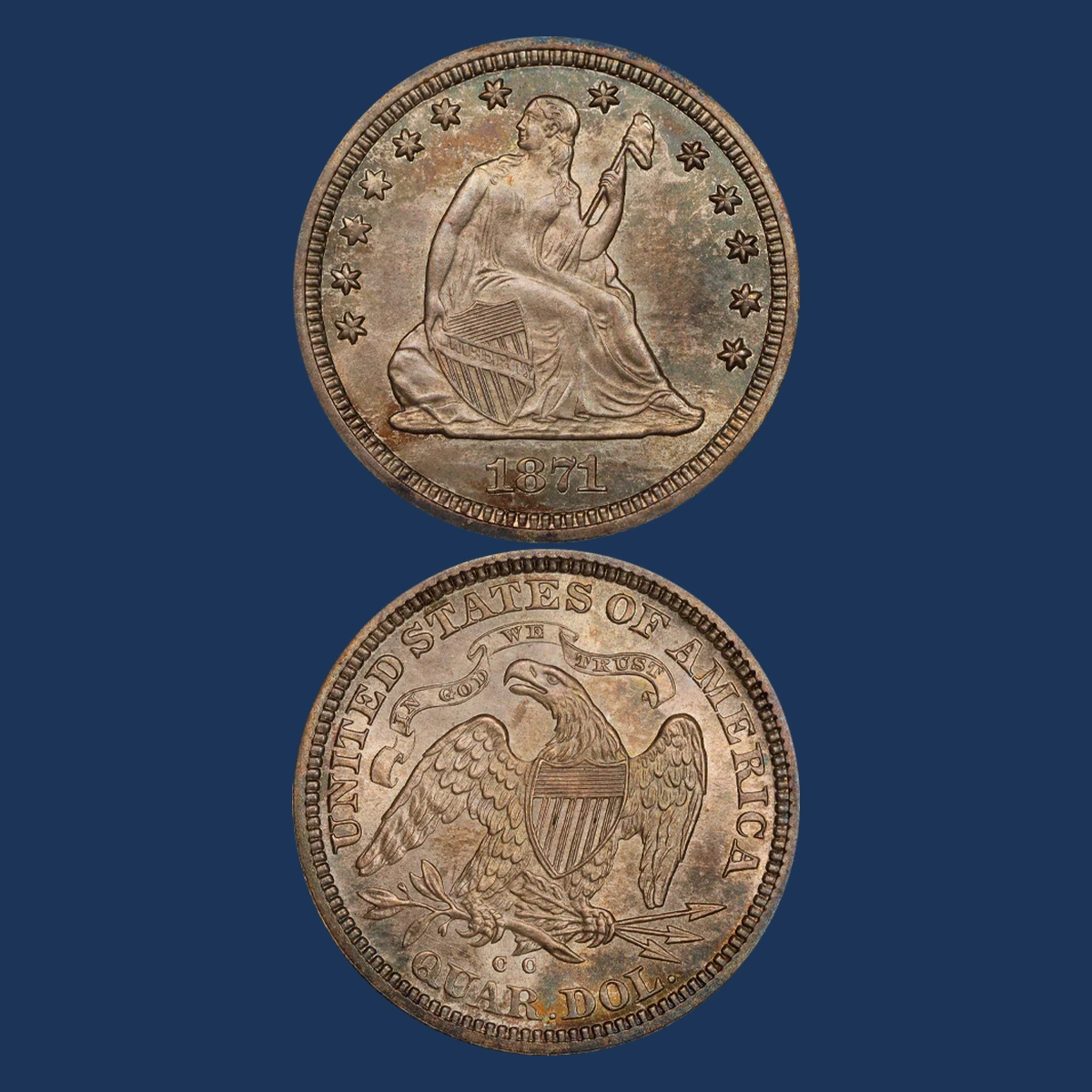
The two 1s in the date have small extra strokes around them. Earlier impressions remain below parts of the first 1 and beside the base and upright of the final 1.
The date was punched into the steel stamping tool more than once, with slight shifts between impressions. That process left repeated shapes on coins struck from the tool.
All known 1871-CC quarters belong to this repunched-date variety, according to Stack’s Bowers. The marks therefore help identify the rare issue rather than separate a few unusual coins from a large normal group.
Estimated Value
Estimate $5,000–$456,000 for genuine 1871-CC quarters across heavily worn examples through exceptional unworn coins. This wide range values the complete rare coin, not the extra date strokes alone.
PCGS records an MS65 example at $456,000 on August 28, 2022, at Heritage. Such a top-condition sale is not the expected price for a worn example.
Cleaning, damage, and lost detail can sharply affect the comparison within the range.
How to Identify
First read the CC below the eagle on the back. This pattern belongs to Carson City quarters, so a date alone cannot identify the correct issue.
On the front, magnify the first 1 and inspect below its top flag and base. Then check the final 1 for extra lines near the upper-right side of its base and beside its upright.
Compare the raised remnants with clear photographs of the Briggs 1-A variety, also called Flynn RPD-001. Wear can hide parts of the pattern, and one sharp scratch should not replace the expected shapes.
Have the complete coin authenticated before treating a matching date as proof of a genuine rare CC quarter.
1871-CC Liberty Seated Quarter Raised Dots from a Rusted Tool
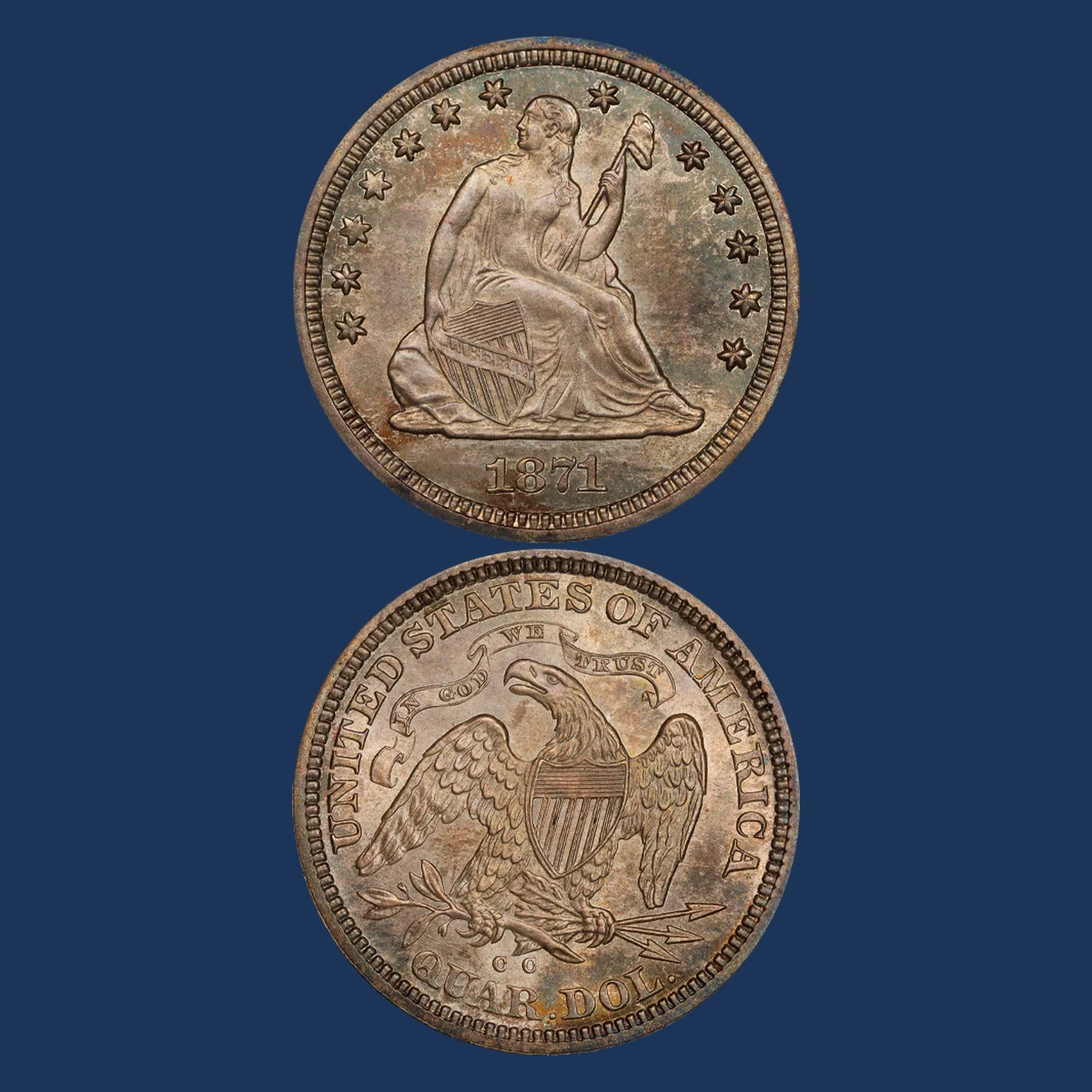
Two tiny bumps appear in the gown folds just right of the Y in LIBERTY. They are raised parts of the coin’s metal, rather than loose dirt sitting on top.
Rust can eat small hollows into a steel stamping tool. When coin metal fills those hollows during striking, the finished coin carries raised dots in the same places.
Stack’s Bowers identifies these two dots as features of the 1871-CC front tool. They accompany the repeated date strokes, but came from a different change to that tool.
Estimated Value
For an authentic 1871-CC quarter with these tool marks, use the same estimated whole-coin range of $5,000–$456,000. Do not add a second amount for the dots to the value of its repunched date.
The coin’s remaining detail and surface condition drive the comparison. Clear dots can help identify the tool, but do not make a worn coin equal to an exceptional unworn example.
Corrosion or added material is damage, even when it creates a similar-looking bump.
How to Identify
Find LIBERTY on the shield, then move right of the final Y into the folds of the gown. Use a magnifier to locate the two small raised dots in that area.
Change the lighting to compare their edges with the surrounding struck metal. Leave any dirt or residue untouched, since scraping can remove original detail as well as a deposit.
A clear photograph of a genuine 1871-CC provides the needed comparison for the dots’ placement and spacing. Check the repeated date and CC mintmark as well, because these bumps alone cannot authenticate the entire coin.
If wear has smoothed the folds, missing dots do not by themselves prove that the coin is false.
Conclusion
For these 1871-CC features, the estimated $5,000–$456,000 range describes one complete rare quarter. Its repeated date and two raised gown dots are clues to the stamping tool, not premiums to add together.
Look at both 1s, then beside the Y in LIBERTY. Clear matching details support identification, while professional authentication remains important before pricing a potentially valuable Carson City coin.