1907 Quarter Error List with Pictures

Even a small shift can matter on an old quarter. A 1907-S graded PCGS AU53, struck just three percent off center, is offered at $2,250 by a specialist dealer.
That is an asking price, not an auction result. Other 1907 quarter errors appear in the stars, mint letter, or date rather than the outline.
Estimated whole-coin values below span $50–$6,000. Read on to compare these different ways the design could go wrong.
1. 1907 Barber Quarter Doubled Stars and Ribbon Ends
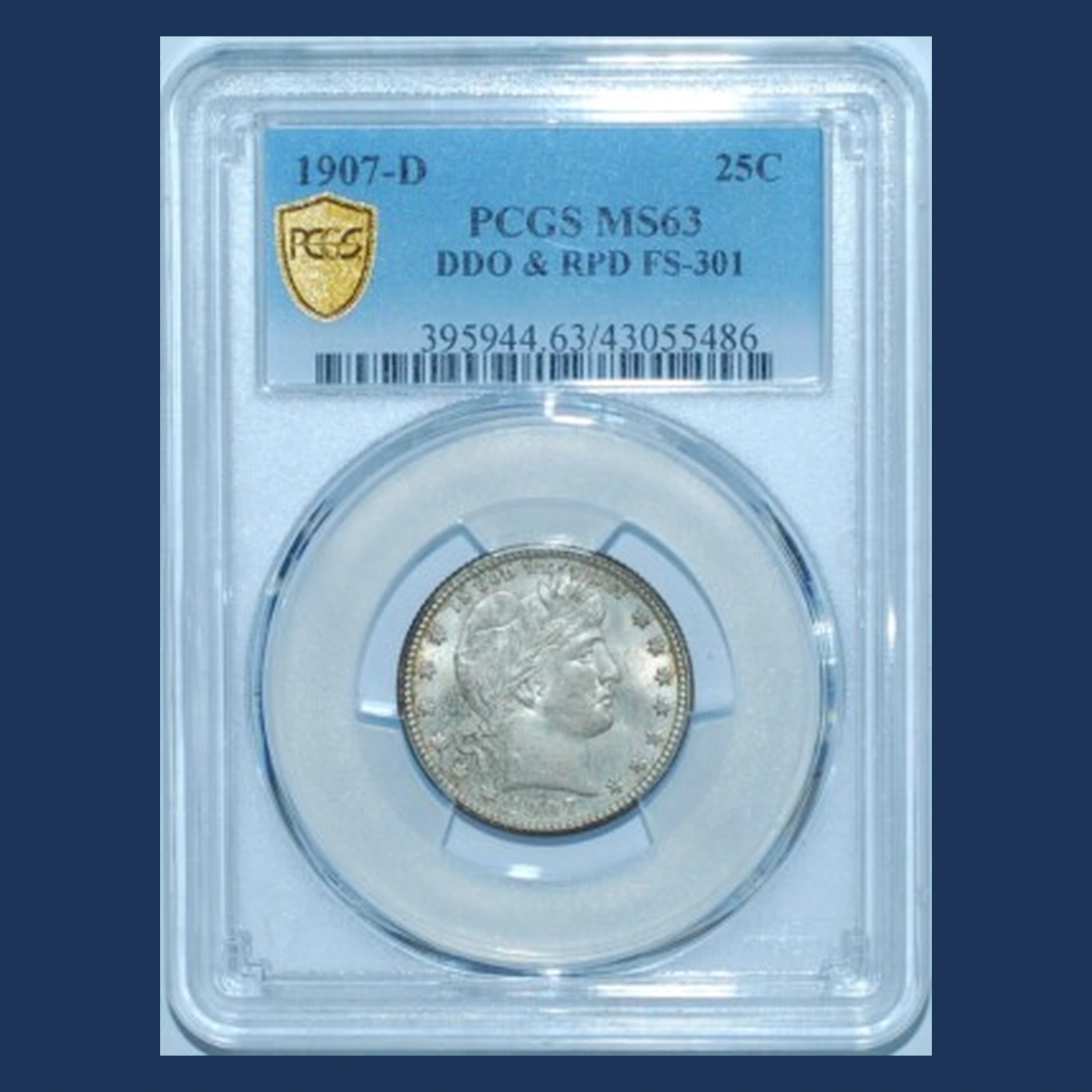
The first two stars and the ribbon ends provide useful places to examine on the Denver doubled-front variety. Extra raised detail at these points can come from an image doubled on the steel stamping tool.
That tool is called a die. Once its design was doubled, the same pattern could appear on multiple coins struck from it.
The Barber Coin Collectors’ Society reports these locations for 1907-D. They describe a specific pattern within the front design, rather than a whole second portrait caused by striking the individual quarter twice.
Estimated Value
For an identified 1907-D doubled front, estimate $50–$1,000. The clearest extra star points and ribbon edges are more appealing than details nearly erased by wear.
A separate silver-quarter doubled-front variety, the 1945 Philadelphia FS-101 in PCGS MS65, sold for $552 in March 2018. That different date offers a broad comparison, not a price for the Denver Barber variety.
Scratches, cleaning, and flat strike-related shelves need to be distinguished before choosing a value within the estimate.
How to Identify
Compare the ribbon ends with a normal 1907-D quarter under the same light. Look for extra rounded edges or split corners that cannot be explained by the ordinary ribbon shape.
Then examine stars one and two, checking whether their extra detail belongs to the same repeated pattern. Do not judge the variety from a single wide star on a worn coin.
A 10× magnifier can separate a low flat ledge from fuller raised doubling. Change the light angle so a reflected highlight does not seem like a second edge.
Include the D below the eagle in a back photograph. The mint identifies which reference coin to use, even though the doubling being checked is on the front.
2. 1907 Barber Quarter Repeated S Mint Letter
The S on the back can show an extra curve from an earlier punch position. Mint workers applied the letter separately to the stamping tool, and another impression could leave part of both shapes.
The reported eastward variety has extra S detail to the right of the main letter. A separate rotated-punch variety involves a turned impression rather than a simple sideways shift.
These belong to the same repeated-mint-letter category, but their shapes should be compared separately. A possible third impression has also been suggested for the eastward type; it is not required to identify every example.
Estimated Value
Identified 1907-S repeated-mint-letter examples have an estimated whole-coin range of $50–$1,500. Strong separation and original surfaces can make a small feature more attractive to a variety collector.
The right-shifted and rotated patterns need their own comparisons. A larger apparent number of outlines does not automatically create a higher price if wear or damage explains them.
As a different-year comparison, a 1949-D/D quarter graded PCGS MS65 sold for $384 in March 2018. That sale concerns another mint letter and variety.
How to Identify
Locate the S below the eagle and above QUARTER DOLLAR. Compare its size and basic shape with a normal San Francisco quarter before looking for an extra impression.
For the eastward type, inspect the right side for curved raised detail that fits another S.
For a rotated example, examine both ends of the letter together. The extra parts should fit a turned S rather than several unrelated dents.
Use light from opposite sides to see whether the apparent second line is rounded metal or a flat shelf. Photograph the surrounding area too, because damage near the letter can push metal into a misleading ridge.
A specialist should match the complete letter pattern before assigning a particular variety.
3. 1907 Barber Quarter Overlapping Date Digits
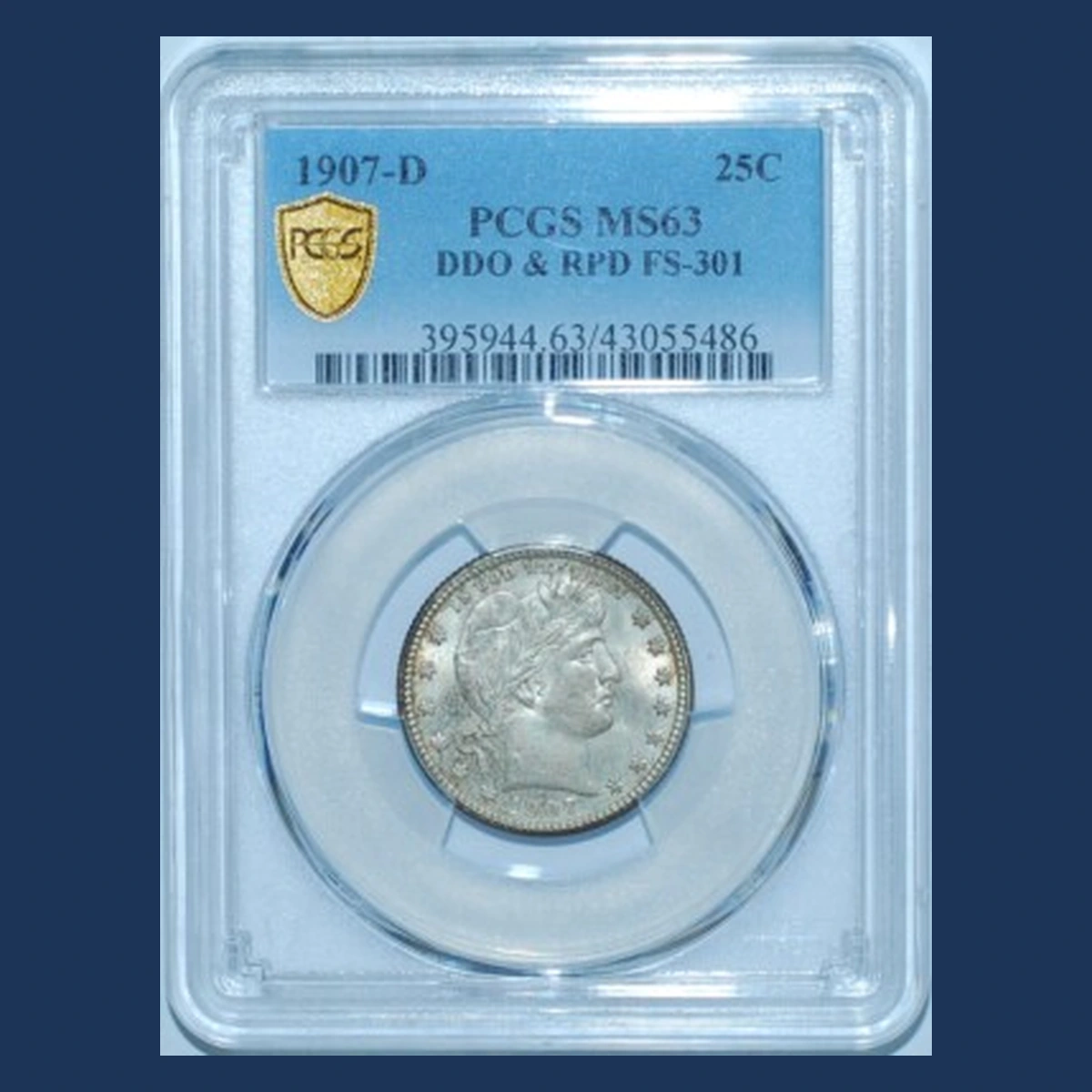
Extra portions of a date can remain when its punch was applied to the tool more than once. The impressions overlap slightly, leaving parts of earlier digits beside the final date.
Denver reports include an extra 7 to the right, traces of 907 above, and another pattern below the whole date. These are different arrangements, not one combined set of extra digits.
New Orleans and San Francisco have their own reported repeated dates. The Barber Coin Collectors’ Society survey lists them separately, so the mint letter is important even when examining the front.
Estimated Value
Confirmed 1907 repeated-date quarters have an estimated range of $50–$2,000. Mint, preservation, and how much of the earlier digits remain visible all affect the comparison.
A clear portion of a second digit is more useful than general date thickness. Several reported directions therefore need separate matching examples rather than one price assigned to any unusual 1907 date.
If the same San Francisco quarter also has a repeated S, assess both features together as one coin.
How to Identify
Read the mint letter on the back before choosing a date photograph for comparison. A D, O, or S points to different reported arrangements, so the year alone is not enough.
On the front, compare all four digits rather than cropping one small line. A Denver candidate may need the 7’s right edge, the upper edges of 907, or the lower date edges examined, depending on the pattern.
For San Francisco, compare reported traces above or below 07; do not borrow the Denver position. Look for raised portions that follow actual digit shapes, and check for fresh cuts or flat strike-related shelves before calling the feature a repeated punch.
4. 1907 Barber Quarter Small and Larger Off-Center Strikes
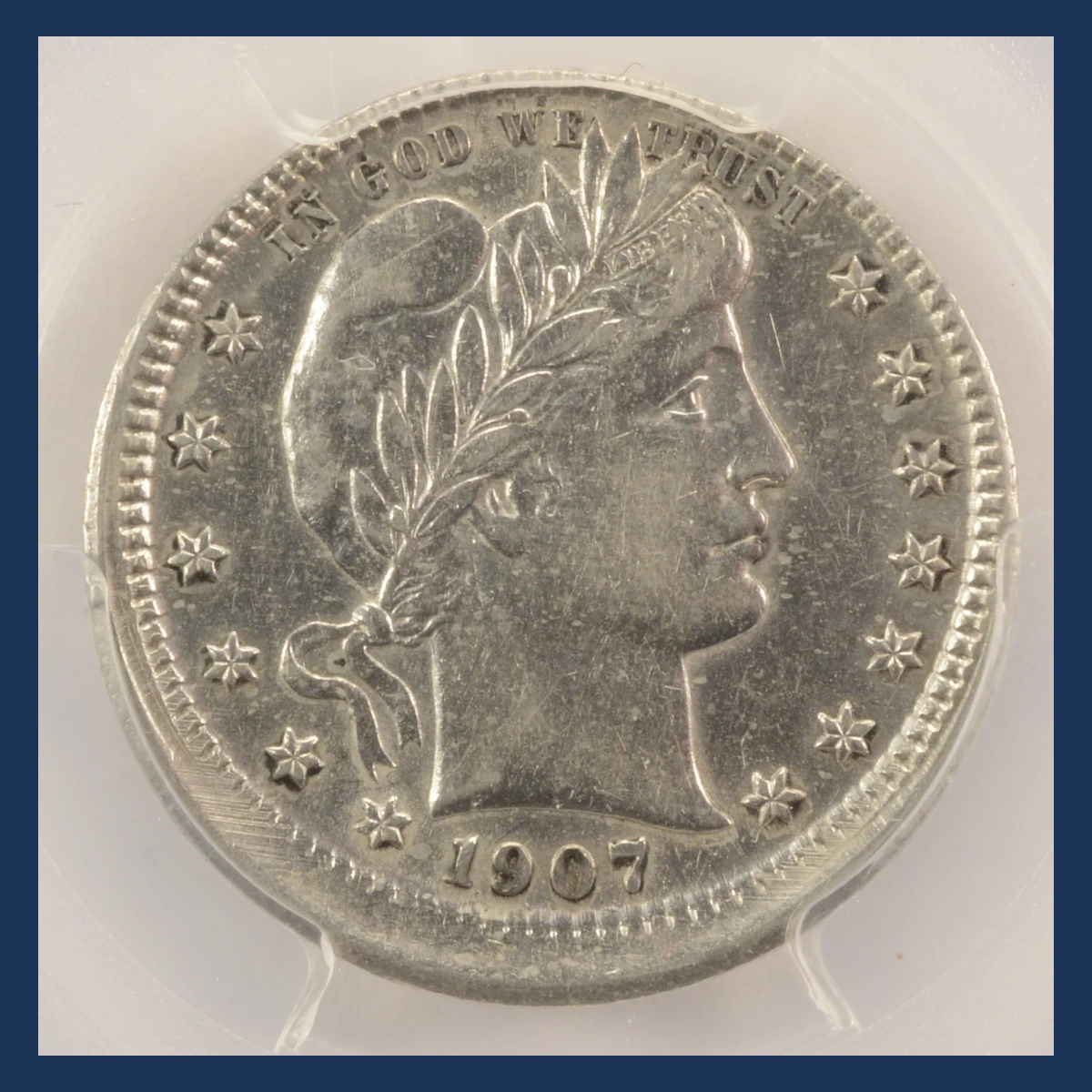
Part of the small toothlike border can disappear when the design misses the edge of the metal disk. The opposite side retains an area that was not reached by the stamping tools.
One 1907-S example graded PCGS AU53 is described as three percent off center. Its slight displacement removes some border details while leaving much of the design easy to recognize.
Mint Error News illustrates another San Francisco example described as fifteen percent off center and graded SEGS MS63. These are separate reported examples, so the larger percentage should not be assigned to the lightly worn PCGS coin.
Estimated Value
The PCGS AU53 dealer listing asks $2,250 for the three-percent example. The seller also notes earlier dipping, a chemical treatment, despite its attractive remaining detail.
For comparable genuine 1907-S off-center quarters, estimate $1,000–$6,000. This covers different amounts of shift and preservation rather than treating that asking price as a completed sale.
The separate fifteen-percent example needs its own assessment. A stronger visual effect can help, but surface condition still matters.
How to Identify
Start with the little border teeth around the design and find where they stop. On a small shift, this can be easier to see than a large missing part of Liberty’s portrait.
Follow the outline to the opposite side and look for original blank metal. The missing design and unused area should fit one displacement of the disk.
Turn the coin over to compare the back. An uneven front paired with a normally centered back needs a misaligned-tool comparison instead.
Check the complete date and S, then photograph both faces without cropping the border. Keep the three-percent and fifteen-percent examples separate, since grade and percentage describe each individual coin rather than the whole error category.
Conclusion
The estimated $50–$6,000 range covers several kinds of 1907 quarter errors. A shifted strike changes the coin’s outline, while repeated date or mint-letter impressions leave smaller clues within the design.
Keep the Denver, New Orleans, and San Francisco patterns separate. Compare complete coins before close-ups, protect the original surfaces, and remember that a dealer’s asking price does not establish what another example will sell for.