1926 Quarter Error List with Pictures

The “Teardrop” on a 1926-S quarter is beside Liberty’s leg, not below her eye. This small raised feature is one reason to inspect the open spaces around the design.
A different 1926 Standing Liberty Quarter error, a small edge clip, sold for $1,092.50 in May 2000. Estimated values for the types covered here range from $25–$2,000.
The sections below explain which shapes come from damaged tools, missing metal, or a possible transfer of the opposite design.
1. 1926 Standing Liberty Quarter Possible Traces of the Opposite Design
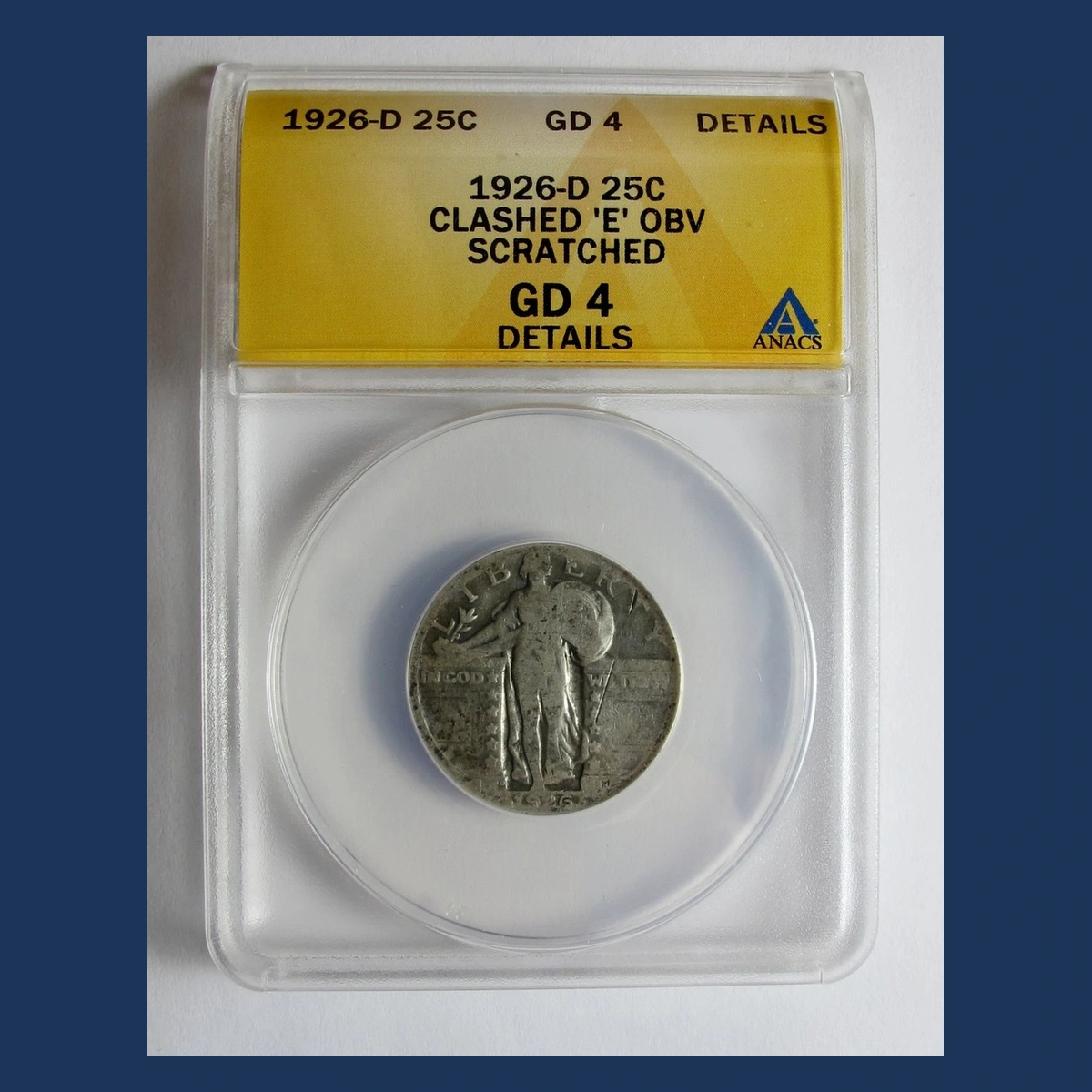
A faint shape that seems out of place may resemble part of the design on the other side. Such a transfer can happen when the two steel stamping tools, called dies, strike each other without a coin between them.
The damaged tools may then copy traces of the opposite picture onto later coins. Collectors call this a die clash.
On a 1926 quarter, identify the transferred shape by comparing it with the opposite design. A scratch, worn fold, or unexplained line is not enough to establish a clash.
Estimated Value
A confirmed 1926 clash has an estimated whole-coin value of $25–$400 for worn through attractive lightly worn examples. A clear, recognizable transferred shape generally draws more interest than a faint mark.
The estimate applies only when examination supports a Mint-made transfer. Ordinary lines or later damage do not earn that premium, and a high-grade quarter can already be worth more for its preservation without any unusual feature.
How to Identify
Keep a normal front and back photograph together while studying the suspected mark. Before calling it a clash, try to identify the part of the opposite design that could have made the shape.
Do not import a location from a different year’s quarter. The correct comparison must explain the line on the actual coin being examined.
Change the light angle and use a magnifier to distinguish raised traces from cuts. A scratch may pass straight across several details without relating to the opposing picture.
Photograph the full face as well as the close-up. A recognizable piece of the opposite design, in a matching relationship, is the meaningful clue; one mysterious line is not.
2. 1926 Standing Liberty Quarter The Teardrop and Raised Crack Lines
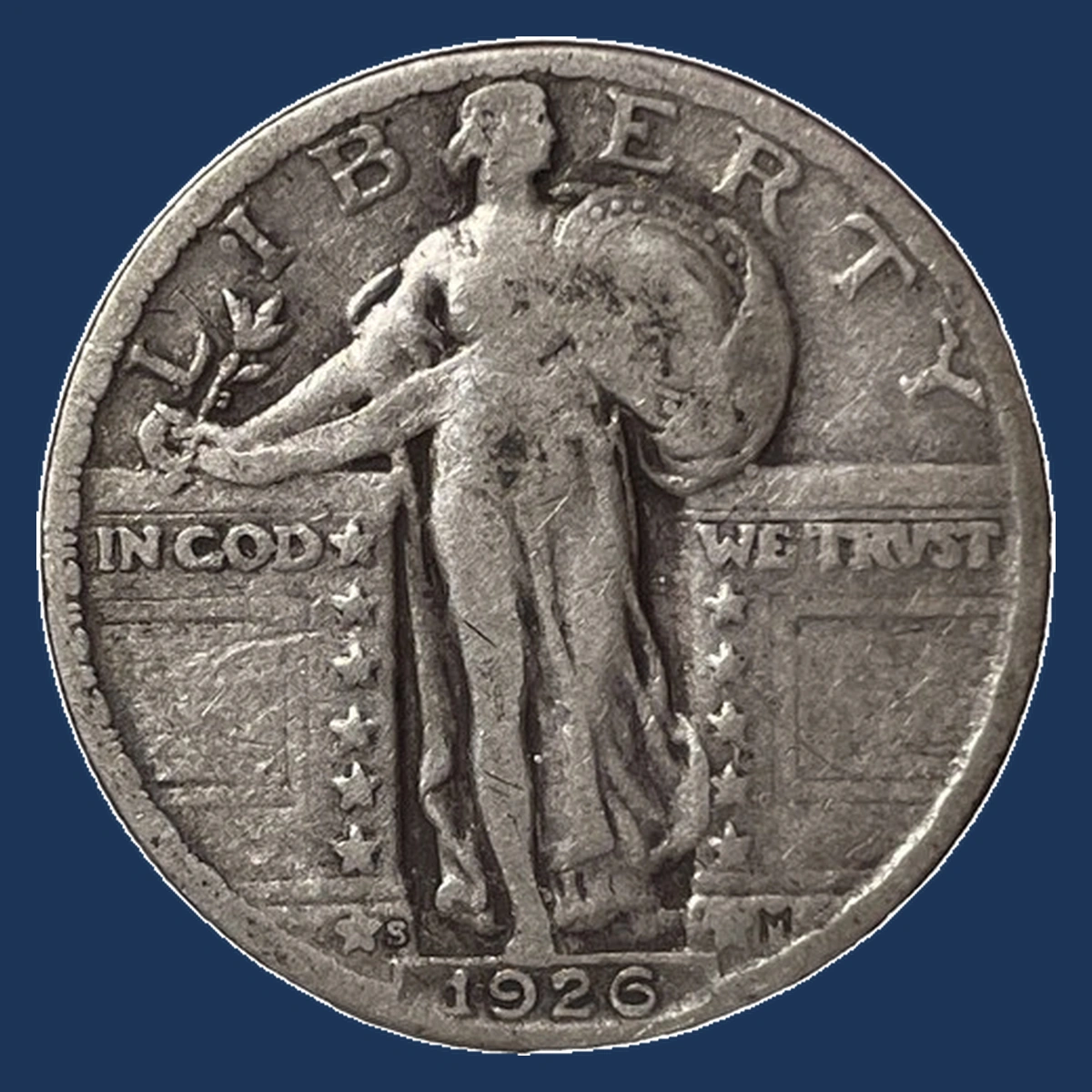
A raised droplet between Liberty’s leg and the wall near WE gives the 1926-S Teardrop its name. It is a small missing area in the stamping tool that filled with silver during striking.
NGC recognizes the Teardrop as variety VP-001. Its central position makes it different from a large broken-tool lump joined to the coin’s rim.
Separate reports describe raised lines at Liberty’s head and an arc above the date. Those lines reflect cracks rather than the droplet itself; they should not be assumed to occur on every Teardrop coin.
Estimated Value
Estimate $30–$1,000 for identifiable Teardrop examples and $25–$500 for the reported fine crack forms. Wear and the coin’s original surface quality account for much of that spread.
A sharp droplet on a pleasing coin can appeal more than a weak trace on heavily worn silver. Do not add the two ranges if one coin has both features: the buyer is purchasing one quarter with its combined condition and details.
How to Identify
Find the small S near the lower left of the front before comparing a Teardrop photograph. Then inspect the space between Liberty’s leg and the adjacent wall near WE.
The feature should rise above the surface. A dent below the eye is unrelated, and a depression beside the leg is not the raised droplet.
Use a 10× magnifier to compare the shape and its connection to the surrounding metal. Do not scrape a suspected lump to find out whether it is attached.
The reported head and date lines need their own inspection under side light.
Trace those lines to distinguish narrow raised metal from scratches cut through the design. Match the Teardrop itself by its position and outline rather than demanding that every separate crack be present.
3. 1926 Standing Liberty Quarter A Small Missing Piece at the Lower Right Edge
A small piece is missing from the lower right edge of a documented 1926-S quarter. The auction description calls it a three-percent clip at about four o’clock on the front.
The fault began when a metal blank was cut with part of its outline already missing. The coin’s design was then struck onto that incomplete disc.
Heritage offered the example graded PCGS AU50, meaning it retained substantial detail with some wear. The small gap must still be distinguished from a cut made after a normal quarter entered circulation.
Estimated Value
The documented AU50 example brought $1,092.50 on May 5, 2000 at Heritage. That is an actual whole-coin result, not an estimate for every small clip.
Allow an estimated $200–$2,000 for comparable genuine examples, depending on wear, surface quality, and the clarity of the missing segment. A readable date and mint letter help establish identity, while later cutting or filing removes the basis for an error premium.
How to Identify
Hold the front upright and locate the small gap near four o’clock. Check the surviving 1926 date and S so the photographed example is not confused with another year or mint.
At each end of the gap, examine how the rim and nearby design meet the missing metal. A later cut can slice through completed details and leave sharp tool marks.
The rim opposite the gap may be weak, but that clue is not required to be equally strong on all clips. A scale may support the inspection because an incomplete blank usually weighs less than the normal 6.25 grams.
That standard is not the documented coin’s measured weight. Inspect the natural boundary and nearby struck metal before relying on either weight or the three-percent label.
Conclusion
A raised Teardrop, a thin crack line, and a missing edge segment each tell a different part of the manufacturing story. They also need different checks.
Estimated values run from $25–$2,000, with the documented clipped coin providing one actual auction comparison. Look beside Liberty’s leg for the Teardrop, preserve the entire edge of a suspected clip, and require a recognizable opposing design before accepting a clash.