1944 Quarter Error List with Pictures

A steel-colored 1944 quarter with a complete date sold for $16,800 in December 2022. Its design landed on the wrong metal disc, leaving LIBERTY and the value off the coin.
This 1944 quarter error list also covers much smaller clues, from repeated mint letters to cracks through the original blank. Estimated values span $25–$25,000.
Read on to match the visible feature with its cause. Small extra letters need close inspection, while a different blank calls for measurements.
1. 1944 Washington Quarter Crack through the Original Blank
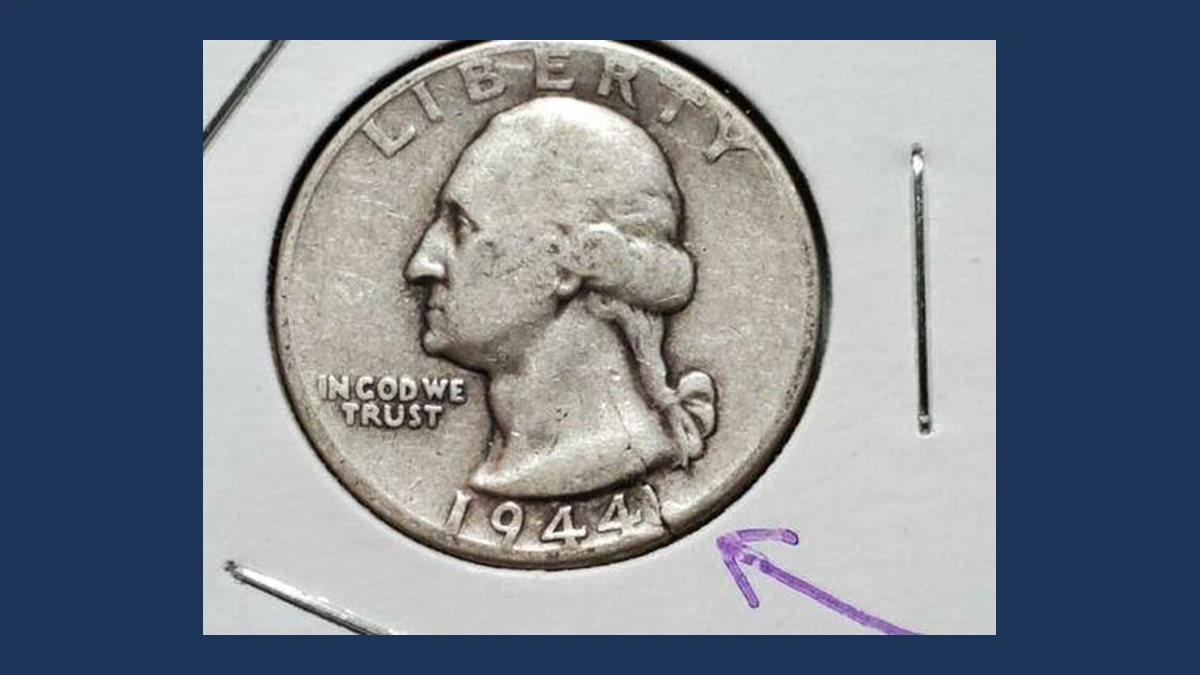
An open split in the metal is different from a fine raised line copied from a cracked stamping tool. Here, the quarter blank itself developed a crack.
A Philadelphia example was certified PCGS VF30, meaning a circulated coin with clear remaining detail. The opening in the metal, rather than its exact position, is the main feature to examine.
The split and nearby design must therefore be examined together. A cut made after striking can create a similar gap.
The original edge and the way silver moved beside the opening help explain when the crack formed.
Estimated Value
The PCGS VF30 Philadelphia example brought $53 in September 2024. That actual result places a documented circulated specimen near the affordable end of error collecting.
Estimate $25–$500 for comparable authenticated cracked-blank quarters. A clear original split and attractive surrounding detail can matter more than its length alone.
The range assumes a minting flaw. A later saw cut or broken coin does not receive the same premium, even if its opening looks dramatic.
How to Identify
Do not press the sides of an open split or try to widen it. Rest the coin securely and photograph the opening before handling it further.
View the gap from the narrow edge, then follow it onto both faces. A split enters the metal; a crack in the stamping tool usually produces a raised line instead.
Use a magnifier to inspect the design beside the opening. Stretched or weak detail may show how the metal moved during striking.
Parallel grooves inside the gap can reveal a later cut. Bending and freshly exposed bright surfaces also need explanation.
Keep the complete date and both sides of the opening in your photographs so a specialist can examine their relationship.
2. 1944 Washington Quarter Curved, Straight, or Double Clips
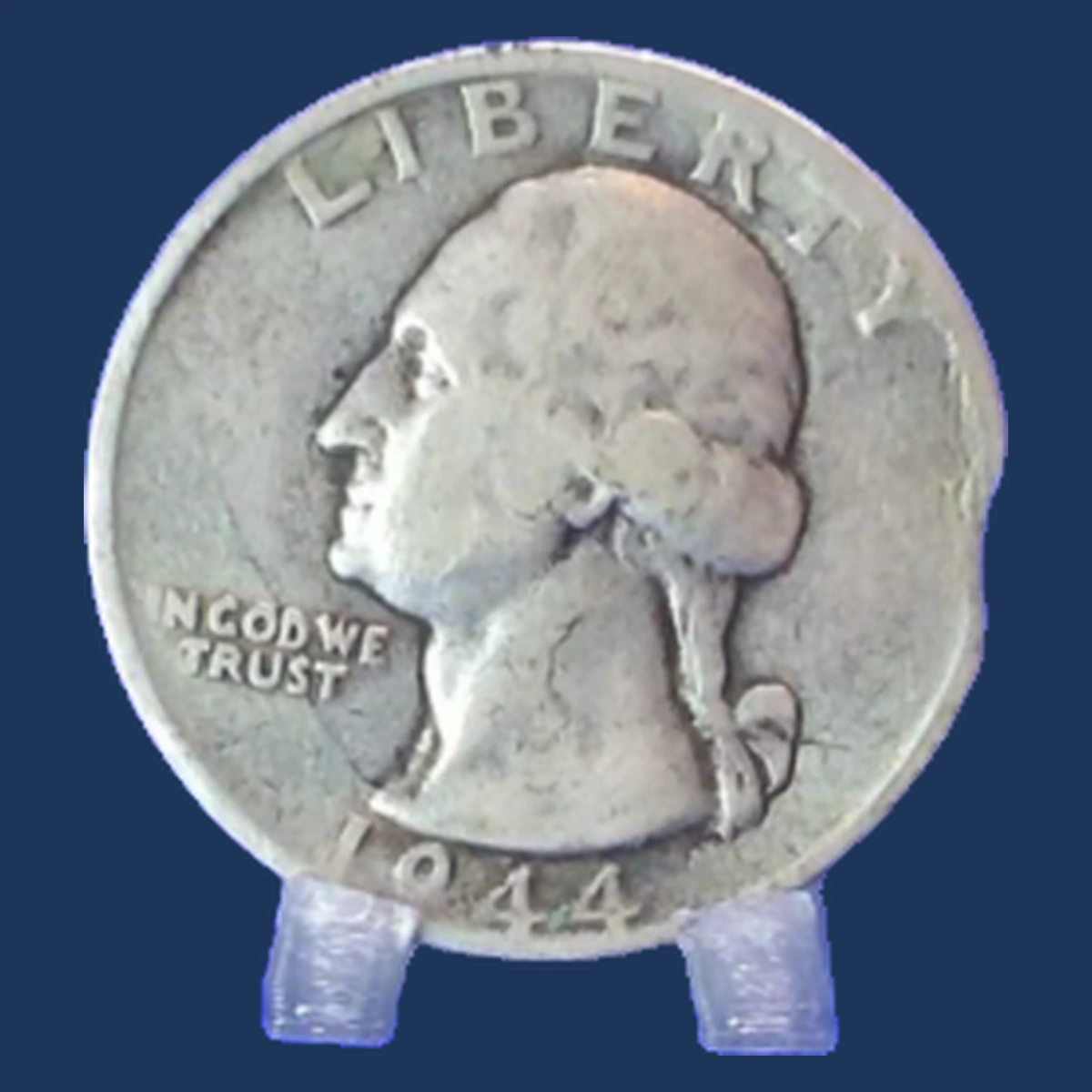
A curved gap can begin when the blank cutter overlaps a hole already punched from the metal strip. The incomplete disc then receives the quarter design.
A straight missing section can come from the end of that strip. Two gaps can form when a blank overlaps more than one opening.
Year lists report these clip forms for 1944 quarters. They do not establish a particular size, direction, or certified specimen for each mint and shape.
A missing section leaves clues where the design meets the gap. A neat curve alone cannot distinguish a mint error from a coin cut later.
Estimated Value
For authenticated 1944 clips, estimate $50–$1,500. Small gaps on worn quarters belong toward the lower end, while large clear clips with attractive detail can draw stronger interest.
This is a comparable-type estimate, not a recorded sale assigned to an unnamed 1944 coin. A double clip does not automatically bring twice the price of a single clip.
The remaining date and original edge help identification. Later cutting or filing removes metal without creating an original blank-cutting error.
How to Identify
For a loose coin, a weight below the normal 6.25 grams supports the observation that metal is missing. It cannot tell you whether the blank was incomplete or someone cut the finished quarter.
Look closely where the raised rim reaches each end of the gap, checking for weakened or stretched design. Then inspect the opposite rim for a weak patch, a supporting clue that is not visible on every genuine clip.
Follow the exposed boundary under a magnifier and look for repeated file lines or parallel saw grooves. If there are two gaps, examine each separately rather than assuming the first proves the second genuine.
3. 1944 Washington Quarter Back Struck-Through Impression
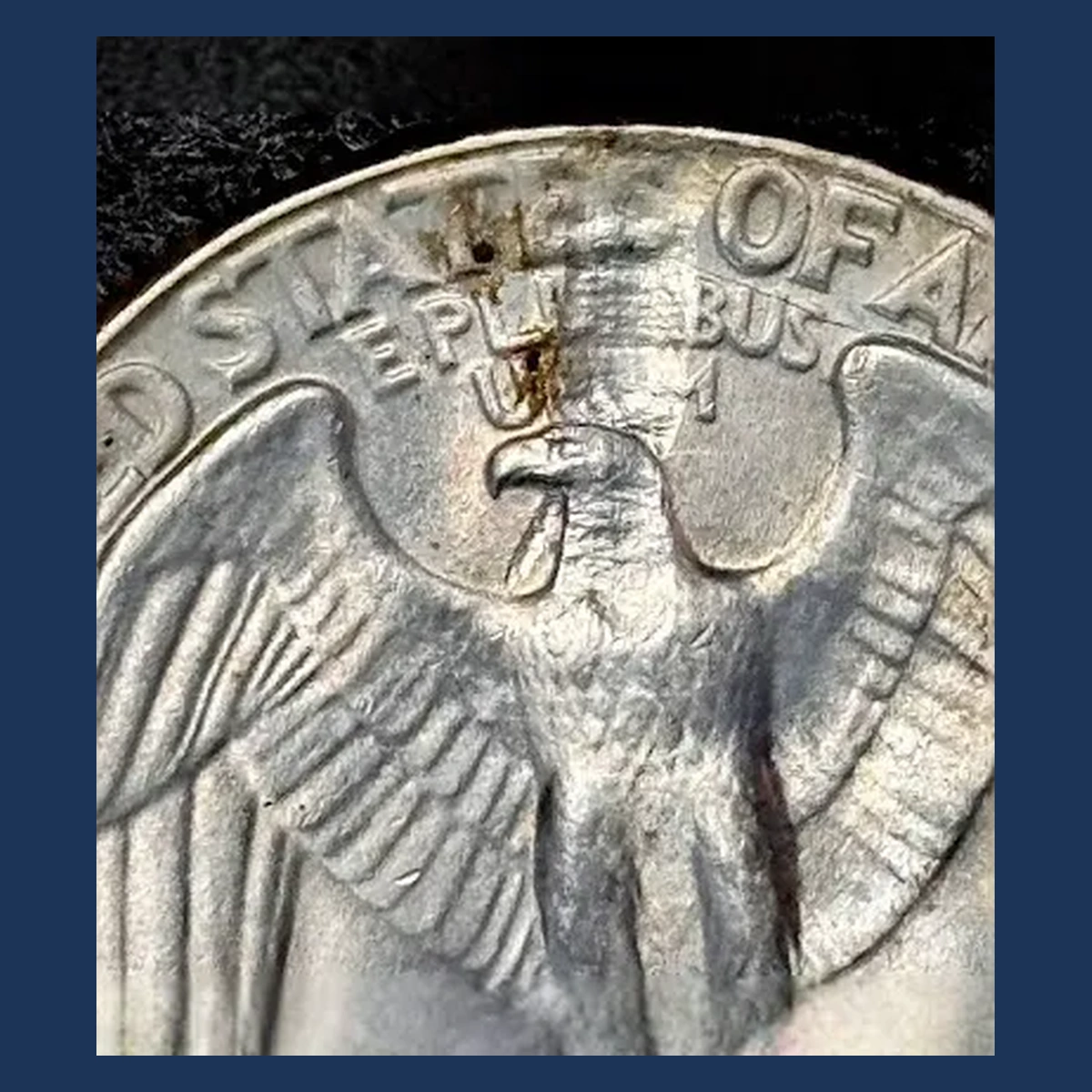
Foreign material between the blank and the stamping tool can block part of the eagle-side design. The coin leaves the press with a hollow or interrupted patch where normal detail failed to form.
A Philadelphia quarter from the Don Bonser collection was certified NGC AU58 with a back strike-through. AU58 means only slight wear.
The object that blocked this coin is not identified. A hollow alone does not tell you whether wire, cloth, grease, or something else was involved.
The boundary and surviving texture can help explain the impression. A later dent or scrape needs a different explanation.
Estimated Value
The NGC AU58 back strike-through brought $174 in November 2020. Its light wear and identified manufacturing flaw provide a useful same-year comparison.
Estimate $50–$1,500 for authenticated examples, depending on the impression’s size, clarity, and surrounding preservation. A recognizable obstruction pattern can attract more attention than an indistinct hollow.
A clearer interruption of the eagle or lettering is easier for a buyer to recognize. Surface scratches and cleaning can reduce interest even on a coin with a genuine mint-made impression.
How to Identify
Place a normal quarter beside the suspect back to see which part of the eagle or lettering is interrupted. Use that intact design to orient the close-up.
Follow the missing detail toward the edge of the hollow. An obstruction prevents the design from forming rather than scraping away an already raised feature.
Tilt the coin under a lamp to inspect the inside surface. A smooth depression does not identify what caused it.
Look for sharp scrape lines or a lip of pushed-up silver that could come from a later gouge. Photograph both the hollow and the undisturbed detail immediately beside it.
Leave any material in place rather than probing the surface for an object.
4. 1944 Washington Quarter Repeated Denver and San Francisco Mint Letters
A small extra D or S can survive beside the normal mint letter below the wreath. The letter was punched into the stamping tool more than once, leaving part of an earlier position.
Denver varieties include a D shifted north, another shifted east, and a tilted overlap. San Francisco has a listed S-over-S shifted east.
The catalog number alone is not enough. Wexler’s Denver number 002 points east, while CONECA’s number 002 points north.
These are separate comparisons within the same repunched-mintmark family. They are not evidence that the whole coin received another strike.
Estimated Value
Estimated values for identified 1944 mintmark repunching are $25–$2,000. Minor outlines on worn quarters generally attract less than bold matching shapes on attractive unworn coins.
This is an estimated range, not an auction result for every catalog number. Different reference systems can number unrelated patterns alike, so a shared number does not establish the same rarity.
Condition remains important: cleaning or heavy wear can reduce interest even when the extra letter is genuine and clearly attributed.
How to Identify
Find the mint letter below the wreath on the back and enlarge that small area. Philadelphia quarters normally have no letter there, so a blank space is not a missing-mintmark error.
For a Denver candidate, compare the extra D with the matching photographs in Wexler’s mintmark catalog. Look north for WRPM-001 and east for WRPM-002; WRPM-003 has a tilted overlap.
The San Francisco WRPM-001 instead has an extra S toward the right. Keep the coin upright when comparing that direction.
A flat ledge or a lump beside the letter can imitate a second punch. Seek a recognizable repeated letter shape, then match nearby tool marks to the same reference.
5. 1944 Washington Quarter Doubled Front and Back Designs
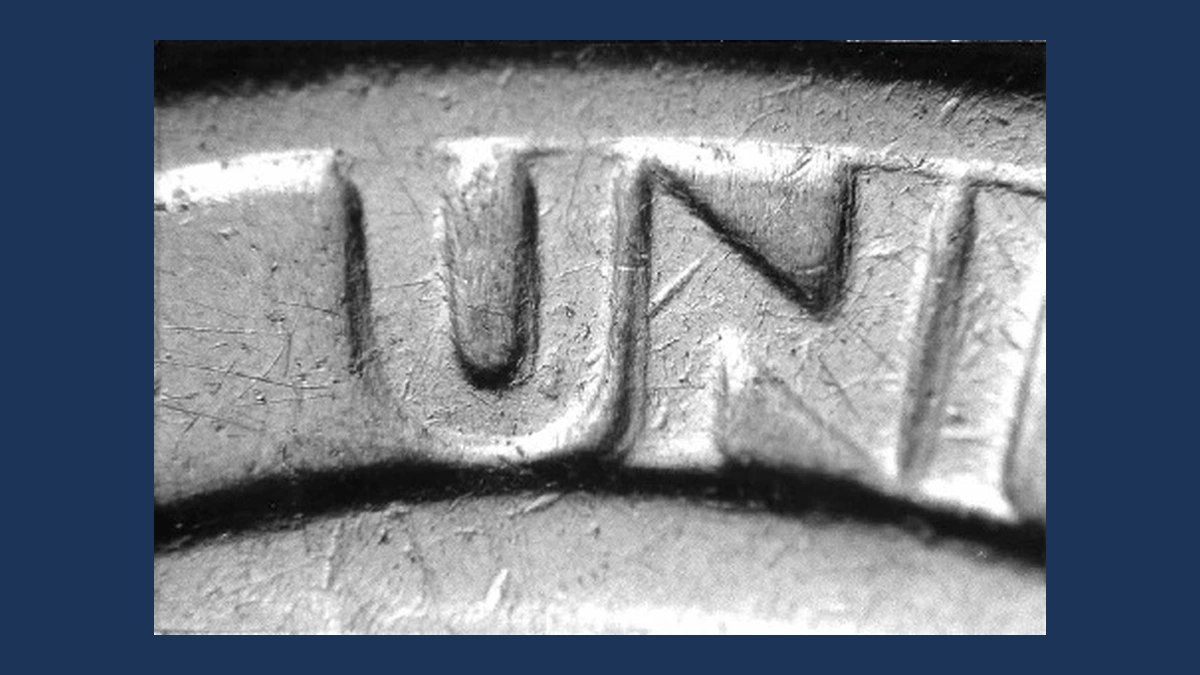
A prepared stamping tool can carry extra outlines that every coin it makes will copy. Collectors call this a doubled die; die means the steel tool bearing the design.
For 1944, front patterns can affect LIBERTY, the date, the motto, and the designer’s initials near the neck. Back patterns involve lettering, wreath details, and sometimes the eagle.
Philadelphia, Denver, and San Francisco have separate varieties. An FS-101 label for one mint does not identify the same tool as FS-101 for another.
Compare the repeated letters with photographs of the same variety and mint. Nearby details can help confirm the match.
Estimated Value
For doubled-tool quarters, estimate $25–$3,000 across subtle circulated examples and attractive unworn varieties. The upper end calls for a desirable pattern as well as good preservation.
Faint thickening needs magnification, while bold separated outlines are easier to show a buyer. A scarce variety in an attractive unworn grade may cost more than a common subtle example.
A normal coin with a flat striking-related shelf does not receive the same premium. Match the variety before selecting the nearest price level.
How to Identify
Read the mint area beneath the wreath before selecting any doubled-design photograph. No letter indicates Philadelphia, while D and S identify Denver and San Francisco.
Denver’s FS-101 has repeated front lettering and date detail; San Francisco’s FS-101 needs its own pattern. Philadelphia’s FS-101 is another separate comparison, not an interchangeable label.
Use a 10× magnifier on several matching letters rather than one thick edge. For a back variety, compare the specified wording, leaves, stems, or feathers without borrowing details from another coin.
Shift the light to distinguish rounded repeated shapes from a flat shelf caused by movement during striking. The repeated outlines, mint, and affected face should all agree with one cataloged example.
6. 1944 Washington Quarter Off-Center Strike
A quarter blank sitting partly outside the stamping tools can receive only part of the intended picture. The unused area remains beside the struck design as a blank crescent.
The other side of the coin should show the same misplaced blank. This separates the error from a front tool that shifted while the back remained centered.
Year lists report off-center 1944 quarters across the three mints. They do not establish a particular percentage or direction for a photographed certified example.
A wide border that still holds the complete design is a different comparison. The missing artwork matters here.
Estimated Value
An authenticated 1944 off-center quarter has an estimated value of $100–$5,000. Greater visible displacement, a readable date, and attractive original surfaces can support stronger demand.
A small shift on a worn coin is less striking than a large blank crescent beside clear detail. Damage or cleaning can reduce the price even when the misplaced strike is genuine.
The mint also needs evidence. A missing part of the back cannot automatically turn an unreadable mint area into a Philadelphia attribution.
How to Identify
Take straight-on photographs of both faces, keeping track of the same blank crescent as you turn the coin over. The missing artwork and untouched area should fit the same misplaced blank on each side.
If the back is centered while only the front has shifted, a misaligned stamping tool offers a different explanation. Also check whether the entire design is present, since a wide surrounding border alone does not prove an off-center strike.
Read the surviving date and inspect the mint area beneath the wreath without filling in parts cut off the coin. Show the bare metal clearly enough to distinguish its original surface from later grinding or flattening.
7. 1944 Washington Quarter Struck on a Different Coin’s Blank
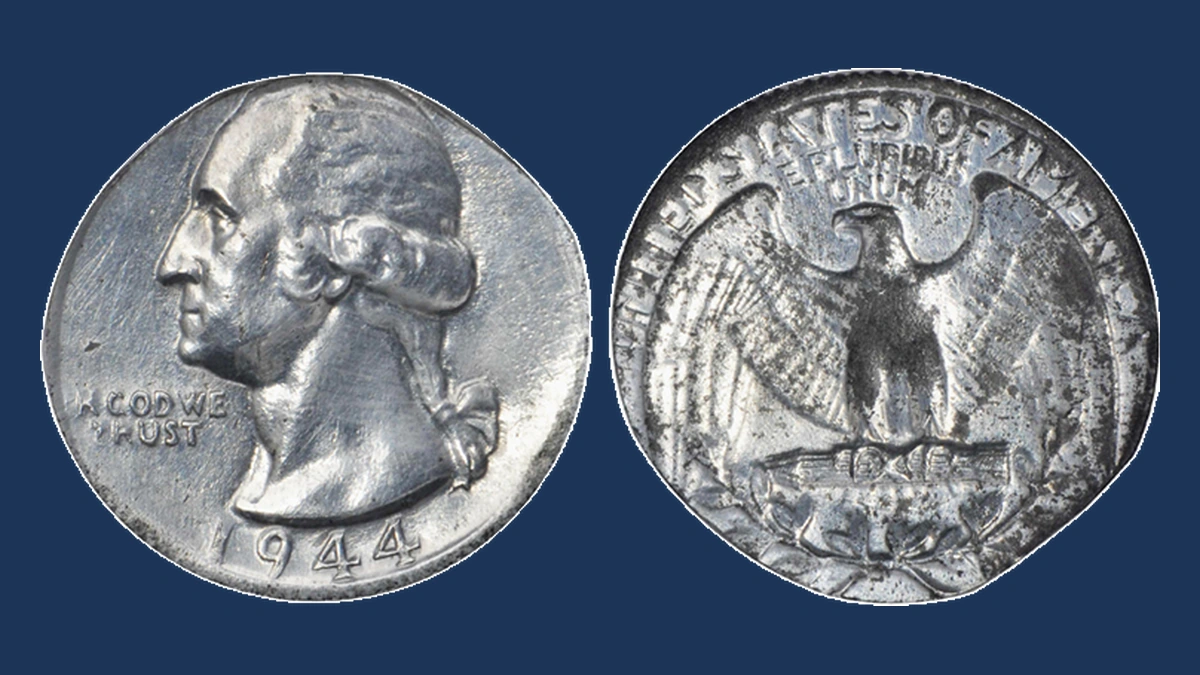
Two documented Philadelphia errors place the quarter design on much smaller blanks. One uses zinc-plated steel and weighs 2.7 grams; another uses wartime five-cent alloy and weighs 5.0 grams.
The steel example has a complete date but lacks LIBERTY and the value. Its slightly oval shape bulges at the top.
The five-cent example also keeps its date, with parts of the outer lettering missing. Its alloy differs from an ordinary copper-nickel nickel.
A year list additionally reports a Philippine five-cent blank. That attribution needs its own physical evidence rather than the measurements of either auction coin.
Estimated Value
The steel-blank NGC MS62 sold for $16,800 in December 2022. Estimate $8,000–$25,000 for comparable authenticated examples.
The separate wartime five-cent NGC MS62 brought $2,990 in May 2004; estimate $1,000–$6,000. Both grades describe unworn coins with visible marks.
For the reported Philippine-blank type, use a conditional $500–$5,000 estimate after the blank is identified. These ranges price different complete coins, not separate features to add together.
How to Identify
Weight is a useful first check: a normal silver quarter weighs 6.25 grams. Measure a loose candidate with a precise scale, then compare its width and surviving outer design.
For the steel specimen, the complete date and missing LIBERTY accompany the recorded 2.7 grams. Oxidation on its eagle is a later surface condition, not another minting error.
The 5.0-gram coin requires wartime five-cent alloy, not merely the weight of a modern nickel. A professional metal examination should support the proposed blank.
Inspect the edge for trimming and the surface for plating. A pale color cannot identify the Philippine type; its metal, measurements, original strike, and readable year need to agree.
Conclusion
A repeated letter, an open split, and a smaller blank tell different stories on a 1944 quarter. The steel-blank sale shows what a major mistake can bring, while many subtle features remain much more affordable.
Estimated values range from $25–$25,000. Keep mint letters, dates, and the entire edge visible in photographs.
For an unusual blank, its measured weight and confirmed metal matter more than color alone.