1954 Quarter Error List with Pictures

Two smaller blanks produced two different 1954 quarter errors in the same auction. The nickel-blank example brought $1,440 in September 2024, while the silver dime-blank coin brought $990.
The 1954 quarter errors below range from small raised lines to those wrong-blank strikes, with estimated values of $20 to $3,000. Philadelphia, Denver, and San Francisco coins need their own comparisons.
Use the visible feature first, then follow the relevant checks for the design, edge, or metal.
1. 1954 Washington Quarter Raised Die Crack on Washington’s Head
A crack in the stamping tool can leave a raised line on the coin. The tool is called a die, and metal enters its narrow crack as the design is pressed into the blank.
An NGC MS65 Philadelphia example is described with such a line on Washington’s head. MS65 indicates an unworn coin with relatively few marks.
The raised line should remain separate from scratches and dents that happened later. Its exact course needs to match the pictured specimen, rather than an imagined path across the hair or face.
Estimated Value
The MS65 head-crack example sold for $52 in July 2022. Comparable genuine small cracks have an estimated range of $20 to $250.
Visible relief and a clear location help collectors appreciate a subtle error. A faint ridge hidden by wear or dark surface marks usually attracts less attention.
Condition still matters to the whole coin. A clean portrait with an original raised line is a better comparison than a scratched quarter with an unrelated groove.
How to Identify
Use low side lighting to follow the line over Washington’s head and check whether it rises above the portrait. A scratch may have a raised lip too, so look for a trench running beside that bright edge.
Compare the whole path with the known specimen, including where it crosses or follows the surrounding head details. Do not choose a direction from the short catalog name and then search for any mark that fits it.
A second photograph with the lamp moved to the opposite side can make the raised or sunken shape clearer. Leave the silver untouched, since rubbing the area may remove surface clues or add new scratches across the line.
2. 1954 Washington Quarter Repunched D and S Mintmarks
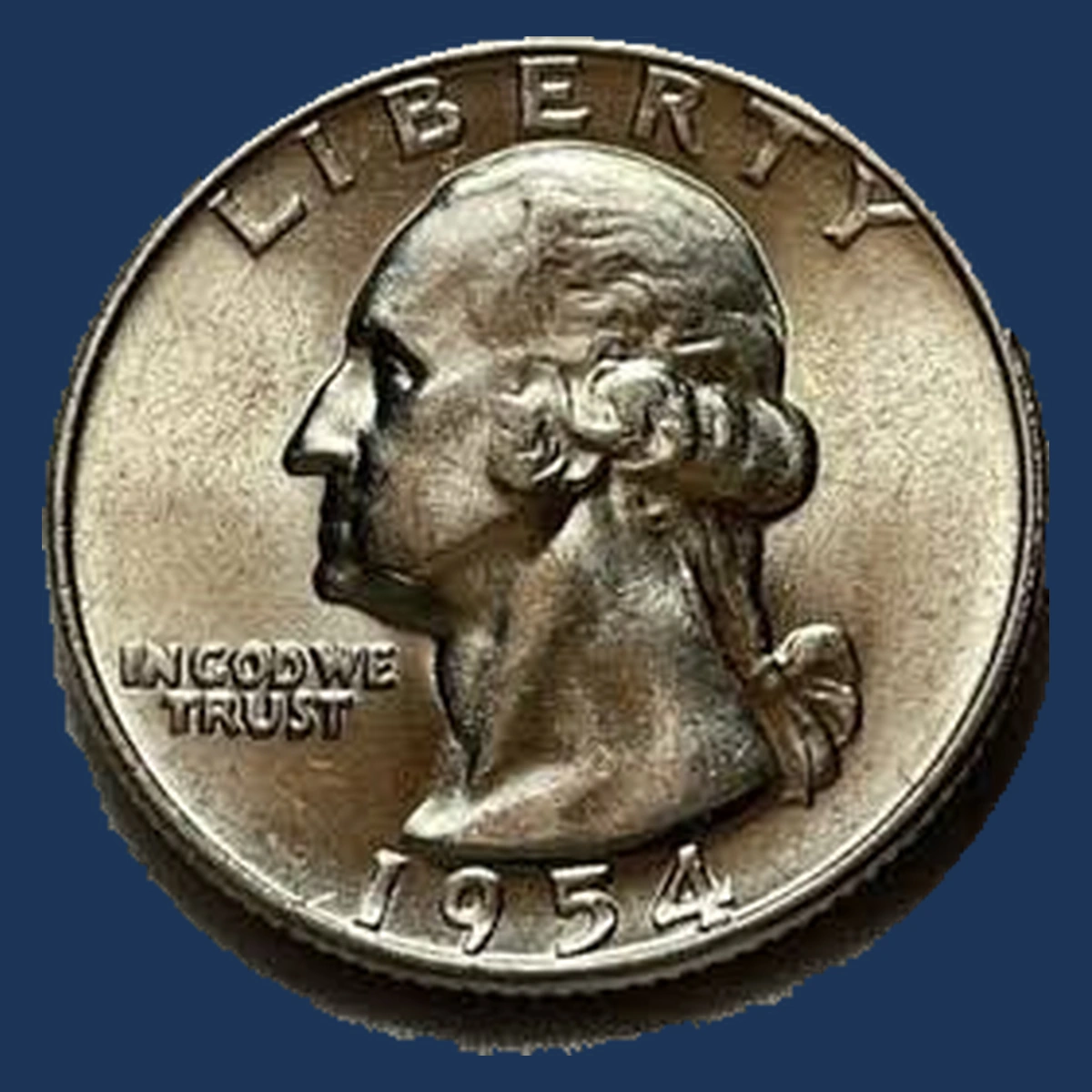
The D or S beneath the eagle was added to the stamping tool with a separate punch. Repeating that punch in a slightly different position could leave part of the first letter visible.
These are repunched mintmarks. The catalogs include both Denver and San Francisco examples for 1954, and NGC recognizes the D-over-D variety.
The earlier and final letters must be read together on each coin. One letter’s extra curve does not establish the direction of repunching on the other mint’s example, even though both belong to the same general mechanism.
Estimated Value
Estimate $25 to $400 for a confirmed minor repunched mintmark. Clear surviving letter parts and attractive original surfaces can improve a small variety’s appeal.
A separate-year Denver comparison is the 1962-D example recorded at $495 on eBay in August 2021. Its MS65 grade describes an unworn coin with relatively few marks.
The 1954 D and S examples need their own matching patterns. A thick or damaged mint letter does not receive a premium solely because a second shape seems visible.
How to Identify
Find the mint letter below the eagle and decide whether it is D or S. The two letters require separate comparisons.
With a 10× magnifier, trace the main letter before looking at the extra outline. Identify whether that extra metal forms part of an earlier upright, curve, or opening.
Place a confirmed same-year, same-mint photograph beside it at a similar scale. A matching earlier letter should not require rotating an unrelated image into a convenient position.
Tilt the light to inspect any apparent doubling for a flat shelf or a scrape.
If the mintmark is worn smooth, do not redraw its lost edges in your mind. A clearer coin may be needed to establish the pattern.
3. 1954 Washington Quarter Reported Clipped Blank
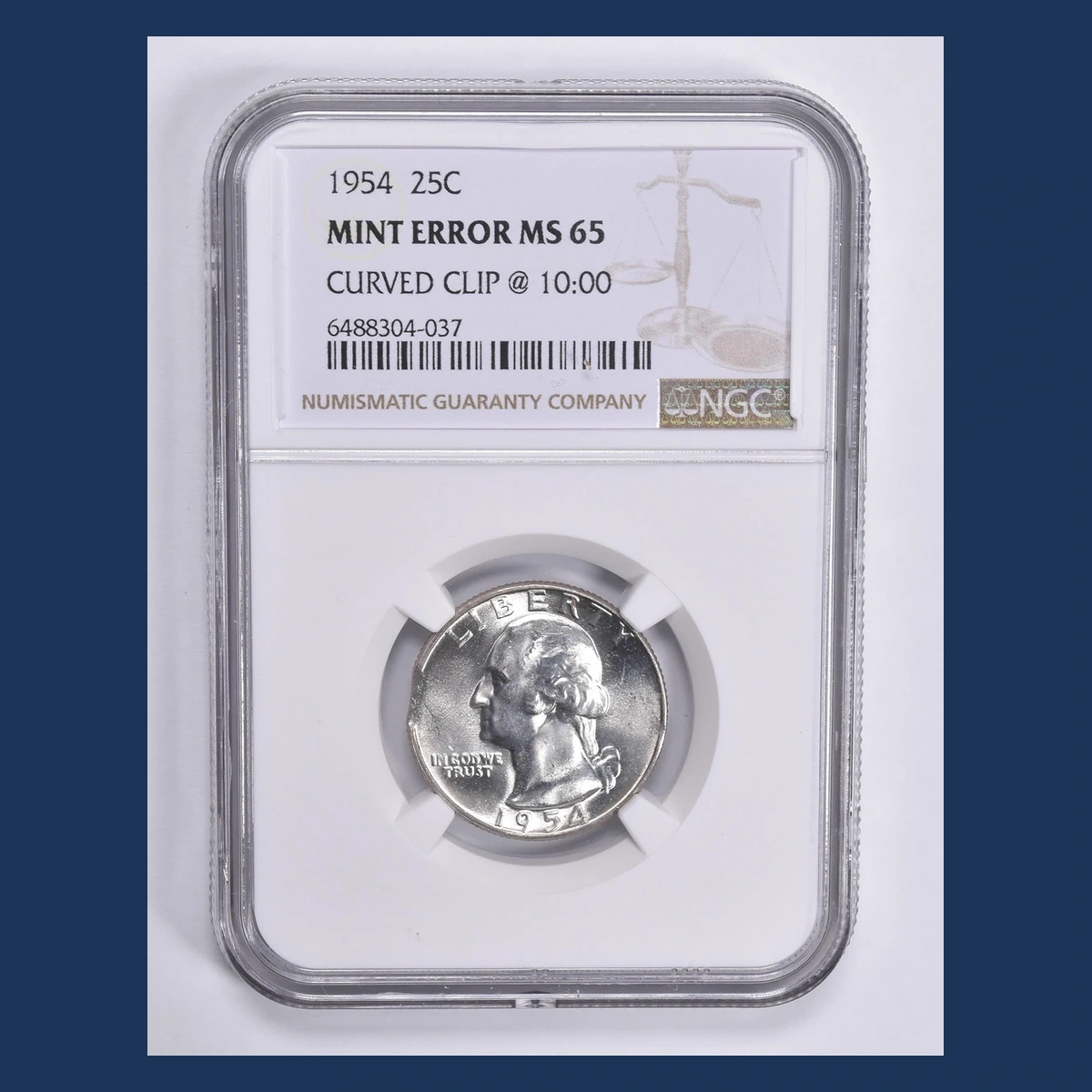
A clipped blank has lost part of its intended outline before the design is struck. The finished quarter then has a missing segment with design formed around its boundary.
The 1954 reports include this category without establishing one universal gap size or shape. A particular coin may show a curved gap or another original blank-cutting defect.
The timing separates it from a quarter cut after minting. A later tool can remove silver and create a similar silhouette, but it may leave cut surfaces through fully formed letters and rim details.
Estimated Value
For an authenticated clipped quarter, estimate $25 to $400. Clear identity and an undamaged missing section make an example easier to collect and explain.
A 1966 clad quarter with a twenty-percent straight clip sold for $124 in June 2024. That later coin offers a different-metal comparison, not a 1954 silver-quarter auction price.
Larger original gaps can attract more attention than tiny rim losses. Heavy wear, filing, or an incomplete date may reduce the appeal of an otherwise genuine clip.
How to Identify
Begin with the edge exposed by the missing section, using side photographs rather than only the front silhouette. Saw teeth, file lines, or fresh cutting marks can point to later alteration.
Follow the struck rim into both ends of the gap. Its formation should fit metal that was already absent when the blank entered the press.
An opposite weak rim may support the diagnosis, but it is not required on every genuine clipped coin.
If the candidate is loose, record its weight against the usual 6.25 grams. Lower weight fits missing metal but also occurs after trimming, so it must be considered with the original edge and design.
4. 1954 Washington Quarter Reported Lamination and Peeling Silver
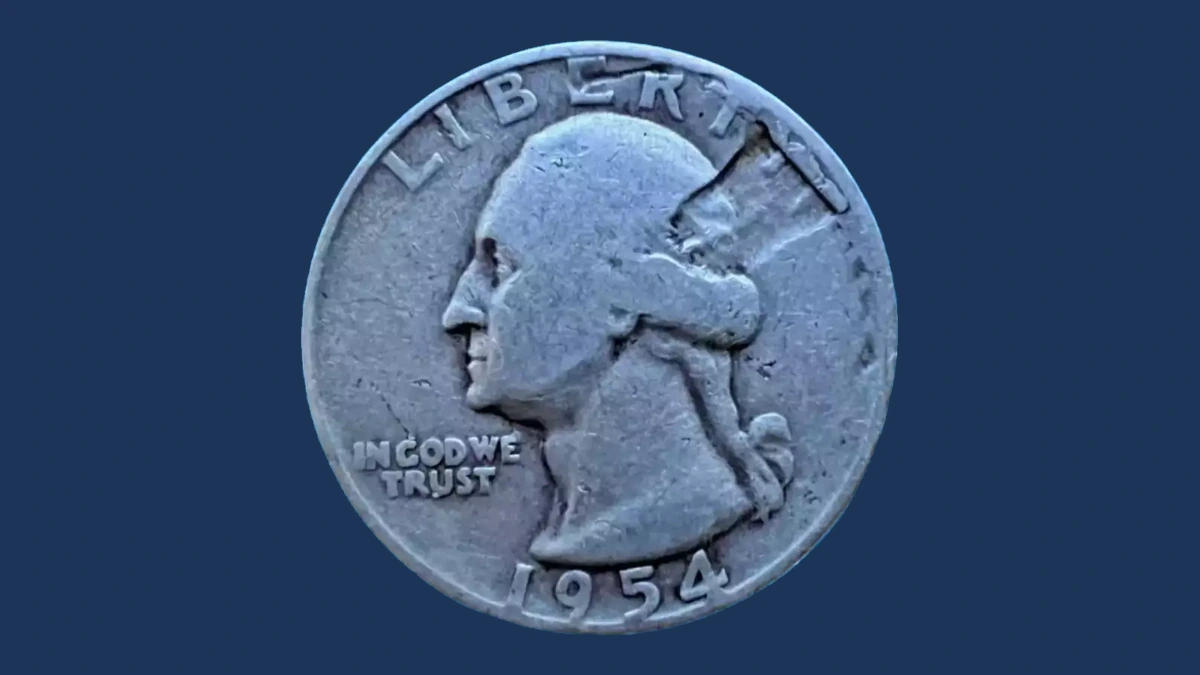
Silver can separate along a weak layer inside a coin blank. A thin flap may remain attached, or it may come away and leave a recessed area.
This is a lamination error, reported for 1954 quarters. The coin is made from a silver alloy throughout, rather than from the layered construction of later clad quarters.
If a flake falls off, the coin loses some metal and weight. Its peeling boundary must be distinguished from a gouge, a corroded patch, or silver deliberately lifted from a finished coin with a tool.
Estimated Value
An estimated $30 to $500 covers genuine small laminations through larger, clearly visible examples. An intact flap with understandable edges can be more interesting than a vague rough patch.
The state of the rest of the coin affects its value as well. Heavy wear and cleaning marks can obscure the original separation.
Lost silver does not become more valuable simply because the opening is larger. The estimate favors a recognizable mint-related metal defect with undisturbed surrounding surfaces.
How to Identify
Leave any attached flap where it is. Lifting it with a fingernail or tool may break off the very metal that shows how the separation developed.
Use magnified photographs to inspect the flap’s connection to the surface. Then follow the boundary of any area where metal has already detached.
Compare the exposed area with nearby struck details to see whether the original design was interrupted or partly carried away. Inspect for digging marks, pushed metal, and corrosion that could explain a later hole.
For a loose coin with a missing flake, a reduced weight is possible. It does not prove lamination by itself; the natural separation and remaining surface provide the more useful evidence.
5. 1954 Washington Quarter Doubled Dies on Circulation and Proof Issues
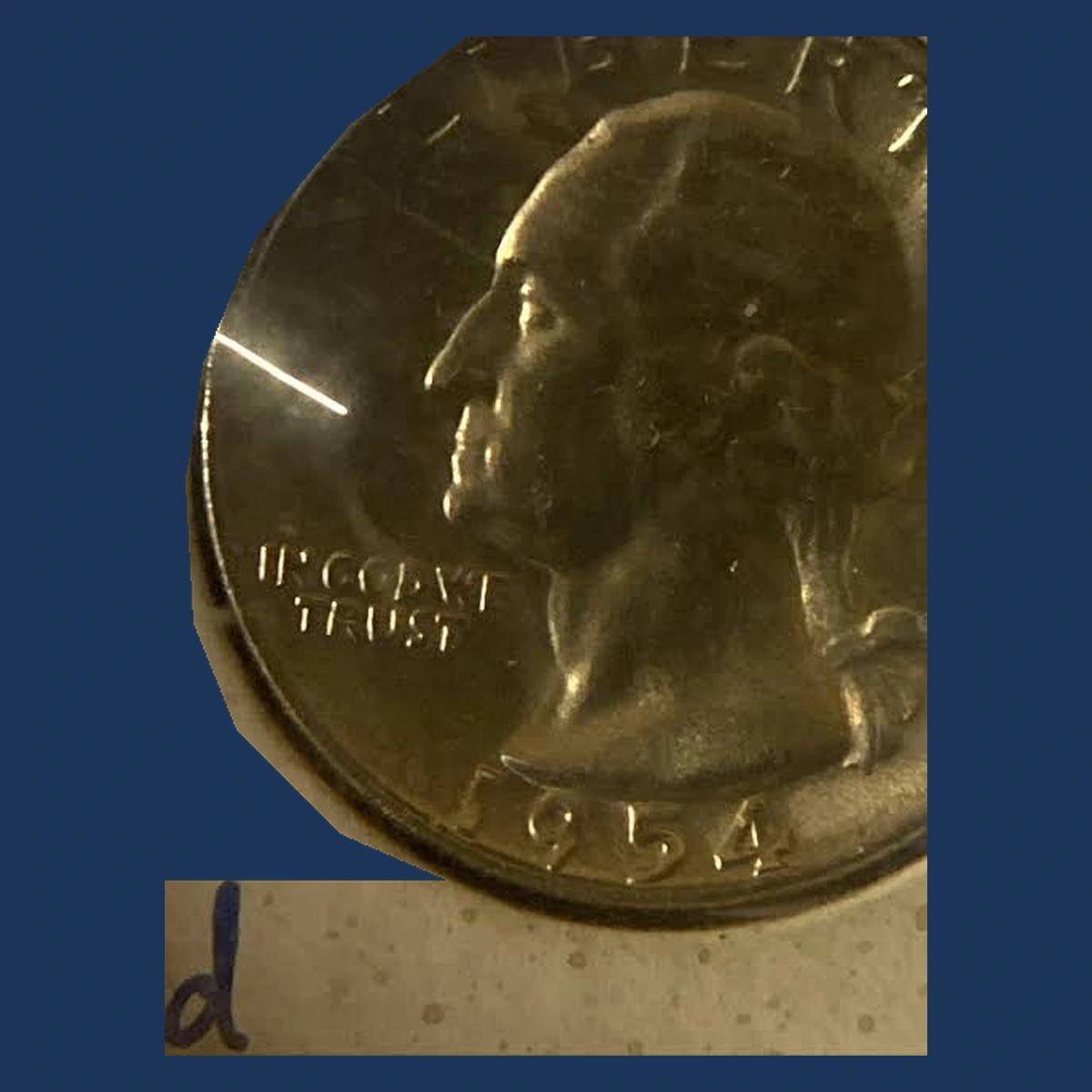
A doubled die carries an extra design outline before it stamps the coin. Multiple coins can therefore repeat the same doubled letters or design features.
The 1954 listings include front and back varieties on ordinary Philadelphia quarters, plus separate Philadelphia Proof varieties. Proofs are collector coins made with special preparation.
A Denver front-side variety is also listed. These reports do not establish a single coin with every feature, and a catalog number alone does not reveal exactly which letter is doubled or the direction of its extra outline.
Estimated Value
Use an estimated $30 to $800 for a confirmed minor doubled die, with the mint and finish correctly identified. Strongly separated detail on clean surfaces supports the higher part of the range.
A 1962 Philadelphia doubled die reached $3,290 in July 2016, but that particular high-grade variety is a different comparison. Its result should not be assigned to any thick 1954 letter.
On Proofs, scratches can obscure tiny features and reduce the whole coin’s value.
How to Identify
Sort the candidate by mint and finish before matching the doubled design. A Philadelphia Proof, an ordinary Philadelphia coin, and the Denver front-side variety need different reference photographs.
Choose several nearby letter ends or design lines that appear repeated. Compare each with the matching points on an attributed coin, keeping the image scale and lighting similar.
Flat shelves from movement during striking can imitate doubling, while reflections can make a single edge appear twice. Change the light angle and inspect the shape of the extra detail.
If only one indistinct mark remains, improve the photographs or seek an expert comparison. Do not transfer a catalog name solely because the year and mint happen to match.
6. 1954 Washington Quarter San Francisco Strike Through String
A length of string between the blank and the stamping tool can leave a narrow depression in the design. The object blocks direct contact while the surrounding silver receives the normal image.
A 1954-S example graded PCGS MS66 is cataloged with this front-side error. That grade describes an unworn coin with very few marks.
The impression is evidence of an obstruction during striking, not a claim that string remains embedded in the coin. A thin scratch added later may resemble a line from above, but it removes or displaces already struck metal.
Estimated Value
The PCGS MS66 string-impression coin sold for $186 in July 2021. Estimate $75 to $1,000 for comparable authenticated examples, depending on clarity, extent, and preservation.
A continuous, easily followed depression can be more appealing than a short mark lost among surface scratches. The condition of the surrounding portrait and lettering helps display the obstruction.
The estimate concerns the actual struck impression. An ordinary scratch or attached material added later is not a comparable minting error.
How to Identify
Follow the narrow depression through the affected front-side design. Look for detail that failed to form where the string interrupted contact with the stamping tool.
Now compare the line with nearby scratches. A later cut may show sharp scraping or displaced silver along a path through already completed details, while an obstruction affects their original formation.
Photograph the whole front along with close views of the depression’s ends. The exact route must come from the coin, not from another year’s string impression.
Keep the back-side S visible in the full-coin photographs to preserve the specimen’s identity. Do not clean the line or try to lift anything from it before a specialist evaluates the surface.
7. 1954 Washington Quarter Reported Off-Center Strike
A blank that sits partly outside the striking position can receive only part of the intended design. One side of its outline stays plain while the opposite side loses outer lettering or portrait detail.
This is an off-center strike, reported among 1954 quarter errors. The size of the blank crescent varies with the amount of displacement.
Each example needs its own readable date and mint evidence. A generic percentage does not identify a particular coin, and an uneven but complete design within a wide border can instead come from a broadstrike.
Estimated Value
Estimate $50 to $1,500 for a genuine 1954 off-center quarter. A strong displacement with a readable year and clean original surfaces is more appealing than a slight shift on a damaged piece.
For context, a 1943-S silver quarter struck 35% off center brought $2,640 in July 2022. That different-year San Francisco result is not a sale of a 1954 candidate.
A lost date or severe marks can lower interest despite a dramatic blank crescent.
How to Identify
Find where the design runs out of metal, then locate the untouched crescent on the opposite side. Their positions should explain one blank sitting partly outside the striking area.
Read the surviving date and include the mintmark area when available. Do not assign Philadelphia simply because the part of the back that would show a letter is missing.
Compare the two faces to see how both designs meet the same outline. A complete design with a wider rim calls for a different comparison.
Look across the plain metal for seams, grinding, or partly erased letters. An unstruck crescent should belong to the original blank, rather than a finished quarter reshaped or joined to added metal.
8. 1954 Washington Quarter Struck on a Silver Dime Blank
The larger quarter design cannot fit completely on a silver dime blank. Outer letters and other details meet the edge before the intended image is finished.
A 1954 Philadelphia example graded PCGS MS64 documents this mismatch. Its metal remains silver, just like a normal quarter, so the pale color does not expose the mistake.
The size and weight provide more useful clues. A standard silver dime blank begins around 2.50 grams, but that number is a reference for the blank type rather than a stated measurement of this particular auction coin.
Estimated Value
The PCGS MS64 silver-dime-blank quarter sold for $990 in September 2024. Estimate $500 to $2,500 for comparable authenticated examples in different conditions.
MS64 means an unworn coin with some visible marks. A clearly identified year and attractive surviving quarter details help collectors understand the undersized strike.
Heavy wear or an incomplete date can reduce its appeal. Silver color alone supports neither the identification nor the price, because an ordinary quarter uses the same basic alloy.
How to Identify
Weigh a loose candidate before relying on its silver appearance. A dime blank normally starts near 2.50 grams, while the correct 1954 quarter blank weighs 6.25 grams.
Compare the width with the dime blank’s usual starting diameter of about 17.9 millimeters. Some spreading during the quarter strike is possible, so record the actual size rather than expecting an unchanged blank.
Trace the surviving quarter design into the edge and check for filing or a cut through finished letters. The small outline should reflect the wrong blank, not later trimming.
Include clear views of the remaining year and the edge. A holder’s measurements, when available, are preferable to opening a sealed coin for testing.
9. 1954 Washington Quarter Struck on a Nickel Blank
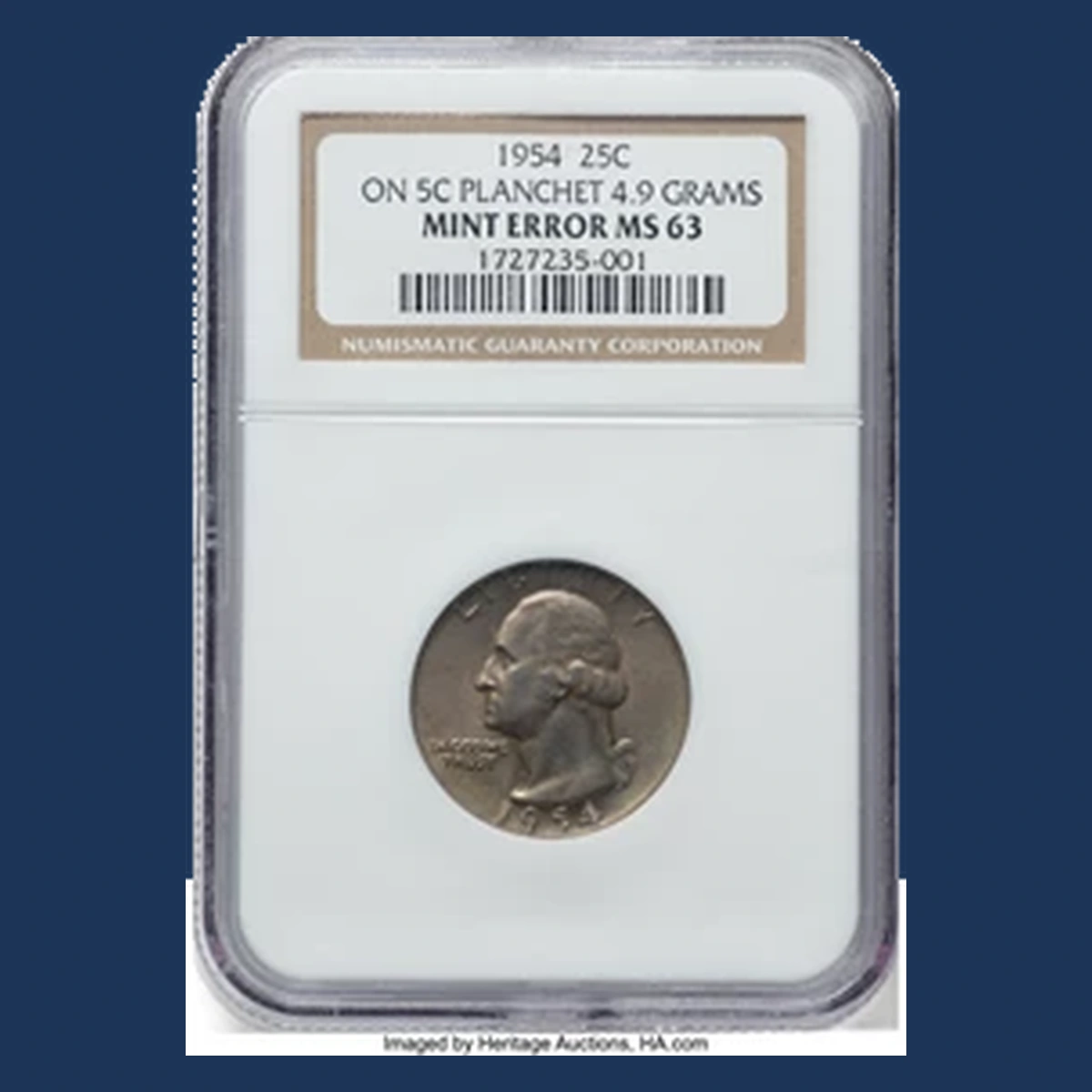
A nickel blank can enter the quarter press and receive a design too large for it. The resulting coin uses copper-nickel metal instead of the silver alloy expected for a 1954 quarter.
The recorded Philadelphia example was graded PCGS MS64 and formerly belonged to Fred Weinberg. Its small blank leaves less room for the outer quarter design.
A gray surface alone cannot establish the metal. Normal silver can darken, and a trimmed quarter can become smaller, so the blank’s composition and original struck boundary need to support the same explanation.
Estimated Value
The PCGS MS64 nickel-blank quarter brought $1,440 in September 2024. A comparable authenticated piece has an estimated range of $600 to $3,000.
The grade describes an unworn coin with some marks. Readable identity and attractive surfaces can make the wrong-denomination blank easier to collect.
A smaller diameter without reliable metal identification does not justify that price level. Later trimming, damage, or plating can change an ordinary quarter’s appearance without creating this error.
How to Identify
For a loose candidate, measure weight and width together: a nickel blank begins near five grams and 21.2 millimeters. A quarter strike may spread it, so the final diameter need not remain exactly at the blank standard.
Inspect the design where it reaches the smaller edge, looking for an original struck boundary rather than filing through finished letters. Dark gray color provides little help here, since an ordinary silver quarter can also darken with age.
Ask an error specialist to check whether the metal is copper-nickel rather than the quarter’s normal ninety-percent silver alloy. Keep a certified piece sealed and use its documented measurements instead of opening the holder or scraping the surface.
Conclusion
The estimated $20 to $3,000 range spans modest surface features and quarter designs struck on smaller blanks. A clear raised crack can be affordable, while a well-preserved nickel-blank example reaches a different price level.
Keep small-letter varieties separate from physical striking accidents when examining a coin. For wrong blanks, the metal and measurements must explain the crowded design; for doubling, several matching outlines should support the same tool-made pattern.