1973 Quarter Error List with Pictures

Look past the shine on a 1973-S quarter: a tiny aluminum example weighs just 0.7 g. Made on a blank intended for Nepal, that Proof, a specially prepared collector coin, sold for $4,800 in August 2020.
Other 1973 quarter errors involve clipped edges, missing layers, or extra strikes on ordinary circulating coins. Estimated values span $5–$8,000, with metal, condition, and the exact mistake driving the price.
The examples below explain what to look for before an unusual quarter earns a place in your collection.
1. 1973 Washington Quarter Weak Design
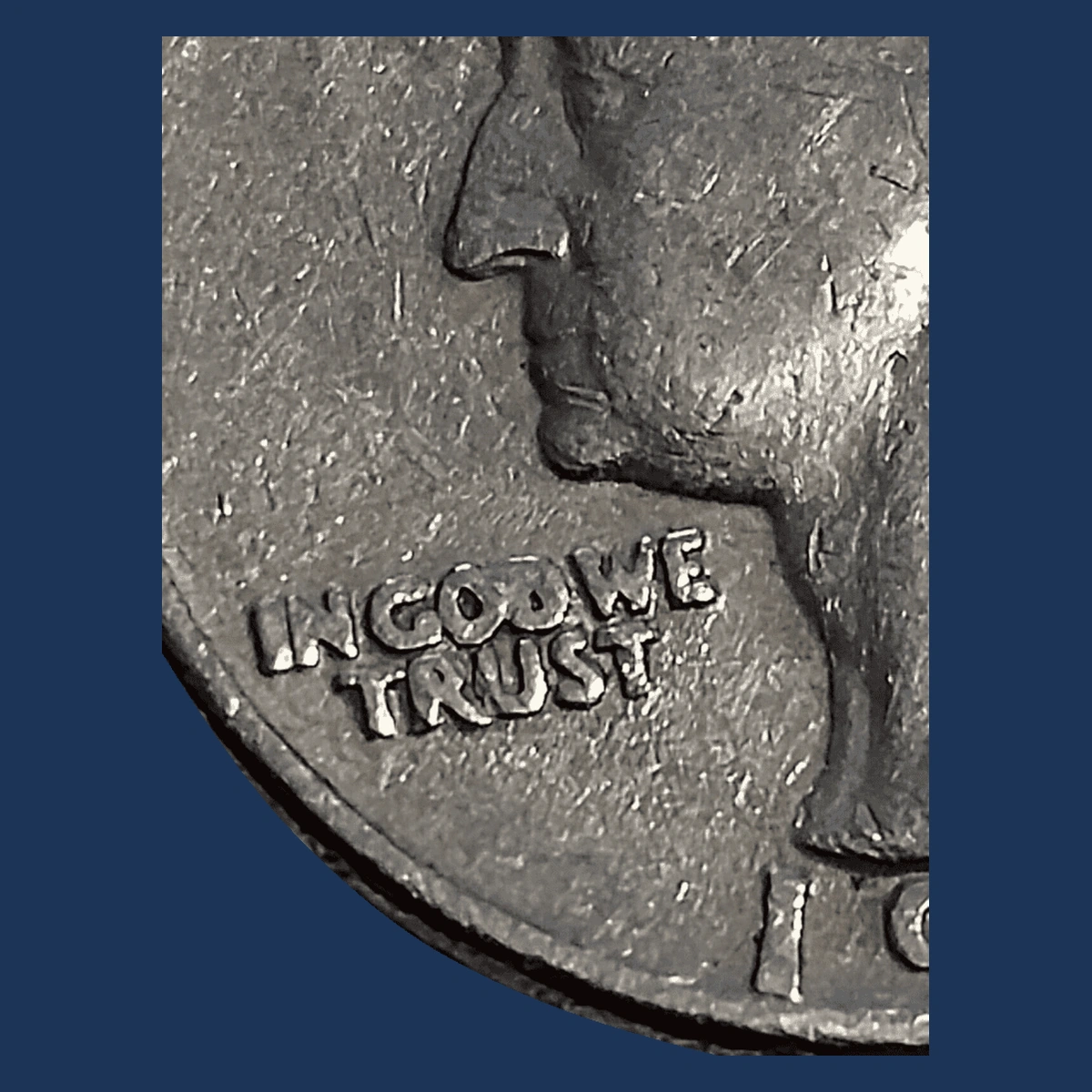
Faint IN GOD WE TRUST lettering appears in reports of weakly struck 1973 quarters. Part of the design can look soft even when the surrounding surface has little wear.
Low striking pressure is one possible explanation. However, material filling the stamping tool, wear on that tool, or ordinary circulation can produce a similar result.
The visible weakness comes first; its cause must be judged from the whole coin. A worn motto on a heavily circulated quarter does not become a valuable Mint error merely because some letters are hard to read.
Estimated Value
Estimate $5–$50 for a genuine minor weak strike with enough original surface to establish that it left the Mint that way. A normally worn coin can remain worth only face value.
As a later-year comparison, an NGC AU55 1986-P quarter described as a weak strike sold for $36 in March 2010. Clear surrounding details and little wear matter more than simply finding the faintest possible motto on a 1973 coin.
How to Identify
Compare the faint motto with Washington’s hair and the eagle’s feathers before examining individual letters. If these raised areas are also flat and smooth, normal circulation wear is the first explanation to consider.
Use a 10× magnifier to inspect the spaces beside the weak letters for surviving original shine. Rotate the coin under a lamp and watch whether that shine continues through the soft area or ends at rubbed, scratched metal.
Next compare front and back: general weakness on both faces differs from one small patch with a sharp boundary. Look for softness formed during striking within an otherwise fresh surface, and do not diagnose low pressure from a worn motto alone.
2. 1973 Washington Quarter Raised Rim Break
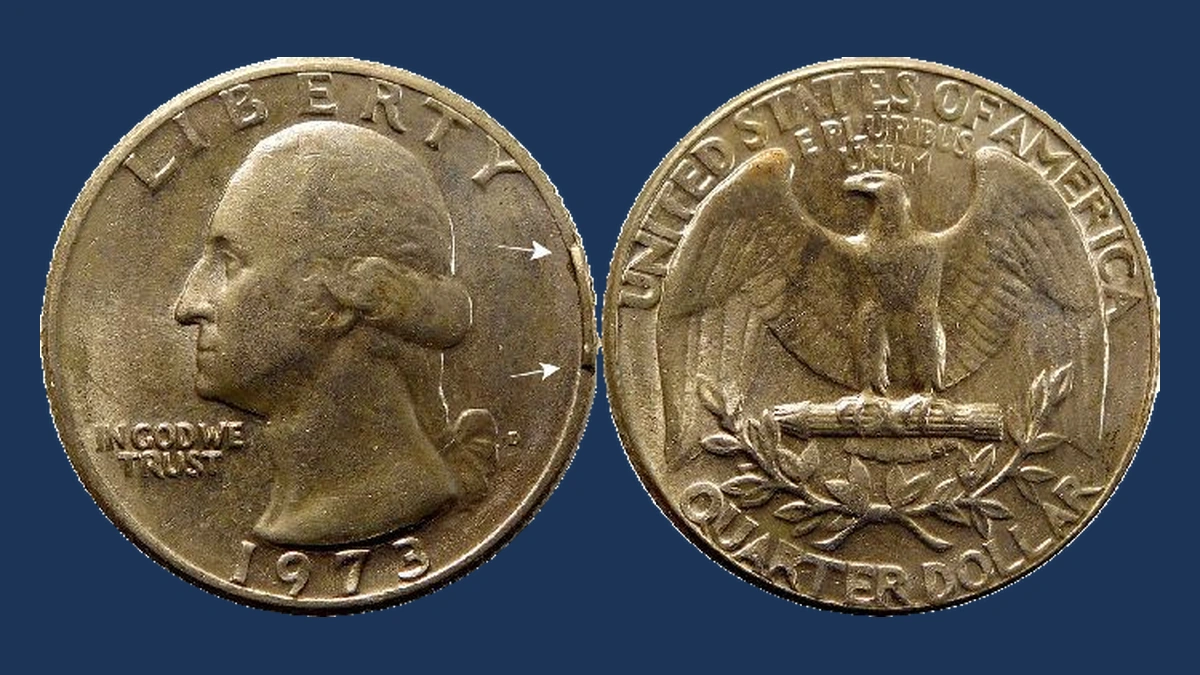
A small raised lump can replace a short section of the rim. The cataloged 1973-D example is a rim cud, meaning a piece broke from the edge of the stamping tool.
Metal flowed into that broken area when the quarter was struck. The result stands above the surface instead of cutting into it like a scratch.
Cuds on Coins lists this example as CU-25c-1973D-01. Its rim location should not be confused with a much larger break that extends far into Washington’s portrait or other major design features.
Estimated Value
A small confirmed rim cud has an estimated value of $10–$100. Clear shape and an undamaged surface help, while a barely visible bump generally attracts less attention.
For scale, a 1970-D nickel with two larger raised breaks sold for $63 in October 2022. That different-denomination sale offers a comparison for modest raised errors, but it does not establish a fixed price for this particular 1973-D quarter variety or every stage of its development.
How to Identify
Find the Denver D first, then compare the raised rim area with the catalog photograph. A matching year and mint do not establish a variety unless the defect itself matches.
Under a 10× magnifier, trace the lump from the normal rim into the raised area. It should blend into the struck surface, rather than resembling a separate bead of added metal.
Inspect the opposite face at that point for a dent caused by a later blow. Damage often pushes up a lip beside the place where it drove metal down.
Follow the edge through the affected section and look for crushed grooves or a cut. Compare the exact rim shape with CU-25c-1973D-01, keeping this small defect separate from larger design-covering breaks.
3. 1973 Washington Quarter Doubled or Retouched Design
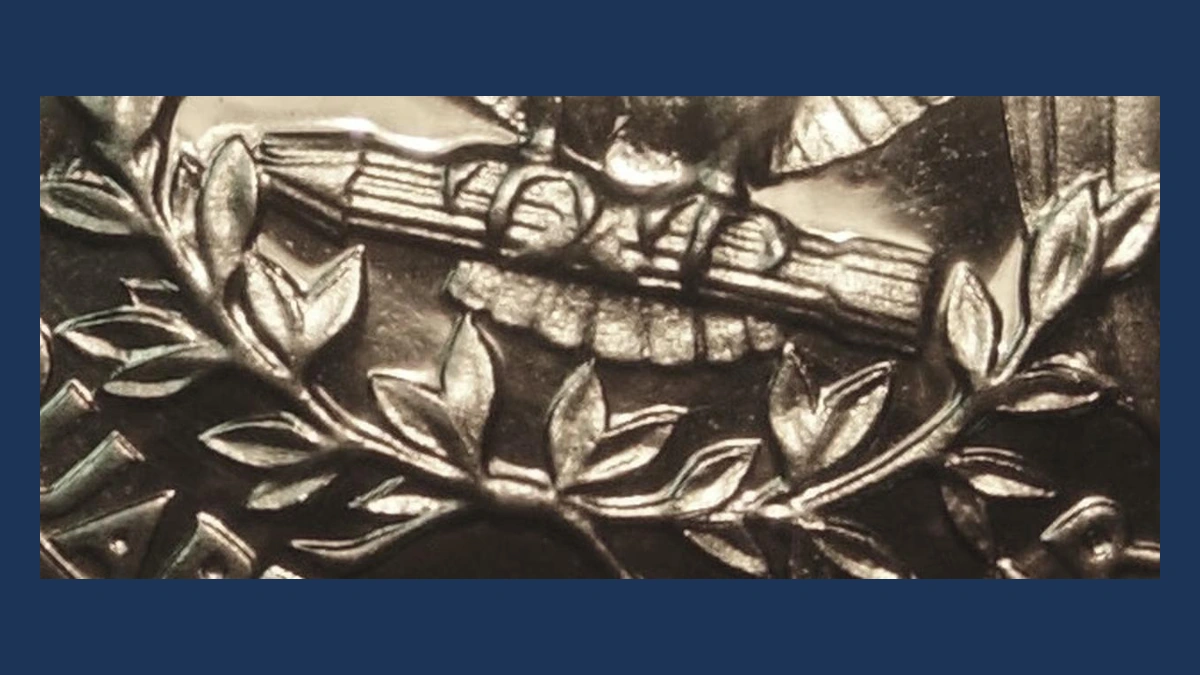
An extra outline can make a letter or part of the design look doubled. Philadelphia front doubling is reported for 1973, but a specific verified working-tool number is not established here.
A separate discussion concerns altered-looking back details on a 1973-S Proof. Those lines may reflect retouching of the design rather than a true doubled die, a steel tool carrying two impressions of the design.
The two reports describe different features on different coins. Neither justifies treating every thick letter or extra line on a 1973 quarter as a valuable variety.
Estimated Value
For a confirmed minor Philadelphia doubled die, estimate $15–$150. The 1973-S retouching report should instead be valued as an ordinary Proof unless the exact feature earns a recognized variety premium.
A practical estimated $5–$30 covers typical raw Proof examples with such minor lines, depending on condition. By comparison, a clearly identified 1990-S Proof FS-101 doubled die sold for $360 in March 2020, a stronger established variety rather than the same error.
How to Identify
Separate the Philadelphia front-doubling report from the San Francisco back-design report before comparing photographs. A 1973 Philadelphia quarter has no mint letter, while the collector Proof carries an S.
For front doubling, inspect the same letters on a normal coin and the candidate under a 10× magnifier. Rounded extra outlines or split corners deserve a closer look; thin flat shelves can result from movement during striking instead.
For the S back report, compare the extra lines with the normal artwork and keep the lighting the same. A line added while preparing the design is not automatically evidence of a doubled tool, so match the actual raised feature before claiming a variety premium.
4. 1973 Washington Quarter Repunched S Mint Mark
An extra part of the S appears above the main mint letter on this cataloged Proof variety. CONECA lists it as 1973-S RPM-001, with the second S to the north.
The letter was punched into the steel stamping tool more than once. A small difference in punch position left overlapping impressions that could transfer to the finished coin.
This repunched mint mark affects the letter rather than doubling the entire quarter design. Early examples preserve the shape most clearly, while glare from a Proof’s reflective surface can make a weak extra line hard to judge.
Estimated Value
An estimated $20–$200 covers recognizable 1973-S RPM-001 Proof quarters across typical collectible condition levels. A clear extra S, original surfaces, and little haze make the feature easier to show and sell.
This is an estimate for a small mint-letter variety, not the much higher-priced Proof wrong-blank errors. The $360 auction result for a different 1990-S doubled-die Proof provides a stronger-variety comparison rather than a direct sale of this repunched S.
How to Identify
Soften the light before examining the S. A Proof’s reflective surface can make a bright rim beside the letter look like a second impression.
Use a 10× magnifier to follow the upper part of the mint mark. The cataloged extra S is northward, meaning above the main letter.
Compare it with CONECA’s RPM-001 photographs, keeping the coin at the same angle.
Move the light and check whether the extra curve stays attached to the raised letter. A shadow will change, and a scratch may continue across the surrounding flat surface.
Trace enough of the upper curve to recognize part of another S. That matching letter shape is the useful check, rather than a vague thickening anywhere around the mint mark.
5. 1973 Washington Quarter Broadstrike
An unusually broad quarter can result when the surrounding steel ring fails to restrain it. The blank spreads outward while receiving the design, producing a broadstrike.
A Philadelphia example graded NGC MS66 was cataloged as broadstruck on a blank. Its expanded edge is the key feature, rather than a special mint letter: Philadelphia quarters still had no P in 1973.
The design can be unevenly placed but should remain on the available metal. If a substantial part of the design runs off the edge, an off-center strike becomes the more useful description.
Estimated Value
Estimate $30–$250 for a genuine 1973 broadstrike, with a wider spread and clean, unworn surfaces generally attracting more interest. A slight increase in size offers less visual appeal than a clearly expanded coin.
Two Philadelphia broadstrikes dated 1990 sold together for $101 in July 2021. That is a pair total, not a per-coin price, and gives a modest comparison for less dramatic examples rather than a guaranteed value for the recorded 1973 MS66 coin.
How to Identify
First check the complete outline against a normal quarter. Calipers should reveal where the coin exceeds the usual 24.26 mm width, while a scale can show whether it remains near 5.67 g.
Follow the outer lettering under a 10× magnifier instead of measuring only the widest edge. A broadstrike keeps the design on the metal, though its placement can be uneven and its rim poorly formed.
Inspect the edge for absent or incomplete grooves where the collar failed to contain the strike. A flattened normal coin may also spread, but tends to lose design height and show later pressure marks; look for a naturally struck design inside the widened boundary.
6. 1973 Washington Quarter Tilted Partial Collar
The edge can develop a sloping step when a blank sits unevenly within the steel ring around the striking area. Part is held at normal width while the exposed section spreads farther.
A Philadelphia example was graded ANACS MS60 Details and described as a tilted partial collar. Its listing also noted counting-wheel damage, which happened after striking and is not another Mint error.
That distinction matters when viewing the coin. The stepped edge explains the collar problem, while a curved scrape from handling machinery explains a separate surface defect and affects condition.
Estimated Value
A tilted partial-collar 1973 quarter has an estimated value of $25–$250. The recorded damaged example should be compared with other problem coins rather than with a clean MS60 piece.
For a different-denomination comparison, a 1990-P nickel with a partial collar sold for $99 in June 2025. A strong edge step, readable date, and limited later damage support the upper part of the estimate, while scratches can reduce demand considerably.
How to Identify
View the coin from the side before inspecting the portrait. Rotate it slowly and watch whether the edge step changes height around the circumference, as expected from a tilted position.
The ordinary edge has grooves and measures about 24.26 mm across the coin. Use calipers to compare the restrained section with the part that spread outward, then weigh it against 5.67 g.
With a 10× magnifier, separate the step from the later counting-wheel scrape. The scrape damages a finished surface; it does not explain a second level formed around the edge.
Look for continuity in that edge structure rather than one isolated dent. A sloping collar step should follow the coin’s outline without the crushed metal left by later squeezing.
7. 1973 Washington Quarter Clipped Blank
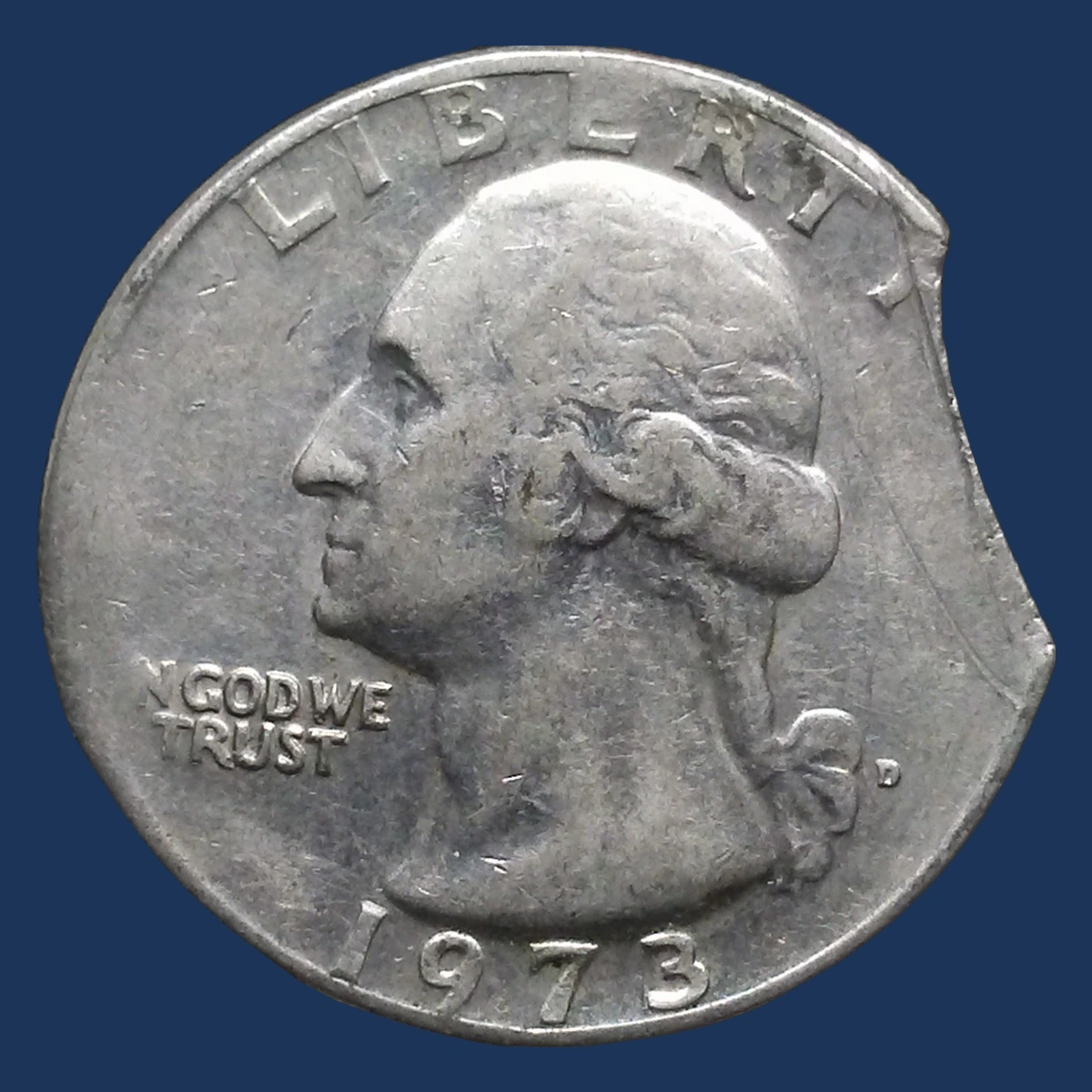
A piece can be missing from the blank before Washington’s design is struck. The completed quarter then carries its design around a natural gap in the outline.
Reports include a 1973-D quarter with a 5% clip. A different Denver coin has two curved clips, a partial-collar edge, and a measured weight of 3.88 g.
ANACS graded that combined-error coin MS62. Its two gaps and stepped edge belong to one specimen, so neither its weight nor its extra collar feature should be assigned to the separately reported 5% clip.
Estimated Value
Estimate $30–$300 for genuine 1973 clipped quarters, with the amount of missing metal, condition, and additional edge features affecting value. A small 5% clip generally belongs below a dramatic two-gap example of similar quality.
A different-year comparison is the 1978 quarter with three curved clips, which sold for $180 in March 2025. That sale concerns one triple-clip coin and helps place visually clear, multiple-gap quarters within a practical collectible range.
How to Identify
Record weight before trying to estimate the size of the gaps by eye. The double-clip specimen weighs 3.88 g; the ordinary quarter standard is 5.67 g, and the separate 5% example needs its own measurement.
Use calipers across the surviving full diameter, comparing it with 24.26 mm. Examine the curved boundaries under a 10× magnifier for softened design and metal flow instead of fresh cutting marks.
On the double-clip coin, inspect the edge step separately from the gaps. Remaining grooves and the partial-collar structure should fit an originally struck coin.
The 3.88 g example provides a specific comparison. Match its two natural gaps and edge step without borrowing those features for every 1973-D clip.
8. 1973 Washington Quarter Struck Through Material
A patch of design can disappear where material gets between the coin and the stamping tool. The material blocks the impression, leaving a depression or an unusually smooth area.
One 1973 report describes a feature across Washington’s face. A different 1973-S Proof, graded PCGS PR67, was cataloged with a struck-through area on the back.
These reports do not identify the same coin or the same obstruction. Without a clear pattern or retained material, the mark should not be called a cloth impression, wire strike, or another specific substance.
Estimated Value
An estimated $20–$400 covers confirmed 1973 struck-through errors, from small interruptions to conspicuous marks on Proof coins. A sharply outlined depression with original surrounding surfaces is easier to value than an unexplained smooth patch.
As a different-denomination comparison, a 1986-P nickel with a struck-through error sold for $204 in June 2023. The shape, visibility, and condition of the quarter still matter, especially when comparing a circulating coin with a specially prepared Proof.
How to Identify
Begin at the border of the smooth or depressed patch. Follow a letter or portrait detail toward it and note whether the design gradually weakens or ends abruptly.
Change the light direction under a 10× magnifier. A gouge often leaves sharp cuts and displaced metal, while something blocking the strike can interrupt the design without cutting through an already finished surface.
Look at the rest of the same face for connected scratches that might explain the patch. Dirt or wear can also obscure details, so avoid cleaning the area in search of a pattern.
The front-side report and the S Proof back example are separate coins. Identify the actual interruption in the design before suggesting a substance, and reserve names such as cloth or wire for marks that preserve that recognizable shape.
9. 1973 Washington Quarter Missing Outer Layer
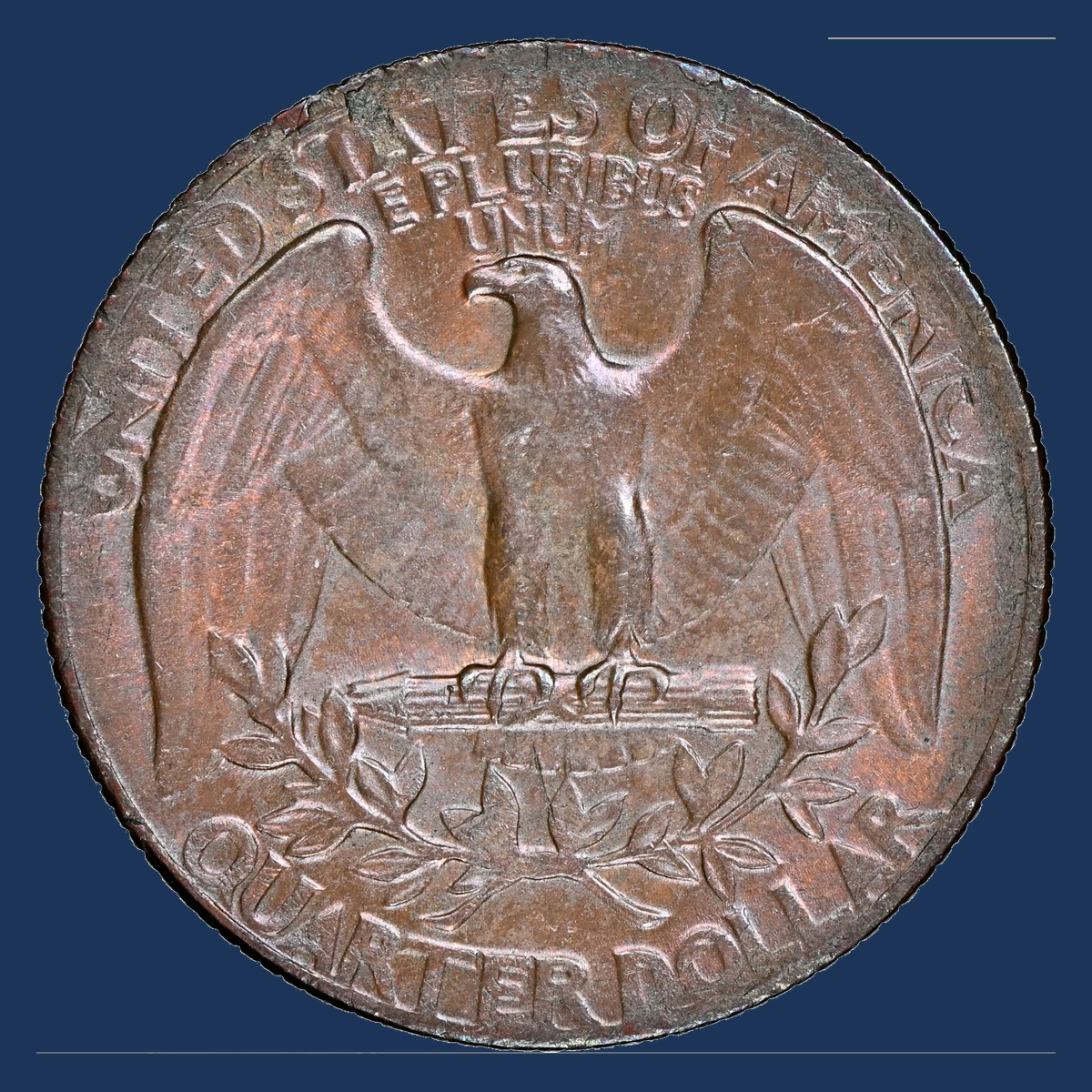
Copper showing through one face can mean that part of a silver-colored outer layer is missing. Normal quarters are clad, with two outer layers bonded to a copper center.
A Philadelphia front-layer example weighs 4.7 g, while a reported back-layer coin weighs 4.9 g. A separate Denver example has only part of its front layer missing and weighs 4.8 g.
The amount and location of exposed copper therefore vary. These measurements identify separate specimens, not one required weight for every 1973 quarter with a missing layer.
Estimated Value
A Philadelphia front-layer-missing NGC MS64 quarter sold for $384 in January 2022. The Denver partial-front-layer coin graded NGC MS63 brought $168 in June 2024.
A practical estimated range is $100–$600 for comparable 1973 examples. The visible copper, remaining design, and surface quality influence value.
Partial loss can look very different from a completely copper-colored face, even when both coins have lost a similar amount of weight.
How to Identify
Inspect the edge layers before deciding that a brown face is exposed copper. A 10× magnifier should show where the outer metal ends, rather than only a change in surface color.
Use a scale to compare with the ordinary 5.67 g weight, then measure about 24.26 mm with calipers. The listed 4.7 g, 4.9 g, and 4.8 g examples are individual results, not interchangeable targets.
On the Denver partial-loss coin, follow the boundary across the front and inspect the design on both sides of it. The edge grooves and surviving design should fit natural striking; scraped surfaces, corrosion pits, or an added coating can imitate the color without the same missing-layer structure.
10. 1973 Washington Quarter Off-Center Strike
A blank positioned away from the center of the press can receive only part of the design. The finished coin shows missing lettering on one side of its outline and blank metal on the other.
Philadelphia off-center examples appear in auction records, including an ANACS MS63 coin. Denver examples with more than 40% displacement are also reported.
The degree of displacement belongs to the particular coin being examined. It should not be borrowed from another 1973 example, especially the separately recorded Denver coin that also carries a backward, sunken design.
Estimated Value
Estimate $40–$700 for genuine 1973 off-center quarters across modest to large displacements. Clear dates and clean surfaces help, while an unreadable year makes a coin harder to collect by date.
For a later-year comparison, a 1978 quarter struck 15% off center sold for $154 in September 2025. A larger blank crescent can bring more interest, but the percentage alone does not replace condition or establish that an unknown coin was made in 1973.
How to Identify
Read the date before measuring the blank crescent. If the mint-mark area was never struck, an absent D does not prove that the coin came from Philadelphia.
Compare both faces under a 10× magnifier. The displaced designs should fit the same blank position, rather than one face merely having a wider rim.
Calipers can compare the remaining outline with the normal 24.26 mm diameter. A scale should usually remain near 5.67 g because the blank’s metal was retained, and edge grooves may be incomplete.
Check the unstruck area for later flattening or tool marks. Trace the design to where it naturally runs off the metal, then verify that the opposite blank crescent explains the missing part.
11. 1973 Washington Quarter Extra Strikes
A coin can return between the stamping tools after its first strike. If it turns over, earlier front details may survive beneath the new back design.
A Philadelphia flipover example retains that earlier portrait outline on its back. Another Philadelphia coin received three strikes, with the second about 85% off center and the third about 95% off center.
A report calling a similar 95% example double-struck may refer to that same triple-struck piece. Denver double strikes are also reported, but the exact overlap must be judged from the actual coin.
Estimated Value
The Philadelphia in-collar flipover graded PCGS MS64 sold for $373.75 in September 2008. Estimate $150–$1,200 for comparable 1973 extra-strike errors, allowing more for a clear, dramatic sequence with several readable impressions.
A different 1978 rotated double strike sold for $198 in July 2022 and provides a lower-priced comparison. Three strikes do not automatically triple the value: separation, visible dates, and the ease of understanding the design all affect collector interest.
How to Identify
On a suspected flipover, examine the back for an earlier Washington outline rather than looking only for doubled dates. Use a 10× magnifier to distinguish that underlying portrait from stains or random scratches.
A round in-collar coin can stay near the normal 24.26 mm diameter and keep edge grooves. Weigh it against 5.67 g and use calipers to document any spreading.
For a multiple-struck piece, follow each separate design boundary. The recorded three-strike example needs three impressions, including the small late strikes, not merely two obvious lobes.
Do not count ordinary repeated Proof blows as errors without displacement. Identify a second position or a flipped design that could not have come from one properly aligned impression.
12. 1973 Washington Quarter Off-Center Strike with Mirror Image
A recorded Denver quarter combines a large off-center strike with a backward design pressed into the back. PCGS graded this piece AU58, indicating slight circulation wear.
The reversed impression is a brockage: an already struck coin acted as a stamp against the next piece. Its raised design produced a sunken mirror image in the new coin.
This example is about 50% off center, so the unusual shape and the reversed impression belong to the same event. It is not simply a half-missing design or ordinary doubled lettering.
Estimated Value
Estimate $200–$1,500 for a comparable authenticated 1973-D off-center brockage, depending on how much of the backward image remains recognizable. Strong design detail adds more appeal than a vague hollow.
A later compound example, a 1999-P New Jersey quarter with an 80% brockage and broadstrike, sold for $312 in December 2024. That different design and error combination offers context, while the 1973 coin’s preservation and readable date still guide its individual estimate.
How to Identify
Use a mirror or a flipped photograph to read the unusual back design. The feature must be reversed as well as sunken, unlike a normal raised image that is merely rotated.
Under a 10× magnifier, trace the image within the off-center struck area. The blank portion and missing normal design should agree with roughly half the coin escaping the strike.
A loose coin should retain roughly the normal 5.67 g on a scale. Calipers and an edge view can compare it with the 24.26 mm grooved-edge standard, allowing for spreading during the error.
Look for later crushing around the rim, which can accompany a false coin-to-coin impression. The recorded combination requires a natural off-center strike carrying the backward design within its struck surface.
13. 1973 Washington Quarter Two Coins Struck Together
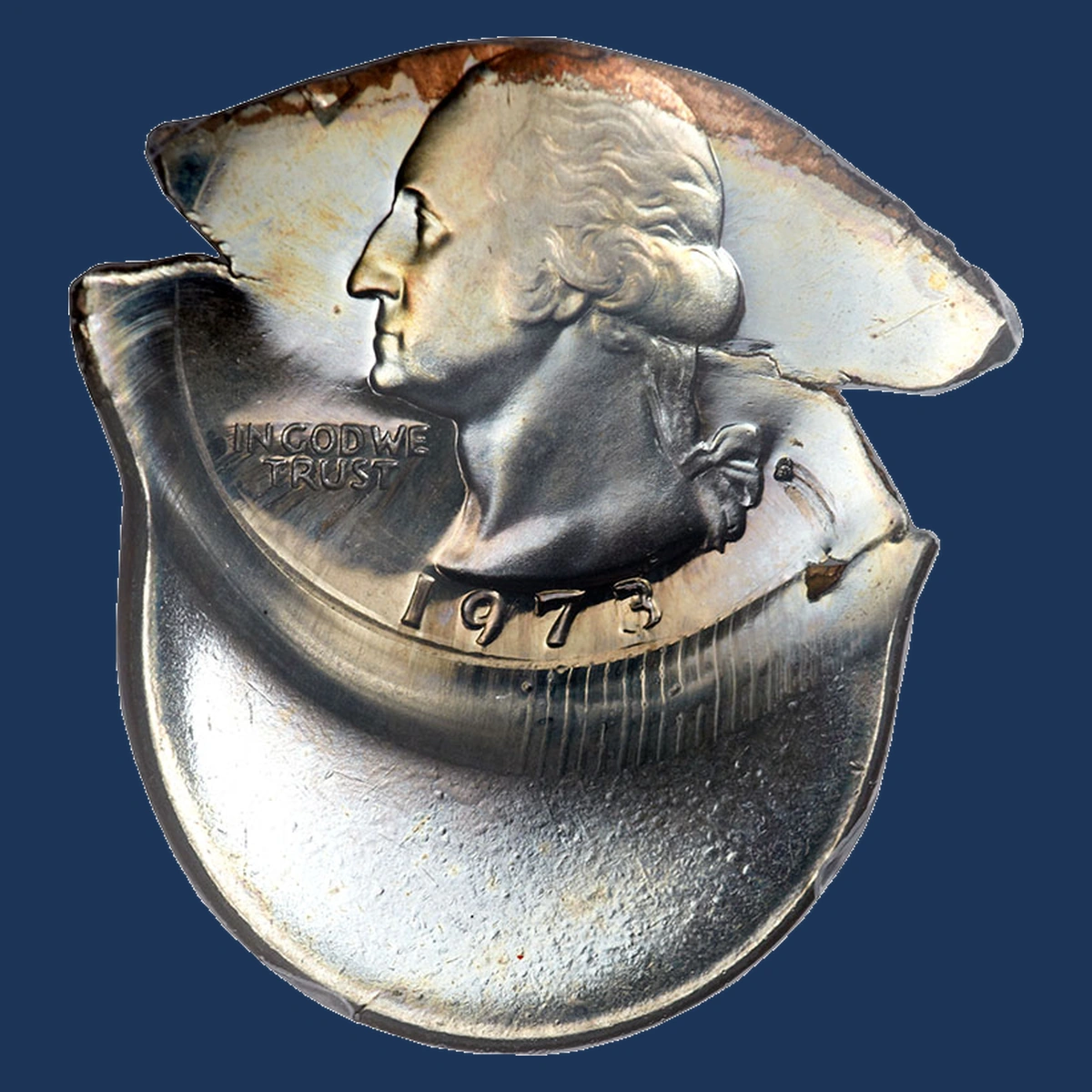
Two 1973-S Proof quarters survive as a matching pair from the same press accident. Their faces show how one coin blocked part of the other during striking.
The first is 15% off center toward twelve o’clock and has an unstruck front. The second retains an almost complete back, while a large depression covers about 85% of its front.
PCGS graded the coins PR65 and PR66. Both pieces are needed to understand this pair, so the blank face and large indent should not be described as two features on a single quarter.
Estimated Value
The two-coin pair sold for $3,760 in June 2017. An estimated $3,000–$6,000 covers a comparable authenticated pair with the relationship between the coins preserved and easy to demonstrate.
That price applies to both coins together, not to either quarter alone. Matching contact areas and original Proof surfaces add appeal, while separated pieces lose part of the story and cannot automatically be priced at half of the recorded pair result.
How to Identify
Keep the coins separate while comparing photographs; do not press their faces together. Locate the blank front on the PR65 coin and the large front depression on the PR66 coin.
A 10× magnifier helps compare the contact boundaries without touching the surfaces. The first coin’s 15% shift toward twelve o’clock should agree with the shape of the second coin’s blocked area.
If safely available loose, weigh each piece and record its dimensions with calipers against 5.67 g and 24.26 mm. Check the edge grooves and any outward spreading separately, since the two pieces did not strike in identical positions.
The main test is the fit of the two contact areas. Compare their outlines and design interruptions while keeping each coin’s own face and grade clearly identified.
14. 1973 Washington Quarter Wrong Metal or Denomination Blank
A quarter design can appear on a smaller blank intended for another coin. Philadelphia and Denver examples include cent and nickel blanks, while Denver dime-blank pieces are also reported.
San Francisco Proof errors include cent, nickel, dime, Nepal one-paisa aluminum, and Liberia five-cent blanks. They still carry Washington and the eagle, not foreign designs.
Some wrong-blank coins have extra features: a Denver cent example is about 5% off center, and a Denver nickel example has an early raised break. Separate Proof cent examples show a clash between stamping tools or displaced extra strikes.
Estimated Value
Estimate $150–$8,000 for this broad group, with ordinary nickel blanks generally below rare foreign blanks and major Proof combinations. A Denver nickel-blank MS64 coin sold for $276 in June 2005.
The Nepal-blank Proof brought $4,800 in August 2020. Other 2020 results include $2,520 for a Proof cent blank and $4,080 for a Proof nickel blank, showing how the actual metal and finish change the price.
How to Identify
Weigh the coin before naming its metal. Normal quarters are 5.67 g and 24.26 mm; recorded wrong blanks include Denver nickel at 5.0 g and cent at 3.06 g.
The Denver dime report is about 2.2 g. The Nepal aluminum piece is only 0.7 g, from a 16.75 mm blank, while the Liberia example weighs 4.2 g.
Use calipers to record the struck size, which can exceed the blank’s starting width. Under a 10× magnifier, compare metal, edge grooves, missing outer design, and the surviving date or mint letter.
A Proof cent with extra strikes weighs 3.13 g, but another listed example is 3.1 g. Check each claimed extra feature on its own coin, and reject filed edges or plating that imitate the wrong size or color.
Conclusion
The 1973 quarter offers errors that are easy to spot and others that need careful magnification. Estimated prices range from $5 for modest weak strikes to $8,000 for rare wrong-blank pieces.
Keep Philadelphia, Denver, and San Francisco examples separate when comparing them. A readable date, natural surfaces, and measurements that fit the claimed mistake matter more than an exciting name or an unusual color.