1992 Quarter Error List with Pictures

One 1992-P quarter kept its full width but weighed only 4.3 grams. This thin-blank error sold for $51 in February 2005.
That example shows why checking 1992 quarter errors involves more than spotting a strange color or outline. Thickness, edge grooves, and the order of repeated strikes can tell different stories.
Estimated values here range from $5 to $1,500. Continue below for the visible features, price examples, and practical checks for each type.
1. 1992 Washington Quarter Die Crack
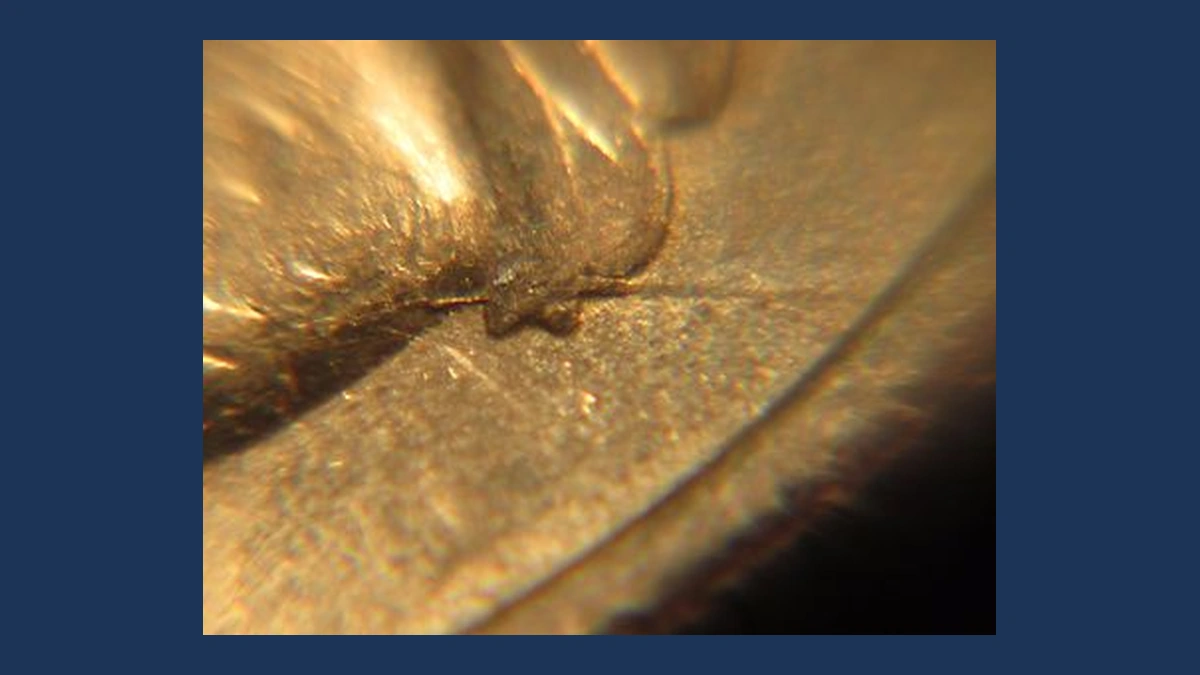
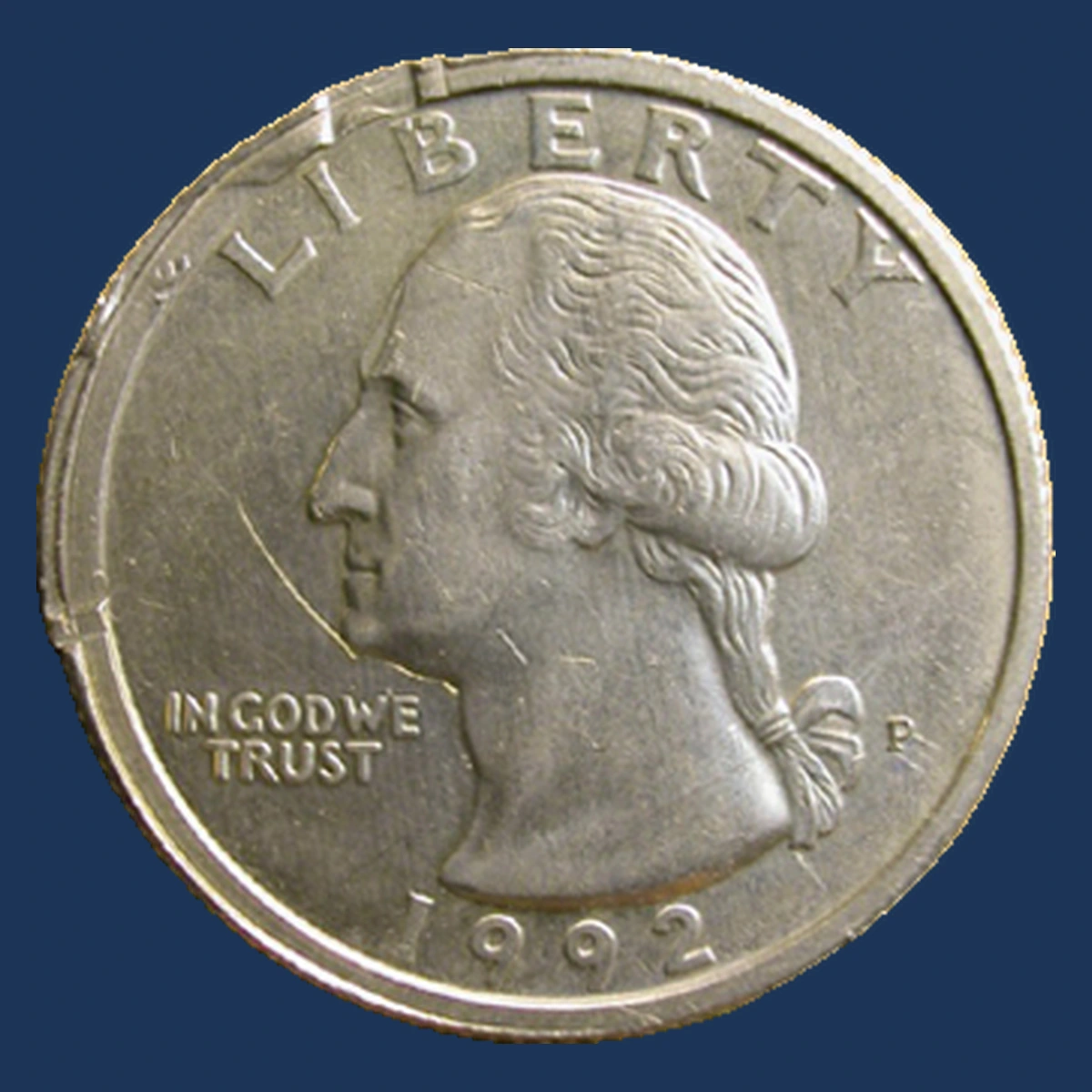
A fine ridge can cross the design or smooth background of a quarter. It appears when metal enters a crack in a die, the tool that stamps the coin.
The crack leaves a raised line, not a trench cut into the finished surface. Thin lines may be hard to see until light comes from the side.
Die cracks are reported for 1992, but no single path or mintmark identifies every example. A ridge across Washington and one near the eagle would need separate photographs, even though both could come from the same general mechanism.
Estimated Value
A small crack can be estimated at $5–$75, depending on visibility and condition. Most fine lines do not turn an ordinary worn quarter into a high-value rarity.
A longer ridge that crosses readable detail can be more interesting because it shows the tool’s damage clearly. Buyers also consider whether marks or corrosion distract from it, so a rougher-looking line is not automatically the more desirable example of the error.
How to Identify
Use a magnifier to inspect both sides of the line while moving the light. The feature should stand up from the coin rather than disappear into a cut.
At any point where it crosses a letter or feather, follow how the raised line meets that design. A scratch can leave displaced metal on one side, but its main path is usually a groove.
Keep a photograph of the full coin with the close-up. Since the 1992 report does not establish one exact crack path, identify your coin from its date and mintmark, then judge the raised line on its own physical features.
2. 1992 Washington Quarter Grease or Debris Blocking the Strike
A letter or small area of the eagle can fail to form when material blocks the strike. Grease can fill the tool’s small recesses, while other debris can lie between the tool and the blank.
The result may be a weak patch with sharp design nearby. The shape of that patch does not always reveal what material caused it.
This type is reported for 1992 without a fixed affected position. A faint mintmark is one possible thing to inspect, but it does not create a separate normal “No P” version of the coin.
Estimated Value
Estimate $10–$150 for a clearly Mint-made blocked area, with tiny weak patches usually near the lower end. Broad missing detail can attract more attention when the surrounding design stays crisp.
A missing mintmark alone should not drive the price. Wear or deliberate removal can also weaken that area, and a buyer needs evidence of a genuine blocked strike before treating a nearly invisible P as a valuable error.
How to Identify
The mintmark belongs to the right of Washington’s hair ribbon. If it looks absent, inspect that spot under a magnifier before giving the coin a “No P” label.
Compare the weak area with nearby letters and the portrait’s high points. Wear usually affects more than one isolated low-detail patch.
Look for abrasions running through the missing feature. A smoothed or scraped surface can explain an erased letter without involving grease at the Mint.
Do not name a specific trapped material unless its shape or texture survives. A clean transition from sharp detail to a localized blocked area is the useful clue, whether the affected part is lettering or the eagle.
3. 1992 Washington Quarter Broadstrike
An unusually wide edge can surround a quarter’s complete design. The metal spread outward because the collar, the ring that controls its width, did not hold it normally during striking.
This error is called a broadstrike. A Denver example graded ICG MS63 is recorded for 1992.
An expanded coin does not need to lose part of its picture. That makes the complete design an important difference from an off-center strike, where part of the design falls outside the blank and never appears on the coin at all.
Estimated Value
The Denver ICG MS63 broadstrike sold for $11 in December 2008. MS63 means a coin with no circulation wear but visible contact marks.
A reasonable estimated range is $10–$200. Mild expansion can remain affordable, while a wider clean example is easier to display and explain.
The auction price also shows why the error name alone is not enough. The coin’s actual outline and condition matter more than an impressive description.
How to Identify
Find the outermost letters on both faces and check whether they remain on the metal. A broad border surrounding complete lettering supports a broadstrike; missing portions of the picture require a different comparison.
With calipers, measure a loose coin across several directions against the usual 24.3 mm diameter. Tilting the coin against a normal quarter can also make an expanded outline easier to notice.
Now inspect the edge with a magnifier. A broadstrike should show how the metal escaped normal collar control, not simply a grooved edge ground smooth after minting.
Flattening with tools can widen a coin too. Crushed finished details and impact marks would argue against an untouched broadstrike.
4. 1992 Washington Quarter Reported Doubled Design
A true doubled die can leave extra outlines on letters, digits, or part of the design. The repetition begins in the stamping tool before that tool strikes the coin.
It does not require the coin to be struck twice. A double-struck coin moves through a different kind of accident and can show overlapping whole impressions.
Front and back doubled-design reports appear for 1992, but they do not establish that both sides are doubled on one coin. The exact pattern must be matched to the individual example rather than assumed from its date.
Estimated Value
Use an estimated $20–$200 for a correctly identified doubled-design example. Clear separation on an attractive coin supports a stronger price than a tiny feature difficult to distinguish from ordinary striking effects.
The range does not apply to every doubled-looking letter. Flat shelves or worn, swollen outlines can have other causes, so buyers should see the actual repeated shape before paying for a doubled die based only on a seller’s wording.
How to Identify
Select one clear letter or digit and photograph it through a 10× magnifier. The extra outline should stay in place as you change the lighting.
Compare several neighboring details. A related pattern is more useful than one bright edge that appears doubled at a particular angle.
A flat shelf beside the normal design often comes from movement during striking. Blurry, swollen edges can come from a worn tool instead.
Check the front and back separately. Finding something on one side does not establish doubling on the other.
For a 1992 example, the date alone supplies no exact pattern to match. The deciding step is comparison with a clearly identified coin showing the same repeated details.
5. 1992 Washington Quarter Weak Strike
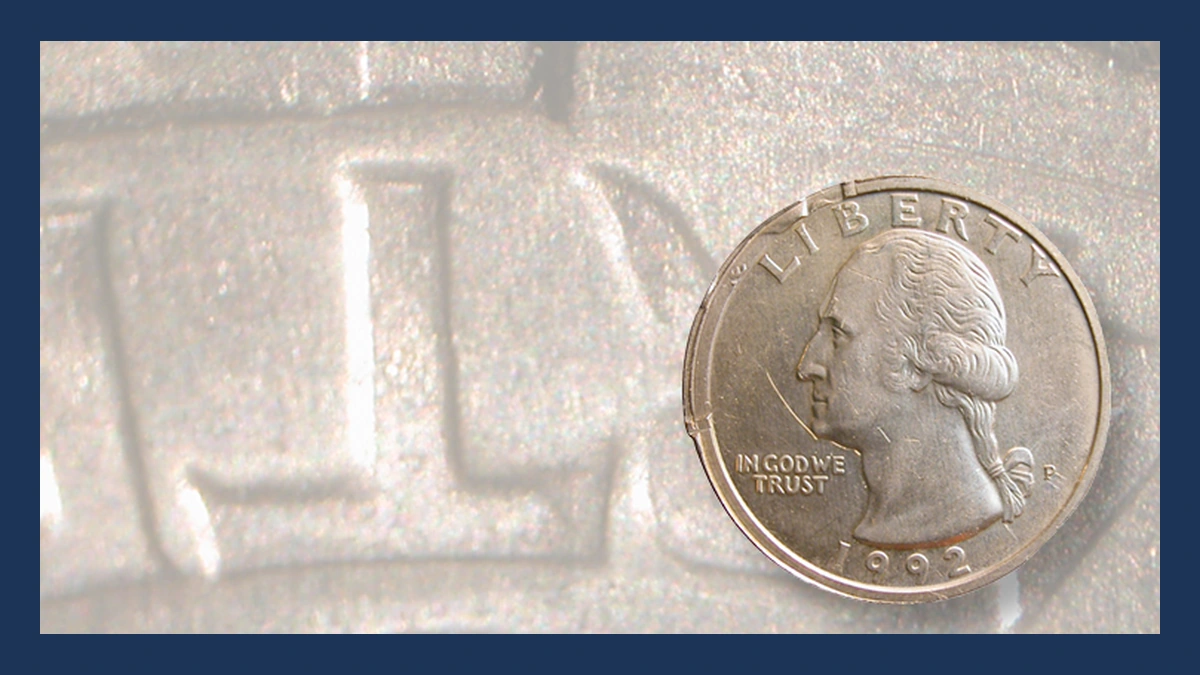
The design can look shallow across a coin when the strike does not press the metal firmly enough into the tools. Edge grooves may also be very weak.
A 1992 example was offered under the older description “die trial strike,” with very weak grooving. That wording suggests testing, but the coin’s appearance does not prove the Mint deliberately made it as a trial.
The visible feature is a weak strike. Wear, chemical damage, and metal removed from the surface can also flatten detail, so the remaining texture is important when judging it.
Estimated Value
The catalog carried a $65 minimum bid for the weakly struck example. A minimum bid starts an auction; it does not tell us what the coin sold for.
Estimate $40–$250 for an identified weak strike with original surfaces. Broad, noticeable weakness can be appealing when the coin is otherwise clean, while minor softness that resembles ordinary circulation wear is usually harder to sell at a substantial premium.
How to Identify
Look at the weak edge grooves as well as the portrait. The catalog’s description concerns both the shallow strike and faint reeding, rather than one missing letter.
Under low-angle light, inspect whether the smooth background still has normal struck texture. Heavy rubbing or chemical roughness could explain shallow details without an unusually light press strike.
A magnifier helps compare protected spaces between letters with exposed high points. Wear normally changes those areas differently.
For a loose clad coin, a scale reading near 5.67 g helps separate weak striking from major loss of metal. Even then, identify the appearance as a weak strike without using the word “trial” as proof of a deliberate Mint experiment.
6. 1992 Washington Quarter Reversed Partial Collar
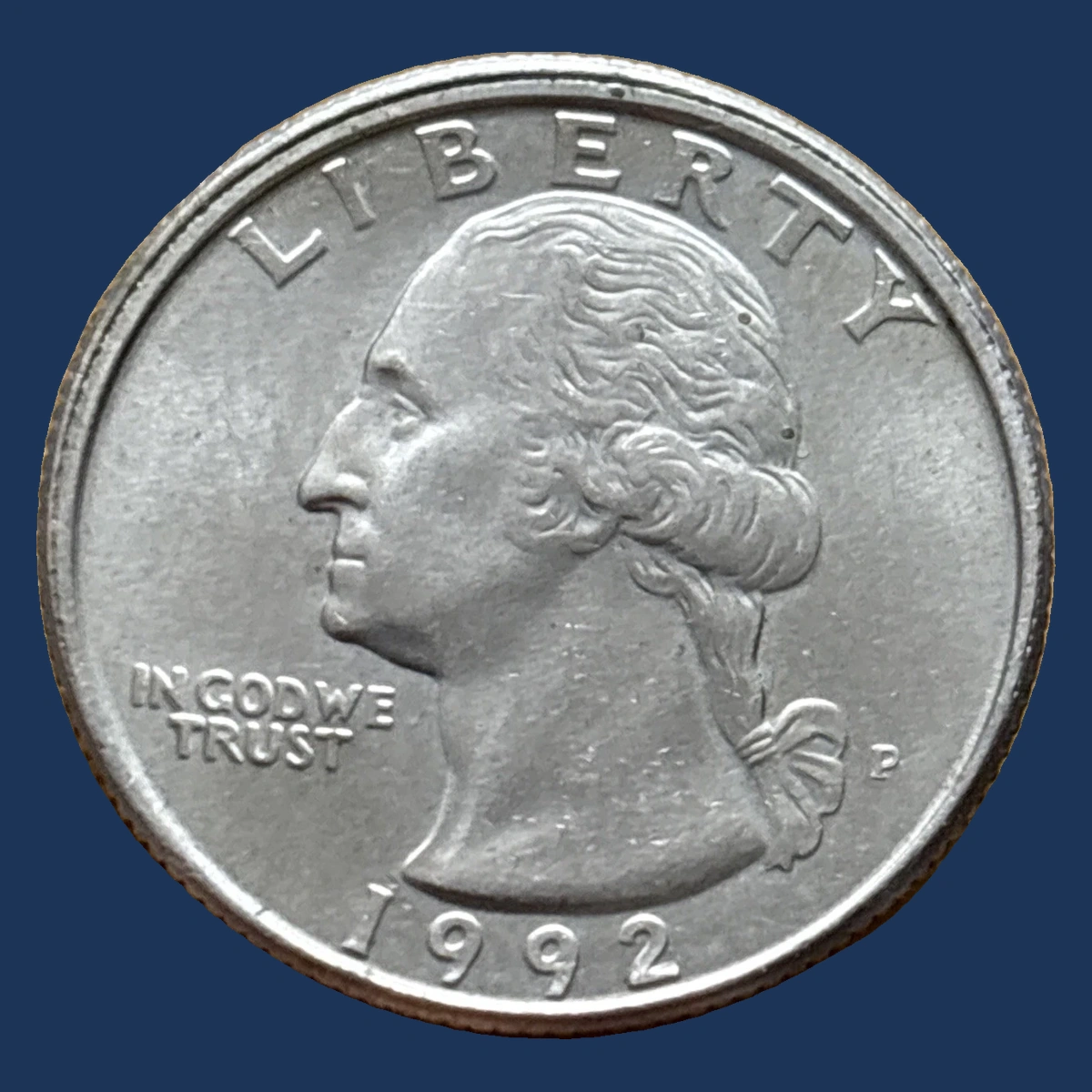
The edge can have a grooved band next to a smoother, expanded band when the blank sits partly outside the collar. On a reversed partial collar, those bands occupy the opposite relationship to the coin’s two faces from the traditional setup.
Two Denver 1992 examples are reported. Their edges show that the stamping tools worked with their usual upper and lower roles exchanged.
That tool arrangement was not itself a mistake. The actual error is the partial collar strike, and “reversed” does not mean the eagle is rotated sideways relative to Washington.
Estimated Value
An estimated $40–$300 suits a clearly identified reversed partial collar. The appeal lies in a visible stepped edge and the way its bands relate to the front and back.
A coin with only a slightly uneven rim is less convincing than one with a clear edge view. Condition also matters because dents can obscure the step; the normal exchange of the tools’ positions does not add a second separate error premium.
How to Identify
Photograph the edge while keeping enough of the front visible to show which face is Washington’s and where it meets the edge. Without that orientation, a close-up of two bands cannot establish that the arrangement is reversed.
The grooved collar-contact band should sit toward the Washington side in this setup. Follow it around the edge with a magnifier and compare it with the expanded smoother metal beside it.
The ANA explanation of die installation connects these edge features with the tools’ positions. Turning the coin top-to-bottom to check eagle alignment tests rotation instead; it does not identify a reversed partial collar.
7. 1992 Washington Quarter Clipped Blank
A missing section can begin when a blank is cut from an incomplete area of the metal strip. The press then strikes that already-short piece of metal into a quarter.
This is usually called a clipped planchet, with planchet meaning the prepared coin blank. A clip need not always be a smooth curved bite; the way the blank was cut can produce different outlines.
Clipped blanks are reported for 1992 without a settled shape, percentage, or mint for one specific example. Those details should come from the actual coin, not a generic illustration.
Estimated Value
Estimate $20–$350 for a genuine 1992 clipped blank, depending on the missing area and condition. A small clip on a worn piece will usually attract less interest than a clear, larger gap on an attractive coin.
The strength of the identification matters as much as appearance. An unusual outline produced with cutters after minting does not belong in that range simply because a large amount of metal is absent.
How to Identify
Inspect the two ends of the gap under a magnifier. The struck design and rim should meet the missing area in a way consistent with metal already absent during the strike.
Look for fresh cutting marks, filed surfaces, or bent finished detail. These can indicate that the gap was made later.
On some curved clips, the rim opposite the gap is weak. That can support the identification, but it is not a required feature of every clip shape.
Weighing a loose example can document its remaining mass. It cannot establish the cause of the missing metal by itself.
Use the gap’s surfaces and neighboring struck detail together, rather than rejecting every non-curved outline or accepting every smooth-looking missing section.
8. 1992 Washington Quarter Thin-Stock Blank
A quarter can have its normal width but contain too little metal because its blank was cut from thinner stock. Stock is the metal strip from which the round blanks are punched.
The documented Philadelphia example was described as having quarter diameter and dime thickness. It weighs 4.3 g, compared with the usual quarter weight of 5.67 g.
Its design is softly struck and the mintmark is difficult to see. This is a full-sized thin blank, not an entire small dime blank; the two explanations would require very different measurements.
Estimated Value
The NGC MS64 thin-stock quarter sold for $51 on February 28, 2005, at Heritage Auctions. The catalog also noted a small scratch, so the price belongs to that particular coin.
An estimated $50–$350 covers comparable identifiable thin-stock examples. A sound surface and readable design improve presentation, but a large price claimed for a supposed small dime blank cannot automatically be transferred to this full-diameter, 4.3 g coin.
How to Identify
Measure the diameter before deciding what the low weight means. The recorded coin keeps quarter width, about 24.3 mm, even though it is unusually thin.
Use a scale to compare a loose candidate with the 4.3 g example and the normal 5.67 g standard. Calipers can then help compare its thickness with an ordinary quarter without squeezing the metal.
Under a magnifier, check for grinding lines or chemical roughness that could explain later metal loss. The catalog’s scratch near four o’clock is damage, not the cause of the thin-stock error.
A full quarter-sized outline, reduced thickness, and compatible struck surfaces support this identification. A much smaller coin near dime weight needs a separate wrong-blank comparison.
9. 1992 Washington Quarter Off-Center Strike
Washington and the eagle can be partly missing even though the coin has a broad area of bare metal. The blank sat to one side when the stamping tools closed, so only part of their designs reached it.
A Philadelphia example is reported as about 10% off-center and graded ANACS MS63. Its precise direction should be read from the coin rather than guessed from that percentage.
This is not caused simply by the tools meeting at an unusual angle. The important feature is the blank’s sideways position during the strike.
Estimated Value
Estimate $50–$500 for an identifiable 1992 off-center quarter. The reported 10% example sits toward the modest end of the visual range, while greater displacement can be more dramatic.
A clear year and readable mintmark help connect a coin to this issue. Those details can matter more than the size of the bare crescent, especially if a larger error loses its date or has marks that spoil the remaining design.
How to Identify
Check how much of the design is actually missing. A wide border around complete lettering can indicate a broadstrike rather than an off-center blank.
Now compare the front with the eagle side. Corresponding missing portions on both faces are more useful than an off-center-looking portrait photographed alone.
With a magnifier, examine the boundary between the struck and bare areas. It should not show sanding used to erase finished design.
Identify the date and P mintmark wherever they survive. For the reported 10% example, determine the direction from the coin itself.
The percentage measures displacement, but it does not tell you whether the blank lay left, right, or toward another clock position.
10. 1992 Washington Quarter Missing or Separating Clad Layer
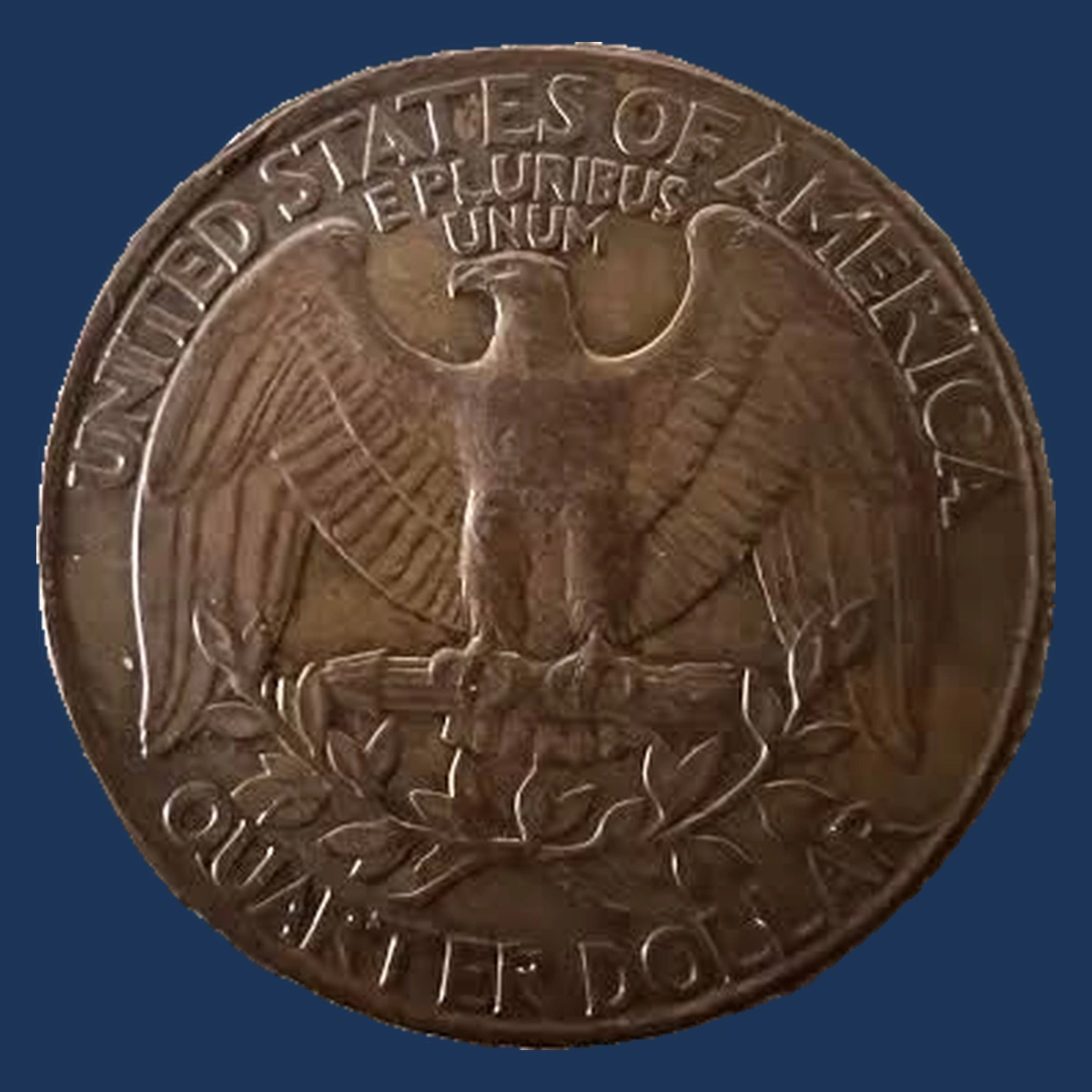
Silvery outer layers surround a copper center in a normal clad quarter. If a layer is absent, the exposed face can look copper-colored; if it separates only locally, a patch or thin flap may remain.
The 1992 reports include a reverse missing-layer description and local layer separation. These appearances should be compared without assuming they describe the same coin.
The outer metal is a copper-nickel alloy bonded to the center, not a coat of pure nickel plating. A normal silver Proof is made differently and should not be diagnosed through the clad-layer explanation.
Estimated Value
A local separating patch can be estimated at $35–$200, while a clearly identified missing outer face can reach about $75–$500. The combined estimated range is $35–$500.
An intact flap or a clean exposed face can make the defect easy to understand. Corrosion and scratches can obscure what happened, so a copper-colored quarter should not receive a strong missing-layer price until its actual metal structure supports that explanation.
How to Identify
First establish that the coin is clad. An S mintmark alone does not settle this, because 1992 Proofs—specially made collector coins—exist in clad and 90% silver versions.
For a local flap, do not lift it. Examine the attached edge through a magnifier to see how the outer layer separates from the metal beneath.
For a whole copper-colored reverse, inspect the remaining layers along the edge and weigh a loose coin against the clad standard of 5.67 g. A stained but intact silvery layer can look brown without showing the same structural loss; color, mass, and the exposed layer boundary should agree.
11. 1992 Washington Quarter Rim-Restricted Second Strike
A second strike can touch only the raised rim instead of pressing a full new design into the coin. The two stamping tools did not close far enough to reach most of the already-struck surface.
On the Philadelphia example, the first strike created a thin raised lip along the left rim. The coin then turned about 90 degrees clockwise before receiving a second strike roughly 75% off-center.
Both faces were struck again, but the reverse preserves only the second rim impression. A missing second eagle does not mean that reverse face escaped the second strike.
Estimated Value
An identified rim-restricted second strike can be estimated at $150–$750. Its appeal comes from understanding the sequence, rather than from a large second portrait that this kind of error may never show.
Clear photographs of the two rim impressions help explain why it differs from a dented edge. A coin whose sequence is easy to follow can attract stronger interest than one with heavy marks obscuring the small surviving second-strike features.
How to Identify
Locate the stronger first design before looking for a second complete portrait. On this example, the extra impression is concentrated at the rim.
A magnifier can reveal the thin raised lip along the first strike’s left edge. Compare the later rim against the documented rotated position rather than assuming the first strike was the off-center one.
The Error-Ref example shows why both faces matter. The reverse has a second rim impression but no recognizable second eagle inside it.
A single shifted line on one face could be a different striking effect. Matching evidence of the second tool contact on both sides supports this particular rim-restricted double strike.
12. 1992 Washington Quarter Wrong Denomination Blank
A smaller blank intended for another denomination cannot hold all of a quarter’s design. The outer lettering may run beyond its edge even when the central portrait is clear.
A Philadelphia quarter on a nickel blank is recorded at 5.02 g and graded PCGS AU55. AU55 means light circulation wear.
A separate 1992 report mentions a complete dime blank, but needs its own small-diameter example. It must not borrow the identity of the known 4.3 g thin-stock quarter, which kept quarter diameter and therefore represents a different blank problem.
Estimated Value
The 5.02 g nickel-blank quarter was offered at $350, an asking price rather than a completed sale. Estimate $150–$800 for a comparable identified nickel-blank example.
For an independently identified full dime-blank quarter, use a conditional estimate of $400–$1,500. The group range is $150–$1,500, but the higher dime-blank estimate requires that separate identity; it is not a new sale record or a price for the 4.3 g thin-stock coin.
How to Identify
Sort the possibilities by both width and weight. A nickel blank normally starts near 21.21 mm and 5 g; a clad dime blank starts near 17.91 mm and 2.268 g.
Striking can change the final outline, so use calipers and a scale together. The measured 5.02 g belongs to the listed nickel-blank coin, not the dime candidate.
Inspect the edge with a magnifier: nickel-blank metal lacks the normal quarter’s copper-centered layered appearance. A dime blank remains clad, but is smaller and lighter.
Keep the full-sized 4.3 g thin-stock case separate. A smaller outline, suitable mass, and genuine quarter detail meeting the original edge are needed before identifying a complete wrong-denomination blank.
Conclusion
The $5–$1,500 estimated range covers small raised cracks through established wrong-blank errors. A low weight can have several causes, so distinguish a thin full-sized quarter from one struck on a smaller blank.
Give the edge as much attention as the portrait when its shape is unusual. Clear photographs and untouched surfaces help preserve the clues needed to identify the error correctly.