1995 Quarter Error List with Pictures

A copper-colored face and a copper-colored coating may look alike, but they tell different stories. Other 1995 quarter errors hide in doubled lettering or a strangely shaped edge.
A nearly flawless 1995-S doubled-die collector coin sold for $920 in July 2010. Estimated values across the errors below run from $10 to $3,000.
Follow the visible clues to learn which kind you have, then compare its condition and mint with the examples.
1. 1995 Washington Quarter Raised Edge Cuds
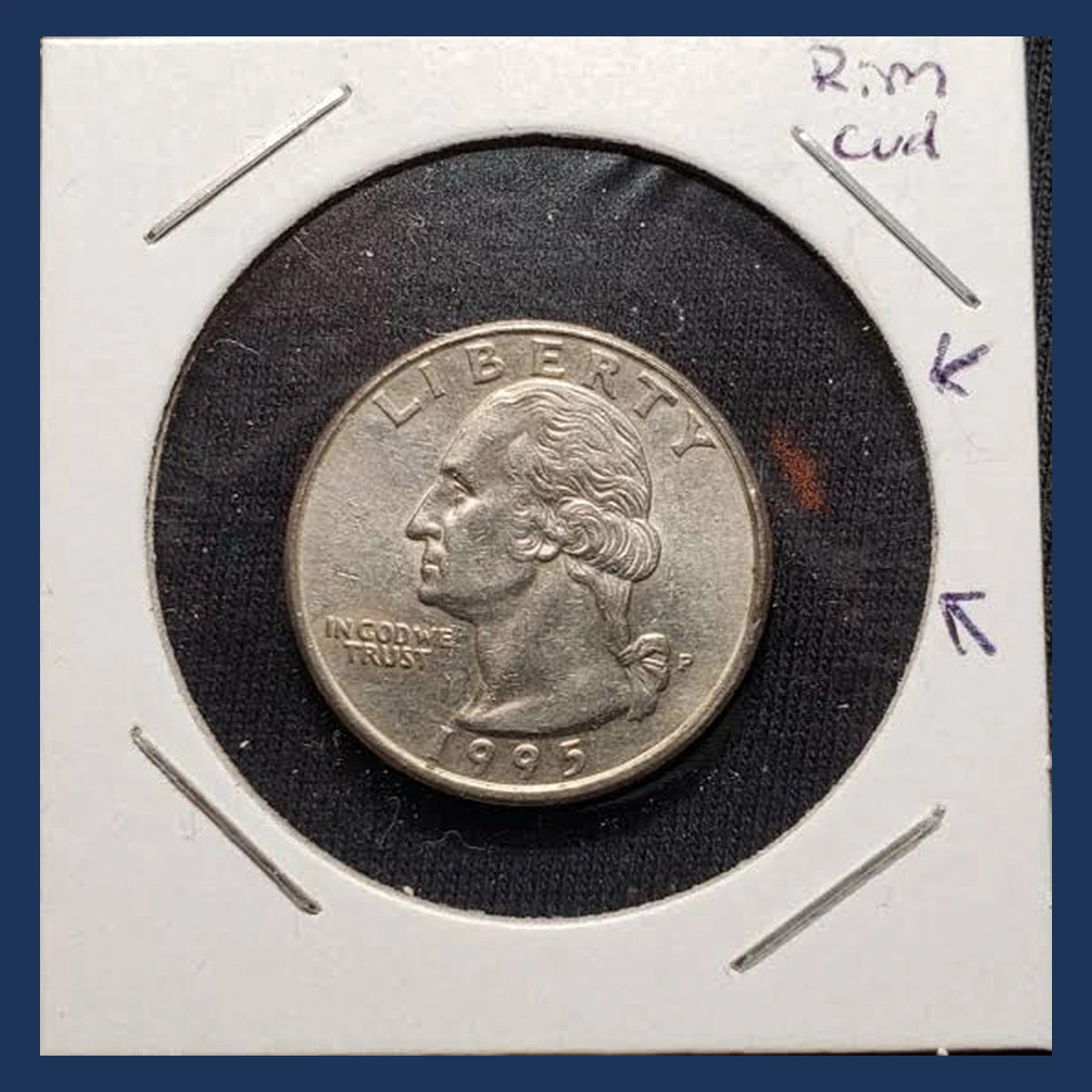
A raised lump can grow out of the rim without being damage to the coin itself. Two Philadelphia examples have this kind of defect beside Washington.
One runs along the upper left edge, outside the L in LIBERTY. The other forms a longer strip at the right edge, beside the portrait.
These raised patches are called cuds. They form when an edge piece breaks off a die, the steel tool that stamps the design.
Coin metal fills the empty space during striking, leaving a raised area.
Estimated Value
Small but clear 1995-P cuds have an estimated range of $10 to $150. A tiny rough patch with heavy wear belongs near the bottom.
A larger, well-defined break is easier to recognize and show in photographs. That visibility can matter more than a slightly better overall condition.
The two known locations are alternatives, not a requirement that one coin carry both. Compare the size of the raised area before paying for the scarcer-looking example.
How to Identify
Picture the front as a clock. The first raised area lies roughly between 9:45 and 11 o’clock, outside the L.
The second stretches from about 2 to 4 o’clock along the right edge. Follow its length rather than looking for the upper-left patch on the same coin.
Tilt the coin under a desk light. A genuine raised patch stays attached to the rim and rises above the surrounding surface.
An edge hit can also push metal upward, but usually leaves a nearby dent or a folded lip. Check the opposite side of the raised strip for that displaced metal.
A close photograph should show the whole boundary, not just a bright reflection on one bump.
2. 1995 Washington Quarter Broadstrike
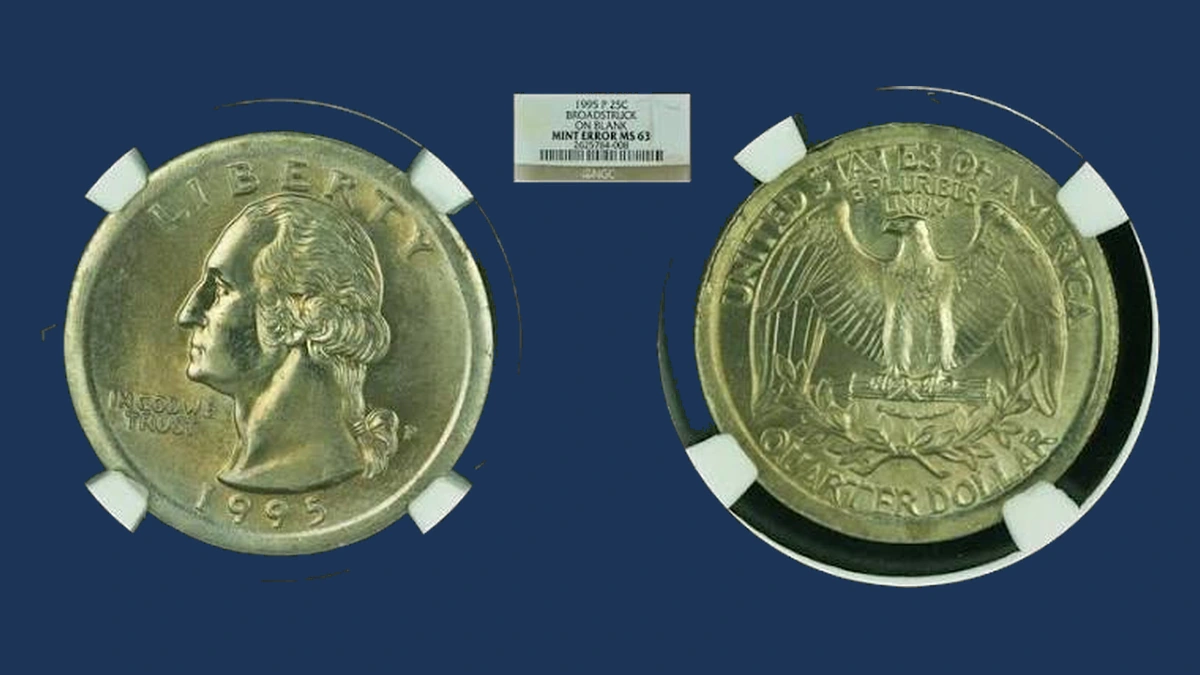
The portrait and eagle can remain complete even when the quarter spreads beyond its usual outline. This happens when the surrounding retaining ring fails to contain the blank during striking.
The result is a broadstrike. Its border may spread unevenly, but missing large parts of the design is not the defining feature.
Both Philadelphia and Denver examples are known for 1995. The Denver coin graded MS62 and a separate Philadelphia coin graded MS65 were unworn, with different amounts of surface marking.
Neither grade describes the amount of expansion.
Estimated Value
$40 to $200 is an estimated range for ordinary single broadstrikes of this year. An earlier listing records a Denver MS62 sale at $63 in March 2023.
That modest result is a useful starting point for a small spread. Wider expansion and a clean, complete design can move a coin higher.
A quarter struck twice while spreading is a different combination. Its extra image should be included when choosing a comparison, rather than priced as an ordinary broadstrike.
How to Identify
Stand a normal quarter beside the suspected broadstrike in a photograph. Keep both coins at the same distance from the camera.
The useful comparison is the space outside the lettering and design. Extra metal surrounding a complete design supports a broadstrike, even when one side spreads farther than the other.
For a loose coin, use calipers to compare its widest and narrowest points with the normal diameter of about 24.3 millimeters. A certified coin can stay in its holder.
Now inspect the edge for weak or absent grooves where the retaining ring failed to contain it. Finally, look for flattened letters, scraped rims, or a hammered surface: spreading after minting damages the existing design.
3. 1995 Washington Quarter Curved Clip with an Incomplete Cut
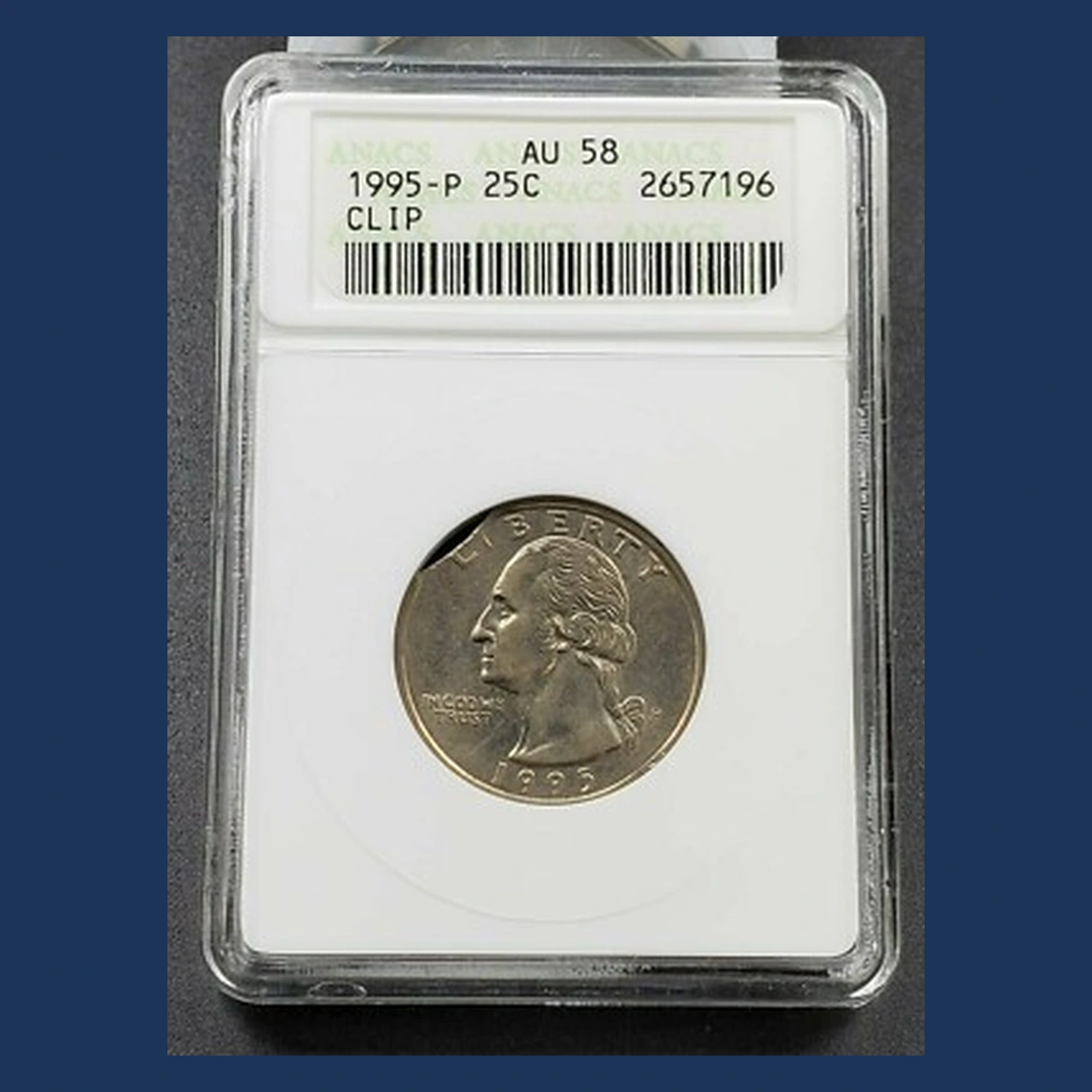
A crescent-shaped piece is missing from this Philadelphia quarter, yet another curved cutting mark remains in the metal. These two features came from the blank-making stage.
A punch cut the round blank from a sheet. Overlapping cuts left a curved gap, while an unfinished cut marked another area without removing it.
The quarter was then struck with both features still present. The cataloged example has its open gap near 1 o’clock and was graded MS62, meaning unworn with noticeable marks.
The attached section is not an extra loose fragment.
Estimated Value
The combined curved clip and incomplete cut brought $159 in July 2022. For comparable genuine examples, an estimated range is $75 to $250.
The unfinished cutting line adds interest because it shows another part of the blank-making process. Its visibility matters, especially when wear could hide it.
Value also depends on how much metal is missing and whether the date remains readable. A coin damaged by cutting after minting does not belong in this price range.
How to Identify
Leave the attached metal alone. Bending it to open the cutting line would damage the very feature you want to identify.
Begin with a clear front photograph showing the date, P, and open gap near 1 o’clock. Then locate the separate curved line within the surviving metal.
Under a magnifier, examine where each feature meets the stamped design. The letters and nearby rim should show how metal flowed around an existing gap during the strike.
A saw or file applied later tends to cut through a finished rim and leave fresh tool marks. Weight can support missing metal, but it cannot establish when the cut happened.
Photograph the unfinished line from both faces so an expert can judge whether it formed before striking.
4. 1995 Washington Quarter Chain Strike
A flattened patch on an already off-center coin can reveal that another blank was nearby in the press. As both pieces spread, their edges pressed against each other.
Collectors call this a chain strike. The contact makes a local boundary rather than the ordinary rounded outline of freely spreading metal.
Two cataloged 1995 examples include one described as about 45% off center. Their mint was not established, so the missing letter should not be filled in by guesswork.
The neighboring coin does not have to survive with the quarter.
Estimated Value
An ANACS-graded MS64 chain strike sold for $146.05 in November 2004. An estimated range of $100 to $350 suits similar single 1995 examples.
The strongest visual clue is the contact area, not simply the amount of blank metal. A clear meeting edge makes the story easier to see.
If both contacting coins survive together, the pair needs its own valuation. The historical result here was for one coin, not a matching set.
How to Identify
Trace the outline where the design stops and the blank area begins. An ordinary off-center coin usually spreads freely along that exposed part.
Look for one section whose edge instead appears locally flattened or constrained. Photograph that section straight on, then from the side to show its shape.
The surrounding metal should still look struck, without file cuts or a row of hammer dents. A flat edge alone can result from later damage.
Check the stamped image nearest the contact area for metal flow consistent with the unusual boundary. The quarter need not show a second complete portrait.
If the mint letter lies outside the struck area, describe it as unknown. Matching the contact shape is more useful than assigning an unseen P or D.
5. 1995 Washington Quarter Off-Center Strike
When the blank enters the press too far to one side, part of it misses the stamping tools. One side of the finished coin stays blank while the design is cut off on the other.
For 1995, Philadelphia and Denver examples show substantial shifts, including quarters about half off center. Other pieces have too little visible mint lettering to identify the mint.
The percentage describes the displaced strike, not metal that was cut away. Most of the original blank can remain, with its outline stretched by the force.
Estimated Value
A Denver quarter about 50% off center, graded NGC MS64, brought $169 in June 2023. Similar 1995 pieces have an estimated range of $50 to $400.
A full date and a clear, attractive crescent help buyers recognize the error. Heavy scratches or a missing date can reduce interest.
A larger shift does not automatically mean a higher price. Compare readability and condition as well as the amount of unstruck metal.
How to Identify
Find the date first: on this design, 1995 sits below Washington on the front. The mint letter normally appears to the right of his hair ribbon.
If either detail falls outside the struck area, do not use the amount of offset to reconstruct it. A holder or documented match may establish what the coin itself no longer shows.
Turn the coin over and compare the blank areas on both faces. A true off-center strike leaves part of the blank beyond both stamping tools.
When only one face shifts while the other stays centered, a shifted tool is a better explanation. On the genuine off-center coin, follow the smooth unstruck crescent into the interrupted design rather than mistaking a cut-out gap for blank metal.
6. 1995 Washington Quarter Missing Clad Layer
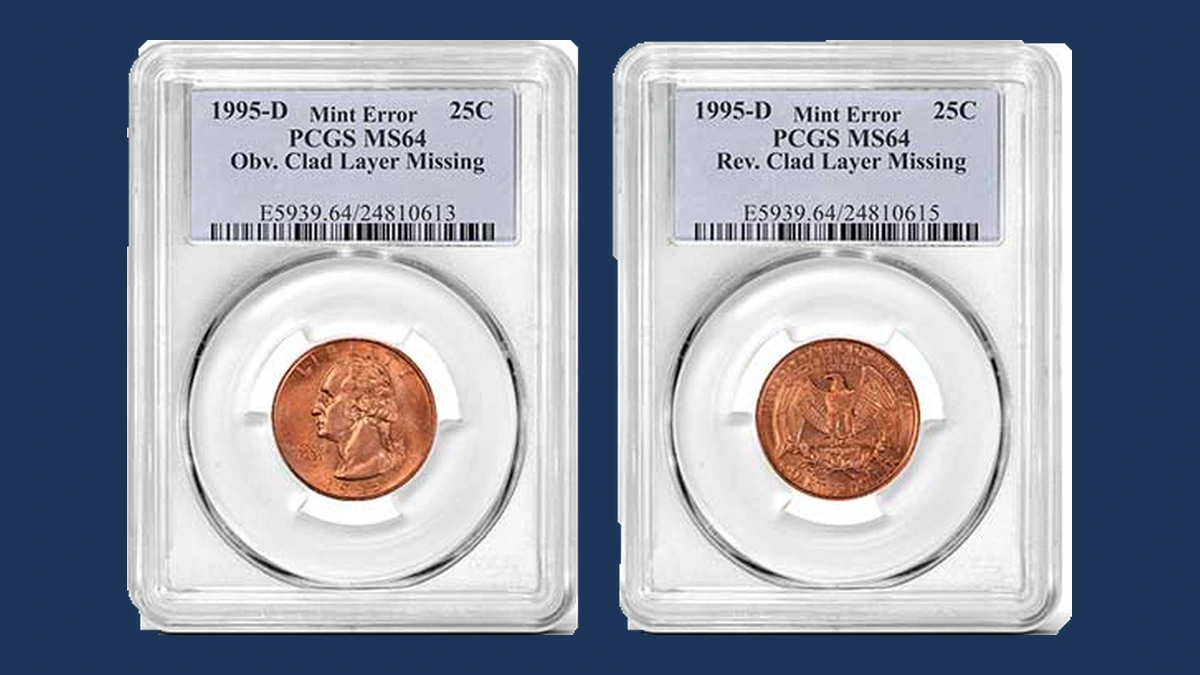
These quarters expose their copper center because an outer layer is missing. The remaining design can be visible on the copper face, while the opposite side keeps its usual silver color.
Philadelphia front-layer and Denver front- and back-layer examples are recorded. They should not all be assigned the same weight.
One Denver front-layer coin weighs 4.7 grams; another weighs 4.6 grams. A normal ordinary quarter weighs 5.67 grams.
This loss of a copper-nickel outer layer differs from staining, added copper coating, or a normal copper stripe along the edge.
Estimated Value
The 4.6-gram Denver example sold for $149 in July 2022. Estimated values for individual 1995 missing-layer quarters are $100 to $500.
A separate auction in February 2014 brought $246.75 for two Denver coins together: one missing its front layer, the other its back layer.
That total is a pair price. For a single coin, compare the affected face, sharpness, wear, and surface quality rather than assigning the entire result to either member.
How to Identify
A scale gives a useful first clue on a loose ordinary quarter. Substantial missing metal should reduce its weight below the normal 5.67 grams.
Weight alone is not enough. Acid treatment and grinding can also make a coin lighter, so examine the exposed face for surviving stamped detail.
Follow the edge around the copper side and compare it with the intact outer layer on the opposite face. Do not scrape the surface to test its color.
The two Denver weights, 4.6 and 4.7 grams, belong to different coins. Neither measurement should be copied onto the Philadelphia example.
An added coating usually changes color without removing an entire layer. Look for an actual layer boundary and naturally struck detail in the exposed copper.
7. 1995 Washington Quarter Copperwash
The documented Philadelphia copperwash looks copper-colored across both faces. Its outer layers are not described as missing.
Copperwash is the name used for a thin copper-colored surface coating. This makes it quite different from a quarter that has lost its outer metal and exposed the core.
The auctioned 1995-P example was graded PCGS MS63, meaning unworn with visible marks. Its coating was described as covering 100% of the front and back.
The amount of color coverage describes this particular coin, not every brown-looking quarter found in change.
Estimated Value
The two-sided copperwash example sold for $312 in July 2022. A working estimate for a comparable authenticated 1995 coin is $150 to $500.
Even coverage and attractive surfaces can help its value. Dark blotches, scratches, or wear make the unusual finish less appealing.
A brown color by itself does not earn this premium. The price range assumes a genuine mint-related coating, rather than a quarter plated or stained after it left the Mint.
How to Identify
Before making any color judgment, view the coin under neutral white light. Warm room lighting can turn an ordinary silver-colored quarter orange in a photograph.
Compare the front, back, and edge without cleaning them. The documented example has broad copper coverage on both faces, not just a narrow copper stripe at the edge.
Under magnification, look for spots where a coating appears to bridge scratches or collect around letters. Those clues can raise concerns about later plating, although photographs alone may not settle the cause.
A normal-looking weight cannot prove copperwash: a thin added layer may barely change it. An expert must assess the coating and the underlying struck surfaces together before the coin is priced as a mint error.
8. 1995 Washington Quarter Abraded Blank
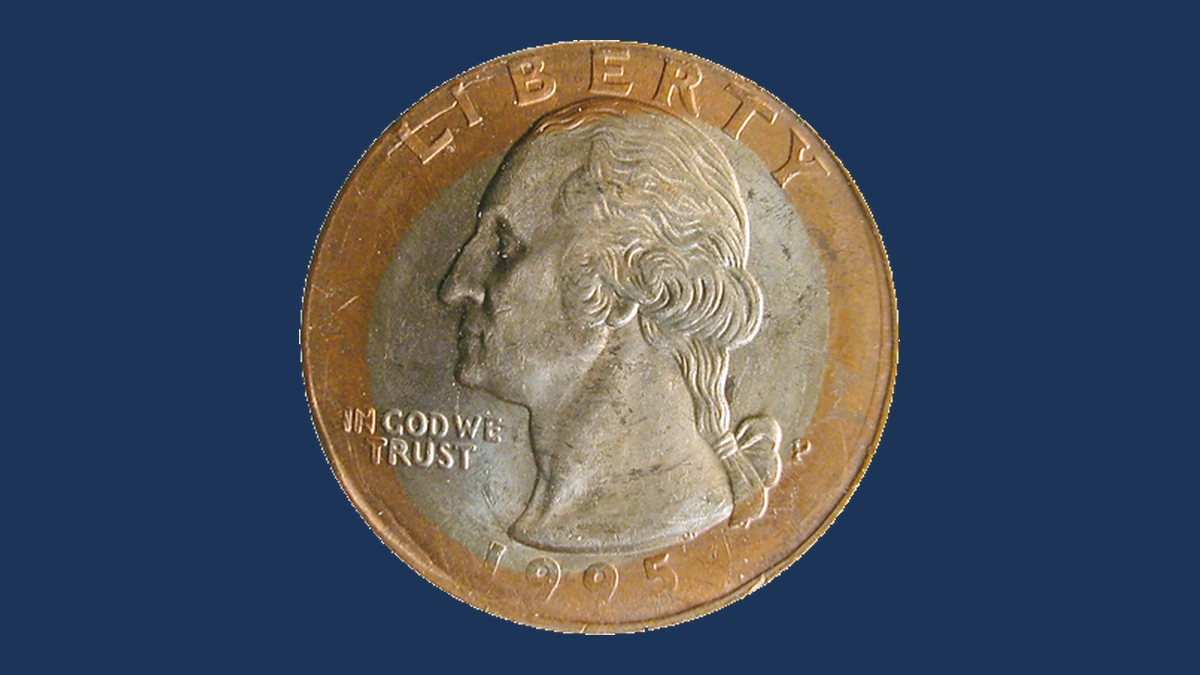
This unusual Philadelphia quarter is smaller and lighter than normal. It measures 23.54 millimeters and weighs 4.66 grams.
Both faces have a fine matte texture, with pits on the back and exposed copper around their outer areas. Error specialist Mike Diamond proposed abrasion before striking, perhaps from sandblasting or a similar process.
He also described sideways rolling and squeezing of the blank. Those actions could push core metal toward the perimeter before the design was stamped.
The exact source of that treatment remains unexplained; it is not proof of an intentional Mint experiment.
Estimated Value
For a coin accepted as this kind of pre-strike blank damage, an estimated range is $50 to $500. This is a working estimate, not a recorded sale of the 4.66-gram piece.
The upper end needs convincing evidence that the unusual surface existed before the design was struck. Clear, well-preserved detail helps demonstrate that sequence.
A quarter sandblasted after minting is damaged instead. Its rough texture alone would not place it in the same value range.
How to Identify
Keep the coin untouched and photograph its surface before handling it further. Rubbing can erase delicate clues about whether the roughness came before or after striking.
For a loose example, record weight and diameter rather than relying on its appearance beside another coin. The published measurements belong specifically to the illustrated 1995-P piece.
Next, examine how the rough surface relates to the stamped lettering and portrait. Later abrasion attacks the finished design as well as the open areas.
Diamond’s illustrated discussion is useful for that comparison. A specialist should assess the sequence of surface treatment and striking before assigning a cause to a similar-looking quarter.
9. 1995 Washington Quarter Indent with a Partial Collar
A broad depression occupies part of this Philadelphia quarter’s front. Another blank overlapped it in the press and kept the stamping tool from reaching that area normally.
This is an indent. Unlike a brockage, or a sunken mirror image, a plain indent need not contain recognizable backward lettering.
The reported 1995-P example also has a partial collar error. Part of its thickness was held inside the edge-forming ring while another part spread outside it.
The coin therefore combines a roughly 20% front depression with a stepped edge.
Estimated Value
An estimated $100 to $600 covers genuine 1995 indent-and-partial-collar combinations of this general kind. A large, clear depression and a visible edge step are useful selling features.
The cataloged MS62 example appeared in a three-coin auction lot with two different double strikes. A total for that group would not be the indent coin’s individual price.
Wear and scratches can soften the depression’s outline. A clean boundary that clearly interrupts the original design is more attractive.
How to Identify
Start at the edge rather than the center of the depression. A partial collar can leave a step between a contained band and metal that spread farther outward.
Follow that step around the coin in side photographs. It should reflect uneven restraint during striking, rather than a cut groove added afterward.
On the front, examine where the roughly 20% depression interrupts Washington’s design. Metal should flow around the overlap boundary.
Now inspect the depressed area itself. If it carries a clear sunken mirror image, that detail points to a brockage combination instead of a plain indent.
A later blow can leave a dent and displaced metal, but does not by itself explain the matching struck edge structure. Evaluate the depression and stepped edge together.
10. 1995 Washington Quarter Brockage with Collar Errors
Backward, sunken design details can appear when a previously struck coin gets between a blank and a stamping tool. That trapped coin presses its image into the new piece.
The result is called a brockage. On these Philadelphia quarters, it appears on the front.
Some 1995 examples combine the mirror image with a partial collar, leaving a stepped edge. Another has a brockage covering about 75% of the front and extra outward spread.
The mirror image and unusual edge belong to the same striking event on each coin.
Estimated Value
A Philadelphia brockage with a partial collar sold for $149.50 in January 2010. An estimated range for these combinations is $100 to $1,000.
The percentage covered by the mirror image helps explain differences within that range. Readable backward details generally show the error better than a shallow, blurred patch.
The broadstruck 75% example is a larger visual combination than the smaller partial-collar pieces. Judge the entire coin rather than adding separate prices for each feature.
How to Identify
Use a mirror, or reverse a photograph horizontally, to make the sunken letters easier to read. They should form a coherent transferred design rather than scattered dents.
Change the light angle to establish that the transferred image lies below the surface. Ordinary raised letters or a second raised strike are not the same feature.
Only then inspect the edge: a step fits partial collar restraint, while wider expansion fits the broadstruck example. Keep the smaller 15% and 20% partial-collar pieces separate from the 75% broadstrike.
Two finished coins squeezed together later can imitate a mirror impression. Expert review should consider the metal flow, surviving normal design, and edge behavior together, not simply the presence of backward letters.
11. 1995 Washington Quarter Doubled Dies
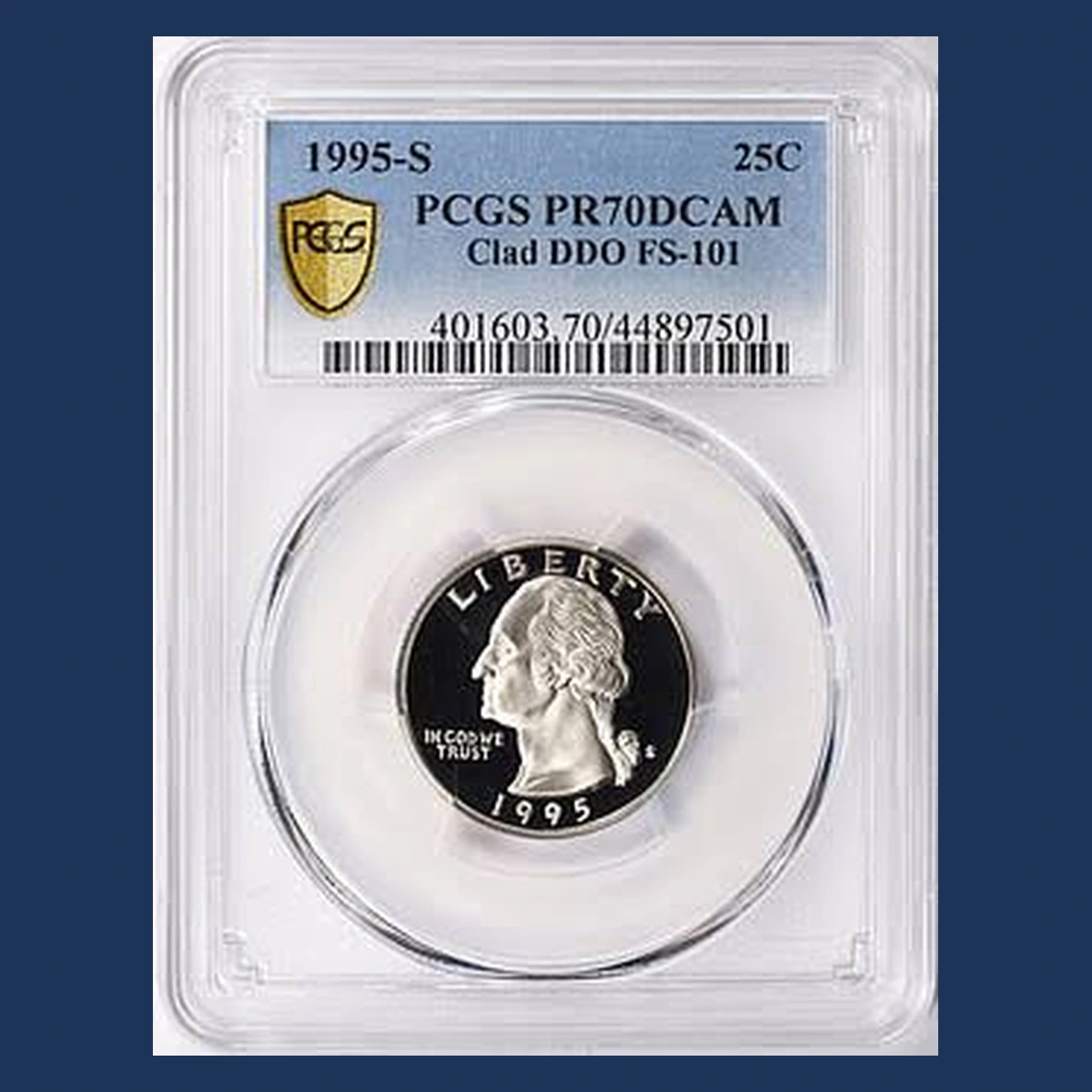
Look below Washington’s portrait for extra outlines around the date and lower ribbon on the 1995-S clad Proof. Proof coins are collector issues made with specially prepared tools and surfaces.
This doubled-die variety, called FS-101, repeats details because the stamping tool carried a doubled design. Lower hair, lettering, and the mint letter provide additional comparison points.
A Philadelphia doubled-front variety is also reported around IN GOD WE TRUST. It needs its own identification.
The San Francisco clad Proof pattern does not identify the Philadelphia coin or the separate silver Proof issue.
Estimated Value
PCGS lists a $920 auction result for the clad FS-101 Proof in July 2010. That example graded PR69, close to the top of the condition scale.
Estimated values are $100 to $1,200 for identified FS-101 Proofs, depending on condition. For the separately reported Philadelphia type, a working $30 to $200 estimate assumes genuine doubled-die details.
Slight machine-made flattening beside letters does not qualify for those doubled-die premiums.
How to Identify
Decide which coin you are checking before comparing doubled lines. An S identifies San Francisco, but it does not alone separate clad Proofs from silver Proofs.
A holder description or the original set information can establish the issue. A normal clad Proof weighs 5.67 grams; the silver version weighs 6.25 grams.
For the clad FS-101, enlarge the date and lower ribbon first, then compare lower hair and lettering with the illustrated variety. Rounded extra outlines and split corners differ from flat, shelf-like machine doubling.
For a P coin, study the motto separately and seek a match to that Philadelphia variety. Do not accept a convincing S photograph as proof that a similar-looking P quarter carries the same doubled stamping tool.
12. 1995 Washington Quarter Repeated Strikes
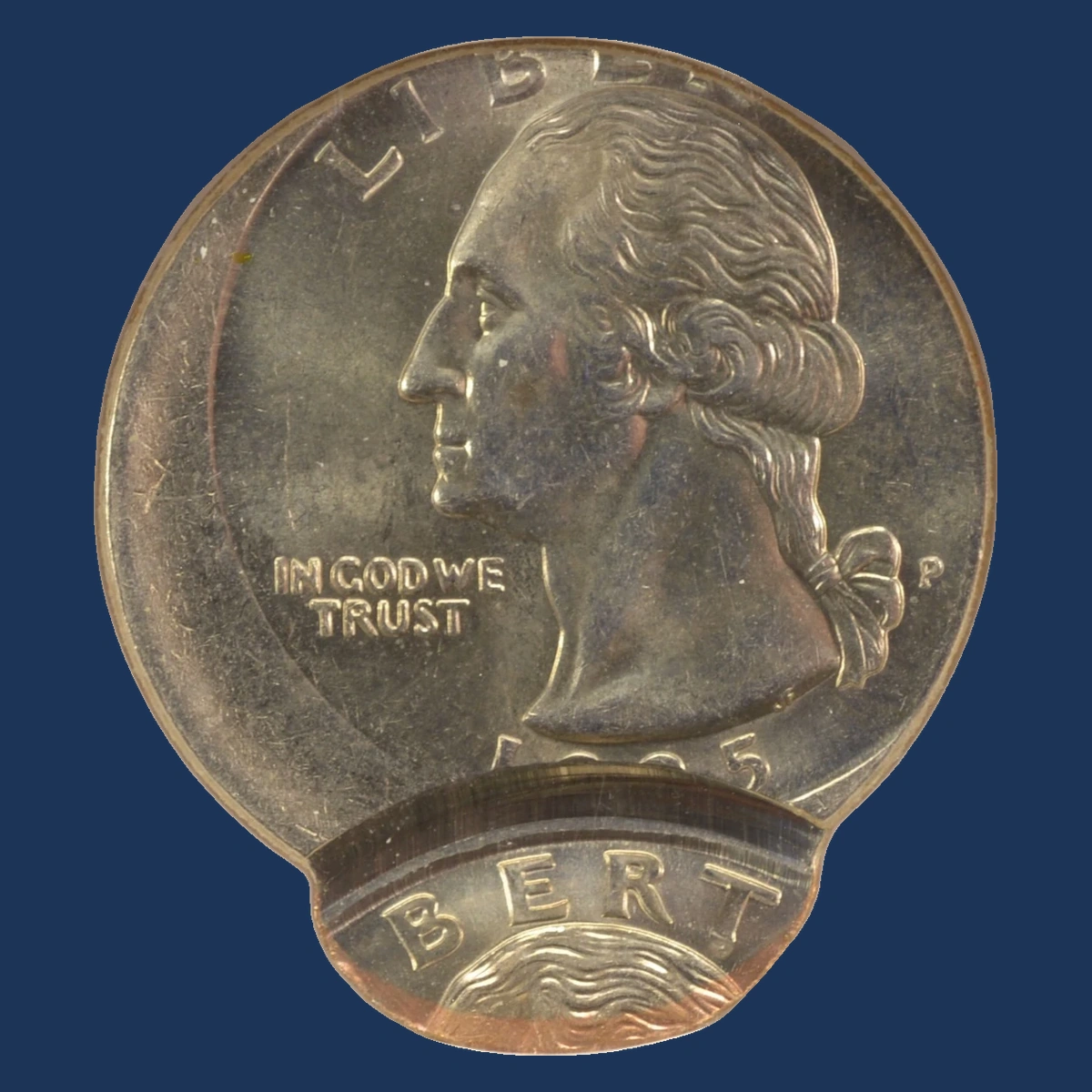
Two separated portraits or overlapping eagle details show that a quarter returned beneath the press after its first strike. Several 1995 examples shifted position between blows.
A Denver coin received its second strike about 60% off center. Philadelphia pieces include two off-center strikes, a second strike about 90% off center, and a broadstruck combination.
Some second blows were blocked on one face, so they did not add a complete new image there. One Philadelphia piece shows a stretched second strike.
Two blows do not require two complete designs on both faces.
Estimated Value
The Denver second-strike-60%-off-center coin sold for $312 in July 2022. A Philadelphia example with both strikes off center brought $264 in the same month.
A working range of $200 to $2,000 allows for much more dramatic combinations. The Philadelphia 25%/85% stretched strike brought $217.35 in November 2004.
Clear separation, readable dates, and unusual stretching can increase interest. Prices for multi-coin lots should not be assigned to each included double strike.
How to Identify
On a photograph, mark a recognizable feature from the first image, then find the corresponding feature from the second. The distance between them reveals the movement between blows.
Check the back separately. The Philadelphia 25%/85% example received no new back design on its second strike because that face was blocked.
The double broadstrike has a different relationship: its second front impression was blocked. Do not force it to match the stretched coin.
For pieces with both strikes off center, locate two separate strike boundaries rather than counting one blank crescent twice. The 85%/85% coin’s mint is not established.
Close, shallow doubling of individual letters cannot explain widely separated portraits or the stretched metal between two distinct strikes.
13. 1995 Washington Quarter Struck on the Wrong Blank
A quarter design can land on metal intended for another denomination. Its oversized picture then runs beyond the smaller blank, leaving parts of the outer lettering missing.
Philadelphia examples from 1995 include a dime blank and a nickel blank. The nickel-blank coin has a recorded weight of 5.0 grams.
A foreign-blank type is also reported for this year, but the country and denomination are not identified. Its mint should not be guessed either.
That report is separate from the known American blanks and cannot supply their weight or metal composition.
Estimated Value
The Philadelphia dime-blank coin sold for $646.25 in January 2016, graded NGC MS66. A nickel-blank example graded MS64 brought $216 in July 2022.
Estimated ranges are $200 to $1,200 for comparable domestic wrong blanks and $500 to $3,000 for an authenticated foreign-blank example.
The foreign range assumes expert identification of the unusual metal. Its upper end is an estimate, not a reported 1995 sale with a known country attached.
How to Identify
A thin copper stripe is normal on a clad quarter or dime blank, but not on a standard solid-alloy nickel blank. Examine the edge before choosing a weight comparison.
For a loose piece, use a scale and calipers. A normal dime blank starts near 2.27 grams, while a nickel blank starts near 5.0 grams; striking can spread either one.
The auctioned nickel-blank coin actually weighed 5.0 grams. The dime blank’s standard weight is a reference, not a published measurement of the illustrated specimen.
Look for the quarter design extending naturally off the metal, rather than a finished quarter with its perimeter cut away. An unidentified foreign blank needs metal analysis and expert assessment before a country or denomination can be assigned.
Conclusion
For 1995 quarters, color alone cannot separate a missing layer from a copper coating. Shape also needs context: a clipped blank, an off-center strike, and a crowded press leave different clues.
The estimated $10 to $3,000 range covers small raised defects through unusual wrong-blank coins. Check both faces and the edge before choosing a price comparison.
Keep paired auction lots separate from prices paid for one coin.