1796 Dime Error List with Pictures

A small shallow flaw beside Liberty’s chin appeared on a 1796 dime that sold for $35,250 in June 2017. The coin also had a raised rim break beside its first star.
This 1796 Draped Bust dime error list covers defective metal, copied design traces, and broken stamping tools. Estimated whole-coin values range from $2,000 to $60,000, with condition making a large difference.
Read on to compare the actual marks before deciding which explanation fits.
1. 1796 Draped Bust Dime Planchet Void (Estimated Up to $60,000)
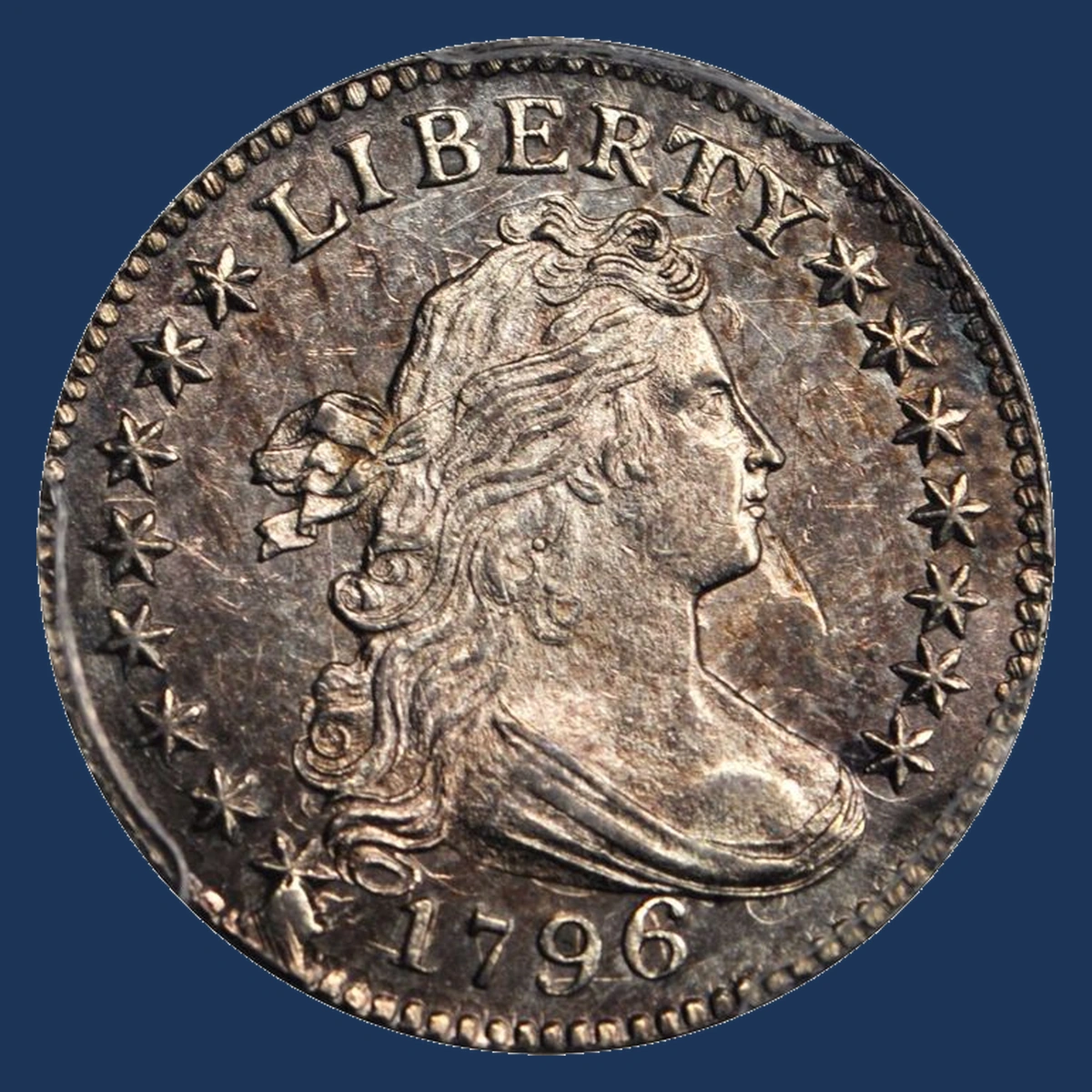
A thin, shallow hollow sits in the space beside Liberty’s chin on the Blue Moon Collection dime. Its auction description identifies it as a flaw present when the coin was made.
Collectors call this a planchet void. A planchet is the metal blank before it receives the coin design.
The flaw is local and shallow, not a hole through the dime or a large peeling layer. The nearby original design helps show how the metal looked when struck.
The coin is called JR-1, a name for its pair of front and back stamping tools. Later damage can create similar depressions.
Estimated Value
The PCGS MS63 sold for $35,250 in the June 2017 Blue Moon sale. MS63 means no circulation wear, though visible marks can remain.
Estimate $2,000–$60,000 for worn through well-preserved unworn examples with comparable shallow flaws. The rare first-year dime itself accounts for much of the price.
The hollow is not a $35,250 extra charge. Cleaning or digging into the surface can lower value, while a small original flaw need not spoil an attractive coin.
How to Identify
Focus a magnifier on the smooth space immediately in front of Liberty’s chin. Compare the thin hollow with the documented JR-1 photograph, rather than treating every pit as the same feature.
Freshly cut walls, pushed metal, or scratches entering the hollow may show later damage. A deep puncture would be a different finding.
A scale and calipers compare an intact coin with about 2.70 grams and 19.80 mm, allowing for wear. Inspect the grooved edge for trimming or repair.
Such a small flaw may barely affect weight. The most useful first match is the shallow chin-side depression with original surrounding metal, not a large scale deficit.
2. 1796 Draped Bust Dime Die Clash (Estimated Up to $60,000)
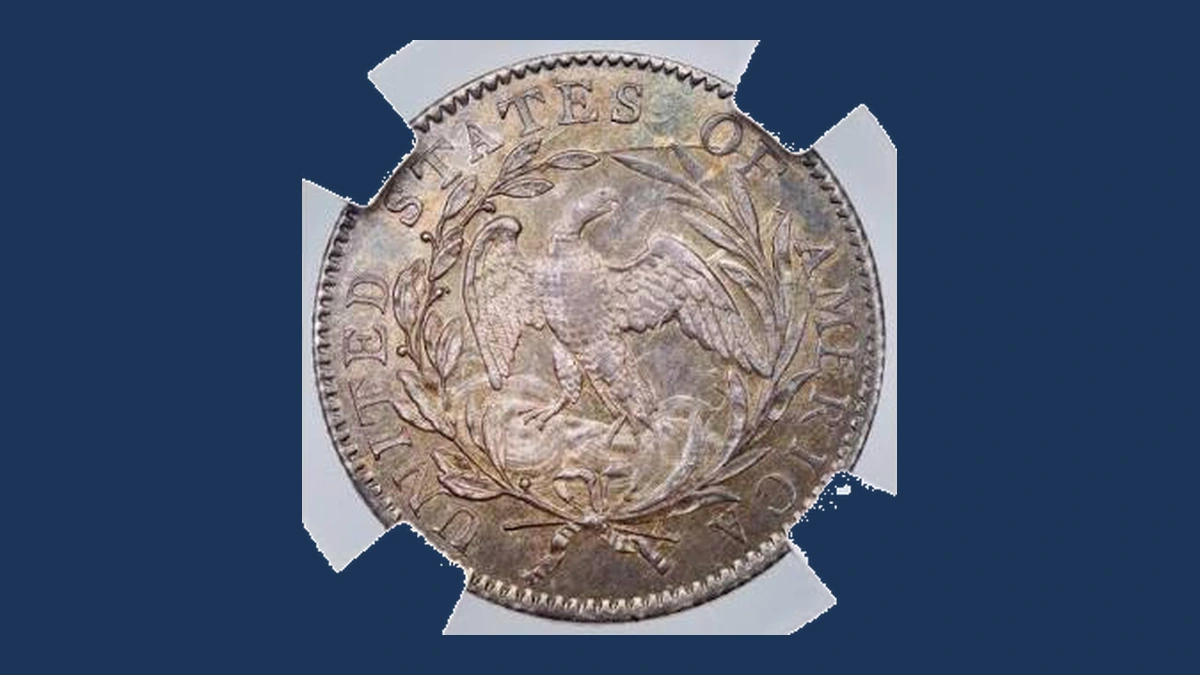
Faint extra design traces appear on the front of a JR-1 dime graded NGC MS63 in a 2013 auction catalog. The catalog calls them die clashes.
A die is a steel stamping tool. If the two tools meet without a blank between them, parts of their designs can mark each other.
Later coins may then show those unintended outlines. Their shapes should relate to the opposite design.
The same catalog describes a curved mark in Liberty’s hair as later damage. A visible curve is not automatically a copied eagle detail, even on a coin that also has genuine clash marks.
Estimated Value
For circulated through well-preserved unworn 1796 dimes with recognizable clashes, estimate $2,000–$60,000 for the whole coin. Original surfaces and demand for this first-year issue remain important.
The $35,250 Blue Moon MS63 sale provides a same-year condition comparison. That different coin was described for a shallow blank flaw and a small rim break.
Its price is not a sale result for the 2013 clashed specimen. Nor does it measure an extra charge for the clash alone.
How to Identify
Use the small eagle on the back to interpret a suspected extra shape on the front. Under a magnifier, its outline and position should fit a recognizable part of that opposite design.
The 2013 catalog separates the clash from the curved hair mark, calling the latter damage. Keep those two features apart when comparing the actual photographs.
Calipers and a scale check about 19.80 mm and 2.70 grams, and the grooved edge should show no joining seam. Begin with a faint recognizable shape that matches the eagle design in the correct position, rather than the more conspicuous unrelated hair curve.
3. 1796 Draped Bust Dime Die Cracks, Chips, and Cuds (Estimated Up to $60,000)
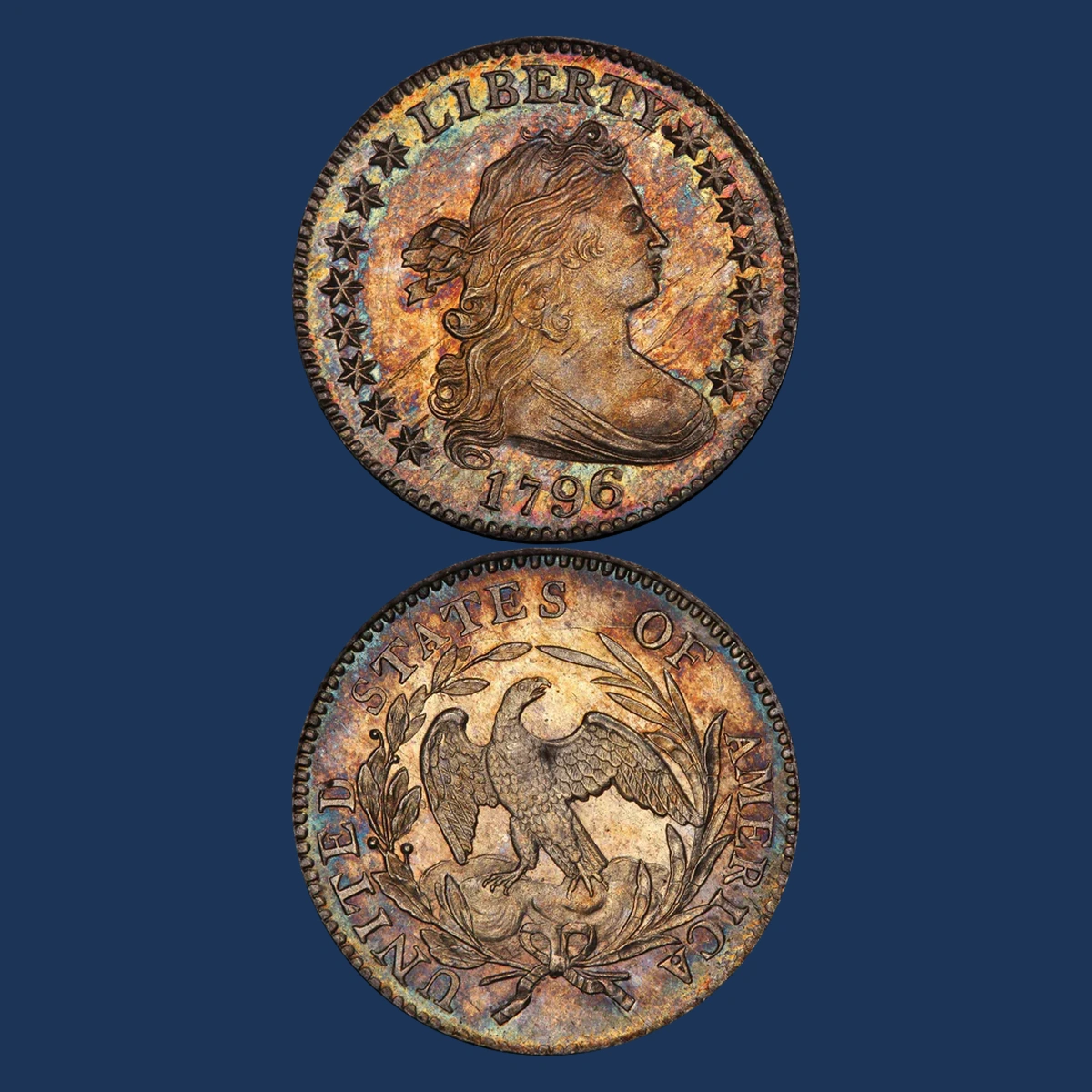
A raised crack crosses 179 in the date of a JR-6 dime. A small lump also sits inside the upper part of 7 where the stamping tool chipped.
Metal filled the damaged tool and formed those raised details. A scratch would cut down into the coin instead.
Other tool pairs developed larger breaks joined to the rim, called cuds. JR-1 examples have one connecting the first front star to the border.
On a separate JR-3, a back cud sits above T in STATES. These locations belong to different tool pairs, so all three should not be expected on one coin.
Estimated Value
The estimated whole-coin range is $2,000–$60,000 for worn through well-preserved unworn 1796 dimes with these features. Tool pairing, original surfaces, and visible damage to the die affect interest.
The $35,250 Blue Moon MS63 had the small first-star cud as well as its chin-side flaw. Those features share one sale price.
An exceptional JR-6 graded MS68 belongs to a higher condition level. This practical range is not a ceiling for the finest surviving coins.
How to Identify
Use a magnifier to trace the raised line through 179, then inspect the upper inside of 7. The JR-6 description identifies those two marks together.
For the rim breaks, choose the correct coin. JR-1 needs the first front star, while JR-3 needs the back rim above T in STATES.
A scale and calipers compare about 2.70 grams and 19.80 mm. Check the grooved edge for dents or folded metal.
The small-eagle back helps confirm the dime type. Begin by testing height: original cracks, chips, and cuds leave raised metal, while cuts and many later impacts leave damage pressed into the surface.
Conclusion
Estimated whole-coin values for these 1796 dimes run from $2,000 to $60,000. Their early date and condition account for much of the value, rather than an error premium alone.
Compare the chin-side hollow, faint copied outlines, or specific raised breaks with the correct photographs. A mark’s shape and location matter more than how dramatic it looks.
Also remember that the missing written denomination is normal for this first-year dime.