1803 Dime Error List with Pictures

An 1803 dime with a nine-pointed star sold for $6,300 in February 2022. The star normally has six points, making the extra tips a small but useful clue.
This guide to 1803 dime errors explains where those points came from and how the date helps identify the coin. Estimated values for worn examples run from $2,000 to $10,000.
Look closely at the star, then follow the checks below before comparing prices.
1803 Draped Bust Dime Recut Reverse Star (Estimated Up to $10,000)
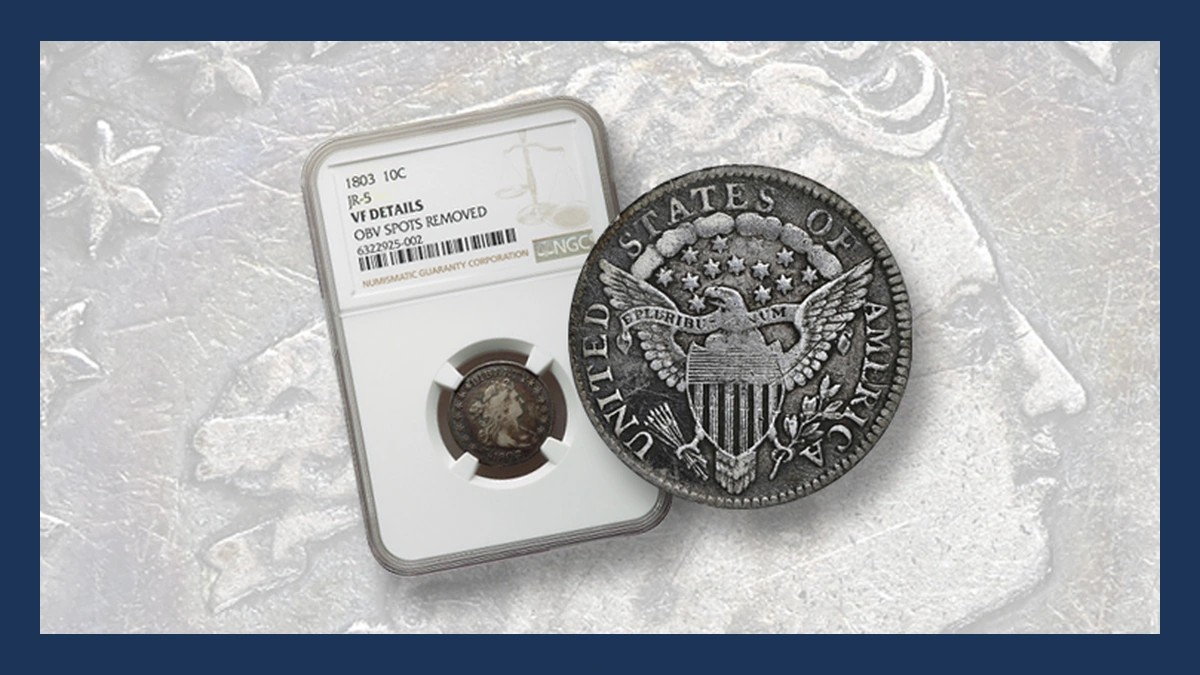
The extra points come from work on the die, the steel tool that stamps a coin’s design. Someone cut the star’s outline again while preparing that tool.
Coins struck with it show nine points on the first star on the back. Two catalog varieties, JR-1 and JR-5, share this same back design.
The front tells them apart. The recorded JR-5 uses the same front tool as another variety, JR-4.
On that front, the 3 in the date leans to the right. Its top runs roughly parallel to the bottom line of Liberty’s bust.
Estimated Value
The recorded JR-5 sold for $6,300 at Heritage in February 2022. NGC called it Very Fine Details, meaning wear plus a condition problem.
Spots had been removed from the front. That treatment matters when comparing it with a coin whose surface has not been altered.
The estimated range is $2,000–$10,000 for worn examples. It covers the entire early dime and its variety, not just a premium for the extra star points.
How to Identify
Turn the dime over and count the points on the first star using a 10× magnifier. Follow the actual outline, rather than bright reflections or nearby scratches.
Compare it with a clear picture of an identified example. Nine points identify the unusual back, but do not by themselves separate JR-1 from JR-5.
When safely accessible, use a scale and calipers against 2.70 g and about 19.8 mm. The coin contains about 89.2% silver and has grooves around its edge; wear can reduce its weight.
Look for fresh cuts around the star that could suggest later carving. Then inspect the date on the front: for JR-5, the right-leaning 3 should match the pictured front design as well as the star.
Conclusion
The estimated $2,000–$10,000 range includes the value of the whole 1803 dime, its condition, and its particular variety. The $6,300 example had spots removed, so that sale should not be treated as a comparison with untouched surfaces.
Count the star’s nine points, then check the 3 in the date. Using both sides prevents a shared star detail from becoming the wrong variety identification.