1833 Dime Error List with Pictures

A cracked-design 1833 dime pictured in a specialist reference book sold for $4,887.50 in January 2006. Its scarce variety and history helped distinguish it, despite improper cleaning.
This 1833 dime error list also includes an eagle that tilts after you flip the coin. Estimated whole-coin values range from $75 to $6,000.
Read on to check the tilt, trace the crack, and compare each feature with the correct example.
1833 Capped Bust Dime Rotated Reverse (Estimated Up to $750)
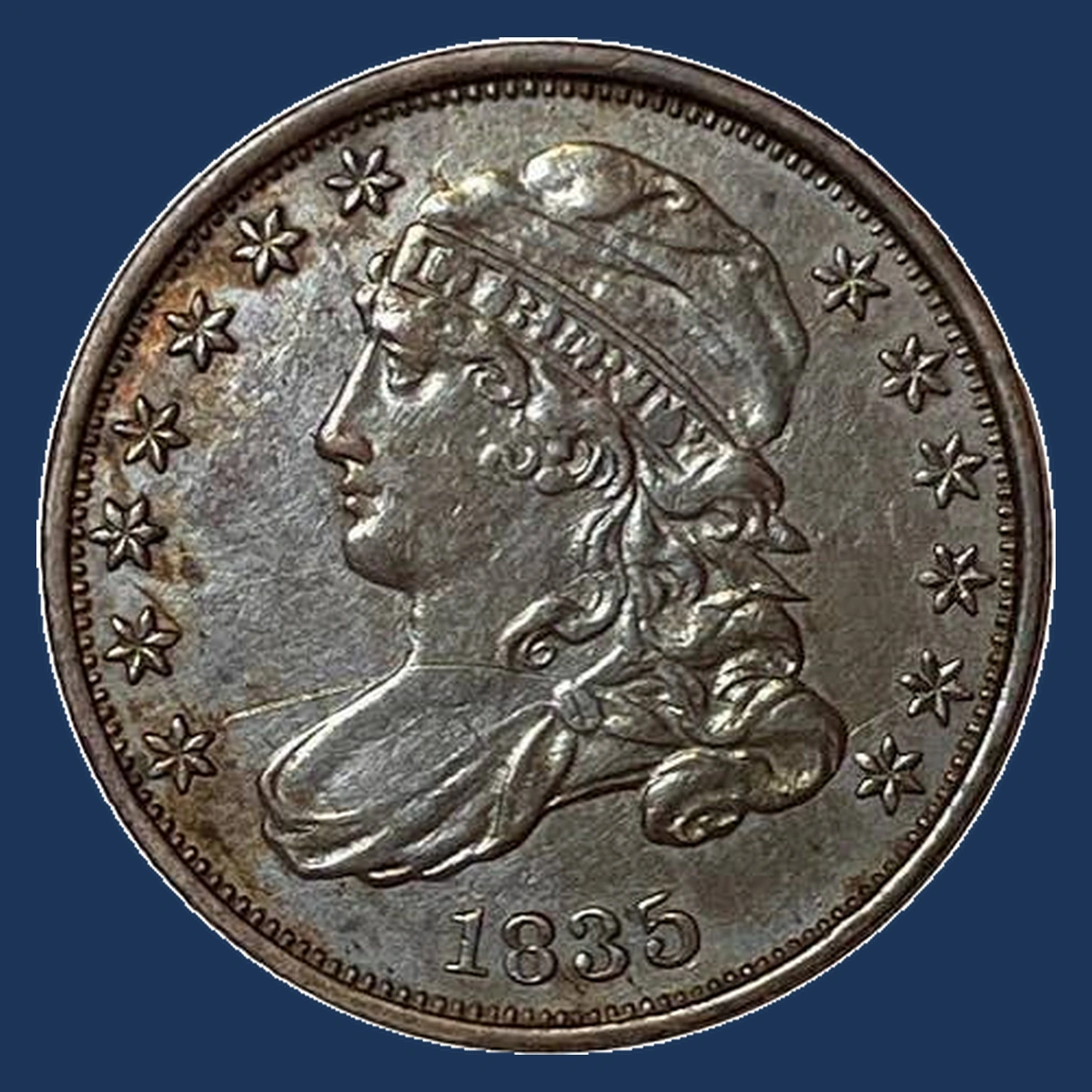
Hold Liberty upright, then flip the dime top to bottom. If the eagle ends tilted, the two stamping tools may have been turned out of their normal alignment.
A die is the steel tool that stamps a coin. This error changes the angle between the front and back designs.
The 2012 ANA catalog describes a JR-1 example with its back turned about 30 degrees clockwise. JR-1 names a particular pair of tools.
A separate worn example was also reported, but without a measured angle. Neither coin needs a second strike to explain a tilted eagle.
Estimated Value
Estimate $75–$750 for worn 1833 dimes with a clear, genuine rotation. Condition, original surfaces, and the amount of tilt affect the price.
The cataloged JR-1 was graded PCGS EF40, meaning light wear with much detail remaining. No sale price is used here for that 2012 listing.
A 30-degree tilt is less dramatic than an upside-down eagle. The much higher JR-3 sale below concerns a different variety and error.
How to Identify
Place Liberty upright beside a vertical line, then flip the coin top to bottom without turning it sideways. The eagle should normally finish upright.
Repeat the movement and record a short video. A protractor or straight reference line in a photograph can help measure the tilt.
The 2012 ANA catalog’s JR-1 turns about 30 degrees clockwise. That angle does not describe every reported 1833 rotation.
Use a scale and calipers against the original 2.70 grams and roughly 18.5 mm width. The dime contains about 89.2% silver and has edge grooves.
For the quickest check, repeat the same controlled flip and see whether the eagle always lands at the same unusual angle.
1833 Capped Bust Dime JR-3 Die Crack and Retained Cud (Estimated Up to $6,000)
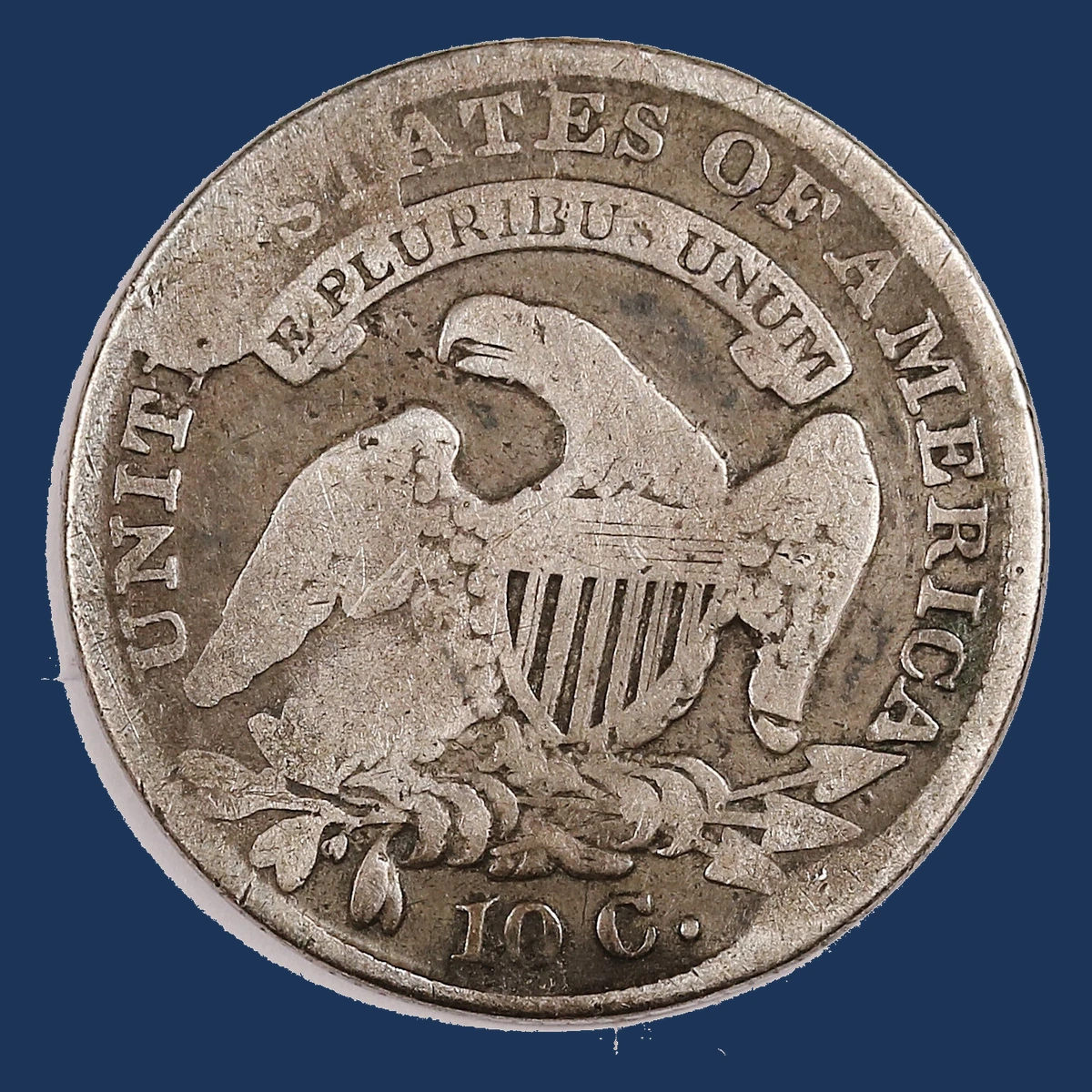
A raised line follows the right leg of the last A in AMERICA toward the arrowheads. It curves back to the rim below the second arrowhead.
The line outlines a cracked piece of the stamping tool that stayed in place. Collectors call this a retained cud.
Because the piece remained, some normal design can survive inside the outlined area. It need not be a smooth, blank lump.
This pattern belongs to the variety called JR-3. The same back tool had served in 1832, but that history does not make every 1833 dime this variety.
Estimated Value
The reference-book JR-3 coin sold for $4,887.50 on January 27, 2006. NCS described it as AU Details with improper cleaning: slight wear, but damaged surfaces.
Estimate $1,500–$6,000 for worn JR-3 examples showing the retained break. Sharpness, original surfaces, and ownership history affect the whole-coin price.
The book appearance adds interest to that particular specimen. Its result is not a fixed price for every retained cud.
How to Identify
Photograph the whole back, then enlarge the last A in AMERICA and the arrowheads. Follow the line continuously rather than joining unrelated marks in separate pictures.
Use a magnifier and side lighting to check that it is raised. A scratch cuts into the metal instead.
Look for surviving design inside the boundary and any small change in surface height. Cleaning scratches elsewhere do not explain away an original raised crack.
A scale and calipers can check the original 2.70 grams and roughly 18.5 mm width. The dime is about 89.2% silver and has grooves around the edge.
The clearest quick check is the raised line returning to the rim below the second arrowhead, with design still inside its boundary.
Conclusion
Use a controlled top-to-bottom flip to check rotation, and a close view of the last A and arrowheads to check the retained cud. The two features need different tests.
Estimated values span $75–$6,000 for the whole coins. Keep the variety and condition with each price comparison; a reference-book appearance does not make every similar-looking crack worth the same amount.