1861 Dime Error List with Pictures

An ordinary 1861-S dime graded AU55 sold for $1,952 in August 2026. AU55 means slight wear; that result does not establish a clash or other error.
This 1861 dime error list spans estimated whole-coin values of $25–$15,000. The upper range belongs to a rare combination of front doubling and a heavily rusted back stamping tool.
First identify the normal shield design, then compare the extra lines and textures below. Five or six upper shield lines can both be correct.
1. 1861 Liberty Seated Dime Die Cracks (Estimated Up to $700)
A raised line in the wreath needs the correct front-side comparison. The Philadelphia catalog describes a right-wreath crack with the Type I front and a left-wreath crack with Type II.
Those two fronts are normal designs, not errors. Each must stay with the correct back picture when tracing a line.
The crack formed in the die, the steel tool that stamped the coin. Silver entered the opening and became a raised ridge.
This does not mean the coin’s blank split. The ridge follows damage in the tool rather than a break through the finished silver.
Estimated Value
The estimated whole-coin range is $25–$700 for worn through lower unworn Philadelphia examples with clear cracks. The catalog assigns no separate listed bonus to these ordinary crack entries.
For condition comparisons, ANACS MS61 brought $252 in April 2021 and PCGS MS64 reached $1,080 in December 2025. Both grades are unworn, with MS64 generally better preserved.
These prices belong to complete coins, not a fixed payment for a wreath crack.
How to Identify
Count the vertical shield lines above the banner on the front. Type I has five and Type II has six; both are normal.
Use a 10× magnifier on the right wreath for the Type I report or the left wreath for Type II. Compare the complete raised route with its picture.
A scratch cuts inward rather than forming the same ridge. Move the light to distinguish their shapes.
Confirm ONE DIME and no mint letter for the Philadelphia example. Use a scale and calipers when safely accessible against 2.49 g and 17.9 mm, then check the edge grooves.
The useful evidence is the matching wreath fracture. The normal shield-line count only tells you which comparison to choose.
2. 1861 Liberty Seated Dime Slightly Rotated Reverse (Estimated Up to $800)
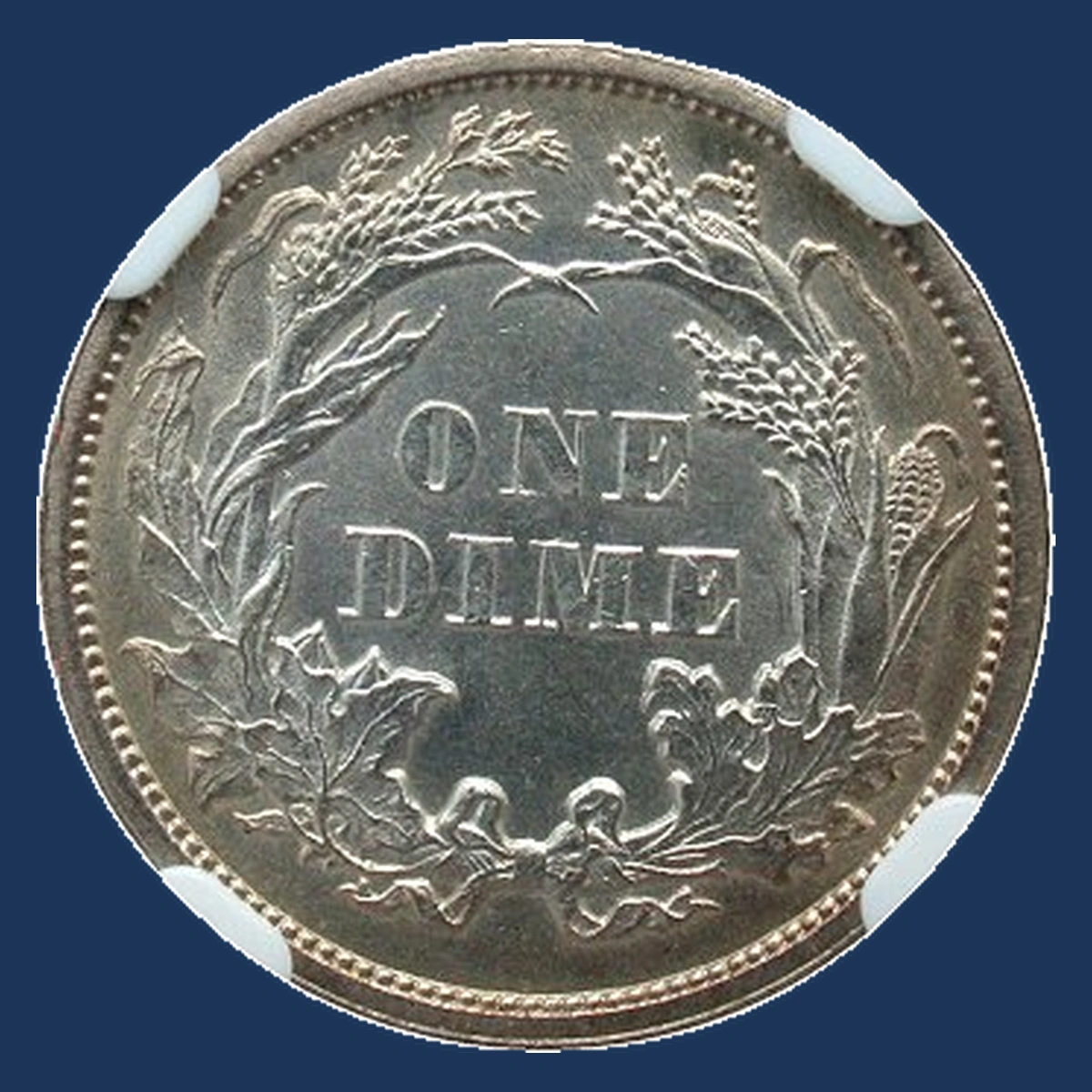
The back of Fortin’s Type I example leans slightly left after the coin is turned over correctly. The recorded NGC MS63 coin is unworn with noticeable marks.
No exact angle is supplied. The description should remain a slight rotation rather than becoming a ninety-degree or half-turn error.
The same coin also has rust texture, front doubling, and a raised back scratch from the tool. Those features share one specimen.
Rotation concerns the relationship between both designs. A coin sitting at an angle in its holder does not show whether the front and back are misaligned.
Estimated Value
The estimated whole-coin range is $25–$800 for comparable worn through lower unworn Type I examples. A slight rotation alone may add little or no value.
The pictured NGC MS63 has no sale price attached here. Its condition and other visible features account for much of the estimate.
The ordinary ANACS MS61 result of $252 in 2021 provides a lower unworn comparison. It does not prove that the slight leftward angle added a separate bonus.
How to Identify
Hold Liberty upright in a secure transparent holder. Turn it from top to bottom without a sideways twist or letting the coin move.
The recorded example should leave the back slightly left of upright. Repeat the motion against a vertical line to check that the result stays consistent.
Do not assign an exact angle from the word slight. Separately straightened photographs can hide the relationship entirely.
Use a 10× magnifier to confirm Type I and compare the other pictured features. When safely accessible, use a scale and calipers against 2.49 g and 17.9 mm, and inspect the edge grooves.
The controlled turn establishes the tilt. The same slight leftward lean must repeat with the front held in the same starting position.
3. 1861 Liberty Seated Dime Die Scratches and Gouges (Estimated Up to $1,200)
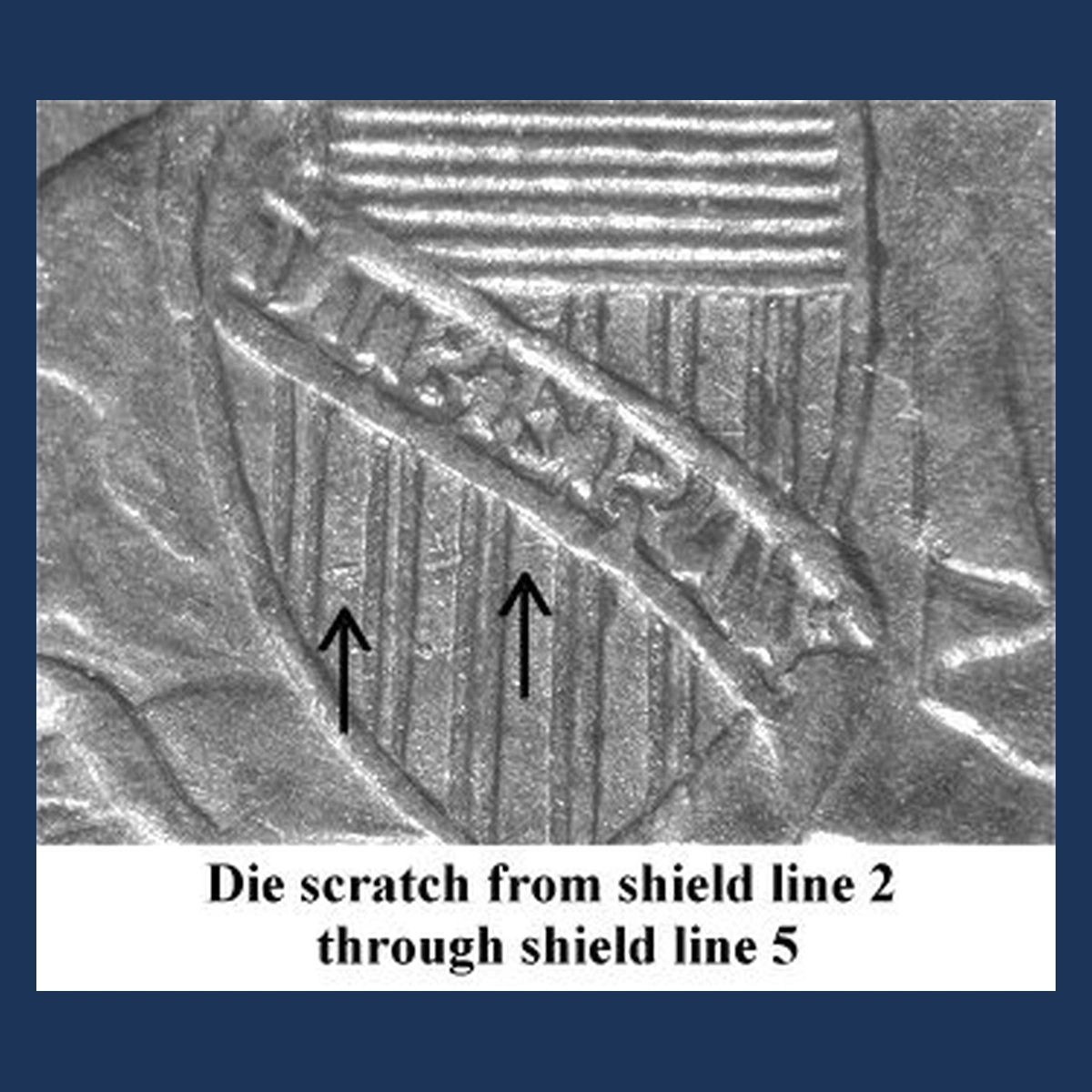
A scratch in a stamping tool leaves raised metal on a coin, the opposite of a scratch cut into the coin afterward. Silver fills the tool’s narrow groove during striking.
The Type I example has a long raised trace crossing two maple leaves in the lower-left wreath. Other Philadelphia examples show lines entering N in ONE or passing through E in DIME.
These are separate locations on different pairings. They should not be assembled into one imagined back.
The actual route matters. A random fine line somewhere beside a leaf does not establish the pictured tool damage.
Estimated Value
The estimated whole-coin range is $30–$1,200 for worn through attractive unworn examples. The underlying coin’s condition supplies most of the amount.
The lower-left wreath mark appears on the NGC MS63 Type I reference, without a stated sale price. The $1,080 ordinary Philadelphia MS64 sale from December 2025 gives a broader condition comparison.
It is not a gouge sale. Cleaning or damage can lower value even when a raised line remains clear.
How to Identify
Light the back from a low angle and inspect the line with a 10× magnifier. Check whether it rises above the neighboring surface or cuts into it.
For the Type I example, follow the full trace across the two lower-left maple leaves. Use separate pictures for lines entering N or crossing E.
A branching tool crack and a tool scratch can both leave raised lines. Their complete routes help distinguish the pictured features.
Use a scale and calipers when safely accessible against the original 2.49 g and 17.9 mm. Inspect the edge grooves and surrounding surface for alteration.
The correct raised trace must match the picture. A later cut does not become a valuable tool mark merely because it occupies a similar spot.
4. 1861 Liberty Seated Dime Doubled Die Reverse (Estimated Up to $1,500)
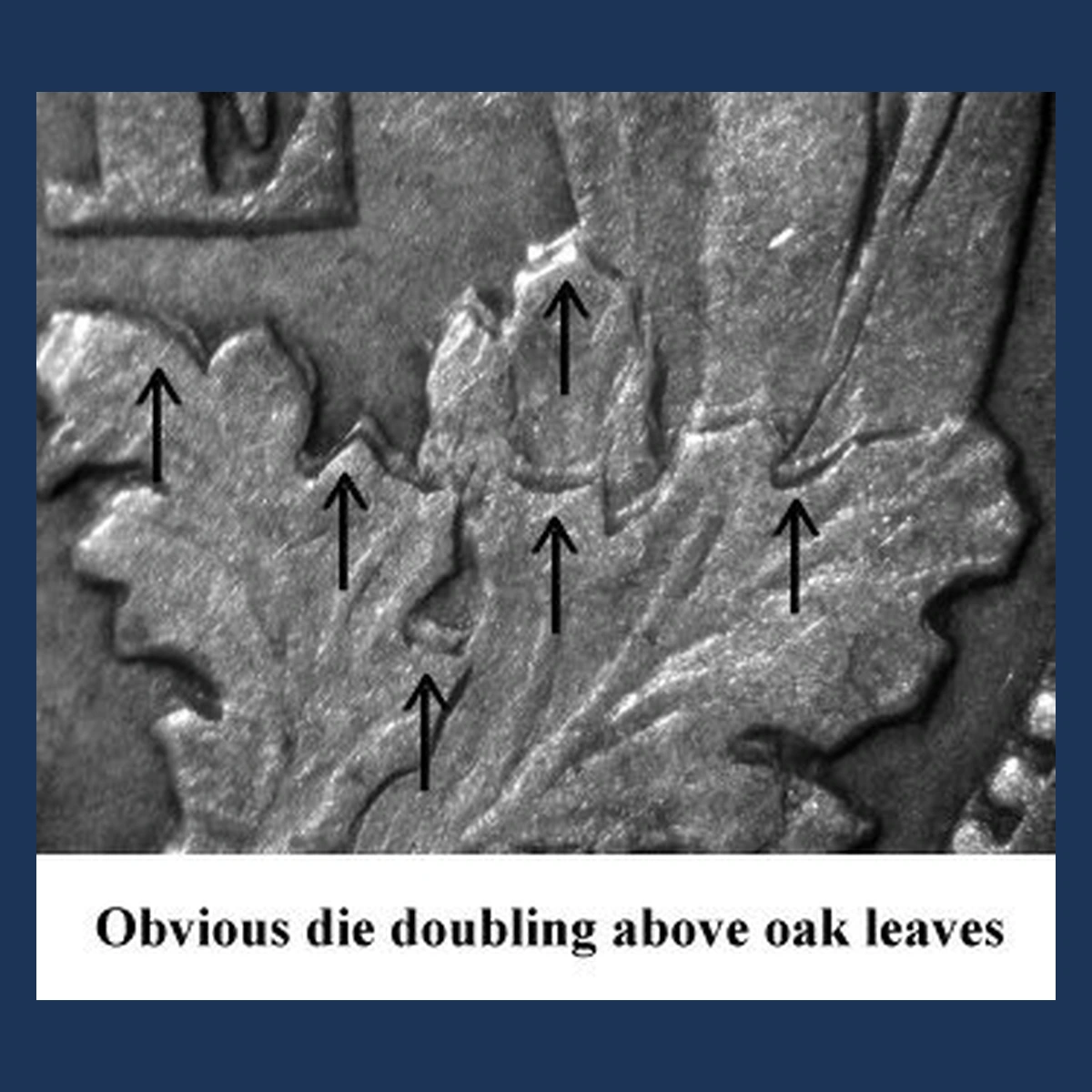
Extra leaf outlines appear in different parts of the Type II back. One listed group has doubling above the upper oak leaves; another has it in the right wreath.
These positions belong to different tool pairings. One coin does not need every leaf doubled to match its particular example.
The repeated design was already in the stamping tool and could appear during a single ordinary strike. It is different from striking the same coin twice.
Normal overlapping leaves and veins can also create several lines. Compare the precise outline before treating an extra-looking edge as a doubled feature.
Estimated Value
The estimated whole-coin range is $50–$1,500 for worn through attractive unworn Type II examples. The catalog gives these ordinary pairings no specific separate bonus.
The Philadelphia PCGS MS64 sale at $1,080 in December 2025 supplies a condition comparison. It was not assigned to either doubled back in the price record used here.
A precise matching leaf outline supports the variety identification. Normal overlapping leaves should not receive the same estimate merely because they look doubled.
How to Identify
Choose the picture for the correct area: above the upper oak leaves or in the right wreath. Use a 10× magnifier to follow the extra contour beyond one short segment.
Compare it with a normal leaf edge and vein. The repeated outline should duplicate part of the design rather than form an ordinary inner line.
Confirm the Type II front by its six vertical shield lines above the banner. That normal line count is not doubling.
Use a scale and calipers when safely accessible against 2.49 g and 17.9 mm, and check the edge grooves. A flat shelf or worn swelling can have another cause.
The useful match is separated design detail in the exact wreath area shown for that example.
5. 1861 Liberty Seated Dime Clashed Dies (Estimated Up to $2,500)
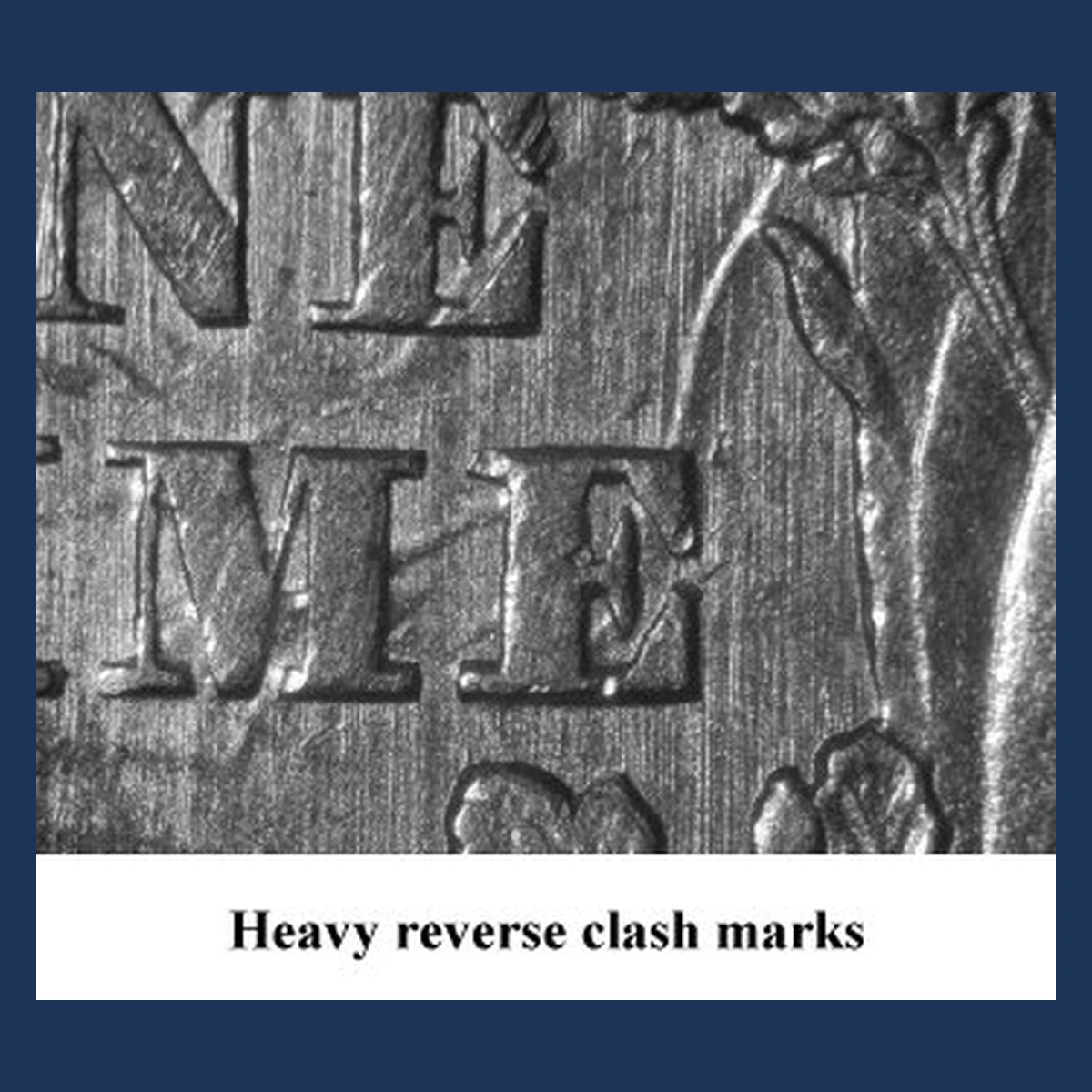
Strong extra shapes appear immediately left of Liberty’s left arm on the Philadelphia Type I example. They are clash marks, copied after stamping tools met without a blank between them.
The pictured coin is PCGS AU58 with CAC quality approval. AU58 means only slight wear, and its back is specifically described as unclashed.
A tool can retain earlier clash damage when paired with another opposing tool. Both sides therefore need not show the same event.
A separate 1861-S report also describes front-side clashing. Its exact pattern needs its own comparison rather than borrowing the Philadelphia arm location.
Estimated Value
Estimated whole-coin ranges are $40–$1,000 for Philadelphia and $150–$2,500 for San Francisco. They cover worn through lower unworn Philadelphia coins and worn through lightly worn S-mint examples.
The scarcer San Francisco issue explains much of the difference. An ordinary 1861-S PCGS XF45 sold for $1,020 in November 2025, and NGC AU55 brought $1,952 in August 2026.
Those sales compare condition, not clashes. They do not belong to the Philadelphia AU58 reference coin.
How to Identify
For the Philadelphia comparison, inspect immediately left of Liberty’s left arm with a 10× magnifier. Look for traces matching the opposite design, rather than normal clothing folds or scratches.
The recorded AU58 example has no visible clash on the back. Do not reject a matching front merely because the back is plain.
For San Francisco, confirm the S and choose that mint’s example. The Philadelphia location does not automatically apply.
Both coins are 90% silver, originally 2.49 g and 17.9 mm, with edge grooves. Use recorded measurements or a scale and calipers when safely accessible.
The useful match is a recognizable transferred shape in the correct place on the appropriate front, not a requirement for marks on both sides.
6. 1861 Liberty Seated Dime Doubled Die Obverse (Estimated Up to $15,000 for the Rare Pairing)
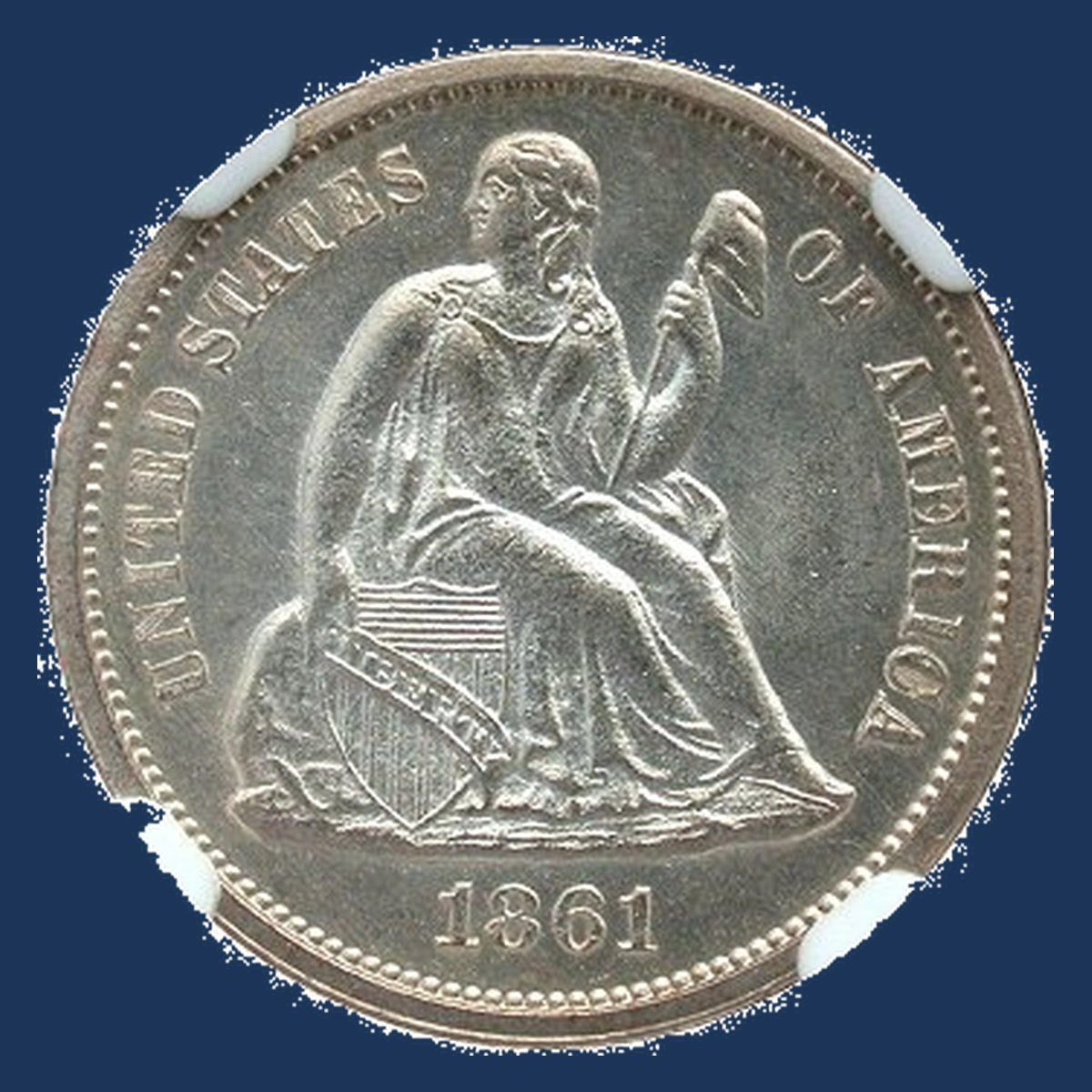
The front design determines where to look for doubling. Type I repeats parts of TED STATES and AMERICA, while Type II shows extra detail in the lower shield.
That Type II front was used with more than one back. One has raised tool lines through E in DIME; another has a rare heavily rusted-tool texture.
Those pairings have very different collector interest. The lower-shield doubling alone does not establish the rare combination.
The Type I example also has rust texture and a raised scratch on the back. Those other features are separate from its repeated front lettering.
Estimated Value
The estimated range is $75–$1,500 for ordinary matching examples, from worn through unworn condition. The rare Type II combination with the heavily rusted back has a separate $1,500–$15,000 estimate.
Fortin suggests a 2500–3000% bonus above an equivalent ordinary coin for that rare combination. That is catalog guidance, not a completed sale.
The larger range already includes both sides. Do not add it to another full estimate for the rust texture below.
How to Identify
On Type I, use a 10× magnifier on TED STATES and AMERICA. Compare the repeated letter edges with the complete pictured front.
On Type II, examine the lower shield instead. Six normal vertical lines above the banner identify that front design but do not prove doubling below it.
Turn the coin over before considering the rare-combination price. Ordinary tool lines through E are different from the heavily rusted back.
Use a scale and calipers when safely accessible against 2.49 g and 17.9 mm, and inspect the edge grooves. Existing measurements can be used for a sealed coin.
The useful identification combines the matching front doubling with the actual back pattern. The front alone cannot establish which valuable pairing is present.
7. 1861 Liberty Seated Dime Rusted Dies (Estimated Up to $15,000 for the Rare Reverse)
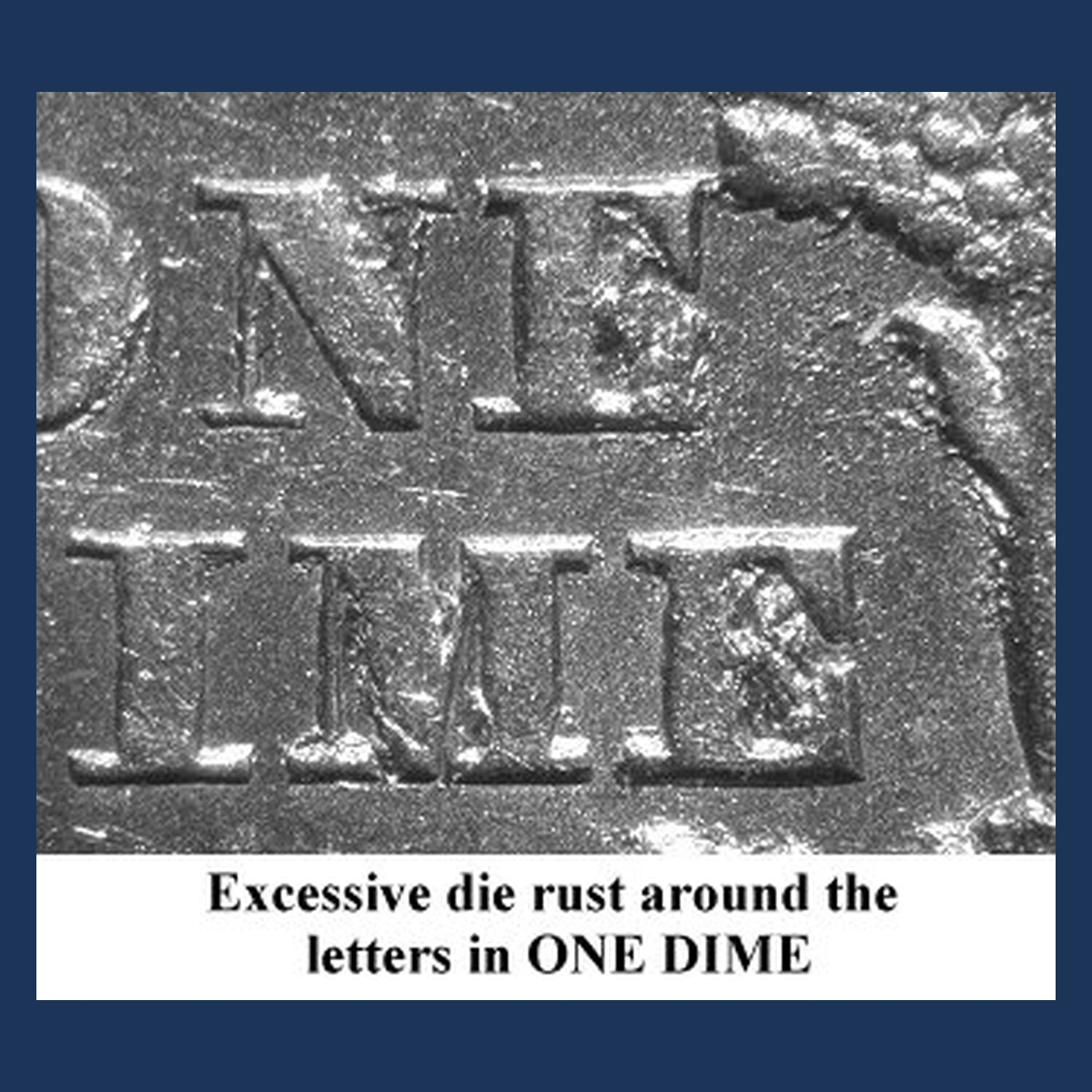
Small pits in a rusty steel tool can leave raised texture on the silver coin. That is different from corrosion damaging the coin after it was made.
On the NGC MS63 Type I example, light texture follows Liberty’s body. It belongs with that coin’s front lettering doubling and back scratch.
The rare Type II example instead has a heavily affected back paired with doubled detail in the lower shield. Its pictures should remain separate from the Type I front.
A rough silver surface alone does not establish either variety. The texture must match the correct tool pattern and surrounding design.
Estimated Value
The estimated whole-coin range for light Type I texture is $30–$1,200, from worn through attractive unworn examples. The rare Type II combination has a separate $1,500–$15,000 estimate.
The ordinary Philadelphia MS64 sale of $1,080 in December 2025 provides condition context. It is not an auction price for the rare rusted-back variety.
The rare back and doubled front describe one coin. Their two sections must not become two added values for that same specimen.
How to Identify
Follow the texture along Liberty’s body for the Type I comparison. Use a 10× magnifier and moving light to see whether it rises from the struck surface or cuts into the silver.
Dirt and later corrosion can obscure that distinction. Compare the entire front rather than choosing one rough patch.
For the rare Type II, match the back’s overall pattern and the doubled lower shield together. Compare the full back rather than selecting one leaf or letter.
Both Philadelphia types began at 2.49 g and measure 17.9 mm, with edge grooves. Use recorded readings or a scale and calipers when safely accessible.
The whole paired design and matching raised texture provide the useful test; roughness by itself does not.
Conclusion
Estimated whole-coin values for these 1861 features run from $25 to $15,000. First separate Type I’s five upper shield lines from Type II’s six; both are normal designs.
Then compare the actual lettering, leaf edges, cracks, or surface texture. Several features can share one coin, especially the rare Type II doubled-front and rusted-back combination.
Value that complete coin once, and test a slight rotation with a controlled turn rather than a tilted photograph.