1862 Dime Error List with Pictures

An 1862-S F-102a dime graded PCGS VF30 sold for $504 in August 2022. That variety is known for a tilted back, while a Philadelphia variety combines three smaller surface features.
This 1862 Liberty Seated dime error list covers repeated date digits, a raised ridge, doubled letters, and rotation. Estimated whole-coin values range from $30 to $3,500.
Read on to find the right mint and check each feature without adding several premiums to the same coin.
1. 1862 Liberty Seated Dime Repunched Date (Estimated Up to $2,000)
An extra outline below the sloping stroke of the 2 helps identify the Philadelphia F-103 variety. It remains from an earlier date punch in the steel stamping tool.
A different variety, F-105, has traces below the top and base of the 1, with faint marks below the 8. These outlines can fade as the tool wears.
The F-105 date sits low and slopes upward, even when its extra traces become difficult to see. The F numbers name different varieties.
These patterns do not need to appear together on one coin.
Estimated Value
Estimate $30–$350 for worn examples and $400–$2,000 for lower-grade through well-preserved unworn coins. Clear repeated outlines and original surfaces help support the price.
Greysheet’s F-103 guide spans roughly $9–$1,716 across its listed grades. Those are guide values, not recorded auction sales.
The estimates cover the whole dime. Judge the separate F-105 pattern on its own condition, especially when the earlier date outlines have become faint through use of the stamping tool.
How to Identify
Use a magnifier below the diagonal stroke of the 2 for F-103. For F-105, examine the top and base of the 1, then check beneath the 8.
Compare the whole date with a labeled example. The low, upward-sloping F-105 date can remain visible after much of the repeated detail fades.
These Philadelphia coins have no mintmark and contain 90% silver. Check about 2.49 grams on a scale and 17.9 mm with calipers, allowing for wear.
Inspect the edge grooves for damage. To find the likely variety quickly, match the extra rounded outlines on the correct digits, rather than a flat shelf from movement during striking.
2. 1862 Liberty Seated Dime Reverse Die Gouge (Estimated Up to $2,000)
A diagonal raised line crosses the area of N and E in ONE. It may look like a scratch, but a scratch cut directly into a coin would be sunken.
Here, the cut was in the die, the steel tool that stamped the back. Silver filled that cut during the strike and left a ridge.
The F-103 variety photograph shows this feature with the repeated 2 and doubled front-side lettering. All three help identify the same coin variety.
The raised line is therefore part of the original strike.
Estimated Value
An F-103 dime with the back-side ridge has an estimated whole-coin range of $30–$2,000. Condition and surface quality matter more than the ridge’s length.
Greysheet’s F-103 listing gives approximately $9–$1,716 across its guide grades. Those figures are published estimates, rather than auction results.
The same coin can also show a repunched date and doubled letters. It still receives one overall value, not three added premiums for features that identify the same variety.
How to Identify
Light the back from the side and use a magnifier around N and E in ONE. Follow the full diagonal line to check whether it stands above the surface.
A later scratch may have pushed-up metal along one side of a groove. That differs from the complete raised ridge shown on F-103.
Turn to the front and check the repeated 2 and extra letter outlines for support. Use a scale and calipers against about 2.49 grams and 17.9 mm.
Inspect the edge grooves as well. For the fastest first check, tilt the N/E line and confirm that it is a raised ridge in the same position as the reference coin.
3. 1862 Liberty Seated Dime Doubled Die Obverse (Estimated Up to $2,000)
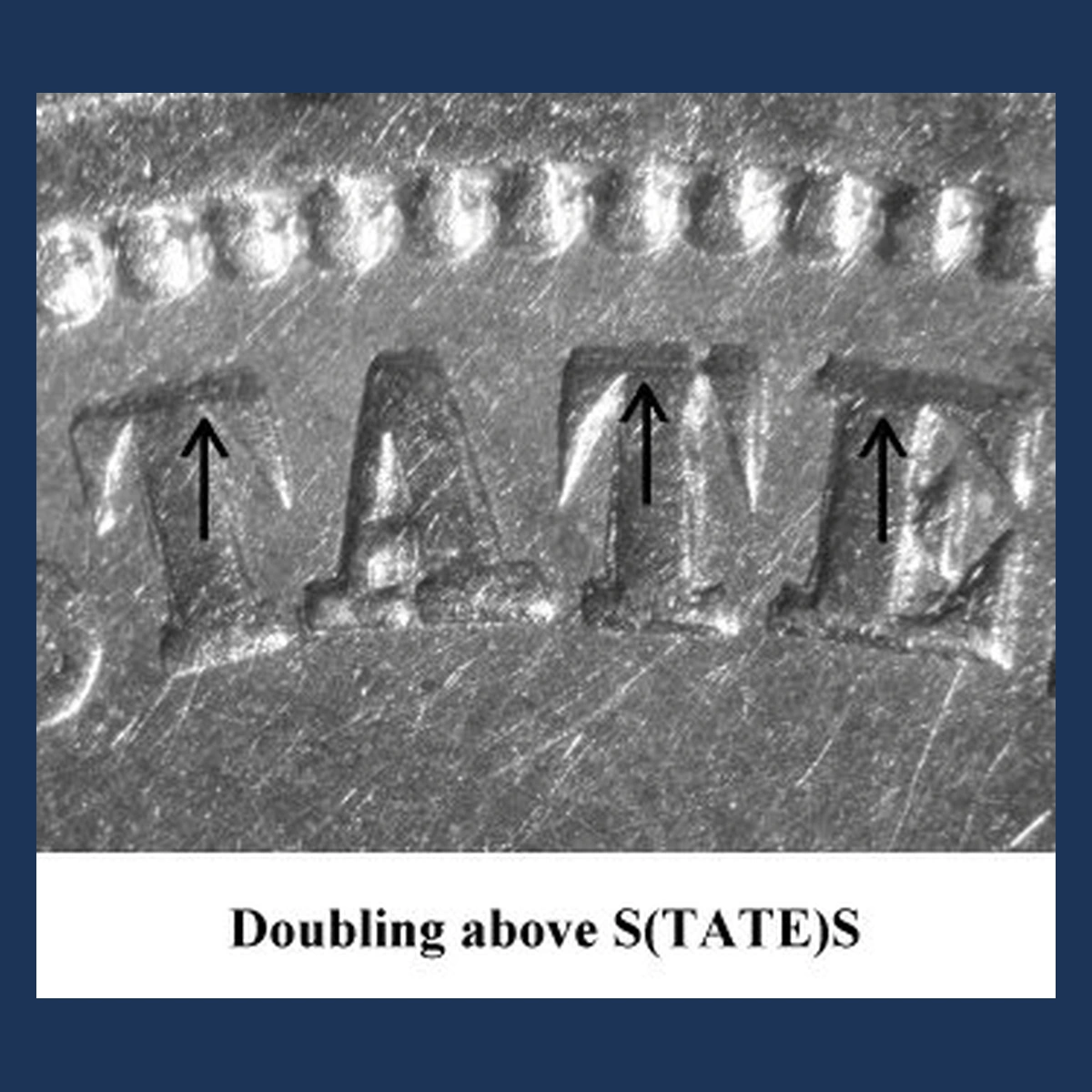
Extra raised outlines appear above the ITED STATES part of the front lettering. On F-103, these details were already on the stamping tool before it struck the coin.
This is a doubled die, meaning a tool carried repeated parts of the design. A single blow could transfer both outlines to the silver.
The repeated 2 in the date came from a separate date-punching step. Both features can exist together without proving two strikes on the coin.
The diagonal ridge on the back helps confirm this particular Philadelphia variety.
Estimated Value
Use an estimated $30–$2,000 for the complete F-103 dime, from worn through well-preserved unworn examples. Strong, clear doubling can make the variety more appealing.
The roughly $9–$1,716 guide span mentioned for the back-side ridge concerns this same variety. It is not another amount to add for the lettering.
A dime with all three identifying features still has one condition-based price. Cleaning, wear, and damaged surfaces can matter more than the strength of one extra outline.
How to Identify
Start above ITED STATES with a magnifier, rather than searching every part of the portrait. Compare several neighboring letters with a sharp F-103 photograph.
Move the light to distinguish rounded repeated edges from flat shelves or reflections. Then check the repeated 2 and the back-side ridge, but return to the letters to verify the actual doubling.
A scale and calipers should show about 2.49 grams and 17.9 mm before wear. Examine the edge grooves and confirm that there is no mintmark.
These are Philadelphia circulation-coin features. For a quick identification, match the extra outlines above several of the named letters to the same F-103 example.
4. 1862-S Liberty Seated Dime Rotated Reverse (Estimated Up to $3,500)
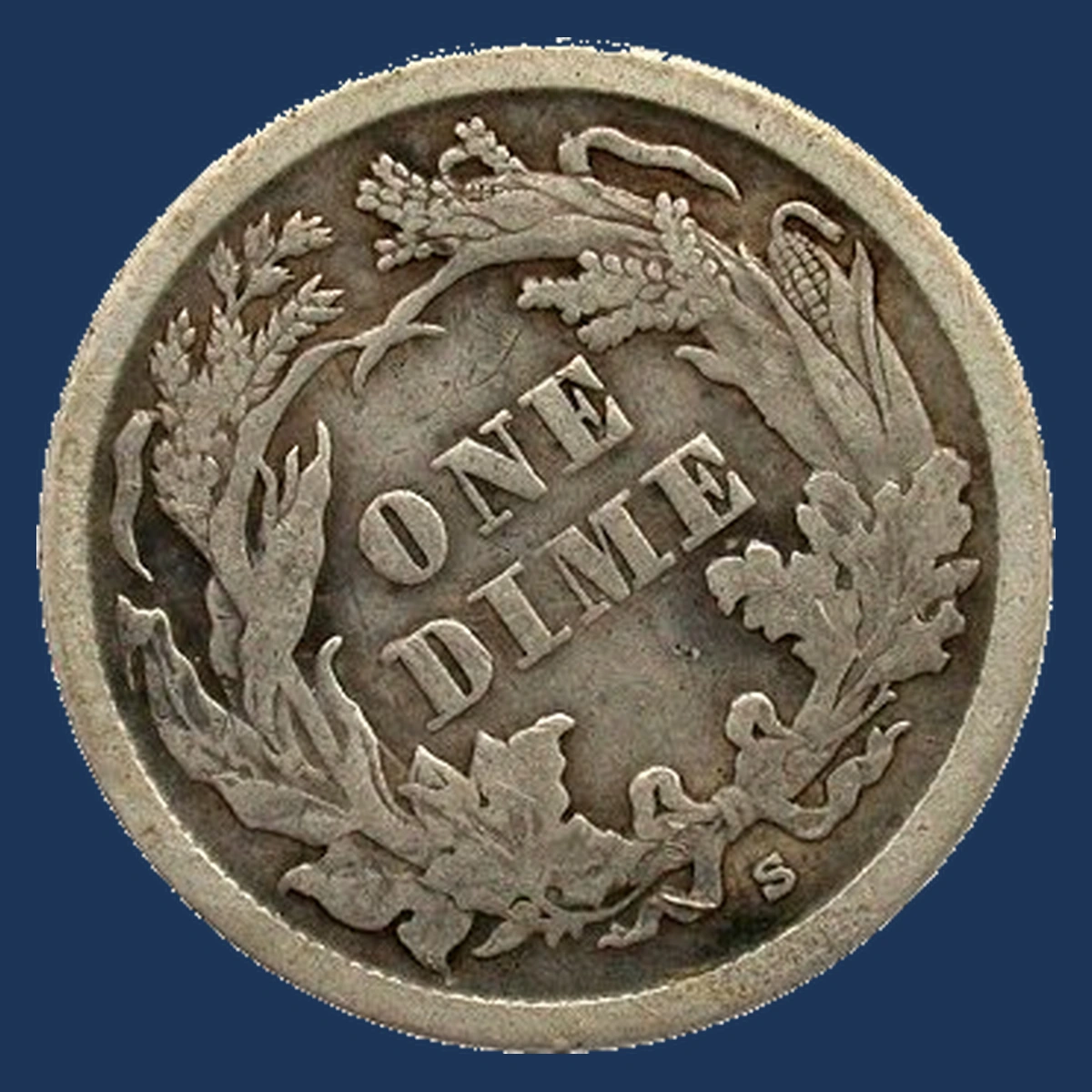
The back sits at an angle when the seated figure is held upright and the coin is flipped over. The two stamping tools were not aligned in their normal positions.
The San Francisco F-102a example has its back turned 35 degrees to the right. A separate auction example is described at about 45 degrees.
Those angles belong to different coins. They should not be combined into a new average angle.
Both pictures can still be centered on the coin. The S below the back-side wreath identifies the San Francisco issue.
Estimated Value
Estimate $150–$3,500 for worn through lightly worn 1862-S dimes with genuine rotation. The angle, condition, original surfaces, and scarcity of this mint issue affect the whole-coin price.
An F-102a graded PCGS VF30 sold for $504 in August 2022. A normal 1862-S graded VF20 brought $600 in June 2025.
Both are circulated-coin comparisons. Neither price identifies the separate 45-degree example or establishes a fixed extra payment for each degree of tilt.
How to Identify
Find the S below the wreath with a magnifier, then hold the seated figure upright. Flip the coin top to bottom without twisting it sideways.
Check how far ONE DIME leans from upright and repeat the motion. Keep the same viewing direction when comparing the 35-degree and roughly 45-degree examples.
Do not straighten the two photographs separately, since that hides the relationship. Inspect the edge grooves for seams that might reveal joined pieces.
Use a scale and calipers against about 2.49 grams and 17.9 mm for this 90% silver dime. The quickest test is to repeat the same top-to-bottom flip and check that the back keeps the same tilt.
Conclusion
Estimated whole-coin values across these 1862 dime features range from $30 to $3,500. The Philadelphia F-103 can combine a repeated 2, doubled letters, and a raised back-side ridge, but those features do not create three separate prices.
The San Francisco rotation needs its own S mintmark and repeatable flipping test. Match the correct coin first, then compare its condition and surfaces with the relevant examples.