1867 Dime Error List with Pictures

A reflective 1867 dime of the F-102 variety sold for $4,920 in November 2024. It was made for everyday use, despite its mirror-like surface.
This 1867 dime error list also includes repeated date marks on a specially made collector Proof. Estimated whole-coin values run from $600 to $8,000.
Follow the date and wreath details below to separate the collector version from regular coins with clash marks or doubling.
1. 1867 Liberty Seated Dime Repunched Date (Estimated Up to $5,000)
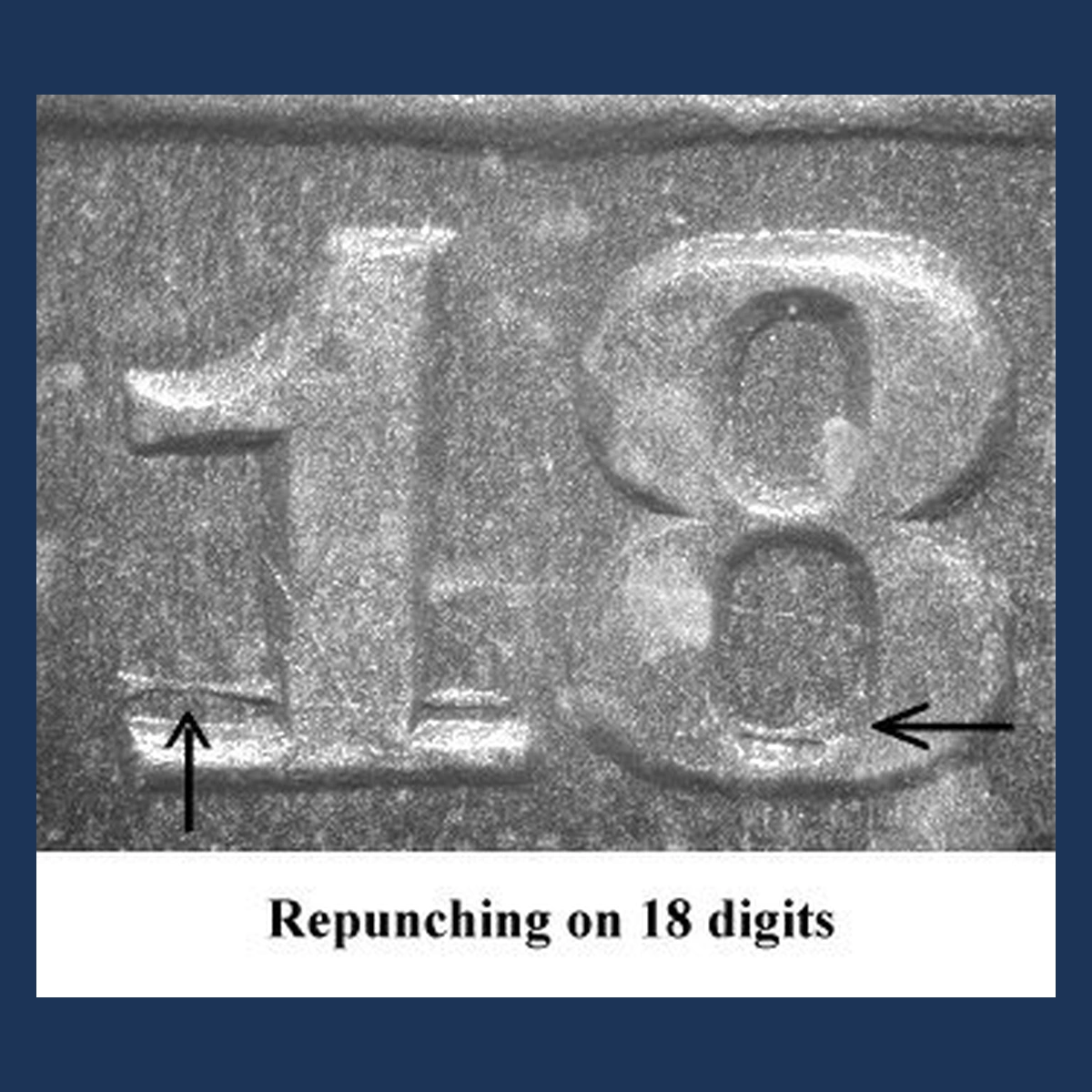
Small pieces of earlier numerals show below the 1 and 7 on this date. Additional repeated marks are reported on the 8.
They were made when the date punch entered the front die more than once. A die is the steel tool that stamps the design onto coins.
The finished tool reproduced those remnants on later coins. The individual dime did not need to move or receive an extra blow.
This variety, F-103, is a Proof made especially for collectors. A regular dime with a reflective surface does not become the same variety just because it looks shiny.
Estimated Value
The estimated range is $600–$5,000 for matching F-103 Proofs. A PCGS PR66 Cameo example with CAC quality approval sold for $3,120 in April 2018.
PR66 is a high condition grade. Cameo describes frosted pictures against mirror-like areas.
The price includes the entire collector coin, rather than a separate payment for repeated date marks. Fine scratches in the reflective surface can lower its value, while unusually well-preserved surfaces can support a stronger price.
How to Identify
Use a 10× magnifier below the 1 and 7, then examine the 8. Compare each raised remnant with an identified F-103 picture.
The extra shapes should fit parts of earlier numerals. A uniform flat shelf around several edges can come from movement during striking instead.
Check the complete date position and the coin’s rim and surface against a known Proof. Bright reflections alone do not establish how it was made.
This Philadelphia dime has no mint letter. Its normal weight is about 2.49 g, its diameter 17.9 mm, and its metal 90% silver.
Use a scale and calipers when safely accessible, and check the edge grooves. Then return to the small raised marks below 1 and 7: those matching numeral remnants are the key feature.
2. 1867 Liberty Seated Dime Obverse Die Clash (Estimated Up to $8,000)
The pictured F-102 coin has strong extra design traces on the front. Its back does not show the same clash marks.
A clash happens when the two stamping tools meet without a blank between them. They can pick up parts of each other’s design and transfer them onto later coins.
The marks need not be equally strong on both sides. A plain-looking back therefore does not rule out the pictured front-side clash.
The date helps identify this variety too. It sits high and slopes slightly downward, with the 1 close to the base of Liberty’s seated figure.
Estimated Value
The estimated whole-coin range is $1,000–$8,000. An NGC MS66 Star Prooflike F-102 sold for $4,920 in November 2024, and a PCGS MS64 brought $4,320 in July 2022.
Both were unworn; Prooflike describes reflective surfaces on a regular coin. These sales compare the variety and condition.
They do not establish visible clash marks on every coin sold under that variety name. Check the marks on the actual coin before using either price.
How to Identify
Keep Fortin’s F-102 photograph beside your coin, with Liberty upright in both views. Look for extra shapes that match parts of the wreath on the opposite side.
A 10× magnifier and light from different angles can help reveal shallow marks. Cleaning lines and scratches do not repeat the wreath’s shapes.
Check the high, gently descending date and the 1 close to Liberty’s base. Those details support the match, even when the back shows no clash.
If safely accessible, compare a scale reading with 2.49 g and use calipers against 17.9 mm, allowing for wear. Inspect the edge grooves for damage.
The important step is matching the actual transferred shapes on the front; a reflective surface or variety label alone is not enough.
3. 1867 Liberty Seated Dime Lower Wreath Doubling (Estimated Up to $8,000)
Look at the lower right part of the wreath for extra outlines beside the normal shapes. Doubling is described there on the F-102 variety.
This is a back-side feature, separate from the transferred clash marks on the front. A single dime can show both.
The extra outline is described as doubling without a more specific cause being established. Seeing it does not by itself prove that the stamping tool received a doubled design.
Study the visible shape first. Reflections, flat shelves, and rounded extra outlines can look similar in a small photograph but have different explanations.
Estimated Value
An estimated $1,000–$8,000 covers the whole F-102 dime with readable wreath doubling. The scarce Philadelphia issue and its condition account for much of the price.
The $4,920 result from November 2024 is a comparison for the variety. It is not a separate auction record for a confirmed doubled-die error.
If the same coin also has front-side clash marks, it still receives one value. Do not add this range to the clash range.
How to Identify
Photograph the lower right wreath sharply enough to include nearby leaves and the rim. Keeping those landmarks visible makes a comparison easier than an isolated close-up.
With a 10× magnifier, change the light and watch whether the extra outline remains in the metal. A moving highlight can disappear, while a real raised edge stays fixed.
Note whether the outline is rounded or forms a flat shelf, without assuming both have the same cause. Check the front’s high, slightly downward-sloping date as well.
Use a scale and calipers on an accessible coin against about 2.49 g and 17.9 mm, then inspect the edge grooves. Return to the lower right wreath and compare the exact repeated shapes with the F-102 picture.
Conclusion
These 1867 dimes span estimated whole-coin values of $600 to $8,000. Start by separating the collector Proof with repeated date marks from the regular F-102 variety.
On F-102, examine the front for transferred design traces and the lower right wreath for doubling. Both can belong to one coin, so their estimates should not be added together.
A mirror-like surface is a clue about appearance, not proof of collector manufacture.