1895 Dime Error List with Pictures

A cup-shaped 1895-O dime sold for $16,450 in 2016. PCGS graded it MS64, meaning unworn with some marks, but its unusual shape is what first catches the eye.
A much smaller feature appears on an 1895-S variety: extra pieces of the date beside 895. This 1895 Barber dime error list covers both, with estimated values from $75 to $30,000.
Read on to compare the tiny numeral marks with a coin transformed into a metal cap.
1895 Barber Dime Repunched Date (Estimated Up to $3,000)
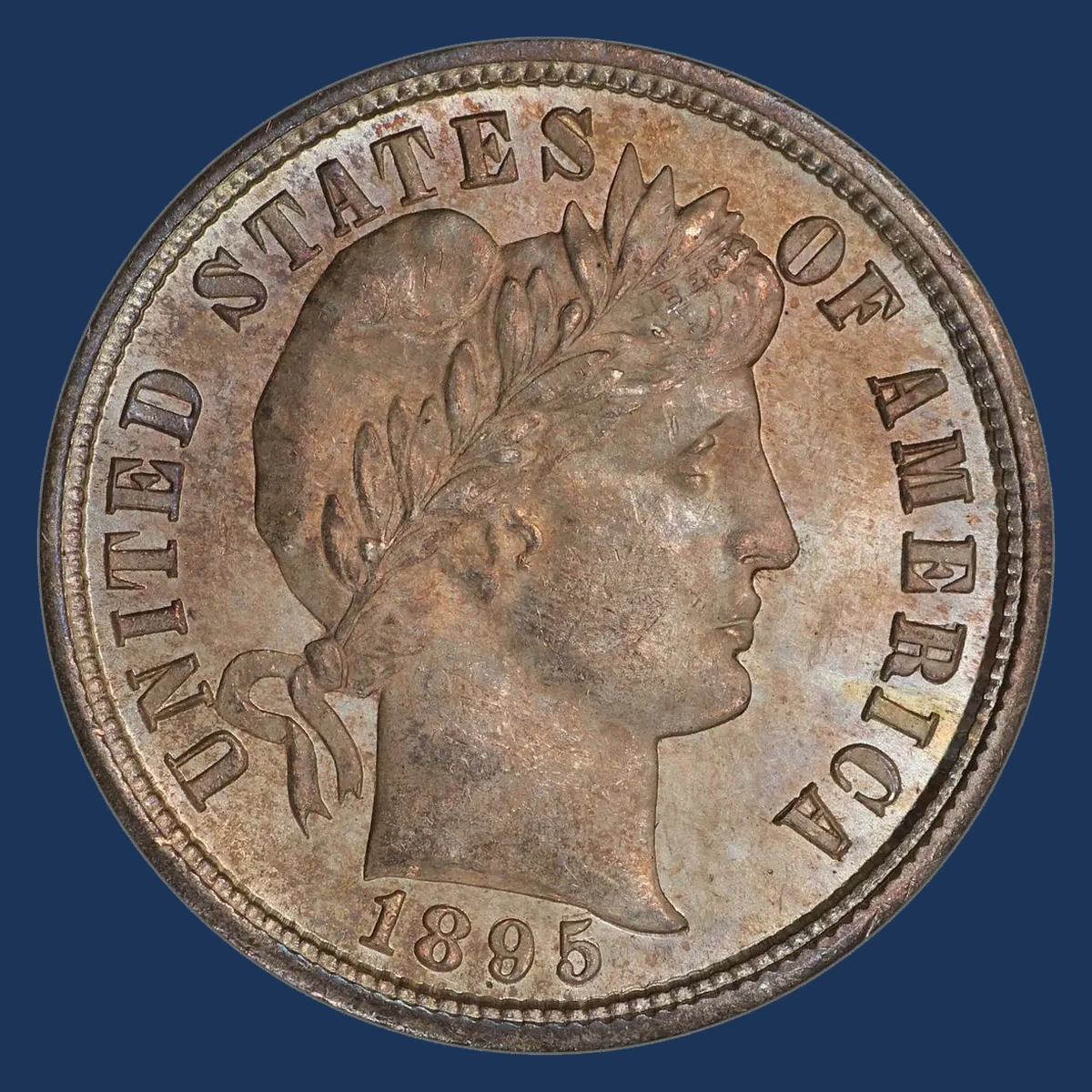
Look beside the 8, 9, and 5 for small pieces of an earlier date impression. These are the features of the 1895-S FS-301 repunched date.
The date was entered more than once into the die, the steel tool that stamps coins. Parts of the earlier position remained and appeared on the coins it struck.
PCGS recognizes this San Francisco variety. The marks belong to the date, rather than the S mint letter on the back.
A doubled-looking S does not identify it. The shapes and positions beside the numerals must match the known example.
Estimated Value
The estimated whole-coin range is $75–$3,000, from worn examples to attractive unworn coins. Clear date remnants help, but condition still matters.
The PCGS auction index lists a $199 eBay result dated November 7, 2025. Its VF Details description indicates wear plus a surface or condition problem.
That listing is a modest-price comparison, not proof of a problem-free coin. Strong wear or cleaning can reduce the value even when the extra date marks remain visible.
How to Identify
Find the S below the wreath on the back before studying the date. This letter identifies the San Francisco issue needed for FS-301.
Use a 10× magnifier around the upper and middle parts of 895. Keep a clear picture of a known example beside the coin and compare each small numeral remnant.
Move the light to separate raised metal from bright reflections. A flat shelf around a number can result from movement during striking instead of a second date entry.
The normal dime is 90% silver, weighs about 2.50 g, and measures 17.90 mm. Use a scale and calipers when safely accessible, and inspect the edge grooves.
Return to 895 for the deciding comparison: the small extra shapes must match there, not merely beside the S.
1895 Barber Dime Obverse Die Cap (Estimated Up to $30,000)
This dime has walls that rise like a shallow cup. It stayed attached to the front stamping tool instead of leaving the press normally.
As more blanks entered, repeated blows pushed its metal upward around the tool. The back of the trapped coin pressed against those incoming blanks.
On the recorded 1895-O example, ONE DIME is enlarged and the wreath curves upward. Those stretched details help explain how the cup formed.
Collectors call the trapped coin a die cap. It is different from a later coin struck against that cap, which would show the effect of an obstruction.
Estimated Value
The estimated range is $15,000–$30,000 for a genuine 1895-O cap in comparable condition. Coin World reported its $16,450 Heritage sale in 2016.
That is an actual sale of the PCGS MS64 cap, not a price for an ordinary New Orleans dime. The surviving cup shape and readable design matter greatly.
Later bending does not create the same error. A damaged dime with a bent rim should not be priced within this cap’s range.
How to Identify
View the coin from the side as well as straight on. The side view reveals how the walls rise from the struck body.
With a 10× magnifier, follow the enlarged ONE DIME lettering and upward-curving wreath. Their stretched shapes should agree with the cup, rather than showing simple folds from later bending.
Compare both faces and the O mint letter with photographs of the graded example. Check the edge and remaining grooves for tool marks or joined pieces.
If safely accessible, compare weight with the usual 2.50 g. Use calipers to record the changed width and height instead of demanding the normal 17.90 mm diameter.
Never flatten the walls to measure them. The cup and stretched back design must work together in the same shape.
Conclusion
Estimated values range from $75 for lower-end repunched-date examples to $30,000 for a comparable genuine die cap. These are very different things to look for.
On the 1895-S, compare the extra pieces of 895 under magnification. On the 1895-O, study the raised walls and stretched back together.
Neither a doubled-looking mint letter nor an ordinary bent rim is enough to make the match.