1907 Dime Error List with Pictures

A 1907-D dime struck 20 percent off center sold for $1,207.50 in September 2004. The lightly worn PCGS AU55 coin still showed its identity even though the bottoms of 07 were affected.
The 1907 dime errors below have estimated values of $20–$2,500 across the conditions discussed. Read on to check tiny date and mintmark lines, raised lumps, missing metal, and designs struck in the wrong position.
1. 1907 Barber Dime Die Crack and Cud Reports (Estimated Up to $600)
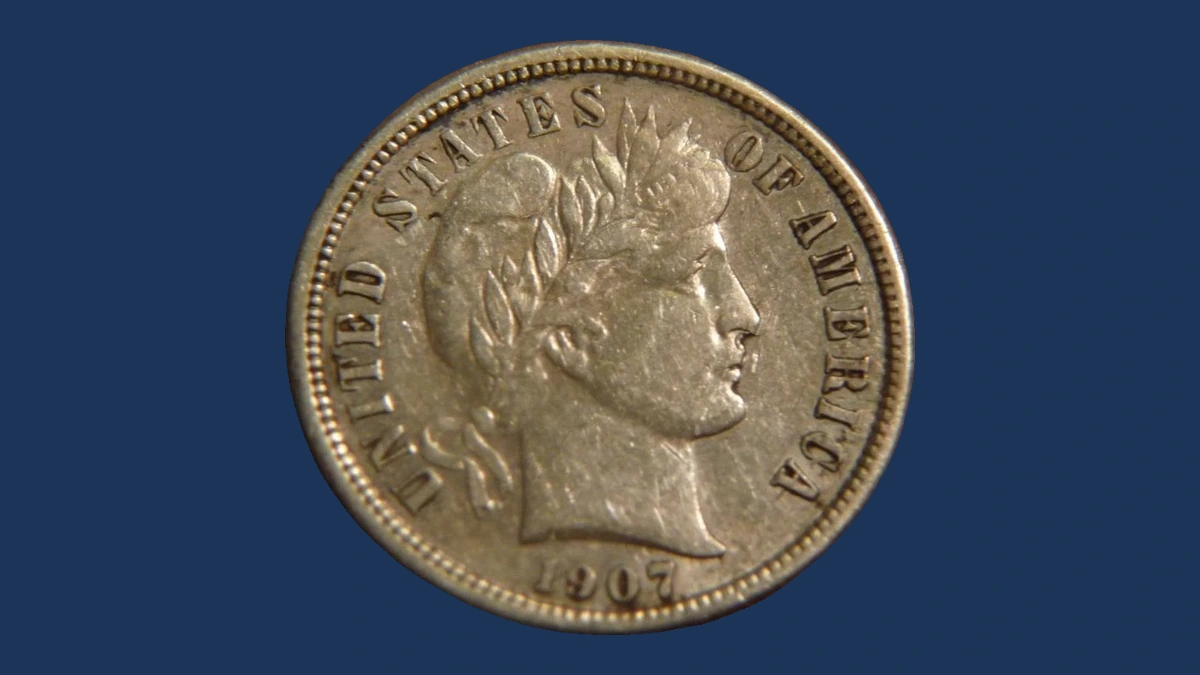
A thin raised line, a small isolated lump, and a broad rim-connected patch can all come from a damaged stamping tool. Their shapes tell different parts of the story.
A die is the steel tool that stamps the design. Silver fills its cracks or broken areas during striking, leaving raised metal on the coin.
A rim-connected patch is called a cud. A lump inside the design is not the same thing.
The 1907 reports give no universal location or mint. Inspect the actual feature rather than applying every reported failure to one imagined coin.
Estimated Value
A modest crack or small chip has an estimated whole-coin value of $20–$150. A clear, confirmed cud on a circulated dime is estimated at $100–$600.
The lower range broadly follows the year guide’s $25–$180 discussion, which is an estimate rather than a recorded auction. A large rim-connected break needs a different comparison from a hairline ridge.
Mint, wear, and damage still affect the price. The error name does not replace those basic checks.
How to Identify
Use a 10× magnifier and side light to follow the raised feature. Decide whether it remains a line, forms an internal lump, or joins the rim.
Inspect the opposite face for weakness across from a large patch. That may support the effect of a broken tool, but cannot prove it alone.
Check the edge grooves and compare a scale with the original 2.50 grams and calipers with roughly 17.9 millimeters. The dime is 90-percent silver.
A ridge above the original surface supports a tool crack; a cud also needs a natural connection to the rim, without an added-metal seam or impact-smoothed boundary.
2. 1907-S Barber Dime Misplaced Date (Estimated Up to $600)
The tops of an extra 0 and 7 appear among the small border teeth below the main date. Heritage describes these fragments on a 1907-S MPD-002 graded ANACS VF20.
That grade indicates a moderately worn coin. The extra digits sit outside the intended date row.
A worker placed the date punch incorrectly on the steel stamping tool before adding the proper date. Those earlier impressions remained on coins made afterward.
An older general listing uses MPD-001. The names should not be treated as interchangeable; the two visible numeral tops establish the match to the auctioned MPD-002.
Estimated Value
The ANACS VF20 MPD-002 sold for $54 on March 4, 2024. Confirmed circulated to lightly worn examples have an estimated value of $40–$600.
The tiny numeral tops must remain readable, and the underlying coin’s condition matters. The $54 result shows an accessible worn example, not a fixed price for every grade.
A better-preserved coin needs a similar San Francisco comparison. Wear or dark toning that hides the border can weaken its appeal.
How to Identify
Find the S below the back bow before studying the date. A similar mark on a Philadelphia coin cannot establish this San Francisco variety.
Tilt the lower front under a 10× magnifier until the normal date and border teeth are both clear. Look for the extra 0 and 7 tops near the teeth’s upper edges.
Record weight with a scale against 2.50 grams and width with calipers against 17.9 millimeters. Inspect the edge grooves of this 90-percent-silver issue.
Matching both numeral tops in the correct S-mint border supports MPD-002; one unusually tall tooth or isolated bump is not the same evidence.
3. 1907-O Barber Dime Repunched Mintmark (Estimated Up to $650)
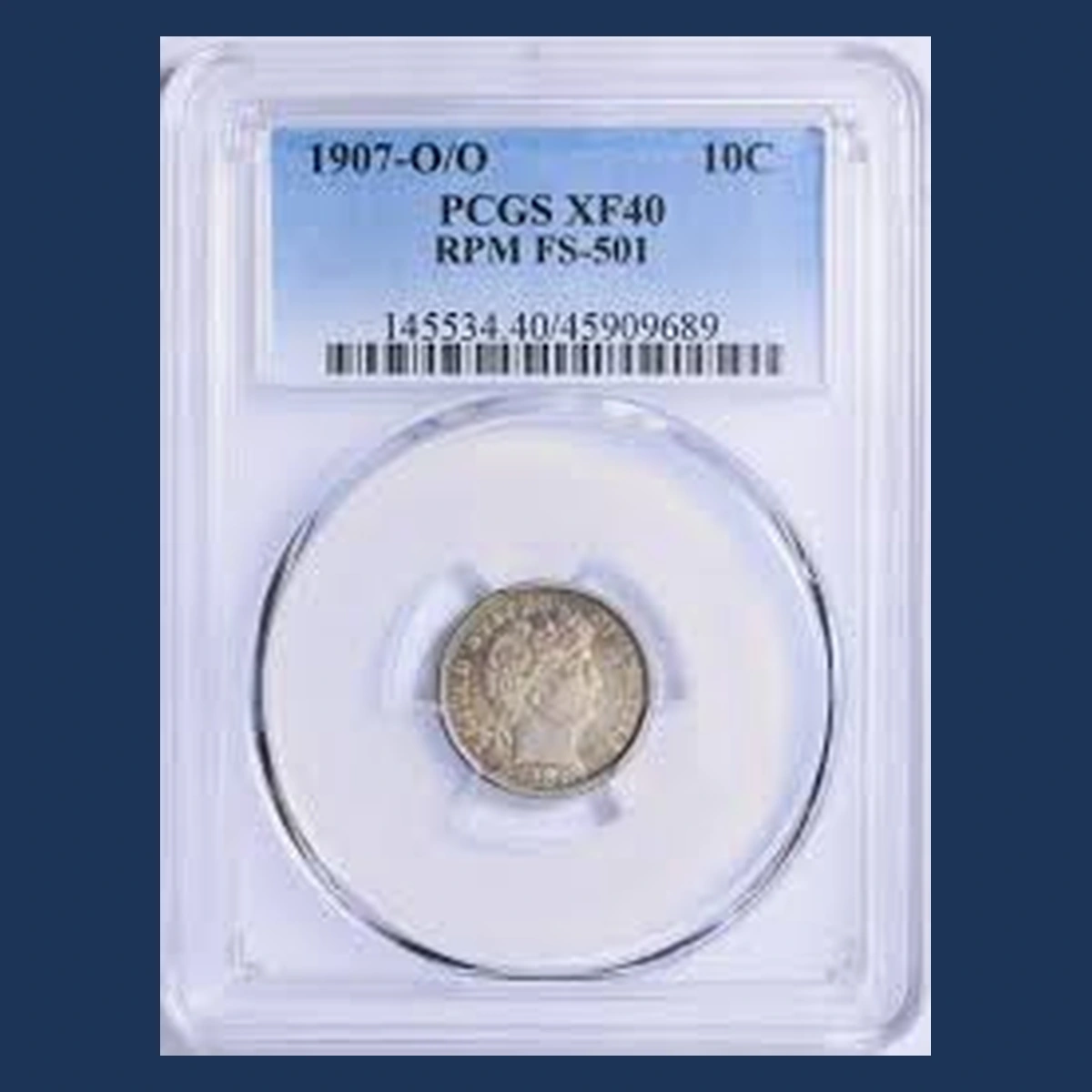
A second O-shaped outline beside the New Orleans mintmark identifies the recognized O/O FS-501 variety. Workers punched the O into the back stamping tool by hand.
If the punch shifted, the final letter could leave part of the earlier impression exposed. The tool then repeated that extra curve on its coins.
The name means O over O, not O over another mint’s letter. A thick or distorted opening alone does not establish repunching.
A PCGS XF40 example illustrated at GreatCollections gives a specific comparison. Its image is more useful than assuming every unusual O is the variety.
Estimated Value
PCGS records a $125 sale in December 2012 for FS-501 at grade G4, a heavily worn grade. Confirmed circulated to lightly worn examples have an estimated value of $50–$650.
The 2023 PCGS XF40 offering does not show its final price publicly. Its $120 figure was a starting bid.
Do not compare that opening amount as another sale. Wear, original surfaces, and the readability of the earlier O help determine value within the range.
How to Identify
Compare the O below the back bow with the illustrated PCGS XF40 FS-501. A 10× magnifier should show a curved piece of the earlier letter.
Inspect the surrounding metal for an added or altered mintmark. A swollen letter or damaged opening is not enough, and the O/O name alone gives no compass direction.
Use calipers against roughly 17.9 millimeters and a scale against 2.50 grams. Check the edge grooves; the normal coin is 90-percent silver.
An earlier O contour matching the confirmed example identifies repunching more securely than general thickness, a shadow, or a random nick inside the final letter.
4. 1907 Barber Dime Clipped Planchet Report (Estimated Up to $700)
A curved piece can be missing before a dime receives its design. A cutting punch that overlaps an earlier hole in the metal strip can produce an incomplete disc.
That disc, or blank, may continue through the minting process and be struck normally. Its missing area affects the nearby rim and design.
The 1907 list reports a curved clip without an exact mint, size, position, or graded example. Those details need the actual coin.
A later notch skips the manufacturing steps that act on an incomplete blank. Its similar shape therefore does not establish the same cause.
Estimated Value
The guide gives $45–$110 for its general clip entry. A more substantial confirmed defect on a circulated to lightly worn example has an estimated range of $50–$700.
This broader estimate considers mint and the strength of the original clipping evidence. It does not claim a specific 1907 auction result.
A tiny clip on a worn coin belongs nearer the lower end. A large, original missing segment needs an appropriately stronger comparison before using the upper figure.
How to Identify
Weigh the dime before estimating the missing portion. A normal 90-percent-silver disc starts at 2.50 grams, though wear also reduces its weight.
Use calipers across intact parts against 17.9 millimeters. A 10× magnifier can show where edge grooves meet the notch.
Inspect both endpoints for natural striking and check the opposite rim for possible weakness. That weakness can support a clip but may be faint or absent on a worn example.
Saw marks, file tracks, or sharp fresh lips suggest later cutting. Natural endpoint flow and an original rim response support missing metal before striking more strongly than the curved shape alone.
5. 1907 Barber Dime Repunched Date (Estimated Up to $800)
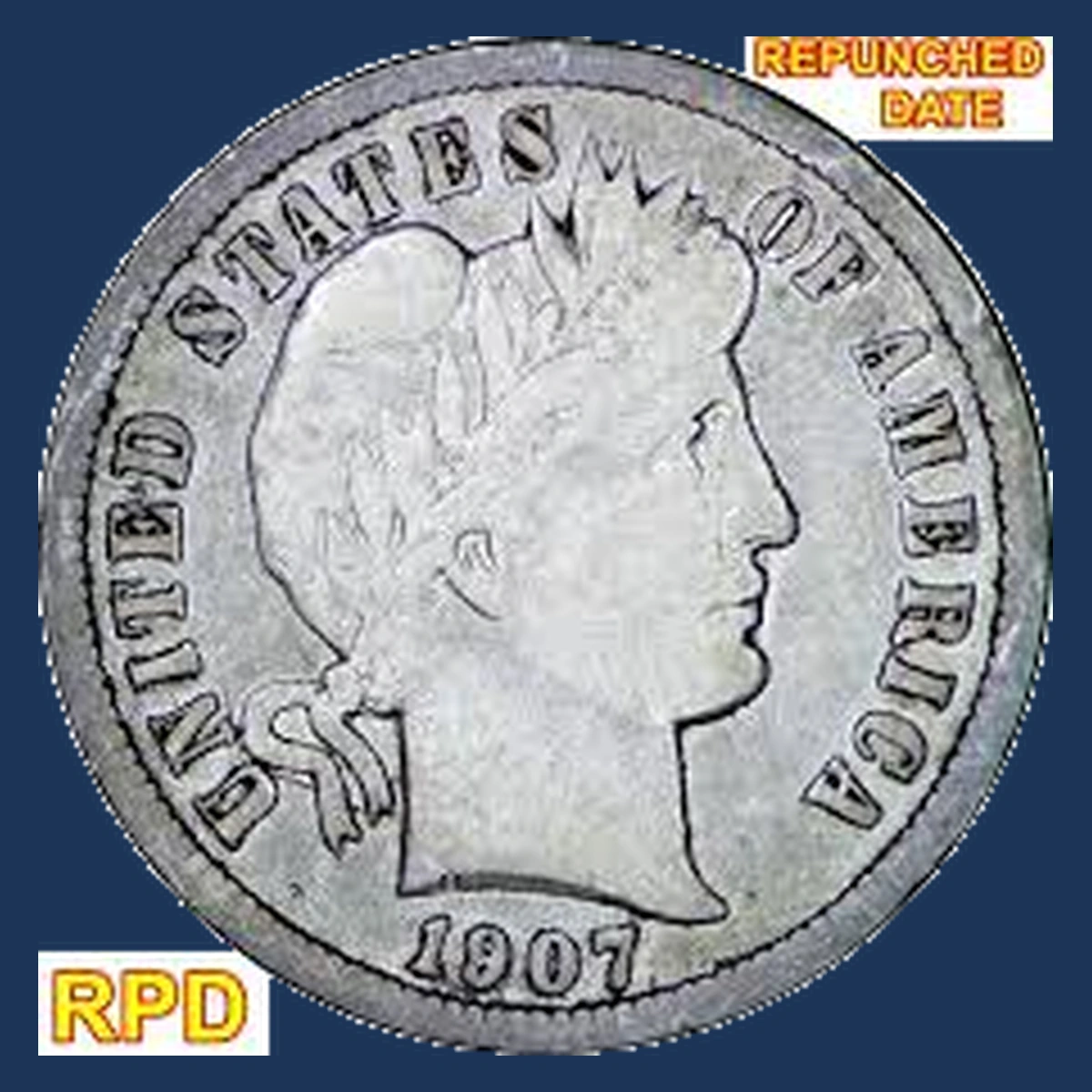
Extra raised detail beside the knob of 9 and inside 0 forms the recorded Philadelphia RPD-002 pattern. Heritage described both features on an ANACS AU50 example.
They came from repeated placement of the date punch near its proper position on the steel stamping tool. Coins made by that tool could repeat the remnants.
Denver and San Francisco date repunching are also reported. Their specific patterns need separate comparisons rather than the Philadelphia photograph.
The misplaced San Francisco digits down in the border are different. Here, the earlier numeral pieces remain beside or within the normal date characters.
Estimated Value
The Philadelphia ANACS AU50 RPD-002 sold for $79 on March 4, 2024. Estimated values of $30–$800 cover circulated through lower unworn examples across the reported mints.
The $79 result applies to that Philadelphia variety in lightly worn condition. It does not price every Denver or San Francisco date variety.
A stronger coin with clear matching remnants can justify more. Unidentified doubled-looking lines should not inherit the same variety allowance without a proper comparison.
How to Identify
Identify the mint first: no mintmark means Philadelphia, while D or S selects another comparison. Inspect edge grooves and use a scale and calipers against 2.50 grams and roughly 17.9 millimeters.
The coin is 90-percent silver. On Philadelphia RPD-002, a 10× magnifier should show a trace on the right side of the 9’s knob and inside the left of 0.
Change the light to separate rounded remnants from flat, shaved-looking shelves. Keep both features clearly visible together in photographs.
The paired match at 9 and 0 establishes this Philadelphia pattern more securely than one extra line at a single numeral.
6. 1907-D Barber Dime Uncentered Broadstrike (Estimated Up to $900)
The design sits unevenly inside a widened disc on the Denver coin described in Jim’s Coins’ catalog. It was graded Good, indicating substantial wear, and reported without edge grooves.
The coin was struck without normal restraint from the collar, the ring that controls width. Metal spread outward but could still hold the entire design.
That makes an uncentered broadstrike different from an off-center coin that loses part of its design. The wide margin alone cannot decide between them.
On a heavily worn coin, a smooth edge also needs care. Wear or later filing can remove grooves.
Estimated Value
Recognizable circulated 1907-D broadstrikes have an estimated value of $100–$900. A heavily worn Good example normally belongs below an attractive, lightly worn coin.
The catalog gives a reported identity without a sale price used here. A different 1904-S broadstrike graded NGC AU55 sold for $460 in 2007.
That older result offers context, not an exact price for the Denver coin. Its San Francisco mint and better condition limit the direct comparison.
How to Identify
Follow surviving border details on both sides before relying on a smooth edge. The complete intended design should remain represented even when it sits unevenly within expanded metal.
View the edge from the side with a 10× magnifier. Filing tracks or abrasion around the circumference suggest a later change.
Confirm the D below the wreath bow and measure the outline in several directions with calipers. Compare with the normal 17.9 millimeters and use a scale against 2.50 grams for the 90-percent-silver coin.
Complete design on naturally expanded metal supports broadstriking; absent edge grooves alone cannot separate collar failure from heavy wear or grinding.
7. 1907 Barber Dime Off-Center Strike (Estimated Up to $2,500)
The bottoms of 07 are affected on the Denver AU55 struck 20 percent off center toward five o’clock. Parts of the last letters in AMERICA are also lost at the boundary.
Those visible features explain the recorded shift. The disc was partly outside the stamping tools when they struck it.
A separate Philadelphia AU55 is reported ten percent off center toward seven o’clock. Its direction and amount belong to that coin.
Other mint reports cannot inherit these measurements or photographs. Matching the lost details with the surviving blank area gives each specimen its own physical description.
Estimated Value
The Denver PCGS AU55 sold for $1,207.50 on September 11, 2004. Collectible circulated to lightly worn examples have an estimated value of $400–$2,500.
Mint, condition, displacement, and surviving date detail all affect value. The Philadelphia ten-percent dealer report has no completed auction price assigned here.
A readable year remains useful even if part of its digits is affected, as on the Denver coin. The percentage alone is not a price guide.
How to Identify
Record weight and size with a scale and calipers before judging the shifted design. The normal 90-percent-silver dime starts at 2.50 grams and about 17.9 millimeters.
Inspect the altered outline and surviving edge grooves through a 10× magnifier for grinding or stretching. Then hold Liberty upright and compare the actual missing details.
On the Denver AU55, check the lower parts of 07 and the final AMERICA letters against the five-o’clock shift. The Philadelphia example needs its separate seven-o’clock comparison.
Corresponding lost details on both faces beside original blank metal establish the displacement more directly than a cropped picture of a blank crescent.
Conclusion
Estimated values of $20–$2,500 cover small raised defects through clearly displaced 1907 strikes. A clipped outline, expanded disc, and missing design each need a different physical explanation.
For the smaller varieties, keep the mint with the close-up. Philadelphia’s extra date lines, San Francisco’s misplaced digit tops, and New Orleans’ earlier O have their own matching features; one unusual bump cannot identify all three.