1913 Dime Error List with Pictures

A 1913 Barber dime struck about 15% off center brought $431.25 in January 2004. The shift left an empty crescent beside Liberty’s displaced design.
This 1913 dime error list includes documented examples and reported categories whose individual coins need examination. Estimated whole-coin values range from $20–$1,500.
See how the date, wreath, edge, and original metal help distinguish these features from wear or later damage.
1. 1913 Barber Dime Lamination or Peeling Alloy
A thin layer can lift from the surface when the silver alloy contains an internal weakness. If the metal falls away, it may leave a shallow, irregular patch instead.
This is called lamination. Auction listings describe a 1913 Barber dime graded ICG MS62 with the flaw, meaning no circulation wear but noticeable marks.
The listed title has no mint suffix, and the reverse should confirm the mint identity. The available description does not locate the peel on either face, so the coin’s actual layer boundary matters more than an assumed position near the portrait or wreath.
Estimated Value
A June auction listing records a $100 winning floor bid for the ICG MS62 lamination dime. That figure is the bid rather than an assumed total including buyer fees.
Estimate $30–$250 for comparable modest laminations on Philadelphia Barber dimes. An intact layer with visible original design can show the process clearly.
A small missing patch, cleaning, or corrosion changes the comparison. Look at the surviving surfaces and the natural separation rather than the size of the rough area alone.
How to Identify
A loose silver dime normally weighs 2.50 g, but a missing layer may lower the reading on a scale. An attached flap can leave the weight near normal, so photograph it without lifting or probing the metal.
Under a 10× magnifier and side lighting, follow the layer boundary into sound silver. Look for original struck detail continuing onto the separated metal, rather than sharp scrape lines through the finished surface.
Keep both faces in the photographs to establish the flaw’s location and check for S below the wreath bow. A natural internal separation meeting the surrounding design explains lamination better than weight alone, a stain, or an unexplained rough patch.
2. 1913 Barber Dime Struck Through Debris or Filled Detail
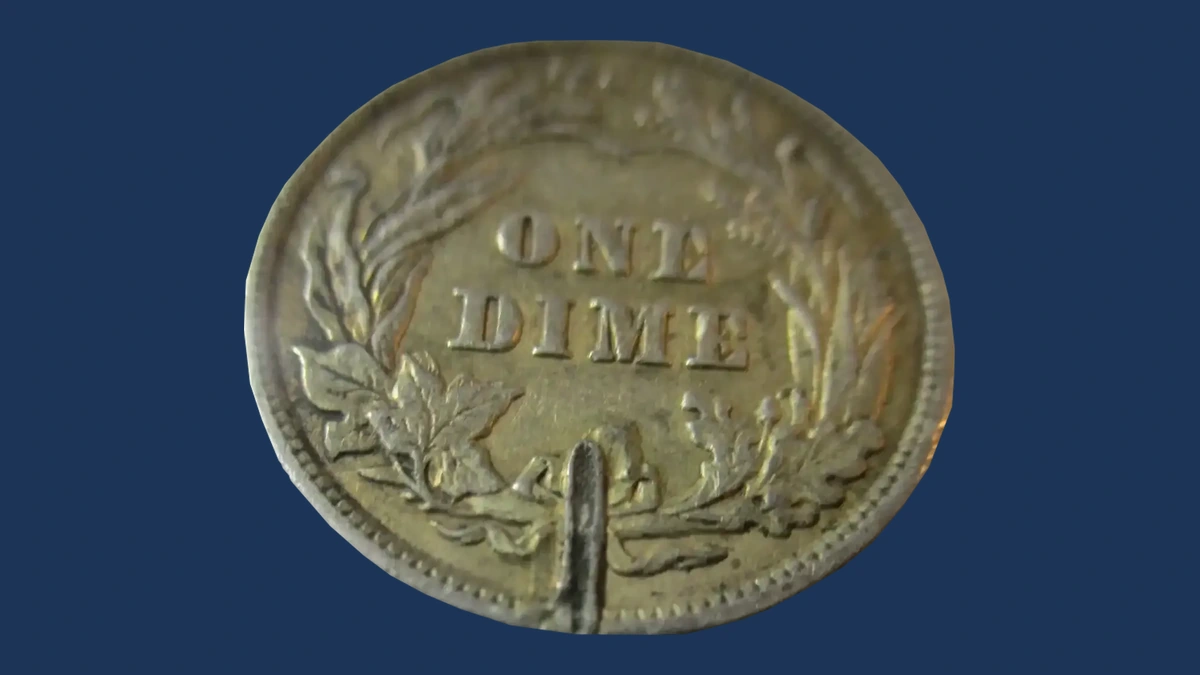
A piece of material caught during striking can leave a depression or an area where the design did not fully form. Grease packed into a tool’s small details can instead leave weak or missing letters.
Year lists report both debris and grease effects for 1913 Barber dimes. They do not establish the same object, the same location, or one shared specimen.
The affected design must be examined directly. A dent, scratch, weak strike, or ordinary wear can also interrupt detail, so look closely at the edges of the affected area.
Estimated Value
For a confirmed localized filled-detail effect on a Philadelphia example, estimate $20–$100. A more distinctive debris impression fits an estimated $40–$300 comparison with similar Barber dime strike-throughs.
The ranges concern whole coins with original features, not a price for every weak letter. Larger clear impressions can be easier to display, while rough surfaces or later scraping reduce appeal; the scarcer San Francisco issue also needs its normal date-and-grade value considered separately.
How to Identify
Choose the visible feature first: a hollow with a defined boundary, or a weak patch of letters. That difference helps decide whether solid debris or filled tool detail is a sensible explanation.
For a hollow, use a 10× magnifier to inspect its sides for pushed-up lips and cutting marks. Those can point to a later dent or scratch.
For missing letters, compare nearby high details and the smooth background. General wear can soften many parts together, while cleaning may leave directional scratches.
Compare the affected area with clear details beside it. A localized gap surrounded by sharp lettering deserves a closer look, while broadly flattened detail may simply show wear.
3. 1913 Barber Dime Reported Die Crack or Rim Break Candidate
A raised line can form when metal enters a crack in a die, the steel stamping tool. A larger broken portion at the tool’s edge can leave a raised lump joined to the coin’s rim.
That rim-connected break is called a cud. It differs from a narrow crack and from an isolated small bump.
Year guides discuss these as possible 1913 Barber dime errors, without establishing a specific matching specimen. They therefore need examination as candidates, with no fixed line path or rim position assigned to all coins of this date.
Estimated Value
If a genuine small die crack is identified on a Philadelphia coin, estimate $20–$150. A clear rim-connected cud supports a higher conditional estimate of $100–$500, using comparable Barber silver-dime breaks.
The coin’s preservation and underlying date value remain part of the total. A San Francisco example needs its scarcer normal-coin value considered too, while solder, impact damage, or an unrelated rim lump would not qualify for a genuine tool-break premium.
How to Identify
A narrow raised line and a large rim-connected lump need different comparisons. Use side lighting and a 10× magnifier to see whether the feature rises naturally from the coin.
For a line, examine both sides. A scratch can leave a raised lip beside a hollow, making one edge look like a tool crack.
For a suspected cud, follow the lump all the way to the rim. An isolated bump does not meet that requirement.
Look for solder, impact marks, or metal squeezed upward by later damage.
Photograph nearby letters and portrait or wreath details as fixed landmarks. A natural continuous ridge or a genuine rim-connected break must be visible before either error name fits.
4. 1913 Barber Dime Reported Doubled Front Design
Extra rounded outlines on the date or LIBERTY could reflect a doubled design in the stamping tool. Coins from such a tool repeat the feature without needing a second accidental strike.
Front doubling has been reported for 1913 Barber dimes. On a possible example, begin with the date below the portrait and LIBERTY on the headband, where extra outlines may be easier to see.
No precise doubling direction or catalog number is established for the reported coin. The important question is whether several actual details show a matching second outline, rather than mere thickness or flat strike-movement shelves.
Estimated Value
For an identified minor doubled-front Philadelphia variety, estimate $40–$600. This is a comparison range for collectible doubled designs on silver dimes, not a verified transaction for the year page’s example.
The strength of separation and the condition of the date and headband lettering can affect appeal. A sharper repeated outline is easier to demonstrate than a thick letter, and a normal high-grade coin’s price should not be mistaken for the added value of doubling.
How to Identify
Use a photograph showing Liberty’s whole head and the date before enlarging individual letters. Find LIBERTY on the headband, then compare the letter edges with the date digits below.
With a 10× magnifier, compare the date digits and headband letters with a normal same-design coin. Look for rounded repeated edges or split corners in several related places.
Turn the light rather than relying on one bright photograph. A reflection can imitate an extra line, and a flat, lowered shelf may come from movement during striking.
Keep the proposed pattern tied to the features actually present on this dime. Several consistent extra outlines are needed; one thick digit does not identify a particular doubled tool.
5. 1913 Barber Dime Reported Repunched S Mintmark
The S mintmark lies below the reverse wreath’s bow. A second curved stroke near it could have formed if the mintmark punch entered the stamping tool again in a slightly different position.
This is the mechanism called a repunched mintmark. A year-specific page discusses a 1913-S example but does not establish a securely matched numbered variety.
The extra stroke therefore needs to be shown on the actual coin. A normal S shape, a scratch, or flat doubling from movement during striking can look like a repeated letter in an enlarged photograph.
Estimated Value
A conditional whole-coin estimate of $75–$1,000 applies to a 1913-S dime with an identified repunched S, across worn and attractive higher-grade examples. The San Francisco date already has collector value without the error.
Use that normal date-and-condition value as the starting comparison, then consider the visible mintmark pattern. A tiny possible stroke cannot justify the same price as a sharply matched, well-preserved variety, and no invented catalog number should increase its apparent importance.
How to Identify
The relevant letter is the S directly below the reverse wreath bow. Begin with a full reverse photograph, then enlarge the mintmark without losing its position among the nearby design.
Through a 10× magnifier, trace the main S and the suspected extra curve. Compare them with a securely identified example, checking whether the smaller stroke fits a second S shifted from the first.
Change the light direction to rule out a reflection and inspect the extra stroke’s height. A genuine rounded outline should remain consistent, while a low, flat shelf or a wide normal letter does not establish the reported repeated punch by itself.
6. 1913 Barber Dime Off-Center Strike
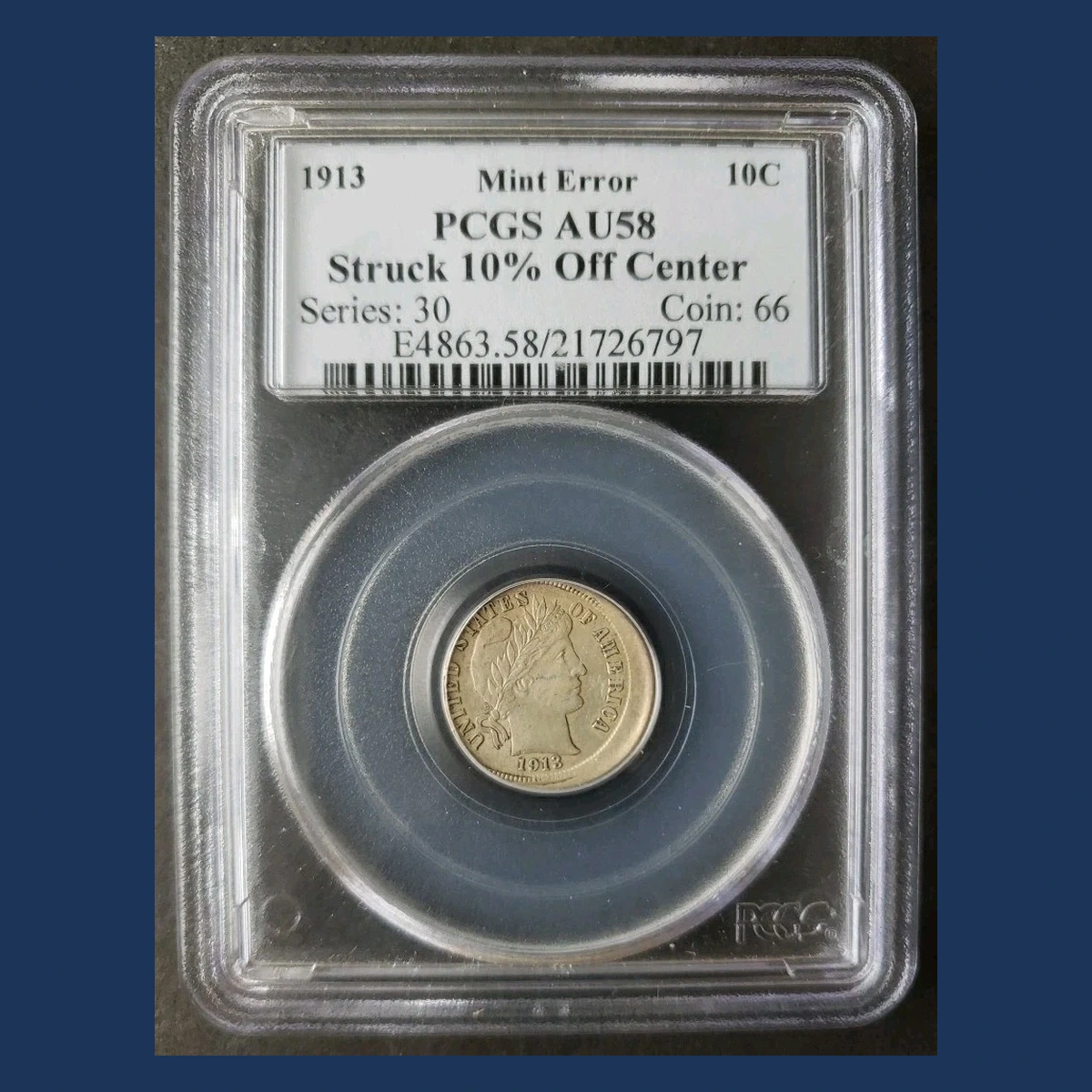
A blank struck away from its intended position receives only part of the design. An empty crescent remains opposite the area where the image falls beyond the metal.
A photographed Philadelphia PCGS AU58 example is 10% off center toward 9 o’clock. A separate ANACS AU50 dime is about 15% off center toward 1 o’clock.
Another 10% example was graded with cleaning, and its identity should not be assumed to match the AU58 coin. Year guides also report 25% and 50% examples without establishing their mintmarks or directions, so those details need their own photographs.
Estimated Value
The 15% off-center ANACS AU50 dime sold for $431.25 in January 2004. AU50 means light wear with much of the original design still clear.
Estimate $150–$1,200 for genuine dated 1913 off-center examples, with mint, displacement, and condition affecting the total. A cleaned coin needs a different surface comparison, and a larger reported percentage does not automatically make its coin more valuable than an attractive, smaller shift.
How to Identify
Identify the first missing part of the design and the empty metal opposite it. With a 10× magnifier, inspect whether the unstruck crescent retains original texture rather than grinding marks.
Compare full views of both faces. A shifted front tool alone can make an uneven rim without placing both designs off the blank.
For a loose candidate, a scale can compare the usual 2.50 g weight, while calipers record the outline against 17.91 mm. An off-center strike can keep all the blank’s metal.
The documented 10% and 15% coins have different directions. Keep the readable date, mintmark area, and two-sided displacement together when matching a particular example.
7. 1913 Barber Dime Reported Strike Through a Capped Tool
A coin that sticks to a stamping tool can cover it and act as a barrier during later strikes. Collectors call the stuck coin a die cap.
A later blank struck through that cap may show softened or distorted detail on the affected face. Its opposite face can remain much clearer.
The 1913 year report includes this category without establishing which face was covered or how developed the cap was. The dime being examined is the coin struck through the barrier, not automatically the cap itself, and general wear can also make one face look weak.
Estimated Value
If an ordinary-strike 1913 Barber dime is identified as struck through a cap, estimate $250–$1,500. This conditional range compares recognizable capped-tool effects on similar silver dimes, rather than a confirmed 1913 auction result.
The contrast between affected and unaffected design helps collectors understand the process. A weak-looking face alone proves little, especially on a worn coin.
Prices for special collector coins or scarce dates should not be applied automatically. Establish the actual coin’s identity before making that comparison.
How to Identify
Take full photographs of both faces before concentrating on the soft-looking area. Compare how the design formed, rather than assuming one face with more wear was struck through a cap.
A 10× magnifier can show scratches or flattened high points caused by grinding and polishing. Check the edges of the weakened design for those signs of later damage.
Keep the date readable in the same photograph.
On the reverse, establish whether there is an S below the bow or no mintmark, as on ordinary Philadelphia coins. That identifies which normal design should be compared.
The softened area must fit the rest of an original strike. A vague smooth portrait alone does not show that a stuck coin covered the stamping tool.
Conclusion
The estimated $20–$1,500 range covers small surface flaws through more dramatic striking errors. A reported category still needs the same careful examination as a coin offered with an auction history.
Begin with the date and mintmark, then follow the feature that makes the coin unusual. Clear photographs of both faces help keep a real lamination, displaced strike, or repeated letter separate from ordinary wear and damage.