1917 Dime Error List with Pictures

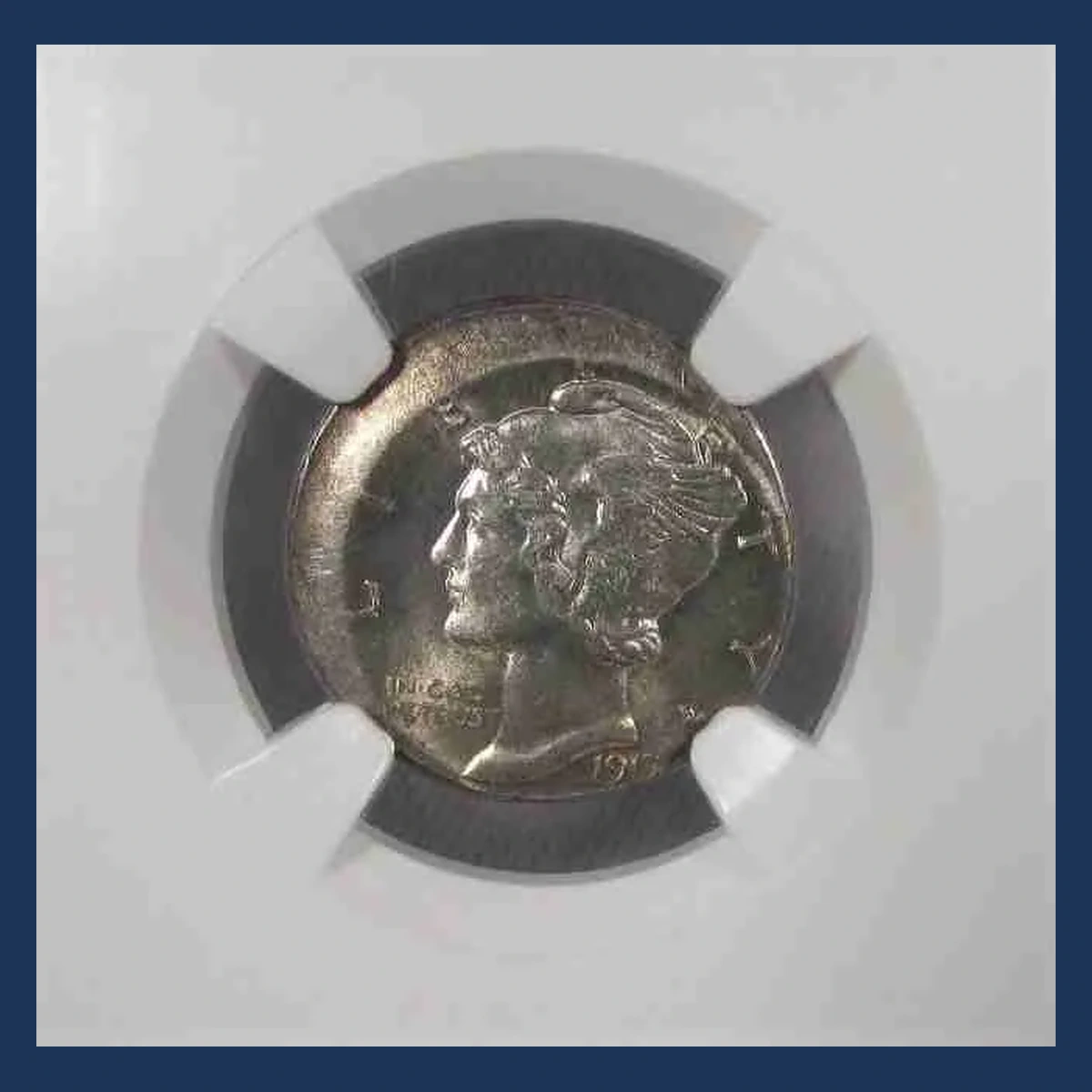
A wide 1917-D Mercury dime sold for $1,233.75 in June 2014. Its designs stayed complete even though the metal spread beyond the usual size.
Other 1917 dime errors have missing letters because the strike landed partly off the blank. Estimated values for the two types range from $150 to $5,000.
Read on to compare both faces and see why a wide rim alone does not identify the error.
1917 Mercury Dime Off-Center Strike (Estimated Up to $1,500)
Part of ER in LIBERTY is missing on a known 1917-S dime. The strike landed 10% off center toward 1 o’clock, while the S mintmark survived.
The blank sat partly outside the dies, the steel tools that stamp coins. Some design missed the metal, and part of the blank received no design.
A separate MS62 example is reported as 12% off center. Its mint and measurements should not be borrowed from the San Francisco coin.
Check both faces for incomplete designs beside untouched metal. A broadstrike instead keeps its full designs inside an expanded outline.
Estimated Value
Estimate $150–$1,500 for genuine examples, depending on the shift, readable date, mint, and condition. The 1917-S graded PCGS AU58, meaning slight wear, went unsold in May 2004.
A different-year 1919 dime struck 10% off center sold for $612.44 in June 2026. Its PCGS MS64 grade describes an unworn coin with some marks.
It also had Full Bands: clear separation in the bands around the central bundle on the back. That is strike detail, not another error.
How to Identify
Read the 1917 date first. Through a magnifier, follow the boundary between the stamped design and untouched crescent on both faces.
Missing letters should fit the same shifted strike. Grinding away a finished design can leave an empty area, but it also damages the surface.
Check beside the lower part of the bundle on the back for the mintmark. The known San Francisco coin retains its S.
A missing letter cannot prove Philadelphia if that area never received a strike. Compare weight with the normal 2.50 grams and use calipers against the usual 17.9 mm width.
Inspect remaining edge grooves for filing or impact marks. Begin by finding corresponding blank crescents and incomplete designs on both faces.
1917-D Mercury Dime Broadstrike (Estimated Up to $5,000)
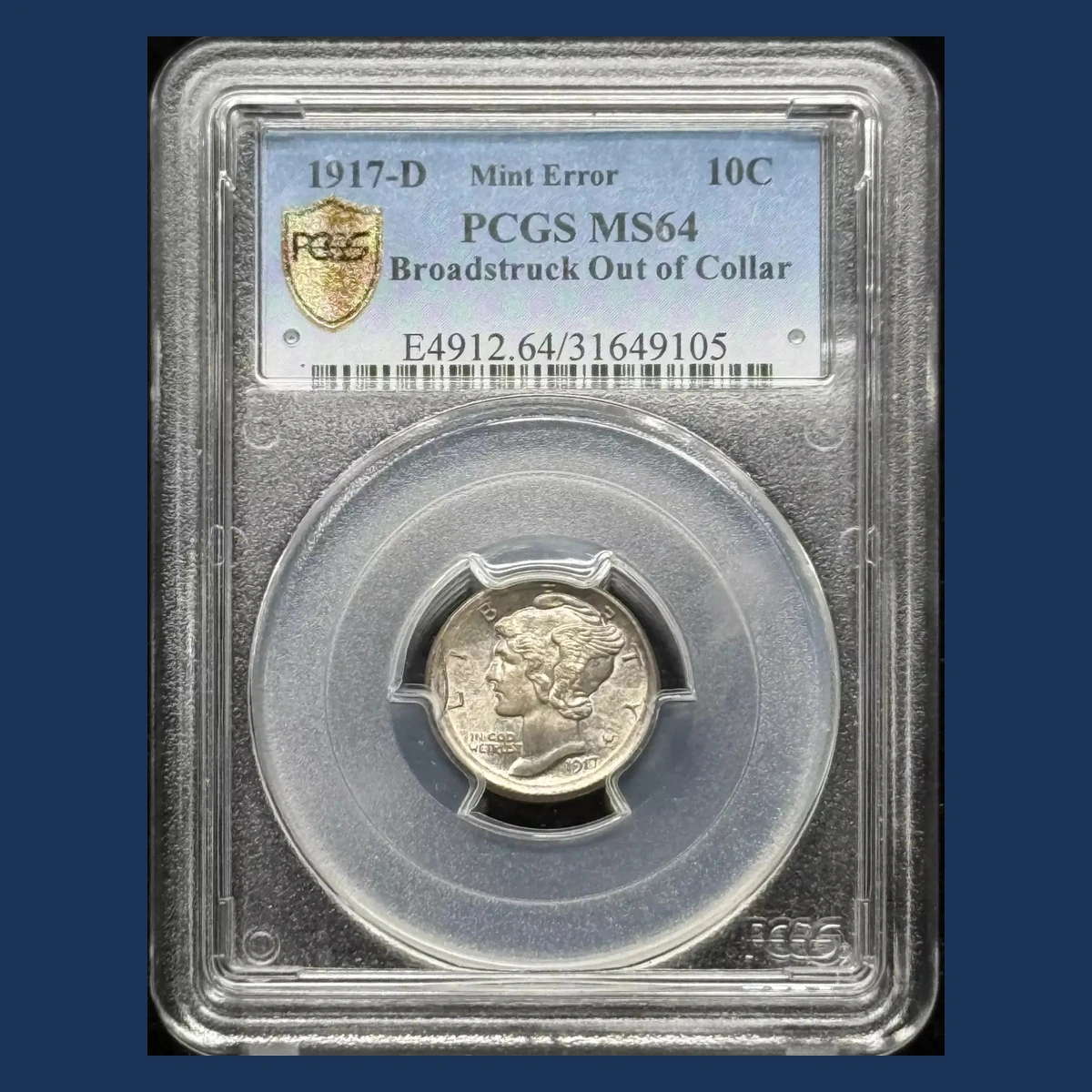
All the main design remains on this wide 1917-D dime. Its flat border is broad and uneven around the picture.
During stamping, a metal ring called the collar normally limits the coin’s width. Without that restraint, silver can spread farther outward.
This is a broadstrike. Unlike an off-center strike, it does not require part of the design to miss the blank.
The dealer’s coin is graded PCGS MS65. A separate auction coin was graded NGC MS65 Full Bands, so its service and extra designation belong to a different specimen.
Both show why width and complete designs should be checked together.
Estimated Value
Estimate $250–$5,000 for genuine Denver broadstrikes, from worn or modest examples to attractive unworn coins. The NGC MS65 Full Bands brought $1,233.75 in June 2014.
The separate PCGS MS65 appears in a GOVMINT listing at $4,995. That is an asking price, not a completed sale.
MS65 means unworn with good surfaces. The amount of spreading and overall appearance also matter; the dealer’s price does not value every broadstrike.
How to Identify
Find the D beside the lower part of the bundle on the back. Then follow the outer lettering on both faces to make sure the designs remain complete.
Use a magnifier to inspect the wide border. Flattening a finished coin can also enlarge it, but usually crushes details or leaves pressure marks.
Measure the widest part with calipers against the usual 17.9 mm. A broadstrike can exceed that width without losing metal.
Weigh it against the normal 2.50 grams for this 90% silver dime. Examine the edge for missing or incomplete grooves, which the collar normally makes.
The quickest check is complete, uncrushed designs inside metal that spread beyond the normal outline.
Conclusion
A wide rim is only the starting clue on a 1917 dime. A broadstrike keeps the complete designs, while an off-center strike leaves missing design beside untouched blank metal.
Estimated values range from $150 to $5,000. Check both faces and the mintmark, then compare condition with the right specimen; an asking price and a completed auction sale are different kinds of evidence.