1919 Dime Error List with Pictures

A small patch of doubled letters helped one 1919 dime sell for $7,800 at auction in 2018. The extra lines appear in IN GOD WE TRUST, while the date looks normal.
This 1919 dime error list covers seven types, with estimated values from $20 to $10,000. Some involve damaged dies; others involve the metal blank or its position during striking.
Start with the photos and simple checks below to see which type matches your coin.
1. Reported 1919 Mercury Dime Spiked Head Die Crack (Estimated Up to $150)
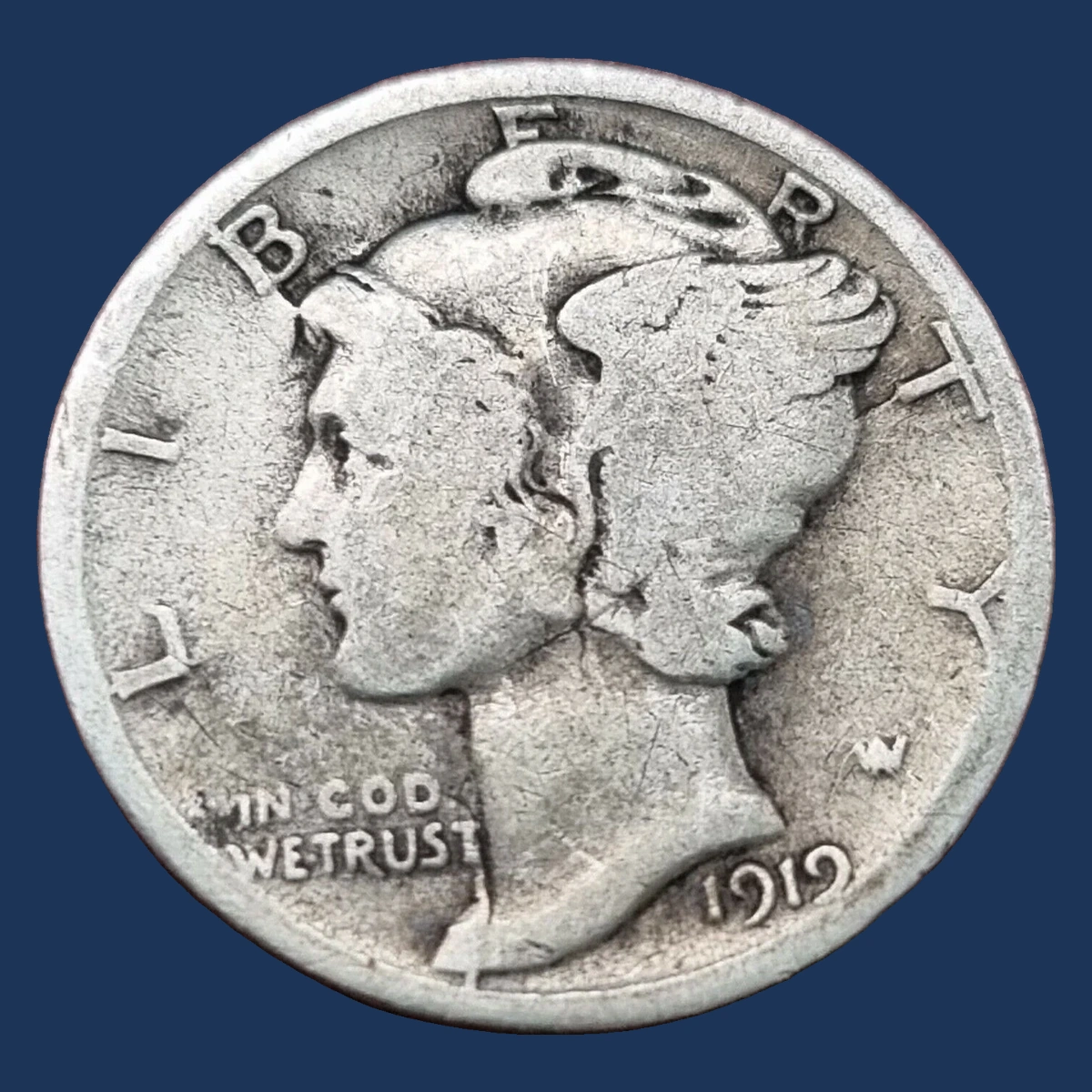
A raised line near the top of Liberty’s head can look like a small spike. That appearance gives the reported Spiked Head die crack its name.
The die is the steel tool that stamps the coin’s design. If it cracks, silver can enter the narrow opening during a strike.
That leaves a ridge on the coin. It is the opposite of a scratch, which cuts into the surface.
This report concerns Philadelphia dimes. It gives no exact route for the line, so do not expect every example to match another year’s photograph.
Estimated Value
Expect about $20–$150 for a genuine example, from a worn coin to one with little or no wear. This is an estimate based on similar Mercury dime cracks, not a recorded Spiked Head sale.
The crack’s visibility matters. A clear raised line is easier to show and study than a faint mark.
Condition still counts. A very high-grade dime may sell for more because of its surfaces, even when the crack adds little.
How to Identify
Start near the top of Liberty’s head. Use a loupe, or small magnifying glass, and move the light across the line.
A die crack rises above the surface. A scratch sinks into it, while a loose hair or dirt may only look raised.
Check the full coin too. This report concerns a Philadelphia Mercury dime, which has no mintmark on the reverse.
A normal example weighs 2.50 g and measures 17.9 mm across. Use a scale and calipers on a loose coin, and inspect the grooves around its edge.
Start by checking that the line near the upper portrait stands above the surface.
2. Reported 1919 Mercury Dime Obverse Lamination (Estimated Up to $350)
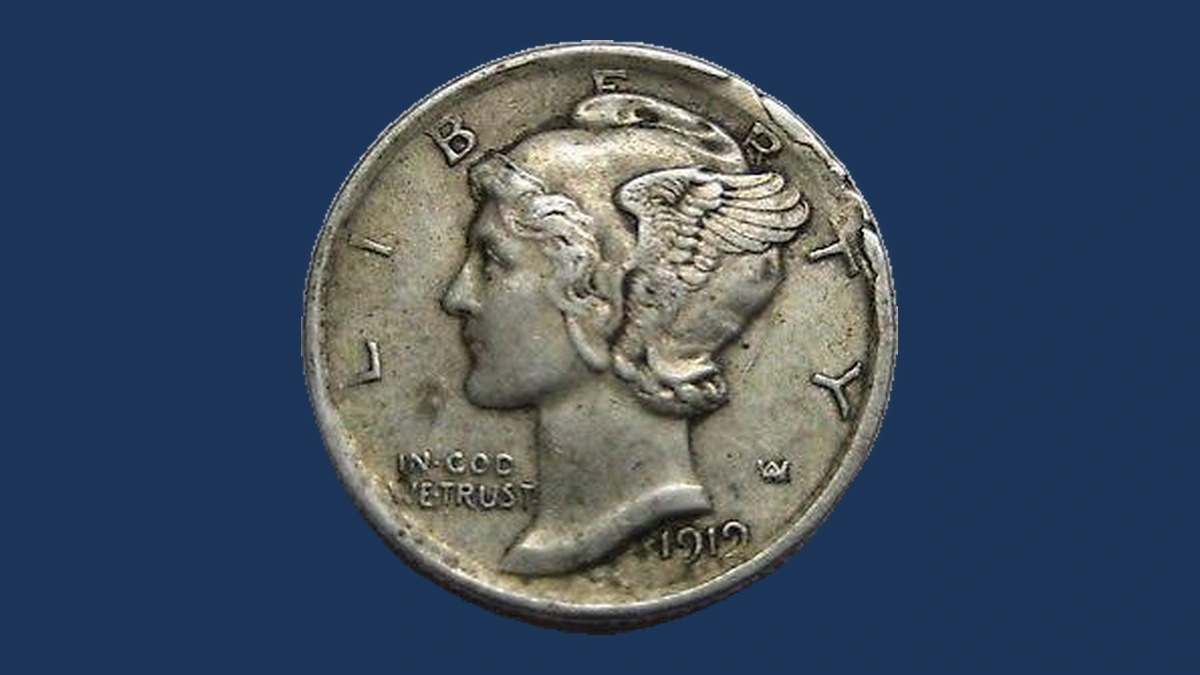
A thin piece of silver can peel away from a dime’s surface. Collectors call this a lamination error.
The weakness starts inside the metal blank, before or during production. A layer may lift like a flap or break away completely.
The 1919 report describes peeling on the front of a Philadelphia dime. It comes from a seller’s listing, with no certified grade or exact location given.
This coin contains a solid silver-copper alloy. It has no modern outer clad layer, and a small peel does not mean the whole dime split in half.
Estimated Value
A useful estimated range is $25–$350. A small peel on a worn dime belongs near the lower end; a larger, clear feature on a clean coin can bring more.
A dealer asked $115 for a 1937 MS66 Full Bands lamination dime. Full Bands means clear separation of the bands across the back’s rods.
Use it as a rough comparison. The size of the peel and the coin’s condition still need to match.
How to Identify
Look closely at the edge of the peeling area. A loupe and light from the side can reveal a thin layer lifting from the metal beneath it.
Do not pull the flap. It is part of the coin, and disturbing it can cause more metal to fall away.
A scrape often leaves tool marks instead of a natural layer. Dirt, corrosion, and a different color alone do not prove lamination.
Check the grooved edge for a continuing split. A scale and calipers can compare a loose coin with the normal 2.50 g weight and 17.9 mm diameter.
Find a thin layer continuing beneath intact silver; that is the best first clue.
3. 1919 Mercury Dime Struck Through Debris (Estimated Up to $500)
Debris caught between a die and a blank can block part of the design. The coin may show a shallow dent or a patch of missing detail.
This is called a struck-through error. It happens during the strike, unlike a scrape made after the coin leaves the Mint.
GreatCollections listed a 1919 Philadelphia dime with this error in an ANACS F12 holder. That grade describes a coin with noticeable wear.
The listing calls the obstruction debris but does not name the material. There is no reason to assume it was wire, cloth, or grease.
Estimated Value
Estimated values run from $40–$500. Smaller marks on worn coins usually bring less than large, clear impressions on better-preserved dimes.
The ANACS F12 auction listing confirms an example, but no final price is used here. The range comes from similar silver-dime errors.
Focus on the mark itself. Guessing what caused it adds no value, and an ordinary dent should not receive a mint-error premium.
How to Identify
Compare the strange patch with the design around it. A struck-through area may interrupt otherwise clear details without leaving the sharp burrs of a later gouge.
Use a loupe and light from several angles. Scratches, corrosion, and impact damage can also remove detail, so a dent alone is not enough.
For the auction coin, match the complete front, back, and grading label with the listing’s photographs. Do not borrow an error’s location from a different dime.
A normal coin weighs 2.50 g, measures 17.9 mm, and has a grooved edge. A scale and calipers help check a loose example.
First rule out a fresh gouge: the nearby struck surface should remain undisturbed.
4. 1919 Mercury Dime Clipped Planchet (Estimated Up to $1,200)
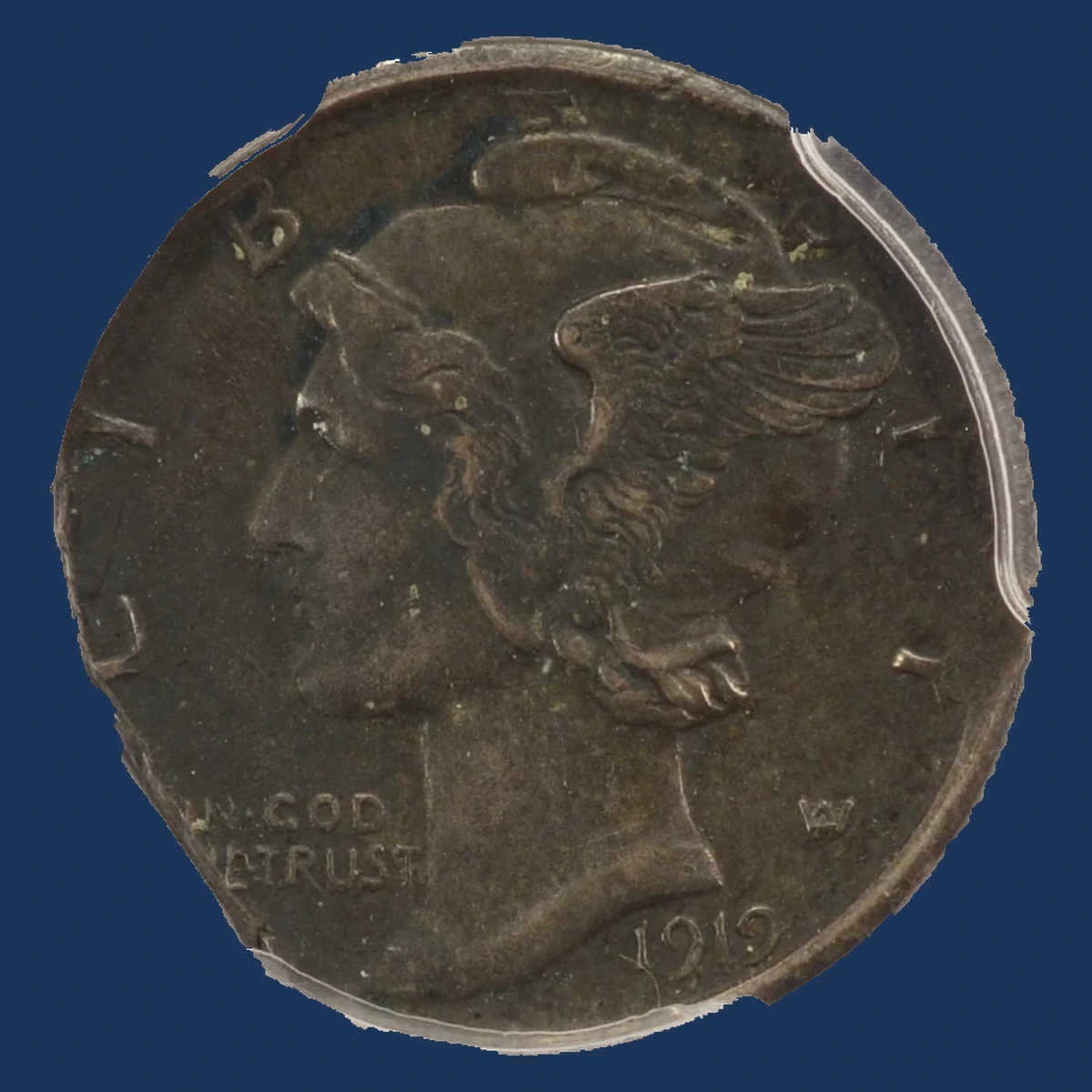
One 1919 dime combines two mistakes. Its blank has a twelve-percent straight clip, and the metal also spread during striking.
Sullivan Numismatics lists this Philadelphia coin in a PCGS MS63 holder. The grade places it in Mint State, with no circulation wear.
The straight section was missing before the coin was struck. This can happen when the blanking punch crosses the edge of the metal strip.
The later spread is a broadstrike, explained below. Both features belong to the same coin; the twelve-percent figure describes its missing metal, not every 1919 clip.
Estimated Value
The PCGS MS63 combination coin has a $1,000 asking price. That is one price for both the clip and broadstrike, not a completed auction result.
Estimate $100–$500 for ordinary genuine clips. A pleasing combination like the dealer’s coin can fit a higher $700–$1,200 range.
Do not add the two error ranges together. The buyer receives one coin, and its surfaces, missing section, and overall appearance determine its total value.
How to Identify
Inspect both ends of the straight gap with a loupe. The nearby design and rim should show that the missing section was already there during striking.
A filed edge may cut through finished grooves and leave parallel scratches. Low weight alone cannot tell a genuine clip from later cutting.
Look at the opposite rim too. It may be weak because the incomplete blank did not form its rim normally.
A standard dime starts at 2.50 g and 17.9 mm. Use a scale and calipers, remembering that this example also spread during striking.
At the gap, check whether the strike formed around missing metal or a later cut removed finished detail.
5. 1919 Mercury Dime Broadstrike (Estimated Up to $1,500)
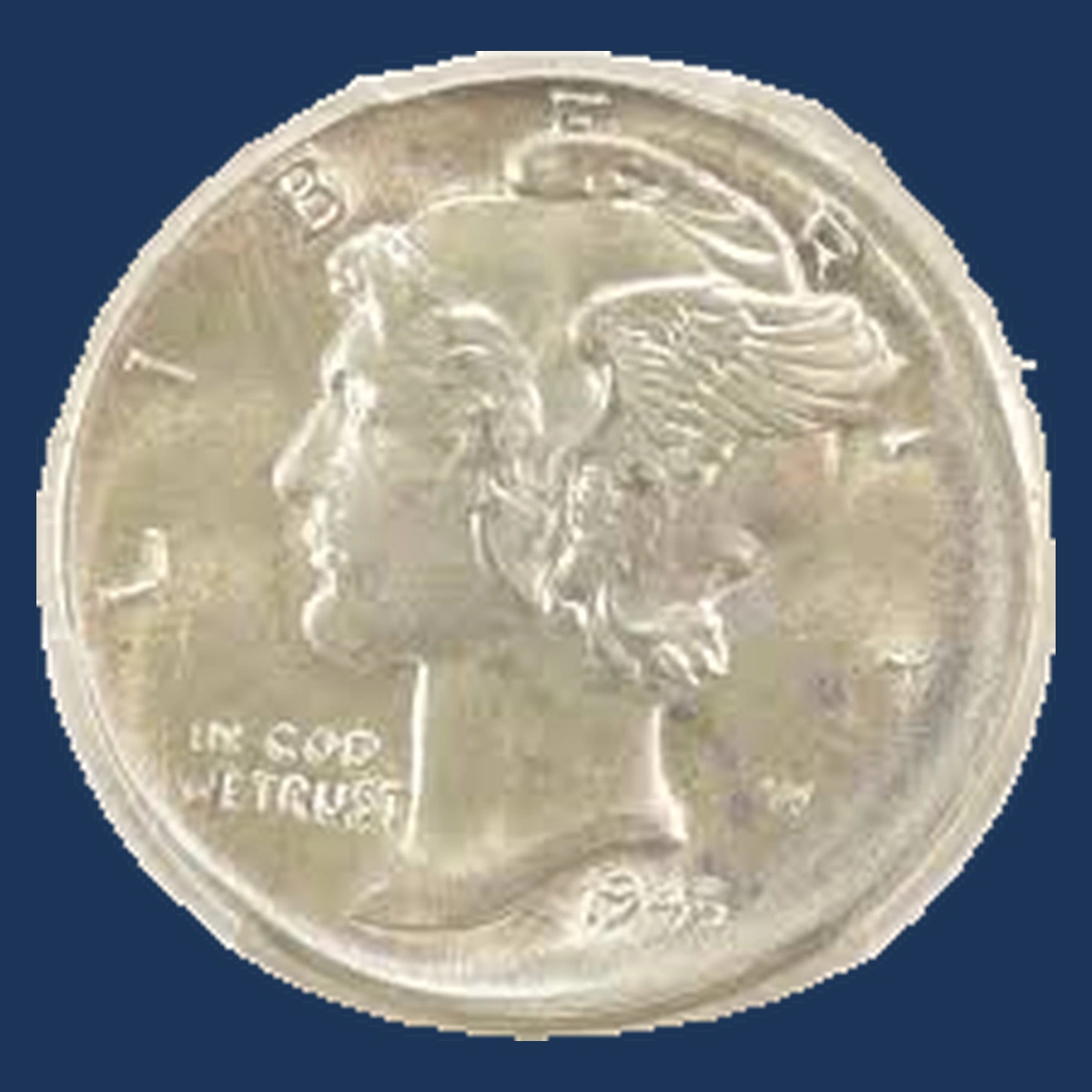
The collar is the metal ring that controls a coin’s size during striking. When it fails to hold the blank, the metal can spread outward.
That produces a broadstrike. The extra width may be uneven, leaving a much larger blank border on one side.
Heritage listed a 1919 PCGS MS64 example with a wide blank arc at the right. Its description also notes the affected bottom of the last 9.
Judge the whole outline, not that digit alone. A separate MS63 example has both broadstriking and a straight clip, showing that two mistakes can affect one blank.
Estimated Value
Allow an estimated $250–$1,500 for Philadelphia broadstrikes, depending on condition and how clearly the metal has spread. Original surfaces and a striking shape can improve the price.
The $1,000 MS63 clip-and-broadstrike offering provides a same-year comparison. Its asking price includes both errors.
The Heritage MS64 is another documented example, but no sale price is used here. Neither record supports adding a full clip value to a full broadstrike value for the same coin.
How to Identify
Check both designs and the entire edge. A wide border on one side does not by itself prove broadstriking.
The Heritage MS64 example is described as an uncentered broadstrike. Compare its spread-out shape instead of judging only the weak bottom of the last 9.
With a loupe, look for natural metal flow and areas where the collar failed to form normal edge grooves. Hammering a finished coin can also make it wider, but usually flattens existing details.
Use calipers against the normal 17.9 mm and a scale against 2.50 g. Account for any missing clip separately.
Check the extra width and unfinished edge together before treating an uneven border as an error.
6. 1919 Mercury Dime Off-Center Strike (Estimated Up to $2,000)
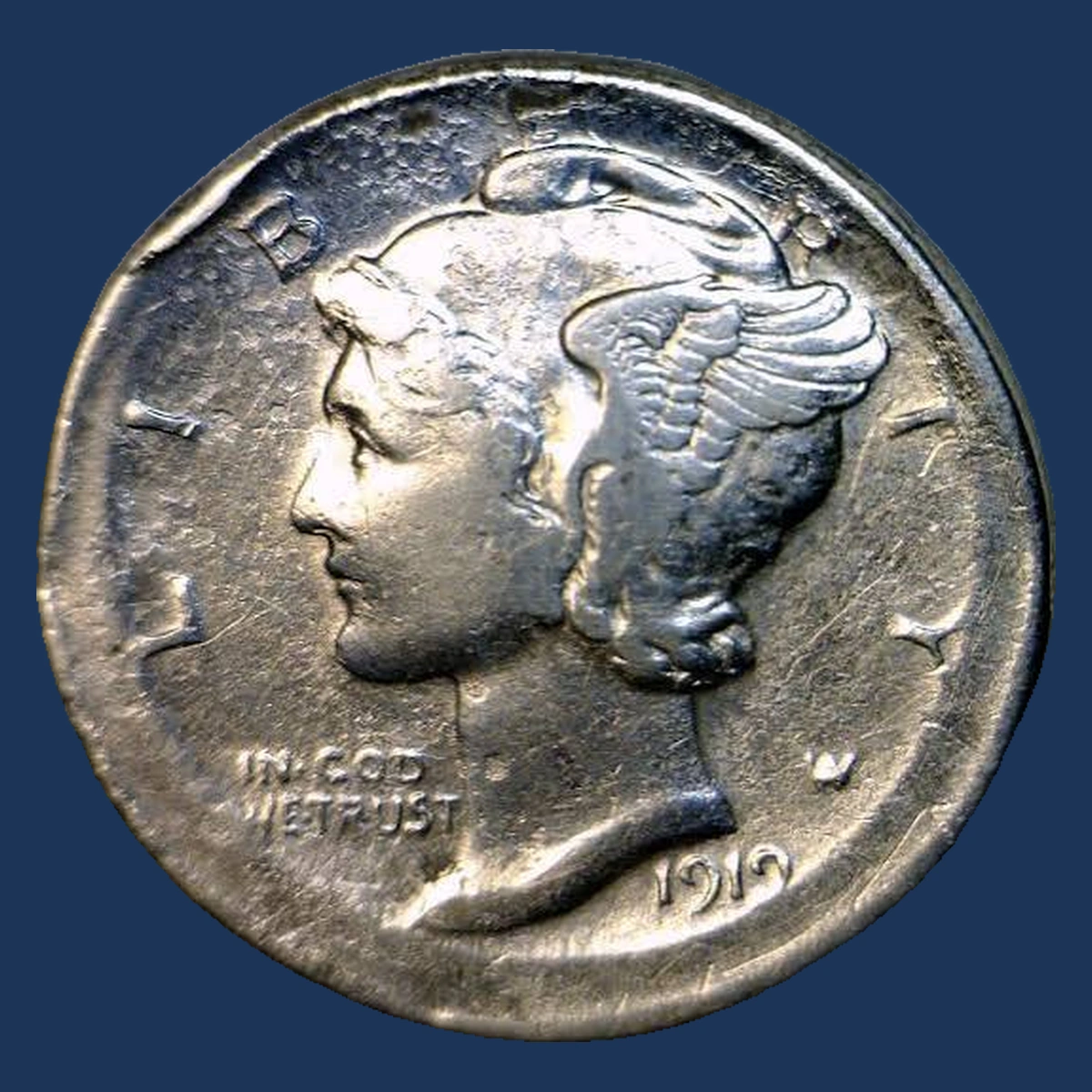
An off-center dime has a blank crescent beside a shifted design. The blank sat partly outside the dies when they struck.
Some of the planned image therefore missed the metal. This is different from a wide border caused by outward spreading.
A historical dealer catalog lists a Philadelphia 1919 dime struck fifteen percent off center toward three o’clock. That direction belongs to this example, not to every off-center dime of the year.
Both faces matter. If only one design is shifted, a misaligned die may be responsible instead of a misplaced blank.
Estimated Value
Estimate $200–$2,000 for genuine Philadelphia examples with a readable date. Greater displacement and better condition can raise the price, but an attractive smaller error can still sell well.
A PCGS MS64 Full Bands dime struck ten percent off center brought $612.44 at Heritage in June 2026. It is a different coin from the older fifteen-percent report.
Keep those details separate. The recent grade and price do not belong to the historical three-o’clock example.
How to Identify
Photograph the full outline on both faces. An off-center blank should leave matching signs of displacement, not just an uneven rim on one side.
For the historical example, check the fifteen-percent shift toward three o’clock. Other genuine 1919 coins may face another direction.
Use a loupe to study the blank crescent. Its surface should look unstruck, rather than ground down or polished to remove the design.
A normal blank weighs 2.50 g and measures 17.9 mm before striking. A scale and calipers provide useful checks, and the edge may retain only some grooves.
Match the blank crescent on both faces first; a one-sided shift suggests a different cause.
7. 1919 Mercury Dime Doubled Die Obverse (Estimated Up to $10,000)
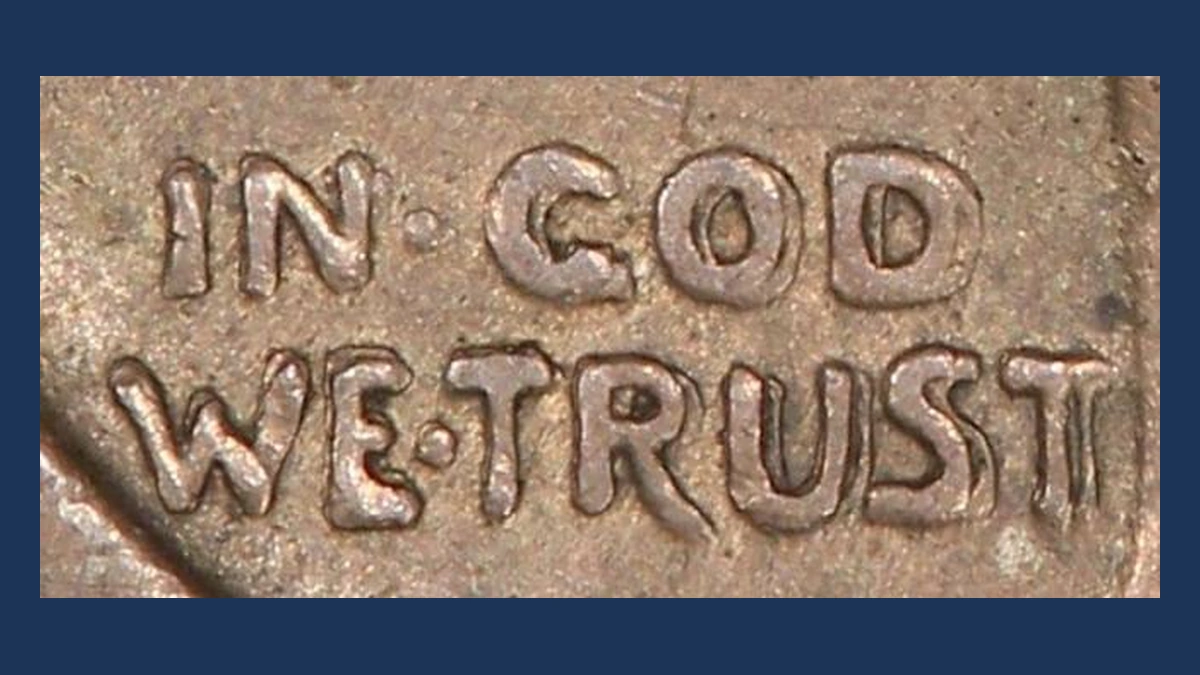
Start with IN GOD WE TRUST. The valuable 1919 doubled die shows extra letter outlines there, even when its date looks normal.
The mistake began while the Mint made the die. One partial design impression was followed by another that did not line up.
The doubled details include GOD and UST, parts of N and R, and the dot between IN and GOD. Much of the surrounding design appears normal.
Collectors call this Philadelphia variety FS-101. The name identifies a particular die, not a second strike on the coin, and the motto can remain readable after years of wear.
Estimated Value
PCGS records an XF40 sale at $7,800 in August 2018. It also reports a separate XF45 private sale for $10,000 in 2017.
An estimated $1,000–$10,000 range covers worn examples through better circulated coins. Clear doubling and original surfaces help; cleaning and heavy wear can lower the price.
These are historical prices, not guaranteed offers today. Match the grade and visible motto detail before comparing your coin with either sale.
How to Identify
Use a loupe to examine the motto. Check several letters, not just one bright edge that may be a reflection.
The discovery report shows where the extra outlines appear. A normal date does not rule out this variety.
Look for rounded extra detail beside the main letters. Flat, shelf-like edges can come from movement during striking instead of a doubled die.
Confirm that the Mercury dime has no reverse mintmark. A loose example can be checked with a scale and calipers against 2.50 g and 17.9 mm; its edge should have grooves.
Begin with GOD and UST, then match their extra outlines to a clear FS-101 photo.
Conclusion
Estimated values for these 1919 dime errors run from $20 to $10,000. Small die cracks sit near the lower end, while the major doubled motto can bring thousands.
Check the whole coin before comparing prices. Its mint, wear, and surfaces all matter, and a coin with two errors still has one total value.
For FS-101, start with IN GOD WE TRUST. For a clip or off-center strike, examine both faces and the edge.