1925 Dime Error List with Pictures

A 1923-S Mercury dime struck 10% off center sold for $276 in March 2021. That different-year sale provides one comparison for reported 1925 striking errors.
These 1925 Mercury dime errors have estimated whole-coin values of $20–$1,000. One documented Denver clip weighs 2.42 grams, while other reports concern surface texture or striking mistakes.
Read on to check what the metal shows and keep each price tied to the right coin.
1. Reported 1925 Mercury Dime Die Crack (Estimated Up to $150)
A thin raised ridge can cross the surface of a dime without cutting into it. It forms when silver enters a crack in the die, the steel tool that stamps coins.
The tool transfers that line along with its normal picture. A small crack may remain thin through many strikes.
The 1925 list does not identify a particular mint, face, or route for the reported example. The actual coin therefore needs inspection before a variety can be named.
A line is not automatically a cud. That term describes a larger raised patch connected to the rim.
Estimated Value
For a circulated Philadelphia coin with a minor genuine crack, estimate $20–$150. This is a whole-coin range based on modest Mercury dime tool defects.
No specific 1925 crack sale supports that amount here. Denver and San Francisco examples need their own underlying mint and grade comparisons.
A short fine ridge usually adds little, while a clear branching line can be more appealing. Size alone does not establish rarity, and a well-preserved coin may explain much of the price.
How to Identify
Check the basic coin first: use calipers against 17.9 mm and a scale against 2.50 grams. Inspect the grooves around the edge for alteration.
Then move a low light across the line while looking through a magnifier. A raised ridge differs from a scratch cut into the silver with metal pushed up beside it.
Follow the line through nearby picture details. A few disconnected bright spots do not establish one continuous crack.
Keep the full date and mintmark area visible in comparisons. For the quickest test, trace a raised seam that belongs to the struck surface, rather than assigning a name from the line’s position alone.
2. Reported 1925-S Mercury Dime Struck-Through Error (Comparison Range Up to $300)
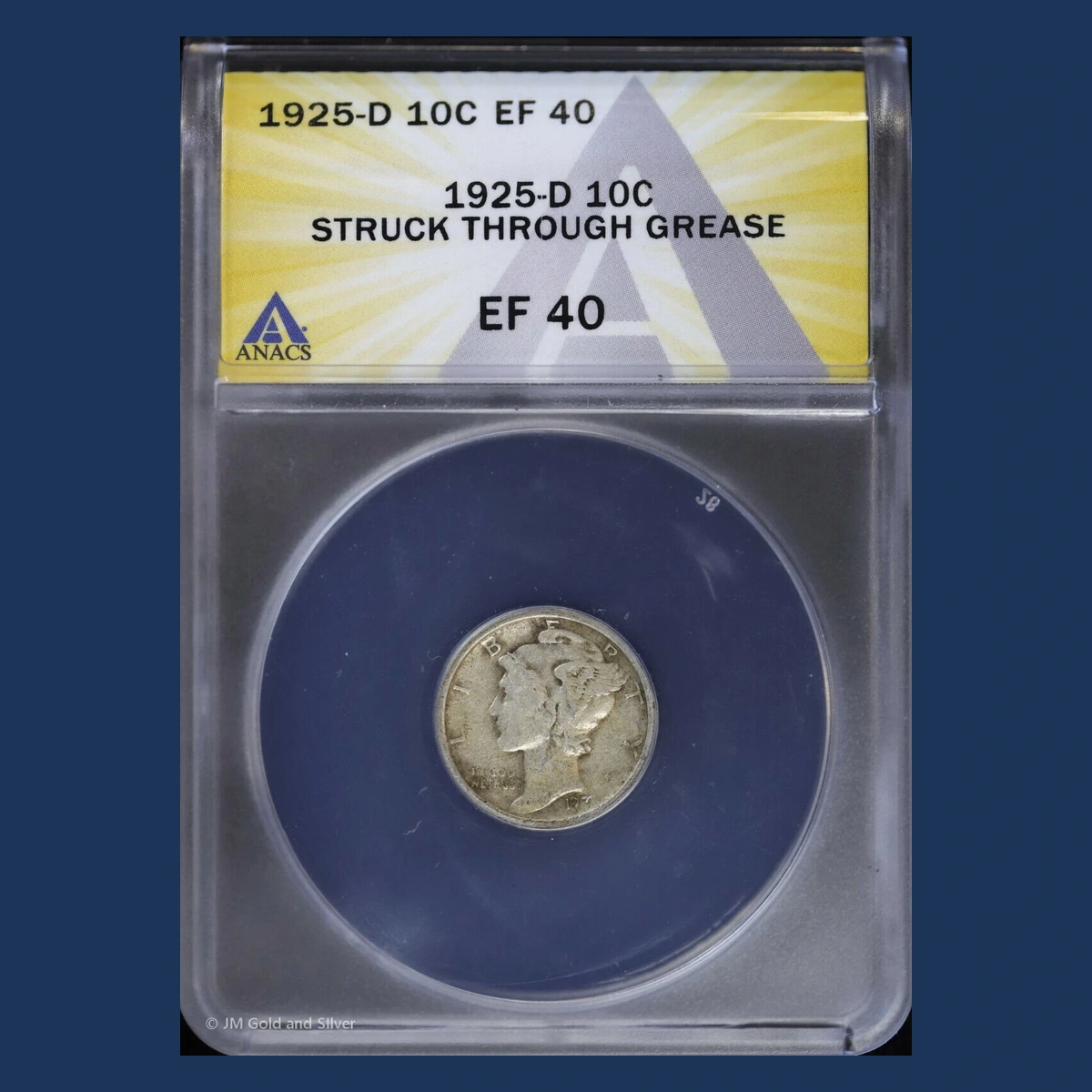
A recessed patch can be caused by material caught between a coin and its stamping tool. The obstruction blocks the picture or presses its own shape into the silver.
This is a strike-through. A later cut can also make a hollow mark, but it has a different cause.
The seller’s 1925-S title used both “damage” and “struck through.” Those terms do not confirm a Mint error, and the coin remains a candidate for this explanation.
No particular object is identified. The boundary of the mark must show how it relates to the original strike.
Estimated Value
The seller asked $14.92 for the candidate. That is neither a completed sale nor an authenticated error price.
For a genuine localized 1925-S strike-through, use an estimated whole-coin comparison of $50–$300. The underlying San Francisco grade is included in that assessment.
The range draws on minor Mercury strike-throughs rather than this listing’s result. Scratches or later damage do not earn the same premium simply because the seller used an error term alongside a damage label.
How to Identify
Use a magnifier along the edge of the affected patch. Check whether the original design weakens into a pressed impression or is cut through after it was already formed.
Sharp raised burrs and directional gouges favor later damage. Depth alone cannot distinguish the two causes.
Confirm S below and left of the back-side bundle of rods. Use a scale and calipers against 2.50 grams and 17.9 mm, and inspect the edge grooves.
Keep the complete coin in the comparison instead of relying on the seller’s title. Start by following the picture into the mark and checking for a struck boundary rather than a fresh cut.
3. Reported 1925 Mercury Dime Rusted Obverse Die (Estimated Up to $500)
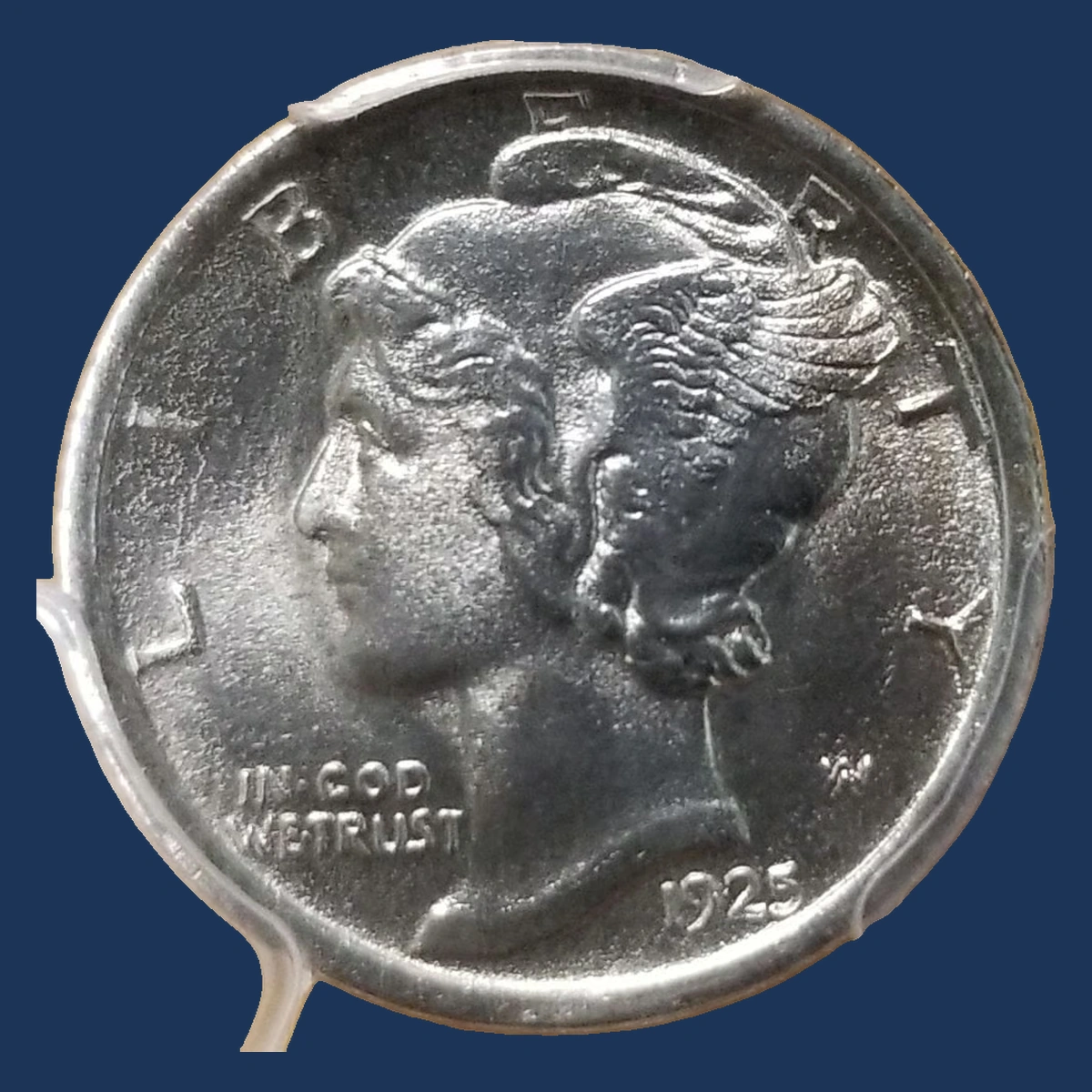
The front of a collector’s Philadelphia dime looks rougher than its back, almost sandblasted. A participant in the discussion identified it as a coin struck from a rusted front-side tool.
Rust can leave tiny cavities in the steel. Silver entering those holes during striking creates small raised bumps on the coin.
That differs from corrosion eating into the coin after minting. The marks rise or sink for different reasons.
The collector discussion also mentions weak details, but ordinary softness alone does not prove a rusty stamping tool.
Estimated Value
Estimate $75–$500 for identifiable examples in attractive circulated through lower-grade unworn condition. The whole-coin range follows the Philadelphia issue’s condition and comparisons with textured stamping tools.
The forum report gives no completed sale to use. It should not be treated as an auction record or a professional grade.
A well-preserved coin with sharp bands may cost more for those qualities. Rust texture does not automatically add a large premium, and corrosion damage to the coin needs a different valuation.
How to Identify
Compare the two faces before judging an individual bump. The reported front is rougher, while the back was described as having relatively strong detail.
With a magnifier, inspect whether the tiny features stand above the original surface. Random pits, etched silver, or defects in a cast copy need different explanations.
Check that no mintmark is present, since this report concerns Philadelphia. Use a scale and calipers against 2.50 grams and 17.9 mm, then examine the edge grooves.
A similar rough look alone cannot authenticate another coin. For a quick first check, compare raised front-side texture with the cleaner back, rather than treating every soft detail as rust damage.
4. 1925-D Mercury Dime Curved Clip (Estimated Up to $600)
A curved section is missing from the Denver dime cataloged by GreatCollections. Its ANACS label records XF40 Details and a weight of 2.42 grams.
The coin came from the Rippere collection of incomplete metal-disc errors. Its description establishes the mint, weight, and condition qualification, but not a clock position for the gap.
A genuine clip exists before the design is struck. The incomplete disc receives its picture around the missing area.
That differs from breaking or cutting a finished coin. The remaining rim and design should show the effect of the original gap.
Estimated Value
Use an estimated $150–$600 for comparable circulated Denver curved clips. The GreatCollections lot ended May 3, 2026, but its realized price requires login.
The displayed $1 was a starting bid, not the sale price. No realized amount is assigned here.
XF40 Details indicates wear plus a condition problem. That affects the whole coin even if the clip is genuine, so an otherwise similar problem-free example may deserve a stronger comparison.
How to Identify
The recorded 2.42 grams is 0.08 gram below the normal 2.50 grams. Wear also removes metal, so that difference cannot prove the percentage clipped.
Use a magnifier at both ends of the curved gap. Compare the struck boundary and nearby rim with the catalog photographs, keeping the full date and Denver mark visible.
Check the opposite rim for supporting weakness, without demanding that it appear strongly. A later notch may show tool marks instead of original striking detail.
Use a scale where accessible and calipers across intact parts against 17.9 mm. Inspect the surviving edge grooves, then match the natural struck transition at the gap as the quickest useful check.
5. Reported 1925 Mercury Dime Cud (Estimated Up to $600)
A broad raised patch can join the rim where the normal picture stops. It forms when a piece breaks from the edge of the steel stamping tool.
Silver flows into the opening during the next strike. The resulting patch is called a cud.
The 1925 list reports the category without a confirmed specimen or rim position. A candidate needs its own physical comparison.
A fine crack may develop before a larger break, but they are not interchangeable descriptions. An isolated bump inside the picture also does not establish the required connection to the rim.
Estimated Value
A genuine rim-connected cud has an estimated whole-coin range of $75–$600 for circulated through modest unworn examples. The estimate follows general Mercury die-break collecting interest.
No specific 1925 cud sale is recorded here. A broad clear break usually draws more attention than a tiny rim disturbance.
Mint, remaining design, and surface quality still matter. An unusually valuable well-preserved coin can exceed this range for reasons unrelated to the break, while later damage does not earn the same premium.
How to Identify
Use a magnifier to follow the raised patch directly into the rim. Check where the normal picture ends, rather than accepting a deposit resting on top of intact detail.
Inspect the opposite face for weakness where silver may have moved into the break. This is supporting evidence and does not appear equally on every example.
Check for solder, impact marks, or a folded edge that could imitate a lump. Use a scale and calipers against 2.50 grams and 17.9 mm, then inspect the edge grooves.
A thin line belongs with cracks instead. For the quickest distinction, verify a broad raised mass joined to the original rim where normal design is absent.
6. 1925 Mercury Dime Obverse Lamination (Estimated Up to $750)
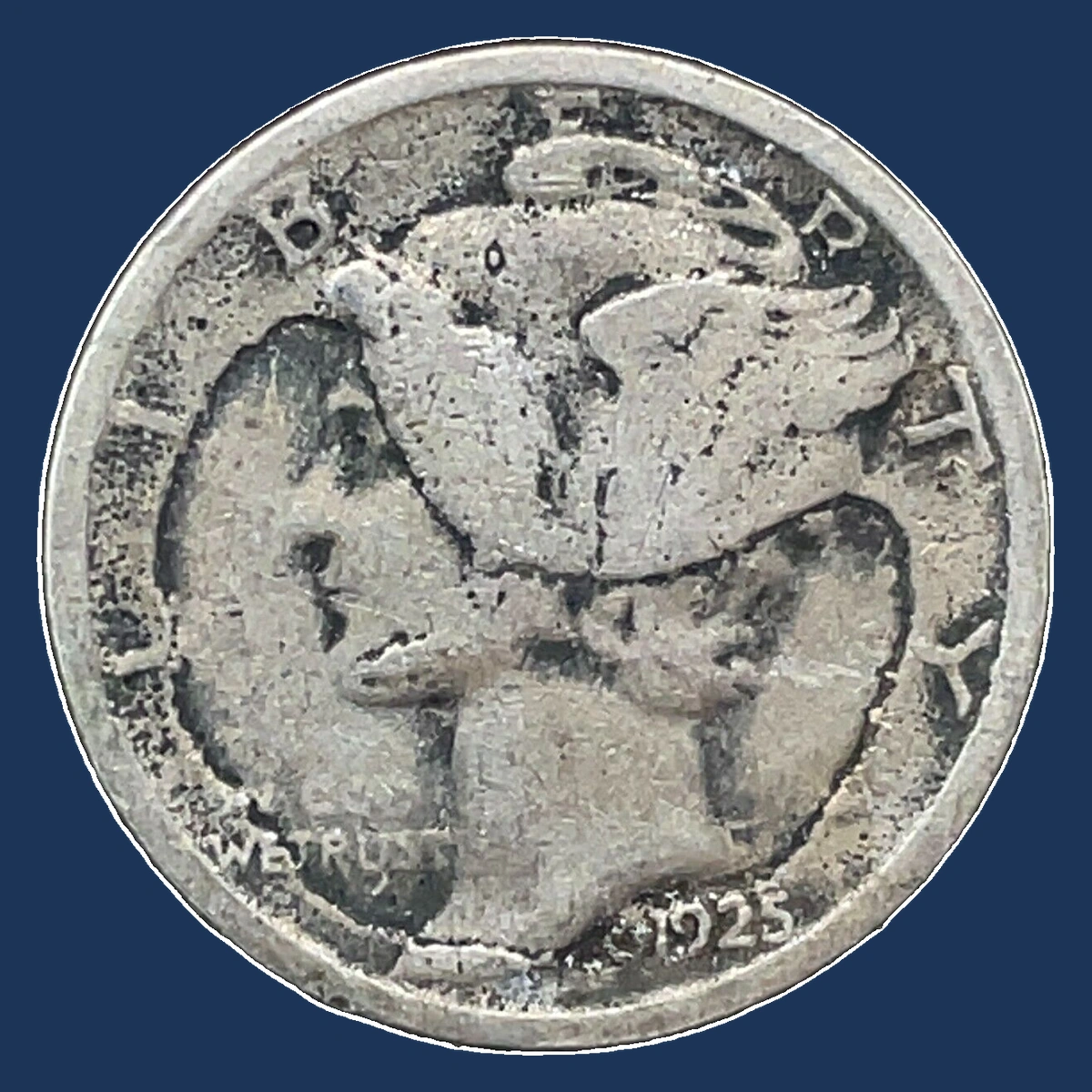
A large area on the front of an ungraded Philadelphia dime was advertised as lamination. The listing’s size description is not a professional grade or a measured area.
Lamination means a weak layer separates within the coin’s metal. It can split, lift, or fall away while surrounding parts keep their original picture.
The dime is made from silver-copper alloy, rather than modern metal layers surrounding a copper core. A local peel is therefore not a missing manufactured outer coating.
The report also does not establish that the entire dime split into two complete pieces.
Estimated Value
The seller asked $699.95 for the ungraded front-side lamination. That remains an asking price, without a completed transaction used here.
Significant circulated peeling suggests an estimated $50–$150. A particularly obvious, attractive example may fit a broader $150–$750 whole-coin range.
The upper allowance does not claim buyers accepted the listing price. Minor seams usually bring less than a large clearly separated area or a stable flap that shows the layered structure well.
How to Identify
Look for a thin lifted edge or a layered opening under a magnifier and low-angle light. Follow how the remaining picture meets the peeled area.
Do not pry up a flap. A gouged patch may have directional tool marks instead of a naturally separating layer.
Use a scale against 2.50 grams where accessible, and calipers against 17.9 mm. A substantial detached piece can lower the weight, while a shallow peel may change little.
Inspect the edge grooves for a seam reaching the perimeter. To make the first useful match, locate a thin separation within the struck silver rather than judging the defect by size alone.
7. Reported 1925 Mercury Dime Broadstrike (Estimated Up to $800)
The coin can spread wider than normal while retaining the whole picture. The collar, the ring that controls its width during striking, failed to hold the metal in place.
That is a broadstrike. The edge can also lack the normal complete grooves formed against the ring.
The reported 1925 category does not identify an actual Denver or San Francisco example. General price comparisons for those mints cannot supply a mintmark to a candidate.
An off-center strike is different: part of the design falls beyond the available metal instead of remaining complete inside an expanded outline.
Estimated Value
Estimate $150–$400 for ordinary attractive Philadelphia broadstrikes. About $400–$800 allows for stronger quality or a more valuable Denver or San Francisco coin.
These are projected whole-coin comparisons, not prices from identified 1925 auction examples. The mint must be established on the actual coin.
The guide cites a 1945 MS64 broadstrike at $360. That reported different-year figure helps set the scale, but it cannot establish a 1925 mint, grade, or completed sale.
How to Identify
Trace the outer lettering on both faces before measuring the outline. A broadstrike should retain the full picture, while missing design beside a plain crescent suggests off-centering.
Use calipers in several directions against the normal 17.9 mm. A scale comparison with 2.50 grams helps check that the expansion involves the original metal, rather than an added border.
With a magnifier, inspect the edge and the picture’s transition into the extra silver. Incomplete normal grooves should fit the expanded shape.
Later squeezing may flatten details while widening the coin. Start by matching a complete, naturally struck picture with an expanded edge, rather than relying on width or smoothness alone.
8. Reported 1925 Mercury Dime Off-Center Strike (Estimated Up to $1,000)
A plain crescent can remain where part of the metal disc missed the stamping tools. On the other side of the design, some intended details may fall beyond the edge.
The 1925 reports list off-center strikes without a confirmed percentage, direction, or mint. Those details need to be established from the actual coin.
A single misaligned tool can shift one picture while leaving the other centered. That is why a front-only photograph is insufficient.
A genuine off-center disc affects the relationship between both pictures and the same remaining unstruck metal.
Estimated Value
Estimate $150–$500 for genuine circulated examples with readable dates. More dramatic, attractive pieces can reach a comparison range of about $500–$1,000.
A 1923-S NGC VF35 struck 10% off-center sold at Heritage for $276 in March 2021. That is a different-year sale and may involve a different mint.
It anchors a modest worn error. The upper range is an estimate for condition and visual appeal, not a documented 1925 auction result.
How to Identify
Compare the complete outlines on both faces and follow where each picture stops. Both should show the same displaced strike beside original plain metal.
Read the date and any surviving D or S left of the back-side bundle of rods. A missing mintmark does not prove Philadelphia if that area was never struck.
Use a magnifier to check the margin for filing or cutting. A scale and calipers can compare with 2.50 grams and 17.9 mm, allowing for changed shape.
Inspect the remaining edge grooves and any smooth area that missed the ring. For the quickest check, match both displaced pictures to the same intact unstruck margin before assigning a mint.
Conclusion
Estimated whole-coin values for these 1925 Mercury dime errors run from $20 to $1,000. The measured Denver clip, Philadelphia peeling listing, and reported rough front each need a different physical check.
Keep asking prices separate from completed sales. A seller’s title cannot prove a strike-through, and a general branch-mint estimate cannot supply a missing mintmark; compare the surviving picture, metal, and edge before choosing the relevant range.