1965 Dime Error List with Pictures

One 1965 dime has a rough missing edge; another carries the wrong silver metal. The first kind can cost tens of dollars, while an unworn silver-blank example sold for $14,400 in January 2023.
These 1965 dime errors span estimated values of $10–$20,000. Ordinary coins and specially prepared collector-set issues both lack mint letters.
Continue below to compare the blank, design, and edge features that explain those very different values.
1. 1965 Roosevelt Dime Doubled Front Design
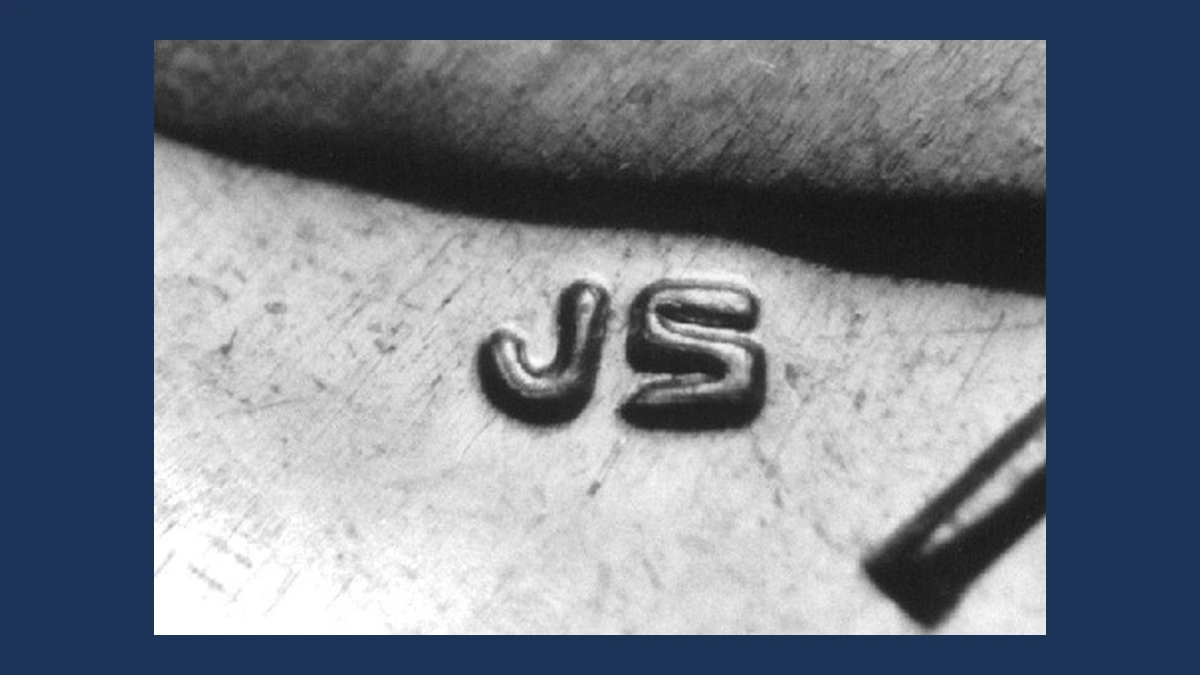
The small initials JS can show a slight extra image toward the center of the coin. This cataloged pattern also affects IN GOD WE TRUST and LIBERTY.
It comes from a doubled design in the die, the steel tool that stamps coins. Wexler lists it as WDDO-001, with the initials providing the clearest doubling.
Small raised marks above the 5 and the I in IN provide supporting comparisons. Surface shine alone cannot settle whether a candidate came from an ordinary issue or a specially prepared collector set.
Estimated Value
An estimated $15–$150 covers well-matched examples of this minor doubled design. The extra image is small, so a clear close-up is especially useful to a buyer.
An unworn coin with clean initials and readable lettering can command more than a worn example. Matching supporting marks can also help establish the variety.
A flat shelf from movement during striking is a different effect. General blurring, wear, or a bright reflection around JS should not receive the same doubled-die premium.
How to Identify
The letters JS provide the best starting point under a 10× magnifier. Look for a small extra image toward the center, then compare it with the catalog photograph.
Do not chase every bright border around a letter. Turn the light slightly; a reflection can disappear, while a real extra outline stays in place.
The marks above the 5 run northwest, and those above the I in IN run northeast. Use these to support the doubled initials, not replace them.
For a loose coin, check 2.268 grams on a scale and 17.91 mm with calipers, including the grooved edge. Surface shine cannot tell whether this doubled pattern came on an ordinary coin or a specially prepared set coin.
2. 1965 Roosevelt Dime Broadstrike
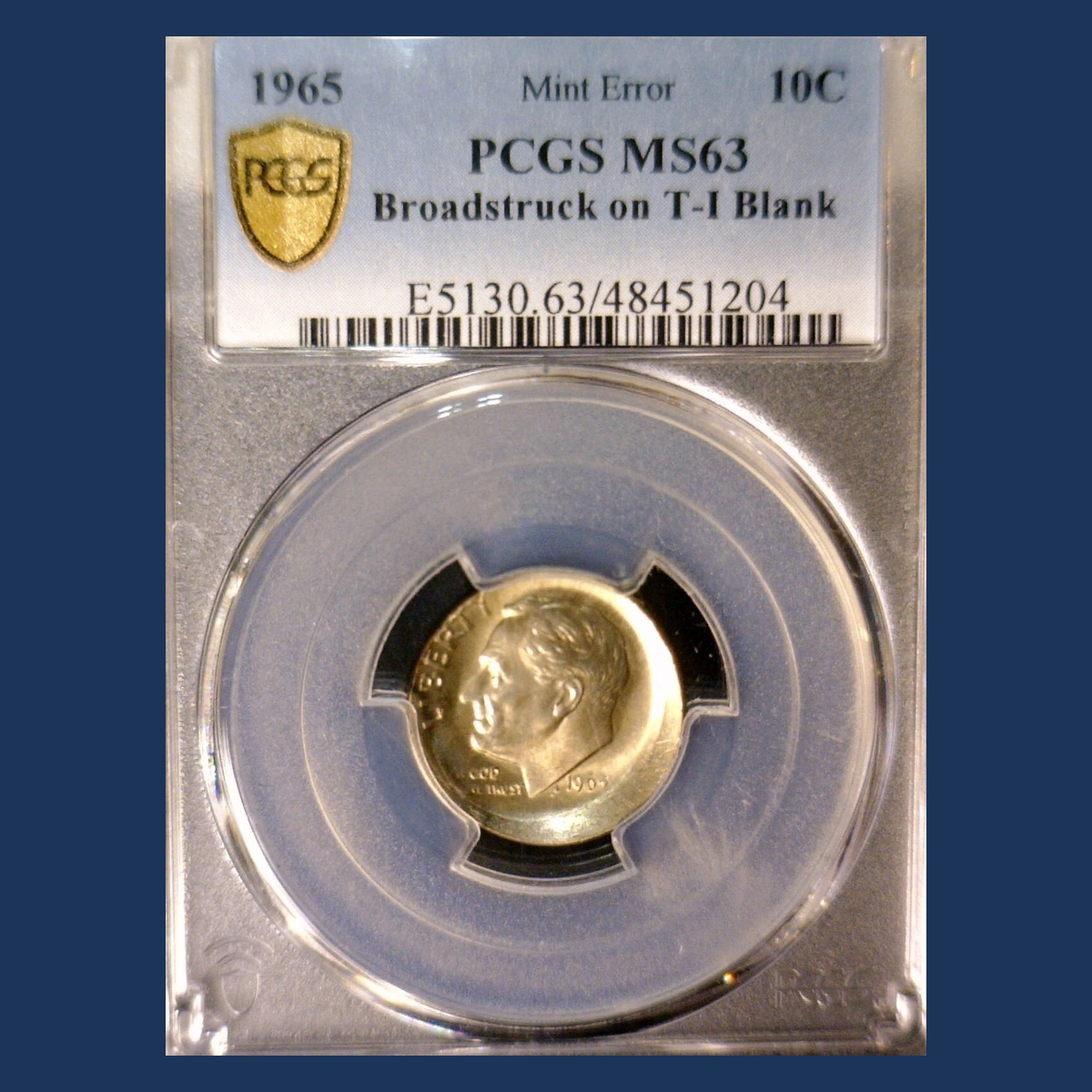
A broadstrike spreads the metal beyond the dime’s usual border while leaving the design on the coin. It happens when the collar ring fails to contain the blank properly during striking.
The recorded 1965 example was graded NGC MS65, meaning a well-preserved unworn coin. Its expanded outline is the useful feature, rather than a missing mint letter.
Both ordinary 1965 dimes and the year’s special set coins normally lack mint letters. A smooth-looking edge also needs more explanation: wear or grinding can remove grooves without creating an original broadstrike.
Estimated Value
The MS65 broadstrike sold for $59 in July 2021. A separate 1965 MS65 broadstrike had brought $84 in April 2020.
An estimated $30–$250 covers ordinary examples with different amounts of spreading and preservation. A wide, clean border around readable lettering is easier to appreciate than slight expansion on a worn coin.
The date, condition, and natural outline should guide the comparison. Simply measuring a larger diameter does not establish either the error or the top price.
How to Identify
Use calipers to compare the width of a loose candidate with a normal 17.91 mm dime. Check several spans rather than assuming that every broadstrike forms a perfect circle.
A scale should show roughly the normal 2.268 grams unless another error changed the metal present. Spreading increases width without necessarily removing metal.
Now read the outer lettering on both faces through a magnifier. A complete design within an expanded border supports broadstrike; a lost section of design points toward an off-center strike.
Inspect the border and edge grooves for later grinding or crushing. A widened coin with flattened lettering and tool marks may owe its size to damage after it left the press.
3. 1965 Roosevelt Dime Incomplete Curved Clip and Ragged Blank
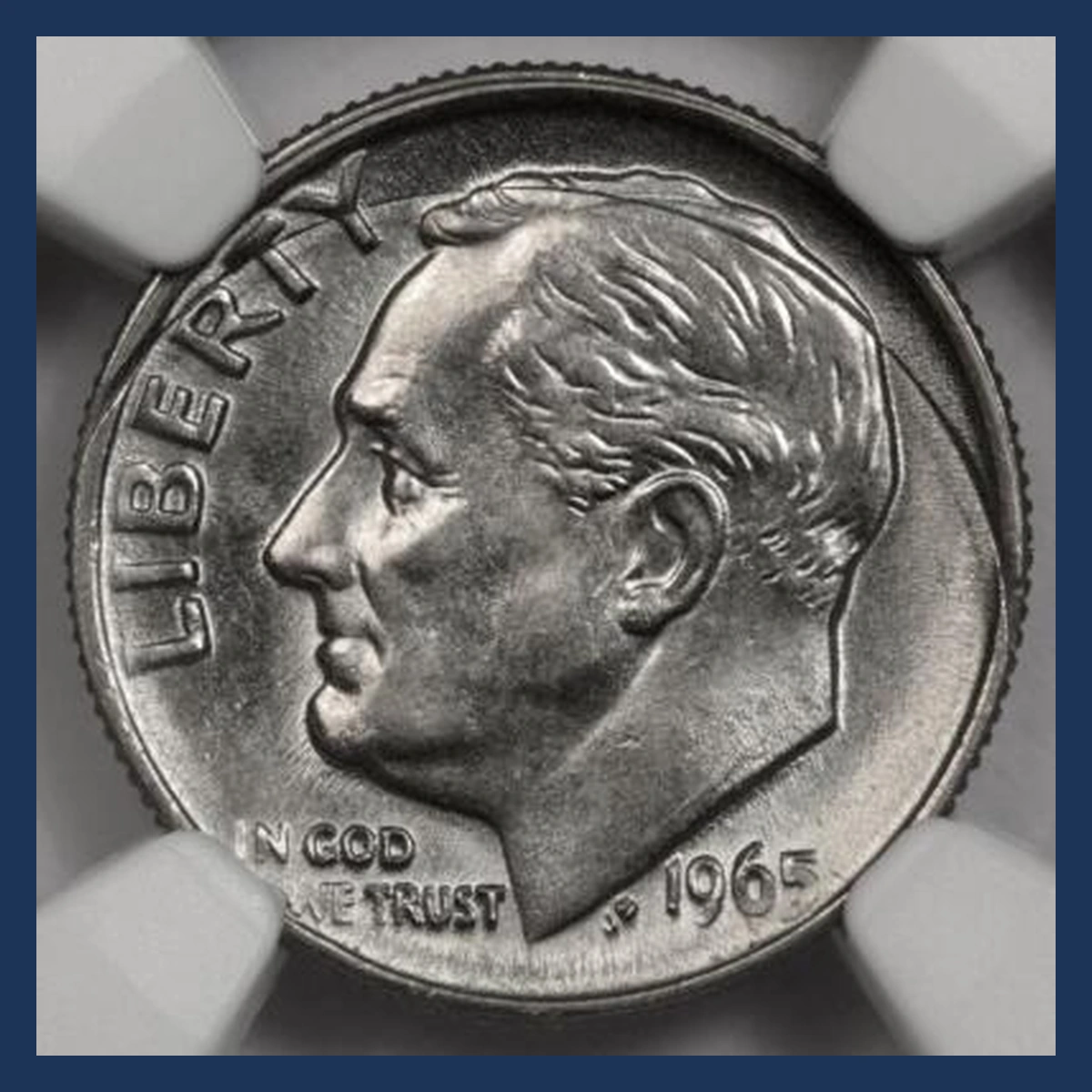
A curved cutting line can remain on a coin even when the piece inside it never broke away. The 1965 NGC MS66 example is an incomplete curved clip, not a dime with a complete bite missing.
A different coin has a ragged missing section near 1 o’clock and weighs 2.0 grams. Its rough outline records an incomplete blank rather than the same unbroken curved line.
Both concern metal prepared incorrectly before striking. Their photographs should preserve that visible difference, and nobody should try to finish the incomplete cut by bending or removing the attached metal.
Estimated Value
The incomplete curved-clip MS66 example sold for $139 in October 2022. The separate 2.0-gram ragged clip brought $35 in July 2021.
An estimated $20–$300 covers comparable original blank defects. The clear unbroken cut can interest collectors for a different reason than a large missing section.
Condition and the visibility of the original feature matter more than the number of rough edges. Completing an unfinished cut or trimming a ragged area would damage the error rather than improve it.
How to Identify
Do not bend a coin to test whether the curved piece will break away. Photograph the whole outline, then follow the cutting line with a 10× magnifier while leaving the attached metal undisturbed.
The ragged example requires a different comparison: its missing section lies near 1 o’clock. A scale should be compared with that coin’s recorded 2.0 grams, not assigned to the incomplete-cut example.
A normal complete dime weighs 2.268 grams and measures 17.91 mm. Calipers can document the remaining width of a loose candidate, but avoid squeezing across the unfinished cut.
At the irregular boundary, examine how the struck surface and surviving edge grooves end. Sharp new burrs or tool scratches can reveal later cutting; a rough shape alone does not establish a mint error.
4. 1965 Roosevelt Dime Front Indent with Partial Collar
A second blank partly overlapped this dime during striking and left a depression on the front. At the same time, the coin sat only partly inside the collar ring that controls its edge.
The result combines an indent with a step along the edge. These are two visible parts of one striking event, rather than two separate coins.
NGC graded the example MS66 Full Bands. MS66 describes strong unworn preservation, while Full Bands means the torch’s horizontal bands remain clearly separated; that band detail is a quality designation, not another mint error.
Estimated Value
This combined error sold for $65 in July 2021. An estimated $50–$400 allows for comparable coins with different-sized depressions and clearer edge steps.
The two features do not automatically produce a high price simply because both appear on the label. Their visibility and the coin’s condition still matter.
A clean depression beside strong design can be appealing. Damage from a later impact, especially at the edge, can instead obscure the original relationship and reduce the value.
How to Identify
Look at the coin from the side first. The partial-collar effect should show a step between metal held inside the ring and metal that spread beyond it.
For a loose piece, use calipers to compare the different widths with 17.91 mm, then weigh it against 2.268 grams. The indent displaced metal rather than necessarily removing a piece.
Under a 10× magnifier, inspect where the edge grooves meet the expanded portion. Grinding can erase grooves, but does not reproduce every feature of a stepped strike.
Follow the front depression into the surrounding design. A later blow may leave flattened detail or scrape marks; the original overlap impression should fit the coin’s striking and edge shape together.
5. 1965 Roosevelt Dime Off-Center Strike
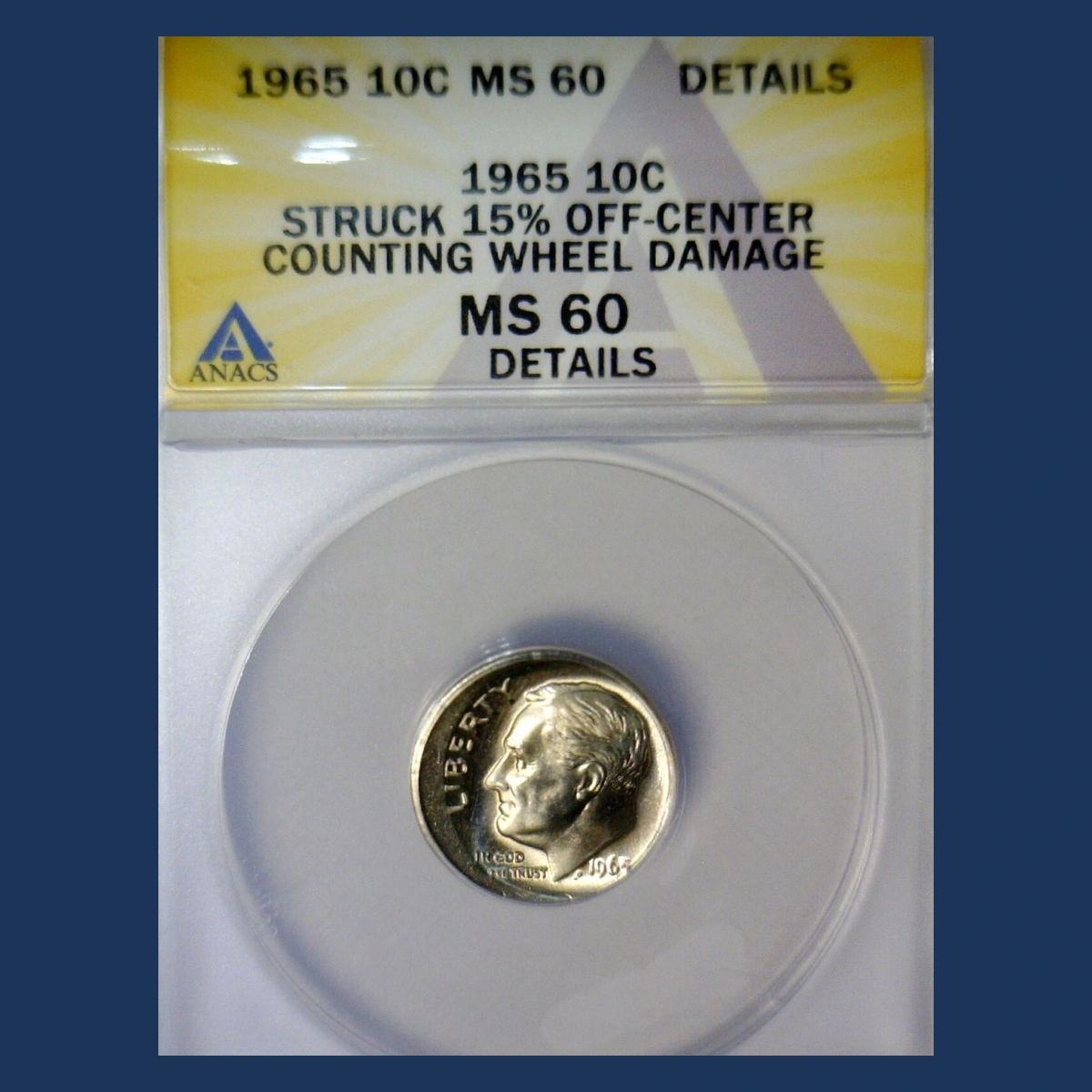
The design shifts off the blank when it enters the press out of position. An untouched crescent remains on one side, while some lettering or other detail falls beyond the opposite edge.
The NGC MS65 Full Bands example is described as 15% off center. It retains strong unworn detail and separated horizontal torch bands, which account for the grade and band designation.
The blank’s displacement is separate from those quality features. One uneven rim on only one face should not be treated as the same error without checking whether both designs follow the same shift.
Estimated Value
The 15% example sold for $114 in April 2020. A separate 35% off-center MS65 Full Bands dime brought $138 in the same auction.
An estimated $40–$500 covers original off-center 1965 dimes with varying displacement and condition. Those results show why the percentage alone does not dictate the price.
A readable date and clean unstruck area are useful advantages. Scratches, a lost date, or weak remaining detail can limit demand even when the shift looks dramatic.
How to Identify
An uneven rim on the portrait face is not enough. Compare both faces first: their designs should share the blank’s displacement, with untouched metal opposite the lost design.
Find the complete 1965 date before choosing a year-specific price comparison. A dramatic shift with the date missing cannot be valued as a visibly dated example.
For a loose candidate, weigh it against the normal 2.268 grams and use calipers to record its outline. The standard diameter is 17.91 mm, although a displaced strike can change the final shape.
Magnify the border between struck and untouched metal, including the remaining edge grooves. Later cutting removes metal; it does not leave the original blank crescent seen on a genuine off-center strike.
6. 1965 Roosevelt Dime Missing Front Outer Layer
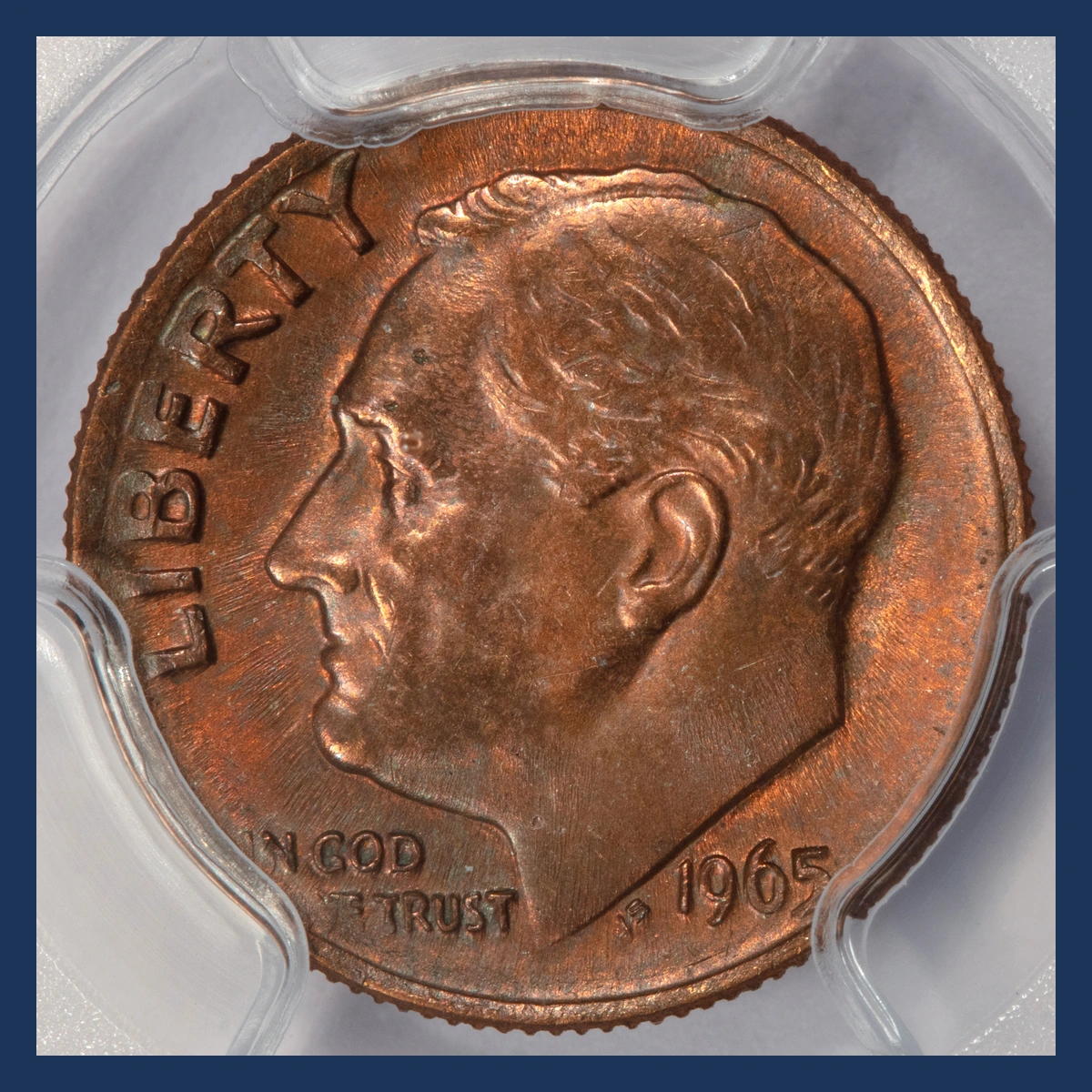
The portrait face of this dime looks orange-copper, while the back retains its normal silver-colored surface. Its front outer layer was absent from the metal strip used to make the blank.
The exposed copper core therefore received the design directly. This is more than a patch of brown tarnish on the usual outer metal.
The recorded ANACS MS62 example is unworn with noticeable marks and has strong detail for this error. Check the original copper surface and missing edge layer together, since color alone can come from staining or later treatment.
Estimated Value
The ANACS MS62 example sold for $391 in August 2004. An estimated $75–$600 covers genuine front-layer losses with different levels of wear and surface quality.
The clear contrast between the two faces makes this coin easy to display. Strong detail on exposed copper is more informative than a brown face covered in pits or scratches.
A buyer should judge the actual missing metal and preservation. Copper plating, staining, or later stripping should not receive the same mint-error range.
How to Identify
Color comes first to the eye, but weight can expose a misleading appearance. For a loose coin, compare a scale reading with 2.268 grams; losing an outer layer should make the coin lighter.
Do not use that standard number as this example’s measured weight. Its actual weight is not given.
Under neutral light, compare the orange-copper front with the normally colored back. Then use a 10× magnifier to inspect the design impressed in the exposed copper.
A scraped or chemically stripped surface may show disturbed detail, pits, or scratches. Check the layered edge and its grooves for the same damage.
Calipers can compare the width with 17.91 mm without scraping the metal. Strong original detail on the exposed core is more useful than a copper-colored face by itself.
7. 1965 Roosevelt Dime Thick Blank
A noticeably thick dime can contain more metal than the press was meant to strike. One 1965 example weighs 2.9 grams, well above the ordinary clad dime’s 2.268 grams.
NGC described the coin as Uncirculated Details with edge damage. This means it has no circulation wear but carries a condition problem, separate from the thick blank itself.
The report does not identify the metal strip that produced the blank. A heavier dime should not automatically be called a quarter-stock error simply because some other thick dimes came from that material.
Estimated Value
For an authenticated thick blank of this general kind, estimate $150–$750. The edge damage on the recorded example would reduce appeal compared with a similarly clear undamaged coin.
A different-year comparison is the 1969-D quarter-stock dime that sold for $253 in January 2006. That comparison involves an identified strip thickness, unlike the unspecified stock of this 1965 coin.
Accurate weight and an original thick edge help support the premium. Added metal or a faulty scale reading does not.
How to Identify
Check a loose coin’s weight on a calibrated scale before interpreting a thick-looking rim. A normal dime is 2.268 grams; the recorded thick-blank example is 2.9 grams.
Measure diameter and thickness with calipers, using 17.91 mm as the ordinary diameter comparison. A rolled or battered edge can look thick without adding metal.
Under a 10× magnifier, inspect the edge grooves, metal layers, and damaged areas. Distinguish the blank’s original thickness from places where later blows moved the metal.
Keep the source of the strip open unless the dimensions and material establish it. The 2.9-gram measurement supports excess metal, but does not by itself identify quarter stock or a different alloy.
8. 1965 Roosevelt Dime Special Mint Set with a Rotated Back
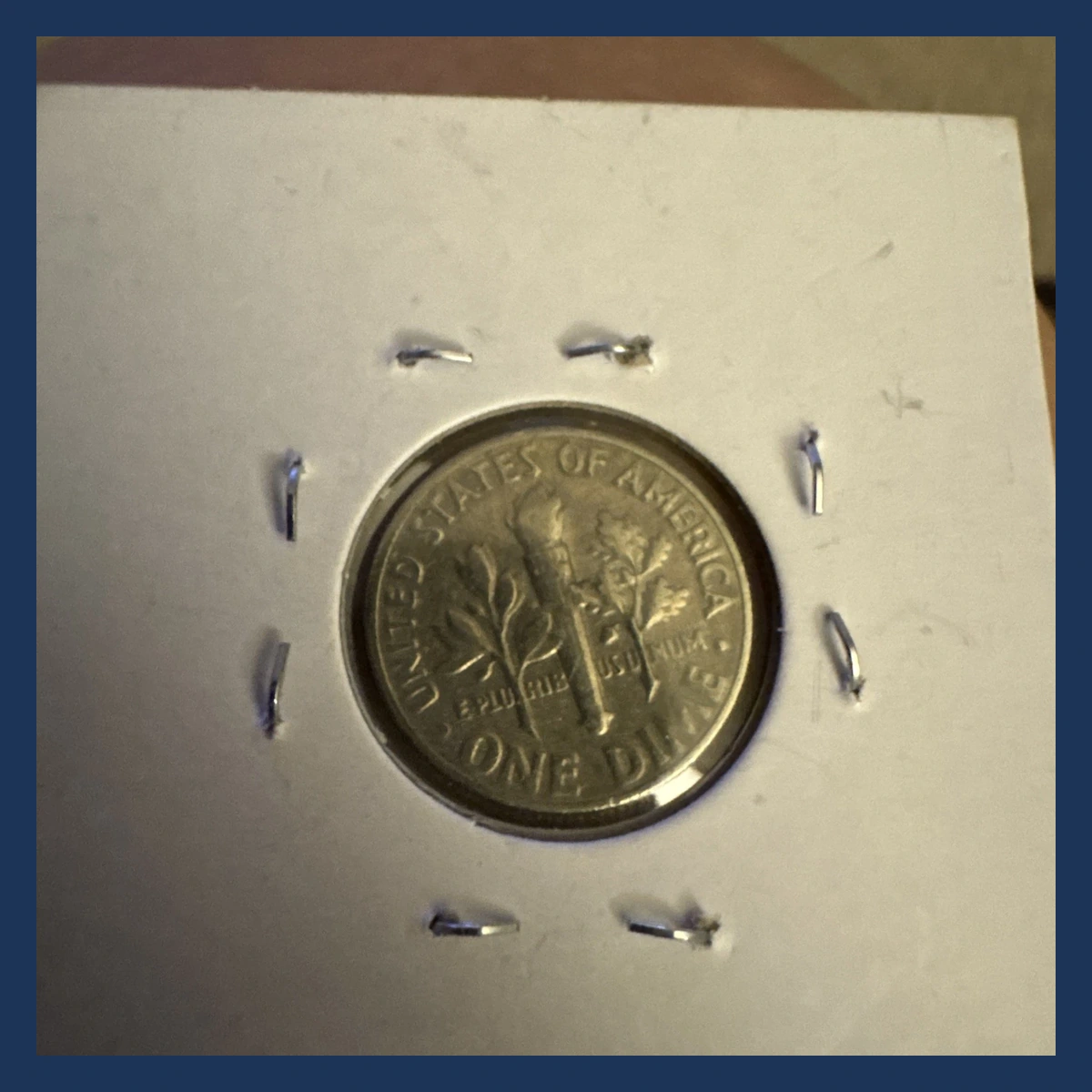
The torch does not stand upright after this coin is flipped normally from front to back. Its back stamping tool was turned 90 degrees counterclockwise from the proper position.
The example is a Special Mint Set coin, or SMS, graded PCGS SP64. These were specially prepared collector coins issued in 1965 instead of Proof sets.
The rotation concerns the fixed relationship between the two designs. Bright surfaces or a missing mint letter do not identify it; ordinary 1965 dimes also lack letters, and two independently rotated photographs can imitate the appearance.
Estimated Value
An estimated $200–$1,000 suits a genuine SMS dime with a clear 90-degree rotation. A continuous front-to-back demonstration helps buyers see that the large turn comes from the coin itself, rather than separate photographs.
The Special Mint Set identity and the large, repeatable turn make useful comparisons. A small tilt on an ordinary circulation coin belongs to a different price discussion.
Preservation still matters. Scratches or unattractive surfaces can lower demand even when a continuous flip clearly demonstrates the rotated tool.
How to Identify
Two separate photographs can make any coin look rotated. Instead, hold Roosevelt upright and turn the coin top to bottom without a sideways spin, recording the whole movement.
The torch should finish 90 degrees counterclockwise from its expected upright position. Repeat the flip before deciding that a small handling twist explains the result.
The Special Mint Set identity needs its own check. Keep the original packaging or certification information with the coin; the recorded SP64 example is a collector-set issue, not an ordinary circulation strike.
Use a magnifier to read the date and inspect the grooved edge. A loose coin can be weighed against 2.268 grams and measured against 17.91 mm with calipers, but normal size and weight cannot prove rotation.
9. 1965 Roosevelt Dime Double Strikes
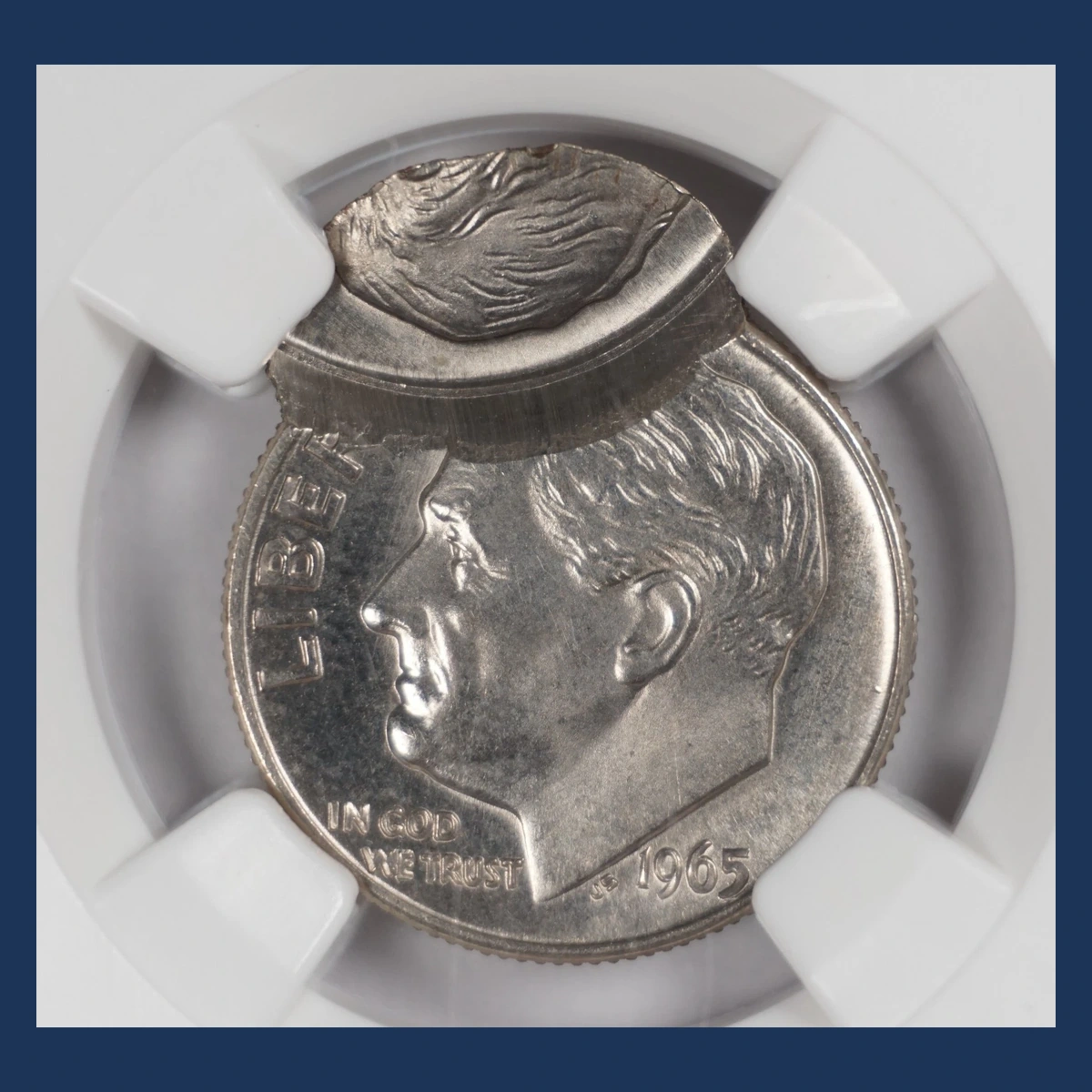
Two separated sets of design details show that the coin received another blow after moving. On the NGC MS65 example, both strikes were off center, not just the second.
A separate PCGS MS64 dime has its second strike 85% off center. Its first design and small later struck area need their own comparison image.
Both are ordinary no-mint-mark 1965 dimes. Their repeated designs differ from small doubled letters created in a stamping tool.
A double strike moves whole design sections. A doubled die can repeat its extra detail with a single blow.
Estimated Value
The example with both strikes off center sold for $456 in July 2021. An estimated $200–$1,200 covers comparable ordinary 1965 double strikes.
Clear separation and a readable date help collectors follow the sequence. A very small later impression can be less informative if it contains little recognizable detail.
The second-strike percentage alone does not determine the top price. The 85% example and the coin with two off-center blows should be compared as distinct pieces with their own condition.
How to Identify
Make two enlarged photographs, one of each face, and mark the outline of each impression. This helps separate a second blow from a single patch of blurred lettering.
On the MS65 coin, neither blow was fully centered. Follow a recognizable part of the portrait or a group of letters through both displaced designs with a 10× magnifier.
The other example has a small second struck area, described as 85% off center. Do not transfer the first coin’s shape or direction to it.
A scale reading for a loose complete coin normally starts near 2.268 grams. Use calipers to record its shape against the usual 17.91 mm diameter, then check how the second blow affected the edge grooves and earlier design.
10. 1965 Roosevelt Dime Reported Cap-Related Errors
A coin stuck to a stamping tool can create several different-looking errors. The stuck coin may grow into a cup, while later blanks can receive weak designs or inward reversed impressions.
The 1965 category appears in a year guide as a possible group of errors. A clearly dated example of a specific cap-related mechanism still needs to be established for that claim.
The visible shape must come before the name. A cup-shaped object, a flat coin with weak detail, and a flat coin with a reversed impression do not all record the same role in the press.
Estimated Value
For an authenticated, dated example, estimate $30–$500 for a modest covered-tool strike or reversed impression. A clear cup-shaped cap can fall around $400–$1,500.
An undated Roosevelt broadstrike with a reversed impression sold for $34.50 in June 2000. It is a general comparison, not a confirmed 1965 sale.
The price must follow the actual role and condition. Weak detail caused by wear or a coin bent into a cup after minting does not qualify for these ranges.
How to Identify
First establish the date on the object itself or through a reliable match to a dated coin. A broad date range on a holder does not establish 1965.
Inspect its form with a 10× magnifier and side photographs. A raised wall suggests the cap itself, while weak detail or an inward mirror image may belong to a coin struck beneath it.
For a loose piece, compare weight with 2.268 grams and record the outline with calipers against a normal 17.91 mm dime. Examine surviving edge grooves without flattening any raised wall.
Trace the unusual design into surrounding metal. Scraping and wear can erase detail, while later bending can raise a wall; look for original struck surfaces that support the claimed cap-related error.
11. 1965 Roosevelt Dime Cracks and Broken Stamping Tools
A thin raised line or extra lump can come from a damaged die, the steel tool that stamps coins. Metal fills its opening during the strike and stands above the normal design.
A separate major 1965 example has a front cud: a larger blank raised area connected to the rim where part of the tool broke away. It was graded PCGS MS64, an unworn grade with visible marks.
Another NGC MS64 coin is described as a front die break. Its precise shape should not be assumed to match the rim-connected cud simply because both involve damaged tools.
Estimated Value
Small genuine cracks and chips are estimated at $10–$100, while substantial original breaks can reach $200–$2,000. The difference is the size, clarity, and effect on the design.
The PCGS MS64 major front cud sold for $552 in July 2021. The separate NGC MS64 front break brought $1,440 in October 2021.
Those are different coins and separate sales. A faint crack or later rim dent should not inherit either result just because the date matches.
How to Identify
A scratch cuts into the surface, while a crack in the stamping tool usually leaves a raised line. Tilt the coin under a light and use a 10× magnifier to establish which shape you have.
If there is a larger raised patch, trace its boundary. The major cud reaches the rim; an internal lump should not be given that same name merely because it is large.
For a loose complete coin, a scale and calipers can check the normal 2.268 grams and 17.91 mm. Inspect the edge grooves near the affected area as well.
Turn the coin over to inspect the opposite face. A dent with metal pushed up beside it points toward later damage, rather than metal filling a broken stamping tool.
12. 1965 Roosevelt Dime Two-Piece Bonded Pair
Two coins became joined during a repeat strike. The first was deformed, and part of its earlier design was flattened as the second coin bonded to it.
The second has a complete back design but an indent behind Roosevelt’s head on the front. These related marks show how the pair interacted under striking pressure.
PCGS graded the pair MS65, describing strong unworn preservation. It is a two-piece striking error, rather than a single thick blank or two ordinary finished coins attached later with glue; the paired relationship belongs to the whole object.
Estimated Value
The bonded pair sold for $2,040 in July 2021. An estimated $1,200–$3,500 covers comparable genuine pairs with clear related designs and good preservation.
The buyer receives the combined object and its striking history. Adding separate values for the indent and repeated strike would count the same features again.
Clear joining evidence and undamaged surfaces support stronger interest. A pair made by attaching two finished coins after minting would not qualify, even if the total weight appears plausible.
How to Identify
Leave the two pieces joined. Trying to separate them can destroy the contact marks that explain this error.
A normal single dime is 2.268 grams and 17.91 mm. A scale and calipers can document a loose pair, but there is no recorded exact weight for this example to match.
Use side photographs and a 10× magnifier to examine the join, surviving edge grooves, and any signs of glue or solder. Then follow the design across the two pieces: the first is deformed and partly flattened.
The second should retain a complete back design and an indent behind Roosevelt’s head on the front. Those related struck features must explain how the pieces met; a joint between two otherwise normal coins is not enough.
13. 1965 Roosevelt Dime Struck on a 90% Silver Blank
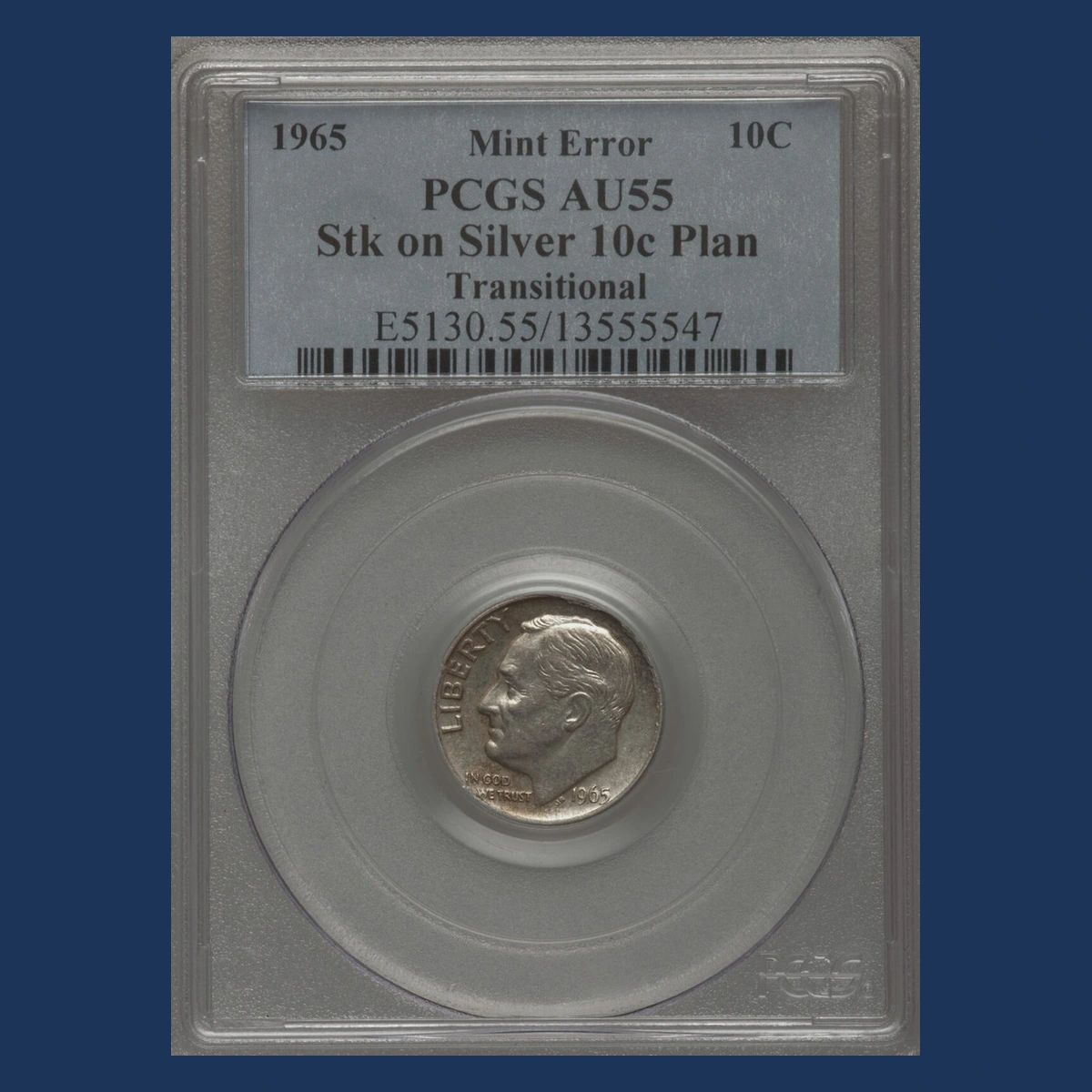
The usual 1965 dime contains a copper core with silver-colored outer layers. A small number were instead struck on the older 90% silver blanks intended for the earlier composition.
This is a transitional wrong-blank error, linking the new date with the previous metal. A silver dime blank normally weighs 2.50 grams, compared with 2.268 grams for the clad version.
The NGC AU53 example shows circulation wear, but its unusual blank remains the important feature. A bright silver-colored surface alone is not enough, because ordinary clad dimes can also look silvery from the front.
Estimated Value
An unworn NGC MS62 silver-blank dime sold for $14,400 in January 2023. The separate, worn AU53 example brought $9,150 in January 2026.
An estimated $5,000–$20,000 covers authenticated examples with different preservation. Damaged pieces can fall lower, while unusually strong coins may attract greater competition.
The premium depends on the genuine 1965 date and silver blank together. A silver-plated ordinary dime, an altered earlier date, or a weight reading alone does not establish that combination.
How to Identify
Use a precise scale on a loose candidate. About 2.50 grams points toward the silver standard, while 2.268 grams is the normal clad target; wear and other factors still need consideration.
Inspect the complete 1965 date with a 10× magnifier. Altered earlier dates can imitate the rare combination.
Examine the edge for the absence of the usual copper-core band, then use calipers to compare width with the normal 17.91 mm. The edge should still show appropriate grooves.
Color and weight are screening clues, not final proof. A grading specialist should verify the metal and original date without filing, scratching, or using a destructive acid test on the coin.
Conclusion
Estimated values range from $10 for minor original tool defects to $20,000 for authenticated silver-blank errors. A rare metal claim needs more evidence than a silvery face or a single scale reading.
Keep incomplete clips attached and bonded pairs together. When two strikes overlap, follow both impressions rather than counting isolated doubled letters.
For the rotated SMS coin, a continuous flip is the useful demonstration; no mint letter is normal throughout this year.