1975 Dime Error List with Pictures

A missing S helped a 1975 proof dime sell for $506,250 in October 2024. A proof is a specially made collector coin with a sharp design and mirrorlike background.
Most unmarked 1975 dimes are ordinary Philadelphia coins. The seven 1975 dime errors below span an estimated $15–$550,000, from peeling metal to that rare proof.
Read on to learn what each error looks like and which simple checks help separate it from damage.
1. 1975 Roosevelt Dime Lamination (Estimated Up to $150)
A peeling patch is the feature to look for. A lamination forms when a weak layer within the metal separates from the rest of the coin.
The loose piece may hang on or fall away, leaving a rough opening. Scraping and corrosion can make similar patches, so look closely at its borders.
A collector described one 1975 dime as small and smooth-edged. Those features alone do not prove lamination.
There must also be evidence of a separating metal layer. A thin or worn-looking coin can have an entirely different cause.
Estimated Value
For a genuine small lamination through a larger visible flap, use an estimated $15–$150. This range values the whole coin and gives more weight to a clear, attractive defect.
The reported small, smooth-edged piece has no verified sale attached to it. A diameter near 17 mm does not create a premium by itself.
Coins with scraped surfaces or ground-down edges should be valued as damaged dimes, rather than priced within this error range.
How to Identify
Leave any loose flap alone. Lifting it can break the metal and damage the coin.
Look along the opening with a 10× magnifier. Check for a layer joined to the coin, rather than fresh cuts or scrape marks.
A normal 1975 dime has clad metal: bonded outer layers around a copper center. It weighs 2.268 g and measures 17.91 mm.
Use a scale and calipers to compare those figures, allowing for metal that has fallen away. Look for filing around the edge, where the normal grooves may be worn or removed.
To separate peeling from simple surface wear, find the boundary where one metal layer lifts away from the next.
2. 1975 Roosevelt Dime Double Curved Clip (Estimated Up to $200)
Two curved gaps can give a dime a bitten appearance. In a genuine double clip, both gaps existed before the design was stamped.
They began in the blank, the metal disc used to make the coin. The machine cutting discs overlapped two holes left by earlier cuts.
An NGC MS65 Full Bands 1975 dime is a recorded example. That grade describes an unworn coin with clearly separated horizontal bands on the torch on its back.
Two later cuts can imitate this outline. They usually leave different marks around the gaps.
Estimated Value
The NGC MS65 Full Bands double-clip dime sold for $35 at Heritage in May 2009. That is an older result.
An estimated $30–$200 covers modest through more striking examples. A newer comparison is a 2002-D dime with a straight clip, sold for $61 in September 2024.
That coin has a different date and clip shape. Larger gaps, a clear date, and attractive surfaces can increase demand.
How to Identify
A double clip removes metal, so start with a scale. The result should be below the normal 2.268 g, with the loss related to the missing pieces.
Use calipers across intact parts of the coin and compare with the usual 17.91 mm diameter. Do not measure across a gap as though it were the original edge.
Under a 10× magnifier, inspect both curved openings for saw marks or filing. Look at the remaining edge grooves too.
Letters near a genuine clip may stretch toward the gap. The rim opposite it can also look weak, though this sign is not always clear.
Check whether the stamped design flows naturally toward both gaps, instead of ending at fresh cuts.
3. 1975 Roosevelt Dime Doubled Die (Estimated Up to $300)
An extra stroke can make a letter look doubled. A doubled die is a steel stamping tool that already has two slightly offset copies of part of the design.
Coins made with that tool can repeat the same extra strokes. Check each side separately.
On the front, compare LIBERTY, IN GOD WE TRUST, and the date. On the back, look at the flame, torch bands, and ONE DIME.
These areas will not necessarily all be doubled together. A thin, flat shelf caused by movement during stamping is a different effect.
Estimated Value
An estimated $25–$300 applies to genuine doubled dies with clear detail and reasonable surfaces. Minor doubling sits toward the lower end.
Strong separation and better condition can raise interest. This range is an estimate, not a recorded sale of a particular 1975 variety.
Before paying extra, compare the doubled detail with a correctly identified example. Flat, shelf-like doubling from movement during stamping normally adds little value to an otherwise ordinary dime.
How to Identify
Choose one letter and move a lamp across it. A reflection may disappear, but a real extra stroke remains part of the metal.
Use a 10× magnifier to see whether the second stroke is rounded or lies below the main design like a shelf. Compare several nearby details before deciding.
Check the other face separately. Doubling on the front does not prove the back has the same problem.
A scale and calipers should show normal measurements near 2.268 g and 17.91 mm. Inspect the edge grooves for damage that might explain an odd appearance.
Match the shape and position of the extra strokes to photographs of a known doubled die.
4. 1975 Roosevelt Dime Off-Center Strike (Estimated Up to $500)
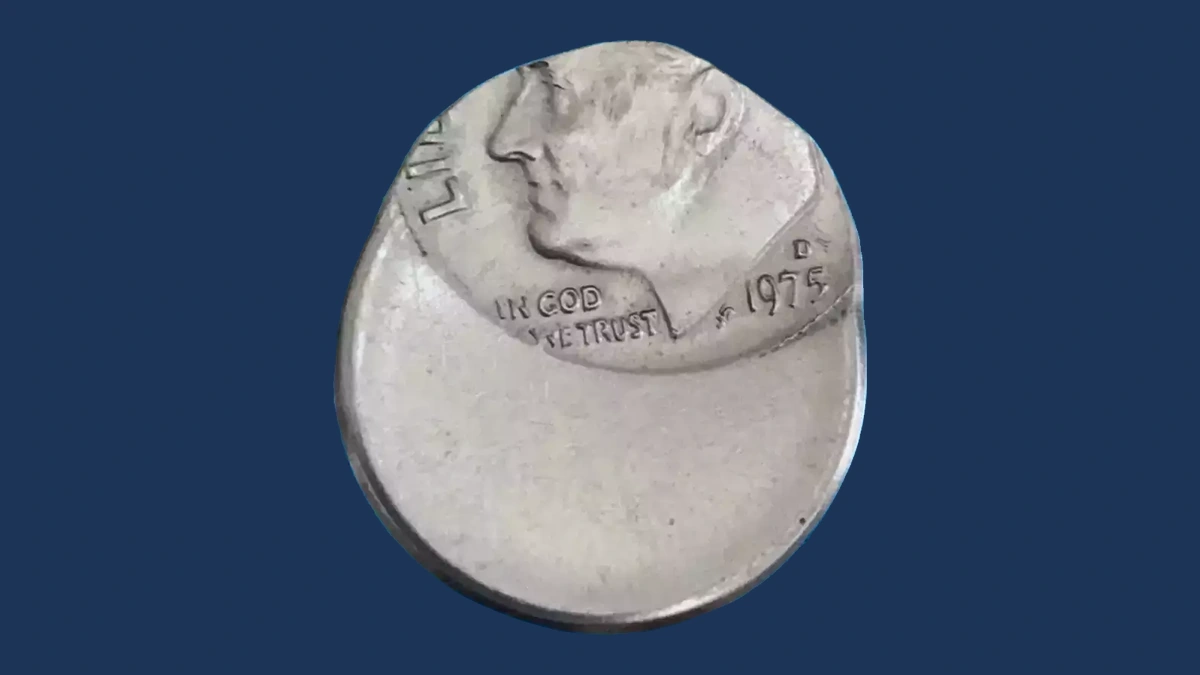
A smooth crescent beside an incomplete design is the main sign of an off-center strike. The metal disc was not fully between the stamping tools when they came together.
Part of the design missed the disc. Another part of the metal received no design at all.
That empty-looking area still contains metal, unlike a clip where a piece is missing. The amount of the shift varies.
A small shift may leave nearly all the design intact. A larger one can lose the date, making the year harder to establish.
Estimated Value
Use an estimated $30–$500 for 1975 off-center dimes with readable dates. The amount of the shift and the coin’s condition affect the price.
Small offsets usually cost less than bold examples with little wear. A different-year 1977 dime struck ten percent off center sold for $109 in June 2026.
NGC graded that comparison MS64 Full Bands. Its price does not set a fixed value for every amount of missing design.
How to Identify
Turn the dime over first. Both faces should show a shift that fits the same misplaced metal disc.
If only one face moves while the other stays centered, one stamping tool may have been out of position instead. Find the date before assigning a year.
A 10× magnifier helps you follow where the design stops and the plain crescent begins. A missing mintmark does not prove Philadelphia if that area was never stamped.
Compare a scale reading with 2.268 g and caliper measurements with the normal 17.91 mm. Inspect the edge grooves for uneven stamping or later cutting.
Look for matching areas of unstamped metal on both faces to recognize an off-center strike.
5. 1975 Roosevelt Dime Repunched S Mintmark (Estimated Up to $1,000)
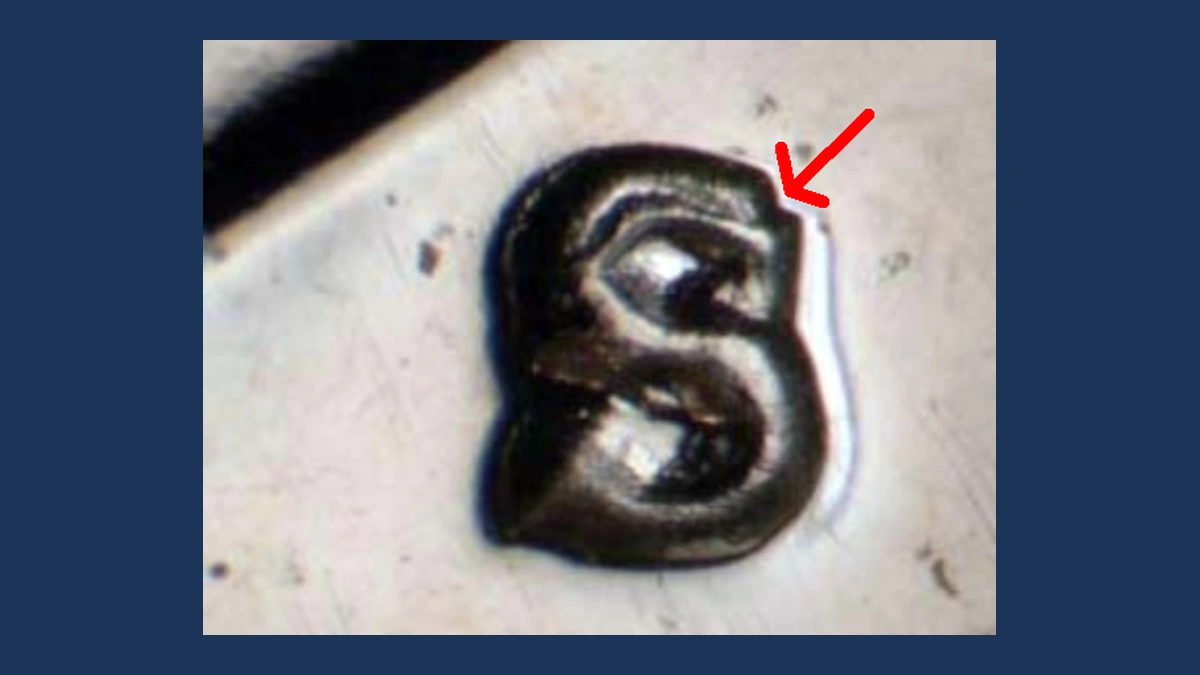
A second part of the S can appear beside the main mintmark on a 1975 proof dime. This is called a repunched mintmark.
Workers added the S to a steel stamping tool with a separate letter punch. If that punch shifted between blows, it could leave overlapping letter shapes.
The recognized FS-501 variety is one example. That catalog number names a specific pattern, rather than every oddly shaped S.
This coin still has an S. It is different from the famous proof dime that lacks the letter completely.
Estimated Value
A PCGS PR69 Deep Cameo FS-501 proof sold for $881.25 at Heritage in September 2016. That means a nearly flawless proof with strong contrast between its frosty design and mirrorlike background.
An estimated $50–$1,000 spans worn or impaired proofs through attractive examples of this variety. The older sale supports the upper part of that range.
Scratches, haze, and weaker contrast can reduce the price. An S that merely looks thick is not enough to earn this premium.
How to Identify
Compare the S near the date with clear photographs of the FS-501 variety. Under a 10× magnifier, follow the curves and openings in both overlapping impressions.
A small lump or reflection is not a second letter. Flat shelves also have a different cause.
The rest of the coin should have the sharp design and mirrorlike background of a proof. Look for polishing scratches that might create misleading shine.
This variety uses a normal dime disc. A scale should read near 2.268 g, and calipers should show about 17.91 mm.
Inspect the normal grooves around the edge for damage. The extra S strokes must match the FS-501 pattern, not just make the mintmark look wider.
6. 1975 Roosevelt Dime Wrong Planchet (Estimated Up to $6,000)
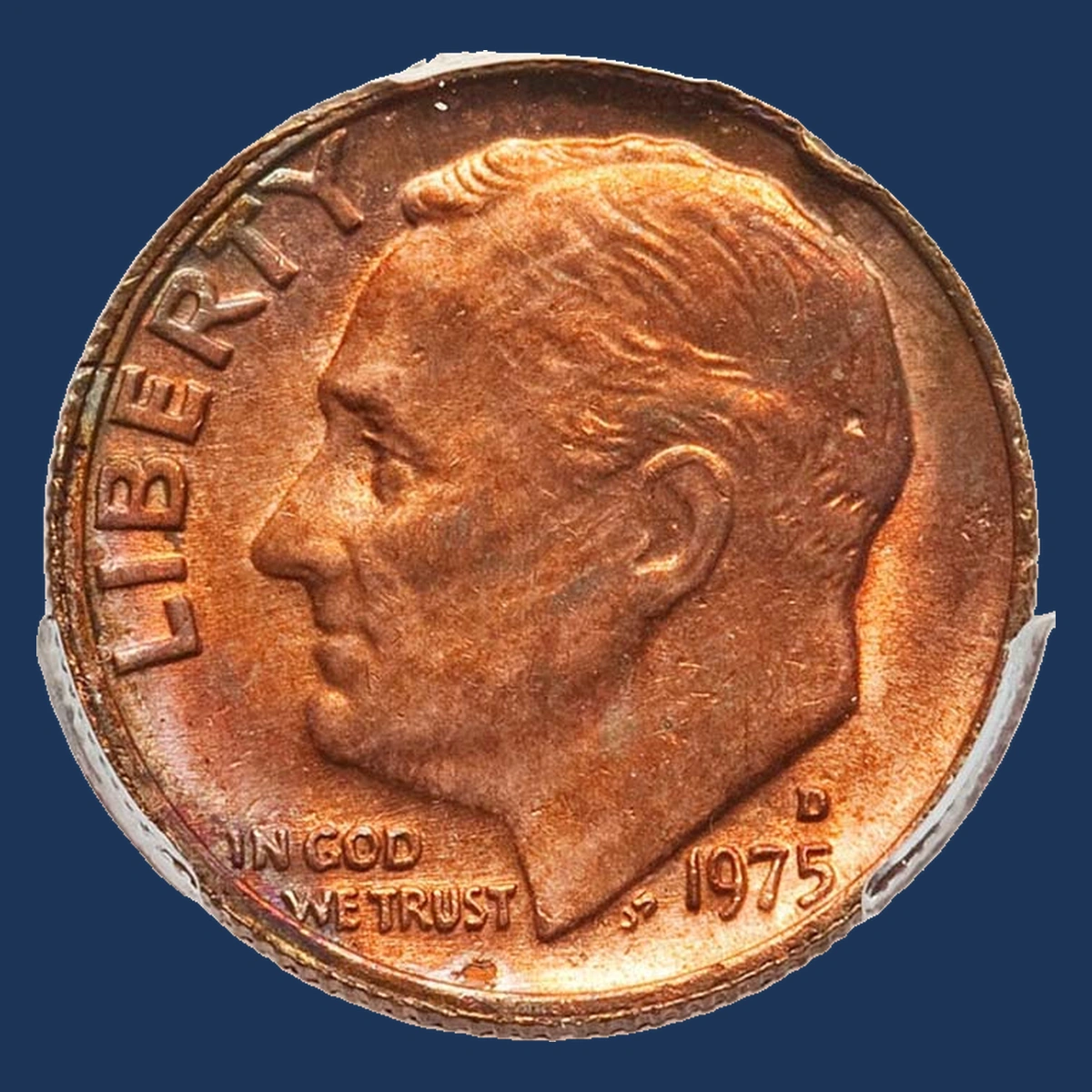
A copper-colored 1975-D dime can be more than a stained coin. One PCGS MS62 example was stamped on a copper blank weighing 2.6 grams.
That weight does not identify it as a standard cent blank. Its original purpose has not been established.
A different error appears on a 1975-S proof made from a Philippine 10 Sentimos blank. The PCGS PR67 example weighs 3.86 grams.
Both are wrong-planchet errors: coins made from the wrong metal discs. Their different weights and finishes matter when comparing them with an unusual dime.
Estimated Value
The 1975-D copper MS62 dime sold for $1,920 in October 2022. Its estimated range is $1,500–$2,500.
The Philippine-blank proof is estimated at $2,500–$6,000. Its auction offering did not reach the seller’s minimum price.
A different 1973-S proof on a Liberian blank sold for $1,380 in 2009. A 2018 circulation dime on an iron blank brought $2,160 in 2023.
These different-blank comparisons help inform the combined $1,500–$6,000 estimate.
How to Identify
Weigh the coin before judging its color. The copper example weighs 2.6 g and the Philippine-blank proof 3.86 g, both above the normal 2.268 g.
If the coin is sealed in a grading holder, use its recorded weight. Do not open the holder for this check.
For a loose coin, use calipers to compare its diameter with the usual 17.91 mm. A wrong disc can spread differently when stamped.
Examine its surface and edge with a 10× magnifier. Look for a thin added coating, scratches, and the presence or absence of edge grooves.
Match the weight to the claimed blank, then seek a grading service’s identification of the metal; color alone cannot identify it.
7. 1975 Roosevelt Dime No S Proof (Estimated Up to $550,000)
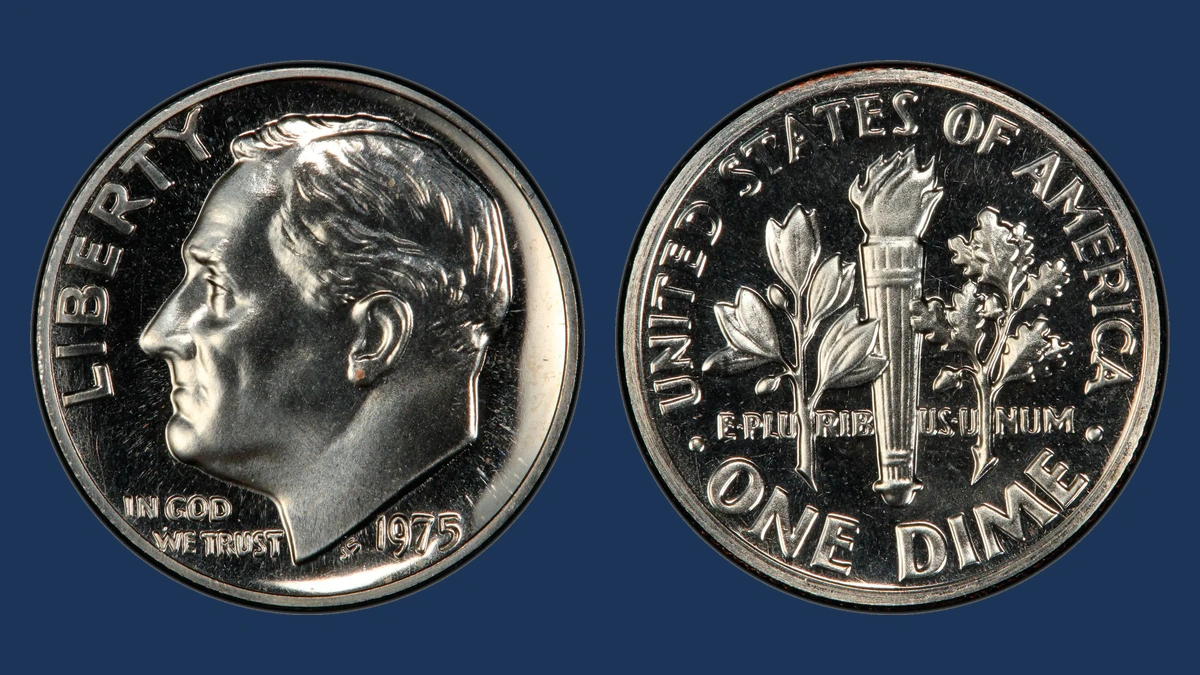
A genuine No S proof has the special collector finish but lacks San Francisco’s S mintmark. Ordinary Philadelphia dimes also lack a mintmark, yet they are normal coins.
The distinction is crucial. A shiny, unmarked dime is not automatically the rare proof.
This error came from a stamping tool that lacked the S. GreatCollections reported only two known examples when one sold in 2024.
Polishing an ordinary dime cannot turn it into a proof. Its sharp design, original mirrorlike background, and grading record must support the rare identification.
Estimated Value
The PCGS Proof-67, CAC-approved example sold for $506,250 at GreatCollections on October 27, 2024. The other known example brought $456,000 in 2019.
Those sales support an estimated $400,000–$550,000 for confirmed examples at this level. They rarely appear for sale, so bidding competition can strongly affect the result.
This range does not apply to ordinary unmarked Philadelphia dimes. Brightness or polishing does not give those coins the same value.
How to Identify
First compare the coin with a normal 1975-S proof. A 10× magnifier should reveal sharp design details and a mirrorlike background without polishing scratches.
Inspect the empty mintmark area near the date for scraping or smoothing. Shine alone cannot prove that the coin was made as a proof.
For a loose coin, compare scale and caliper readings with 2.268 g and 17.91 mm. Check the grooves around the edge for alteration.
Leave a sealed coin in its grading holder and use the recorded measurements. Match its holder number and photographs with the grading service’s records.
The decisive check is a grading record that specifically identifies the coin as a 1975 No S proof.
Conclusion
The missing S attracts attention, but a proof finish and confirmed identity make the difference. Estimated prices run from $15 for small metal flaws to $550,000 for the rare No S proof.
Other errors need different checks. Use a 10× magnifier, scale, and calipers to examine the whole coin, then compare its shape and details with the correct error type.