2008 Dime Error List with Pictures

An error guide reports $1,050 for a 2008-D dime with a clamshell split. That reported sale highlights a striking shape, but a dark color or faint letter needs a different explanation.
This 2008 dime error list covers ten reported types with estimated values of $10–$1,200. Most concern ordinary Philadelphia or Denver clad dimes, rather than collector finishes.
Use the feature-by-feature checks below to separate changes in the metal, stamping tools, and strike itself.
1. 2008 Roosevelt Dime Improper Annealing Color (Estimated Up to $350)
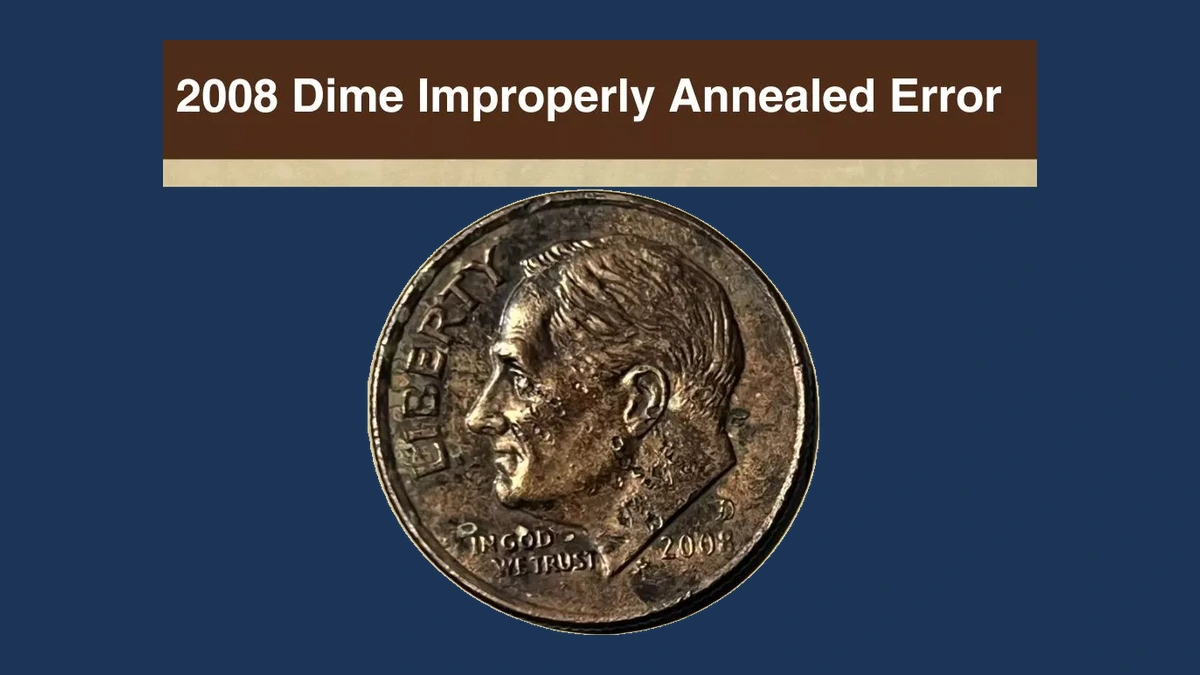
A brown, dark gray, or copper-colored surface can sometimes begin inside the Mint’s heating equipment. Annealing is the heating step used to soften blanks before striking.
Problems during that treatment can change the metal at the surface. The resulting color need not cover every part of the coin equally.
The year guide reports this effect on a 2008-D ordinary dime. That report does not make every unusually colored Denver coin an annealing error.
Later heat, chemicals, and storage can produce similar colors. The original surface and a specialist examination matter more than deciding whether a color looks dramatic.
Estimated Value
The guide reports $315 for a 2008-D described as MS60, meaning unworn with substantial marks. That figure should not turn every brown dime into a three-figure collectible.
For professionally identified annealing-related color, use an estimated $25–$350 range. Clear original surfaces and an accepted explanation of the color matter more than darkness alone.
A subtle genuine example may attract less attention than a vivid one. Later stains and heat damage belong outside this mint-error estimate.
How to Identify
View both faces and the edge under neutral lighting before comparing colors. A warm lamp can make ordinary silver-gray metal look yellow.
A 10× magnifier helps reveal residue, corrosion, or a coating that sits over damaged detail. Do not rub or dissolve the color as a test.
The reported D coin should have ordinary clad construction, a 2.268-g weight, and about 17.9-mm diameter. Use a scale and calipers for these checks.
Neither normal weight nor even color proves an annealing cause. Some genuine examples have incomplete color coverage, and later chemical changes can also be widespread.
Begin with preserved original surfaces beneath the unusual color, then seek a match to an identified annealing example.
2. 2008 Roosevelt Dime Die Cracks and Rim Cuds (Estimated Up to $400)
A raised line can come from a crack in the die, the steel tool that stamps a coin. Metal enters the opening and forms a small ridge on the finished dime.
If a larger section breaks away at the tool’s edge, a raised patch may join the rim. That rim-connected break is called a cud.
A 2008-P article reports these features without locating an example. Each crack’s path or cud’s position must come from the coin itself.
A scratch cuts into the surface. Corrosion, solder, and trapped dirt can create misleading bumps for other reasons.
Estimated Value
Small identifiable cracks can fit an estimated $10–$50, while a clear larger rim break may reach about $50–$400. The combined range is $10–$400, depending on size, preservation, and visibility.
The 2008-P report supplies no specific auction amount used here. These are estimates for recognized tool breaks, not prices for unidentified raised marks.
A long crack is not automatically more valuable than a short one. Its clarity and effect on the design help explain collector interest.
How to Identify
Shine a light across the surface from the side. Under a 10× magnifier, establish whether the feature is raised or cut into the metal.
Trace a line across nearby letters or portrait detail instead of judging one isolated segment. For a suspected cud, follow the raised area all the way to the rim.
Compare the back if the coin itself seems split. A crack through the dime is different from a mark transferred by a damaged tool.
Use a scale against 2.268 g and calipers against about 17.9 mm for the reported ordinary P issue. Photograph its grooved edge.
The quickest starting point is a continuous original ridge, or a raised break visibly connected to the rim.
3. 2008 Roosevelt Dime Front Die Clash (Estimated Up to $400)
A faint piece of the torch or a branch can appear near Roosevelt’s portrait. It belongs to the other side’s design rather than to the normal front.
The stamping tools hit each other without a blank between them. Their contact left damage that could reproduce those extra shapes on later coins.
The year guide reports a front clash on an ordinary 2008-P dime. Its brief description does not locate every trace on a particular certified example.
An unfamiliar line is not enough. Its shape and position must fit contact with the opposite tool, rather than random surface damage.
Estimated Value
Use an estimated $20–$400 range for clear clashes on worn through attractive unworn 2008-P dimes. Faint lines carry less appeal than recognizable opposite-design fragments.
A different 1978-S proof with strong clashes sold for $159 at Heritage in October 2022. Its specially made collector finish differs from this ordinary 2008 issue, so it provides context only.
Preservation still matters. Cleaning scratches can hide the clash and reduce how confidently a buyer can compare it with another example.
How to Identify
Open clear photographs of both designs at the same size. Look around Roosevelt for a shape that could come from the torch or branches on the back.
Use a 10× magnifier and rotate the coin under one light source. Follow the shape instead of assigning an identity to every faint line.
Compare its location with how the two tools would meet. An opposite design pressed into a coin later has a different origin and may damage nearby metal.
Check the normal 2.268-g weight and 17.9-mm diameter with a scale and calipers. The clash itself need not change the grooved edge.
Start with a recognizable opposite-design fragment whose position fits tool contact, then inspect the surrounding surface for scratches.
4. 2008 Roosevelt Dime Low-Pressure Weak Strike (Estimated Up to $500)
A very shallow portrait and weak back design can indicate that the press applied too little force. The metal did not fill the tools’ design recesses fully.
The guide reports a weak 2008-P dime. The phrase die adjustment strike is sometimes used, but a weak coin alone cannot establish what workers were doing.
The important question is whether the detail was never fully formed. Circulation wear removes detail that once existed and usually affects exposed high points first.
An obstruction can weaken part of a design. Low force instead requires examination of the wider pattern across both faces.
Estimated Value
An unworn coin can preserve the evidence needed to value a low-pressure strike. Once circulation smooths the surface, the faint design becomes harder to explain.
Estimate $100–$500 for identified examples with widespread shallow detail and original texture. The guide’s reported $515 for a 2008-P MS63 falls just above that working range.
MS63 means unworn with noticeable marks. Compare how much detail failed to form, not simply how pale or flat the portrait appears in a photograph.
How to Identify
Examine the highest points and the smooth areas under a 10× magnifier. Look for original surface texture continuing through a faint design instead of smooth patches worn flat.
Compare the strength of both faces. A single missing word beside a sharp portrait may suggest a local obstruction rather than low pressure.
Inspect the rim and edge grooves for incomplete formation. Their appearance should agree with the shallow design, not with crushing after minting.
A scale and calipers can compare the usual 2.268 g and 17.9 mm. Normal measurements do not prove the cause by themselves.
Look first for widespread shallow detail on undisturbed surfaces, supported by a weakly formed rim rather than worn high points.
5. 2008 Roosevelt Dime Missing Clad Layer (Estimated Up to $550)
An exposed copper-colored face may show that one pale covering was absent when the coin was struck. Normal clad dime metal has copper-nickel outer layers over a copper center.
The design can remain visible in the exposed metal. Missing material also reduces the coin’s weight.
The guide reports a 2008-P ordinary dime with this feature, without securely identifying the affected face here. It should not be confused with the normal 2008-S silver proof.
That specially made collector issue contains 90% silver and does not use the same layered structure. A silver-looking edge on that coin is normal, not missing cladding.
Estimated Value
Ordinary silver proofs and copper-colored clad errors belong in different price comparisons. For an identified 2008-P missing-layer dime, an estimated $75–$550 covers collectible worn through unworn examples.
The guide reports $530 for a coin described as MS62, an unworn grade with noticeable marks. A clear exposed design supports stronger values than a heavily scratched or rough face.
Demand depends on the original missing layer. Metal removed later by chemicals or grinding does not receive the same premium.
How to Identify
Identify the mint and finish before examining the copper color. The reported P coin is clad, while a 2008-S silver proof normally weighs 2.50 g.
Use a precise scale to compare the suspect P dime with the normal clad weight of 2.268 g. Calipers should relate to about 17.9 mm for either standard composition.
Under a 10× magnifier, follow the layered edge toward the affected face. Look for an absent outer covering rather than a stain over intact metal.
Check for pits or grinding lines across the exposed design. Low weight can also follow later metal removal.
The clearest first combination is reduced clad-coin weight, a missing edge layer, and original detail struck into the exposed copper.
6. 2008 Roosevelt Dime Front Grease Strike-Through (Estimated Up to $600)
One part of the front can lose detail while nearby lettering remains sharp. Material inside the stamping tool blocks the design from forming in that area.
The 2008-P report describes grease affecting the front. It does not establish a fixed patch that every example must share.
The remaining surface may be smooth or show a shallow interruption, depending on the obstruction. Not every missing letter indicates the same material.
This local effect differs from a coin struck with too little pressure overall. It also differs from wear or polishing, which removes metal and changes an already formed surface after minting.
Estimated Value
A small blocked letter may fit a $10–$50 estimate. A large interruption with sharp surrounding detail can move an identified unworn coin toward the broader $10–$600 range.
The guide reports $585 for a 2008-P described as MS63. That unworn example’s reported price illustrates the upper end, not the value of every grease mark.
The boundary matters. A dramatic missing patch loses appeal when polishing or wear prevents a collector from judging its original surface.
How to Identify
Compare the weak area with a normal 2008-P front at the same enlargement. Keep enough of Roosevelt and the wording visible to judge the pattern of missing detail.
Use a 10× magnifier along the transition into the clear design. Scraping, fine polishing lines, or pushed-up metal can indicate later damage.
Turn the coin over and compare overall strike strength. Widespread shallow detail on both faces requires a different assessment from one local front patch.
Check a loose clad dime with a scale against 2.268 g and calipers against about 17.9 mm. Preserve views of the edge too.
Follow the original surface from a sharp detail into the interruption before deciding that an obstruction blocked the strike.
7. 2008 Roosevelt Dime Off-Center Strike (Estimated Up to $650)
An off-center dime combines incomplete design with metal that never received an impression. The blank sat partly outside the normal striking area.
The Denver example described by the year guide is a modest displacement. Its appearance must be checked on both faces rather than judged from one uneven rim.
The metal remains present in the empty area. A clipped blank instead has part of the metal missing altogether.
A clear 2008 date and D help connect the error to this issue. An unstruck surface can also carry ordinary handling marks, so it need not look perfectly smooth or flawless.
Estimated Value
Estimate $50–$650 for clear, readable-date examples, from modest worn shifts to stronger unworn coins. The guide reports $635 for a 2008-D described as MS65, an unworn grade with relatively few marks.
That reported amount is not treated as a separately verified sale here. Grade and surface quality can account for much of a premium on a small displacement.
A bigger blank area does not guarantee a higher price. Losing the date or adding damage can reduce collector interest.
How to Identify
Compare where the design ends on the front and back. Both should fit a blank that sat outside the normal position between the tools.
A 10× magnifier can show whether the empty area retains original metal texture. Fresh grinding can erase part of a normal design and imitate missing detail.
Photograph the date and D before estimating a percentage. A border shift confined mainly to one face may come from a misaligned tool instead.
Use calipers against the normal 17.9-mm outline and a scale against 2.268 g. Record deviations without assuming that every unusual shape has lost metal.
The fastest useful distinction is incomplete design beside original unstruck metal on both faces, rather than a merely uneven rim.
8. 2008 Roosevelt Dime Doubled Design on Both Faces (Estimated Up to $700)
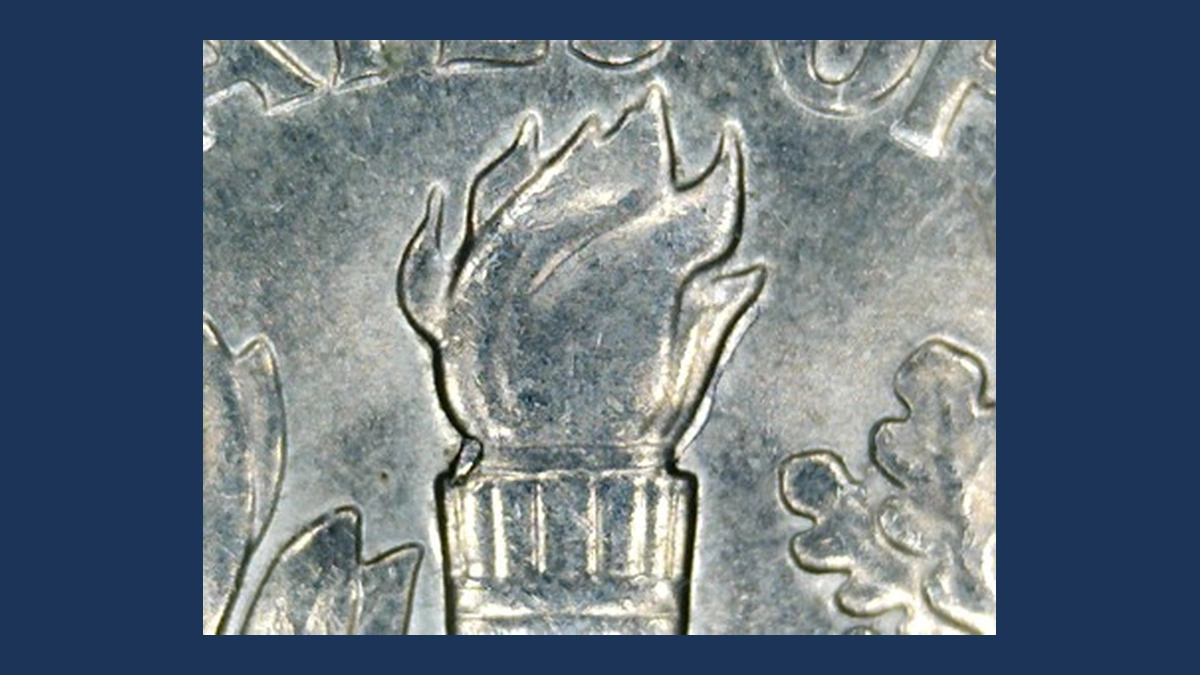
The reported Denver combination has repeated contours on the front and back. Each face must be examined separately to determine whether its stamping tool carried a doubled design.
Doubling on one face does not prove doubling on the other. A single coin can also show unrelated flat strike ledges in several places.
The guide names front lettering or portrait details and back torch or branch details as inspection areas. It does not provide a precise variety number or a matching pattern.
The actual extra contour is what matters. Thick letters and soft design edges do not establish this combination.
Estimated Value
Both faces must support the doubling claim before the combination can support a stronger price. Two vague photographs do not justify adding two separate premiums.
An estimated $50–$700 covers identified examples from minor worn features to distinct doubling on a clean unworn coin. The guide reports $620 for a 2008-D described as MS65, meaning unworn with relatively few marks.
Use the complete coin as the comparison. Separation that remains clear under ordinary magnification helps a collector judge its appeal.
How to Identify
Make separate close-ups of the best front and back features with a 10× magnifier. Trace each alleged duplicate instead of assuming the two faces share one cause.
Look for rounded extra contours or a small split where a letter turns a corner. Low flat ledges that cut into the normal design can reflect movement during striking.
Check D above the date and retain full-coin photographs. The report concerns an ordinary Denver coin, not every 2008 collector version.
A scale and calipers should relate to the normal clad specifications of 2.268 g and about 17.9 mm. The edge normally has grooves.
Start with one clearly repeated contour on each face, and match both patterns before identifying a combined doubled-die coin.
9. 2008 Roosevelt Dime Displaced Double Strike (Estimated Up to $1,100)
Two displaced portraits or sets of letters can show that one dime received two blows. The first impression remained when the coin returned beneath the stamping tools.
The second blow could overlap or distort that earlier design. This creates a different pattern from tiny repeated contours already present in one doubled tool.
The year guide reports a 2008-D double strike but does not establish its displacement or direction. Those details must be read from the coin.
A normal proof receives special striking treatment, but that alone is not this error. This report concerns displaced impressions on an ordinary coin.
Estimated Value
The guide reports $1,020 for a 2008-D MS63 double strike in 2022. By comparison, an actual 1978-D MS63 double strike brought $264 at Heritage that year.
Both grades indicate unworn coins with noticeable marks, but their strike patterns differ. An estimated $150–$1,100 accommodates that variation for identified 2008 examples.
The upper end calls for a dramatic, readable second impression and attractive surfaces. The number of blows alone does not determine the price.
How to Identify
Find a recognizable letter or portrait feature in the first impression, then locate the corresponding part of the second. Keep those two sets separate as you trace them.
Under a 10× magnifier, inspect the places where the strikes overlap. A later pressed-on design can leave damaged metal or a mirrored impression with a different explanation.
Confirm 2008 and D wherever they survive. The guide does not justify assigning a particular angle or percentage to every example.
A normal starting blank weighs 2.268 g and measures about 17.9 mm. Use a scale and calipers to document the resulting shape.
Look first for two genuine struck impressions occupying different positions, rather than one design bordered by small flat shelves.
10. 2008 Roosevelt Dime Clamshell Split (Estimated Up to $1,200)
A gap can open sideways through the dime while part of the metal remains joined. The connected portion acts like a hinge, giving a clamshell split its name.
An internal weakness allows the coin to separate along a plane within its metal. That plane need not divide the coin into equal halves.
The guide reports a 2008-D, but its split surface must establish whether it runs within the core or along a layer boundary. Neither location should be guessed from the name.
Do not force it open. Pulling the sides apart can destroy the connection and damage the evidence.
Estimated Value
The year guide reports $1,050 for an example described as MS60, an unworn coin with substantial marks. Its original marketplace transaction is not established here.
Use an estimated $100–$1,200 for identified examples, with the opening, surviving hinge, and overall preservation affecting the comparison. The reported high should not be treated as a standard price.
Artificially pried or cut metal has a different origin. An intact, original split is more useful than a fragment damaged during examination.
How to Identify
Begin at the edge opening without inserting a tool. Under a 10× magnifier, follow the natural split toward the metal that still joins the two sides.
Photograph that connection and any exposed interior. Saw cuts, squeezed edges, or fresh pry marks can point to deliberate damage.
Weigh the entire connected coin on a scale against the normal 2.268 g. A split can retain all its metal, so half the normal weight is not a requirement.
Calipers can document width against 17.9 mm without pressing the opening closed. Record the D and the design on both outer faces.
The decisive first feature is a natural sideways separation with a surviving metal connection, rather than two neatly cut pieces.
Conclusion
Start with what changed: the surface color, the amount of metal, or the shape of the design. Those observations lead to different checks even when two dimes first look similar.
Estimated values run from $10–$1,200. Treat the guide’s reported sales as comparisons, preserve the coin’s original surfaces, and establish the actual mechanism before applying a high-end price to an unusual-looking example.