1866 Nickel Error List with Pictures

The date survived even though much of the lettering missed the metal on one 1866 nickel. That 30% off-center coin sold for $11,100 in July 2022.
This 1866 nickel error list covers estimated whole-coin values of $25–$15,000. The examples are ordinary Shield nickels, with rays between the stars on the back.
Those rays are normal for this first-year design. Read on to find the extra lines, missing design, and metal problems that need a closer look.
1. 1866 Shield Nickel Uneven Surface beside CENTS
The surface near the right of CENTS can look uneven because the stamping tool changed shape. Collectors describe this kind of distorted tool as a buckled die.
The 1866 variety catalog notes this feature on examples of one reverse tool. It also describes another example without the same distortion, so the shape must be checked on the actual coin.
This is a change in the surface formed during striking. It differs from a scratch across the finished nickel or a raised chip left by a small piece breaking out of the tool.
Estimated Value
Estimate $25–$300 for an ordinary 1866 nickel with a clearly matched, modest buckled-tool feature. This whole-coin range reflects both the visible distortion and the coin’s overall preservation.
A subtle uneven area may add little to a worn nickel. Stronger original surface detail makes the effect easier to compare, while dents, polishing, or corrosion can hide the shape and reduce collector interest even when the underlying tool variety is identifiable.
How to Identify
Compare the area to the right of CENTS with a documented example showing the buckled surface, keeping neighboring letters visible. An example from the same stamping tool may lack this distortion, so the tool number alone does not establish the feature.
Move a low light across the area and watch the surface height under a 10× magnifier. A gradual change in the original struck surface differs from a bright reflection that shifts or disappears as the light moves.
Inspect the opposite face for a dent and the surrounding metal for signs of a later blow. Identify the matched change in surface shape, with nearby original details intact, rather than treating any uneven patch beside CENTS as a buckled-tool error.
2. 1866 Shield Nickel Faint Traces of the Opposite Design
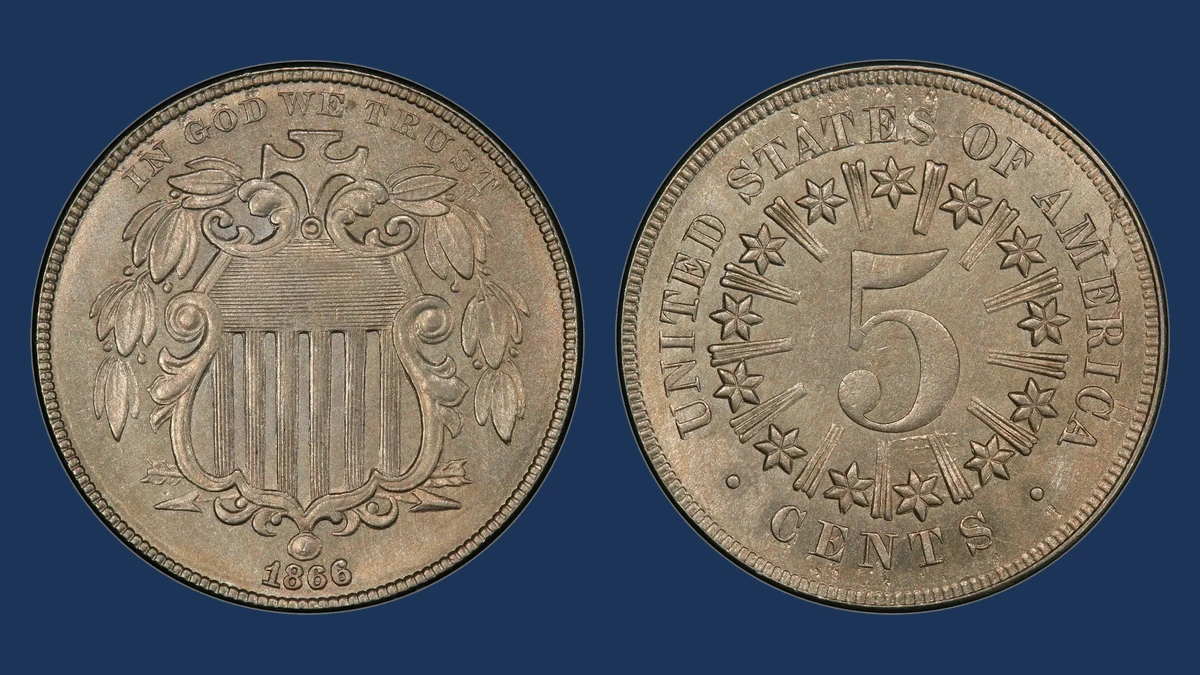
The stamping tools can hit one another when no blank sits between them. That contact may leave marks which later appear as faint fragments of the opposite design on coins.
Several 1866 examples are cataloged with weak or strong clashes. A partial outline can be visible even though the normal shield and back design remain clear.
Not every extra line around the large 5 is a clash. The catalog questions that explanation for certain horizontal marks below it, so the shape needs to match the opposite design rather than merely look unusual.
Estimated Value
For recognizable ordinary-strike clash marks, use an estimated $30–$400 range. A clear fragment that follows the opposite design is easier to display than a faint line that requires imaginative tracing.
Strong original detail and little surface damage support the better comparisons. If a coin also carries a repunched date or a crack, assess the full combination together rather than adding separate whole-coin prices for marks made by the same tools.
How to Identify
Start with photographs of the normal shield face and the star-and-ray back at the same size. Locate the suspicious shape, then test whether an actual curve or angle from the opposite design explains it.
Follow the mark under a 10× magnifier and compare with a documented clash, rather than completing a vague outline by imagination. Connected design fragments provide a stronger match than a lone straight line, which might be a scratch or a tool-polishing mark.
Pay particular attention to horizontal marks below the large 5, whose position alone does not prove a clash. Keep the normal rays and stars visible as reference points, and identify a recognizable piece of the opposite design within the original struck surface.
3. 1866 Shield Nickel Peeling Metal on the Front
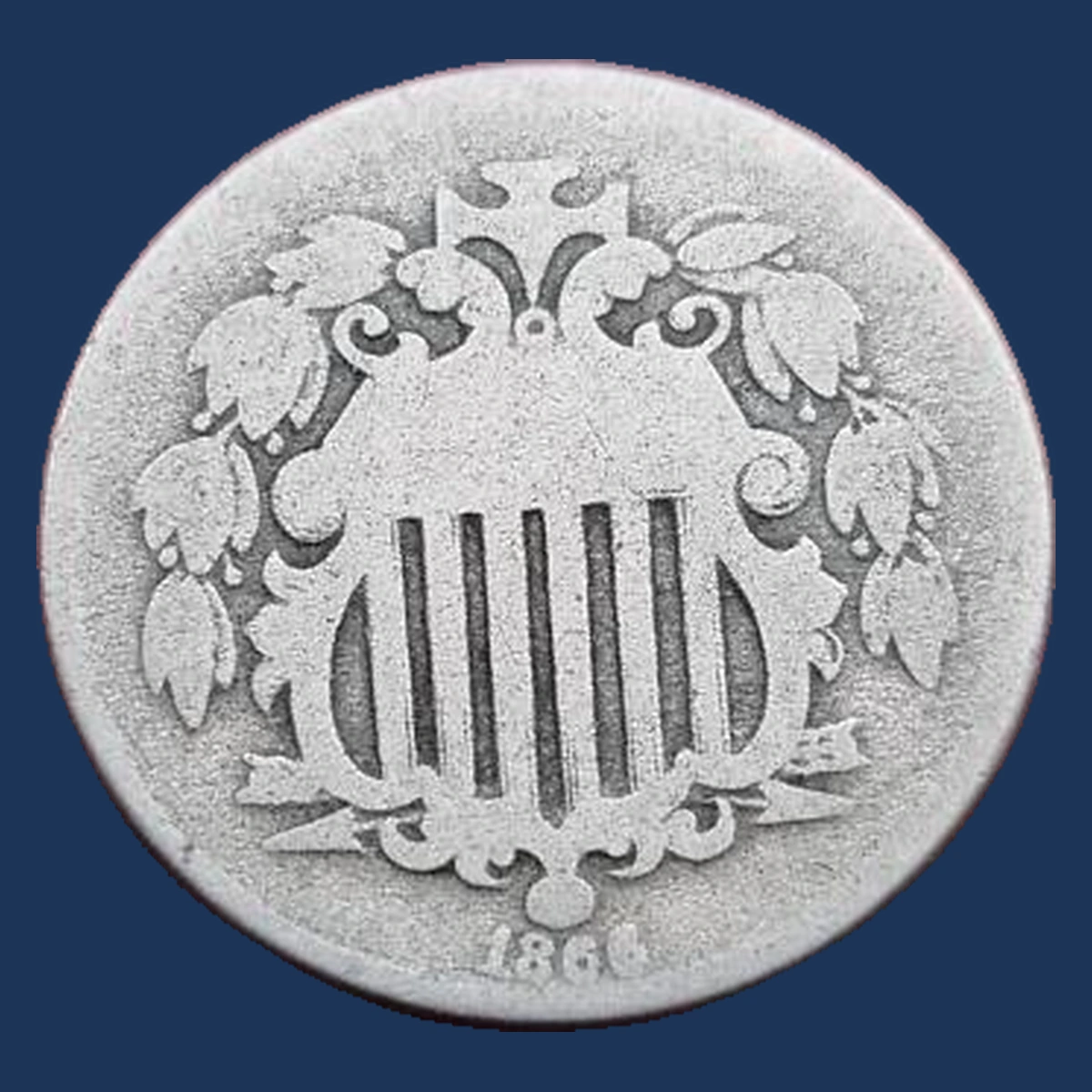
A thin part of the coin’s metal can separate along an internal weakness. The result is a lifted flap or an irregular area where the surface layer has fallen away.
GreatCollections cataloged an 1866 Rays nickel with front lamination in NGC MS65. That grade describes an unworn coin with relatively few marks.
These nickels contain copper and nickel mixed throughout, rather than a modern bonded outer sheet. A separation follows a weakness within that alloy, so the attached edge and nearby surviving design matter more than a change in surface color.
Estimated Value
An estimated $40–$800 covers small genuine laminations across worn and attractive unworn Shield nickels. Much of an MS65 example’s value can come from its condition, beyond the metal flaw itself.
A different 1911 Liberty Head nickel with front peeling sold for $51 in January 2023. That modest comparison does not make the 1866 MS65 equally priced; flaw size, remaining design, and the condition of the entire coin still matter.
How to Identify
Photograph any attached flap from the side without lifting it. Bending a loose layer can break it away and destroy useful evidence of how it joins the coin.
Inspect that attached boundary with a 10× magnifier. Original design continuing onto the flap can help show how the separation relates to striking.
A detached piece can lower the weight below the normal 5 grams, while attached metal may leave it near normal.
The standard Shield nickel is 20.5 millimeters across with a plain edge. Check the edge beside the flaw for a cut or damage that might explain the separation.
Follow the natural layer into sound metal, keeping corrosion and fresh scratches separate from the original weakness rather than calling every rough patch lamination.
4. 1866 Shield Nickel Raised Cracks and Large Rim Breaks
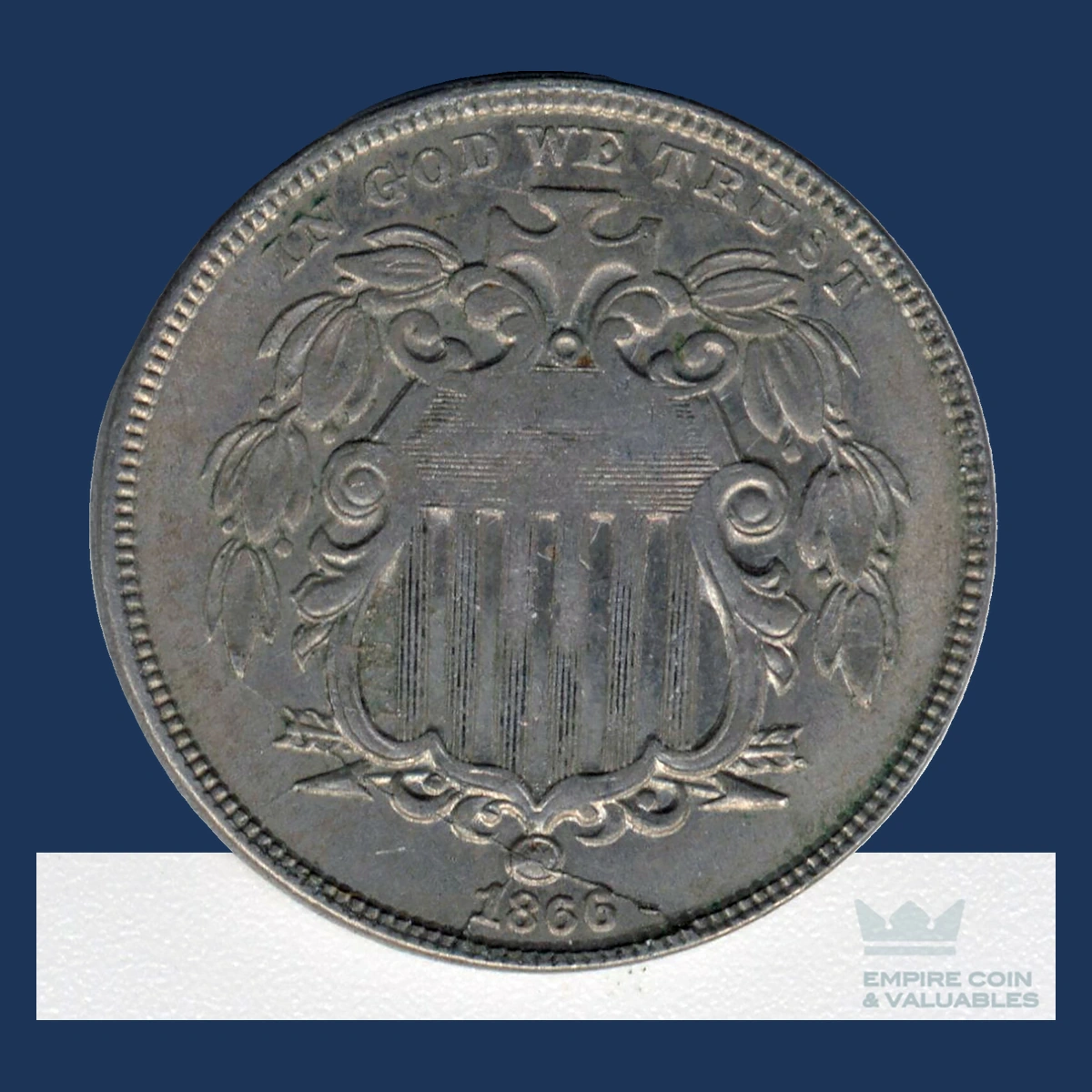
A crack in a stamping tool leaves a raised line on the next coin. If a larger part breaks away at the tool’s edge, metal can form a rim-connected lump called a cud.
Reported 1866 crack paths pass through the cross, left leaves, or back lettering. Large front breaks occur around 3–4 o’clock on one example and across much of the date on another.
Those are separate coins and separate shapes. A line across the surface is not a split in the coin, and a large lump needs its own rim connection.
Estimated Value
Modest raised cracks fit an estimated $25–$200 whole-coin range. Large, clearly formed cuds can support an estimated $150–$1,500, depending on how much design they replace and the remaining coin’s condition.
A dramatic date-area break may attract attention, but the year still needs a reliable match. Original surfaces and a natural transition into the lump matter more than a colorful nickname or an unusually high price attached to an unidentified blob.
How to Identify
Draw the raised line’s route on a photograph before comparing small details. A crack near the cross should be matched to that path, not to an unrelated line around CENTS.
For a cud, follow the patch all the way to the rim. Use side lighting and a 10× magnifier to check whether it belongs to the struck surface.
Inspect the opposite face for an impact that might have pushed up the apparent lump later. Added metal may also look separate from the original surface at its base.
The 3–4 o’clock break and the date-covering example require their own photographs. Do not combine their outlines or use one coin’s visible date to fill in another’s missing digits.
5. 1866 Shield Nickel Repunched and Misplaced Date Strokes
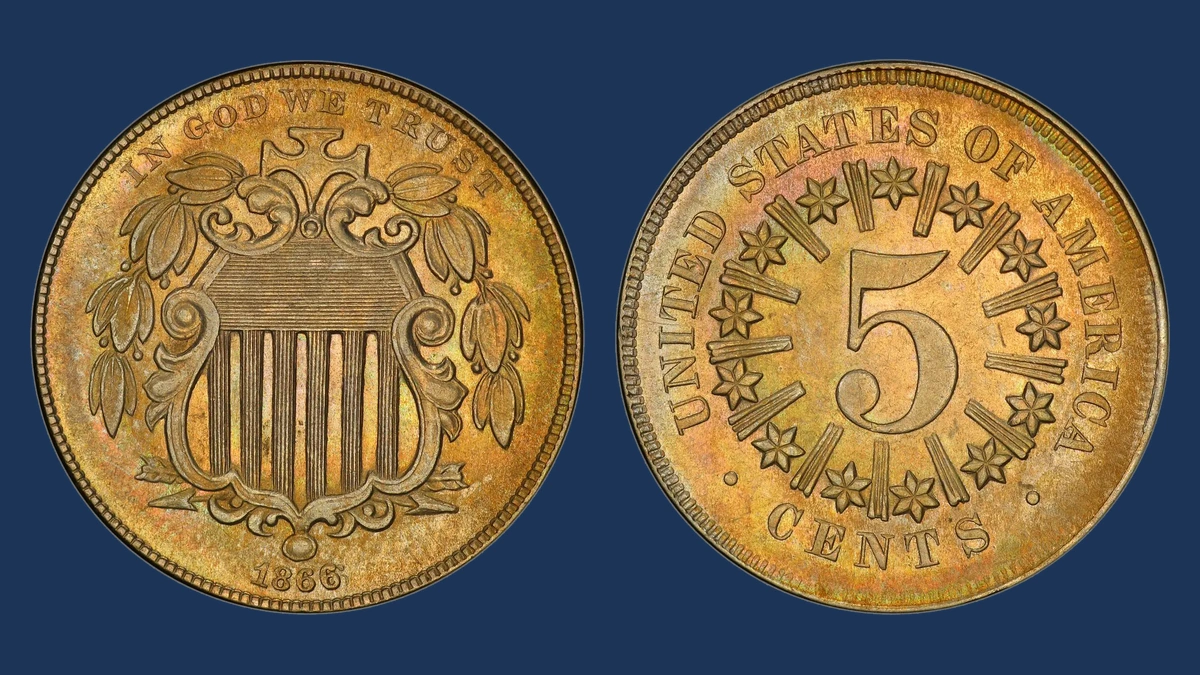
An extra curve beside a date digit can record another impression of the date punch. It entered the steel stamping tool in a slightly different position before coins were made.
One 1866 pattern has extra date traces toward the upper right. Other examples show 18 toward the lower right or extra 6 detail below.
Misplaced traces sit farther outside the normal digits. The catalog records a 6 curve above the border teeth between the last two 6s, and a separate 1 top between its normal foot and the border.
Estimated Value
For identifiable date-punch varieties, estimate $75–$1,500 across worn and attractive unworn ordinary coins. The strength of the visible trace and the particular pattern both affect collector interest.
A faint line hidden by wear is less useful than a clear piece of a second numeral. A misplaced trace and a nearby repunched digit can share one coin, so compare its complete identity and condition instead of pricing every short stroke as another error.
How to Identify
Photograph all four date digits and the border teeth below them together. Extra strokes can sit beside a normal numeral or farther into the space beneath the date.
Use a 10× magnifier to trace the added outline beside each affected digit. The upper-right pattern and the separate lower-right 18 pattern require different reference photographs.
For the misplaced 6, examine the space above the border teeth between the final two digits.
The separate misplaced 1 trace sits between its normal foot and the border. Do not combine these two reported traces unless both are actually present on the same coin.
Move the light across each stroke to rule out a reflection, and compare the remaining curved or straight shape with the matching numeral.
6. 1866 Shield Nickel Doubled Motto and Front Design
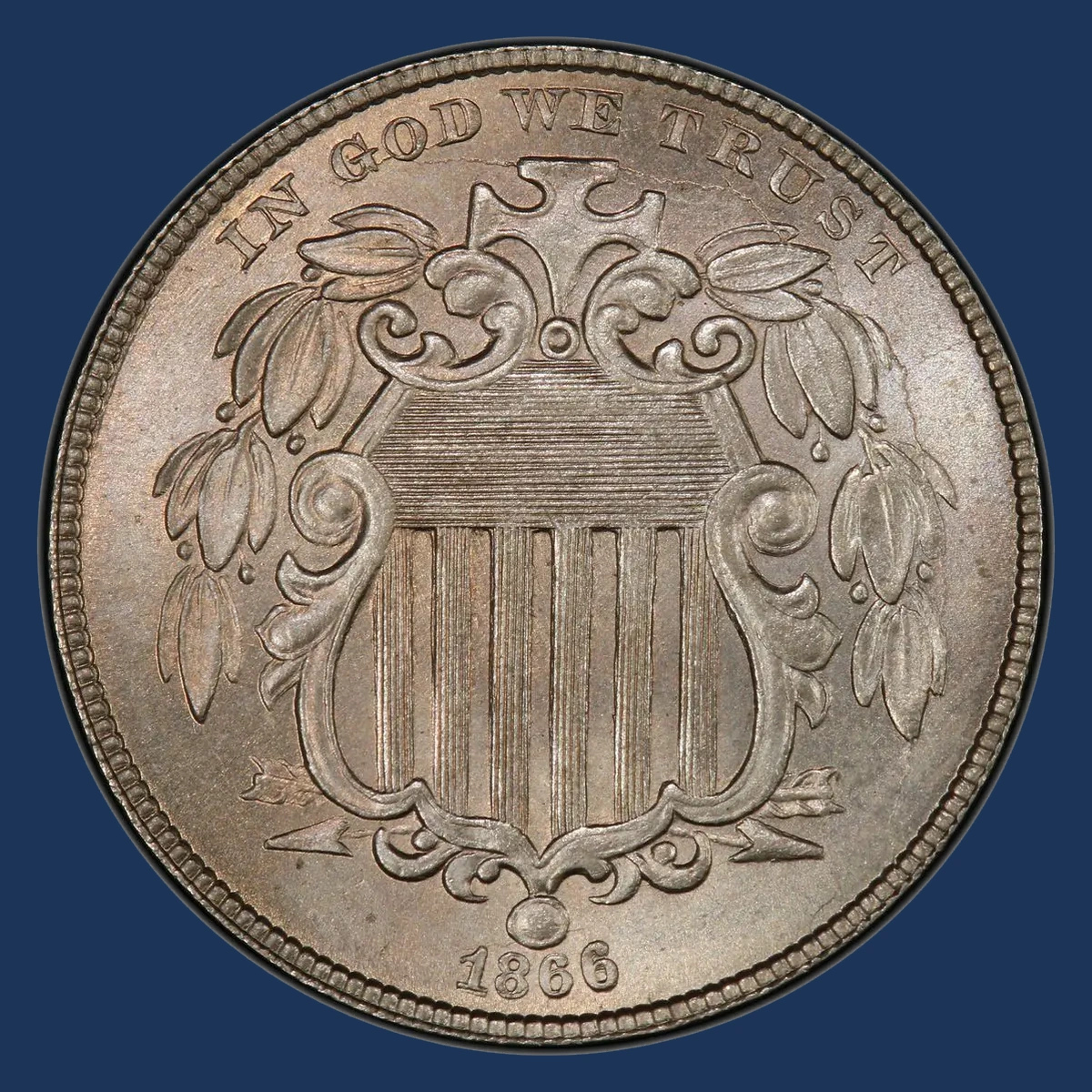
The motto above the shield can carry an extra outline along the left sides of its letters. The 1866 variety catalog identifies this as one doubled-die pattern.
A die is the steel stamping tool, and its design was doubled before it made these coins. Other cataloged examples have a different spread toward the lower left.
The nickel itself did not need a second misplaced blow to show those letters. The useful comparison is a repeated raised shape in the tool’s design, rather than general thickness or a narrow flat ledge beside a letter.
Estimated Value
Use an estimated $100–$2,000 range for matched ordinary-strike 1866 doubled dies, with strong separation and attractive original surfaces supporting higher values. Fainter or heavily worn examples generally provide a more modest comparison.
A complete pattern matters more than one enlarged letter. If a coin also shows date repunching or cracked-tool lines, its condition and all identified features belong in one whole-coin assessment rather than a sum of separate error prices.
How to Identify
Study IN GOD WE TRUST above the shield with the coin upright. Under a 10× magnifier, follow the left edges of the letters rather than looking only at their overall width.
Compare several extra outlines with the Shield Nickel Varieties catalog. A lower-left spreading pattern needs its own reference instead of being forced into the left-motto example.
Tilt the light across the letters. Rounded extra detail should remain fixed, while reflections change as the lamp moves.
Flat shelves may result from movement during striking, and worn tools can thicken letters. A consistent second raised outline at the right locations provides a stronger match than a single bright edge.
7. 1866 Shield Nickel Back Design Turned Out of Alignment
The large 5 may point well away from upright after the shield side is turned over normally. This can happen when one stamping tool rotates relative to the other.
The 1866 catalog lists an example turned about 135 degrees and another close to 180 degrees. The latter is nearly a half turn from the normal alignment.
These angles belong to separate examples. A photograph that has been rotated independently cannot establish the error, because the relationship between the two faces must be preserved while turning or photographing the actual coin.
Estimated Value
Estimate $100–$2,000 for clearly identified large rotations on ordinary 1866 Shield nickels, allowing for differences in angle and condition. A near-half-turn error is easy to display when both faces remain correctly aligned in photographs.
A worn coin can still demonstrate the rotation, but clean original surfaces and a readable date help collector appeal. The angle does not determine a fixed price, and an unusually tilted photograph should not earn a rotation premium.
How to Identify
Hold the shield upright with the date at the bottom, then turn the coin from top to bottom about a horizontal line through its center. Prevent any sideways spin, which would change the apparent relationship between the two faces.
The large 5 should stand upright after this movement on a normally aligned American coin. Observe where it points instead, then repeat the same controlled turn to make sure handling did not create the angle.
A simple holder can preserve the relationship for photographs while you compare the roughly 135-degree example with the separate near-half-turn coin. Record the actual direction and angle on the specimen, rather than estimating rotation from two images that may have been turned independently.
8. 1866 Shield Nickel Extra Metal Struck In below the Date
A small piece of extra metal can remain pressed into the coin after striking. One cataloged 1866 example shows this feature immediately below the final 6 in the date.
The catalog’s marked photograph points to that particular location. The same example also belongs to a repunched-date variety, so the extra metal and date traces share one coin.
The description does not identify the fragment’s alloy or where it came from. Its physical connection to the surrounding design is more useful than assuming it is wire, scrap from another denomination, or loose dirt.
Estimated Value
For authenticated retained metal of this general size, use an estimated $150–$3,000 range, depending on the fragment’s visibility and the coin’s preservation. Clear original contact between fragment and coin makes the feature easier to explain.
The cataloged date variety remains part of the same object. Do not add a second complete valuation for its repunched digits, and do not give attached dirt or later solder the premium of material present during the strike.
How to Identify
Leave the attached material undisturbed and begin with a side-lit photograph that includes the final 6. The recorded feature sits directly below that digit, so the whole date helps keep its position clear.
Inspect the contact under a 10× magnifier from more than one angle, looking for the original strike shaped around the extra piece. A loose particle or a deposit lying across finished details may have arrived after the coin was made.
Compare the connection with the cataloged example without pulling, scraping, or probing it with a needle. The intact boundary is the useful evidence; establish that the material was present during striking before naming its alloy or suggesting where the fragment came from.
9. 1866 Shield Nickel Backward Shield Impression on the Back
The back of this recorded nickel shows a sunken, backward version of the shield design. Collectors call that transferred image a brockage.
The auction title describes the reverse as struck through a capped die. A coin covering the stamping tool carried the raised design that could press its mirror image into the next coin.
NGC gave this example a VG Details description with scratches. That means substantial wear and a surface problem, not a clean numerical grade; the scratches are later damage rather than another feature of the mint error.
Estimated Value
An estimated $500–$5,000 covers authenticated early Shield nickel brockages with differing clarity and preservation. The scratched, well-worn recorded example needs comparison toward the more impaired part of that market.
A recognizable backward shield can remain collectible despite wear. Stronger original detail and undamaged surfaces support better prices, while a faint hollow or a later coin-to-coin squeeze does not justify the same estimate merely because it resembles part of a shield.
How to Identify
Inspect the back under side lighting to see whether the unusual shield sinks into the metal. A normal raised shield at another angle is a different kind of feature.
Reverse a photograph horizontally, or use a mirror, to see whether the sunken design becomes correctly oriented.
Follow enough of the shield to recognize connected design details. Heavy wear and scratches may interrupt the outline, but they do not create the original transferred image.
Check the surrounding rim for crushing that might result from pressing two finished coins together later.
Compare the preserved sunken shield with a documented brockage, separating its backward design from the later scratches that explain this specimen’s Details grade and poorer condition.
10. 1866 Shield Nickel Second Strike Far Off Center
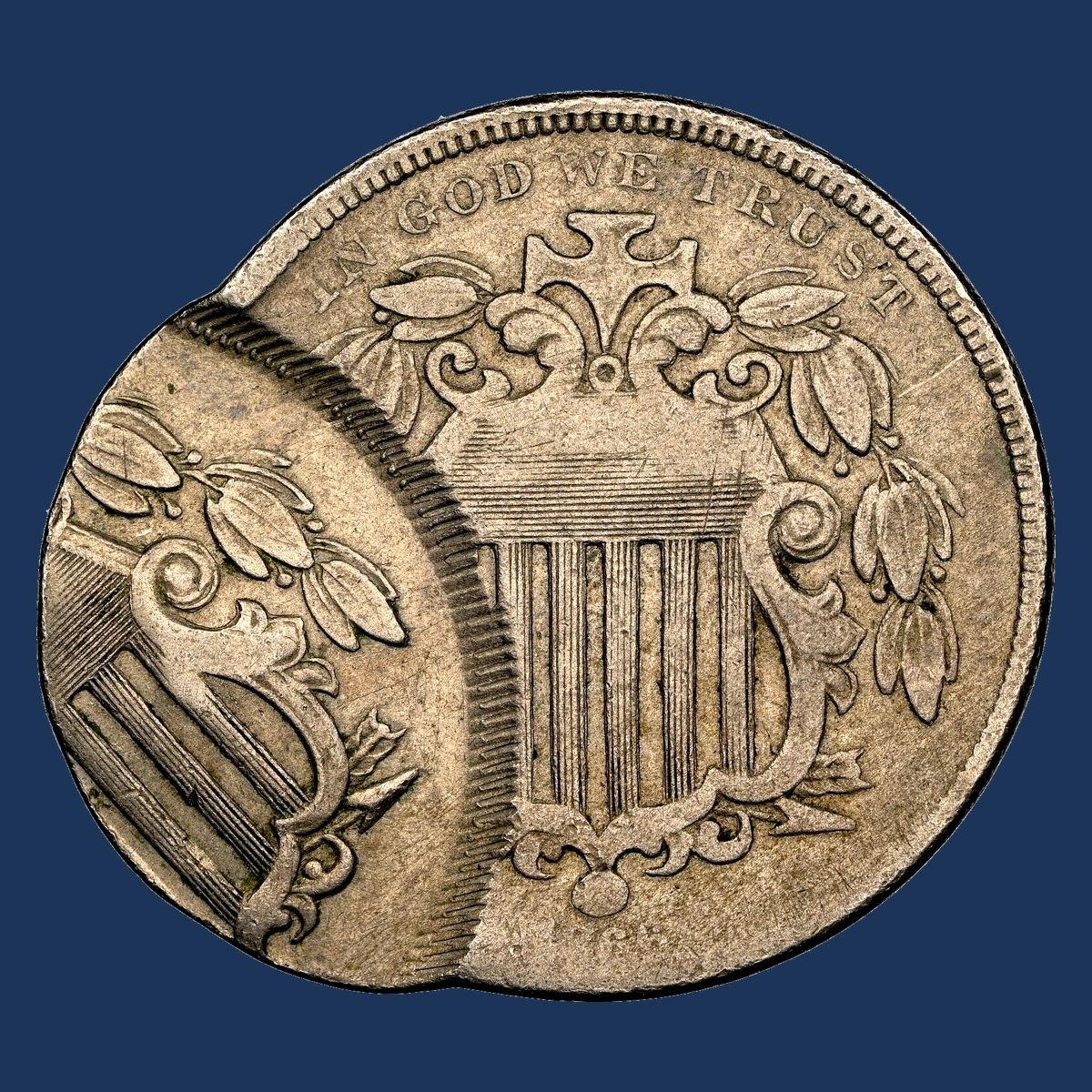
A second part of the design can sit far outside its first position when a struck coin receives another blow after moving. The resulting outline and overlapping images record both strikes.
The Shield Nickels specialist site illustrates an 1866 example supplied by Ken Hill. Its description identifies two strikes with the second far off center, without assigning an exact percentage.
This is different from tiny doubled lettering already present on a stamping tool. A large displaced second impression needs to be followed across the actual coin, not counted from a few bright lines alone.
Estimated Value
Estimate $1,000–$8,000 for an authenticated 1866 double strike with a clearly displaced second image. The amount of visible separation, readable year, and condition of the surfaces affect the comparison.
The single-strike off-center example below brought $11,100 in July 2022 in exceptional unworn condition. That different error shows why preservation can matter more than the number of blows; two strikes do not automatically make a worn coin worth twice as much.
How to Identify
Keep the entire outline visible and find the clearest shield or large 5 belonging to the first strike. Locate a second group of details that cannot fit that same position, instead of counting isolated extra lines.
At the overlap, a 10× magnifier can reveal where the later blow flattened the earlier design. Follow several related letters or design fragments into the displaced second impression, then turn the coin over to see whether the other face supports that sequence.
Preserve the visible date in your photographs and compare the arrangement with the illustrated Ken Hill example. Its description gives no exact off-center percentage, so record the actual displaced design without borrowing a number from a different nickel.
11. 1866 Shield Nickel Strike 30% Off Center
This recorded 1866 nickel was struck 30% off center toward 11 o’clock. Part of the intended lettering fell beyond the blank, while the date and large back 5 remained visible.
NGC graded the coin MS66, meaning unworn with very few imperfections. Its sharp remaining design makes the displaced strike especially easy to see.
The coin also has front die cracks, but they do not represent additional off-center strikes. The wide shift and untouched crescent come from one misplaced blank, with the remaining metal receiving only the part of each design it overlapped.
Estimated Value
The NGC MS66 coin sold for $11,100 in July 2022. An estimated $500–$12,000 spans more worn dated Shield nickel off-center errors through exceptional examples of this kind.
The top result reflects both the visible shift and unusually strong preservation. A smaller displacement, damaged surface, or incomplete date can make another coin much less desirable even when its basic striking error is genuine.
How to Identify
Compare the date and large 5 with the metal’s outline, then follow the missing lettering toward the edge. On the recorded example, the design shifts toward the upper left at about 11 o’clock.
The other side of the outline should contain the unstruck crescent. Inspect both faces to confirm that one misplaced blank explains their design positions.
A loose normal Shield nickel starts near 5 grams and 20.5 millimeters across. An off-center strike can change the outline without removing metal.
With a 10× magnifier, examine the plain edge and blank area for filing or later flattening. A naturally unstruck surface opposite the lost design is the key physical relationship.
12. 1866 Shield Nickel Design Struck on a Cent Blank
A smaller copper-alloy blank can receive the Shield nickel design instead of an Indian cent design. Its limited size leaves less room for the nickel’s outer lettering.
A specialist study records an 1866 example graded PCGS XF45. This is a worn coin with much design still visible, rather than a specially made experimental pattern.
The actual weight is not supplied in that description. Normal cent-blank standards can guide a comparison, but they should not be presented as measurements of this particular coin or proof that any copper-colored nickel has the same origin.
Estimated Value
For an authenticated 1866 Shield nickel on a cent blank, estimate $4,000–$15,000, depending on the surviving design and condition. A clear year and undisturbed copper-alloy surfaces make the wrong denomination easier to understand.
A much better-preserved 1873 Shield nickel on a cent blank sold for $21,600 in May 2022. That different-year, high-grade result provides context for the category; it is not the sale price of the recorded worn 1866 example.
How to Identify
Check that the design is the Shield five-cent type, with a large 5 on the back. Then examine how its outer lettering meets the smaller blank.
A normal Shield nickel is 5 grams and 20.5 millimeters across. An Indian cent blank normally starts near 3.11 grams and 19.05 millimeters, but striking may spread it.
Record a loose candidate’s actual weight and dimensions instead of substituting those standards. Under a 10× magnifier, inspect the edge for filing or a coating that changes its color.
A specialist can identify the alloy without scratching the coin. The smaller original blank, appropriate metal, and naturally cropped nickel design must agree before assigning this error name.
Conclusion
Estimated $25–$15,000 values span small tool flaws and major 1866 Shield nickel errors. The normal rays around the back’s 5 are part of the design, while extra outlines or misplaced strikes need separate comparisons.
Photograph the date, both complete faces, and any unusual edge. Leave attached metal alone, and judge a coin’s condition together with its error rather than adding a full price for every visible feature.