1897 Nickel Error List with Pictures

Examine the date, surface, and outline separately when checking an 1897 Liberty Head nickel error. A second date outline comes from a different mistake than a peeling face or a design struck on the wrong blank.
Estimated values span $20–$6,000. For comparison, a different-year 1905 nickel on a cent blank sold for $3,120 in August 2024.
Read on to compare four types without mistaking wear or later damage for a minting error.
1. 1897 Liberty Head Nickel Peeling on the Portrait Side
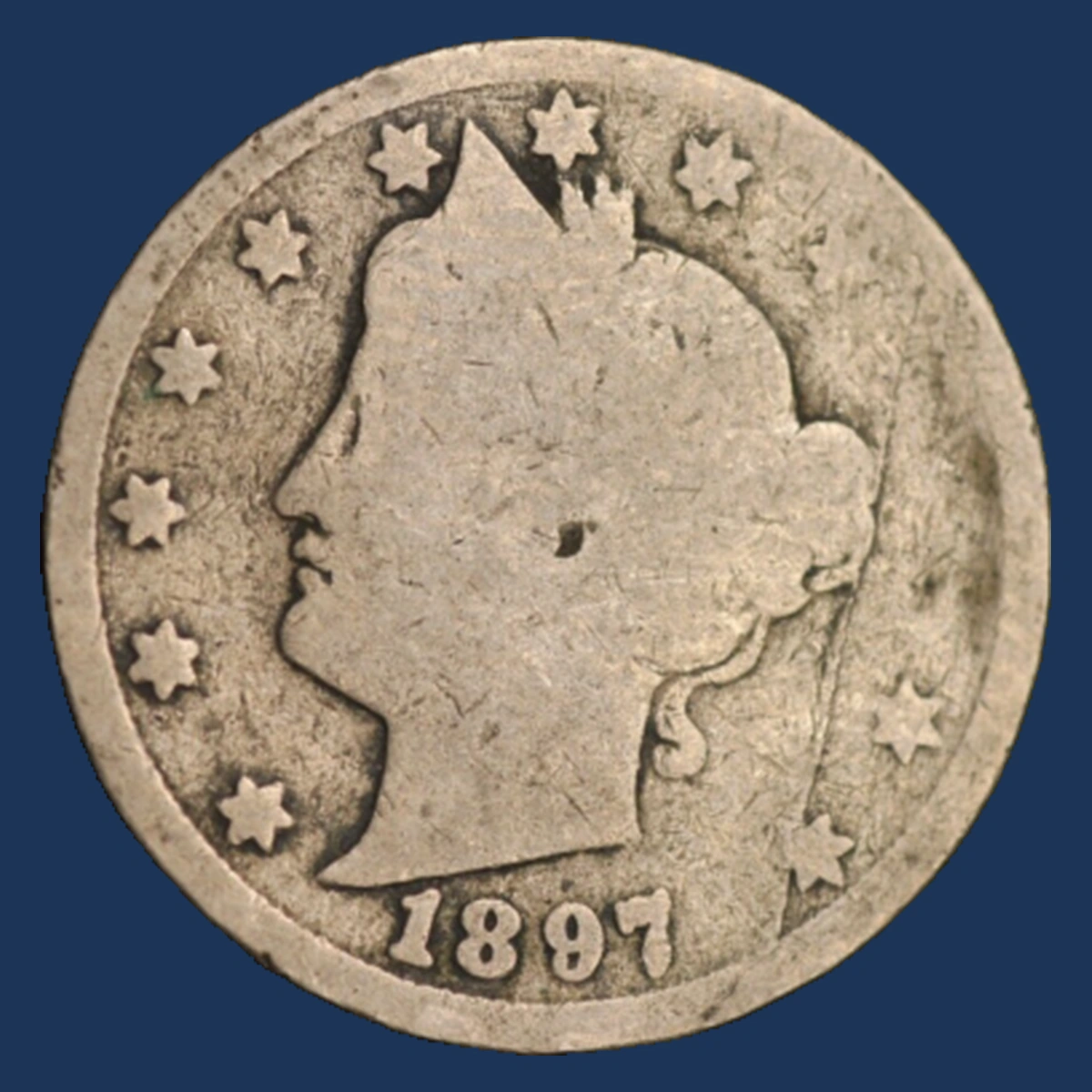
The surface can open into a thin peel when the metal contains an internal weakness. This is called lamination, and it begins within the blank rather than as an extra design on the stamping tool.
A seller reported an 1897 example in a PCGS holder labeled AG03 with front lamination. AG03 means heavy wear, so much of the original portrait detail is already faint.
The description identifies the affected face without fixing the peel’s precise position. A particular line through Liberty’s hair, cheek, or date should not be assumed from that short label.
Estimated Value
A genuine front lamination is estimated at $20–$250, depending on its size, remaining detail, and preservation. A heavily worn example generally makes a weaker comparison with a clear peel on an attractive coin.
An attached strip can help reveal how the surface separated. A shallow rough area may be harder to explain, especially when wear has flattened the surrounding design.
The estimate is for the whole nickel. Cleaning or pulling loose metal away can reduce its appeal.
How to Identify
Heavy wear can make several parts of the face look flat, so first find a genuine opening or lifted layer. Use a 10× magnifier and light held low across the surface.
A natural peel separates along a thin boundary within the metal. A gouge cuts across completed detail and may leave sharp edges or displaced metal beside the cut.
Do not lift the flap or brush the opening. Keep a graded coin sealed, using photographs through the holder to examine the affected area.
For a loose nickel, compare weight with 5 grams on a scale and diameter with 21.2 millimeters using calipers. Inspect the plain edge; missing material can lower weight, but an attached flap need not.
2. 1897 Liberty Head Nickel Repunched 1897 Date
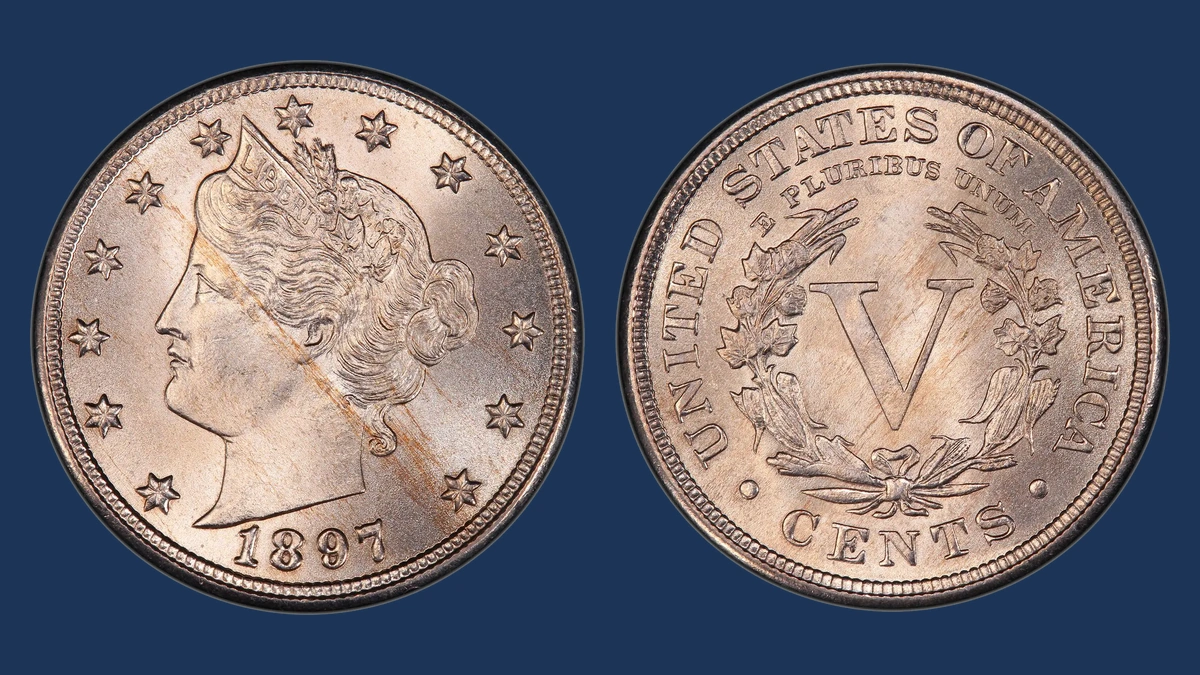
A faint extra stroke beside a number may be part of an earlier date impression in the die, the steel stamping tool. Coins made with that tool repeat the same overlapping date pattern.
NGC recognizes an 1897/1897 variety called FS-301. Its description places the later date impression northwest, or upper left, of the first impression.
The older catalog number FS-014.48 and Flynn–Van Note RPD-006 refer to this same variety. They do not represent three different errors.
The name describes one year punched again. It does not mean an 1897 coin was struck over a different year.
Estimated Value
Estimate $20–$1,500 across worn repunched-date coins and attractive unworn examples with a recognized pattern. The clearest, best-preserved pieces belong toward the stronger end of that broad range.
A date that can be matched confidently is more useful than an unexplained thick numeral. Overall condition also contributes to the price, particularly when a nickel retains strong portrait detail and original surfaces.
Wear can erase the small remnants. A scratch or a flat striking shelf should not receive the same variety premium.
How to Identify
Photograph all four digits together while keeping the coin upright under a 10× magnifier. Compare the overlapping strokes with NGC’s FS-301 photographs, rather than choosing a single bright line beside one digit.
For a loose complete nickel, use a scale and calipers to check roughly 5 grams and 21.2 millimeters. Inspect the plain edge and date area for filing, added metal, or scratches that could change the apparent number outlines.
Move the light to test whether the extra shapes stay fixed instead of disappearing as reflections. The pattern must fit the later date impression lying northwest, or upper left, of the first, without substituting flat shelves from striking movement.
3. 1897 Liberty Head Nickel Ten Percent Off-Center Strike
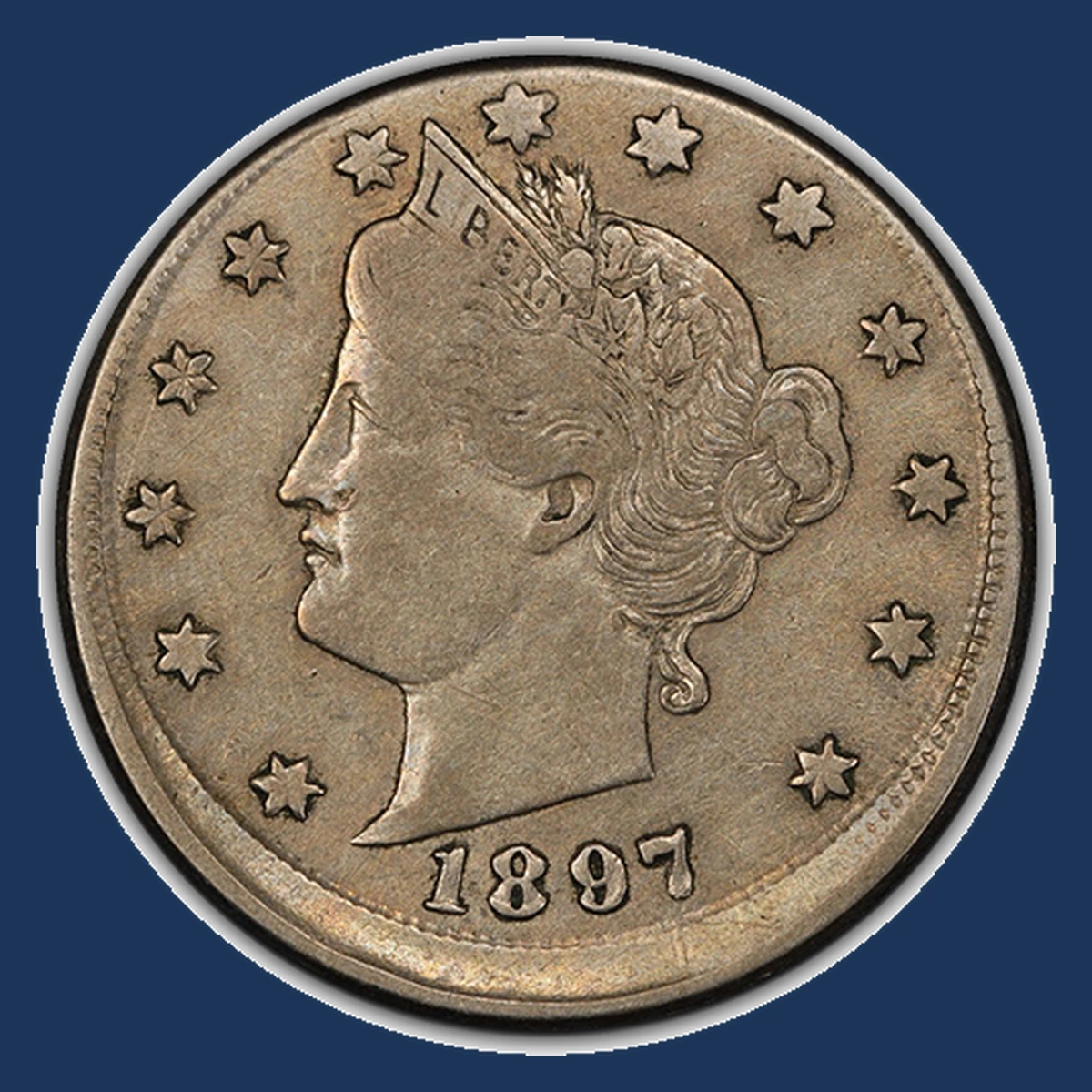
Part of the blank stayed outside the design when this nickel entered the press out of position. The resulting coin combines an untouched crescent with details cut off at the opposite side.
A dealer listed an 1897 example as 10% off center in PCGS XF40. XF40 describes moderate wear while retaining much of the design.
The listing establishes the amount of shift but does not fix a direction in the available description. Both faces must therefore be compared with the actual specimen rather than rotated to match another year’s off-center coin.
Estimated Value
The dealer offered the XF40 example at $725, an asking price rather than a completed sale. An estimated range of $200–$1,500 covers genuine dated examples with different wear and amounts of displacement.
The blank crescent should be easy to see, and a readable 1897 date helps identify the issue. A larger shift may look dramatic but can also remove useful date or portrait detail.
Deep scratches or later edge damage can reduce interest in an otherwise genuine error.
How to Identify
Compare the front and back before measuring the shift. Both designs should fit the same displaced blank, with unstruck metal remaining opposite the lost design.
Check the full date under a 10× magnifier. A similar-looking nickel with an unreadable date cannot simply take the identity of this 1897 example.
The normal blank starts at 5 grams and 21.2 millimeters. Use a scale and calipers only on loose coins, keeping the certified XF40 example sealed.
Inspect the plain edge and the boundary of the untouched crescent. A later cut removes metal, whereas the off-center strike leaves an original area that never received design.
4. 1897 Liberty Head Nickel Struck on a Cent Blank
A cent blank is too small to hold the full nickel design in its intended space. If it enters the nickel press, it receives Liberty’s portrait and the large V instead of an Indian cent design.
Heritage’s December 2024 catalog includes an 1897 example graded PCGS AU55, meaning light wear. The catalog identifies the underlying disk as a one-cent blank.
That blank should be compared with the bronze cent metal used in 1897. A brown surface alone is not sufficient, since an ordinary nickel can become stained without changing its underlying metal or size.
Estimated Value
A genuine cent-blank 1897 nickel has an estimated range of $2,000–$6,000. The smaller blank’s identity, surviving design, and surface quality all affect the price.
A 1905 nickel on a cent blank sold for $3,120 in August 2024, providing a different-year comparison. That result does not establish what the 1897 AU55 example realized.
Readable date digits and natural bronze surfaces help support the identification. Coating, cleaning, or damage around the edges can weaken both appearance and value.
How to Identify
Compare the candidate’s outline with a normal nickel, then measure a loose example. A nickel is normally 21.2 millimeters across, while a contemporary cent blank begins near 19.05 millimeters.
Use a scale to compare the nickel standard of 5 grams with the cent standard of 3.11 grams. These are normal blank specifications, not published measurements of the AU55 coin.
Under a 10× magnifier, inspect the plain edge and the way the nickel design meets the smaller boundary. Striking may spread the blank, so its finished diameter need not match the starting disk exactly.
Check the metal without scratching or filing it. Size, weight, and genuine bronze composition must agree; a coating or trimmed nickel should not pass those checks.
Conclusion
The estimated $20–$6,000 range covers very different mistakes, from a local peel to a nickel design on cent metal. A small date remnant can also matter when it matches the recognized repunched-date pattern.
Keep fragile metal in place, preserve grading labels, and photograph the whole coin before enlarging details. A useful identification connects the visible feature with how it formed, rather than relying on a nickname or asking price.