1908 Nickel Error List with Pictures

An unusually sharp 1908 off-center nickel carried an $800 asking price in a 1983 dealer catalog. That was an offer to sell, not a recorded auction result.
This 1908 nickel error list spans estimated values of $15–$2,000. Some clues sit inside the date, while others involve the blank’s edge or surface.
Look below for the extra digit, peeling metal, clipped edges, and displaced designs that separate these errors.
1. 1908 Liberty Nickel Lamination
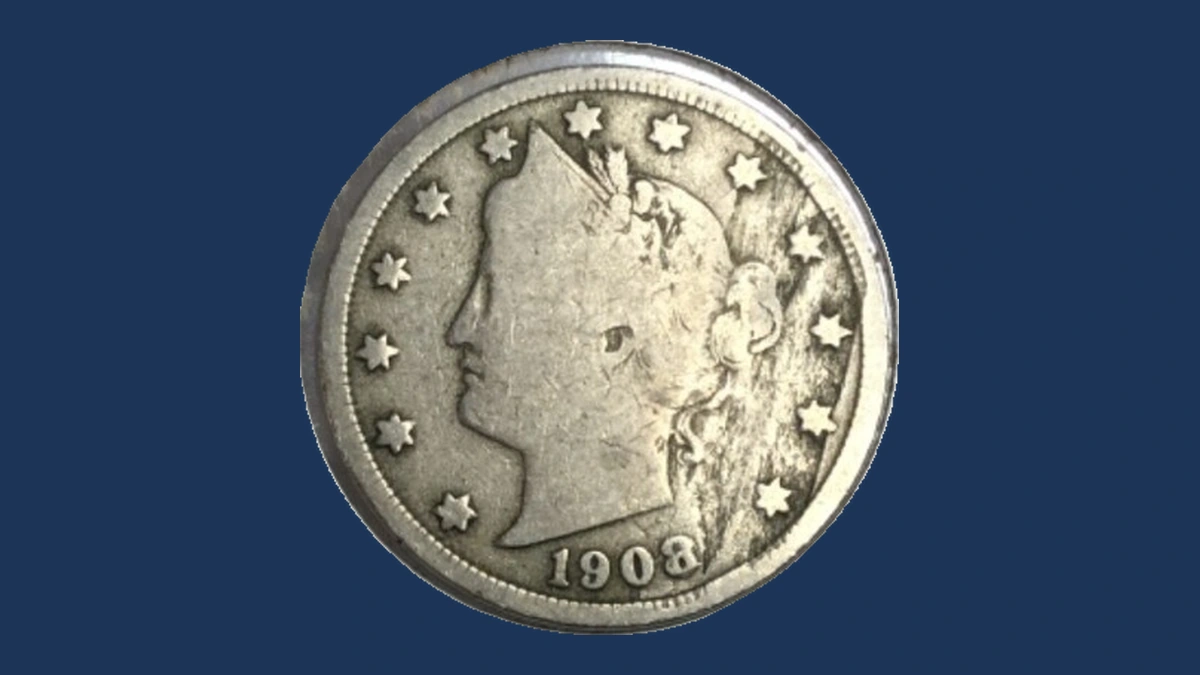
A rough patch may mark the place where a thin layer of metal began to lift. A seller’s 1908 example describes peeling on the front, while year guides also report this kind of surface flaw.
Collectors call the separation lamination. It starts with a weak area inside the blank’s copper-nickel alloy, rather than a coating added to the coin.
The loose layer may stay attached or fall away and leave a shallow hollow. A small peel does not mean the entire coin separated into two halves.
Scraping and corrosion can produce similar rough patches.
Estimated Value
For confirmed 1908 surface laminations, estimate $15–$250. Small flakes on worn coins usually sit below larger, clearly visible separations on better-preserved examples.
The reported front-peeling coin is described as VG+, meaning heavily worn with some surviving detail. No completed selling price is assigned to it here.
The estimate depends on the original coin as well as the flaw. Harsh cleaning or corrosion can reduce demand even when part of the peeling is genuine.
How to Identify
Leave the raised layer in place and angle a lamp across it. With a 10× magnifier, inspect where the flap joins the surrounding metal instead of trying to lift its edge.
A natural split can reveal a thin layer or rough inner surface. Scraping may leave parallel tool marks, and corrosion can make scattered pits without producing the same attached sheet.
Check a loose coin with a scale and calipers against 5.00 grams and 21.21 millimeters. A small attached flake may change neither figure, while a larger missing piece can reduce the weight.
The reported front example has no fixed clock position. Follow the joining edge of the actual peel rather than choosing a spot based on the year alone.
2. 1908 Liberty Nickel Repunched and Misplaced Date
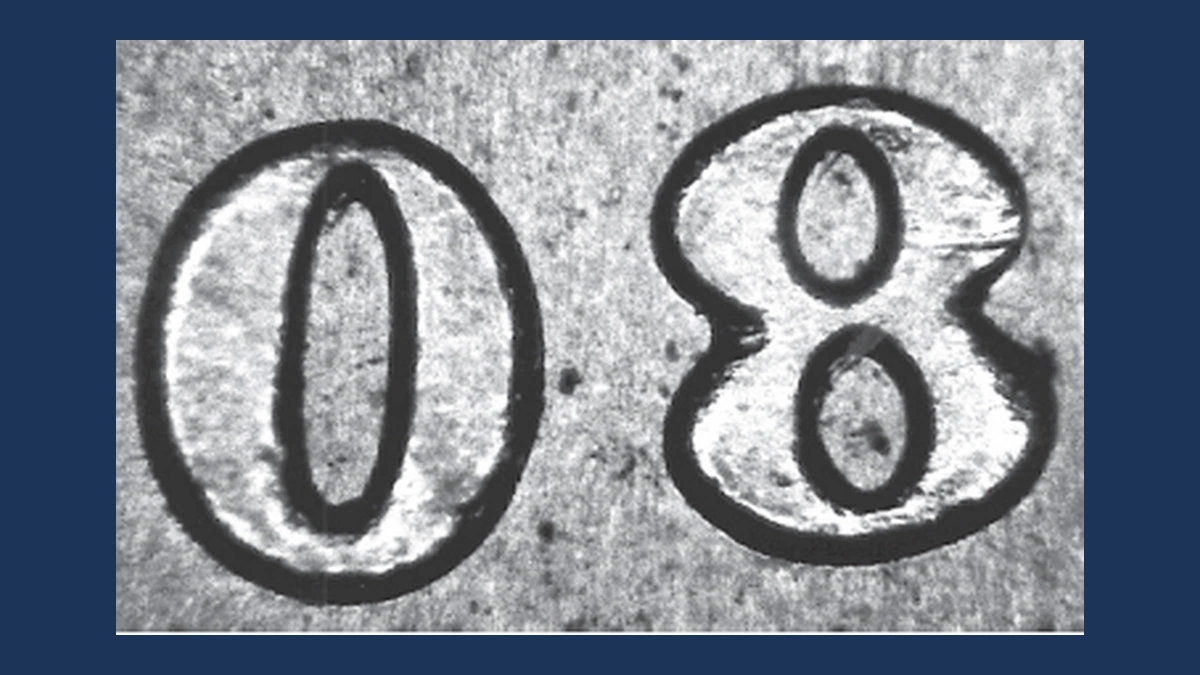
This variety has two clues in the same small area. All four date digits show extra punching toward the right, and another piece of an 8 sits below them.
The top of that extra 8 appears among the small tooth-like border details between the regular 0 and 8. Collectors call those border details denticles.
The marks came from date punches applied to the steel stamping tool, or die. Coins made with that tool repeated the misplaced and repunched digits together.
The extra 8 is therefore not a separate mistake to price twice on the same coin.
Estimated Value
Estimate $30–$300 for identifiable circulated through lower unworn examples. Clear extra digit shapes and original surfaces matter more than the variety label by itself.
Kevin Flynn’s misplaced-date reference lists older values of $25 in Very Fine and $190 in MS63. Those are guide figures, not auction results.
The current estimate allows for differences in grade and visibility. Both date features belong in the one whole-coin price.
How to Identify
Center a 10× magnifier between the 0 and 8, just above the toothed border. Look for the rounded top of the extra 8 rather than a random shapeless bump on one border tooth.
Then follow the regular 1908 digits for the extra strokes to their right. A matching coin should combine that repunching with the lower misplaced digit described in the reference.
A scale and calipers can compare a loose example with the normal 5.00 grams and 21.21 millimeters. These checks screen the coin itself; the paired date features identify the variety, so photograph the entire date and border together.
3. 1908 Liberty Nickel Clipped Blank
Two small gaps and one larger curved gap need not come from the same coin. A collector records a 1908 double clip totaling four percent, graded PCGS AU58 for very slight wear.
GreatCollections separately listed a curved clip at 5.12 grams, graded ANACS MS60 Details. That describes an unworn coin with a condition problem, not necessarily the same problem on every clipped nickel.
A clipped blank lacks metal before striking, often because its punch overlapped an earlier hole. The stated weight is above the normal five grams and remains part of that specific listing.
Estimated Value
An estimated $50–$450 covers recognizable 1908 clips across worn and stronger examples. The shape, number of openings, surfaces, and remaining detail affect the result.
The four-percent double clip and 5.12-gram curved clip have no individual auction prices assigned here. Their different grades should not be blended into one specimen.
A natural pair of gaps can appeal to an error collector, but two gaps do not automatically double the value of one.
How to Identify
For the double clip, inspect both missing sections under a 10× magnifier. A four-percent total does not mean that each gap removes four percent.
Check how the original rim approaches each opening. A natural curved shortage should differ from a sharp notch cut through an already finished edge.
Weigh a loose coin, but do not reject it solely for reading near or above 5.00 grams. The listed curved example is recorded at 5.12 grams.
Use calipers across intact areas against the normal 21.21 millimeters. No exact gap positions are assigned to these two examples here.
Examine the exposed edges for filing and compare any weak rim opposite a gap. The flow of original metal into the openings is more revealing than weight alone.
4. 1908 Liberty Nickel Defective Planchet
The recorded weight is the clearest numerical clue for this example: 4.7 grams instead of the usual five. GreatCollections lists the coin as struck on a defective planchet, meaning a flawed blank.
NGC graded it MS62, an unworn grade that allows noticeable marks. The listing does not explain the exact location or cause of the blank’s defect.
A low weight alone cannot tell whether metal was missing, poorly formed, or affected in another way. It also does not prove a foreign blank or a peeled layer.
The coin’s surfaces must complete that picture.
Estimated Value
Use an estimated $75–$500 for a genuine 1908 defective blank of this general kind. A visible, understandable flaw and an attractive original surface support stronger interest.
The 4.7-gram MS62 example sold in August 2018, but its realized price is not stated here. The page’s $130 starting bid is not used as the final amount.
The estimate should not be mistaken for a foreign-blank valuation.
How to Identify
Put a loose candidate on a scale first and record the result without rounding it to a whole gram. The listed example is 4.7 grams; normal Liberty nickels are 5.00 grams.
Measure the diameter with calipers against 21.21 millimeters. Then inspect the faces and plain edge with a 10× magnifier for missing metal, unusual texture, or later removal.
A light coin with filing marks can be damaged rather than mint-made. The catalog’s broad description is not enough to assign one exact cause to every similar-looking nickel.
For a coin in a grading holder, use its recorded measurements rather than opening it. Match the visible flaw and original surfaces to the documented example, not just the low weight.
5. 1908 Liberty Nickel Off-Center Strike
The portrait and lettering can run beyond the metal when the blank sits too far to one side. The portion outside the striking area remains blank, creating a visible crescent.
A 1983 dealer catalog lists a fifteen-percent off-center 1908 Liberty nickel described as Gem BU, or a particularly attractive unworn coin. A 1981 catalog places a reported example toward 1 o’clock.
The two descriptions do not establish whether the catalogs showed the same specimen. Both describe a shifted design rather than a missing piece of the blank.
An uneven border alone does not mean the design missed the metal.
Estimated Value
For dated 1908 off-center nickels, estimate $150–$2,000 across circulated and stronger examples. Clear displacement and preserved surfaces are more helpful than a dramatic shape with an unreadable year.
The 1983 dealer catalog asked $800 for its fifteen-percent Gem BU example. This is a historical offer, not an auction record or a fixed current price.
The estimated upper end allows for better condition and stronger collector interest than a worn example.
How to Identify
Find the 1908 date on the coin before comparing its displacement with a catalog image. All Liberty nickels of this year came from Philadelphia, so no D, S, or P letter should be present.
Check both faces for the same misplaced strike and examine the blank crescent under a 10× magnifier. Grinding away part of a normal design can leave surface marks that differ from untouched blank metal.
A scale should place an intact loose coin near 5.00 grams, while calipers can record its outline against 21.21 millimeters. The useful match is cropped design on both faces beside naturally unstruck metal, rather than an uneven rim on only one face.
Conclusion
The estimated $15–$2,000 range covers small peeling flaws through stronger off-center 1908 nickels. The old $800 dealer offer helps document an example, but it is not a modern auction record.
Compare the entire date before naming a punching variety. For clipped or defective blanks, examine the edge as carefully as the weight.
All 1908 Liberty nickels came from Philadelphia, and no mint letter belongs on their original design.