1917 Nickel Error List with Pictures

A $11,500 auction result belongs to a 1917 Buffalo Nickel with doubled back lettering, rather than a spectacular missing chunk. Bowers & Merena sold the MS64 example in June 2010.
These 1917 Buffalo Nickel errors reward a close look at both small details and the whole coin. Estimated values range from $10 to $15,000, covering minor raised cracks through scarce doubled designs.
The guide below explains the visible clues, including how one nickel can separate into two matching pieces.
1. 1917 Buffalo Nickel Raised Cracks and Reported Rim Break
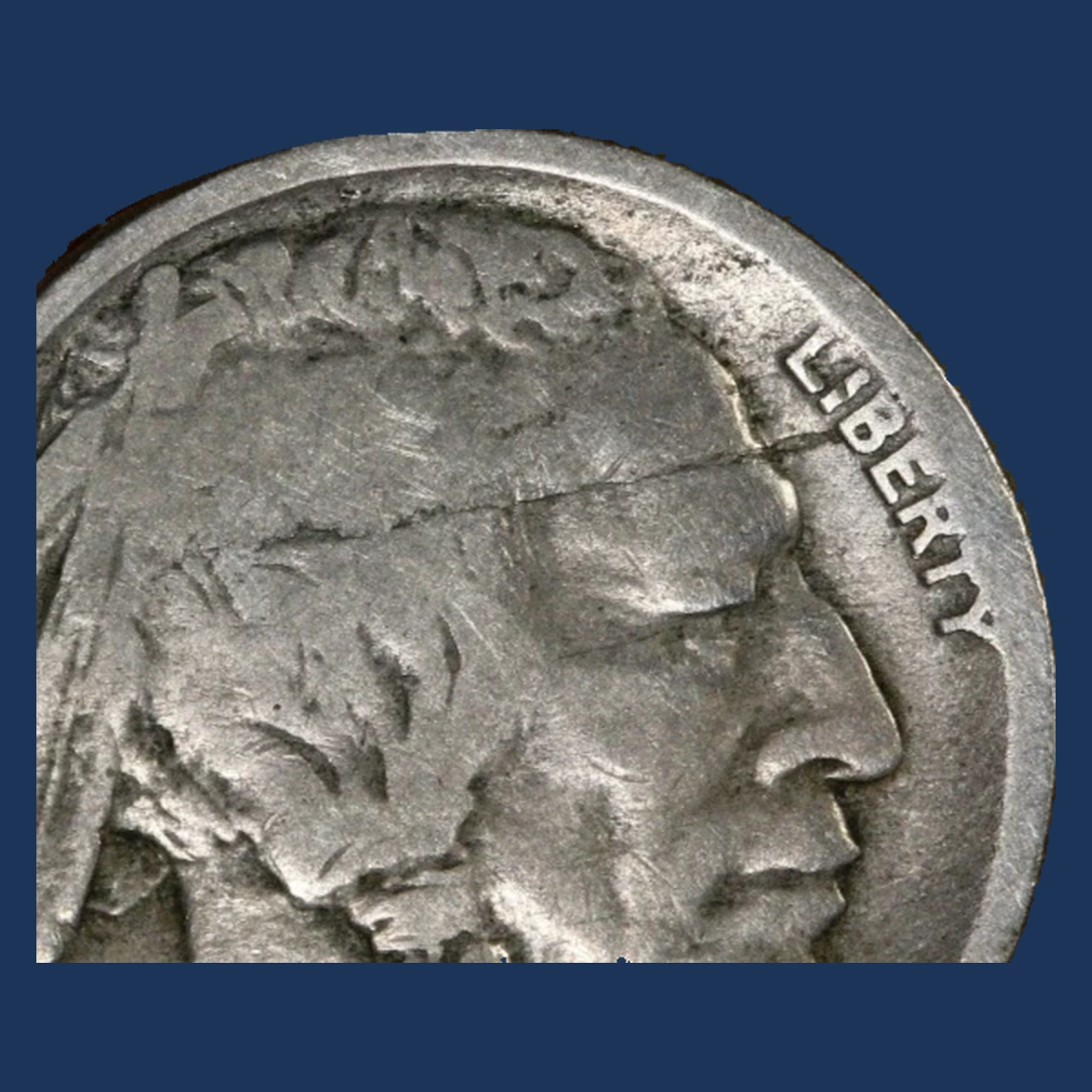
A fine raised line above the portrait can be the result of a cracked stamping tool. Metal entered the crack under pressure, leaving a ridge rather than a cut on the coin.
A larger smooth patch touching the rim is called a cud. It forms when part of the tool breaks away.
A collector describes a platform-like area beneath the date on a worn 1917-S coin. That particular piece needs authentication before the feature can be accepted as a genuine mint-made break, rather than damage or a counterfeit feature.
Estimated Value
Allow an estimated $10–$100 for a modest genuine raised crack, with a clear rim break extending the range to about $400. Size, wear, and the coin’s mint affect the whole-coin price.
The upper estimate applies to an authenticated mint error. It is not an auction result or an authentication of the reported 1917-S piece.
A raised area created by impact, added material, or a counterfeit does not receive this mint-error premium.
How to Identify
Inspect beneath the date and above the portrait under a light held low to the surface. Follow a suspected raised line with a 10× magnifier to see whether it rises naturally from the coin.
A rim-connected patch should be continuous with the surrounding metal. Turn the coin sideways and look for a nearby dent that could have pushed metal upward.
For a loose example, check the plain edge, 5 g weight, and 21.2 mm diameter with a scale and calipers.
Those measurements alone do not authenticate the reported 1917-S piece. A specialist should examine that coin before its platform-shaped area is valued as a cud, even if the lump touches the rim.
2. 1917 Buffalo Nickel Peeling Metal and a Split Pair
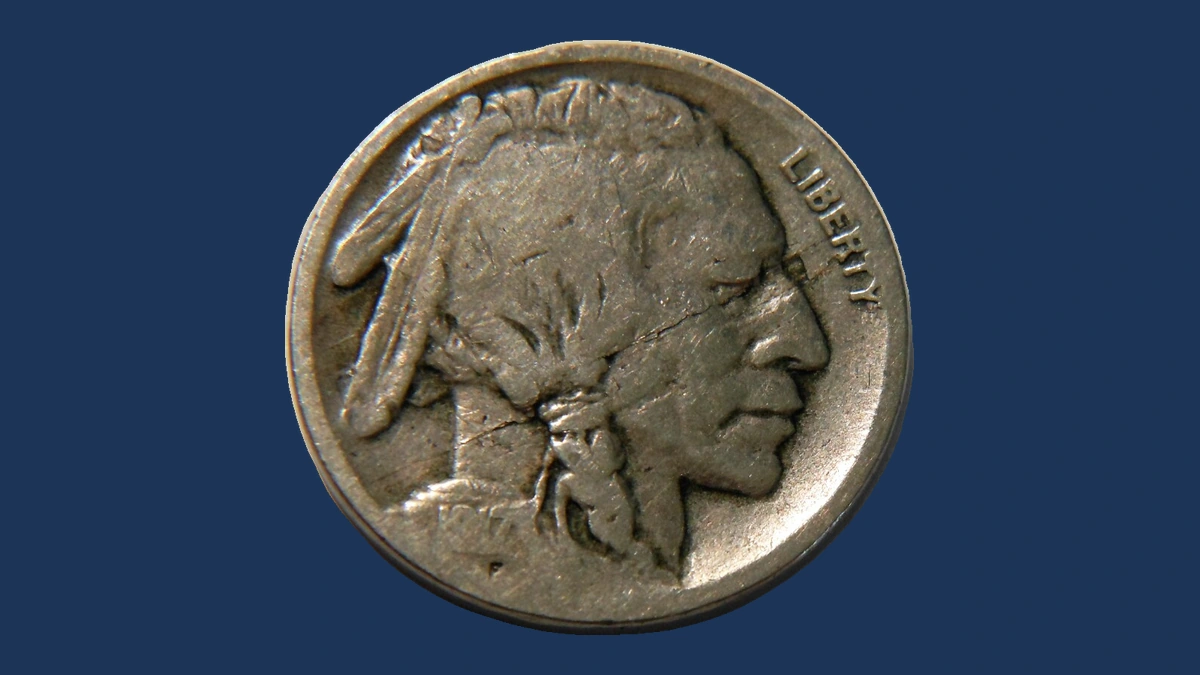
A thin flap can separate from a Buffalo Nickel when the metal contains a weak layer. This peeling is called lamination, and it may affect only a small patch.
In a more extensive failure, the coin separates through its thickness. One piece retains the portrait, while its partner retains the buffalo, with rough inner surfaces exposed.
A recorded 1917 pair has both matching pieces graded NGC MS64. The pair represents one original coin split after striking, not two separately made nickels or two separate error events.
Estimated Value
Estimated values range from $10–$2,500, with small worn laminations at the low end and attractive matching split pairs much higher. A loose half should not automatically receive the value of a complete pair.
NGC reports that the 1917 pair graded MS64 realized $1,260 in June 2023 at Heritage. That price includes the auction’s buyer’s fee.
It covers both pieces together; it is not $1,260 for each half.
How to Identify
First decide whether you have a small surface peel or a separate thin piece. Leave an attached flap alone, and do not press two separated pieces together.
A 10× magnifier should show a natural layer boundary or rough inner surface. Regular saw marks, smooth machining, or a groove cut around the edge suggest later alteration.
For a pair, compare the outlines and broken inner textures without forcing a physical fit. Each outer face should retain its own original design.
A scale can compare the combined weight with the normal 5 g, allowing for lost material. Calipers can check the approximately 21.2 mm outline and reduced thickness, while the surviving outer edge remains plain.
Matching outer outlines and complementary rough inner surfaces support a pair more strongly than two unrelated thin pieces.
3. 1917 Buffalo Nickel Off-Center Strike
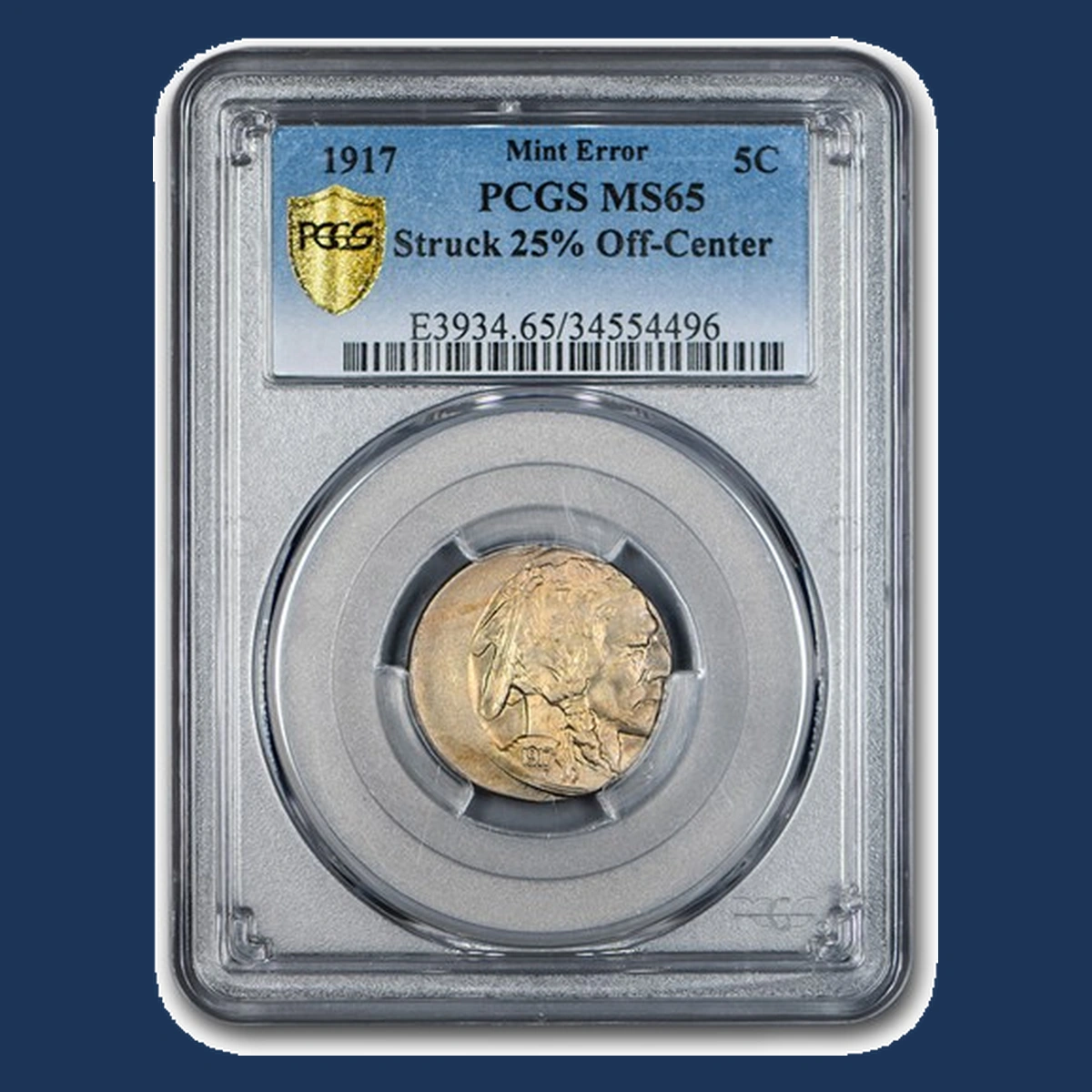
When the metal disk sits partly outside the correct striking position, the design runs off one side. A broad unstamped crescent remains on the other side instead of a normal even border.
Recorded 1917 examples include strikes described as roughly 25%, 40%, and 45% off center. The percentage belongs to the individual coin, not every error from that year.
A visible date can identify the year even when the mint mark area is missing. In that situation, the lack of a visible D or S does not establish Philadelphia.
Estimated Value
For clearly dated 1917 off-center coins, estimate $400–$3,500. Readability, the amount of displaced design, wear, and scratches matter more than percentage alone.
A different-year comparison is the 1921 coin struck 45% off center, graded NGC MS63, which brought $2,300 in September 2009. Its mint was unidentified.
That result helps place a dramatic Buffalo Nickel error in context. It is not a recorded sale of the 1917 collector examples discussed here.
How to Identify
Read the date before estimating how far the design has moved. A partial or altered date can undermine an otherwise impressive error.
Compare the normal 5 g weight with a scale if the coin is loose. An off-center strike moves the design without necessarily removing any metal.
Use calipers to check the full outline against the normal 21.2 mm diameter, allowing for spreading during striking. Inspect the plain edge for cutting or squeezing.
Under a 10× magnifier, follow the transition between the struck design and the blank crescent on both faces. Natural metal flow should replace the scratches or grinding expected from deliberate removal.
If the mint mark area lies outside the metal, leave the mint unidentified rather than guessing from an absent letter.
4. 1917 Buffalo Nickel Missing Feather or Partial Leg
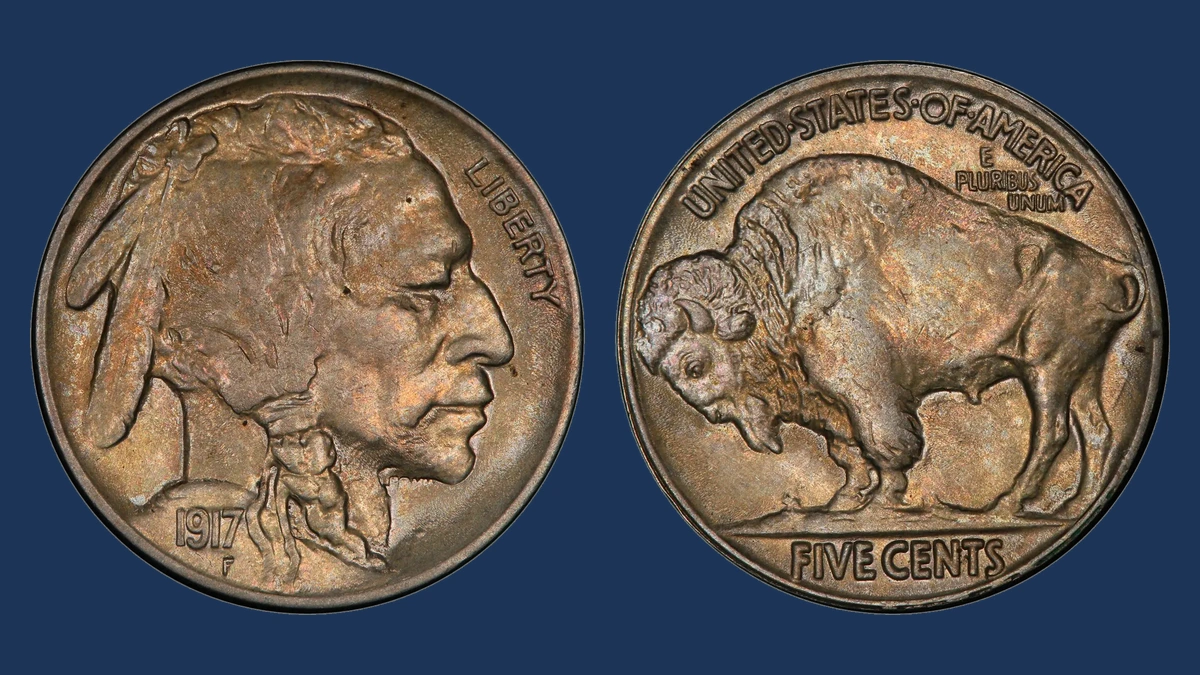
Polishing a stamping tool can erase shallow parts of its design. Later coins then show missing details even though the surrounding portrait or buffalo remains fairly clear.
Two Feathers examples are reported for Philadelphia, Denver, and San Francisco. The affected feature is the small inner feather behind the portrait’s neck, not anything on the buffalo’s tail.
The 1917-D Three-and-a-Half Legs variety affects part of a front leg instead. These are separate results of tool polishing; the missing feather and partial leg do not have to occur on one coin.
Estimated Value
An estimated $40–$6,000 covers these varieties across different mints and condition levels. Heavily worn Two Feathers pieces can fall near the bottom, while sharp scarce examples demand more.
A 1917-D Three-and-a-Half Legs graded MS63 brought $2,640 in August 2019 at Heritage. A slightly worn AU58 example of that same variety sold for $1,410 in February 2017.
Neither result should be used as a fixed price for every missing-feather coin.
How to Identify
Choose the correct comparison before counting feathers or legs. Read the mint below FIVE CENTS: no letter for Philadelphia, D for Denver, or S for San Francisco.
With a 10× magnifier, examine the small inner feather beside the neck and the detail immediately around it. A trace can remain, so total disappearance is not always required.
For the Denver leg variety, follow the affected front leg through its middle toward the hoof. Compare that shape with a confirmed 1917-D example, rather than the later 1937-D variety.
A loose normal coin should measure about 21.2 mm with calipers and 5 g on a scale, with a plain edge. Sharp surrounding details beside the matching missing area help distinguish tool polishing from general wear.
5. 1917 Buffalo Nickel Strike on a Cent Blank
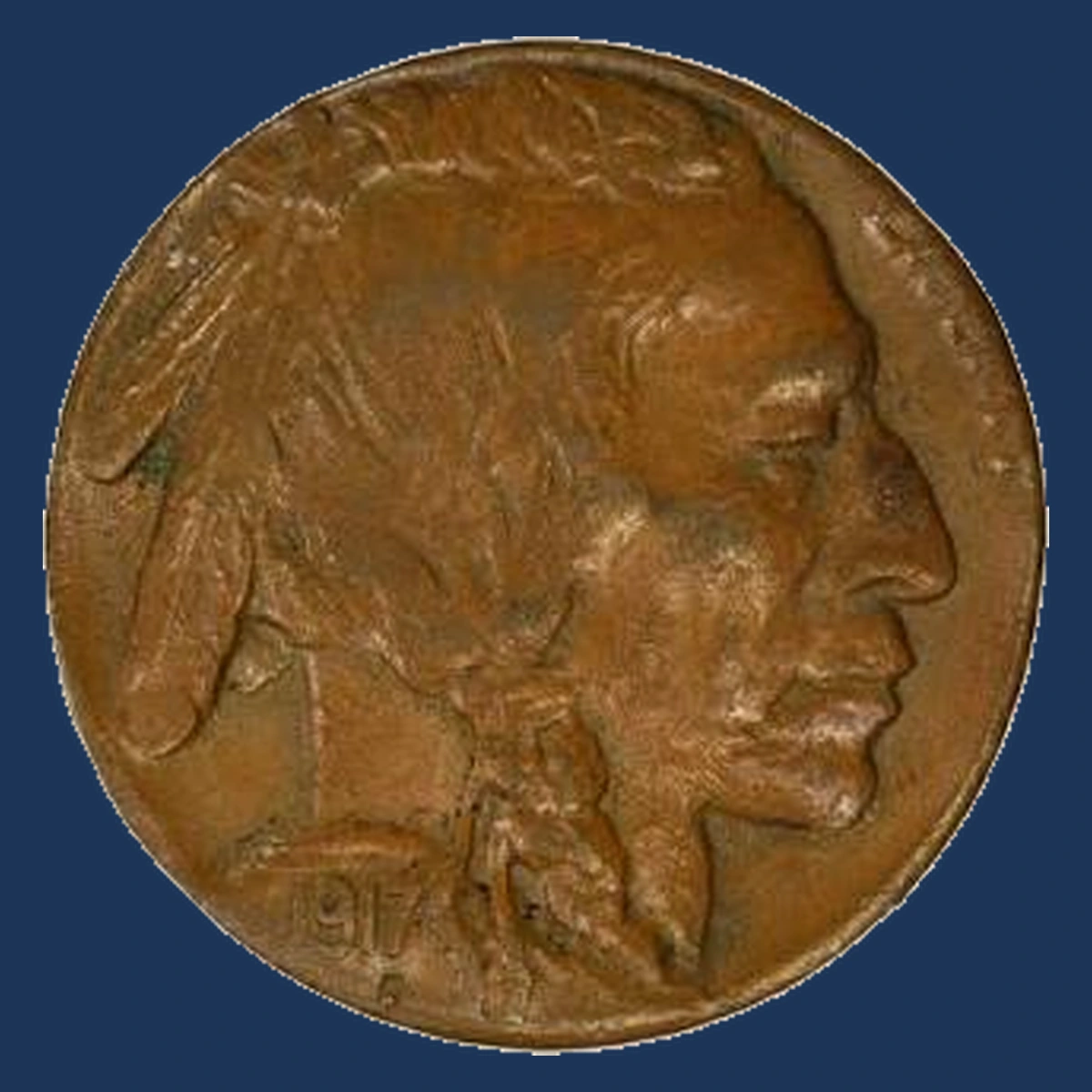
The nickel design looks crowded when it lands on a disk intended for a cent. Some outer lettering runs beyond the smaller piece of metal, and the copper-rich surface can turn brown.
A collector’s recorded 1917 example is graded PCGS MS64 Brown. The mint is not established here simply from the absence of a visible mint letter.
The underlying blank, or unstruck disk, should fit a cent’s metal and weight. A plated nickel may imitate the color but does not recreate the same small original disk.
Estimated Value
Estimate $1,500–$6,000 for a genuine 1917 nickel struck on a cent blank, depending on wear, readable detail, and surface quality. The recorded MS64 Brown example is an unworn coin, but no selling price is assigned to it here.
As a comparison, a 1936 Buffalo Nickel on a cent blank graded AU55 brought $3,290 at Heritage in June 2017.
That different-year result supports the estimate without becoming a claimed sale of the 1917 coin.
How to Identify
Begin by comparing the full design with a normal nickel. Outer details should have run beyond a naturally smaller blank, rather than having been cut away after a normal strike.
A period cent normally weighed 3.11 g and measured 19 mm before striking. A scale and calipers can compare those standards with the normal nickel’s 5 g and 21.2 mm, allowing for spreading.
Examine the plain edge with a 10× magnifier for evidence of plating, grinding, or a newly cut border.
Read the date without relying on a seller’s label. A non-damaging metal test can help establish the copper-rich cent alloy.
The lighter cent-size disk and naturally crowded nickel design must agree; a brown surface by itself does not establish the error.
6. 1917 Buffalo Nickel Doubled Back Lettering
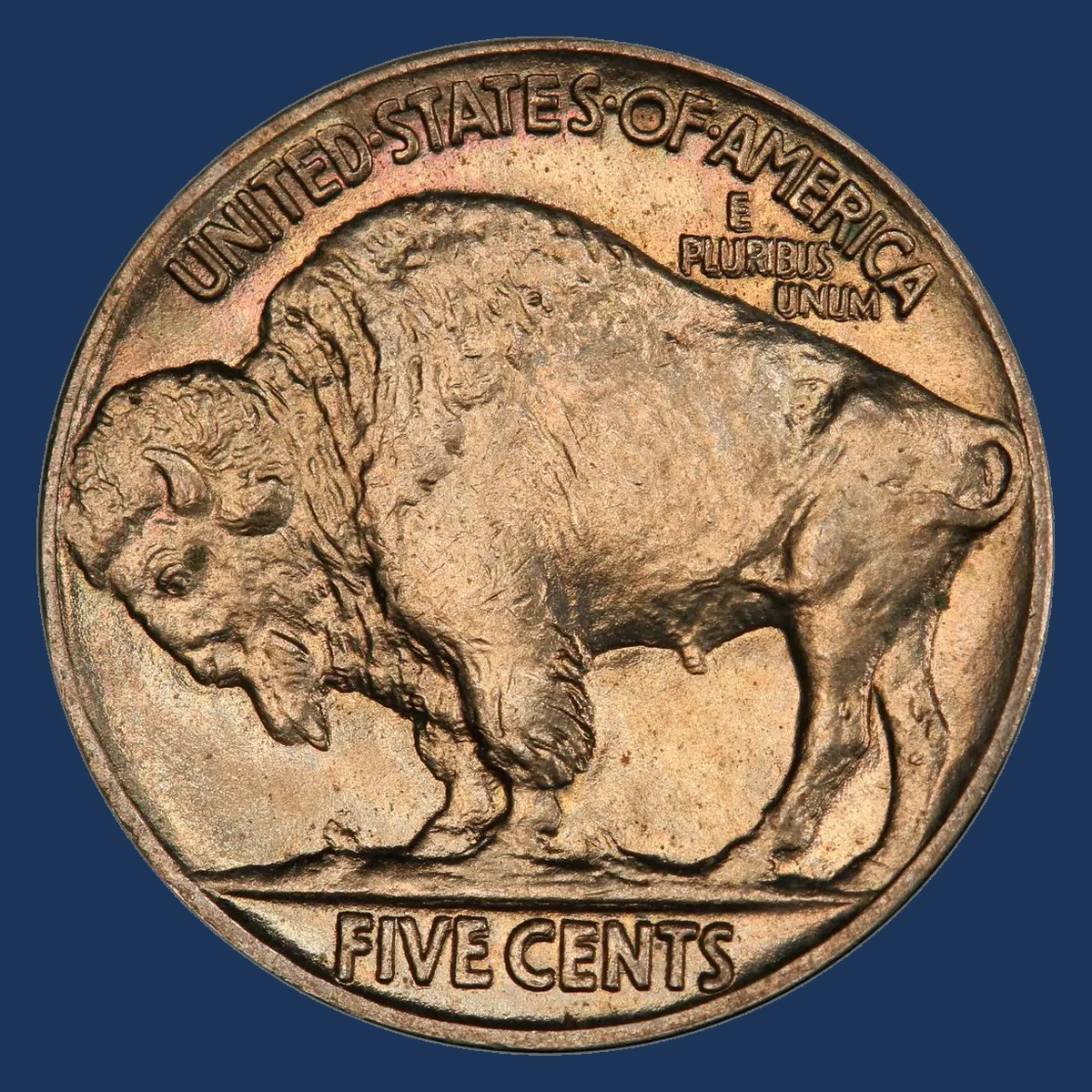
The small words above the buffalo can show a second raised outline rather than a single clean stroke. Other back lettering may also show separated detail on a doubled-design variety.
This began in the steel stamping tool, called a die, while its design was being prepared. Coins struck with that tool repeated the extra outlines.
Philadelphia 1917 examples include FS-801 and FS-802. Their numbers distinguish particular tools, but the visible problem belongs to one mechanism: a doubled back design, not a second strike delivered to each finished coin.
Estimated Value
Estimated values range from $100–$15,000 according to the exact variety, strength of doubling, and condition. A worn coin with only faint traces belongs far below a desirable unworn example.
PCGS records an FS-801 graded MS64 selling for $11,500 on June 17, 2010, at Bowers & Merena. MS64 describes an unworn coin with visible marks.
That result applies to the named variety, not automatically to every doubled-looking letter.
How to Identify
Place a normal 1917 Philadelphia coin beside the suspect piece and compare the same back words. Start with E PLURIBUS UNUM under a 10× magnifier, using light from more than one direction.
The coin should have no mint letter below FIVE CENTS. Its plain edge, approximately 5 g weight, and 21.2 mm diameter can be checked with a scale and calipers when loose.
Look for distinct rounded extra strokes rather than a flat ledge or a bright reflection. Then compare all visible doubled letters with photographs of the particular FS variety.
One unusual letter is weaker evidence than matching separation across the same group of letters. The pattern on the named variety should repeat on your coin.
Conclusion
Across the estimated $10–$15,000 range, the cause of a 1917 Buffalo Nickel’s unusual appearance matters as much as its size. A doubled word, missing feather, and copper-colored disk require different checks.
Keep thin metal flakes and split pieces untouched. Match the correct mint when identifying a variety, and treat an unreadable mint area as missing information rather than proof of Philadelphia.