1939 Nickel Error List with Pictures

Monticello’s steps came in two normal styles in 1939, so a different-looking building is not automatically an error. Strongly repeated letters beneath it are another matter.
An exceptional Doubled Monticello nickel with sharply defined steps sold for $23,500 in September 2019. This guide to 1939 Jefferson Nickel errors covers estimated values from $5 to $25,000, including much more affordable finds.
Read on to compare altered lettering, displaced designs, and coins struck on the wrong metal disc.
1. 1939 Jefferson Nickel Unusual Color from Mint Heating
A dark or copper-colored surface can sometimes result from the heating used to soften blanks before striking. That preparation is called annealing, and problems during it can affect the metal’s outer surface.
The finished nickel still contains a copper-nickel mixture throughout. A brown patch does not reveal a missing outer layer over a copper core.
Improper annealing is reported for 1939, without an established mint or back-design type here. Age, chemicals, burial, and later heating can also change color, so appearance alone does not identify when the change happened.
Estimated Value
Allow an estimated $15–$150 for a correctly identified Mint-heating error, depending on preservation and how clearly the unusual surface can be recognized. Ordinary dark toning does not qualify for the same premium.
A 2005-D nickel identified as improperly annealed sold for $119 in December 2022. That later coin uses the same broad copper-nickel composition but remains a different-year comparison.
The estimate does not assign a sale to the reported 1939 example or establish its cause from color alone.
How to Identify
Check the coin’s size and weight before concentrating on the color. A loose example should be near 5 grams on a scale and 21.2 mm across with calipers.
Compare both faces with an ordinary nickel under the same neutral light. Look into protected spaces beside the lettering with a 10× magnifier, checking for crusts, corrosion, or a thin added coating.
Turn the plain edge toward the light as well. A color change confined to a treated patch can tell a different story from the original struck surface.
Leave the surface untouched for a specialist examination. Scratching a bright test spot removes evidence needed to distinguish Mint heating from changes made afterward.
2. 1939 Jefferson Nickel Repeated D or S Mintmark
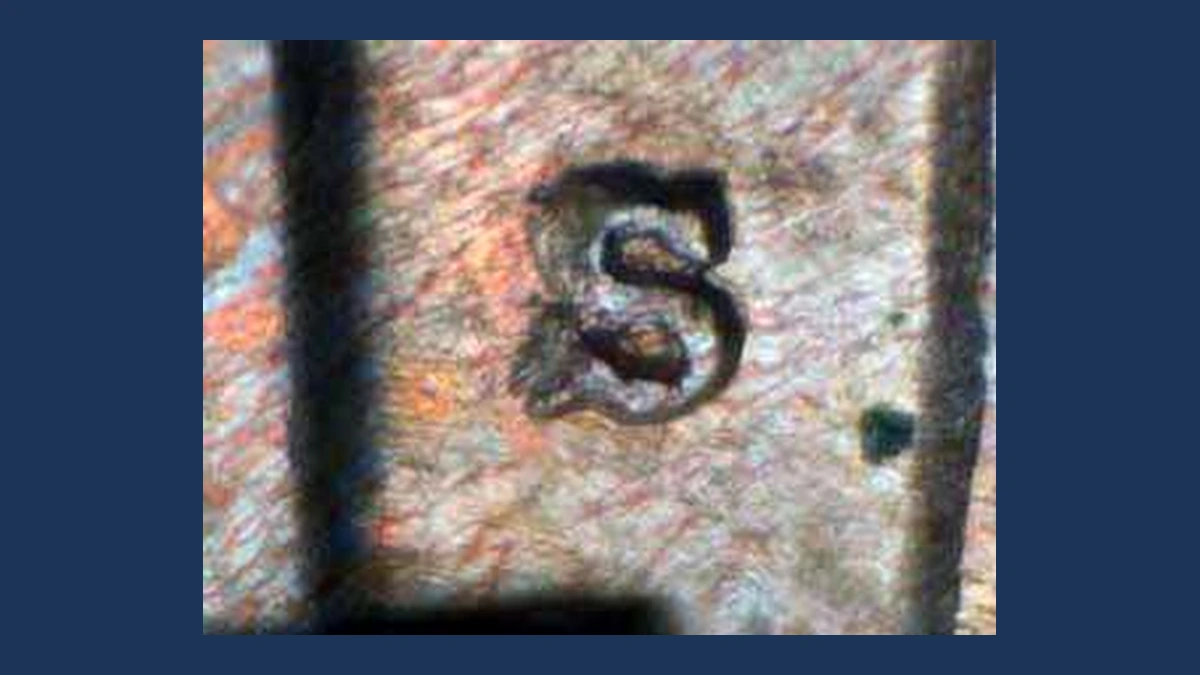
A small extra curve beside the mintmark can be another impression of the same letter. In 1939, mintmarks were punched into the steel stamping tools separately from the rest of the design.
The Denver variety preserves tilted impressions of D, while the San Francisco variety has an extra S below the main letter. These are known as repunched mintmarks.
The repetition belongs to the tool, not to a finished coin sent through the press again. On both mints’ coins, the small letter sits to the right of Monticello.
Estimated Value
Identified worn examples may fall around $20–$100, with attractive unworn pieces around an estimated $100–$350. The estimate includes the entire coin rather than only the second mintmark outline.
Denver and San Francisco coins must be compared separately, because their ordinary values and collector demand can differ. A small extra letter does not make two otherwise different coins equally valuable.
Clear photographs and readable strokes help support the premium; heavy scratches or cleaning can reduce it.
How to Identify
Look beside Monticello for the D or S, rather than above its dome. A Philadelphia nickel has no mintmark and cannot be a D/D or S/S variety.
Use a 10× magnifier to trace each remaining curve in the 1939 mintmark photographs. The D pattern involves tilted impressions, whereas the extra S lies below the main letter.
A damaged or swollen letter may not preserve a separate recognizable outline.
Check the loose coin with a scale and calipers against 5 grams and 21.2 mm. Its edge should be plain, without grooves.
Match the extra letter’s curves to the correct mint photograph instead of calling every nearby bump a repeated punch.
3. 1939 Jefferson Nickel Design Interrupted by Trapped Material
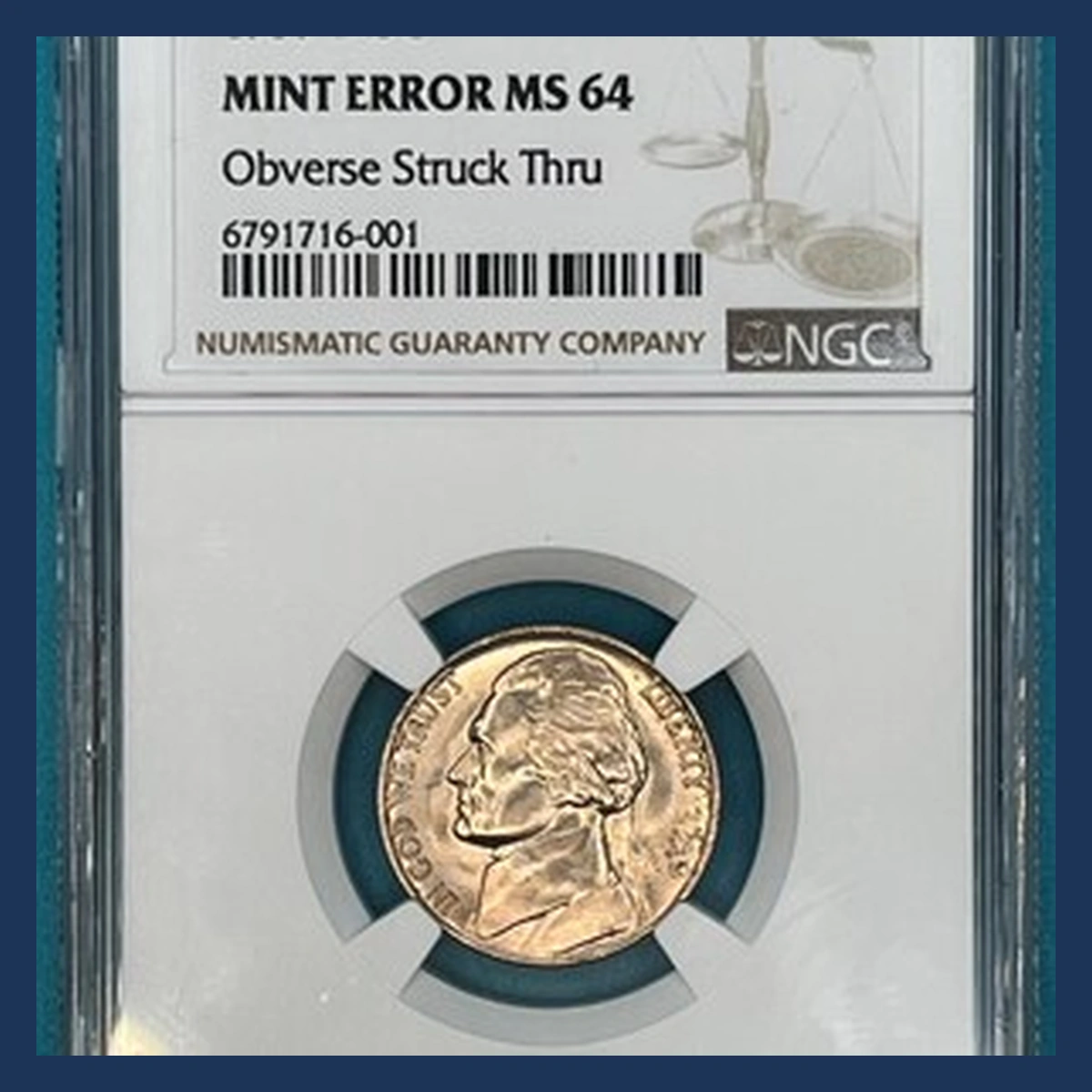
Part of a letter or portrait may be missing where material blocked the stamping tool from reaching the blank. The unstruck metal disc is called a blank, and this blockage produces a struck-through error.
The material may fall away after the strike or remain attached. Its presence is not required on every finished coin.
This mechanism is reported for 1939 without a confirmed object or location here. A weakly formed patch must still be separated from ordinary wear, a soft strike, or damage made after the coin left the Mint.
Estimated Value
For a small, distinct struck-through area, estimate $10–$75. Larger, easily recognized impressions may fit $75–$350, depending on the rest of the coin.
These ranges cover genuine Mint-made impressions and are not a recorded sale of a particular 1939 object strike. A featureless worn patch has much less evidence behind it.
An identifiable trapped object can affect value, but it should not be claimed merely to justify the upper estimate when no object has been established.
How to Identify
Compare the faint patch with nearby high points before naming its cause. If the portrait, letters, and building all show similar flattening, ordinary wear may explain the appearance.
Examine the boundary through a 10× magnifier, looking for a clean interruption rather than scratches and metal pushed aside. Any remaining material needs examination in place, not removal to see what is underneath.
Use a scale and calipers to compare a loose coin with 5 grams and 21.2 mm, and inspect the plain edge. Sharp adjacent details surrounding a distinct impression provide a better starting point than a uniformly weak design across both faces.
4. 1939 Jefferson Nickel Broadstrike with an Uneven Border
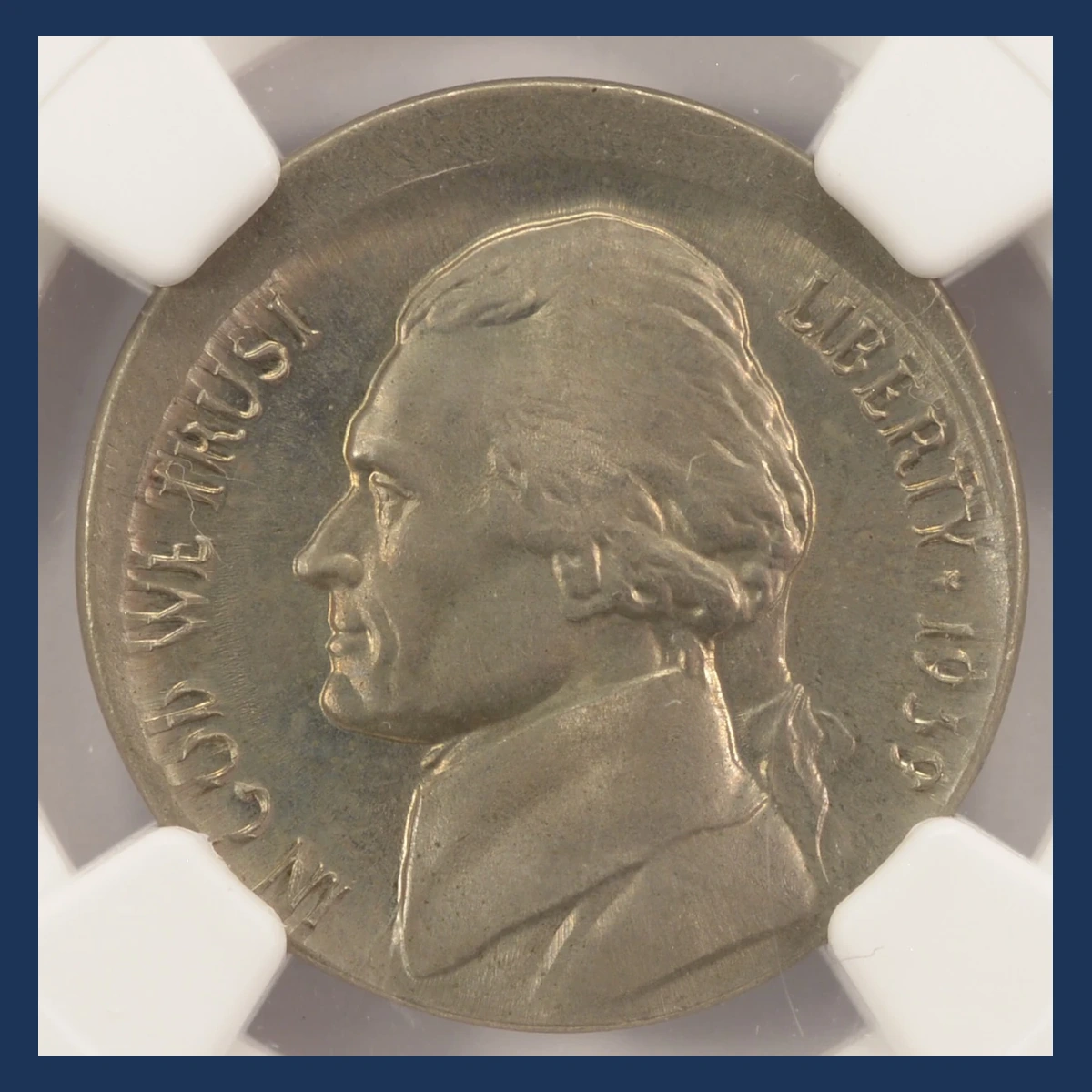
The recorded broadstrike has a wide border near the upper left, around 10:30, but none at the lower right near 5 o’clock. Its off-center-looking border can be misleading.
The design spread because the ring around the coin, called the collar, did not restrain the metal normally. Outer lettering stretched as the metal flowed outward.
This Philadelphia coin has the straighter-step back design known as the Reverse of 1940. Its MS64 Six Full Steps grade describes an unworn coin with clear steps, rather than a second error in the building.
Estimated Value
An attractive 1939 broadstrike can be estimated around $100–$500, with more wear or weaker eye appeal generally placing it lower. The recorded MS64 coin was listed as unsold in May 2007, so that offering supplies no completed sale price.
A later 1999-P broadstrike sold for $89 in March 2025. That different-year result is a modest comparison rather than an exact value for the 1939 piece.
Original stretched lettering and an undamaged edge help distinguish a collectible broadstrike from later flattening.
How to Identify
Follow the entire band of unused metal before deciding that part of the design was lost. On the recorded coin, that band varies sharply between 10:30 and 5 o’clock.
Check the outer lettering with a 10× magnifier for stretching caused by outward metal flow. A broadstrike preserves its intended design, even when the border is uneven.
Calipers can record the widest span against the normal 21.2 mm diameter. A scale should remain near 5 grams unless metal has been lost later.
Inspect the plain edge and raised portrait for crushing or tool marks. The intact design with outward-spread lettering, rather than the uneven border alone, supports the broadstrike identification.
5. 1939 Jefferson Nickel Raised Crack Lines and Rim Blobs
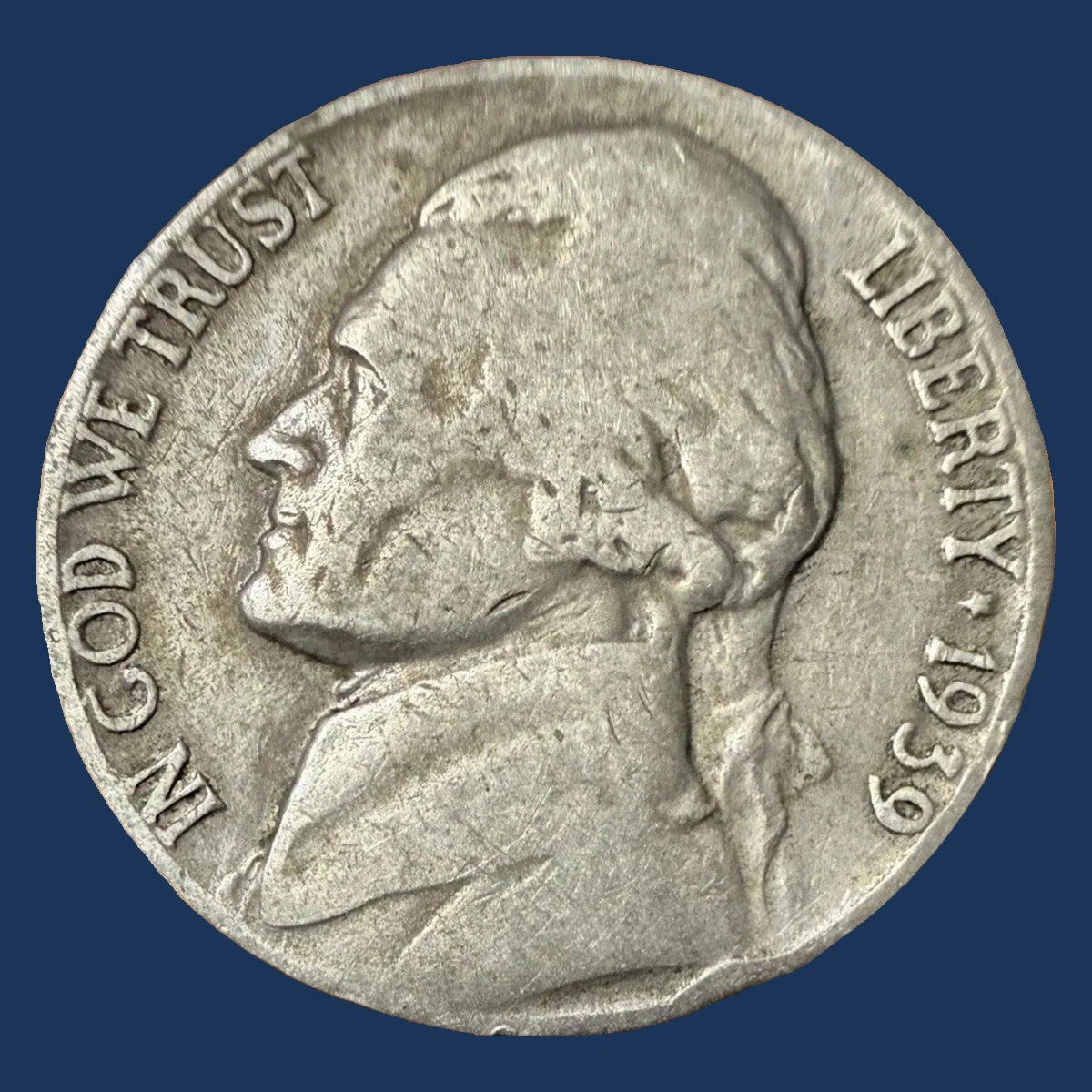
A narrow raised line can mark a crack in the steel tool that stamped the coin. Metal pressed into that opening becomes a ridge on the finished nickel.
A larger break at the tool’s edge can produce a plain raised blob touching the rim. Collectors call this a cud.
Both types are reported for 1939 without one established path or mint here. A line cut below the surface is instead a scratch, and a dent can push metal upward without involving a broken Mint tool at all.
Estimated Value
Fine crack lines may fit an estimated $5–$40, while clear rim-connected cuds can reach $50–$600. A visible break with an undamaged surrounding surface generally makes a stronger collectible.
For a different-year comparison, a 1959-D nickel with a cud sold for $504 in May 2021. That sale is not a price for a specific 1939 break.
Each estimate assumes the feature came from the stamping tool; added metal or a later edge hit does not receive that premium.
How to Identify
Inspect the rim connection first when evaluating a blob. A true cud should join the edge, rather than sit as an isolated lump in the middle of the portrait.
Turn the coin under a low light and use a 10× magnifier to examine its surface. A seam or different texture can suggest added material.
For a thin line, check that the line itself rises above the surface, not just a lip beside a scratch.
A loose example should be close to 5 grams and 21.2 mm on a scale and calipers. Examine the plain edge for a dent that could explain pushed-up metal.
Follow the feature into the original design to distinguish a raised tool-break impression from damage crossing the finished coin.
6. 1939 Jefferson Nickel Off-Center Strike
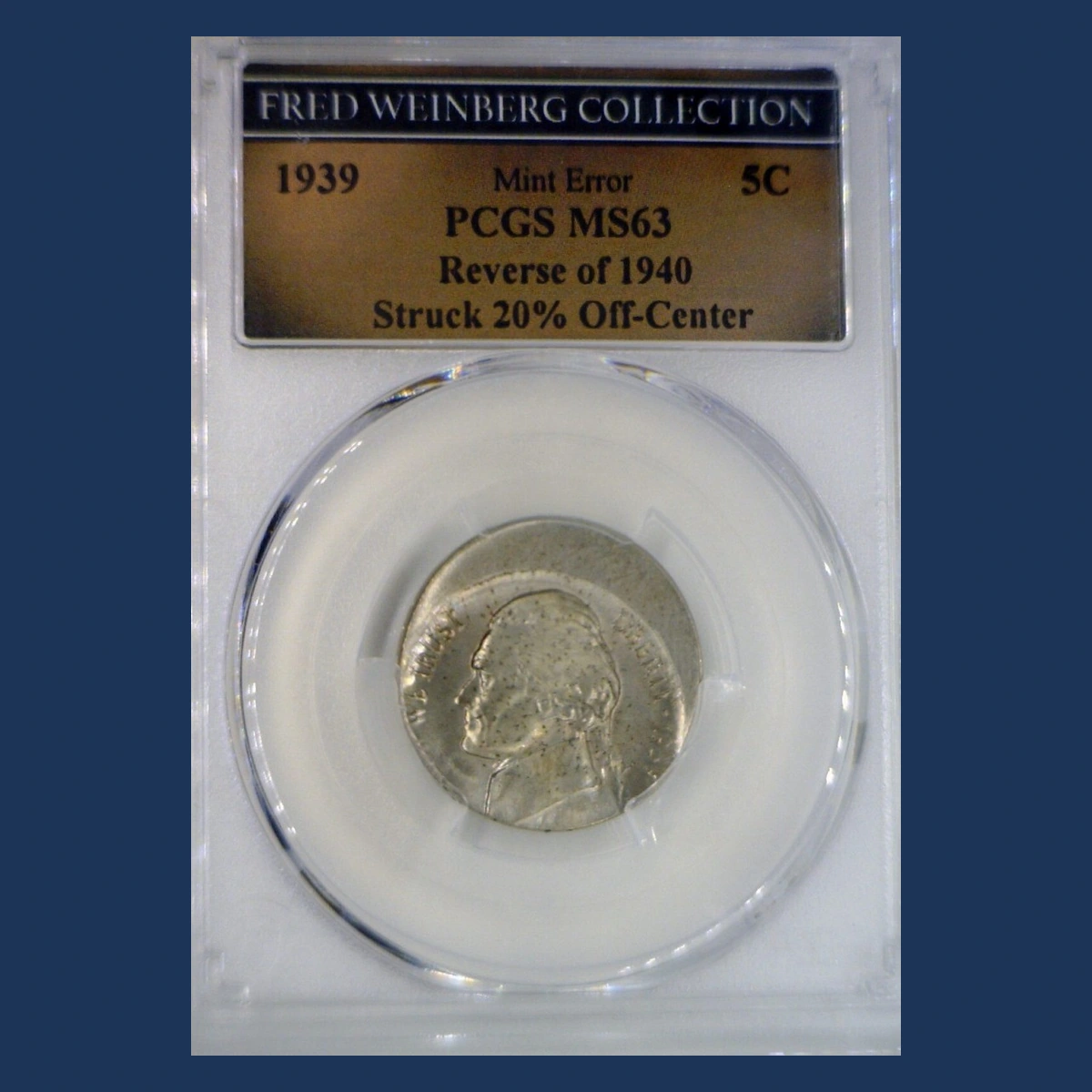
A 1939 nickel can show a solid blank area beside a design shifted beyond the opposite edge. The metal disc was out of position when the press struck it.
Two recorded Philadelphia examples use different normal back designs. One is 10% off center with the Reverse of 1940; another is 15% off center with the Reverse of 1938.
The earlier back has more rounded, wavy-looking steps, while the later version has straighter steps. Those normal design differences must not be mistaken for another error or used to combine the two specimens.
Estimated Value
The 10% off-center example graded MS65 sold for $252 on March 8, 2021. That price belongs to the coin with the later back design.
Estimate $75–$250 for worn or less striking examples and $250–$750 for attractive unworn coins with clear dates. The separate 15% example does not automatically inherit the first coin’s sale price.
The amount of shift matters, but surfaces, remaining design, and readable date also influence the final value.
How to Identify
Read the date and compare Monticello’s steps before selecting an auction photograph. The 10% and 15% examples have different back designs, so their labels and shapes should remain separate.
Examine both faces under a 10× magnifier. A genuine off-center strike should leave unused metal beside design that runs beyond the opposite boundary.
Use a scale to check roughly 5 grams, since an off-center strike usually moves metal rather than removing it.
Measure the altered outline with calipers against a normal 21.2 mm nickel, then follow the plain edge for cutting or filing. The unused area should remain solid original metal, not a gap or a patch ground smooth after striking.
7. 1939 Jefferson Nickel Double Strike with the Coin Turned
Two overlapping versions of Jefferson or the back design can result when a coin turns before being struck again. A recorded 1939 Philadelphia example was described as double struck and rotated within the collar.
The surrounding ring continued to restrain its outline. A coin can therefore remain close to normal size while showing a second position of the design.
NGC graded this example MS61, an unworn condition with noticeable marks. Its overlap involves separate strikes on one coin, unlike fixed repeated letters copied from a doubled stamping tool.
Estimated Value
The recorded MS61 rotated double strike sold for $499.38 on March 2, 2014. It provides a direct 1939 comparison for this mechanism.
Use an estimated $200–$600 for worn or less attractive examples with clear overlapping features. Better-preserved pieces with strong repeated designs may reach $600–$1,200.
The upper range is an estimate, not another documented sale for the same coin. Being able to recognize both strikes is more useful than a confusing mass of damaged detail.
How to Identify
Compare the two faces before measuring a suspected double strike. A second position of the portrait should make sense alongside the displaced details on the back.
Photograph both faces and use a 10× magnifier to follow individual outlines through the overlap. Do not count scratches crossing the designs as remnants of another strike.
Now check roughly 5 grams and 21.2 mm with a scale and calipers, including the plain edge. Those ordinary readings fit a coin struck twice while still confined by the collar.
No precise turning angle is established for this particular specimen. Look for two consistent design positions across the coin, rather than treating one doubled letter as evidence of two separate strikes.
8. 1939 Jefferson Nickel Struck on a Cent or Silver Dime Blank
A nickel design can be squeezed onto a smaller disc intended for a cent or dime. Both combinations are recorded for 1939, and the wrong metal affects weight as well as appearance.
The Philadelphia cent-blank example is brown, with a full date and LIBERTY. Most of WE TRUST falls beyond its small edge, while part of IN GOD looks distorted.
The separate San Francisco example was struck on a silver dime blank and has the later back design. Its silver color alone is not enough to distinguish it from an ordinary copper-nickel coin.
Estimated Value
Two different examples each brought $1,560: the Philadelphia cent-blank AU58 in September 2019, and the San Francisco dime-blank AU55 in December 2024. Both grades indicate light wear, not identical condition.
An estimated $750–$1,750 suits worn but clear examples, with stronger pieces around $1,750–$3,500. The San Francisco auction record identifies its silver blank.
These prices concern entire authenticated coins, not a premium that can be assigned to any small or discolored nickel.
How to Identify
Weigh the candidate before deciding whether its color is important. A normal nickel is 5 grams, compared with starting standards of about 3.11 grams for a cent and 2.5 grams for a silver dime.
Those figures are reference weights, not measurements of the two recorded errors.
Calipers can compare the outline with a nickel’s 21.2 mm, a cent’s roughly 19 mm, or a dime’s roughly 17.9 mm. Striking can spread the smaller blank.
Inspect the edge and outer lettering with a 10× magnifier. A normal nickel has a plain edge; grinding or plating must not substitute for naturally crowded design and the correct metal.
For the cent example, match the full date and LIBERTY beside the cropped motto.
9. 1939 Jefferson Nickel Doubled Monticello and Other Repeated Designs
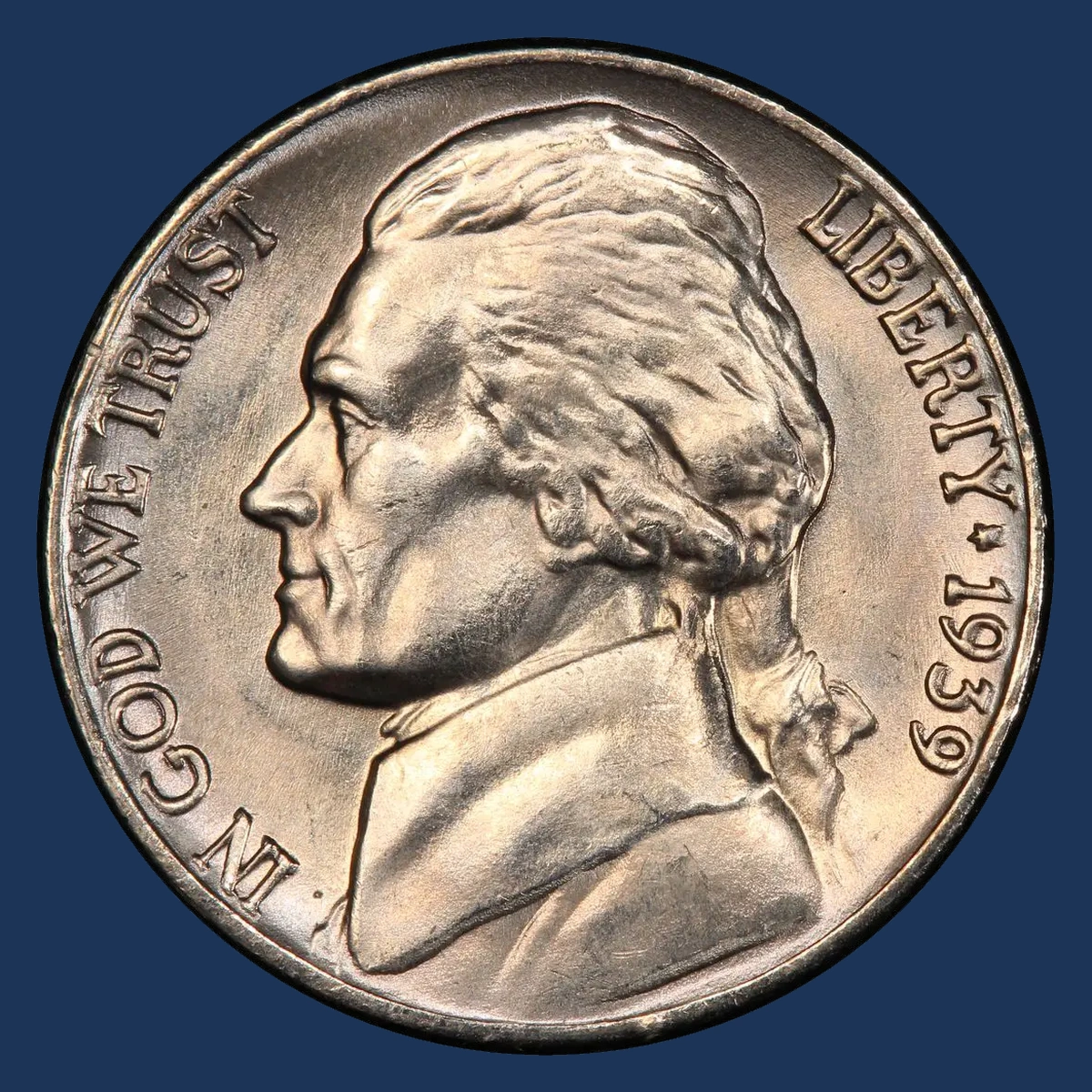
The famous Doubled Monticello variety shows bold repeated outlines to the left of MONTICELLO and FIVE CENTS. This Philadelphia coin uses the later, straighter-step back design.
The steel stamping tool already carried the repeated design before it struck the coin. Such a tool is called a doubled die.
Other 1939 varieties affect front lettering, the date, or different back inscriptions. Separate examples also occur among specially made collector coins called Proofs.
The many patterns are not interchangeable, and the ordinary change from the earlier wavy-step back to the later back is not itself doubling.
Estimated Value
Minor identified varieties may fit $10–$200; stronger Doubled Monticello coins can range around $200–$5,000. Exceptional examples with superb preservation and sharply defined steps can reach an estimated $5,000–$25,000.
PCGS records $23,500 in September 2019 for an MS67 Full Steps example. That result belongs to a particularly high-grade coin, not every doubled nickel.
Minor Proof varieties require their own condition comparison; their full coin price should not be confused with the extra value of faint doubling alone.
How to Identify
For Doubled Monticello, start with FIVE CENTS and MONTICELLO rather than the steps. A 10× magnifier should reveal a distinct extra outline toward the left on the correct Philadelphia variety.
For another pattern, compare the exact mint, front or back, and ordinary or Proof finish with Brian’s 1939 photographs. A shiny cleaned coin is not automatically a Proof.
The normal 1938-style and 1940-style backs must remain separate comparisons.
A scale and calipers provide the basic checks of 5 grams and 21.2 mm, with a plain edge. Match repeated letter outlines across several features, rather than identifying doubling from thick lettering or a different set of normal steps.
Conclusion
A normal change in Monticello’s steps should not be mistaken for doubling or a striking error. Compare the actual letter outlines, coin shape, and surviving design before attaching a name to an unusual feature.
Estimated values range from $5 to $25,000, with the top end reserved for exceptional coins. Record weight and diameter without cleaning the surface, and keep each auction comparison tied to its stated condition and error.