1986 Nickel Error List with Pictures

The digits 986 from a Lincoln cent can be seen in Jefferson’s hair on one unusual 1986-P nickel. It sold for $1,265 in January 2011, then $1,020 when offered again in September 2019.
That mixed design is one of the 1986 Jefferson Nickel errors below. Estimated values run from $5–$2,200, covering small mint-letter features through a nickel struck over a finished cent.
Start with the feature you can see, then compare its shape, condition, and price.
1. 1986 Jefferson Nickel An Unusually High P Mintmark
The P beside Jefferson identifies Philadelphia. A year report describes one placed unusually high, making its relationship to the portrait and nearby design the feature to examine.
Mint letters were added to the stamping tool separately during this period. Small position differences can therefore be normal variations in tool preparation.
A higher-looking P alone does not establish a rare minting mistake. It needs a meaningful comparison with ordinary examples from the same year.
This is also different from repunching, where a second outline of the letter remains. Position and extra letter strokes answer different questions.
Estimated Value
Use an estimated $5–$50 only for a documented unusual placement that attracts collector interest. Ordinary small position differences may add nothing beyond the nickel’s normal condition value.
This range is not a recorded sale of a confirmed high-P specimen. A label or enlarged picture should not turn every slightly shifted mint letter into a valuable error.
Preservation and a convincing same-year comparison matter more than how close the P appears in a tightly cropped image.
How to Identify
Choose several ordinary 1986-P nickels before judging a high-looking P. Photograph each with Jefferson upright and the date visible, keeping the image scale and camera angle alike.
Compare the letter’s distance from the portrait and nearby design, allowing for normal differences from hand punching. A 10× magnifier can reveal dents or displaced metal that changed the apparent position.
For a loose coin, a scale checks against 5 grams and calipers against 21.21 millimeters. Inspect its plain edge and the surface around the P for later alteration.
A tight crop can exaggerate the claim.
Return to the complete upright photograph and compare the same landmarks before treating the placement as unusual.
2. 1986 Jefferson Nickel Extra P or D Mintmark Strokes
An extra curve beside a P or D can begin when a worker punches the mint letter into a tool more than once. A misplaced first impression may survive beside the stronger letter.
The steel stamping tool is called a die. It copies the extra shape onto each coin made from that tool.
Year reports include repunching for Philadelphia and Denver in 1986. A specific numbered variety or direction should come from a matching identified specimen.
A low flat shelf beside the letter may have formed from movement during striking instead. An extra-looking edge is not automatically another punched mintmark.
Estimated Value
For an identified repunched mintmark, estimate $10–$150, with clear extra letter portions and attractive surfaces supporting the higher end. Faint marks hidden by wear are less useful to buyers.
This estimate applies after repunching has been identified. It is not a recorded sale for every P or D in a year guide, and no particular direction is required here.
A normal mintmark with a flattened side does not earn the same premium merely because it looks doubled.
How to Identify
Find an identified example with the same mint letter as your coin, then compare the complete P or D. Through a 10× magnifier, follow any extra stem or curve rather than judging a single thick corner.
Change the light to separate raised metal from glare and a flat shelf beside the letter. The extra shape should resemble part of another punched P or D.
A scale and calipers can check a loose nickel against 5 grams and 21.21 millimeters, but normal dimensions cannot identify repunching. Inspect the plain edge and the metal around the letter for alteration, then match the extra stroke to the identified example.
3. 1986 Jefferson Nickel Dark Surface from Blank Preparation
Blanks are the metal disks that become coins. Heating softens them before striking, and problems during this process, called annealing, can leave dark gray or black color.
This type is reported for Philadelphia and Denver nickels from 1986. Some sellers use the nickname Black Beauty for dark examples.
That nickname does not prove the cause. Soil, chemicals, ordinary tarnish, and heating after minting can also change a nickel’s color.
A normal nickel uses copper and nickel mixed throughout. A dark surface is not evidence that a separate outer metal layer has gone missing.
Estimated Value
An estimated $20–$150 suits an identified preparation error with original surfaces. The coin’s preservation and the quality of the identification matter more than the darkness of its color.
A 2005-D improperly annealed nickel graded MS62 sold for $119 in December 2022. This later-date comparison gives context without establishing the cause of a dark 1986 coin.
A corroded or artificially colored nickel should not receive that error value just because its appearance matches a seller’s nickname.
How to Identify
Look for the moving shine of an original struck surface beneath the color. Tilt the coin under neutral light, then inspect any rough or crusty patches with a 10× magnifier.
Do not rub away a dark spot to test it. Cleaning can remove evidence useful for separating mint preparation from later staining.
Check the plain edge as well as both faces for coating, corrosion, or heat damage.
For a loose candidate, compare a scale reading with 5 grams and caliper measurements with 21.21 millimeters. Normal size and weight do not explain the color.
A professional surface examination is more persuasive than the nickname alone, especially when the original texture remains visible.
4. 1986 Jefferson Nickel Traces of the Opposite Design
A faint outline can appear where it does not belong in the normal design. If it matches the opposite face, it may be a die clash.
The two steel stamping tools can hit each other when no blank lies between them. Damage from that contact may then transfer to later coins.
The 1986 type is reported without a fixed mint, position, or cataloged pattern. A candidate needs an actual match to the opposing design.
Random scratches are different. Several connected traces that line up with a recognizable feature provide better evidence than one unexplained line beside the portrait.
Estimated Value
Estimate $10–$200 for an identified original clash, depending on how clearly its extra outlines can be followed. Tiny traces on a worn coin generally sit below strong, recognizable shapes.
This is an estimated range rather than a sale assigned to one 1986 specimen. The report does not supply a particular line on Jefferson’s neck or around Monticello to price.
Later scratches and polishing marks do not qualify just because they resemble a small part of the opposite design.
How to Identify
Find a recognizable piece of the opposite design before tracing every stray line. A normal front photograph and a mirrored back photograph can help test whether a Monticello feature fits the mark near Jefferson.
Use a 10× magnifier to follow adjoining traces. Two connected features in the correct relationship are stronger evidence than one short line that might be a scratch.
Do the same comparison on the back if it carries extra marks. Clash impressions can differ in appearance, so their shape and alignment matter more than a rule about every line being raised.
Check a loose coin against 5 grams and 21.21 millimeters with a scale and calipers, including its plain edge. Align the neighboring design traces with the mirrored comparison to test the match.
5. 1986 Jefferson Nickel Doubled Front and Back Designs
Close repeated outlines can come from a doubled design already present in a stamping tool. This is a doubled die, rather than two separate blows on a finished coin.
Denver reports for 1986 mention front details around the portrait, date, and IN GOD WE TRUST. Back reports point to MONTICELLO, FIVE CENTS, E PLURIBUS UNUM, and nearby building details.
These locations are starting points for examination, not one established pattern that every coin must show. A specific identification needs matching raised details.
Broad flat shelves or thick worn letters can resemble doubling without coming from the same cause.
Estimated Value
Use an estimated $20–$250 for clearly identified doubled designs, allowing for visibility and condition. A strong repeated pattern is more appealing than one thick-looking letter.
The year reports do not establish a numbered Denver variety or a completed sale used here. The range applies after the actual design has been matched, rather than treating every suggested location as an authenticated separate error.
A coin with ordinary striking movement should not inherit the estimate simply because its lettering has two edges.
How to Identify
Inspect the mint letter before choosing a comparison; the reported front and back doubling concerns Denver coins. On a loose coin, a scale and calipers can check the usual 5 grams and 21.21 millimeters, with a plain edge.
Select one reported word and inspect several letters through a 10× magnifier. Record where the extra outlines sit and how far they extend, rather than naming a variety from one mark.
Tilt the light to reveal flat shelves, reflections, or rounded additional strokes. Then inspect the other letters on the same face.
Compare this complete pattern with an identified 1986-D nickel. A thick letter or a doubled design on a different denomination cannot supply the required match.
6. 1986 Jefferson Nickel Overlapping and Triple Curved Clips
Three curved gaps can appear when the blank-making punch crosses earlier openings in the metal strip. The incomplete disk can then pass through the press and receive a normal nickel design.
A 1986-P example was cataloged with a ten-percent triple curved clip and graded PCGS MS64. The percentage describes that coin’s missing metal, not ten percent for each opening.
A separate Philadelphia nickel has two overlapping curved clips and graded NGC MS65 Full Steps. Full Steps refers to clear stairs on Monticello.
The two gap arrangements are different examples of the same blank-making problem.
Estimated Value
The ten-percent triple clip sold for $109 in July 2022. The separate overlapping pair of clips brought $49 in July 2021.
Across comparable genuine clips, estimate $25–$250, depending on the missing area, readable identity, and remaining condition. More gaps do not multiply the price automatically.
The auction results belong to complete individual coins. A new cut can create a similar outline without the original struck boundary needed for the same comparison.
How to Identify
A loose clipped coin should weigh less than the normal 5 grams, so begin with a scale. Calipers across intact points can still read near 21.21 millimeters despite the missing metal.
Trace the outline through a 10× magnifier, marking where each curve begins and ends. Two overlapping curves may join within one opening, unlike separate gaps around the coin.
At each endpoint, inspect how the struck rim weakens or flows toward the missing area. Saw grooves, sharp filing marks, or folded metal can expose a cut made after striking.
Examine the remaining plain edge and the rim opposite the gaps. The original transitions at each curved opening matter more than simply counting three missing areas.
7. 1986 Jefferson Nickel A Widened Coin with a Complete Design
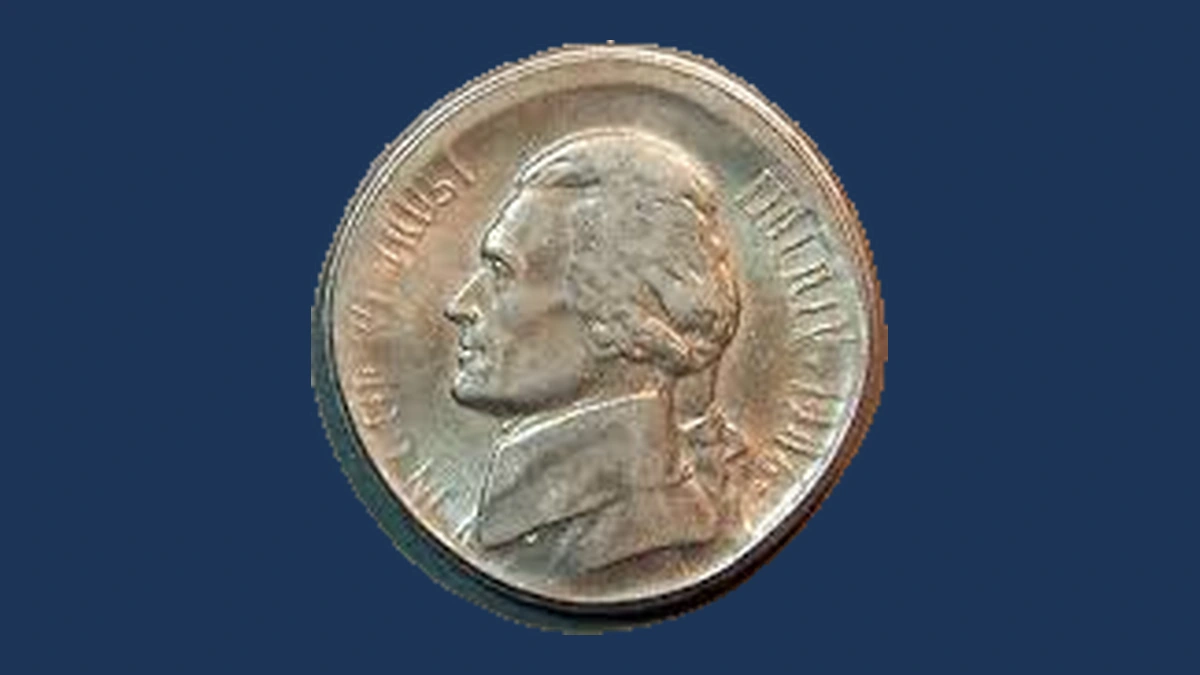
A nickel can spread wider when the surrounding ring fails to hold its edge during striking. That ring is the collar, and the resulting coin is called a broadstrike.
The full design stays on the metal, although the extra border may be wider on one side. A complete outline distinguishes it from an off-center strike that loses outer detail.
Philadelphia and Denver examples are reported for 1986. The separately recorded Philadelphia multiple-strike coin also has broadstriking, so those features should be kept together when examining that particular piece.
Width alone does not prove the cause.
Estimated Value
For an ordinary single-strike broadstrike, estimate $25–$300, with attractive natural expansion supporting the stronger end. This is separate from pricing a coin that also received repeated blows.
A 1999-P broadstrike sold for $89 in March 2025, offering a related-date comparison. Its price does not establish the dimensions or mint of a newly examined 1986 piece.
Later hammering can also enlarge a nickel, but crushed original design does not deserve the same mint-error valuation.
How to Identify
Calipers can show whether a loose coin exceeds the normal 21.21-millimeter diameter in several directions. Check it on a scale as well: metal spreading during striking should leave the weight near 5 grams.
Read all the outer lettering and follow the design around both faces. A broadstrike keeps the full design inside the expanded metal, even when the extra border is uneven.
Look through a 10× magnifier for hammer marks or flattened details that could explain later widening. Include the plain edge in that examination.
If another stamped portrait or lettering overlaps the first, examine the repeated-strike category too. For a simple broadstrike, verify the complete original design within a naturally spread border.
8. 1986 Jefferson Nickel Raised Rim Breaks Called Cuds
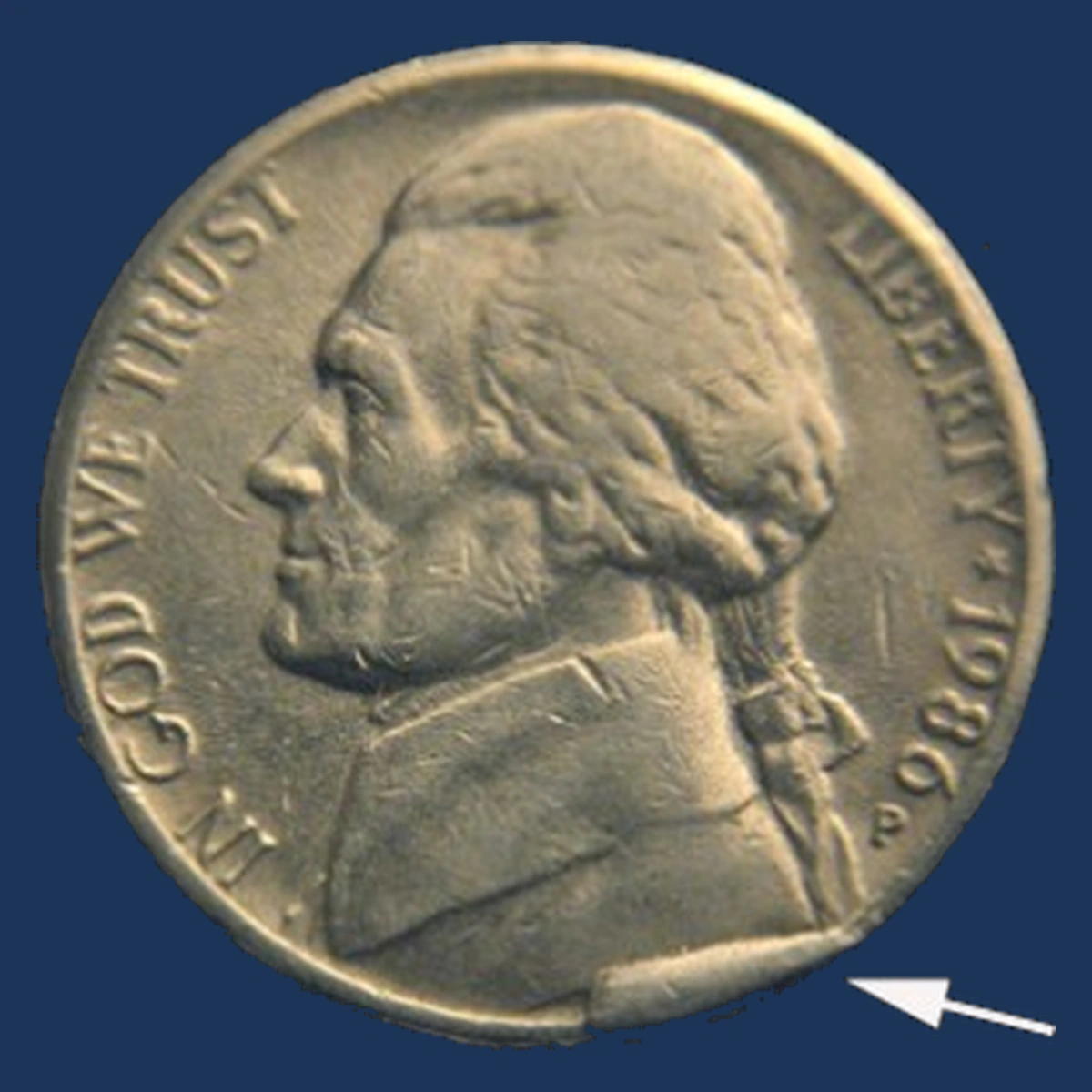
A raised area joined to the rim can form after part of the stamping tool breaks away. Metal enters the missing part of the tool and leaves a lump on the coin.
Collectors call this a cud. It differs from a small isolated bump inside the design or a piece of solder added afterward.
Three Philadelphia listings are recorded for 1986. They represent separate cataloged patterns, not three lumps required on one coin.
The actual shape and location must match the selected example. A generic raised patch cannot be assigned to a numbered cud just because the date is correct.
Estimated Value
For a genuine rim-connected break, estimate $15–$350, depending on size, visibility, and the surrounding coin’s condition. A large clear break generally offers a stronger comparison than a tiny damaged-looking patch.
A worn 1983-P nickel with a cud sold for $63 in July 2022. That different-year result provides context without pricing each of the three 1986 patterns individually.
The range assumes original struck metal. Added material and a rim pushed inward by a blow require another explanation.
How to Identify
Check the edge beside the raised patch for a dent, solder, or a seam before calling it a cud. A blow to the plain edge can push metal onto the face and imitate a rim-connected lump.
Under a 10× magnifier, trace the patch into the coin’s rim and inspect the adjoining design. An isolated interior bump does not meet the same description.
Compare it with the separate Philadelphia catalog images, keeping the whole face visible. A scale and calipers can check a loose example against 5 grams and 21.21 millimeters.
The useful match includes the patch’s outline, rim connection, and nearby surviving letters. A date match by itself cannot identify which recorded pattern is present.
9. 1986 Jefferson Nickel A Deep Impression from Trapped Material
A deep missing area can form when material blocks the stamping tool from reaching the blank. The press forces that material into the metal while making the rest of the design.
A recorded Philadelphia nickel has a deep struck-through area on the front. NGC graded it MS65 Full Steps, meaning unworn with relatively few marks and clear stairs on Monticello.
The stair detail is on the back and is not another error. The obstruction itself was not identified in the catalog.
A dent made after striking can look deep too, but its relationship to the surrounding finished design differs.
Estimated Value
The MS65 Full Steps example sold for $204 on June 12, 2023. Estimate $40–$400 for comparable genuine strike-throughs, depending on clarity, size, and preservation.
The documented sale concerns a deep front impression, not an identified piece of cloth or retained wire. A different object or shallower interruption needs its own comparison.
Ordinary damage should not receive this range solely because it leaves a dramatic hole-like patch beside otherwise sharp letters.
How to Identify
Begin with the back: sharp Monticello steps can survive even when an obstruction deeply affects the front. This helps distinguish a local striking problem from heavy wear across the coin.
Examine the front depression under a 10× magnifier, following where nearby design stops at its boundary. A dent made later may crush already finished detail or push a lip of metal outward.
Use a scale and calipers on a loose example against 5 grams and 21.21 millimeters. Inspect the plain edge for signs of later pressure, then light both faces from several directions.
Do not infer cloth or wire from depth alone.
Follow the interrupted design into the depression to judge whether the obstruction was present during striking.
10. 1986 Jefferson Nickel An Off-Center Strike with a Thin Raised Rim
A nickel can receive an off-center design while some metal also rises into a thin rim. The two effects are reported together on a Philadelphia example.
Off-center striking leaves unused blank metal opposite outer details that miss the disk. A finned rim is a thin raised edge formed when metal is forced into a narrow gap around the tools.
A normal thick border is not the same shape. The report supplies no fixed percentage, direction, or height for this coin.
The raised rim and displaced design should be checked together instead of borrowing measurements from a separate Denver double strike.
Estimated Value
Estimate $35–$450 for a genuine dated example with the combined features, depending on displacement and preservation. A readable date and a clear thin projection help establish the comparison.
The recorded Philadelphia report has no individual sale used here. A 1999-D nickel struck sixty-five percent off center sold for $75 in September 2024, but that comparison does not establish a finned rim or the same percentage on the 1986 coin.
The whole object receives one value.
How to Identify
Photograph the projecting rim from the side without bending it. A 10× magnifier can separate a thin natural fin from a thick rolled border or later folded metal.
Now inspect both faces for the off-center design. Find the original blank area and the part of the image missing across the coin from it.
Weigh a loose candidate against 5 grams, then measure intact spans with calipers against 21.21 millimeters. Keep the jaws away from the delicate raised edge.
The ordinary edge is plain, so absent grooves prove nothing. Preserve the 1986 date and P in the photographs, keeping the rim shape and the design displacement as two observations on the same coin.
11. 1986 Jefferson Nickel A Nickel Design on an Unused Cent Blank
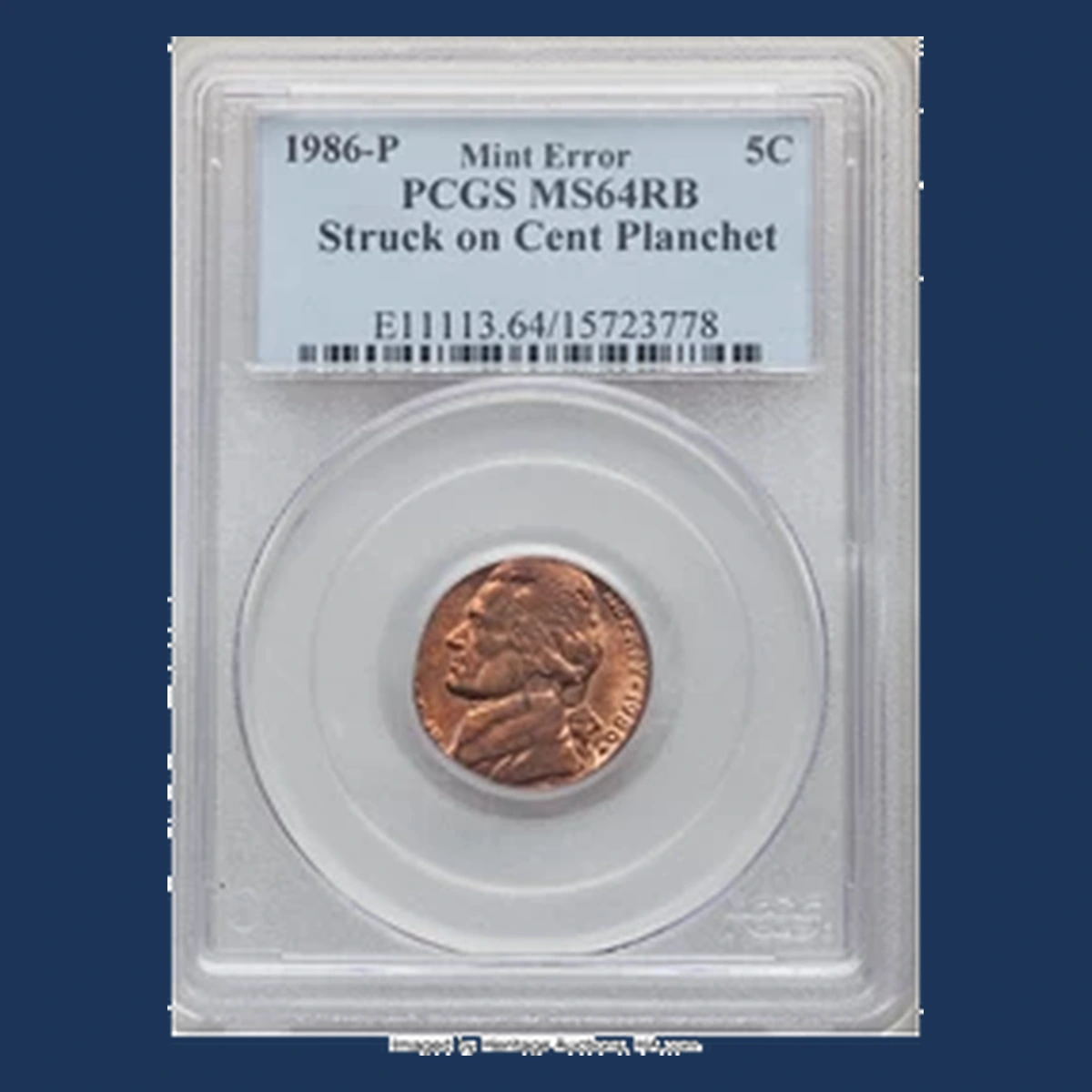
A blank intended for a cent can enter a nickel press before receiving any Lincoln design. Jefferson and Monticello are then stamped onto a disk too small to hold the nickel image normally.
A recorded Philadelphia example graded ANACS MS60 Red and Brown. That describes an unworn coin with noticeable marks and mixed copper surface colors.
Its exact weight was not supplied in the record used here. The normal modern cent standard is a comparison, not a measured weight for this specimen.
This error differs from a finished cent struck again, which can preserve parts of its earlier design.
Estimated Value
The ANACS MS60 Red and Brown example sold for $312 in November 2020. Estimate $200–$700 for comparable authenticated cent-blank strikes, depending on readable identity and preservation.
The range concerns an unused smaller blank carrying the nickel design. It should not be replaced by the higher sale of a coin showing both nickel and earlier cent details.
Copper color on a normal-sized plated nickel does not establish the blank or justify the same error price.
How to Identify
For a loose candidate, start with a scale and calipers. Compare the readings with a modern cent’s usual 2.5 grams and 19.05 millimeters, versus a nickel’s 5 grams and 21.21 millimeters.
The smaller blank can spread during the blow, so its finished diameter need not equal an untouched cent blank.
With a 10× magnifier, inspect the edge and the ends of the outer nickel lettering. Grinding or plating can imitate size or color without naturally truncating the design.
Confirm the 1986 date and P, and retain the coin for non-damaging material examination. An unused cent blank does not need to show any earlier Lincoln portrait or cent lettering.
12. 1986 Jefferson Nickel Repeated Strikes, Sometimes with a Wider Outline
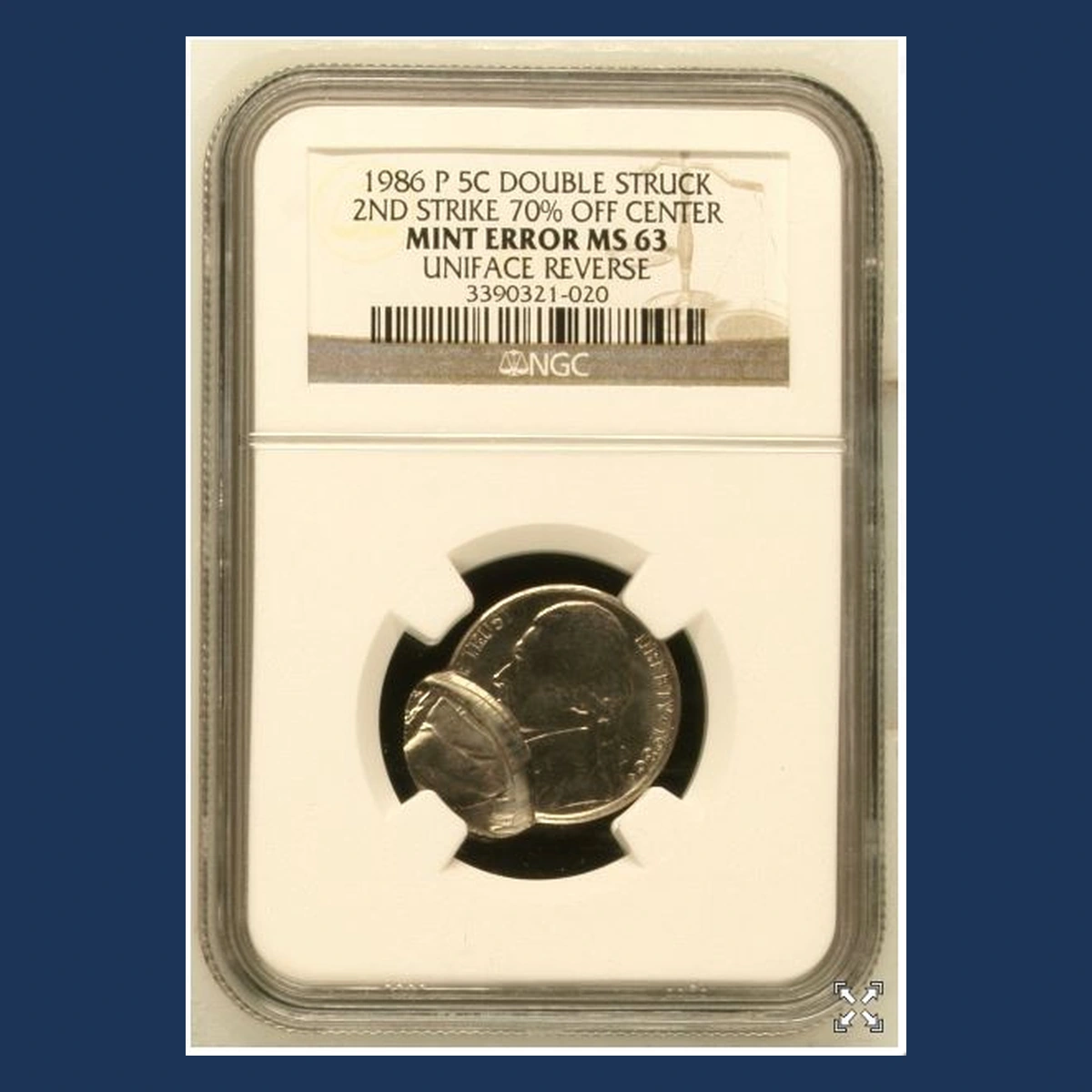
More than one blow can leave a second portrait or lettering in a new position. A Denver example received its second strike seventy percent off center and graded PCGS AU55, indicating light wear.
A different Denver piece has a second off-center strike plus damage on the back. NGC described it as unworn but damaged, rather than giving it a numerical grade.
A Philadelphia example graded NGC MS67 combines repeated strikes with broadstriking, or spreading beyond the normal edge ring. Its exact number of blows was not supplied.
These are separate coins with different layouts and condition.
Estimated Value
The Denver seventy-percent second strike sold for $253 in June 2008. The separate back-damaged example brought $99 in June 2023.
Estimate $80–$800 across comparable double and multiple strikes, with clear overlapping designs and attractive surfaces supporting the higher end. The Philadelphia MS67 broadstrike has no individual sale assigned here.
The wider shape and repeated images on that coin belong in one whole-coin comparison. Its grade does not establish a particular strike count or turning angle.
How to Identify
Identify the mint and the complete outline first, because the Philadelphia and Denver examples have different striking patterns. A Philadelphia multiple broadstrike needs both repeated images and an expanded outline.
On a loose coin, a scale can check against 5 grams and calipers can record its departure from the normal 21.21 millimeters. The normal diameter in a catalog is not a measurement of the expanded specimen.
Use a 10× magnifier to follow a repeated letter or portrait through the overlap. Check both faces and the plain edge for later squeezing or scraping.
Keep the Denver coin’s back damage separate from its original strikes. Trace a recognizable second image, rather than counting every damaged line as another blow.
13. 1986 Jefferson Nickel A Nickel Struck over a Finished Lincoln Cent
A finished Lincoln cent received another denomination’s design when it entered a nickel press. The earlier date did not disappear completely under Jefferson’s portrait.
On the recorded 1986-P example, the cent’s 986 digits remain visible in Jefferson’s hair. The nickel’s P is sharp, while the upper part of its date is weak.
NGC graded the coin MS64 Red, indicating an unworn piece with some marks and preserved copper-red color. Those surface descriptions belong to the whole object.
The earlier cent image distinguishes this error from using an empty copper-colored blank. Both designs must belong to the same struck piece.
Estimated Value
The NGC MS64 Red coin sold for $1,020 in September 2019. Its auction history identifies the same specimen previously sold for $1,265 in January 2011.
An estimated $700–$2,200 covers comparable authenticated examples with readable traces of both designs. These two results are repeat sales, not proof of two separate specimens.
Preserved earlier details and natural surfaces help explain the appeal. Ordinary copper plating does not create this combination.
How to Identify
The surviving cent design is essential.
A low weight or copper color alone cannot distinguish this coin from a nickel design on an unused cent blank.
Find the older 986 digits in Jefferson’s hair with a 10× magnifier, then locate the nickel date and P. Follow where the newer portrait crosses or flattens the earlier digits.
For a loose coin, use a scale against the cent’s starting standard of 2.5 grams; that is not the recorded specimen’s measured weight. Calipers can record spreading beyond a cent’s original 19.05 millimeters, compared with 21.21 millimeters and 5 grams for a normal nickel.
Inspect the edge for a seam or added coating. The older digits should remain beneath the later nickel design on the same piece of metal.
Conclusion
The estimated $5–$2,200 range starts with small documented mint-letter features and reaches a nickel struck over a finished cent. Those coins need different evidence and should not be priced from color or an error name alone.
Keep complete photographs with any measurements. Match the visible detail to the correct mint and specimen, leave thin raised metal intact, and separate later damage from the original striking mistake.