2002 Nickel Error List with Pictures

A cup-shaped nickel can tell a very different story from a flat coin with weak detail. A 1977-D coin curled around its stamping tool sold for $487.20 in July 2021, offering a different-year comparison.
This guide to 2002 Jefferson Nickel errors includes estimated ranges from $5–$1,500. Some clues are small; others change the shape or alignment of the whole coin.
Read on to check the visible feature before choosing its name or price range.
1. 2002 Jefferson Nickel One Face Shifted toward the Edge
One side of Jefferson’s border may look narrow while the other side is wide. If Monticello stays centered, one stamping tool may have shifted sideways.
The tool is called a die, and this error is a misaligned die. Its movement differs from a whole blank sitting away from the center of the press.
Reports include the type for 2002 P and D nickels without a fixed direction. A specific coin needs both faces examined.
A dented rim or a tilted camera can also make the border look uneven. Start with the design’s relationship to the entire outline.
Estimated Value
A clearly visible original shift is estimated at $5–$75. A very small rim difference on a circulated nickel can add little collector value.
The range concerns the reported type rather than one documented 2002 auction result. Clean surfaces and an obvious contrast between the two faces make a more useful comparison.
Metal squeezed sideways by a later hit is a different cause. An uneven border alone should not receive the same premium without evidence that the stamping tool shifted.
How to Identify
Position the camera directly above a flat coin and photograph each face. A tilted view should be ruled out before comparing the widths of the borders.
With a 10× magnifier, follow the design around both faces. Look for one design displaced inside the outline while the other stays substantially centered.
Check a loose specimen with a scale against 5 grams and calipers against 21.21 millimeters. Inspect the plain edge for filing, dents, or squeezing.
Now compare the date and other outside details with the rim. A single tool shift should explain that face without requiring missing metal or an unstruck crescent across both sides of the coin.
2. 2002 Jefferson Nickel Faint Traces from the Opposite Face
Monticello’s outline can seem to intrude beside Jefferson, or pieces of the portrait may appear on the building side. A die clash can leave these faint transferred shapes.
The two stamping tools touched when no blank was between them. Marks from their contact then appeared on coins made afterward.
Year reports include Philadelphia and Denver examples without fixing one exact location. Each set of fragments should match the correct opposite design.
A 2002 nickel uses Jefferson’s older side-view portrait. Comparisons with the modern forward-facing head belong to later coins and can produce misleading matches.
Estimated Value
Estimate $10–$100 for recognizable original clash traces. Easily followed pieces of the opposite design have more appeal than faint lines visible only at one difficult angle.
This range is an estimate for the reported 2002 type. It does not assign a sale to a particular collection of ghost-like marks.
Wear can erase transferred detail, while scratches can imitate it. The surrounding surface and the clarity of the design relationship both matter when choosing a comparison within the range.
How to Identify
Use a normal 2002 nickel to identify the older side-view portrait and Monticello. Pick a distinctive curve or angle in one design that could explain an unusual fragment on the other face.
With a 10× magnifier, look for adjoining fragments that make the same design relationship convincing. Unrelated scratches or an isolated cut do not become a clash just because they sit near the portrait.
For a loose candidate, record scale and caliper readings against 5 grams and 21.21 millimeters and inspect the plain edge. Examine both faces for signs of later pressure from coins squeezed together, then photograph the matching fragments in their full surroundings.
3. 2002 Jefferson Nickel Repeated Front Letters or Portrait Edges
A letter can carry a second raised outline when its stamping tool already contains a repeated design. This is called a doubled die.
The finished coin does not need another trip through the press. Many coins made from the same tool can repeat the same small feature.
Philadelphia reports for 2002 point toward LIBERTY, IN GOD WE TRUST, and Jefferson’s outline. They do not establish one shared pattern across every thick-looking letter.
A flat shelf beside a letter can result from movement during striking instead. Reflections and worn tools make details look broader than normal without proving a doubled die.
Estimated Value
A clearly matched minor doubled design is estimated at $10–$50, with stronger, attractive examples around $50–$150. These figures assume a genuine repeated tool pattern.
The year report does not provide an independently matched original sale for a specific front variety. Treat the range as an estimate, not a price guaranteed by the appearance of one letter.
Photographs should show the extra outline in relation to the whole feature. Flat movement doubling does not receive the same premium.
How to Identify
Move the lamp across the suspected second outline before choosing a variety name. A reflection can travel or disappear, while a real extra edge remains fixed in the metal.
Check the P below the date, then use a 10× magnifier on the complete word or portrait feature. Look for rounded separation and compare a flat shelf that narrows the main letter with movement during striking.
For a loose coin, compare scale and caliper readings with 5 grams and 21.21 millimeters, inspecting its plain edge. Keep those basic checks alongside clear photographs; they cannot turn generally thick lettering into a doubled design.
Match several raised details to the same Philadelphia example. One bright corner is not enough.
4. 2002 Jefferson Nickel Abnormal Surface Color
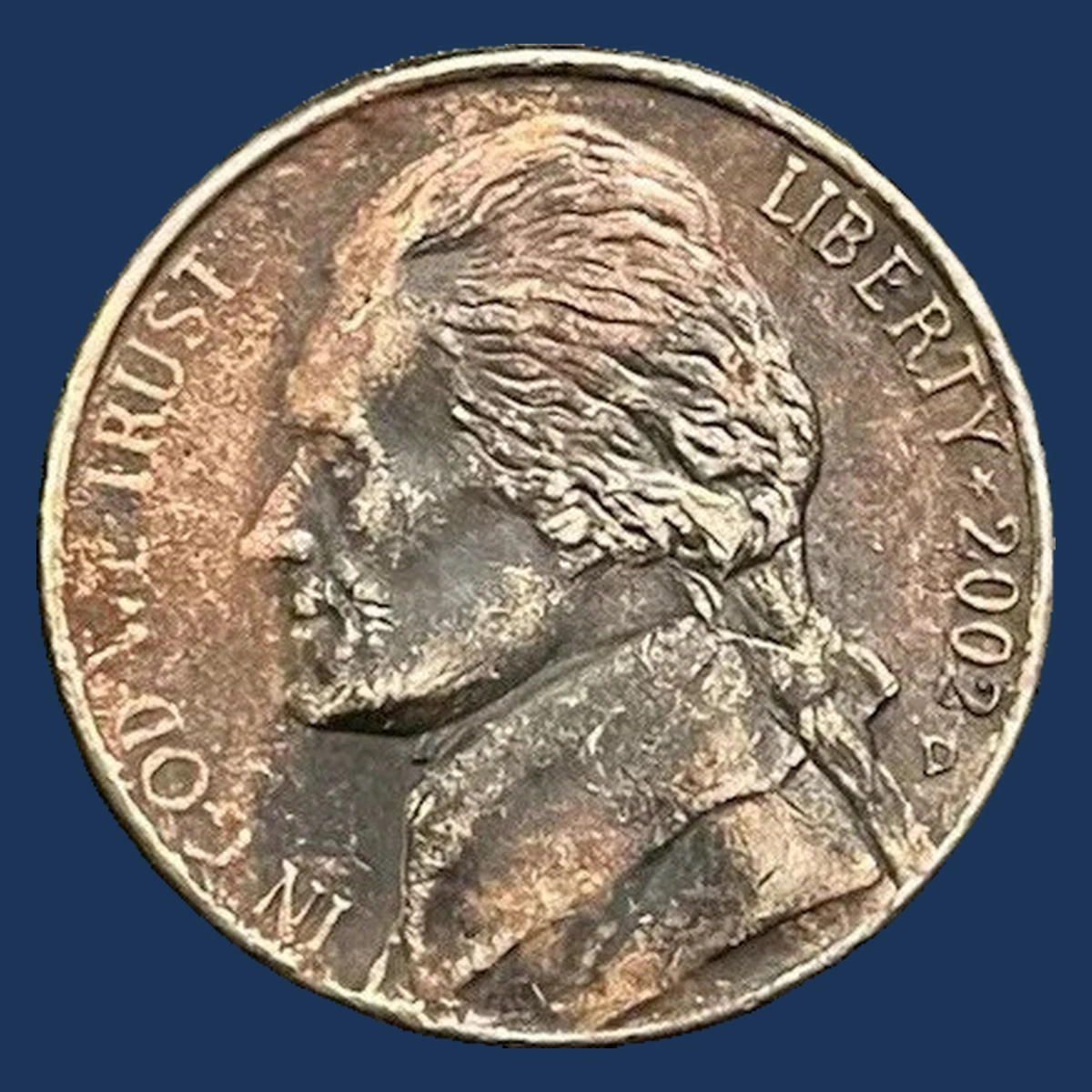
A blank is heated before striking to make its metal easier to shape. The process is called annealing.
Problems during heating can change the surface color. Reports describe this type for 2002 Philadelphia and Denver nickels, including an ungraded Denver seller example.
The reported color does not establish the cause by itself. Chemicals, burial, later heating, and added copper plating can produce unusual-looking coins too.
A normal nickel contains copper mixed with nickel throughout. It has no separate nickel skin over a copper center, so a brown surface does not prove that a layer is missing.
Estimated Value
For a correctly identified Mint heating error, estimate $15–$175. Preserved original surfaces and a strong visible change support the more attractive comparisons.
A 2005-D improperly annealed nickel brought $119 in December 2022. This different-year sale offers context without turning the ungraded 2002 Denver report into a certified example.
Ordinary toning or an added coating does not qualify for the same range. A normal weight and an even dark color are useful observations, but do not prove when the surface changed.
How to Identify
First inspect the protected spaces around letters with a 10× magnifier. Look for crusts, corrosion, or an added coating before judging the overall shade.
Compare both faces and the plain edge with a normal nickel under neutral light. Different lamps can make similar surfaces appear very different in photographs.
Weigh and measure a loose candidate against 5 grams and 21.21 millimeters with a scale and calipers. A much lighter or smaller copper-colored piece needs a separate blank investigation.
Leave the surface untouched for examination. A polished test spot removes original evidence, and remaining shine cannot by itself distinguish a Mint heating problem from later treatment.
5. 2002 Jefferson Nickel A Back That Stays Tilted
Turn an upright Jefferson over from top to bottom and Monticello should also stand upright. If the building repeatedly appears tilted, the two designs may have an unusual alignment.
A stamping tool can rotate out of its intended position. Coins struck afterward then preserve that changed relationship between their faces.
The type is reported for 2002 P and D nickels without a measured angle for a particular example. A general forty-five-degree description should not supply that measurement.
Photographs turned separately can create the same appearance. The way you hold and turn the whole coin is essential to the test.
Estimated Value
Estimate $10–$50 for a clear modest rotation and $50–$200 for a more dramatic, correctly measured example. Tiny alignment differences may attract little interest.
A 2015-D nickel with a ninety-degree rotation sold for $79 in October 2021. That is a different-year comparison with its own measured angle.
The estimate depends on a repeatable relationship between the two faces. A tilted photograph or a coin placed crookedly in a holder should not receive the same premium.
How to Identify
Hold Jefferson upright and turn the coin top to bottom around a horizontal axis. A side-to-side turn is not the correct starting movement for this test.
Repeat without twisting your fingers. Check whether Monticello returns to the same tilted position each time.
Photograph the coin in a support that fixes the relationship between its faces. Measure the actual angle from upright rather than borrowing a number from another example.
Use a 10× magnifier to confirm the date and mint. On a loose coin, compare scale and caliper readings with 5 grams and 21.21 millimeters and inspect the plain edge.
The repeated alignment difference matters more than one sloping image of the building. Both faces must belong to the same recorded turn.
6. 2002 Jefferson Nickel A Clipped Blank
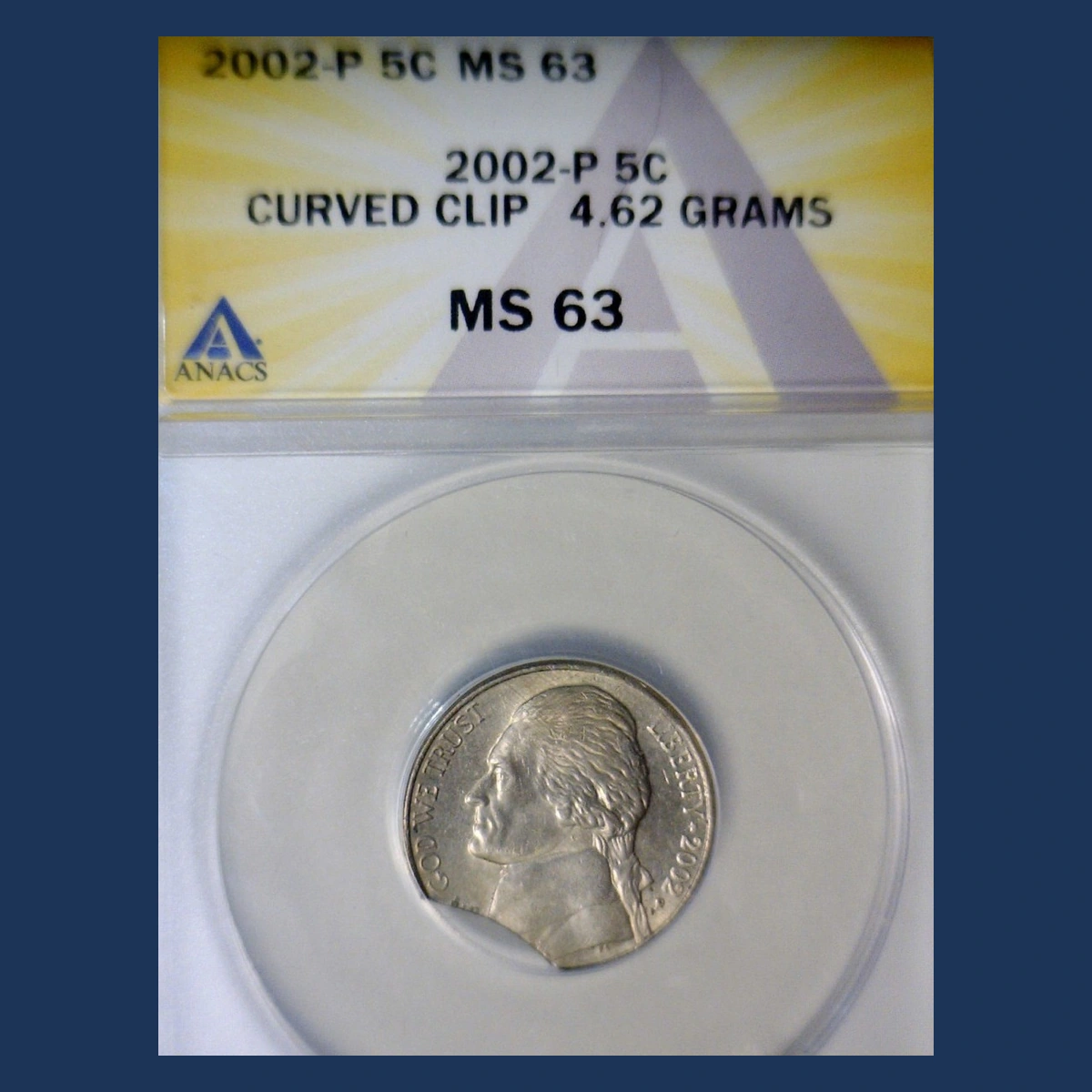
A blank can be incomplete when it reaches the press. Its missing section remains a gap after Jefferson and Monticello are struck onto the available metal.
This is a clipped blank. Curved openings can arise when a blank-cutting punch overlaps a hole already left in the metal strip.
Other incomplete outlines can have straight or irregular boundaries. Reports for 2002 include the type without establishing one measured percentage for a particular coin.
A later cut can imitate the shape. Striking effects around the original gap help distinguish a Mint-made incomplete blank from metal removed after the design was finished.
Estimated Value
A genuine modest clip is estimated at $15–$100, with larger, attractive examples around $100–$250. A readable date and undamaged original boundary improve the comparison.
A 1997-P nickel with a twenty-percent curved clip brought $124 in March 2025. That different-year sale does not establish the missing amount or shape of any reported 2002 specimen.
Two similarly sized gaps can have different causes. Sawing or filing a finished coin does not create the same collector premium.
How to Identify
Check whether the apparent gap is actually missing metal. An intact crescent with no design is an unstruck area, not a clip.
Use a 10× magnifier along the gap’s ends and its plain edge. Look for natural design flow toward the opening, then inspect for saw marks or a sharp filed boundary.
Weigh a loose piece against 5 grams and measure intact spans with calipers against 21.21 millimeters. Later cutting also lowers weight, so measurements cannot prove the cause alone.
Inspect the rim opposite the gap for supporting weakness. That clue may be absent or hidden by wear, so keep the original-looking boundary and surviving struck details central to the comparison.
7. 2002 Jefferson Nickel A Wide Nickel with All Its Design
A wider outline can develop when the blank spreads without normal restraint during striking. The surrounding ring, called the collar, usually controls that outward movement.
The result is a broadstrike. Its complete design stays on the metal even if the border is much wider on one side.
Philadelphia and Denver reports include this type for 2002. A perfectly centered design is not required, but losing design beyond the edge changes the comparison.
A normal Jefferson nickel already has a plain edge. Smoothness is therefore not proof of collar failure, and flattening after minting can also enlarge the coin.
Estimated Value
For original spreading, estimate $25–$100 in modest examples and $100–$300 in stronger, well-preserved pieces. The full design should remain available for examination.
A different-year 1999-P broadstruck nickel brought $89 in March 2025. That result supplies a practical comparison without establishing the diameter or sale price of a reported 2002 coin.
Extra width from later hammering does not receive the same premium. The shape must agree with naturally struck detail instead of crushed letters or a flattened portrait.
How to Identify
Measure several spans of a loose coin with calipers against the normal 21.21 millimeters. A scale reading near 5 grams supports spreading without loss of metal, but does not prove how the spreading happened.
Check every outer word on both faces next. A broadstrike keeps its whole design within the expanded outline even when the border is wider on one side.
Use a 10× magnifier to inspect the expanded metal for hammer marks or crushed high points. A later blow can widen a coin while flattening details that were already present.
Photograph the plain edge and where it joins both faces. Compare the complete lettering with the surrounding spread metal instead of deciding from a single wide rim segment.
8. 2002 Jefferson Nickel Cracks, Small Chips, and a Rim Cud
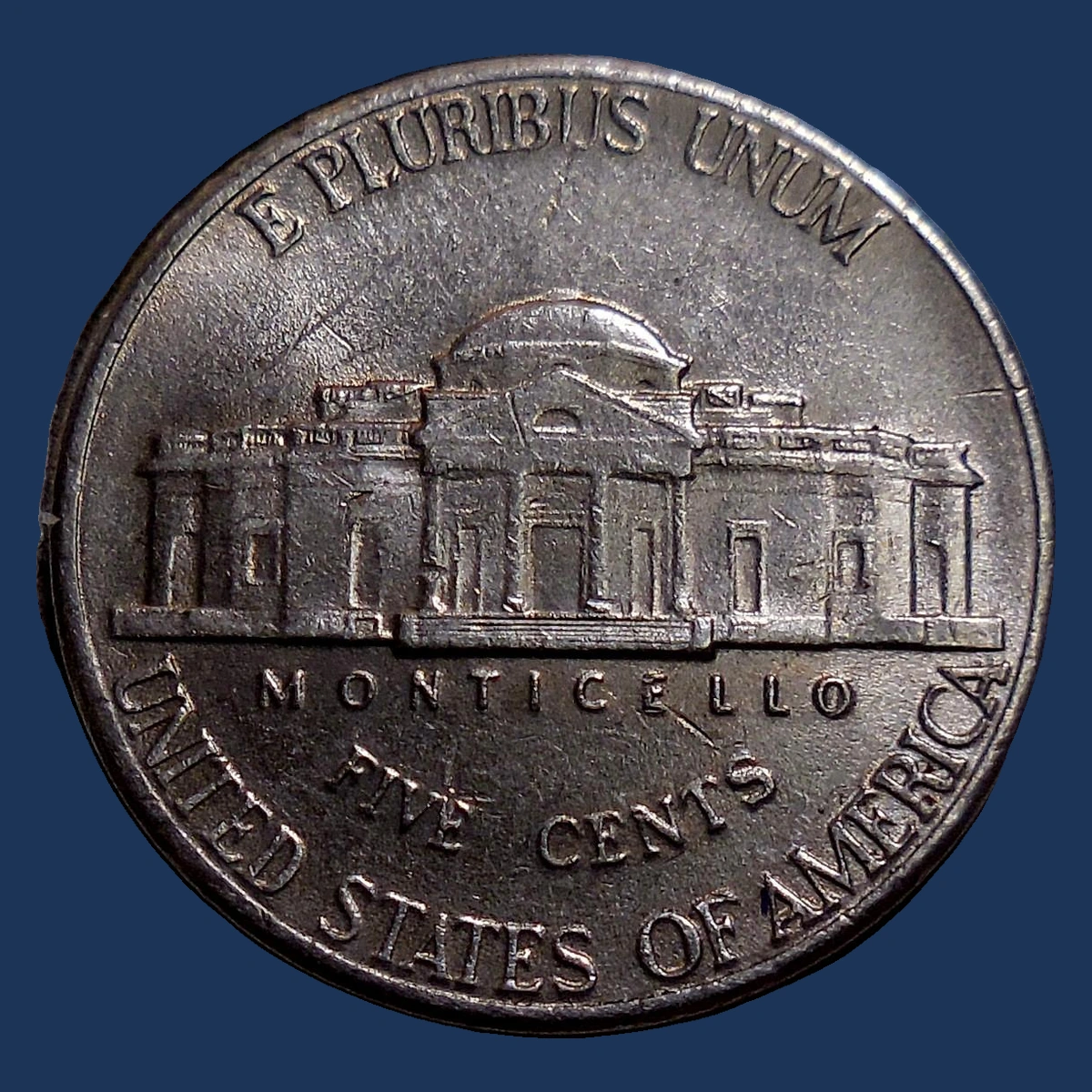
Tool damage can leave either a narrow raised line or an extra lump on a coin. Metal enters a crack or missing piece in the tool during striking.
P and D reports include portrait-area lines and small bumps near LIBERTY. A separate Denver report places a larger rim-connected break on the back between two and four o’clock.
That rim-connected form is called a cud. It differs from a small isolated chip inside the design.
Mint Error News also records a 2002-S Proof front crack. Proofs are specially made collector coins, and this report does not give the crack’s route.
Estimated Value
Small ordinary cracks and chips are estimated at $5–$50. A clear rim cud can be estimated at $50–$300, while an original crack on an attractive S Proof may fall around $50–$500.
The 2002-S Proof report establishes the type without supplying a completed sale price. Its range is an estimate.
Compare the whole coin and its finish. A tiny interior bump should not inherit the price of a substantial cud or a clean Proof.
How to Identify
Decide whether the feature is a thin line, an isolated lump, or a patch connected to the rim. Those visible forms require different comparison photographs.
On the reported Denver cud, keep Monticello upright when checking the two-to-four-o’clock area. Do not transfer that position to the separate Proof front crack.
Use a 10× magnifier to follow original surface into the raised feature. A cut center, attachment seam, or battered surrounding metal suggests another explanation.
For a loose coin, compare with 5 grams and 21.21 millimeters on a scale and calipers. Inspect the plain edge near any rim connection.
Confirm the S Proof finish before using its comparison. A shiny polished ordinary nickel is not the same kind of coin.
9. 2002 Jefferson Nickel A Layer Separating from the Front
A rough surface or thin separated layer can begin with weakness inside the blank. The reported Philadelphia type for 2002 has been described as a split planchet, meaning a split metal blank.
The description does not establish whether an entire face separated or only a local patch peeled. It also does not settle whether separation came before or after striking.
These differences should follow the actual surface and surviving design. They should not be guessed from roughness alone.
The nickel is one copper-nickel alloy throughout. Calling the flaw a missing nickel skin over a copper core would misdescribe its construction.
Estimated Value
For small genuine peeling areas, estimate $10–$100; a clearer major split can be estimated at $100–$600. The amount of surviving design and the timing of separation affect the comparison.
A 1981-P nickel struck on a 2.91-gram split blank sold for $30 in August 2021. That different-year coin is a modest example, not a weight or strike sequence to assign to the 2002 report.
Grinding or chemical damage does not qualify for a split-blank premium merely because the coin becomes thin.
How to Identify
Begin with the separated boundary rather than the roughest patch. Side lighting and a 10× magnifier can reveal whether the surface opens into the coin’s original metal.
If a flap remains, leave it attached. Photograph any design on the flap and adjoining surface.
Use a scale on a loose piece against 5 grams, then measure thickness and width with calipers against a normal 21.21-millimeter nickel. Lost metal can reduce weight, while a retained layer may leave it nearly normal.
Inspect the plain edge and exposed surface for parallel grinding marks. Follow how the design meets the separation before deciding whether the split occurred before or after the strike.
10. 2002 Jefferson Nickel Design Struck Away from the Center
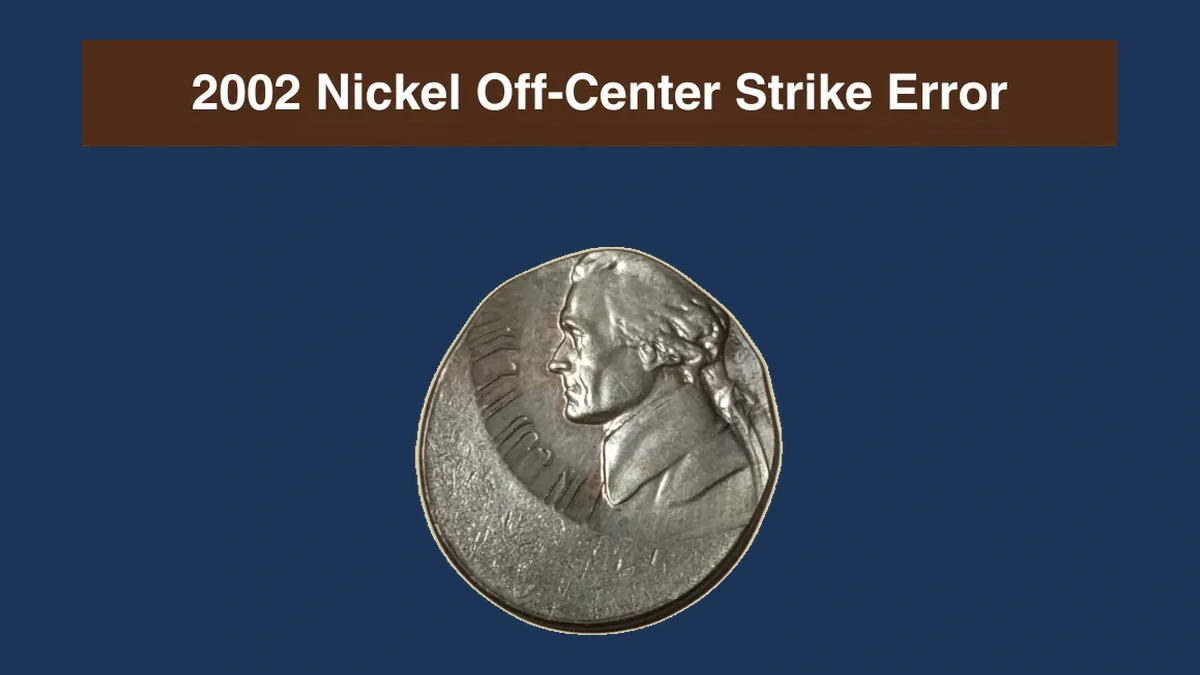
A misplaced blank can receive Jefferson and Monticello away from its center. Some intended design then falls beyond its edge while another portion of metal remains untouched.
This is an off-center strike. Year reports include a Denver example, but do not establish its actual direction or percentage from a primary auction record.
A date close to the rim does not prove the error by itself. The unused metal and missing outer design need to support the same displaced strike.
The front and back should also agree. One shifted face opposite a centered face calls for a separate tool-alignment explanation.
Estimated Value
Estimate $30–$150 for modest dated examples and $150–$650 for stronger, attractive offsets. The date must remain identifiable for a reliable year-specific comparison.
A 1999-D nickel struck sixty-five percent off center sold for $75 in September 2024. Its angle and percentage belong to that different-year coin, not the reported 2002 Denver piece.
The largest unstruck area does not always bring the highest price. Damage and an unreadable date can reduce appeal even on a dramatic error.
How to Identify
Find solid metal with no design before estimating a percentage. A missing section instead suggests a clip or a later cut.
Orient the date upright and compare the displaced designs on both faces. Their relationship should fit the same misplaced blank.
Use a 10× magnifier along the boundary between untouched metal and struck detail. Grinding lines can reveal a blank-looking area made after minting.
Weigh a loose specimen against 5 grams and record its outline with calipers against 21.21 millimeters. The shape may spread even when the metal remains.
Check the plain edge for trimming or impacts. Keep the surviving date, mint letter, and unstruck area in the same record before naming the direction of the shift.
11. 2002 Jefferson Nickel Two Overlapping Strikes
Parts of Jefferson or Monticello can appear twice if a coin receives another blow after moving. This is a double strike.
A Denver example is reported for 2002 without an established direction or amount of movement for its second blow. Those details need to be read from the actual overlaps.
The mistake differs from a doubled die that repeats tiny outlines already present in the tool. Here, two design positions come from separate blows on one coin.
Pressing finished coins together later can also add confusing marks. Their sunken reversed impressions need to be separated from a genuine repeated strike.
Estimated Value
For recognizable double strikes, estimate $75–$300, rising to $300–$900 for stronger overlaps on attractive coins. Both impressions should remain understandable.
A 2001-D nickel with a later strike sixty-five percent off center brought $307.44 in June 2026. It offers a nearby-year comparison without establishing the second-strike position on the reported 2002 coin.
These are whole-coin values. Do not add a complete error price for each surviving portrait or word from the two blows.
How to Identify
Choose a large repeated feature, such as part of Jefferson’s face, and trace each position separately with a 10× magnifier. A thin shelf beside one letter does not establish a second blow.
Turn the coin over and connect the back’s overlapping design with the front. The pattern should fit a consistent sequence rather than unrelated dents.
For a loose coin, compare weight with 5 grams on a scale and record the outline with calipers against 21.21 millimeters. Repeated blows can alter shape without removing metal.
Inspect the plain edge and crossings for later squeezing. A sunken mirror image from another finished coin needs a different explanation from a second design struck into the same blank.
12. 2002 Jefferson Nickel A Coin Cupped around a Stamping Tool
A coin can remain attached to a stamping tool after receiving its design. Further blows can spread its metal upward around the tool, producing a cup-shaped die cap.
The cap is the stuck coin itself. Later coins struck through that cover may show weak detail but need not have a cup-shaped body.
A year list reports this cap type for Denver in 2002. A shallow weak portrait is not enough to identify the coin that formed the cap.
A bent or hammered nickel can also become cup-shaped. Curved design and the striking pattern need to explain its shape.
Estimated Value
For an authenticated 2002 die cap, use an estimated $300–$1,500, depending on depth and preservation. If the coin instead proves to be a flat strike through a cap, use an estimated $40–$300.
The different-year 1977-D cap mentioned above sold for $487.20 in July 2021. No completed sale is assigned here to the reported 2002 type.
The higher range requires the actual cupped coin. A faint portrait alone should not receive a deep-cap price.
How to Identify
View the coin from the side before judging the portrait. A cap needs a body that wraps upward, not simply weak facial details.
Never straighten the walls. Their shape is part of the feature being examined.
Use a 10× magnifier to follow design into the curved metal and inspect the opposite surface. Later hammering can leave dents, sharp folds, and crushed lettering.
For a loose piece, a scale can compare weight with the original 5 grams. Calipers can record changed dimensions against 21.21 millimeters without squeezing the walls.
Photograph the edge and both faces for specialist review. Identify the cupped object before choosing its range; a separate coin struck through a cap requires a different comparison.
Conclusion
Estimated values of $5–$1,500 cover these 2002 nickel error types. A shifted face, a tilted back, and a second strike may all look odd, but each leaves a different relationship between the two designs.
Begin with the complete coin before moving to close-ups. Keep ordinary P and D pieces separate from S Proofs, preserve fragile surfaces, and use the actual shape and metal to choose the right price comparison.