2003 Nickel Error List with Pictures

Two unusual nickels do not automatically make a matched pair. Their marks must show that they met during the same minting accident; a genuine 1999 pair sold for $1,260 in September 2025.
This 2003 Jefferson nickel error list covers estimated values of $3–$3,000, from small tool flaws to major striking mistakes. The coins still carry Jefferson’s older left-facing portrait.
Read the checks below to distinguish complete designs, missing metal, and matching contact marks before comparing prices.
1. 2003 Jefferson Nickel Small Raised Lines and Blobs
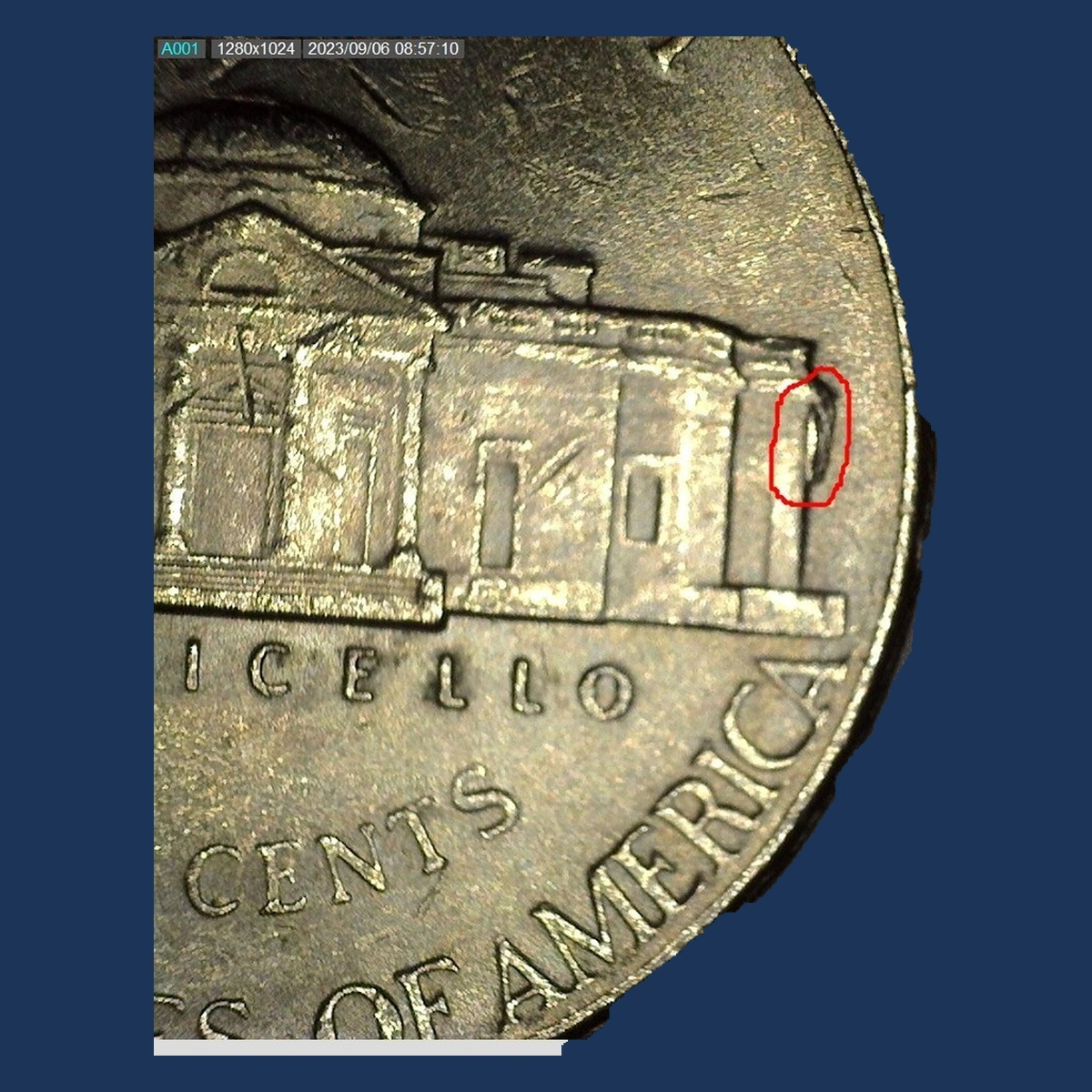
A fine raised line or small blob can appear beside the portrait or lettering. Reports for 2003-D nickels describe cracks and small chips in the stamping tools.
A die is the steel tool that forms one face of a coin. Copper-nickel metal pressed into a narrow crack leaves a raised line, while a small chipped-out area leaves a wider blob.
These are not scratches cut into the coin. A large break connected to the rim also needs its own evidence; an interior chip does not automatically prove that larger error.
Estimated Value
For ordinary small cracks or chips, estimate $3–$40. A distinct shape on an unworn surface can attract more interest than a faint line hidden by wear.
The range is an estimate for these modest 2003-D features, not a claimed auction record. Buyers should be able to see where the added metal begins and ends.
Corrosion or attached material receives no tool-error premium. Size alone is also insufficient when a large-looking blob comes from later damage rather than the original strike.
How to Identify
Use a 10× magnifier to determine whether the feature rises above the surrounding surface. Move the light across it; a cut-in scratch casts shadows differently from a narrow raised ridge.
Compare the nearby portrait or letters with an ordinary 2003-D coin. Normal design edges can resemble unexpected cracks in a tightly cropped picture.
A loose nickel should be close to 5 g and 21.21 mm across, checked with a scale and calipers. Inspect the plain edge for impacts that pushed metal inward.
Follow any raised line into an adjoining blob without assuming a particular path. A visible seam or different texture around the blob can suggest attached material rather than metal shaped by the stamping tool.
2. 2003 Jefferson Nickel Portrait Traces around Monticello
Faint portrait-like shapes may appear around Monticello or near its steps on reported 2003-P nickels. They can come from a clash between the two stamping tools.
The tools touched without a blank between them, damaging their surfaces. Later coins then copied partial traces of the opposite design.
The building should still remain in its normal position. The extra marks need to fit Jefferson’s left-facing portrait rather than merely resemble random lines.
Clash marks are not all the same depth, and a complete backward portrait would require a different explanation.
Estimated Value
An estimated $5–$60 suits recognizable 2003-P clash marks. The upper part assumes clear traces and clean surfaces that make the opposite design easy to recognize.
This is a small-error estimate rather than a specific sale amount. Faint marks that depend on unusual lighting may attract little extra money.
A matching shape and position matter more than the number of marks. Later squeezing, dirt, or scratches can create a busy surface without creating a collectible clash.
How to Identify
Start with a normal 2003 portrait photograph, since a modern forward-facing Jefferson is the wrong comparison. Look for portions of the older portrait that fit the extra shapes around the building.
Inspect those shapes with a 10× magnifier and side light, keeping the nearby lettering and steps in view. A close crop can hide that two apparently similar lines sit in incompatible positions.
For a loose coin, compare 5 g on a scale and 21.21 mm with calipers, then inspect the plain edge. Normal measurements support the coin’s basic identity but cannot establish a clash by themselves.
If the whole face appears sunken and backward, examine whether another coin contacted it directly instead of assuming the effect came from tool-to-tool contact.
3. 2003 Jefferson Nickel Weak Details or an Obstruction Impression
A design area can appear unusually soft or interrupted while nearby details remain normal. An obstruction between the blank and stamping tool can stop the design from forming there.
Soft material in a recess may leave weak lettering. A firmer object can instead leave a distinct depression or outline.
The 2003 reports identify this general struck-through category without establishing one material or location for every coin. A missing letter should therefore not be labeled as a cloth, wire, or metal-fragment impression merely because those errors can occur on other dates.
Estimated Value
For genuine 2003 struck-through effects, estimate $3–$25 for small soft areas and $25–$200 for clear object impressions. Visibility and condition account for much of the spread.
A different 2000-D nickel struck through a coin covering the tool sold for $84 in September 2025. That is another kind of obstruction, not a sale or material identification for this date.
The estimate excludes ordinary wear and later dents. A convincing boundary matters more than an imaginative explanation of what caused it.
How to Identify
A small missing letter needs different attention from a sharply bounded depression, so photograph the entire affected face first. Include the date and nearby sharp details before enlarging the weak area.
Use a 10× magnifier at the boundary to look for natural interruption of the strike rather than fresh cutting or scraping. Compare wear on the highest portrait details as well, since general flattening can explain a soft patch without any obstruction.
For a loose nickel, record 5 g and 21.21 mm as the normal comparison values for a scale and calipers. Inspect the plain edge and surrounding surface for damage that a close-up of the patch alone might hide.
4. 2003 Jefferson Nickel Wide Coin with a Complete Design
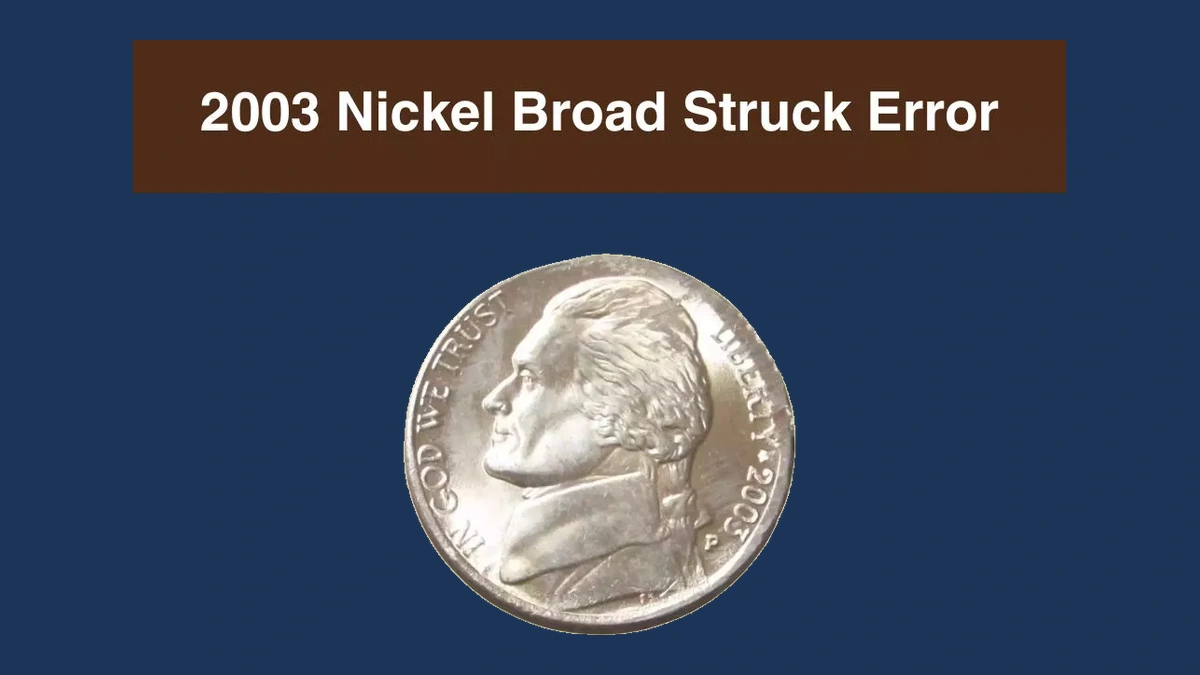
The coin can spread wider than normal while retaining Jefferson, Monticello, and the main lettering. This broadstrike forms when the surrounding ring fails to contain the blank as the stamping tools apply pressure.
The extra metal flows outward instead of remaining within the intended diameter. An expanded border can be uneven without cutting off the main design.
The reported 2003 examples include Denver coins. A plain edge is normal on nickels, so it does not prove that the restraining ring failed; the actual expansion must be visible.
Estimated Value
A 1999-P broadstruck nickel graded PCGS MS63 sold for $89 in March 2025. Its unworn condition makes it a useful different-year comparison.
For 2003-D broadstrikes, allow an estimated $25–$250. Visible expansion, undamaged designs, and original surfaces support the stronger prices.
A wider diameter alone is not enough. Later pressure can flatten and spread a normal coin, so a large but damaged example should not be valued as an equally large mint-made broadstrike.
How to Identify
Use calipers to compare several diameters with a normal 21.21 mm nickel. An uneven expanded border may give different readings depending on the direction measured.
Weigh the loose coin against 5 g and inspect both faces through a 10× magnifier. Broadstriking spreads the existing metal; it does not normally remove a section of the blank.
Check that the principal designs remain complete and that the plain edge flows naturally into the wider border. A missing piece of design may indicate an off-center strike instead.
Look at the portrait and lettering for flattened tops or matching pressure damage. Those marks can reveal a coin squeezed after minting, even when its outline first appears to fit a broadstrike.
5. 2003 Jefferson Nickel Displaced Design
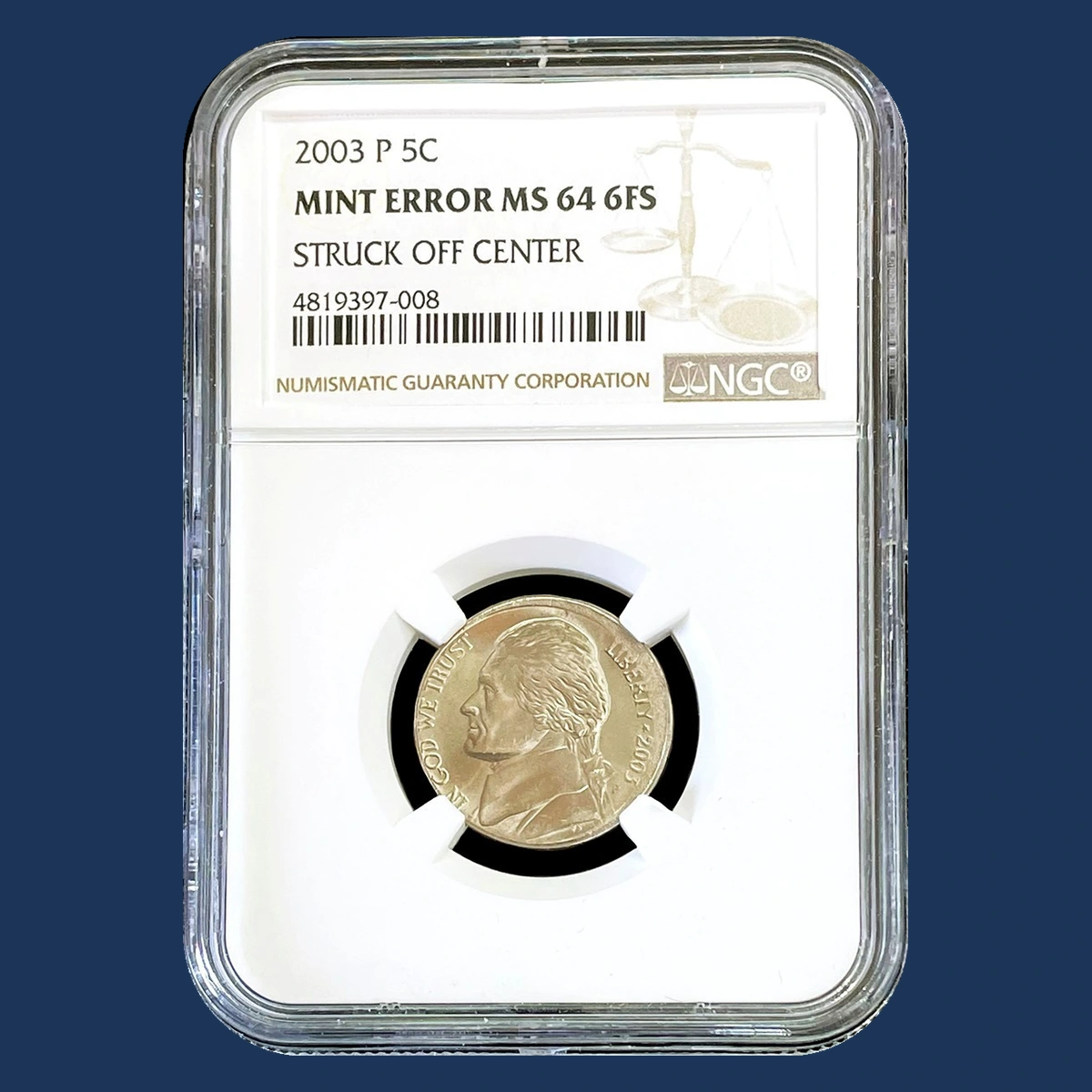
A recorded 2003-P nickel was struck 10% off center toward 9 o’clock. The displaced blank left original metal outside the struck design while some details ran beyond the opposite edge.
ANACS graded that coin MS63, an unworn grade. It appeared in a two-coin auction lot alongside a different, more strongly displaced 2001-D nickel.
The 2003 coin must be judged by its own shift. A large percentage or higher grade belonging to the companion coin does not describe this Philadelphia example, and an uneven rim alone is not equivalent to off-center striking.
Estimated Value
The two-coin lot containing the 2003-P example sold for $63 in January 2022. That total also purchased the 2001-D coin, so it is not the individual price of the 2003 nickel.
Estimate $25–$500 for 2003 off-center strikes, depending on the shift, date visibility, and condition. A modest 10% example belongs below a dramatic clean displacement.
The combined sale provides context only. Do not divide it equally and present the result as an actual single-coin transaction.
How to Identify
With the date upright, the recorded P example shifts toward the left, at 9 o’clock. Compare its two faces with that direction in mind rather than borrowing the companion coin’s position.
A 10× magnifier helps inspect the transition from struck detail to the original blank crescent. Look for tooling that could have removed design from a finished coin.
Check a loose nickel with a scale against 5 g and calipers against a normal 21.21 mm blank. Inspect the plain edge for missing metal; striking can distort the outline without creating a clip.
Read 2003 and P directly in the photograph.
An undated nickel described only as belonging somewhere between 1966 and 2003 cannot be identified as this year.
6. 2003 Jefferson Nickel Nickel Design on a Cent Blank
Jefferson’s nickel portrait can appear on a smaller, copper-colored disc. The reported 2003-D type used a blank intended for a one-cent coin instead of the normal nickel blank.
A modern cent blank is copper-plated zinc, with a normal starting weight of 2.5 g. Its smaller surface cannot accommodate all the nickel design.
That figure describes the blank standard, not a recorded measurement of this particular coin. Color alone also cannot establish the mistake, since plating or staining a normal nickel can change its appearance without changing the original design.
Estimated Value
For an authenticated 2003-D cent-blank strike, estimate $150–$750. A readable date and clean, naturally cut-off design support the higher part of the range.
A 1981-P nickel struck on a cent blank sold for $372 in September 2025 at PCGS MS63. Its older copper-based blank differs from the lighter copper-plated zinc blank used for 2003 cents.
That is a market comparison, not a specification match. A plated normal nickel does not receive the same wrong-blank premium.
How to Identify
Compare the two designs before measuring: the coin should carry the nickel portrait and Monticello, not Lincoln and the cent’s back. Surviving cent designs beneath the nickel would raise a different double-denomination question.
Use a scale to compare a loose example with the cent blank’s 2.5 g and the nickel’s normal 5 g. Calipers can compare the outline with starting diameters of 19.05 mm and 21.21 mm, allowing for expansion during striking.
Under a 10× magnifier, inspect the plain edge for filing, cutting, or an added copper coating. The outer nickel details should end naturally where the original small blank ends.
A specialist should assess the metal without scratching through the plating. Low weight and copper color together are useful clues, but neither substitutes for that examination.
7. 2003 Jefferson Nickel Two Displaced Impressions
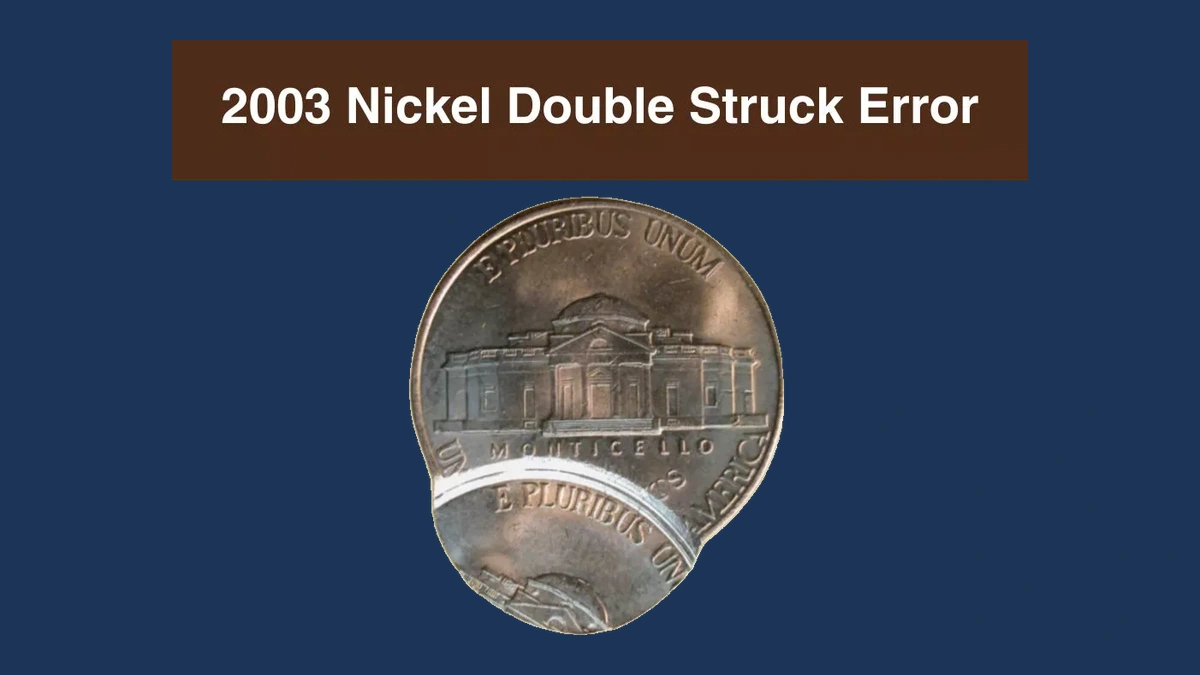
A second set of portrait or lettering details can show that a coin moved and was struck again. The repeated groups should belong to separate blows, not merely a small extra outline on a stamping tool.
The reported 2003 case is described as a collector Proof, a specially made coin with a reflective finish. That identity requires checking against the actual piece.
Proof production normally uses repeated aligned blows, which are not an error by themselves. The collectible mistake is movement between blows that leaves two displaced impressions on the finished coin.
Estimated Value
For a genuine displaced double strike matching the reported 2003 type, estimate $100–$1,500. This conditional range does not establish a grade or collector finish for the candidate.
A 2007-D nickel with double striking and major broadstriking sold for $1,260 in August 2025. Its added expansion makes it a stronger error than simple minor doubling.
The comparison shows why the actual geometry matters. A small extra letter edge or normal aligned Proof striking does not qualify for this range.
How to Identify
Trace a second portrait edge and the lettering associated with it. A 10× magnifier should show a matching group of displaced details, rather than one isolated shelf beside a numeral.
Examine both faces to see how the two impressions overlap. Do not assume a second-strike angle or direction before the actual details establish it.
Check the mint letter and finish separately. Reflective fields alone do not prove a Proof, and ordinary aligned multiple blows during Proof manufacture do not create this error.
For a loose coin, use a scale and calipers against the normal 5 g and 21.21 mm, and inspect its plain edge. Keep a sealed example in its holder so the repeated design can be assessed without risking new surface marks.
8. 2003 Jefferson Nickel Coin Wrapped around a Stamping Tool
The edge can rise around the coin until its outline resembles a shallow cup. A die cap forms when a struck coin sticks to a stamping tool and is repeatedly pressed against later blanks.
The trapped coin gradually spreads and wraps around the tool. The reported 2003 category concerns the cap itself.
A different coin struck beneath that cap may show a softened or altered design without becoming cup-shaped. Those are separate objects, and a bent nickel made outside the Mint can imitate a cap’s outline without sharing its striking history.
Estimated Value
An estimated $300–$2,000 applies to a genuine 2003 cap with convincing original strike details. Greater depth and visible metal flow can support stronger collector interest.
The 2007-D nickel sold for $1,260 with major expansion and repeated striking was also discussed as a cap. Its auction label describes the striking effects, making it a comparison rather than a price for the 2003 report.
Artificially bent coins fall outside the estimate. The raised outline alone is not enough.
How to Identify
View the candidate from the side and compare its raised edge with the design on both faces. A cap-like outline needs natural metal flow and strike effects that explain how the coin wrapped around a tool.
Use a 10× magnifier where the flat face becomes the wall. Sharp folds, fresh scratches, or matching gripping marks can reveal later bending.
The starting nickel standard is 5 g and 21.21 mm, with a plain edge. A scale and calipers may record an unusual final width or height on a loose example without proving how it formed.
Do not flatten the coin to measure it. Keep the cup intact and distinguish it from a flat coin that was simply struck beneath a cap.
9. 2003 Jefferson Nickel Two Coins from One Striking Accident
Two coins can preserve opposite sides of the same striking accident. If their contact marks fit together, collectors call them a mated pair.
The 2003 report uses both pair and bonded-coin language, but those words describe different conditions. Two matching coins can be separate, while bonded coins remain physically joined.
The essential clue is the relationship between their designs and contact areas. Similar dates or two unusual shapes do not prove a pair, and sticking ordinary coins together afterward cannot create the original pressure marks of a shared minting accident.
Estimated Value
For an authenticated 2003 pair, estimate $500–$3,000 for both coins together. The range assumes that their marks demonstrate one shared accident, not merely that each coin is unusual.
A genuine 1999-P pair sold for $1,260 in September 2025. One coin had an off-center backward impression, while its partner had repeated off-center strikes.
That different-year sale is a pair comparison. The 2003 estimate does not establish that the reported pieces remain bonded or have a verified Proof finish.
How to Identify
Lay the two coins beside each other without forcing them together.
Compare the size, curve, and position of the proposed contact areas before looking at their dates.
With a 10× magnifier, trace details that could have transferred from one coin to the other. The shapes should fit both pieces at once, including which areas were blocked during striking.
For loose, separate coins, record each weight and outline with a scale and calipers against 5 g and 21.21 mm. Examine both plain edges for later reshaping.
If the pieces are joined, do not pull them apart. Glue or solder must be distinguished from an original bond, and any finish or grading claim must be checked for each coin rather than copied across the pair.
Conclusion
Estimated values for 2003 Jefferson nickel errors range from $3 to $3,000. A small raised line differs greatly from a genuine cap, wrong blank, or two coins that prove a shared striking accident.
Keep the old left-facing design, date, and mint letter in view. Check each coin individually before accepting a pair, and separate a combined auction price from the value of one piece when using past sales as comparisons.