1817 Cent Error List with Pictures

Fifteen normal stars and fifteen sunken mirror-image stars appear on one unusual 1817 cent. That brockage drew a $7,500 winning bid before buyer’s premium in January 2015.
This 1817 cent error list covers estimated whole-coin prices from $20 to $15,000. Both 13-star and 15-star designs occur, so count the original stars before comparing examples.
Below, follow the marks from small copper flakes to shifted strikes and mirrored designs, with checks for each type.
1. 1817 Coronet Head Cent Back Design Shifted toward the Edge
The back design may sit closer to one edge while the front remains differently centered. This points to a misaligned die, meaning a stamping tool was displaced relative to the other tool.
A collector describes an 1817 N-14 with the back shifted slightly toward five o’clock. This example has the 13-star front design.
Heritage described another N-14 with sharp left borders and softer right borders caused by tool misalignment. A weak border alone, however, is not enough to identify the cause.
The useful distinction is movement of a tool rather than the entire blank sitting off center under both tools.
Estimated Value
Slight misalignment on worn 1817 cents fits an estimated $25–$250 whole-coin range. Better-preserved pieces can fit roughly $250–$1,500, with much of the value coming from condition.
The collector’s N-14 was described as XF40, with light to moderate wear, while Heritage’s separate coin was NGC MS63 Brown and unworn. Neither is assigned a sale amount here.
Compare the uneven borders with the front’s centering. A small displacement should not automatically receive the price of a major off-center strike.
How to Identify
Place full photographs of both faces beside one another and compare the design’s distance from the rim. The reported N-14 back moves toward five o’clock, so inspect that border and the opposite side with a 10× magnifier.
Use calipers on a loose cent to record its roughly 28 mm diameter, and a scale to compare the 10.89 g copper standard. One displaced tool need not remove metal or change the coin’s overall weight.
Look at the front before deciding what happened: a similarly displaced design on both faces may indicate an off-center blank instead. Wear can also soften border details, so judge the actual spacing rather than sharpness alone.
2. 1817 Coronet Head Cent Small Copper Flakes near the Stars and Lettering
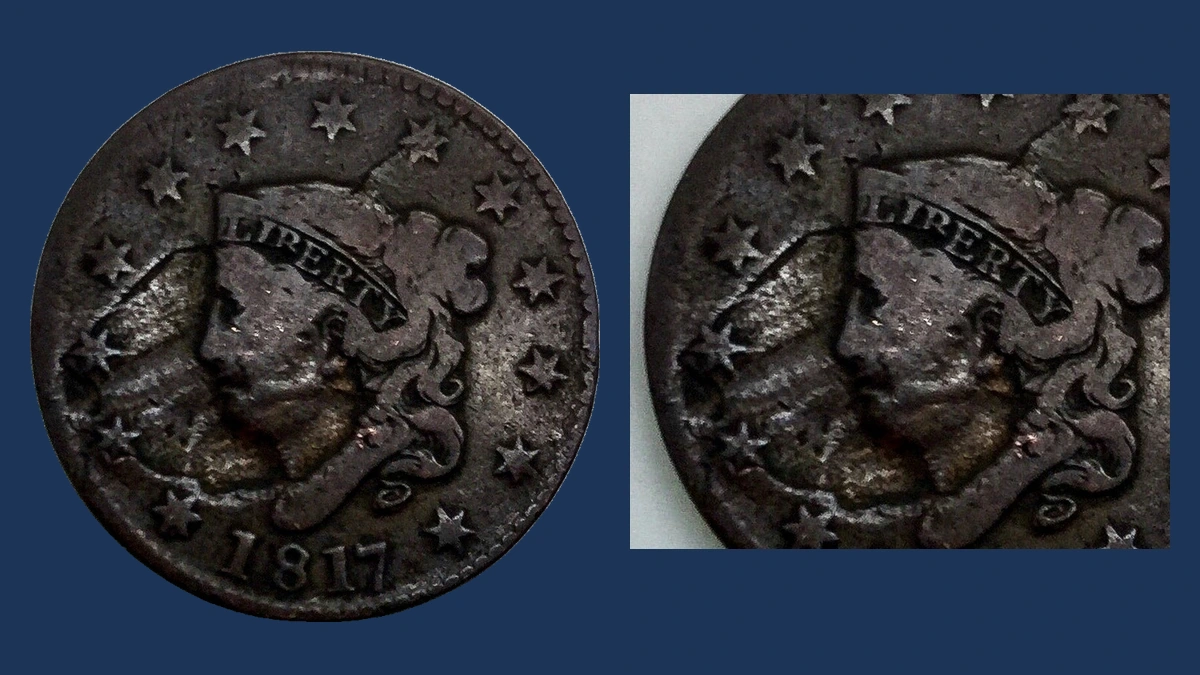
A small missing sheet can interrupt a star or leave a hollow beside the wreath. This is lamination, where a weak layer in the copper separates from the metal beneath it.
One 1817 N-3 has a noticeable flake missing from the rim beside star one. A smaller missing flake lies below a wreath stem on its back.
A separate N-17 has a minor separation at the top of U in UNITED. Both examples belong to the 13-star design.
The different locations should be checked individually. These small surface defects do not describe an entire blank split into two complete halves.
Estimated Value
The N-3 graded PCGS AU58 sold for $930 in September 2020. Its grade indicates only slight wear.
The separate N-17, cataloged VF20+ with moderate wear, brought $1,020 including premium in August 2025. Different tool varieties and overall appeal affect these prices as well as the flakes.
Estimate $25–$400 for worn examples with modest lamination, or roughly $400–$2,000 for stronger pieces. Neither auction amount is a charge for a missing copper flake alone.
How to Identify
For N-3, inspect the first star at the lower-left front rim before turning to the wreath stem on the back. Under a 10× magnifier, look for the thin boundary of the missing copper sheet.
N-17 needs a separate view of the top of U in UNITED. A light held low beside that letter can reveal the step between the original surface and the exposed layer.
Weigh a loose cent against 10.89 g and measure sound spans around 28 mm with calipers. Small flakes may not cause a large change in weight.
Keep tools off fragile edges. A layered separation is more useful than general roughness when distinguishing lamination from corrosion or a later rim knock.
3. 1817 Coronet Head Cent Rim Clip or Straight Missing Edge
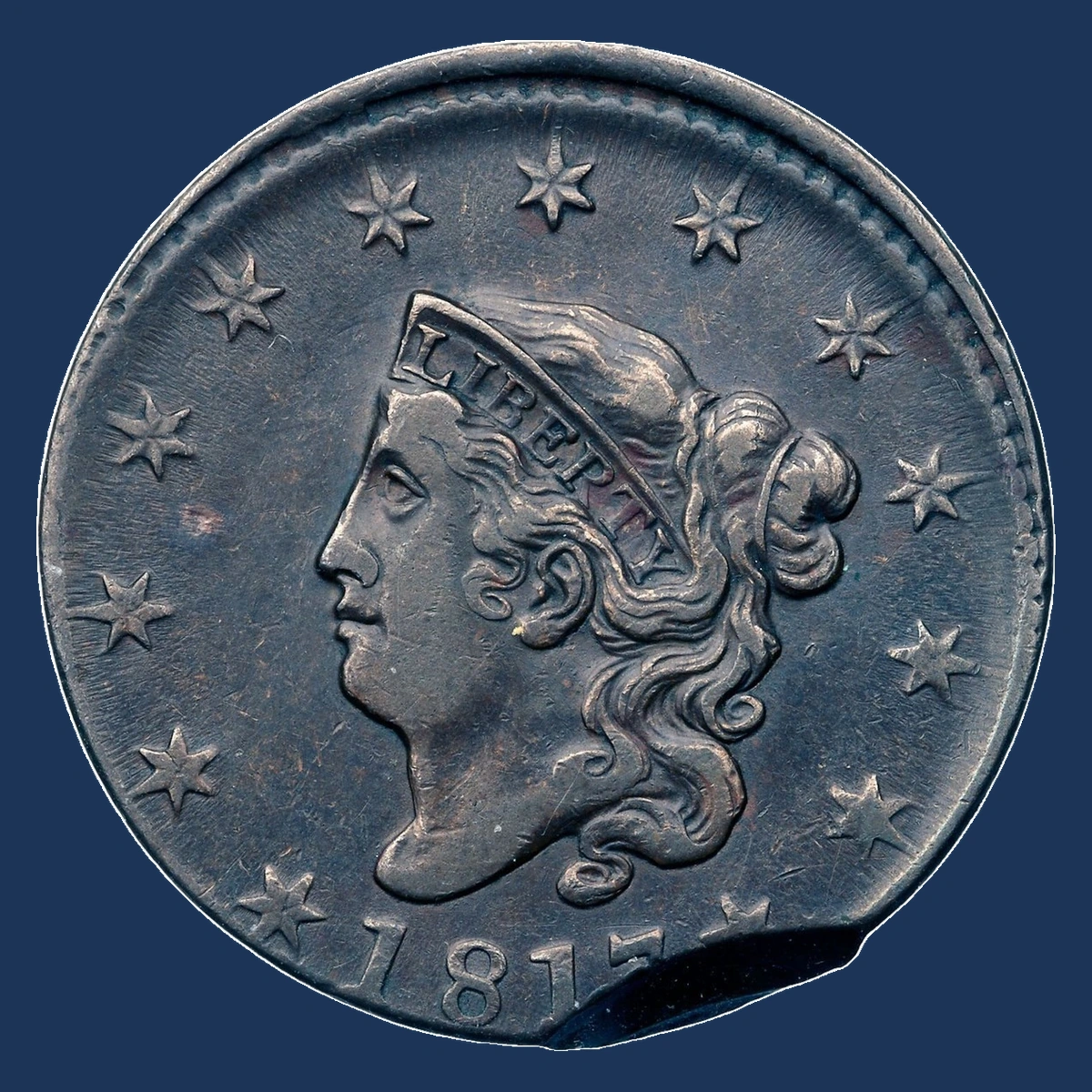
A clipped blank starts with an incomplete outline, so the coin lacks part of its edge. The missing section can be straight rather than curved.
A Mint Error News listing describes an 1817 with a rim clip at five o’clock. A collector separately records a straight clip on a 13-star N-12.
The two descriptions do not establish the same coin. The straight clip’s clock position and missing percentage are not specified.
This error differs from a small flake peeling off the surface. A clip changes the blank’s outline, while a shallow lamination can leave most of the edge thickness intact.
Estimated Value
Worn 1817 cents with small original clips fit an estimated $50–$400 range. Larger, clearer clips or better-preserved pieces can fit roughly $400–$2,500.
The rim-clip and straight-clip reports have no completed sale amounts used here. These are estimates for whole coins, with the shape and condition assessed together.
A straight missing edge can be mint-made, but it can also result from later cutting. A large cut does not earn the estimated premium unless the edge supports an original incomplete blank.
How to Identify
Inspect the missing wall under a 10× magnifier before accepting a clip label. The rim-clip report names five o’clock, but the straight-clip example needs its own location recorded.
A scale can compare a loose example with the original 10.89 g weight, and calipers can measure surviving spans near 28 mm. Missing copper may lower the weight, though wear also contributes.
Inspect how the struck border ends beside the gap and whether filing or saw marks cross already finished detail. A weak rim opposite the shortage can support the diagnosis, but it must agree with the gap’s shape and strike-formed edges.
4. 1817 Coronet Head Cent Lines beside the Date and Raised Rim Breaks
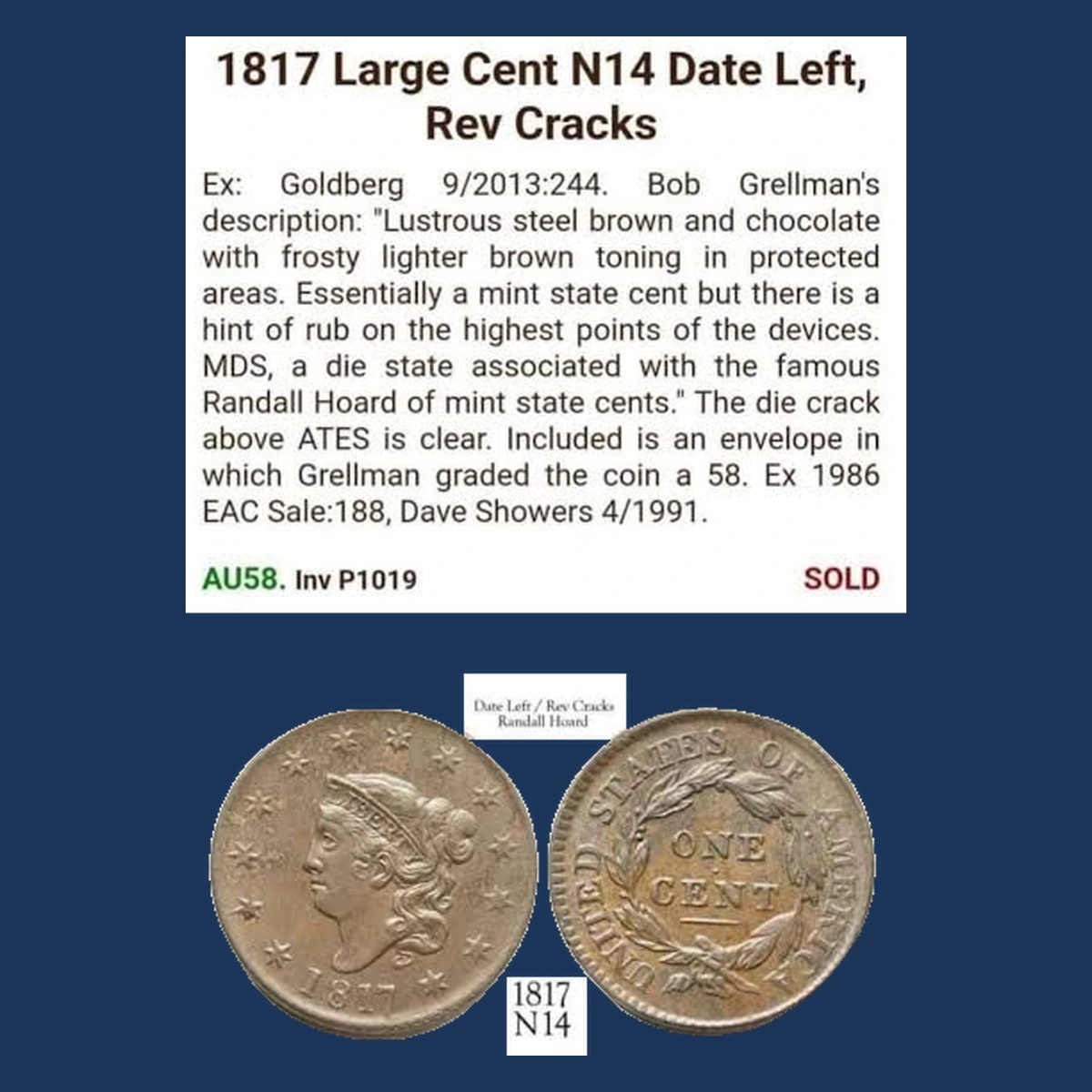
A ridge near the date can be a copy of a crack in the stamping tool. A missing tool fragment can leave a raised rim-connected patch called a cud.
An N-12 example has a crack along the tops of the date digits, between 1 and 7. A collector records another date-bottom crack on N-4.
The 13-star N-17 has a back cud at TATE in STATES. A later stage of the 15-star N-16 is described with a break near AM in AMERICA.
Not every N-16 has that break. Earlier examples can show the normal letters and border in the same area.
Estimated Value
Modest cracks on worn 1817 cents fit an estimated $20–$250 range. Clear rim breaks across different conditions can fit about $100–$3,000 for the whole coin.
The reported N-17 with the TATE cud was heavily worn. Its raised patch should be compared with other worn examples, not priced as an unworn cent.
For nearby-year context, an 1829 N-8 graded PCGS AU50 sold for $810 in September 2020 with three cuds. That lightly worn coin is a different date and variety.
How to Identify
With a 10× magnifier, trace the line above the date on N-12 or below it on N-4. Change the light direction to check whether it rises from the copper instead of cutting into it.
For the N-17, follow the raised patch from TATE all the way to the rim. A detached lump within the design is not a rim-connected cud.
A scale and calipers check 10.89 g and roughly 28 mm on a loose copper cent. Inspect the plain edge for blows or added material near the patch.
The AM location belongs to the 15-star N-16, so count the front stars before using that comparison.
An earlier coin without the AM break cannot show what the completed cud looks like.
5. 1817 Coronet Head Cent Counterclockwise Back on the Fifteen-Star Design
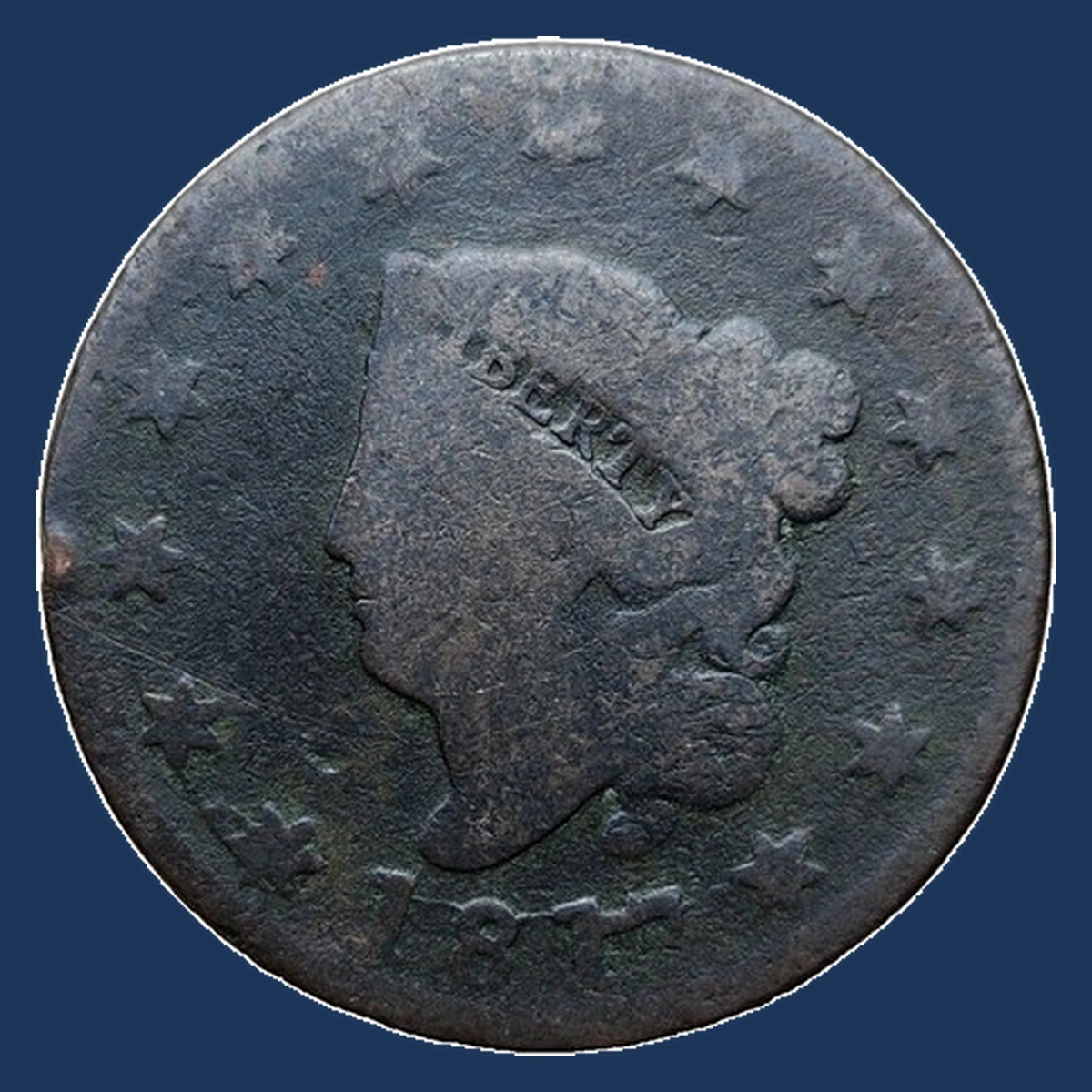
A sideways lean of the back design is different from a wreath shifted toward the rim. Rotation changes the angle between the two faces, even if both designs remain centered.
Heritage described counterclockwise rotation on an 1817 N-16 with fifteen front stars. The catalog did not state an angle.
The example was graded ANACS MS61 Brown, indicating no circulation wear under that service’s assessment. Its minor marks and hairlines were also noted.
The direction can be checked by a controlled top-to-bottom flip. An independently straightened back photograph cannot preserve the relationship needed to measure how far it turns.
Estimated Value
For circulated fifteen-star 1817 cents with visible rotation, estimate $75–$800. Lightly worn or unworn examples can fit roughly $800–$5,000, depending on preservation and the measured turn.
The ANACS MS61 catalog example has no sale amount used here. A different-year comparison is the rotated 1852 NGC MS65+ Red-Brown cent that sold for $2,350 in November 2014.
That 1852 is a better-preserved, different design variety. Rotation alone does not erase the price difference between ordinary 13-star and fifteen-star 1817 cents.
How to Identify
Carefully count the original front stars first to confirm you are comparing the fifteen-star design. Keep that portrait upright against a fixed line, then flip top to bottom without turning sideways.
Use a protractor beside the photograph to measure the wreath’s lean. A 10× magnifier helps locate the wreath’s central line if wear obscures the top leaves.
Both star-count versions use a copper blank of 10.89 g and roughly 28 mm; a scale and calipers check loose coins. Repeat the flip before recording a counterclockwise angle, since the catalog gives a direction but no number to copy onto another example.
6. 1817 Coronet Head Cent Tiny or Large Remains of a Second Strike
An extra strike can touch a small part of a coin that already carries a design. The percentage describes how far that second impression missed the center.
Heritage sold an 1817 described as double struck with the second blow 95% off center. It retained heavy wear and environmental damage.
A separate Mint Error News listing describes a second blow 50% off center toward one o’clock. That direction belongs to the listed example, not automatically to the 95% coin.
The earlier portrait and date must be distinguished from whatever the blow added. Blurred letter edges alone do not establish two strikes.
Estimated Value
The damaged 95% second-strike example sold for $264 on June 19, 2019. NGC described VG Details, meaning heavy wear with a separate surface problem.
Estimate $200–$1,500 for worn or impaired 1817 double strikes, and about $1,500–$6,000 for clearer examples with better surfaces. The surviving extra design matters alongside condition.
A 95% off-center second blow may leave only a small trace. Its larger percentage does not automatically make it more valuable than a clear, broader second impression.
How to Identify
Photograph the original portrait and date before enlarging the suspected second-strike area. Under a 10× magnifier, separate recognizable extra design from dents and flattened copper.
The 95% example may show very little of the second impression because most of that blow missed the coin. Do not expect the broad extra design associated with the separate 50% report.
A loose cent can be weighed on a scale against 10.89 g and measured with calipers around the usual 28 mm. Extra blows can spread its outline without removing metal.
Compare how the newer impression overlaps the earlier details. A specialist should be able to explain two strike positions rather than rely on the percentage written on a label.
7. 1817 Coronet Head Cent Shifted Strikes on Both Star-Count Versions
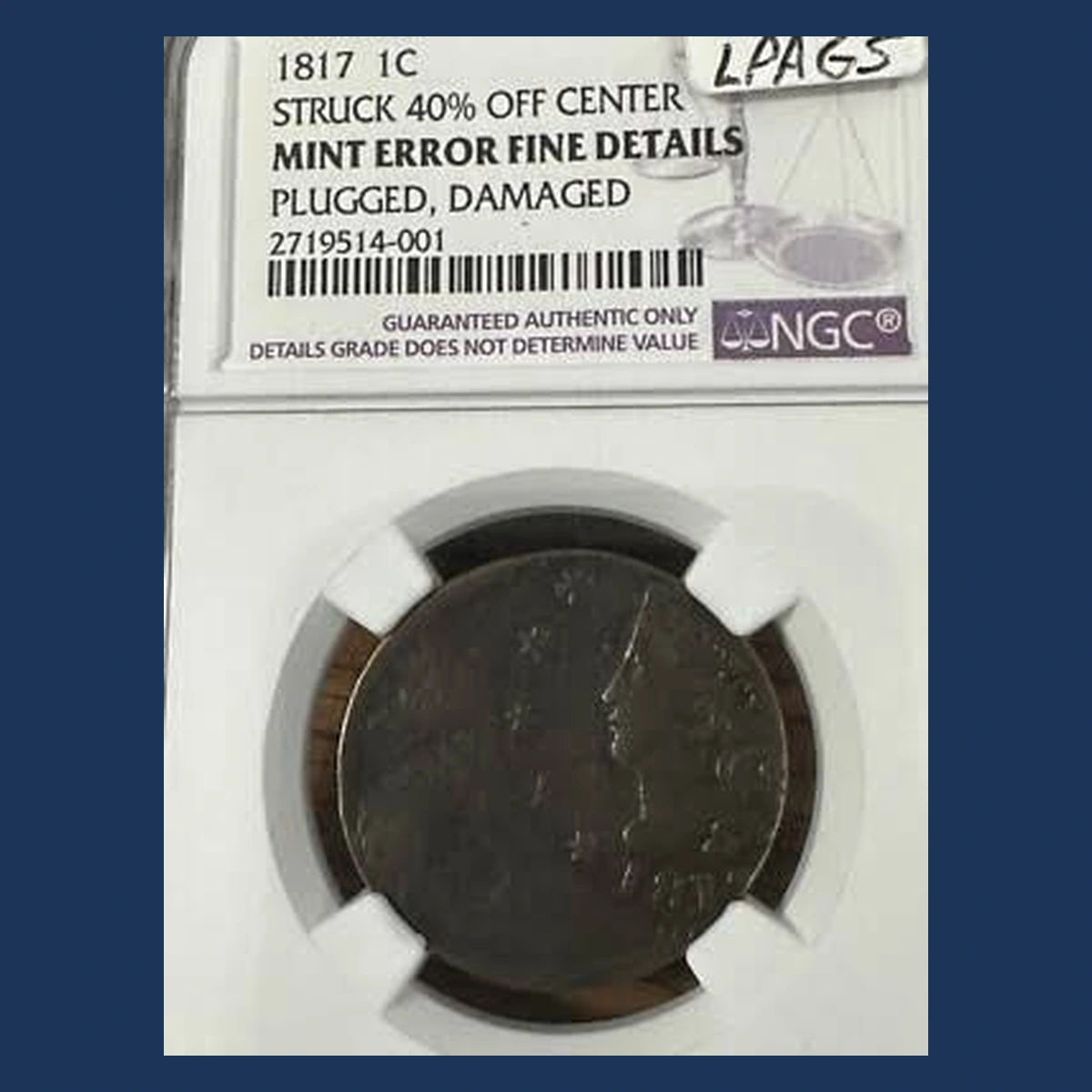
Both 13-star and fifteen-star cents can have part of the design missing beyond the edge. A blank positioned off center leaves a bare area on the opposite side.
One 13-star N-11 was cataloged as 30% off center. Another auction listed a fifteen-star N-16 at 25% off center.
Mint Error News also illustrated a 15% example directed toward four-thirty. These descriptions concern separate coins, so their measurements and directions should not be mixed.
An off-center strike changes where the design lands, not how many stars the original tool carried. Count surviving stars with care when part of the design is missing.
Estimated Value
The 30% off-center 13-star N-11 graded PCGS VG10 sold for $1,708 on March 23, 2026. VG10 indicates substantial wear with the main design still readable.
Estimated whole-coin prices range from $500–$2,500 for worn examples, reaching roughly $2,500–$7,000 for stronger pieces or desirable combinations of design and error. The fifteen-star version requires its own comparison.
A readable date helps identify the issue. The 2026 result does not assign a sale price to either of the other described coins.
How to Identify
Keep the date, struck edge, and bare copper in one photograph. This shows how much design is missing without relying on a tightly cropped image.
Under a 10× magnifier, compare both faces where their designs meet the edge. The displacement should explain the unstruck area as well as the lost letters or stars.
Use a scale to compare a loose cent with the 10.89 g standard; an unstruck area still contains copper. Calipers record the outline against roughly 28 mm, allowing for distortion and wear.
When missing stars prevent a simple count, compare the remaining design with the appropriate variety photographs. Do not call a partly missing 13-star design a different star-count variety.
8. 1817 Coronet Head Cent Mirrored Portrait and Stars in Sunken Copper
A normal portrait can face a sunken mirror copy on the other side of the same cent. A struck coin trapped in the press transfers its raised design into the next blank.
The fifteen-star N-16 brockage has fifteen normal stars and fifteen reversed stars. Its thirty total stars do not form a new thirty-star front design.
Goldberg described the two impressions as aligned, with the strike slightly off center toward nine o’clock. The coin was graded NGC VF20, with moderate wear.
A separate auction example was attributed to 1817. A brockage need not retain a readable date.
Estimated Value
The NGC VF20 fifteen-star brockage drew a $7,500 winning bid in January 2015. That figure excludes buyer’s premium.
Estimate $3,000–$8,000 for clear circulated 1817 brockages, or about $8,000–$15,000 for stronger examples with desirable design and preservation. The mirror impression’s completeness affects appeal.
The separately attributed 1817 brockage was PCGS VF35, with moderate wear, but no sale amount is used here. Keep its identity separate rather than treating the two descriptions as one sale history.
How to Identify
Compare the normal raised stars with the recessed stars under side lighting and a 10× magnifier. The sunken designs should be reversed, not merely shifted copies standing above the surface.
For the N-16, the normal and mirrored fifteen-star patterns can be compared directly on photographs of the same coin. A different brockage without a readable date needs a reliable specialist identification rather than a year guessed from its portrait.
A scale and calipers check the copper standard of 10.89 g and about 28 mm on a loose example. These measurements cannot prove that the mirror image formed in the Mint, so have an expert inspect the edge and metal flow for later pressing.
Conclusion
Counting the original stars helps keep 1817 examples straight, but the error itself may sit on the edge or back. A missing copper flake, shifted wreath, and mirrored portrait each tell a different story.
The estimated $20–$15,000 range covers worn minor features through major brockages. The $7,500 auction figure is a winning bid before premium.
Match the design version and visible defect together, then compare wear and surface problems before choosing a price.