1852 Cent Error List with Pictures

A crack running from CENT to the rim and a turned back both appear on an 1852 cent that sold for $2,350 in November 2014. Its excellent preservation was part of the price.
This 1852 cent error list covers estimated whole-coin values of $20–$8,000. These are large copper Braided Hair cents, with features ranging from faint date strokes to displaced designs and missing metal.
Use the photographs and checks below to separate those features before comparing prices.
1. 1852 Braided Hair Cent Separated Layer on the Front
A thin copper layer can peel from the portrait side and reveal rough metal beneath it. This is called lamination.
The 1852 year guide reports an ANACS VF20 Details example with this front-side flaw. VF20 describes moderate wear, while Details indicates a separate condition problem.
The description does not identify a particular strand of hair or star beside the separation. The coin itself must supply that location.
A weak layer in the original blank can separate during or after striking. Scraping and corrosion may also leave rough patches, but they damage the surface through different processes.
Estimated Value
For a worn 1852 front lamination, estimate $20–$150. More distinct flaws on better-preserved large cents can fit roughly $150–$500.
These are estimated whole-coin prices, not a reported sale of the VF20 Details example. Its separate condition issue must stay part of the comparison.
A thin peeling boundary can be more informative than a large featureless hollow. Missing much of the portrait does not automatically increase value, especially when corrosion or cleaning obscures the original surface.
How to Identify
Follow the edge of a peeling area with a 10× magnifier while moving a lamp across the front. Original struck details may stop at the separation or remain on an attached flap.
Do not pull at any loose layer.
Weigh a loose copper cent against 10.89 g on a scale and use calipers across intact edges against 27.5 mm. A small surface flake can leave nearly normal measurements.
Examine nearby copper for widespread pitting or straight scraping grooves. Those signs can explain a rough patch without a natural layer separating.
Compare the actual boundary with the reported flaw, rather than assuming a damaged patch beside a familiar star must be a lamination.
2. 1852 Braided Hair Cent Front Design Shifted Relative to the Back
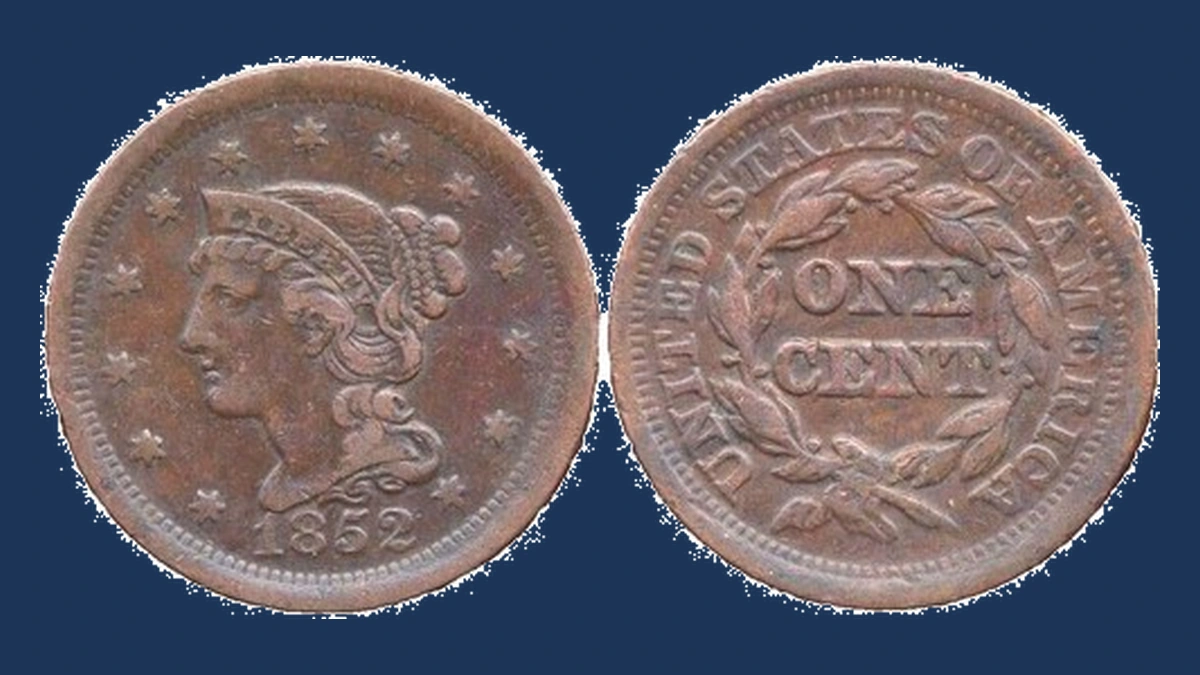
The portrait and stars can sit closer to one edge while the back remains better centered. This suggests that one stamping tool was out of position.
A seller lists an 1852 cent with front-tool misalignment. A separate Newman Collection description records the front shifted toward seven o’clock on an N-16 example.
That description also notes a raised back edge section. It proposes a connection with the misplaced tool rather than establishing a universal rim shape.
The whole blank need not have moved off center. Comparing both faces is what separates this explanation from a displaced strike affecting the entire coin.
Estimated Value
Estimate $30–$750 for recognizable 1852 front-tool misalignment across circulated and better-preserved examples. Small border differences on a worn cent usually belong toward the lower end.
The Newman archive records a separate NGC MS64 Brown example at $411.25. Its lack of circulation wear and preserved surfaces contribute to that whole-coin price.
The seller’s ungraded example cannot inherit the same grade or seven-o’clock direction. Compare its actual offset and condition rather than transferring every detail from the Newman coin.
How to Identify
Take straight-on photographs of both complete faces at the same scale. Measure the border beside the front stars, then compare the back lettering and wreath with their own rim.
If the cent is loose, a scale and calipers check 10.89 g and 27.5 mm. An offset design should not be diagnosed from a tilted camera view or an artificially reduced edge.
Use a 10× magnifier to inspect the thin border for filing, squeezing, or metal folded inward. The informative relationship is a displaced front with a more centered back, rather than the same loss of design on both faces from a misplaced blank.
3. 1852 Braided Hair Cent Repunched 1 or 18
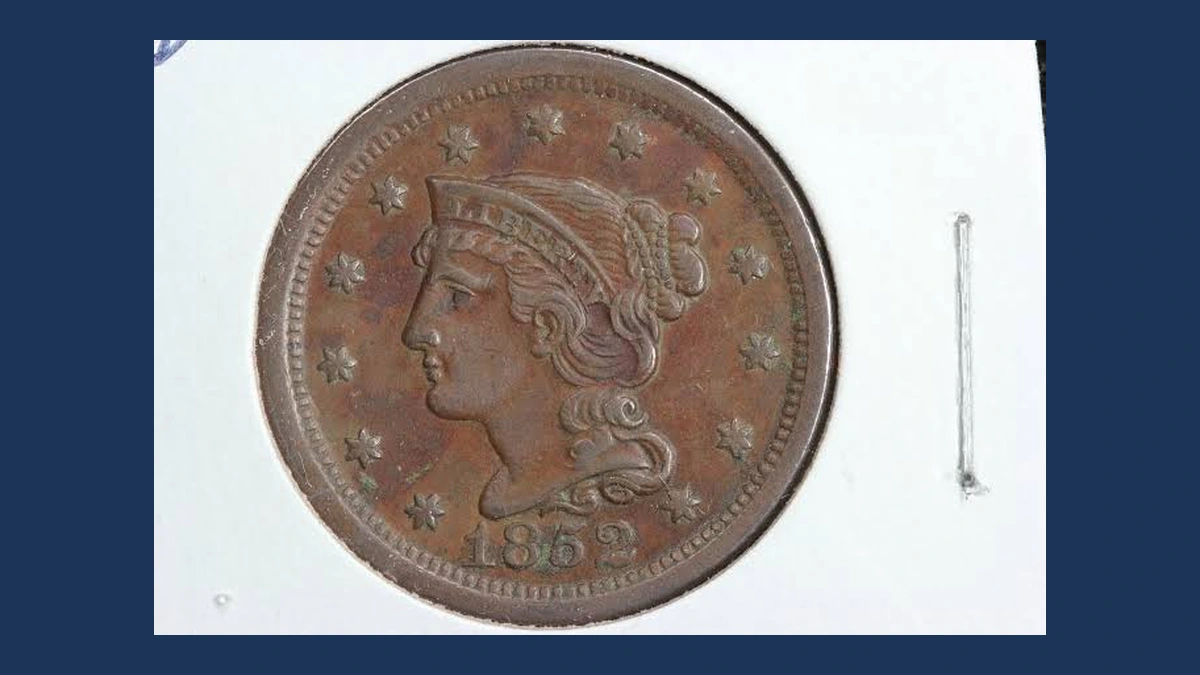
Extra strokes beside the 1 or the opening 18 can remain from an earlier date impression. The date punch was applied more than once while making the stamping tool.
Early Cents Auctions records an 1852 example with a repunched 1 and another with a repunched 18. They are different varieties rather than one required cluster of date marks.
The available summaries do not specify the direction of every remaining stroke. A close-up of the matching coin is needed for that comparison.
These features repeat the same date. They do not imply that another year was struck beneath 1852.
Estimated Value
For circulated 1852 repunched dates with readable extra strokes, estimate $30–$300. Better-preserved examples can fit roughly $300–$1,500, depending on the variety and surfaces.
An Early Cents Auctions pair containing a repunched 1 showed a total price of $180. Another pair containing a repunched 18 showed $120.
Those are pair totals, not individual coin prices. Neither amount should be divided automatically or assigned in full to the repunched example without considering its companion.
How to Identify
Center the 1 and 8 in a photograph under a 10× magnifier, leaving the rest of 1852 visible. Compare the raised remnants with the appropriate repunched-date example.
The one-digit and two-digit patterns need separate comparisons. Do not borrow a stroke’s direction from an 1853 cent.
Examine the date for sharp cuts that could indicate later engraving.
A loose example should be compared with 10.89 g on a scale and 27.5 mm using calipers. Leave an encapsulated coin in its holder.
Trace each extra stroke far enough to recognize part of the same numeral; a random bump near the date is not a matching earlier impression.
4. 1852 Braided Hair Cent Broad Flat Rim
A broad flat band surrounds the design on one Newman Collection cent. Heritage recorded a diameter of twenty-eight millimeters and a rim about two millimeters wide.
The catalog suggested that the blank missed the rolling step that raises its edge before striking. This proposed explanation has not been established by measurements alone.
NGC labeled the piece Damaged with AU detail, meaning only light wear remained. Heritage discussed small marks and considered that damage assessment harsh.
Both observations matter. The rim needs examination without treating the catalog’s proposed cause as a replacement for the grading label.
Estimated Value
The Newman archive records a realized price of $211.50 for the wide-rim example. Its NGC Damaged, AU Details identity remains part of that result.
For similar 1852 cents with a broad original-looking rim, estimate $100–$1,500 after examining the surfaces and proposed cause. This estimates the whole coin, not a proven premium for missing the edge-rolling step.
A widened or flattened rim made after striking needs a different assessment. The measurement alone does not establish the higher end of the range.
How to Identify
Use calipers to record several complete diameters and the flat band’s width, comparing the reported 28 mm and roughly 2 mm. A normal 1852 large cent is about 27.5 mm across.
Weigh a loose example against 10.89 g on a digital scale, then inspect the complete band under a 10× magnifier. Filing grooves, compression, or displaced metal around the portrait may explain a changed outline.
The Newman record preserves both the suggested preparation error and damaged grade. Compare the whole rim and its relationship to the struck design; a single caliper reading cannot decide whether the rolling step was missed.
5. 1852 Braided Hair Cent Raised Cracks and Rim Breaks
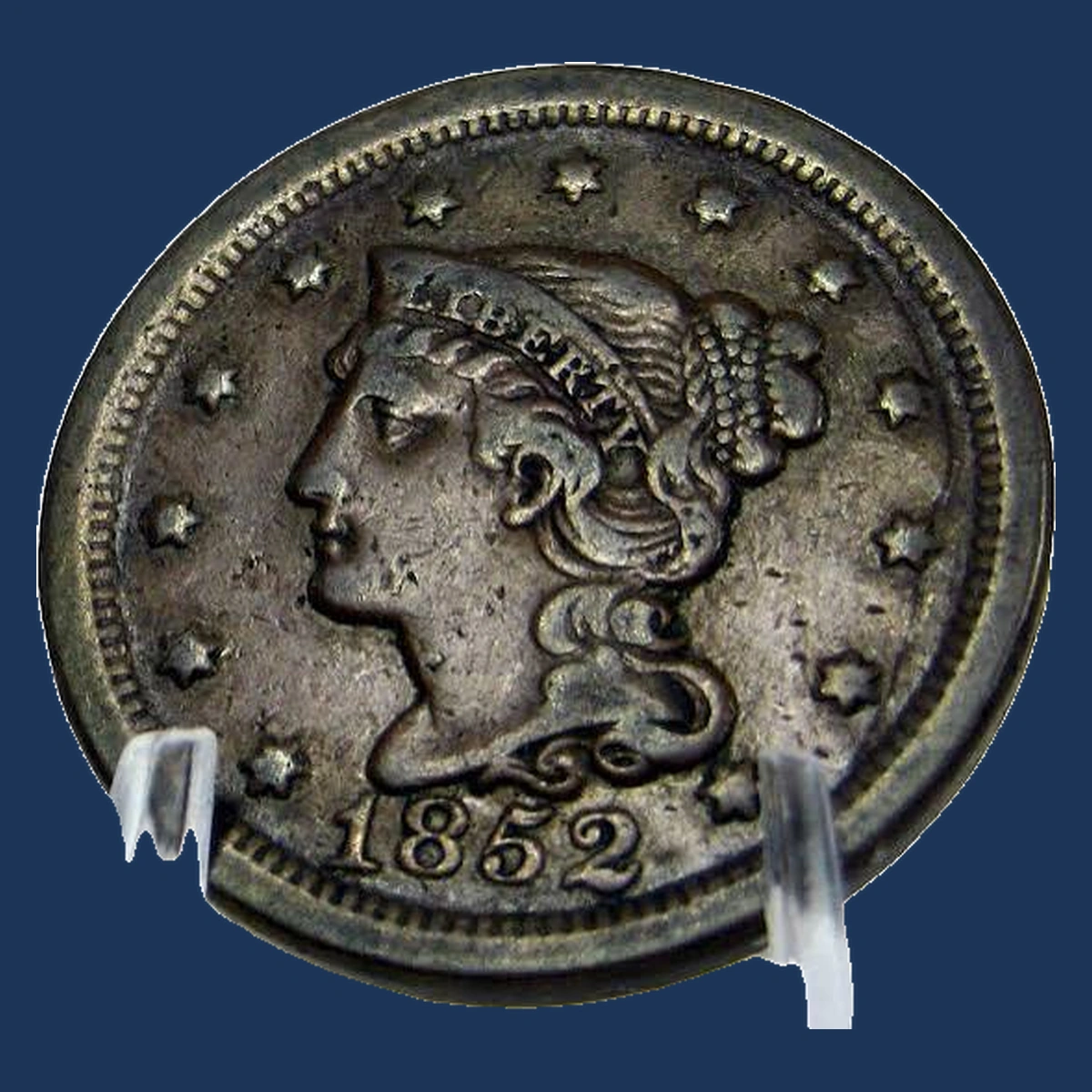
A thin ridge can run from the C in CENT toward the left rim. A documented N-3 example shows this horizontal crack ending around nine o’clock.
A cracked stamping tool lets metal enter its narrow opening, leaving a raised line on the cent. A larger missing tool piece can instead create a rim-connected patch called a cud.
Other 1852 examples have breaks below the wreath stem, above AMERICA, or near front stars. They do not all belong to one coin.
A curved front crack near the crown follows another route. Compare each raised feature with its own location and shape.
Estimated Value
A PCGS MS64 Brown N-23 with a strong lower back rim break brought $1,920 at Goldberg in 2021. That unworn example provides a substantial-break comparison.
Estimate $20–$150 for many circulated cents with modest cracks, and roughly $100–$2,500 for more substantial cuds across suitable conditions.
The N-3 coin with a C-to-rim crack also has a rotated back and sold for $2,350. Its quality and combined features receive one price; a faint crack alone does not explain that result.
How to Identify
Inspect a raised patch at the rim from both the face and edge under a 10× magnifier. Folded copper or added metal can imitate a cud without any damaged stamping tool.
The N-23 auction example has a lower back break. Keep it separate from the N-3 line extending left from C.
On a loose cent, a scale and calipers compare 10.89 g and 27.5 mm; the original plain edge should also be checked for alteration.
For a thin line, move the light and follow its complete path. A ridge above the design supports a tool crack, whereas a cut sunk into the copper is a scratch.
6. 1852 Braided Hair Cent Rotated Back
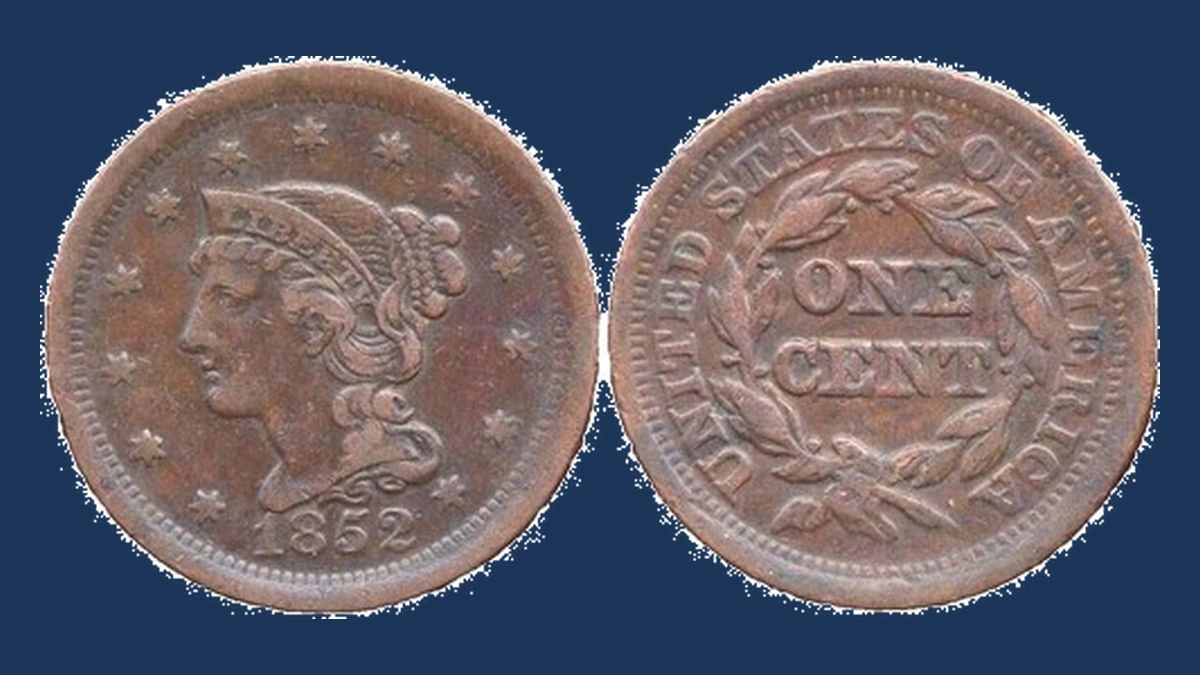
The wreath can remain tilted after the upright portrait is flipped top to bottom. The error reflects the angle between the two stamping tools when the coin was made.
An Early Cents Auctions description records an N-3 with forty-five degrees counterclockwise rotation. Other N-3 examples are described as widely rotated without the same measured angle.
Heritage’s example also shows the crack from CENT toward the left rim. That mark can identify its tool pairing but cannot measure the back’s tilt.
Each coin needs its own controlled flip. A quarter turn is not the same alignment as an upside-down, half-turn back.
Estimated Value
Heritage’s NGC MS65+ Red-Brown example sold for $2,350 in November 2014. Its exceptionally preserved unworn surfaces were important to the price.
For circulated 1852 rotations, estimate $50–$400. Better-preserved examples with clear rotations can fit approximately $400–$3,000.
The forty-five-degree circulated example appeared in a two-coin lot, so its individual sale price is not isolated. Avoid transferring either the highest grade or a precise angle between these separate coins.
How to Identify
Hold the date level and turn the cent top to bottom around a horizontal axis. The wreath should become upright on a normally aligned coin.
If it remains tilted, repeat the motion without twisting the coin sideways.
A fixed guide line and protractor on aligned photographs let you measure the angle and its direction. A 10× magnifier can help locate the upper wreath’s center when wear obscures it.
Calipers and a scale compare a loose cent with 27.5 mm and 10.89 g, but do not establish alignment.
The forty-five-degree counterclockwise example should reproduce that tilt after each flip; a photograph rotated for display cannot provide the same evidence.
7. 1852 Braided Hair Cent Curved Missing Piece of the Blank
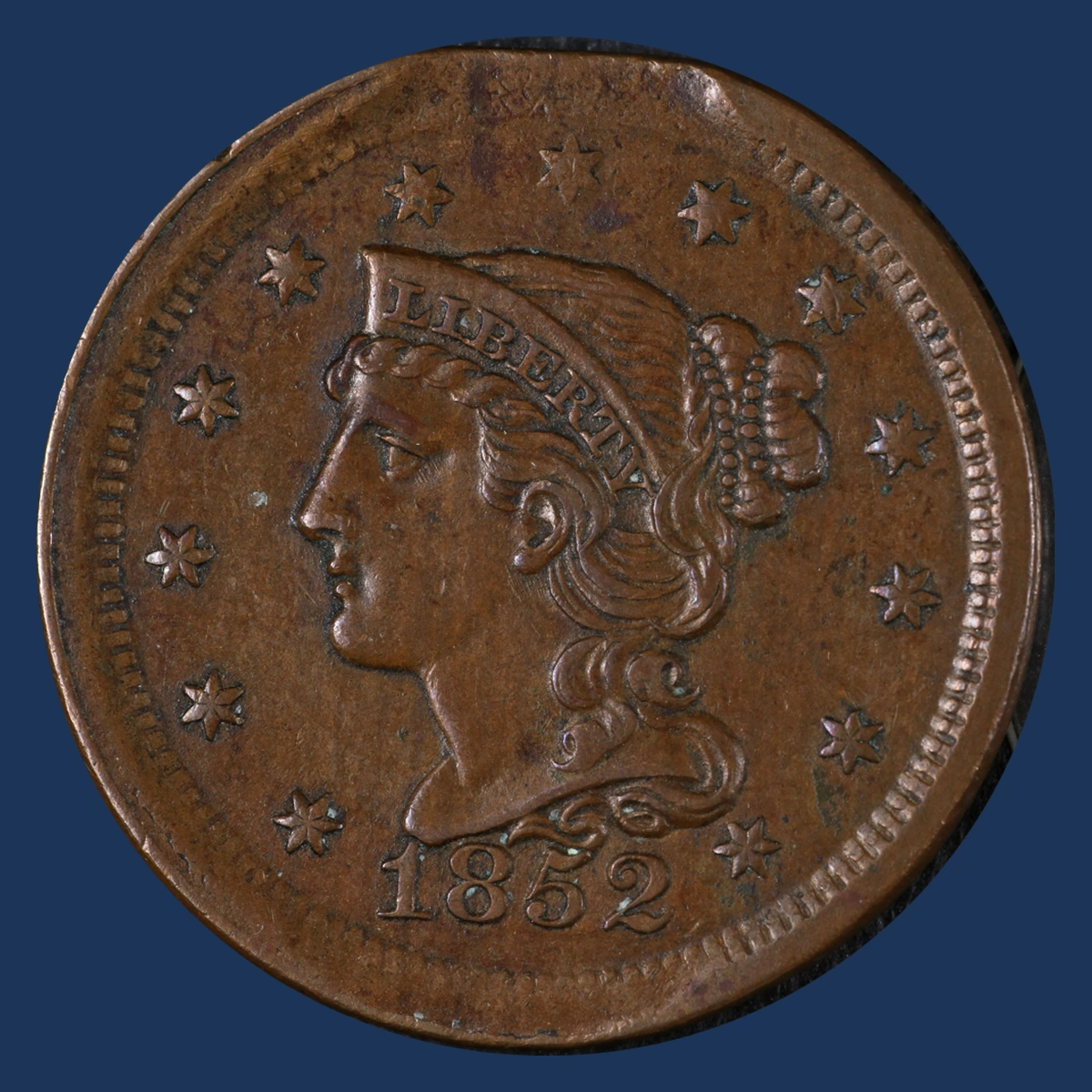
A curved gap can cut into the outline where a blank was punched across an existing hole in the copper strip. The incomplete disc then received the cent design.
The 1852 year guide reports a curved clip graded NGC MS63 Brown. It also mentions a separate PCGS example with only slight wear.
The reported grades do not specify the same size or position of missing metal. MS63 describes an unworn coin with noticeable marks.
A genuine clip began before striking. Filing or cutting a finished cent can produce a similar outline, so the edge and neighboring design need inspection together.
Estimated Value
An NGC MS63 Brown 1852 clip sold for $384 at Stack’s Bowers in June 2024, as PCGS records. That provides an unworn same-year comparison without establishing every clip’s shape or location.
Estimate $100–$700 for circulated clips and roughly $300–$3,500 for clear examples with little or no wear. Condition and the missing segment guide comparisons.
A large gap is not automatically more valuable. Later cutting or an unreadable date can make a dramatic outline a poor comparison.
How to Identify
Compare the remaining mass of a loose cent with 10.89 g on a scale. Use calipers across an intact span against 27.5 mm without pressing on the clipped area.
Under a 10× magnifier, follow where the struck design meets the curved gap and inspect the opposite rim for possible weakness. That opposite-rim sign can help, but it is not equally visible on every clip.
Look for straight cutting grooves or a fresh wall through finished letters before matching a reported example. The missing segment and adjacent struck rim should fit a blank that was already incomplete, rather than a whole penny cut after leaving the Mint.
8. 1852 Braided Hair Cent Strike Displaced across the Blank
An untouched crescent can sit beside a design that partly missed the copper blank. The portrait and back lettering are displaced together rather than one tool alone being shifted.
The 1852 year guide reports an example struck about thirty-five percent off-center. Its NGC VF Details label indicates moderate wear with a separate condition problem.
The description leaves the shift’s direction and condition problem unspecified. Inspect the individual coin instead of transferring either detail from another example.
The blank itself can retain its original metal. Missing design is different from a clipped outline where part of the blank was never present.
Estimated Value
For circulated 1852 off-center large cents with readable dates, estimate $300–$2,500. Stronger preserved examples can fit roughly $2,500–$8,000.
The reported thirty-five-percent VF Details coin belongs among circulated comparisons with a condition issue. No completed sale price is assigned to it here.
As a nearby-year comparison, an 1855 large cent struck fifteen percent off-center brought $1,020 in December 2024 at NGC VG10. That more heavily worn coin had a different displacement, so neither figure transfers automatically to the 1852 report.
How to Identify
Keep both faces and the entire blank crescent visible in photographs, with 1852 level rather than turned to fit the page. A 10× magnifier helps show where the outer design leaves the available metal.
Compare a loose coin with 10.89 g on a scale and record several widths with calipers against 27.5 mm. A displaced blow can change the outline without removing metal.
Inspect the bare area for grinding or flattening that happened after striking.
Both faces should explain the same misplaced blank. If the back is centered while only the front shifts, compare a front-tool misalignment instead of using the thirty-five-percent report.
Conclusion
The large copper surface makes some flaws easy to notice, but their causes still need separate checks. A raised crack, a missing layer, and an offset design are not interchangeable.
Estimated whole-coin values here span $20–$8,000. Match the actual defect, remaining detail, and condition before choosing a comparison.
The wide-rim example retains its damaged grade and proposed explanation; an unusual outline alone does not prove how the blank was prepared.