1856 Braided Hair Cent Error List with Pictures

Scratches did not stop one double-struck 1856 large cent from bringing $2,640 in January 2023. Its overlapping designs still revealed the original minting mistake.
This 1856 Braided Hair cent error list covers estimated whole-coin values of $50–$40,000. The examples range from a missing rim section to a deep cup with a backward portrait.
These are large copper cents, about 27.5 millimeters across. Read on to compare their specific features without mixing them with the smaller Flying Eagle cents also dated 1856.
1. 1856 Braided Hair Cent Missing Section at the Rim
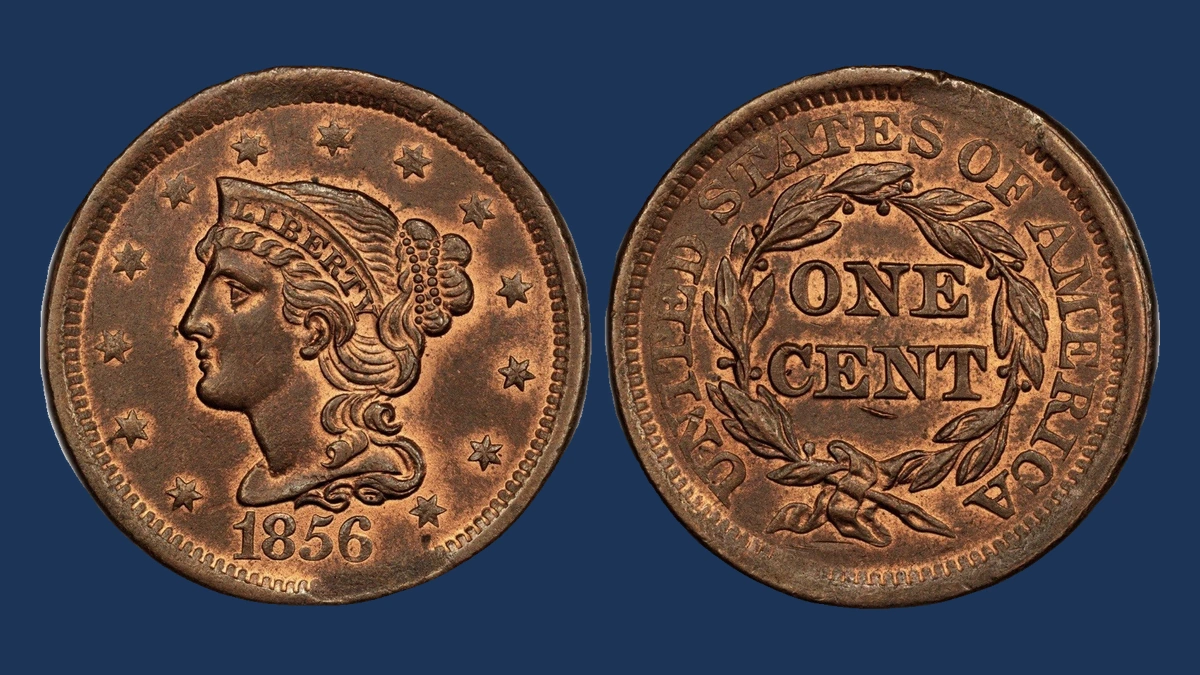
A missing rim section can survive when an incomplete copper blank reaches the press. The resulting cent has normal struck details around an edge that was never complete.
GreatCollections lists an 1856 Slanted 5 example graded ANACS VF30 with a rim clip. VF30 describes moderate wear; Slanted 5 describes the normal shape of the date digit.
A separate collector example has a clip near eight o’clock. That position should not automatically be assigned to the auction coin.
The original missing section needs to be distinguished from copper removed later. A cut or filed gap can make a similar outline.
Estimated Value
For identifiable 1856 clips, estimate $75–$500 on circulated cents and $500–$2,500 for attractive unworn examples. The VF30 auction coin belongs with worn comparisons.
A clipped 1852 large cent graded NGC MS63 Brown brought $384 in June 2024. That unworn coin had noticeable marks and belongs to the same series.
The estimate is for the whole coin, not a fixed amount per missing section. Corrosion, a damaged edge, or unclear evidence of the clip can reduce collector interest.
How to Identify
Examine the wall of the gap rather than starting with its size. A 10× magnifier should show whether finished design was cut through or whether the surrounding strike formed around an incomplete blank.
Follow the plain edge to both ends of the opening. Saw marks, fresh filing, or sharp burrs suggest later removal.
Use a scale on a loose coin against the normal 10.89 grams and calipers across intact spans near 27.5 millimeters. Both an original clip and a later cut can lower the weight.
The VF30 auction example is separate from the collector’s eight-o’clock example. Check where your own gap crosses the lettering before comparing either coin’s edge.
2. 1856 Braided Hair Cent Raised Rim Patch beside the Upper-Right Stars
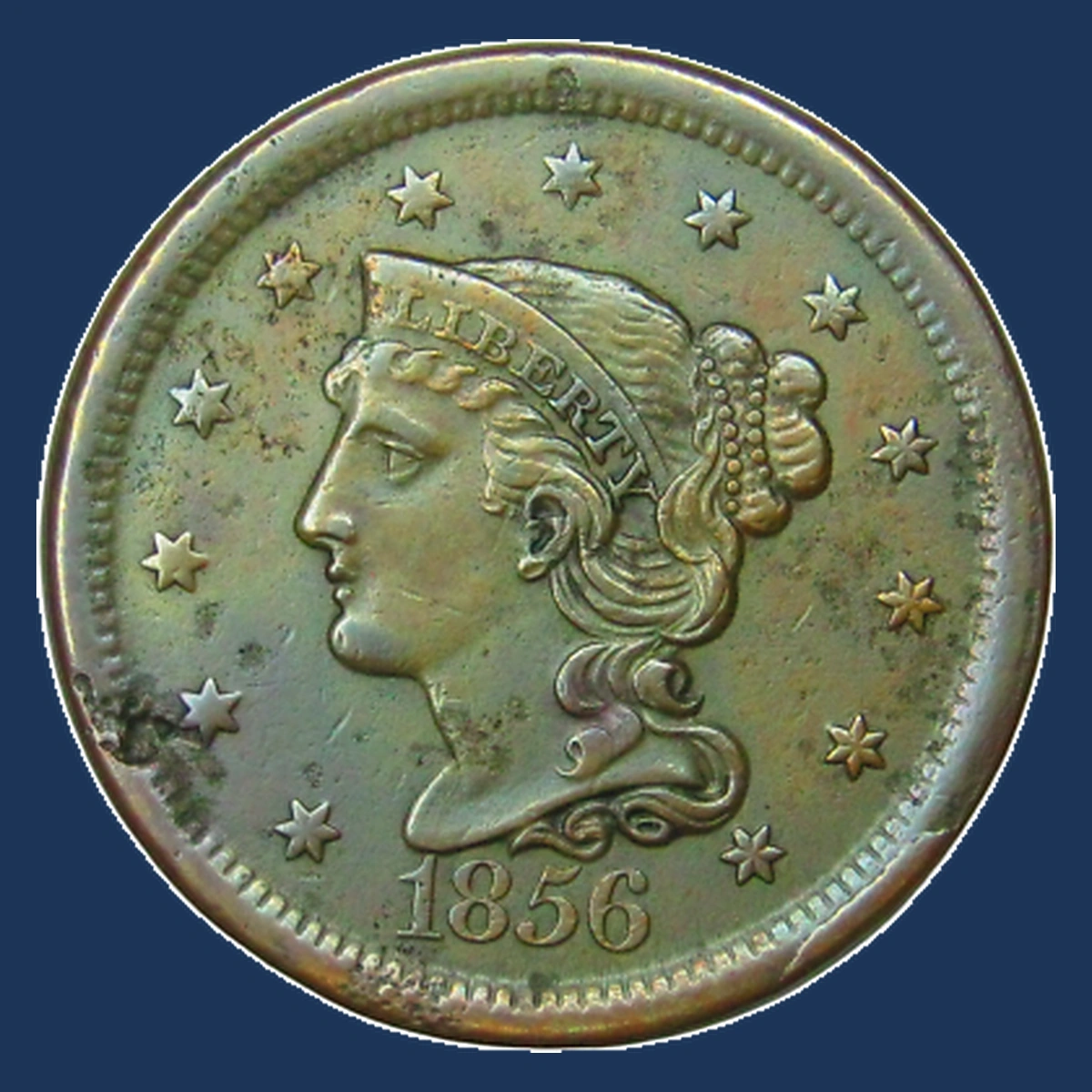
A raised patch at the rim can join the points of the stars. Part of the stamping tool broke away, leaving an opening that copper filled during the blow.
This rim-connected feature is called a cud. On a recorded 1856 Slanted 5 variety, the strong patch lies between stars ten and eleven.
A later stage extends toward star nine as more steel breaks. The larger patch shows how the damaged tool changed during continued use.
The patch is raised metal, not a missing section of the blank. A rim impact after minting can imitate part of its shape.
Estimated Value
Estimate $50–$600 for worn 1856 cents with recognizable rim breaks and $600–$3,000 for attractive, better-preserved examples. The patch’s size and clarity affect the comparison.
The auction catalog describes one star-ten-to-eleven example as lightly cleaned despite strong remaining detail. That surface change belongs in any condition assessment.
A larger break does not automatically outweigh cleaning or corrosion. The ranges value the complete cent, including the variety and preservation, rather than treating every joined star as a separate premium.
How to Identify
Find the upper-right stars with Liberty upright, counting from the lower left if necessary. Compare the outer points of stars ten and eleven with the recorded rim patch through a 10× magnifier.
A later example may reach star nine, but do not expect that extension on every coin. Match the actual boundary rather than selecting the largest illustrated break.
Inspect the plain edge beside the patch for a dent that folded copper inward. Natural struck metal replacing the star points differs from a damaged rim pushed over intact design.
A scale and calipers can record a loose example against 10.89 grams and about 27.5 millimeters. Keep the measuring jaws away from the raised patch and preserve side-lit photographs of its height.
3. 1856 Braided Hair Cent Reported Twenty-Five-Percent Shift
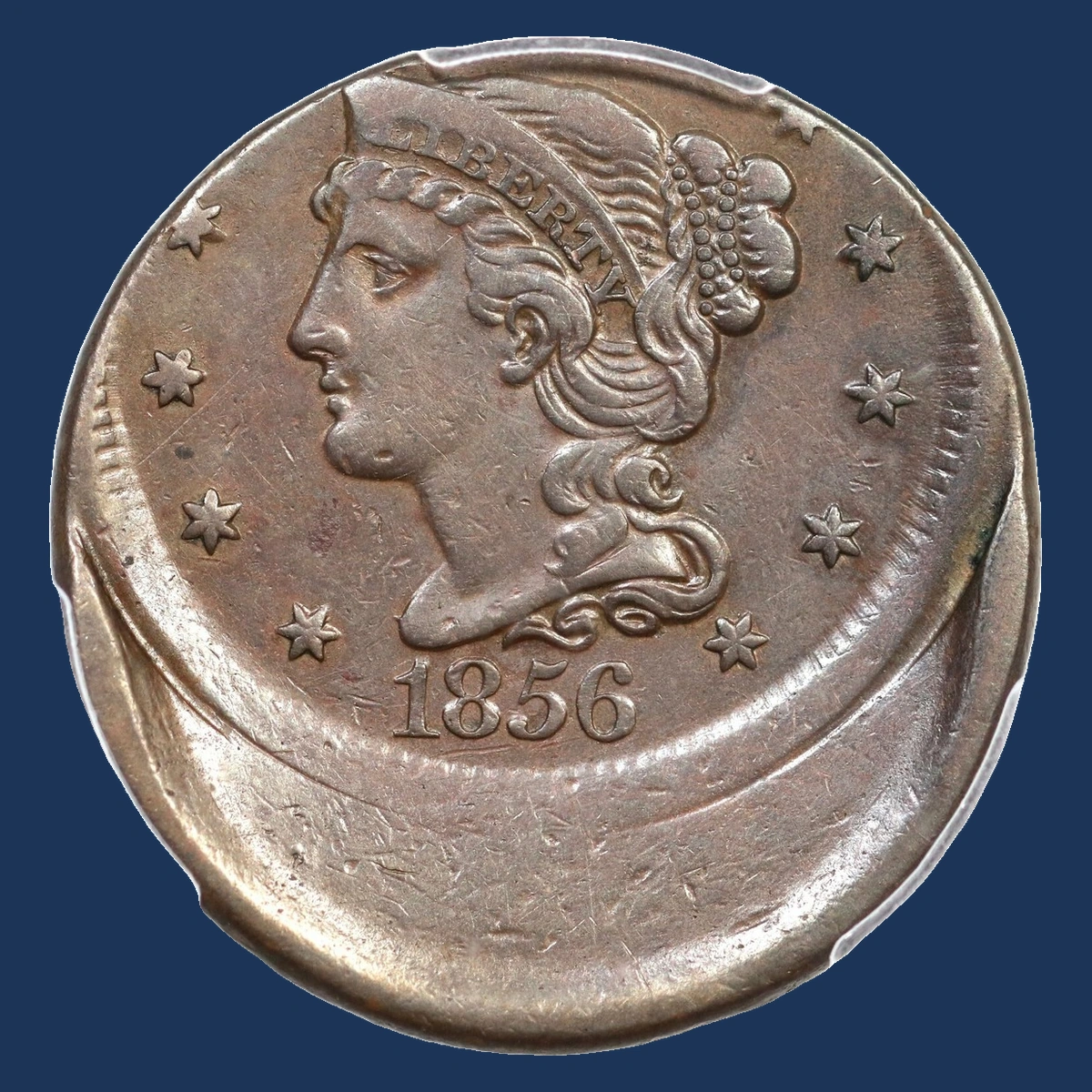
A blank sitting away from the stamping tools’ centers receives a displaced design. Part of the copper remains bare while some portrait or lettering misses the edge.
The 1856 year guide reports a Braided Hair example twenty-five percent off center and graded PCGS XF40. That grade indicates circulation wear with substantial detail remaining.
This report concerns the large copper cent, not the much smaller Flying Eagle issue. The same year on a different coin does not make it a valid comparison.
The crescent shows where copper missed the stamping tools. Check the opposite face before judging the direction of movement.
Estimated Value
The year guide reports an asking price of $4,250 for the PCGS XF40 twenty-five-percent example. An asking price is not a completed auction sale.
Estimate $400–$2,500 for worn 1856 off-center large cents and $2,500–$7,500 for clearer, better-preserved examples. The amount of displacement is only part of the comparison.
A readable date, original bare copper, and clean surfaces help support stronger prices. Heavy corrosion or later cuts can reduce appeal even when the original misplaced strike is genuine.
How to Identify
Confirm the Braided Hair portrait and large copper format before measuring the displaced design. For a loose coin, compare 10.89 grams on a scale and about 27.5 millimeters with calipers.
The unstruck crescent still contains metal, so an off-center strike alone need not greatly reduce weight. A separate cut or corrosion can do so.
Use a 10× magnifier where the design ends at the bare area. Look for original untouched copper rather than grinding that removed a finished portrait or letters.
Compare both faces and the plain edge. A shift confined to one design can come from a misplaced tool, whereas the blank’s off-center position should explain what happened on both sides.
4. 1856 Braided Hair Cent Two Strikes with the Second off Center
Two sets of design remain when a cent receives another blow after moving from its first position. The second impression can extend beyond the copper and leave an irregular outline.
Heritage sold an 1856 Braided Hair example labeled double struck, with the second strike off center. NGC described its remaining detail as Extremely Fine and also noted scratches.
The scratches are a condition problem, not the cause of the overlapping design. Both features need to be considered.
Look for parts of the portrait or lettering beside the newer impression. Their positions show how the coin moved between the two blows.
Estimated Value
The scratched NGC example sold for $2,640 on January 23, 2023. Its label indicates substantial surviving detail with a separate surface problem.
Estimate $750–$4,000 for recognizable circulated double strikes and $4,000–$12,000 for stronger examples with clearer overlap and better surfaces. These are whole-coin ranges.
A second off-center blow is part of this one minting event. Do not add another full off-center coin price to the double-strike estimate.
How to Identify
Start with photographs of both faces, since one view can hide much of the older design. A 10× magnifier helps follow the first portrait, date, or wreath beneath the second impression.
The normal copper blank began near 10.89 grams and 27.5 millimeters. Use a scale and calipers on a loose example, allowing for metal spread by the repeated blows.
Check the plain edge for trimming or later pressure, then compare the height of the overlapping details. Two ordinary strikes leave raised designs; a backward sunken portrait points to contact with another coin.
Scratches may cross either impression. Follow each scratch beyond the overlap to separate later surface damage from letters or portrait edges made during striking.
5. 1856 Braided Hair Cent Deep Cup with a Sunken Backward Portrait
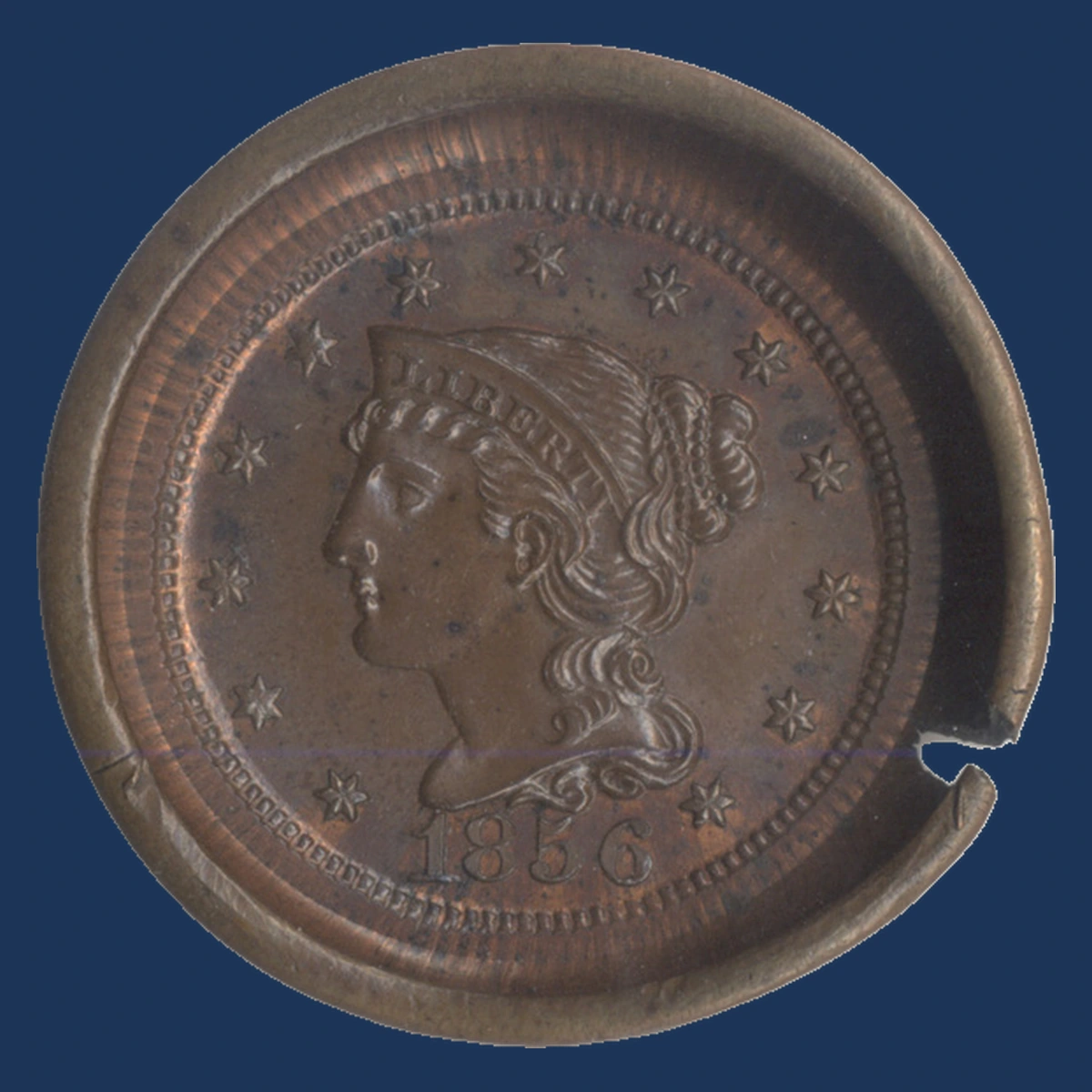
A deep cup and a backward portrait appear on the same 1856 cent. The front formed a cap around a stamping tool, while the back received a sunken copy of a front design.
A cap develops when a coin sticks to a tool and later strikes spread its metal around that tool. The reversed impression is a brockage, made by contact with an already struck coin.
Mike Byers lists the piece as NGC MS63, meaning unworn with noticeable marks. Its cup is exceptionally deep.
Raised walls surround the front of this piece. Its backward image lies on the other face.
Estimated Value
For an authenticated 1856 cap with a clear brockage, allow an estimated $10,000–$40,000. Depth, original surfaces, and the quality of the reversed design affect the complete value.
The dealer marks the NGC MS63 example as sold but gives no price. That listing therefore cannot show what the buyer paid.
A different, smaller 1863 Indian cent cap sold for $18,000 in August 2020. That comparison concerns another cent type, with a different size and metal mixture.
How to Identify
Do not press the cup flat to measure it. The original large cent weighed 10.89 grams and measured about 27.5 millimeters, with a plain edge.
A scale can weigh a loose coin, but calipers must not squeeze its walls. Read measurements on an existing certification label before handling a fragile example.
View the cap from the side and compare its stretched walls with the NGC MS63 example. Sharp folds or tool marks would suggest later bending.
Now turn to the backward portrait. Under a 10× magnifier, its details should sink into the copper, unlike the raised design on the front.
Both features need to agree with the coin’s shape. Have an error specialist inspect the piece if later bending or squeezing remains a possibility.
Conclusion
The important 1856 clues include an incomplete edge, a raised patch joining the stars, and designs displaced by one or more blows. The deep cap adds a backward portrait to an already unusual shape.
Estimated whole-coin values run from $50–$40,000. Compare the larger copper Braided Hair type throughout, and judge scratches or cleaning separately from the minting feature.
Clear views of both faces and the edge help show what happened without bending, polishing, or otherwise changing the coin.