1859 Penny Error List with Pictures

A penny with two heads sold for $195,500 in August 2008, then $90,000 in September 2020. Those prices concern one remarkable 1859 coin, not an ordinary penny with a small mark.
This 1859 Indian Head penny error list covers estimated values from $25–$225,000. Smaller features include a curved missing edge, repeated date strokes, and a broken stamping tool.
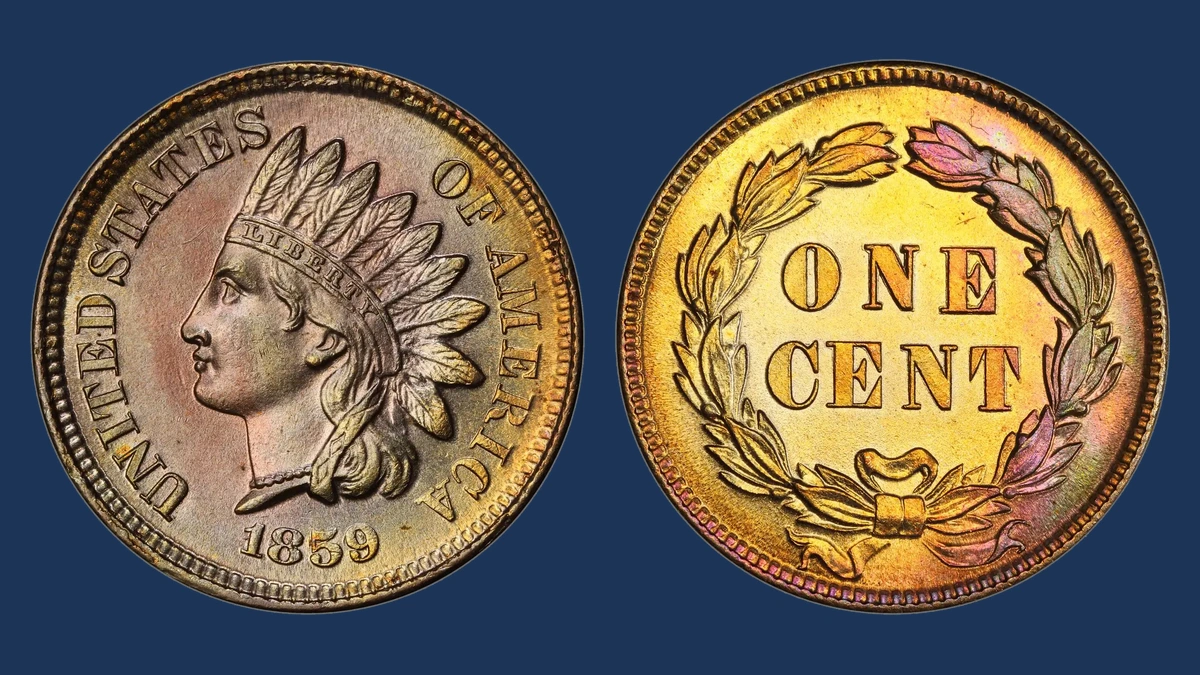
The normal back has a laurel wreath without a shield. Start with that design before comparing unusual coins with the examples below.
1. 1859 Indian Head Penny A Thin Layer Lifting from the Metal
A thin piece of the penny’s surface can lift without an outside object being attached. Weakness within the metal lets one layer separate from the material beneath it.
This is called lamination. The reported 1859 category concerns peeling in the copper-nickel metal, rather than an applied coating coming loose.
An attached flap or an opening left by a missing flake can show the separation. The report does not establish one required location on the portrait or wreath.
A rough patch alone needs closer examination. Corrosion and scraping can remove metal without producing the same layered split.
Estimated Value
For identifiable 1859 laminations, estimate $25–$250 on worn coins and $250–$1,000 with stronger preservation. A clearly attached flap may be easier to recognize than an empty rough patch.
The estimate concerns the whole cent, including its condition. It is not a sale price assigned to one pictured 1859 specimen.
Collectors may find a peel interesting while still disliking a large damaged-looking area. Cleaning or removing the flap can lower appeal and erase the evidence that explains it.
How to Identify
Photograph a loose flap before handling the coin further. Do not lift it to inspect the surface beneath.
With a 10× magnifier and low-angle light, follow the separation into the original metal. A scraped patch often has disturbed copper pushed to one side, while corrosion can leave scattered pits.
If the coin is safe to measure, a scale compares its weight with about 4.67 grams. Calipers can check intact areas against the normal 19-millimeter diameter without touching the fragile sheet.
The normal edge is plain. Include it and both faces in photographs, because a close view of one rough spot may hide widespread later damage or an added surface coating.
2. 1859 Indian Head Penny Curved Missing Section near Five O’Clock
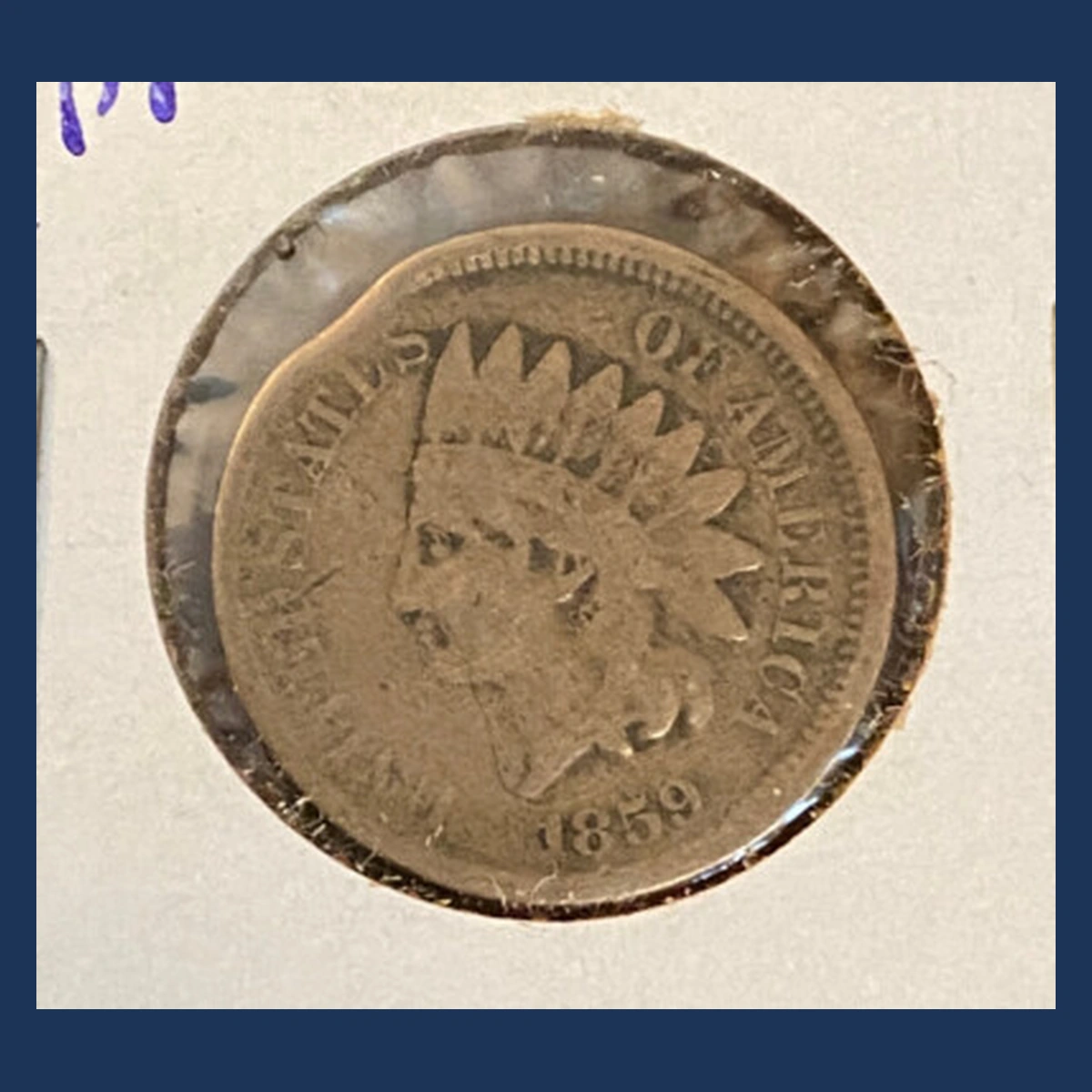
A curved piece is missing near five o’clock on a recorded 1859 cent. The collector’s list identifies the coin as NGC MS63, meaning unworn with noticeable marks.
The gap began in the blank, the metal disc used to make the coin. A blank-cutting punch can overlap an earlier hole and produce this incomplete shape.
The design was then struck onto the remaining metal. Softness near the opening may help distinguish an original clip from a cut made afterward.
This example establishes a curved clip. It does not provide evidence for every possible straight or multiple-clip shape in 1859.
Estimated Value
Estimate $65–$450 for recognizable worn 1859 clips and $450–$2,000 for attractive unworn examples. The NGC MS63 collection coin belongs with unworn comparisons.
An unworn 1852 large cent with a clip sold for $384 in June 2024. It is a larger copper coin with a different design, used only as context.
The missing area, surface quality, and strength of identification influence the whole price. A later cut does not receive the same estimate as an original incomplete blank.
How to Identify
An intact 1859 cent weighs about 4.67 grams and measures about 19 millimeters across. A scale and calipers can record how much material a loose clipped coin has lost.
Next examine the opening itself with a 10× magnifier. Saw teeth or fresh filing lines suggest cutting after the coin left the Mint.
On the documented example, the curved gap lies near five o’clock with the portrait upright. Keep both photographs aligned so that the opening stays in the same physical place.
Trace the plain edge through the gap and inspect the design at both ends. Original striking may soften these nearby details.
Also check the rim opposite the opening. Weakness there can support a clip, but its absence does not settle the question.
3. 1859 Indian Head Penny Reported Doubled Lettering and Leaf Details
Extra raised outlines have been reported around LIBERTY and the feathers on the front. Back reports describe the O in ONE and the veins of laurel leaves.
A doubled die is a stamping tool with duplicated design details. A coin can copy those details in one normal blow.
The front and back reports need separate comparisons. An extra contour on a leaf does not establish a matching doubled headband on the same coin.
Flat shelves and bright reflections can imitate doubling. The useful feature is a recognizable added part of the design, rather than thickness or glare alone.
Estimated Value
For a specialist-confirmed 1859 doubled design, use an estimated $50–$600 on circulated cents and $600–$4,000 on unworn examples. These ranges require genuine duplicated design, rather than a flat mechanical shelf.
A recognized doubled-back 1863 Indian cent sold for $1,560 in March 2023 at MS62, an unworn grade. Its different leaf pattern does not certify the reported 1859 features.
Condition and a convincing variety match support the estimate. A catalog number copied from another coin does not.
How to Identify
The front and back need different close-up photographs. Place LIBERTY and its adjacent feathers together under a 10× magnifier when examining the front.
For the back, compare the O in ONE and the veins of nearby laurel leaves. A later shield-and-oak wreath cannot provide a matching photograph for this one-year design.
Move the lamp while watching the extra outline. A reflection will shift, while a feature in the metal stays in place.
A loose copper-nickel coin normally weighs about 4.67 grams and measures about 19 millimeters, with a plain edge. Use a scale and calipers to check these basics.
Examine whether the added shape follows the letter or feather. Flat shelves that narrow the main design point toward movement during the strike, rather than a doubled stamping tool.
4. 1859 Indian Head Penny Raised Cracks and a Lower-Right Back Break
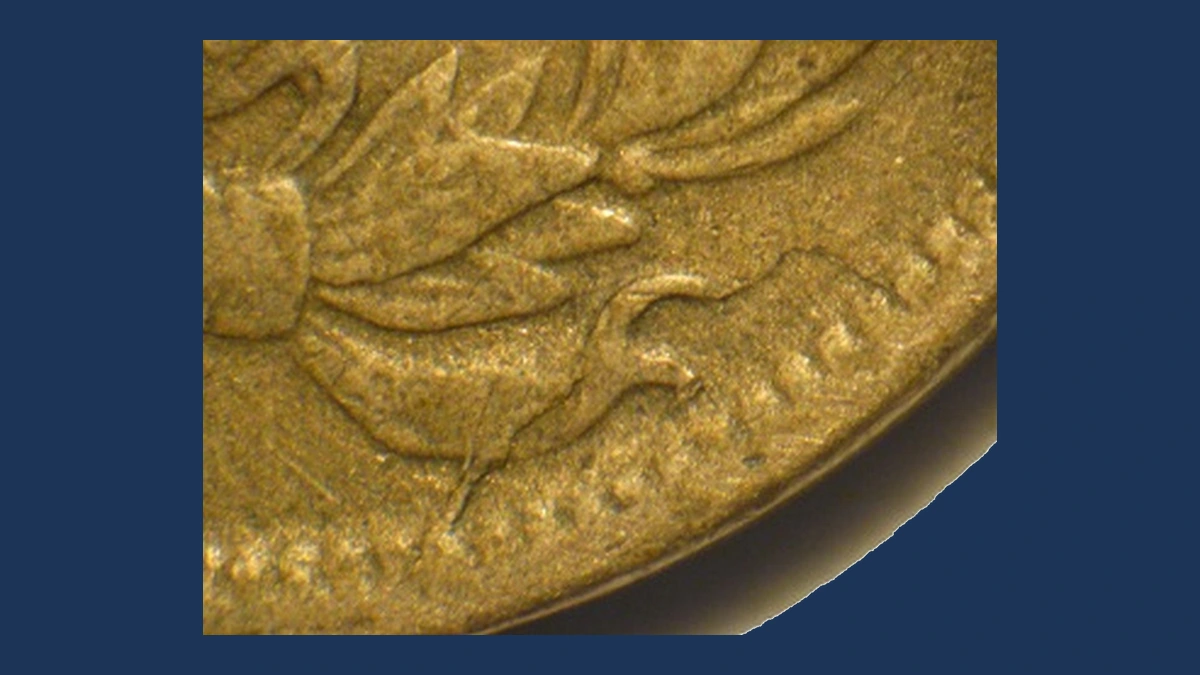
A broad raised area in the lower-right back is visible on a recorded Snow-2 cent. It formed when a section of the stamping tool broke but remained in place.
Collectors call this a retained cud. Because the steel stayed in the tool, some design can survive inside the affected area.
Thinner raised lines on other 1859 cents come from smaller cracks in the steel. They do not all share the same path or tool pair.
The Snow-2 also has a repunched date on the front. Its repeated numeral and back break belong to one coin with two different features.
Estimated Value
The PCGS MS65 Snow-2 with a retained back break sold for $1,740 in February 2025. MS65 describes an unworn coin with relatively few marks.
Estimate $25–$400 for worn cents with modest cracks and $100–$5,000 for more obvious rim breaks across different conditions. The upper range assumes strong preservation as well as a clear feature.
The auctioned coin also has a repunched date. Its full value is not a separate premium to add to another full date-variety price.
How to Identify
Start at the lower-right edge of the Snow-2 back and follow the break’s boundary with a 10× magnifier. Look for a shifted section rather than merely a thin line.
Some wreath or lettering detail may remain inside a retained break. Its presence does not rule out the feature.
Compare a narrow raised crack separately from this broad patch. A scratch cuts into the finished surface, while metal filling a tool crack stands above it.
Use a scale and calipers on a loose cent to compare about 4.67 grams and 19 millimeters. Inspect the plain edge beside any raised area for a dent that pushed metal inward, and keep the repunched-date photograph with the back view.
5. 1859 Indian Head Penny Extra Date Strokes beneath the 8 or 1
The date was punched into the stamping tool before coins were struck. A slightly displaced repeat impression could leave pieces of the earlier numerals visible.
On the 1859 Snow-2, also called FS-302, earlier detail appears below the 8. Snow-3, or FS-303, is mainly recognized beneath the 1.
Compare the two patterns separately. A photograph showing the extra stroke below the 8 cannot identify the feature below the 1.
The repunching happened in the steel rather than through another blow on the finished penny. It also differs from a date punched into the wrong place outside the normal row of numerals.
Estimated Value
The Snow-2 graded PCGS MS65 brought $1,740 in February 2025. Its price includes the repunched date, attractive unworn preservation, and the retained break on its back.
For 1859 repunched dates, estimate $50–$750 on circulated examples and $750–$6,000 for stronger unworn coins. The exact date pattern matters alongside condition.
Do not transfer the Snow-2 price unchanged to Snow-3 or count its back break again. Both faces contribute to one complete-coin assessment.
How to Identify
Compare all four date numerals before enlarging one suspect stroke. Under a 10× magnifier, Snow-2 should lead your attention below the 8, while Snow-3 calls for a close look below the 1.
The Snow-3 photograph helps show the second pattern. Move a lamp across the date to check whether the extra stroke rises from the surface.
A loose copper-nickel cent should be compared with about 4.67 grams and 19 millimeters using a scale and calipers. Its edge is normally plain.
Those measurements check the coin, rather than identifying the date pattern. Follow the extra stroke around the numeral: it should resemble part of the number, not an irregular corrosion lump.
6. 1859 Indian Head Penny Shifted Design with an Unstruck Crescent
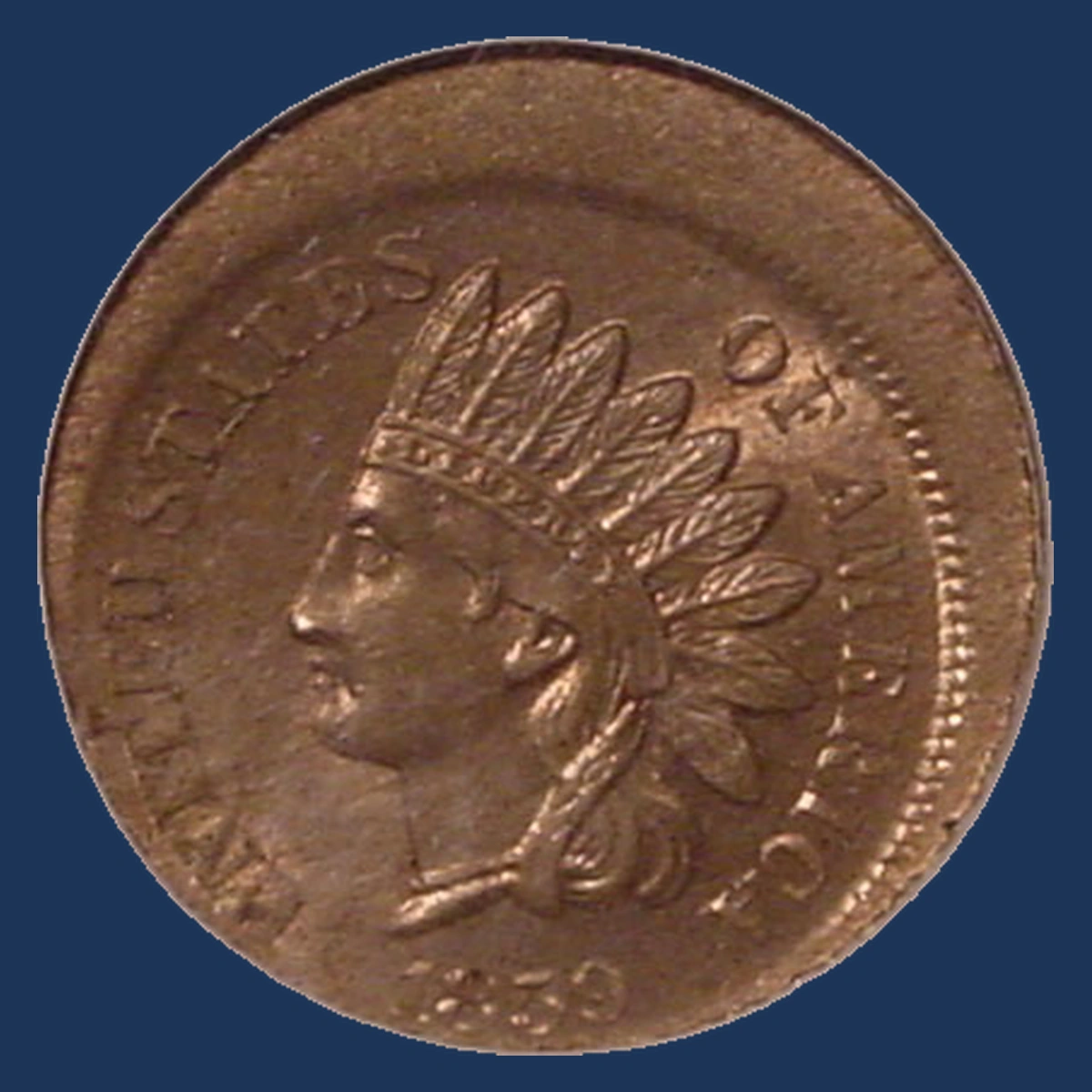
An off-center strike leaves some copper untouched while part of the design misses the blank. One 1859 example is reported fifteen percent off center toward seven o’clock.
The report calls it a Type 1 blank, meaning the disc had not received its prepared raised border. That blank-preparation term is separate from the coin’s design type.
A different NGC VG8 example is recorded sixty percent off center toward six o’clock. VG8 describes substantial wear.
The larger-shift coin’s year is assigned from the surviving design rather than a complete visible date. The two examples should not share one percentage or condition description.
Estimated Value
Estimate $150–$1,500 for readable circulated 1859 off-center cents and $1,500–$7,500 for attractive examples with stronger detail. Identification matters when the shift removes the date.
A worn 1875 cent struck twelve percent off center sold for $391 in February 2005. That provides context for a different date and smaller displacement.
The heavily worn sixty-percent example does not automatically outrank a sharper small-shift coin. Clear design, original bare metal, and surface condition all affect the complete price.
How to Identify
Begin with the date if it remains visible. If it does not, compare the surviving shieldless laurel wreath and portrait with the correct 1859 design.
A 10× magnifier helps distinguish original unstruck metal from a ground-away design. Check both faces: the missing portions should fit one blank that was out of position.
Keep seven o’clock and six o’clock comparisons separate for the two reported examples. Their percentages describe different coins, rather than successive stages of one strike.
A loose copper-nickel blank began near 4.67 grams and 19 millimeters. Record weight with a scale and several widths with calipers, then inspect the plain edge for cuts or later flattening.
7. 1859 Indian Head Penny Second Strike Fifty-Five Percent Off Center
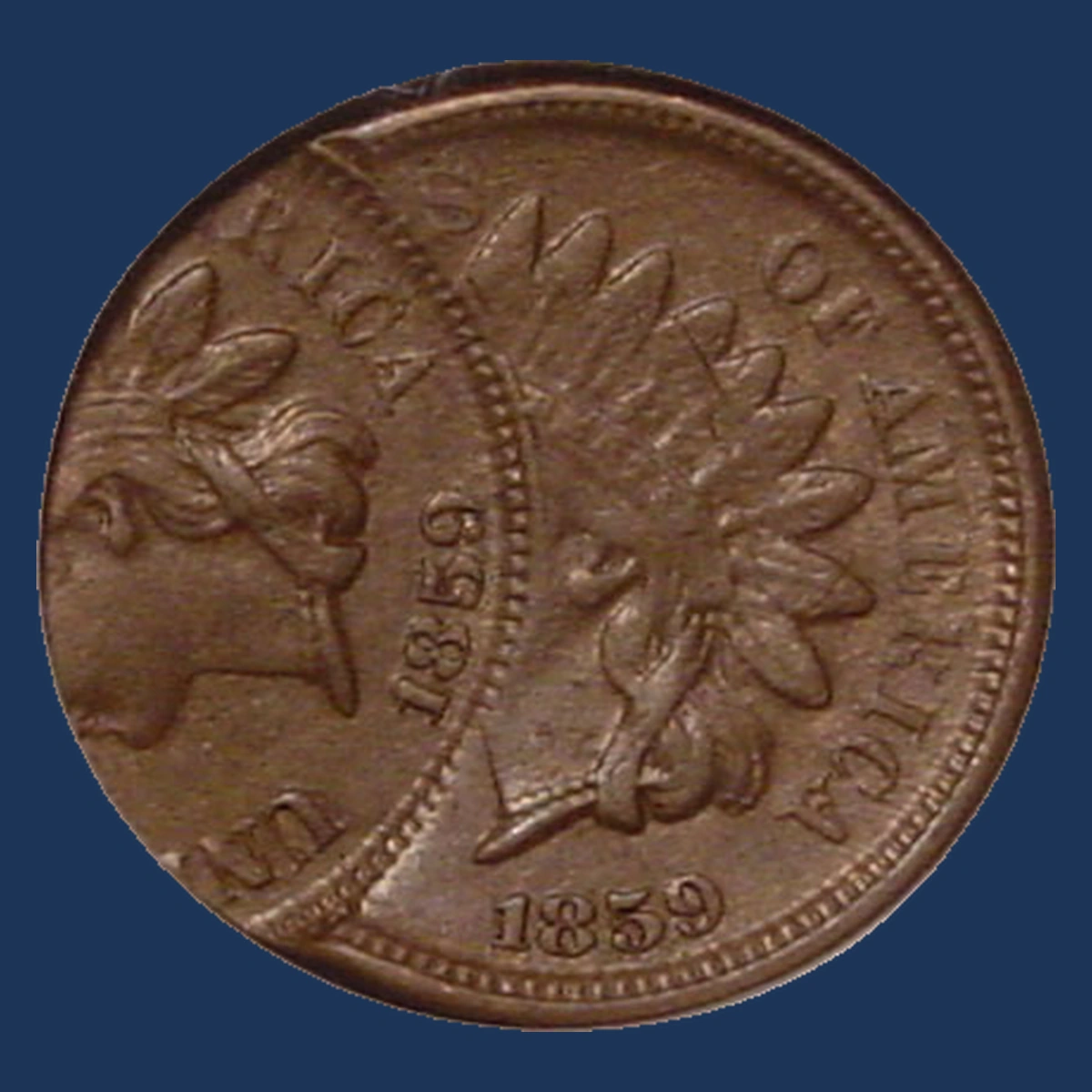
Two sets of design survive when a coin remains in the press and receives another blow. On a recorded 1859 example, the second strike was fifty-five percent off center.
The collector’s list identifies the coin as NGC MS61. That means unworn, but with noticeable marks or other limitations in appearance.
The displaced second design belongs to a separate striking event on the same coin. It is different from a doubled tool that repeats tiny outlines in one normal strike.
The record does not establish a clock direction here. The visible overlap should guide the reconstruction of how the cent moved.
Estimated Value
Allow an estimated $500–$3,000 for worn 1859 double strikes and $3,000–$15,000 for clearer unworn examples. The recorded MS61 belongs with unworn comparisons, though preservation still varies within that group.
A corroded 1867 Indian cent with an eighty-five-percent second strike sold for $517.50 in January 2006. That damaged coin shows why displacement alone does not set the price.
The 1859 range covers one coin with two impressions. Its off-center second blow does not earn another full coin value to add.
How to Identify
Trace one complete portion of the original design before following the overlapping impression. A 10× magnifier can help separate the two dates, letters, or portrait outlines that actually remain.
Use the full front and back views together. A large second strike should explain the overlapping shapes rather than merely make a few letters appear thick.
The collector’s recorded example provides the fifty-five-percent comparison. Do not assign its percentage to another 1859 with a different overlap.
For a loose coin, use a scale against 4.67 grams and calipers against the original 19-millimeter size. Inspect the plain edge for later squeezing, recognizing that repeated striking can itself change the final outline.
8. 1859 Indian Head Penny Cup-Shaped Coin Stuck to the Front Tool
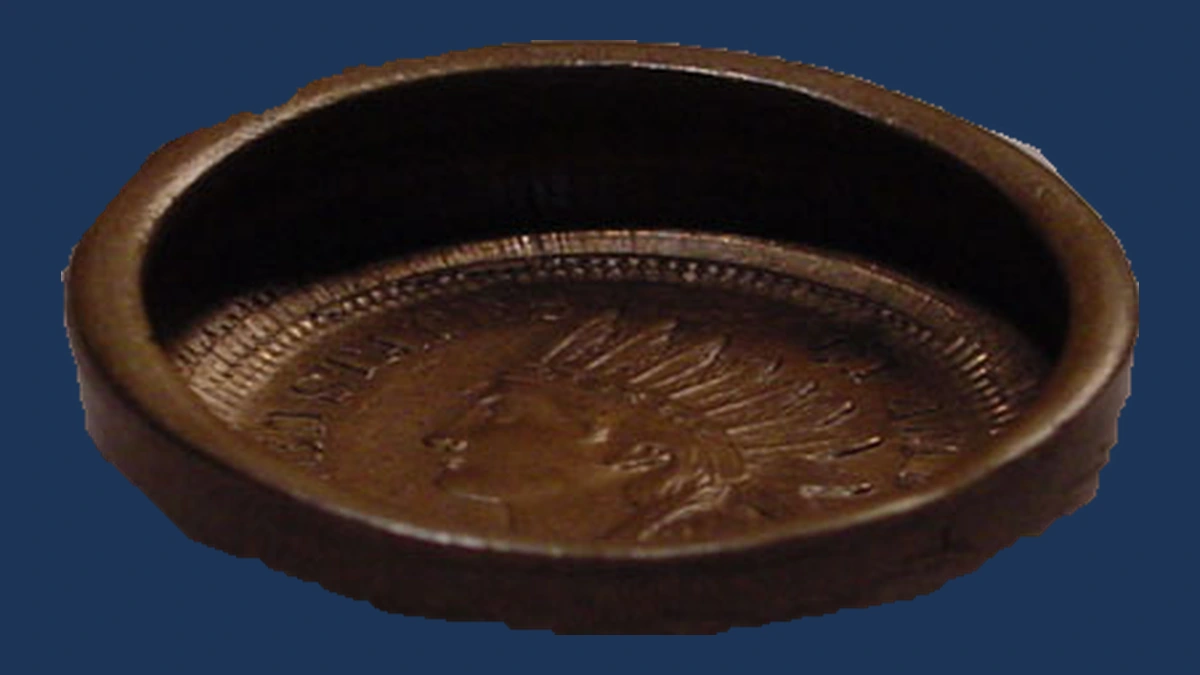
A penny can remain attached to the front stamping tool instead of leaving the press. Further strikes spread its metal around the tool until the sides rise like a cup.
That trapped coin is called a die cap. Its back design can stretch and enlarge as the metal moves.
The recorded 1859 example is graded PCGS MS66, indicating very strong unworn preservation. Its shape and surviving design need to be assessed together.
This is the cap itself, not another coin struck through a cap. A later bend can create a bowl shape without the same repeated-strike changes.
Estimated Value
The 1859 front die cap brought $23,500 in March 2014 at Heritage. Its high MS66 grade supports comparison with well-preserved major errors.
Estimate $7,500–$35,000 for authentic examples across different depths, surfaces, and amounts of surviving design. A shallower or damaged cap needs a different comparison from the auctioned coin.
The value concerns an identified mint-made shape. Bending an ordinary cent into a cup does not create the same error, even if the two look similar from the side.
How to Identify
Leave a certified example in its holder. The thin walls can bend if you try to improve the view by handling the coin.
A loose cap needs a scale and calipers only when they can be used safely. Record its weight, width, and height without pressing against the raised sides.
The original cent blank was about 4.67 grams and 19 millimeters across. Its plain edge and final shape may have changed as metal spread around the stamping tool.
Photograph the cup from the side, then inspect both designs through a 10× magnifier. The front, enlarged back, and walls should tell the same story of repeated striking.
Pay particular attention to letters near a bend. Simply folded normal letters differ from letters stretched while the metal spread.
9. 1859 Indian Head Penny Cent Portrait Struck over an 1857 Silver Half Dime
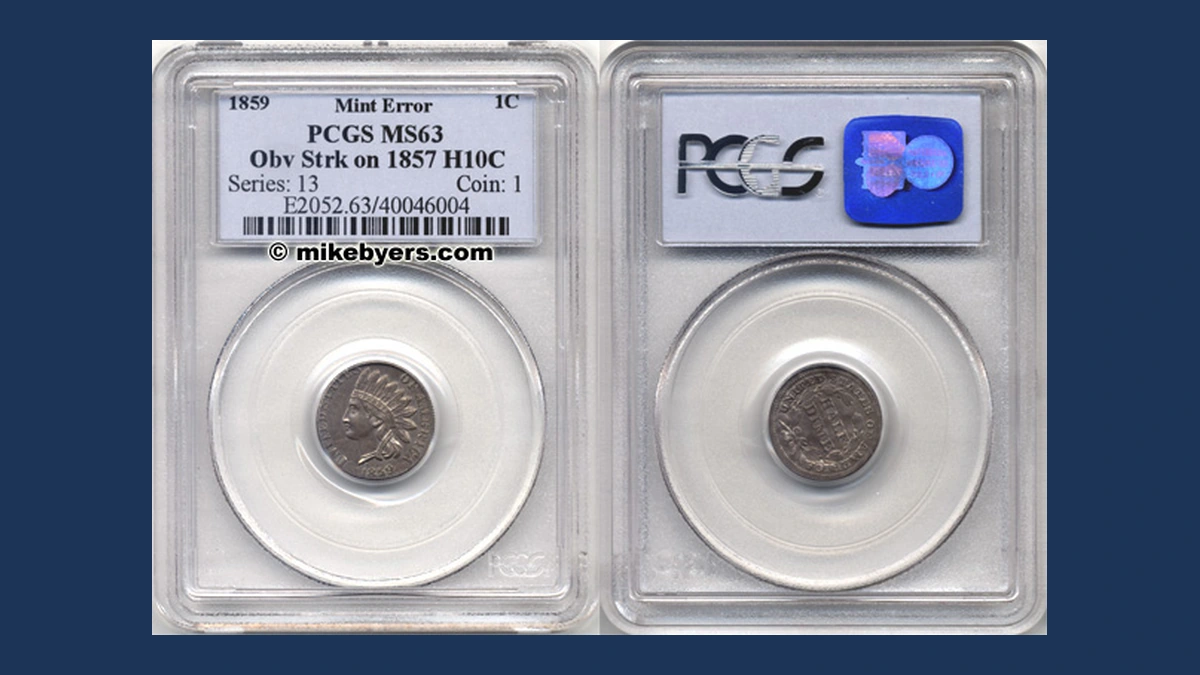
One piece began as an already struck 1857 silver half dime, a five-cent coin. It later received the front design of an 1859 Indian cent.
Traces of the earlier 1857 date remain beneath STA in STATES, in front of the Indian portrait. The other face still shows HALF DIME, although the surface became wavy and partly flattened.
Heritage proposed that the small silver coin lay above a cent blank during the blow. That is an explanation for the unusual two faces, rather than an observed record of the press.
This is not a cent struck on an unused silver blank.
Estimated Value
The PCGS MS63 example sold for $71,875 in January 2007. MS63 identifies an unworn coin with noticeable marks.
An estimated $50,000–$100,000 provides a working range for this extraordinary identified piece, rather than a price for ordinary silver-colored pennies. Its surviving half-dime design and long collecting history are central to the comparison.
An unused silver blank would produce a different error. A plated cent, altered combination of coins, or unrelated half dime cannot borrow this auction result.
How to Identify
Read HALF DIME on the back before interpreting the larger portrait. Those words identify an already finished five-cent coin, rather than an unused silver blank.
A normal 1857 half dime began near 1.24 grams and 15.5 millimeters, far smaller than a 4.67-gram, 19-millimeter cent. If a loose candidate can be handled safely, record its weight and width with a scale and calipers.
Then use a 10× magnifier below STA to find the surviving 1857 numerals. Compare their position with the later portrait and the flattened, wavy back.
Photograph the edge as well as both faces for a specialist. An assembly of joined coins or designs squeezed together later must be distinguished from this documented overstrike.
10. 1859 Indian Head Penny Two Normal Heads from Two Front Tools
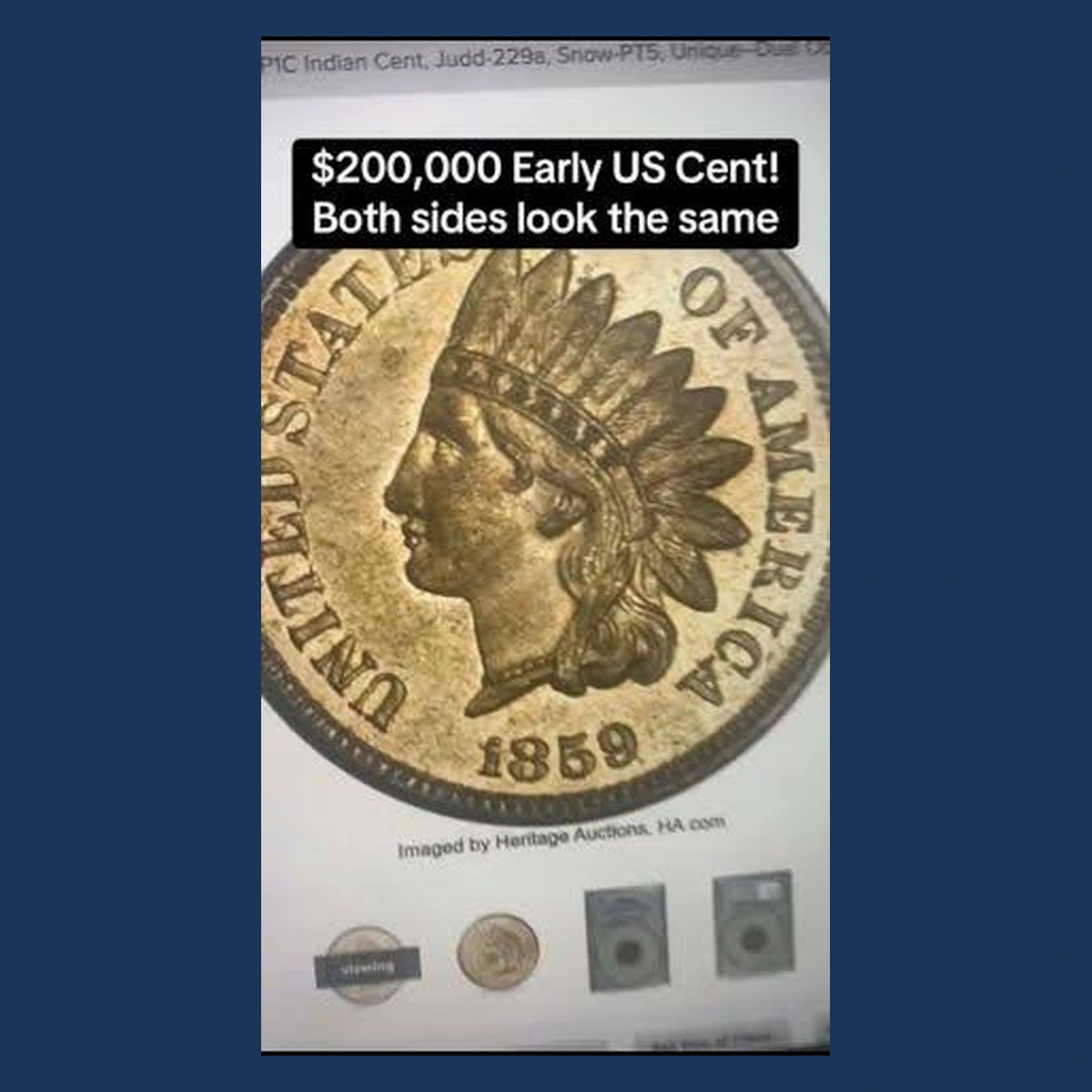
A normal raised Indian portrait appears on both sides of this 1859 penny. Two front stamping tools were paired, leaving no wreath side.
This pairing is called a mule. PCGS describes the piece as a dual-obverse mule strike, while experimental-coin references also list it as Judd-229a or Snow-PT5.
The copper-nickel coin has a plain edge. Its several catalog names all describe this same pairing of two front designs.
Both portraits are raised and read normally. That separates it from a brockage, where contact with another struck coin leaves a backward design sunk into the metal.
Estimated Value
The PCGS MS63 two-headed coin sold for $90,000 in September 2020. Its earlier August 2008 sale brought $195,500.
Use an estimated $75,000–$225,000 for this exceptional identified piece, with market conditions and provenance affecting the result. The differing sales show why one old high price is not a guaranteed resale value.
The range does not apply to novelty coins made by joining two fronts. Specialist authentication and a match to the recorded piece are essential.
How to Identify
Check that both portraits are raised rather than recessed. A 10× magnifier can also compare the recorded tiny dot between BE in LIBERTY on one face and the dot beside the ear on the other.
Photograph the full edge to look for a joining seam. Two ordinary coin fronts can be assembled into a convincing novelty from a straight-on view.
For a loose candidate, a scale and calipers compare the normal copper-nickel standard of about 4.67 grams and 19 millimeters. The recorded edge is plain.
The auction describes about ten degrees clockwise from medal alignment, measured with a side-to-side turn. This is a different starting position from the usual top-to-bottom flip, so do not call it a simple ten-degree normal-coin rotation.
Conclusion
For 1859 pennies, a missing edge, extra date stroke, and second portrait each require a different check. The normal coin is copper-nickel, with a smooth edge and a shieldless wreath.
Estimated values span $25–$225,000, with the rare two-headed coin far above modest surface flaws. Keep those very different comparisons separate.
When an error changes the shape or hides the date, preserve full photographs of both faces and the edge so the surviving design can establish the coin’s identity.