1872 Penny Error List with Pictures

Some 1872 pennies repeat part of a date number; another reported example carries a much larger second strike. A repunched-date cent graded an unworn MS65 Red and Brown sold for $2,160 at Heritage in January 2018.
This 1872 Indian Head penny error list covers estimated whole-coin values of $70–$5,000. Even an ordinary 1872 cent has collector value, so a small flaw does not explain its entire price.
Use the clues below to separate extra digits, damaged-tool marks, and repeated strikes.
1. 1872 Indian Head Penny Marks from Debris During Tool Making (Estimated Up to $1,500)
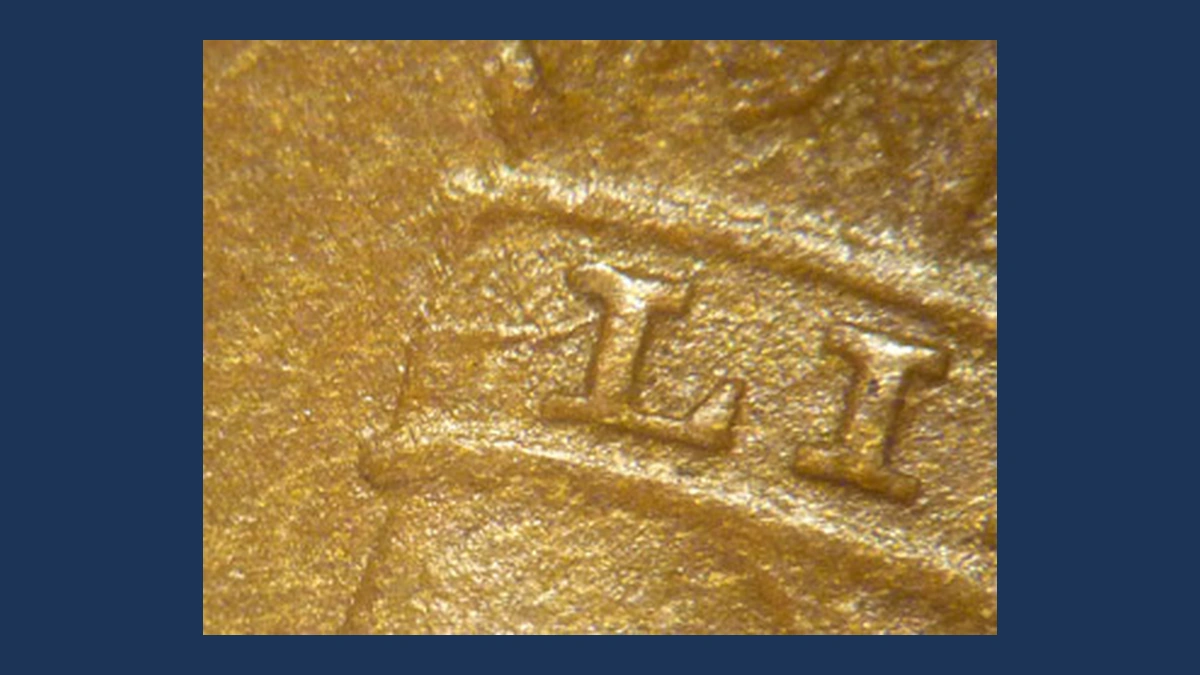
A small line or odd shape near LIBERTY may have started with debris trapped during tool making. The 1872 catalog records examples near the L and in the lower-left border.
A raised master design was pressed into a steel stamping tool, called a die. Material caught during that step could leave a defect in the tool’s surface.
Later coins repeated that defect. This is often called a hub-through mark.
The timing matters: no new thread had to land on every penny. That separates this repeated tool feature from material blocking one coin during its own strike.
Estimated Value
Use an estimated whole-coin range of $70–$1,500 for a correctly matched 1872 tool-making mark. Much of the price can come from the coin’s date and condition.
A fine feature on a worn penny may add little. A clean, sharp example makes the repeated mark easier to recognize, but small size alone does not establish rarity.
No separate auction result is assigned to these marks. The estimate should not be applied to an ordinary scratch that merely resembles a short fiber.
How to Identify
Compare two photographs of the same listed 1872 variety if available. A tool-made mark repeats in the same position relative to the design, unlike a loose fiber landing differently on separate coins.
Use a 10× magnifier near the L in LIBERTY or the cataloged lower-left border area. Do not assume a scratch at one location belongs to the example recorded at the other.
Check the plain edge and compare scale weight and caliper diameter with 3.11 g and about 19 mm. Then match the mark’s shape and neighboring design to the variety photograph; its repeated position is more useful than a general thread-like appearance.
2. 1872 Indian Head Penny Die Cracks, Chips, and Rim Breaks (Estimated Up to $1,500)
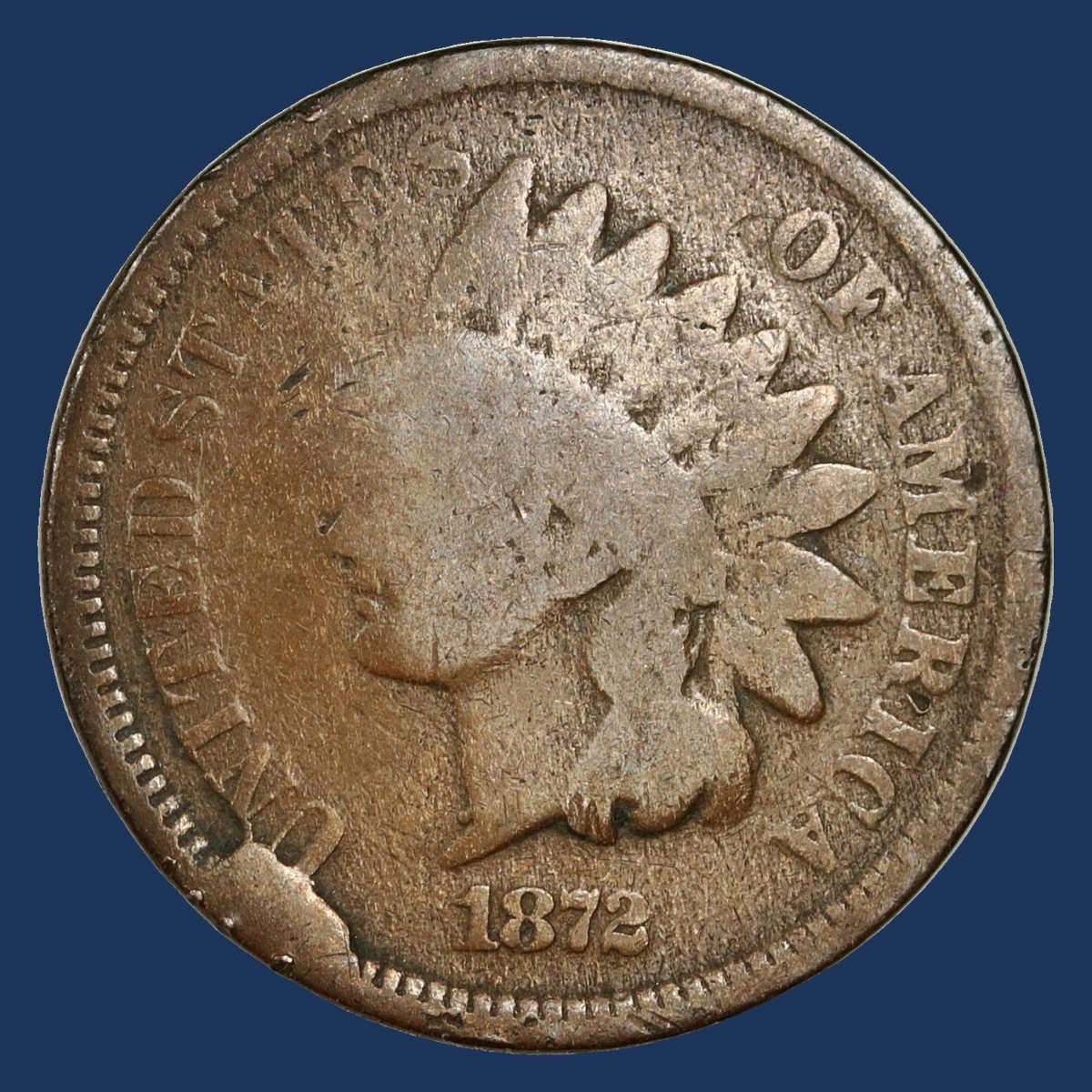
A small raised lump on the cheek in front of the ear differs in size from a broad patch at the rim. Both can come from missing pieces of a stamping tool.
A narrow split in the tool produces a raised crack line instead. Listed 1872 examples include lines above UNITED and between the back rim and wreath.
Some larger rim breaks retain design inside their boundaries because the broken tool fragment remained in place. Other breaks erase the affected design more fully.
The cheek-chip example uses the shallow-N back design. That normal lettering style is not itself an error.
Estimated Value
Estimate $70–$1,500 for ordinary 1872 coins with these features. Worn cents with small cracks or cheek chips can owe most of their value to the date itself.
A larger clear rim break on a better-preserved coin may bring more. That does not mean every lump or every shallow-N example earns a special premium.
This is an estimated whole-coin range, not a set of separate documented sales. Corrosion, cleaning, or a crushed rim can reduce the value.
How to Identify
For the cheek feature, begin in front of the ear rather than at the rim. Under a 10× magnifier, look for a localized raised lump without a surrounding cut or impact hollow.
The plain edge matters more when checking a larger rim patch. Inspect it for squeezing before comparing the front around 7–7:45 or the back around 11:30–12:30 with the appropriate example.
A scale and calipers should show roughly 3.11 g and 19 mm, allowing for wear. Those figures do not distinguish a tool break from every form of damage.
At the suspected break, trace its boundary into normal design and check for the retained details shown in the matching 1872 photograph.
3. 1872 Indian Head Penny Misplaced Date (Estimated Up to $2,500)
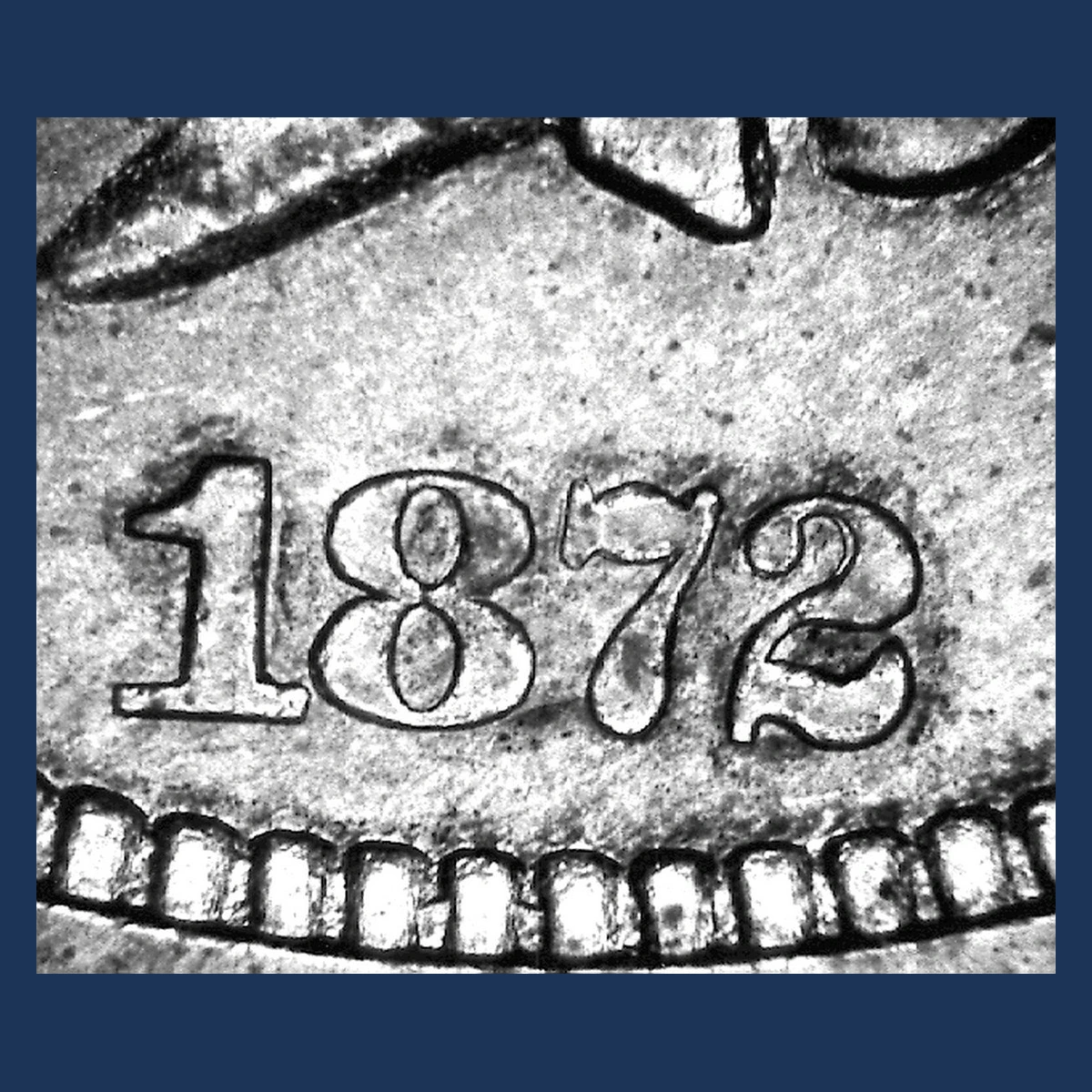
A curved number fragment sits below and slightly right of the normal 8, among the small border teeth. It is separate from the main date.
This misplaced date began when the number punch touched the steel stamping tool in the wrong location. Correctly placing the date afterward did not remove every trace of the first attempt.
The surviving fragment then appeared on pennies made with that tool. It is not simply another outline attached to the normal 8.
The teeth provide landmarks. A random blob between them needs more than its location to prove it is part of a digit.
Estimated Value
For a clearly matched 1872 misplaced date, estimate $100–$2,500 across circulated and attractive unworn examples. The penny’s underlying condition remains a major part of its price.
A 1908 FS-301 example graded an unworn MS65 Red and Brown has a recorded $1,187 eBay price from December 2021. That different-date record is a comparison, not a sale of the 1872 variety.
An indistinct lump should not be valued as a definite extra 8. The estimate assumes the fragment matches the known form.
How to Identify
Check the normal 8 first, then move below and right with a 10× magnifier. Leave the date upright so the location of the stray fragment stays clear.
Compare the curved mark with the surrounding border teeth. A digit fragment should fit the recorded 8 shape, while corrosion usually produces an irregular surface.
Do not scrape the border to expose a possible number.
Use a scale and calipers to compare the coin with 3.11 g and about 19 mm, and examine its plain edge. These checks cannot by themselves prove the variety.
Return to the extra curved fragment and compare its exact gap from the normal 8 and adjacent teeth with the 1872 photograph.
4. 1872 Indian Head Penny Doubled Die (Estimated Up to $2,500)
The upper end of the R in LIBERTY has extra detail on the recorded doubled-die variety. The affected letter is on the headband, not in the date.
This duplication was already present in the steel tool before it struck the penny. The coin did not need to be hit twice.
The same listed variety also has a repunched date, a separate feature produced when its date punch was applied. Both can appear on one coin without sharing the same cause.
A thick or worn R is not enough. The particular extra outline at its upper end must be visible.
Estimated Value
An estimated $150–$2,500 applies to a clearly identified 1872 doubled-die example in suitable condition. The date’s collector value is included in that range.
As a different-year comparison, an 1887 FS-101 doubled-front cent graded MS63 Brown sold for $1,380 in June 2025. It is not the same headband variety and cannot provide an exact 1872 price.
The accompanying repunched date is another feature of the same coin. Do not add two full estimated coin values together.
How to Identify
Start with the photograph of the doubled R, then examine that letter at 10×. Comparing the specific upper end avoids confusing ordinary thickness elsewhere in LIBERTY with this small feature.
Inspect the plain edge and use a scale and calipers against the normal 3.11 g and about 19 mm. These basic checks help assess the coin itself before assigning a valuable variety.
Move the lamp across the R to separate a raised outline from a reflection. Compare its extra upper detail and the associated date pattern with the same pictured variety, rather than borrowing a date match from another 1872 example.
5. 1872 Indian Head Penny Repunched Date (Estimated Up to $3,000)
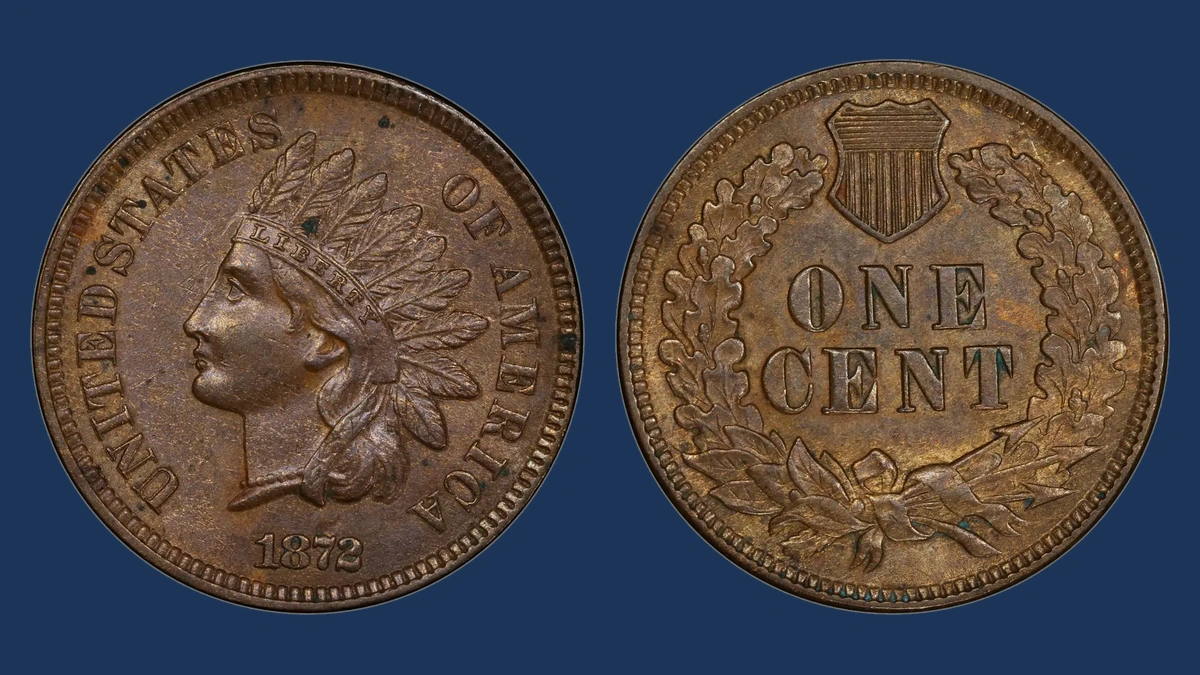
The 1, 8, 7, or 2 may have a smaller extra stroke beside its main outline. The positions vary between the listed date varieties.
These are remnants of a repeated date punch in the stamping tool. A second impression can leave part of the earlier number exposed if the punch shifts.
The finished coin then reproduces the combined result. This does not mean its whole design was struck twice.
FS-301, also called Snow-1, is one recognized repunched-date variety for the year. Other reported forms need their own photographs rather than assuming every extra digit points in the same direction.
Estimated Value
A practical estimated range is $100–$3,000 for matched 1872 repunched dates in different conditions. Sharper coins and clearer extra strokes generally support higher prices.
PCGS records $2,160 for an FS-301/Snow-1 example graded MS65 Red and Brown at Heritage on January 3, 2018. That is an unworn whole-coin sale.
The result does not give every repunched date the same value. Different forms, wear, and surface problems still need separate comparisons.
How to Identify
Before comparing tiny strokes, establish that the date really reads 1872. Heavy wear can blur the last digit on an older cent.
Use a scale and calipers to compare the usual 3.11 g and about 19 mm, then inspect the plain edge for damage. Under a 10× magnifier, follow each number where an extra stroke is suspected.
Look for a curve or straight segment that belongs to that number. A flat shelf along several letters elsewhere can point to movement during striking instead.
Select one photographed 1872 date variety and compare the directions of its extra strokes, keeping all four digits in view rather than matching one isolated bump.
6. 1872 Indian Head Penny Double Strike (Estimated Up to $5,000)
A small second impression appears toward the lower right of the recorded penny. Its later strike landed about 80% off-center toward 5 o’clock.
The coin had already received one design before it moved and was hit again. Only part of the second design reached the metal.
The original account says the date remains complete. That helps identify this as an 1872 error instead of an undated Indian Head cent.
The same coin also has a small pit in ONE. That is separate damage, not another mint error, and it does not erase the evidence of the two strikes.
Estimated Value
Estimate $600–$5,000 for genuine dated 1872 double strikes, depending on preservation and how clearly both impressions can be read. Damage can reduce an otherwise impressive example’s value.
A different-year comparison is a 1908 double strike graded an unworn MS62 Brown, sold for $4,080 in June 2024. It does not supply a sale price for the reported 1872 coin.
The pit mentioned on that coin belongs in its condition assessment. Do not ignore damage simply because the mint error is genuine.
How to Identify
Locate the complete 1872 date.
Now follow the second impression toward 5 o’clock, using a 10× magnifier to identify actual repeated coin detail. A deep scratch or flattened patch cannot substitute for that second design.
Use a scale to compare with the normal 3.11 g, and record the shape with calipers around the usual 19 mm diameter. The extra blow can distort the outline; inspect the plain edge for added metal or later cuts.
Check the pit in ONE separately as a condition problem. Its presence should not be used either to prove or dismiss the double strike.
Trace a recognizable feature into the lower-right second impression and compare that strike boundary with the documented 80% example.
Conclusion
For 1872, distinguish three small details carefully: an extra digit beside the date, a digit fragment in the border, and doubling on the R in LIBERTY. They come from different steps in making the stamping tool.
Estimated values range from $70 to $5,000. Condition and the underlying value of this older date matter throughout, while the reported double strike needs its two design positions checked separately from later damage.