1888 Penny Error List with Pictures

The last 8 deserves a closer look. On the famous 1888/7 penny, small traces of an older 7 remain beside it; one example sold for $74,750 in 2007.
That rarity sits far above most 1888 Indian Head penny errors. This guide covers estimated values from $5 to $80,000, including modest raised cracks and a rare coin made from an unusual metal.
Keep reading for the visible clues, price differences, and checks that help separate these features.
1. 1888 Indian Head Penny Uneven Rim or Shifted Design (Estimated Up to $100)
A wide border on one side and a narrow border on the other can make the design look shifted. The 1888 report calls this a rim shift.
That description alone does not identify one minting mistake. A stamping tool could sit out of line, or the metal disc could move away from the center.
These causes leave different patterns when you compare both faces. A coin struck at an angle can look different again.
A later blow to the edge can also distort the rim. The visible border should be examined before assigning a specific error name.
Estimated Value
Use $5–$100 as an estimated whole-coin range for an ordinary 1888 penny with a genuine minor alignment error. A slightly uneven border may add little beyond the coin’s normal value.
This range does not assume the reported rim shift is a confirmed major off-center strike. That larger error has its own section and a different price range.
The low estimate reflects the limited description. A damaged edge should receive no mint-error premium merely because its width looks uneven.
How to Identify
Photograph both faces straight on, keeping the entire rim visible. Compare where each design sits: one shifted face suggests a misaligned tool, while two similarly displaced faces call for a different explanation.
Use calipers at several angles, since one diameter reading can hide distortion. A normal bronze cent is about 19 mm across and weighs 3.11 g on a scale, with wear allowed for.
Inspect the narrow border and plain edge through a 10× magnifier for scrapes, flattening, or a lip pushed up by damage. Set the two photographs beside each other and establish whether the shift belongs to one design or both.
2. 1888 Indian Head Penny Clipped Planchet (Estimated Up to $300)
Part of the penny’s outline is missing. If that loss happened before striking, the error is called a clipped planchet: the flat metal disc was incomplete before becoming a coin.
The punch that cuts discs from a metal strip can overlap an earlier hole or reach beyond the strip. Either problem leaves missing metal.
An auction listing records an 1888 clipped cent, but it does not establish a clip percentage here. That detail should be measured from the actual example.
A bite-shaped hole alone proves little. Cutting an ordinary coin afterward can produce a similar outline.
Estimated Value
An estimated $25–$300 suits a genuine 1888 clip, depending on size, condition, and how clearly its edge formed before striking. The estimate covers the whole penny.
A later copper cent provides a limited comparison: a 1939 clipped cent graded an unworn MS64 Brown sold for $180 in January 2023. Its different design and date prevent a direct one-for-one price transfer.
Small clips on worn coins generally sit lower. A cut or filed edge does not earn this premium.
How to Identify
Weigh the coin first. A true loss of metal should put it below the normal 3.11 g, though wear can also lower weight.
Use calipers across the complete part of the coin to compare with the usual diameter of about 19 mm.
Inspect the missing section through a 10× magnifier, looking for cut marks or a freshly filed face.
A mint-made clip can leave weak border detail beside the gap and sometimes on the opposite side. Neither clue should be used alone.
Follow the plain edge into the missing area. Look for struck detail that weakens naturally toward the gap, rather than a sharp cut crossing an already finished design.
3. 1888 Indian Head Penny Rotated Dies (Estimated Up to $300)
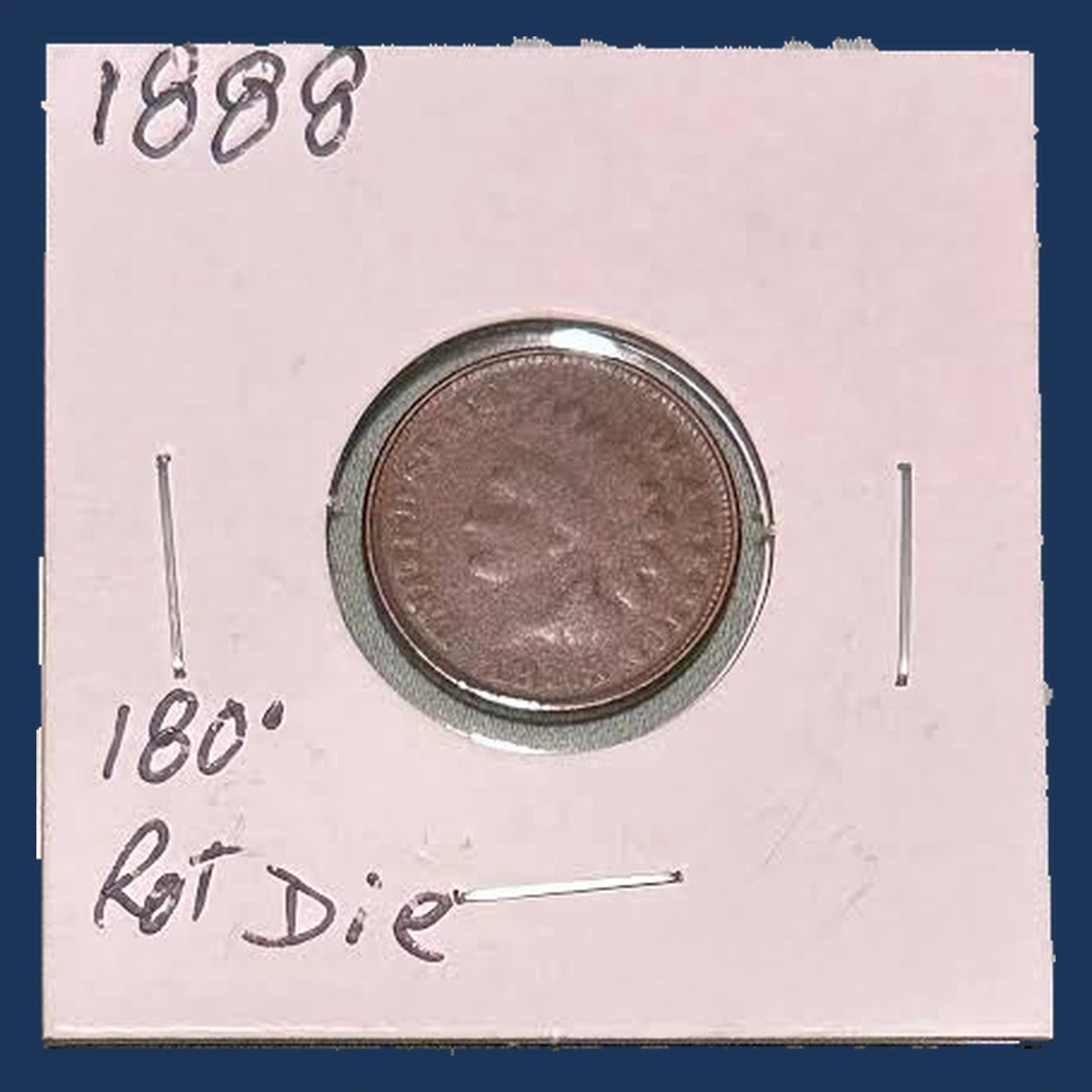
The front looks upright, but the back turns sideways when you flip the coin in the usual way. A stamping tool can rotate in the press and leave the two faces out of alignment.
The recorded 1888 example is described as 110 degrees clockwise and graded F12 Brown by NGC. That grade describes a visibly worn brown coin.
The rotation is part of the relationship between the two designs. It does not mean the metal disc itself is twisted.
Loose photographs can be misleading because either picture may have been rotated before being displayed.
Estimated Value
For a clearly established rotation near the reported 110 degrees, use an estimated $50–$300. Readable designs and an easily demonstrated angle help support the price.
The collector record identifies an NGC F12 Brown example but supplies no sale price used here. This range is an estimate, not a transaction assigned to that coin.
Minor deviations normally attract less interest than a large sideways turn. Damage or heavy corrosion can still reduce the value of a dramatic rotation.
How to Identify
Check the plain edge through a 10× magnifier for a seam joining two altered coin halves. A scale and calipers should give results near 3.11 g and about 19 mm for an ordinary bronze cent.
Hold the date upright between two fingertips.
Flip the coin from top to bottom without turning it sideways. The back of a normally aligned U.S. cent should now be upright.
If it is tilted, keep the coin in a fixed holder and compare the angle with a protractor. The recorded example has a 110-degree clockwise turn.
Loose front-and-back photographs cannot establish that angle. Repeat the fixed top-to-bottom flip and check that the back reaches the same sideways position each time.
4. 1888 Indian Head Penny Off-Center Strike (Estimated Up to $1,500)
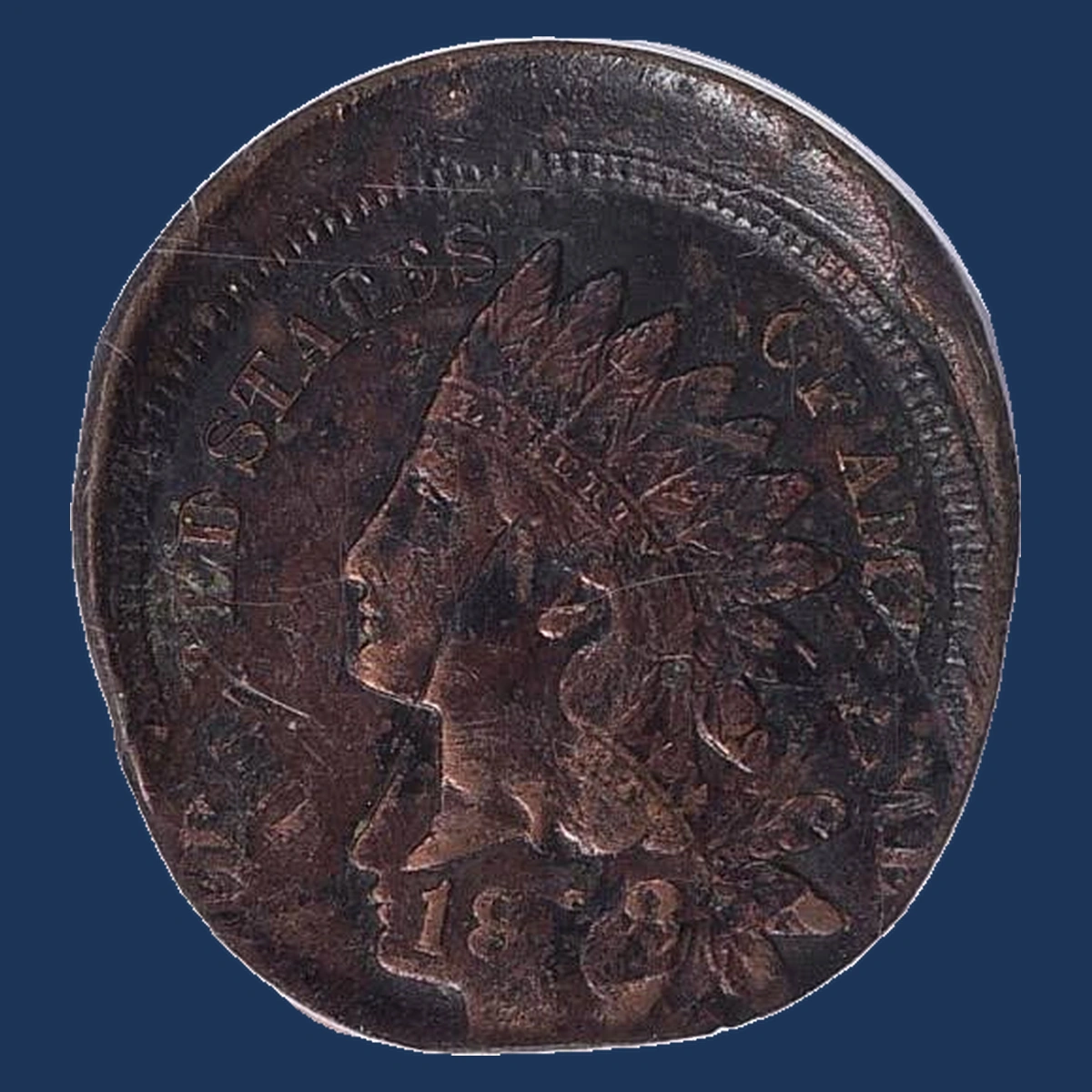
The portrait and wreath shift away from the center, leaving some metal unstamped. Part of the design falls beyond the coin’s edge.
The metal disc sat in the wrong place when the stamping tools came together. This differs from a slightly uneven border caused by one tool being out of line.
An 1888 error list includes off-center strikes, without giving a firmly identified percentage or grade here. The size of the blank area must come from the particular coin.
A full date matters: it ties the dramatic shape to 1888 rather than another Indian Head cent.
Estimated Value
For an authenticated 1888 off-center cent, estimate $150–$1,500, depending on the amount of displacement, condition, and whether the date survives.
As a nearby-year comparison, an 1896 cent struck 10% off-center and graded AU50 for light wear by NGC sold for $159 in June 2023. That was an actual sale of the 1896 coin, not proof of an identical 1888 example.
A larger clear error with its full date can cost more. A nearly centered coin belongs near the lower end.
How to Identify
Locate the complete date before judging how far the design moved. A wide empty crescent is interesting, but it cannot establish the year if 1888 has fallen off the coin.
Turn the coin over. Both faces should fit the same displaced strike, unlike a single misaligned tool that can shift only one face.
Use a 10× magnifier to inspect the transition from design to unstamped metal. Filing can remove letters, but it leaves a worked surface rather than a natural strike boundary.
Use a scale to compare with 3.11 g and use calipers around the normal 19 mm size, allowing for distorted shape. Follow the plain edge around the blank crescent to see where the original strike naturally stops.
5. 1888 Indian Head Penny Die Cracks, Chips, and Rim Breaks (Estimated Up to $3,000)
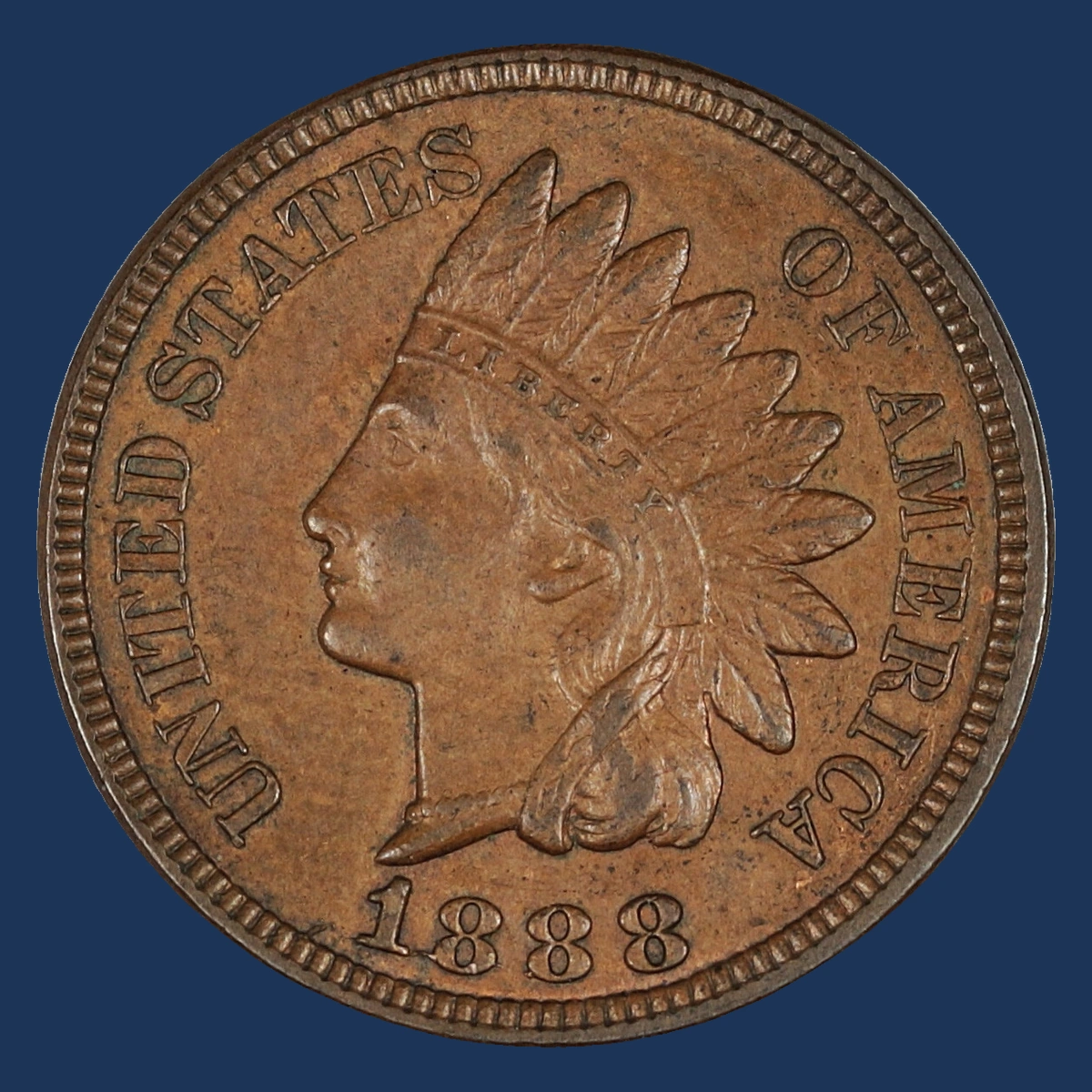
Fine ridges, small blobs, and broad raised rim patches can all come from damage to a steel stamping tool, called a die. Metal enters a crack or missing part of that tool during striking.
On 1888 pennies, recorded examples include lines on the back and a small lump beside the last 8. Larger breaks reach the rim, sometimes with part of the old design still visible.
Some examples are Proofs, coins specially struck for collectors. Their small chips need to be distinguished from the larger rim breaks on ordinary circulation coins.
Estimated Value
For ordinary circulation coins, estimate $5–$500, from small cracks on worn pennies to strong rim breaks. A tiny lump rarely carries the same premium as a large missing section of design.
A Proof with a small chip needs a separate whole-coin estimate of $500–$3,000, mainly reflecting its collector finish and condition. That is not the price of the chip alone.
These are working estimates. A worn or damaged surface can hide the original break and reduce collector interest.
How to Identify
Look along the rim before following the smaller marks. The listed front break lies around 12–1 o’clock; a separate back example has a retained break around 3:45–4:45.
A retained break means the broken tool piece stayed in place temporarily. Through a 10× magnifier, you may still see design within that raised area.
Now inspect any thin line: a real crack leaves a ridge, while a scratch cuts a channel. Weigh the coin on a scale and check with calipers against 3.11 g and about 19 mm, with a plain edge.
For a small chip, compare the bump beside the last 8 or on the back leaf with the corresponding 1888 photograph.
6. 1888 Indian Head Penny Repunched Date (Estimated Up to $3,000)
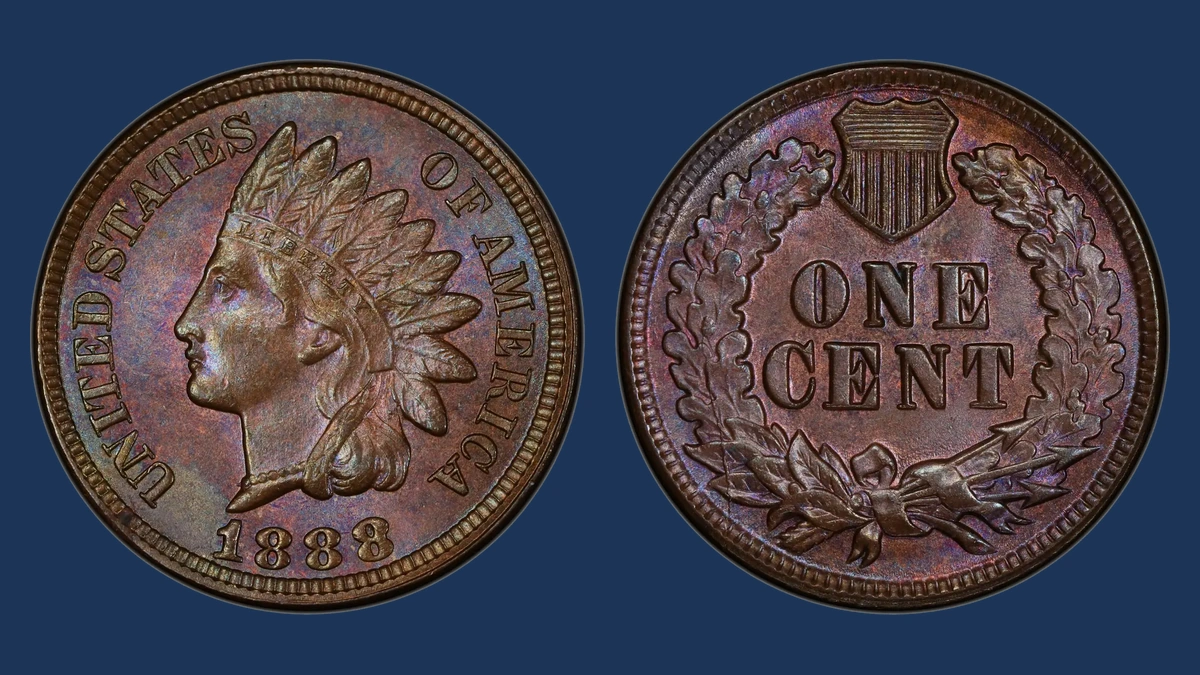
A second outline next to a date number does not always mean an older year is underneath. It can be another impression of the same date.
Workers punched the date into each stamping tool separately. Repeating the blow after a small movement could leave parts of the first impression visible.
The 1888 examples include traces near the base of the 1 and inside the loops of the 8s. Proof examples also show extra strokes below the 1 and within the first 8.
Each follows its own pattern. These ordinary repunched dates are distinct from the valuable 1888/7 overdate.
Estimated Value
Estimated values for circulation examples are $15–$500. Clear extra strokes on an unworn penny are worth more attention than vague marks on a heavily worn date.
For comparison, a 1904 FS-301 repunched date graded an unworn MS64 Brown brought $168 in January 2019. That different-year result helps set scale without creating a sale price for 1888.
A Proof example is estimated at $500–$3,000 as a complete collector coin. Much of that value comes from the Proof itself.
How to Identify
Choose a date photograph of the right coin type before studying the numbers. A Proof was specially made for collectors, and its pictured date should not automatically be used to identify a circulation coin.
Check basic identity with a scale and calipers against 3.11 g and about 19 mm, then inspect the plain edge. These checks can reveal an altered coin but cannot name its date variety.
Under a 10× magnifier, follow the base of the 1 and the curves inside each 8, separating curved digit traces from scratches. Compare those exact extra strokes with one photographed 1888 repunched date, rather than picking different matching numbers from several varieties.
7. 1888 Indian Head Penny Misplaced Date (Estimated Up to $3,000)
Date fragments can appear nowhere near the normal date. A stray 1 or 8 may hide near the necklace, along the neck, or among the hair.
This happened when a date punch touched the stamping tool in the wrong position. Correcting the date did not always erase the first impression.
The 1888 catalog lists several separate locations, including fragments in the lower border. A Proof example has a misplaced 1 between the normal 1 and first 8, down among the border teeth.
These features are parts of numbers, not just random bumps beside the portrait.
Estimated Value
Circulation examples have an estimated range of $25–$700. The more easily a collector can recognize the misplaced digit, the more useful the feature becomes.
A different-year comparison is the recorded $1,187 eBay price for a 1908 FS-301 cent graded an unworn MS65 Red and Brown in December 2021. That is not an 1888 auction result.
For a Proof with a misplaced digit, estimate $500–$3,000 for the entire coin. Its overall quality may outweigh the small date feature.
How to Identify
Start at the necklace rather than staring only at 1888. A 10× magnifier can reveal the top of a stray 1 near the first pearl, while other varieties require checking the neck or hair.
Do not connect marks from different photographs into one supposed variety. The extra digit’s shape and its distance from nearby design should agree with one example.
The plain edge, scale weight near 3.11 g, and caliper diameter around 19 mm describe the ordinary bronze cent. They cannot identify the hidden digit.
For a Proof, move to the border below the space between the 1 and first 8. Compare the small extra 1 there with a photograph of the Proof variety itself.
8. 1888 Indian Head Penny Struck Through Material (Estimated Up to $4,000)
One feather tip looks incomplete even though much of the surrounding design is sharp. Material between the stamping tool and the coin can stop that small area from forming properly.
This is called a struck-through error. The material may leave the coin afterward, so an incomplete feature can remain without anything still attached.
Heritage described this effect on the third feather from the top of an 1888 cent graded MS65 Red by PCGS for unworn condition and preserved copper-red color. Grease was suggested as a possible cause.
The missing detail was observed; the blocking material was not identified.
Estimated Value
For an ordinary example with a clear small struck-through area, estimate $50–$300. A subtle incomplete feather tip should not automatically receive the price of a major missing design.
The recorded MS65 Red coin needs a separate whole-coin estimate of $1,500–$4,000, reflecting its high grade and preserved copper color. No actual price for that auction lot is assigned here.
Most of that larger amount concerns the quality of the penny. It is not a four-figure premium for the feather alone.
How to Identify
Count down from the top of the headdress to the third feather, then compare its tip with the adjacent feathers through a 10× magnifier. A localized incomplete tip means more when the nearby detail remains sharp.
Look next at other exposed high points, where ordinary wear would also smooth the design. A scrape can leave cuts or displaced metal, so move the light across the affected feather and its surrounding surface.
The plain edge, scale weight near 3.11 g, and caliper diameter around 19 mm should remain normal for a small struck-through patch. Compare that tip with the photographed auction coin, paying particular attention to missing detail without a gouge.
9. 1888 Indian Head Penny Die Cap (Estimated Up to $5,000)
A penny that sticks to a stamping tool can gradually take on a cup-like shape. Repeated blows spread its metal around the tool instead of releasing it as a normal flat coin.
The resulting object is called a die cap. One surface may keep recognizable design while the other changes under later strikes.
The 1888 listing names this category, but a precise wall height or grade is not established here. Those details must come from a genuine specimen.
A penny bent into a bowl after minting is different. Shape alone cannot establish how it was made.
Estimated Value
An authenticated 1888 die cap has an estimated range of $500–$5,000. Depth, remaining design, condition, and a readable date would strongly affect its value.
A later copper comparison is a 1979-D front-side cap graded MS64 Red by PCGS, sold for $329 in January 2016. It helps illustrate the category, but it is not an Indian Head cent or an 1888 sale.
The higher range assumes a genuine older cap. An artificially bent penny does not qualify.
How to Identify
View the object from the side before studying the date. A cap should show metal that flowed into walls around a stamping tool, not just a flat penny folded upward.
With a 10× magnifier, inspect the inside and outside for remaining coin design and the effects of later blows. Sharp bends, tool scratches, or a hammered surface suggest later work.
The normal starting coin weighs 3.11 g and measures about 19 mm across. Check it on a scale, but use calipers to record both wall height and width rather than expecting a flat-coin diameter.
Inspect the plain edge along the raised wall. Look for stretched struck detail continuing into that wall, which a simple bent coin will not reproduce naturally.
10. 1888 Indian Head Penny Copper-Nickel Strike (Estimated Up to $30,000)
This rare penny has a pale, nickel-like appearance rather than the usual bronze color. It is made of copper-nickel, not pure nickel.
PCGS graded the known coin MS64 and labeled it a nickel die trial, meaning a proposed test striking. Another explanation is that the Mint accidentally used a disc intended for a Colombian five-centavo coin.
Those explanations differ. The unusual metal is recorded, but a mistake cannot be assumed solely from the holder’s wording.
The coin also has a misplaced 1 near the first necklace pearl. That small mark helps identify the specific example.
Estimated Value
Use an estimated $5,000–$30,000 for the recorded copper-nickel piece, subject to its identity and accepted classification. This is not its recorded auction result.
A later wrong-disc comparison is a 1959 cent on a Venezuelan five-centimo disc, sold for $3,904 in June 2026. The country, date, and collector market differ substantially.
The 1888 piece’s rarity and competing test-strike explanation make a simple price transfer inappropriate. A merely plated ordinary cent does not enter this range.
How to Identify
Color is only a starting clue. A plated bronze penny can look pale too.
Use a 10× magnifier on worn points and the plain edge, looking for copper exposed beneath a coating.
Weigh the coin on a scale and measure it with calipers. The usual 3.11 g and about 19 mm describe a bronze penny, not measured specifications for the rare copper-nickel example.
An unusual result needs professional metal testing. Do not scratch the coin to test its surface.
Compare the misplaced 1 near the first necklace pearl with the recorded specimen, then examine the rest of the design. Have the alloy checked before treating a pale 1888 penny as this copper-nickel strike.
11. 1888 Indian Head Penny 1888/7 Overdate (Estimated Up to $80,000)
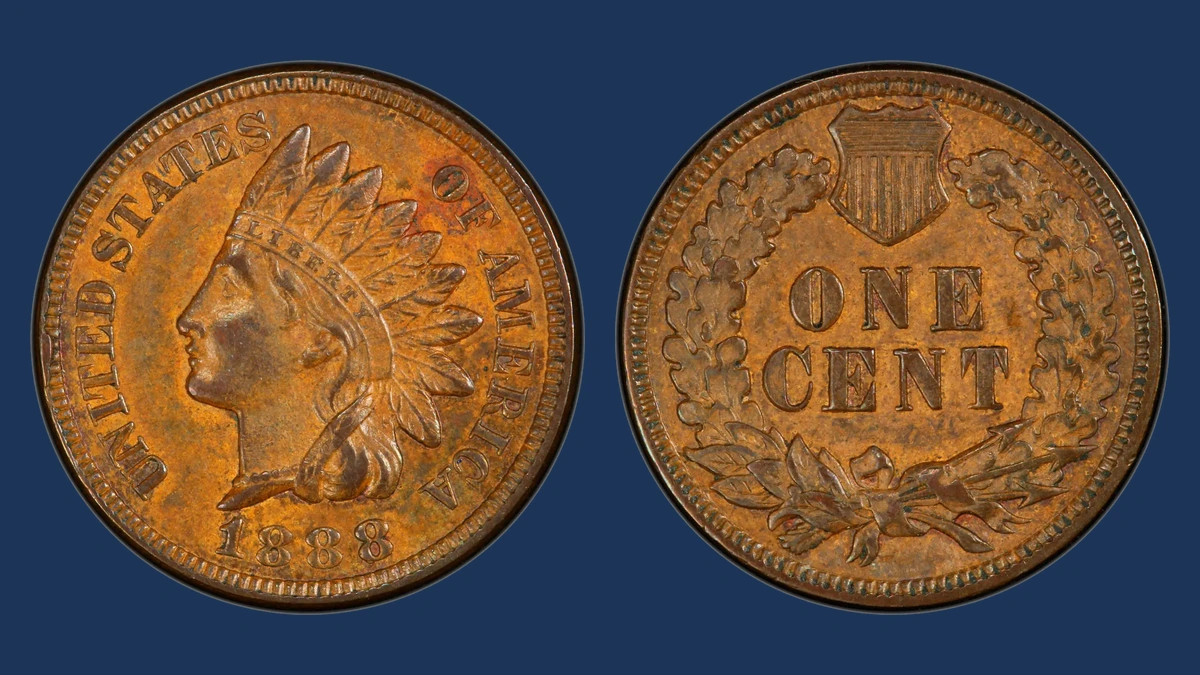
A small raised trace beside the final 8 can be part of a 7, not another 8. This is the famous 1888/7 overdate.
The later digit was punched over an earlier one in the stamping tool. Parts of the old number survived and appeared on the coins.
Look near the upper left and bottom of the last 8. The recognized variety is known as Snow-1 or FS-301, two names for the same major variety.
Its value comes from the specific surviving 7. An ordinary date chip or an extra stroke from another 8 does not qualify.
Estimated Value
The estimated range is $1,000–$80,000, with condition making a huge difference. PCGS records a $74,750 Heritage sale for an MS63 Brown example in August 2007.
More recently, a PCGS MS64 Red and Brown example sold for $66,000 on February 27, 2025. These prices concern unusually well-preserved coins.
A heavily worn coin can sell for much less. The overdate must be established before applying any part of this range.
How to Identify
Do not start by searching for any bump under the date. Use a 10× magnifier on the last 8 and compare its upper-left trace with the corresponding part of a 7.
Then look below that same 8 for the lower remnant. Both locations are more useful together than one isolated lump.
Normal coin checks still matter at this price level. Use a scale for 3.11 g and calipers for about 19 mm, and inspect the plain edge for signs of alteration.
A rim break above the E in UNITED appears on many examples, but it does not replace checking the date. Compare the upper and lower 7 remnants directly with a clear photograph of FS-301.
Conclusion
For an 1888 penny, a tiny extra digit can matter more than an obvious rim defect. Check the last 8 for the overdate, but treat other extra strokes as separate features.
The estimated $5–$80,000 range spans ordinary worn coins with small errors through rare, well-preserved varieties. Photographs, measured size and weight, and a clear explanation of the visible feature are more useful than a dramatic label alone.